Customer Insight & Messaging
Using audience language, pain points, awareness, desired outcomes, proof, timing, and clear value propositions to make messages resonate.
44%
Best tweets about Marketing
A curated collection of the sharpest, most-shared X posts about marketing—saved so you do not have to dig through the timeline yourself. Updated weekly.
Positioning, distribution, and the campaigns marketers screenshot to steal later.
Original Xholic analysis
Marketing posts emphasize positioning, customer understanding, and multi-channel distribution. Practical advice frequently connects message development to audience pain points and proof, while campaign execution is framed as an iterative process of testing, measurement, and refinement.
48% of posts
All-time engagement
34% of posts
Published in 90 days
Conversation map
Using audience language, pain points, awareness, desired outcomes, proof, timing, and clear value propositions to make messages resonate.
44%
Finding, testing, and scaling channel mixes across organic social, SEO/AEO, creators, affiliates, paid media, communities, marketplaces, and owned audiences.
44%
Building trust and attention through useful content, authentic expertise, personal brands, executive amplification, building in public, and repeatable formats.
36%
Defining a distinctive mental slot, sharpening differentiation, reframing customer problems, and creating or owning new market categories.
30%
Offers, headlines, proof, sales arguments, landing pages, CTAs, lead generation, funnel design, conversion optimization, and unit economics.
28%
Meta and performance-ad systems centered on creative volume, persona-based ads, testing loops, conversion signals, retargeting, fatigue management, and scaling winners.
20%
Using influencers, affiliates, user-generated content, referrals, niche communities, and relationship-driven participation to earn distribution.
18%
Community-native Reddit growth through research, karma building, helpful posts and comments, soft promotion, subreddit fit, and compliance with norms.
6%
Tone and stance
Performance benchmark
Posts with media make up 28% of this collection. Their median all-time score is 18.3, compared with 15.3 for text-only posts.
Format mix
Consensus and debate
Shared view
Multiple posts argue that teams should clarify positioning, differentiation, and audience before scaling campaigns or spend, on the premise that distribution amplifies the underlying idea.
Shared view
Posts recommend grounding messages and creative in buyer pain points, desired outcomes, perspectives, and proof rather than relying on feature descriptions alone.
Shared view
Posts describe distribution through a mix of channels and mechanisms—including owned media, creators, affiliates, referrals, communities, and repeat launches—rather than a single content tactic.
Open debate
One perspective argues that great marketing creates markets by introducing a new need; another argues that great campaigns expose existing demand or beliefs that people struggle to articulate.
Open debate
Direct-response posts prioritize lead generation, conversion, offers, and testing. Other posts argue for clear asks, useful content, and marketing that earns voluntary interest rather than relying on persuasion.
Open debate
One post contrasts direct-response work that prioritizes speed and a core sales argument with brand-led work that prioritizes consistency, legally supportable claims, and visual polish. Another raises the trade-off between Meta scaling and possible harm to brand value.
What performs
Reddit Marketing had the highest theme median all-time score, at 66.987. Its evidence posts lay out community-native practices such as subreddit research, rule-following, helpful participation, soft promotion, and optimization.
Tweet 1990701924795175284 was the largest benchmark outlier, with an all-time score of 1323.92, or 78.02 times the overall median. It characterizes channels as discovered, exploited, and discarded, and argues that new products need new distribution.
Posts with media had a median all-time score of 18.28, compared with 15.25 for text posts. Several evidence posts present marketing execution as structured checklists or operating systems, spanning e-commerce, paid social, and Reddit.
Statistical standouts
Creator landscape
The five most represented creators account for 20% of the selected posts.
1. Chris Cunningham
@ChrisClickUp
2 posts
2. Alex
@heyitsalexP
2 posts
3. Hridoy Reh
@hridoyreh
2 posts
4. Paul Mit
@pmitu
2 posts
5. Sarah 🦕
@SarahLevinger
2 posts
6. Sahib
@seeksahib
2 posts
Hridoy Reh appears twice among the listed top voices and has a 70.73 median all-time score. Both evidence posts present Reddit participation as a stepwise system centered on community fit, useful contributions, trust-building, and measured promotion.
Alex’s two listed top-voice posts contrast aggressive direct-response approaches with brand-led marketing, including differences in speed, claims, legal caution, and visual polish.
Since the previous snapshot
Themes, sentiment, stance, and post format are classified per tweet. All counts, shares, medians, creator concentration, freshness, and performance comparisons are then calculated directly from the published snapshot.
Xholic's all-time score compares engagement while accounting for reach, post age, and creator consistency. It is used for relative comparisons within this collection.
This report analyzes the exact 50-post snapshot shown below. AI identifies editorial categories and drafts explanations; all statistics are calculated from the snapshot, and every narrative claim is checked against cited posts before publication.
Best Marketing tweets
Ranked 01–50

@thepatwalls ·
I'm trying to put together a list of all the distribution "channels" that work in 2026: 1. Organic Short Form 2. Niche Communities (Reddit, Discord, FB Groups) 3. ASO (App Store & Platform) 4. Personal Brand 5. UGC 6. Influencers 7. Engineering As Marketing (Free Tools) 8. SEO & AIO (incl. programmatic) 9. X & LinkedIn 10. Viral Video Launches 11. Organic Long Form (YouTube) 12. Cold Email & Outreach 13. Salespeople 14. Paid Ads 15. Affiliate 16. Feedback/Customer Calls 17. Timing & Trends 18. Positioning 19. Open Source What am I missing?

@oliverbrocato ·
📂 ECOM BRAND ┃ ┣ 📂 Product ┃ ┣ 📂 Problem / Demand ┃ ┣ 📂 Product Research ┃ ┣ 📂 Supplier Discovery ┃ ┣ 📂 Costing & Margins ┃ ┗ 📂 Differentiation ┃ ┣ 📂 Validation ┃ ┣ 📂 Sample Orders ┃ ┣ 📂 Product Testing ┃ ┣ 📂 Landing Page Test ┃ ┣ 📂 Preorders ┃ ┗ 📂 Demand Validation ┃ ┣ 📂 Branding ┃ ┣ 📂 Brand Positioning (w/ story) ┃ ┣ 📂 Name & Domain ┃ ┣ 📂 Logo & Identity ┃ ┣ 📂 Packaging ┃ ┗ 📂 Brand Assets ┃ ┣ 📂 Product images (nano banana) ┃ ┣ 📂 Product photos ┃ ┣ 📂 Lifestyle shots ┃ ┣ 📂 UGC style images ┃ ┗ 📂 AI avatars holding product ┃ ┣ 📂 Store ┃ ┣ 📂 Shopify Setup ┃ ┣ 📂 Theme ┃ ┣ 📂 Product Pages ┃ ┣ 📂 Checkout ┃ ┗ 📂 Conversion Optimization ┃ ┣ 📂 Supply Chain ┃ ┣ 📂 Manufacturer ┃ ┣ 📂 MOQ Negotiation ┃ ┣ 📂 Quality Control ┃ ┣ 📂 Freight & Shipping ┃ ┗ 📂 Inventory Planning ┃ ┣ 📂 Content ┃ ┣ 📂 Static ads ┃ ┣ 📂 UGC ┃ ┣ 📂 Ad Creatives ┃ ┣ 📂 Hooks & Scripts (Claude) ┃ ┗ 📂 Creative Strategy & Testing ┃ ┣ 📂 Launch ┃ ┣ 📂 Offer ┃ ┣ 📂 Landing Page ┃ ┣ 📂 Creator Seeding ┃ ┣ 📂 Influencer Push ┃ ┗ 📂 First Ad Tests ┃ ┣ 📂 Acquisition ┃ ┣ 📂 Meta Ads ┃ ┣ 📂 TikTok Ads ┃ ┣ 📂 Google Ads ┃ ┣ 📂 Influencer Marketing ┃ ┗ 📂 Affiliate Programs ┃ ┣ 📂 Distribution ┃ ┣ 📂 Shopify ┃ ┣ 📂 Amazon ┃ ┣ 📂 TikTok Shop ┃ ┣ 📂 Retail ┃ ┗ 📂 Marketplaces ┃ ┣ 📂 Conversion ┃ ┣ 📂 PDP Optimization ┃ ┣ 📂 Bundles ┃ ┣ 📂 Upsells ┃ ┣ 📂 AOV Optimization ┃ ┗ 📂 Checkout Flow ┃ ┣ 📂 Revenue ┃ ┣ 📂 One-Time Purchases ┃ ┣ 📂 Subscriptions ┃ ┣ 📂 Bundles ┃ ┣ 📂 Limited Drops ┃ ┗ 📂 Wholesale ┃ ┣ 📂 Analytics ┃ ┣ 📂 ROAS / MER ┃ ┣ 📂 Contribution Margin ┃ ┣ 📂 Blended CAC ┃ ┣ 📂 Inventory Days ┃ ┗ 📂 Profit Dashboard ┃ ┣ 📂 Retention ┃ ┣ 📂 Email Flows ┃ ┣ 📂 SMS ┃ ┣ 📂 Loyalty Programs ┃ ┣ 📂 Reviews & Referrals ┃ ┗ 📂 Repeat Purchase ┃ ┣ 📂 Protection (Bustem) ┃ ┣ 📂 Trademark ┃ ┣ 📂 Brand Registry ┃ ┣ 📂 Copycat Monitoring ┃ ┣ 📂 Counterfeit Removal ┃ ┗ 📂 Brand Enforcement ┃ ┣ 📂 Growth ┃ ┣ 📂 New Creatives ┃ ┣ 📂 New Distribution Channels ┃ ┣ 📂 Product Line Expansion ┃ ┣ 📂 Partnerships ┃ ┗ 📂 International Markets ┃ ┗ 📂 Scaling ┣ 📂 Hiring ┣ 📂 Automation ┣ 📂 Systems ┣ 📂 Retail Expansion ┗ 📂 Exit Strategy

@GrammarHippy ·
Become a tope 1% marketer: Go to a supper saturated niche. Health / wealth / relationships. One of these ^ Look at how everyone is solving the same problem but with a different solution. Notice the solution is essentially a mechanism. The “HOW”. Stop here. They are bringing a new HOW because the people seeing the ad have failed with the old HOW. So now we have a new opportunity. A new HOW. Then… See how they PROVE their new mechanism works. Look for proof. What makes the buyer believe that “this time it’ll be different..” New HOW + PROOF it works = marketing in a nutshell. Top 1% if you nail this.

@codyschneider ·
marketing engineering today how to get claude code to manage your facebook ads why it works - andromeda replaced interest targeting, the creative itself is now the targeting mechanism - ad and landing page are the signals facebook uses to decide who sees it - more ads across more personas gives the algorithm more to prospect with - loop: publish more ads, let facebook find winners, trim losers, promote winners, remix winners conversion tracking - google tag manager installed once in the head, all pixels deployed through it - custom event pushed to the data layer on the target user action - gtm sends that as a conversion event to facebook - start with an upfunnel conversion action, move deeper as volume allows - example progression: signup, then first product action, then payment - deeper events need enough volume for facebook to learn, that is why you cannot start at payment - cap at roughly five conversion events, more than that is noise server-side lead qualification - facebook conversions api fires events from a server - enrich the lead in real time, score 1 to 10, send back only leads above threshold (~6) - b2b signals: headcount, crm in use, site traffic (apify similarweb endpoint), branded search volume - smb signals: google review count and velocity - consumer signals: zip code - solves the lead quality complaint, the algorithm optimizes for form fills unless you tell it otherwise - avoids waiting on a four week sales cycle for signal - same approach works for google and linkedin research - scrape reddit for pain points and desired outcomes of the target buyer - use the exact language buyers already use in forums, do not guess - perplexity for manual pulls, xai api when the agent does it creative - statics: nano banana via kie ai (unified api across frontier image models) - ugc video: heygen avatars plus elevenlabs voices, elevenlabs voices outperform heygen native - seedance for higher quality, costs more - test with cheap models, produce winners with expensive ones - inputs: competitor ad library screenshots, your brand style guide (fonts, colors, logos) - ugc scripts written from the reddit research, hooks pulled from the same source - use heygen public avatars, ugc section marketing api - create a developer app in business manager, not a public app, no review process - create a system user, assign it the app, page, ad account, instagram account - generate a non-expiring token from the system user - use the api for writes only: uploading creative, turning off losers, moving ads between adsets - do not use the api for data analysis - hammering the api with agent read calls risks an ad account ban under their tos - agent reads also produce hallucination, truncation, and pagination errors at volume - mcp exposes only a handful of endpoints and breaks at scale, go direct to the api campaign structure - two campaigns: testing and winners - testing campaign holds multiple adsets, five ads per adset competing for budget - facebook concentrates budget on the likely winner on its own - signal window is two days to a week depending on spend and cost per action - winners move into the winners campaign and compete against each other there - watch for ad fatigue in the winners campaign - remix winners into new variations, push back into testing - optional: higher funnel event in testing, deeper event in winners analytics - data pipeline into a data warehouse, agent queries the warehouse - sources: facebook ads, google analytics or posthog, crm or cms, transaction data - open source stack: airbyte for the pipeline, clickhouse for the warehouse - postgres and supabase are not built for this, 100m rows takes minutes instead of milliseconds - facebook ads alone is about 42 tables with hundreds of columns - warehouse access enables conversational analytics and live dashboards deployment - an agent is software with a thinking loop and a live data stream - host on Graphed .com or similar, run hourly or daily

@emilylai ·
“Distribution is everything” comes down to: - onboarding the right influencers/creators - nailing affiliate marketing - effective media buying - building owned media channels - having referral growth loops …and doing this all with strong and sustainable unit of economics Consumer crypto marketing is just consumer marketing now.

@jessethanley ·
Cursor has an unreal marketing engine going on right now. Hundreds of promoted UGC ads across all channels. Automated Remotion videos used for retargeting. Retention emails and win-back sequences. Good onboarding emails. Referral and affiliate programs that seem to be working. Many things worth copying.

@stacy_muur ·
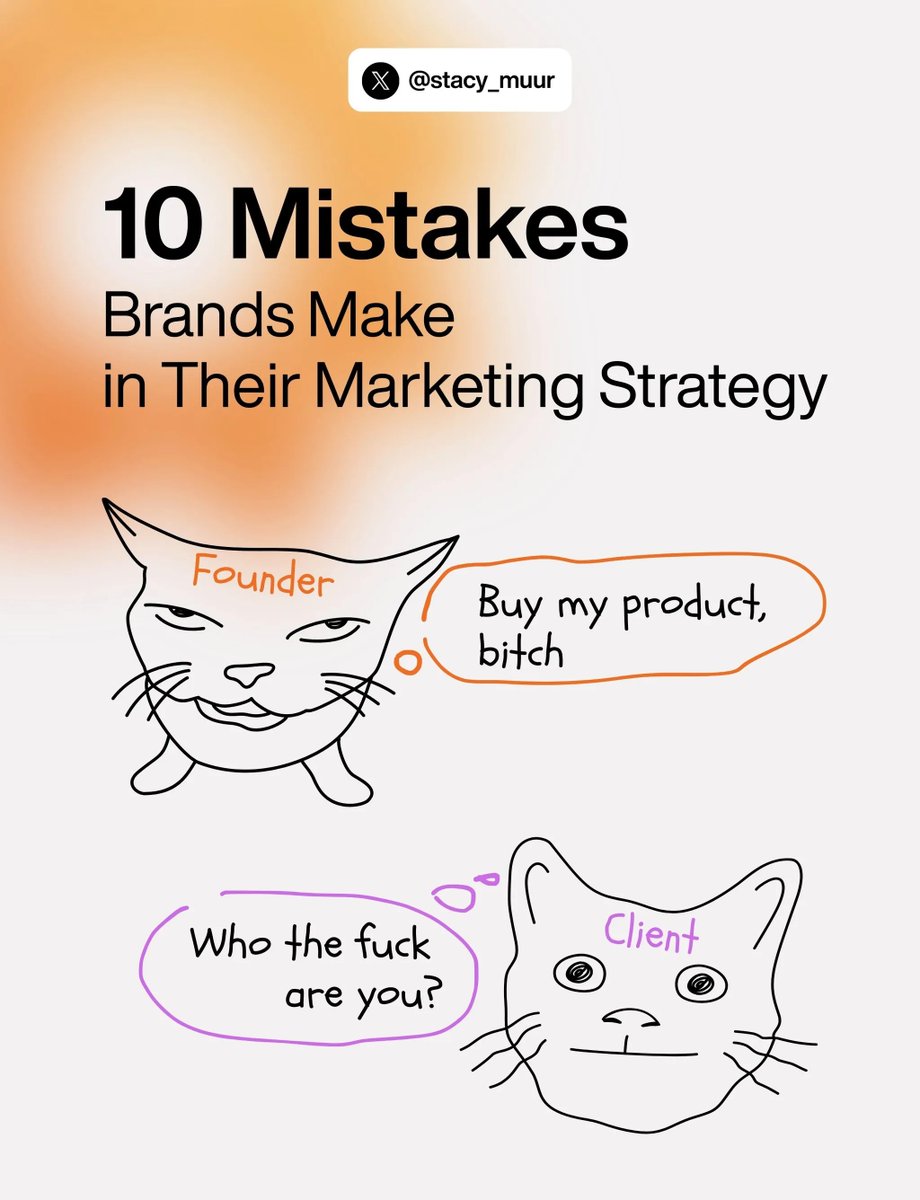
10 Mistakes Brands Make in Their Marketing Strategy ↓ 1. Lack of positioning Companies assume clients automatically understand what they do; it's not true for 95% of startups. You must have a solid positioning that pops up in every client's head when they hear it. Example: Polymarket: The World's Largest Prediction Market 2. Overcomplicating the message Most projects explain themselves in the most confusing way possible. "Our revolutionary ZK chain can reach up to 1,000,000,000 TPS with instant finality" Too much technical jargon & complicated terms for a simple user to understand. 3. Talking too much about features Here's the simple truth: users don't care about your tech. They care about how your product makes their life easier. Example: Instead of saying “gasless agnostic smart wallet” Say “send & swap any crypto without worrying about fees” 4. Not repeating your USP enough A lot of teams get bored with saying the same thing and keep changing the angle every week. But marketing usually works through repetition. People need to hear the same message several times before it sticks. It may take months, and even years, for the message to be remembered. 5. Trying to speak to everyone Many teams want traders, devs, institutions, and casual users all at once. That usually makes the content vague. The best marketing starts by picking a core audience and speaking directly to them. You must understand whether you're targeting specifically traders, yield farmers, etc. 6. Weak distribution Even strong content will fail if it does not reach the right audience. Are you making cool memes? That's great. But you get no new followers and no retention. Content is not enough. You need a system that gets content in front of the right people. This is where team-led marketing works best. 7. Copying competitors too much Many teams that are starting in an industry are looking at what their competitors do because "Well, if it's working for them, it will also work for us" That’s not true. Look for the gaps your competitors are missing in their strategies, and focus 100% of your energy on them. 8. Keeping marketing disconnected from the product The strongest projects build naturally marketable products. That means shareable moments, gamification, competition, referrals, or anything that gives users a reason to talk about it. When the product itself creates content & virality, marketing gets much easier. Just look at @Euphoria_fi, they got millions of views because of their cool UI before even going public. 9. No clear CTA Sometimes a post gets attention, but the next step is unclear. People should know exactly what action to take after reading your content. Don't be afraid to insert links in posts to convert social metrics into product metrics. 10. Quitting too early - You just hired a CT lead. - They worked for one month. - They didn't go viral. - You stop all processes to "rethink" Organic marketing usually takes a lot more time and grind. It's a mistake to assume your strategy is broken just because you see no huge results in a short time. Organic growth takes months and years. But it pays off 100x more at the end.

@hridoyreh ·
📂 Reddit Marketing ┃ ┣ 📂 Find Subreddits ┃ ┣ 📂 Search Keywords ┃ ┣ 📂 Related Subreddits ┃ ┣ 📂 Competitor Research ┃ ┣ 📂 Active Communities ┃ ┗ 📂 Target Audience ┃ ┣ 📂 Learn the Rules ┃ ┣ 📂 Read Rules ┃ ┣ 📂 Check Flairs ┃ ┣ 📂 Promotion Policy ┃ ┣ 📂 Link Policy ┃ ┗ 📂 Posting Guidelines ┃ ┣ 📂 Build Karma ┃ ┣ 📂 Answer Questions ┃ ┣ 📂 Leave Comments ┃ ┣ 📂 Help Others ┃ ┣ 📂 Daily Activity ┃ ┗ 📂 Earn Trust ┃ ┣ 📂 Optimize Profile ┃ ┣ 📂 Username ┃ ┣ 📂 Bio ┃ ┣ 📂 Website Link ┃ ┣ 📂 Avatar ┃ ┗ 📂 Social Links ┃ ┣ 📂 Content Strategy ┃ ┣ 📂 Tutorials ┃ ┣ 📂 Case Studies ┃ ┣ 📂 Checklists ┃ ┣ 📂 Data Posts ┃ ┣ 📂 AMA ┃ ┣ 📂 Discussions ┃ ┗ 📂 Success Stories ┃ ┣ 📂 Comment Marketing ┃ ┣ 📂 Answer Questions ┃ ┣ 📂 Add Value ┃ ┣ 📂 Share Experience ┃ ┣ 📂 Soft CTA ┃ ┗ 📂 Follow Up ┃ ┣ 📂 Post Marketing ┃ ┣ 📂 Educational Posts ┃ ┣ 📂 Problem Solution ┃ ┣ 📂 Guides ┃ ┣ 📂 Before / After ┃ ┣ 📂 Templates ┃ ┗ 📂 Free Resources ┃ ┣ 📂 Product Promotion ┃ ┣ 📂 Launch Posts ┃ ┣ 📂 Beta Invites ┃ ┣ 📂 Discount Offers ┃ ┣ 📂 Free Tools ┃ ┣ 📂 Feedback Requests ┃ ┗ 📂 Show Progress ┃ ┣ 📂 Link Strategy ┃ ┣ 📂 Link When Asked ┃ ┣ 📂 Profile Link ┃ ┣ 📂 Resource Links ┃ ┣ 📂 Recommendations ┃ ┗ 📂 Avoid Link Spam ┃ ┣ 📂 Engagement ┃ ┣ 📂 Reply Fast ┃ ┣ 📂 Ask Questions ┃ ┣ 📂 Continue Discussions ┃ ┣ 📂 Thank Users ┃ ┗ 📂 Build Relationships ┃ ┣ 📂 Analytics ┃ ┣ 📂 Upvotes ┃ ┣ 📂 Comments ┃ ┣ 📂 Clicks ┃ ┣ 📂 Referral Traffic ┃ ┣ 📂 Signups ┃ ┗ 📂 Conversions ┃ ┣ 📂 Scaling ┃ ┣ 📂 Content Calendar ┃ ┣ 📂 Repurpose Content ┃ ┣ 📂 AI Assistance ┃ ┣ 📂 Multiple Subreddits ┃ ┗ 📂 SOPs ┃ ┗ 📂 Mistakes to Avoid ┣ 📂 Spamming ┣ 📂 Self Promotion ┣ 📂 Low Effort Posts ┣ 📂 Ignoring Rules ┣ 📂 Fake Accounts ┣ 📂 Underage Account ┗ 📂 Copy Paste Comments

@AndrewWriteCopy ·
Dan Kennedy is an industry legend. He’s maybe the most influential direct response guru of the last few decades. He was my introduction to the world of marketing and copywriting. And he remains my biggest influence. So I’m sharing 10 of the most powerful marketing ideas I learned from Dan: 1) Your Real Business is Lead Generation and Sales Conversion The single most important thing I've learned: No matter what business you're in, your real business is lead generation and sales conversion. As without leads and sales, you don't have a business. 2) Know Your Numbers You've got to know your business's key metrics. You need to know what's working and what's not working for you so you can make informed decisions. At the very least you should know: 1) The cost of getting a customer. 2) And the value of that customer. 3) Sell To Want Not Need You've got to sell what people want, not what they need. This is a mistake I see all the time. Just because someone doesn't have something - like a smart, new website - doesn't mean they want it. It often means they're just not interested in it. 4) Guard Your Time Time is your most valuable asset as unlike money you can never create more of it. So treat it as such and guard it as best you can. Don't fritter away your hours. Have a time management system to ensure you get the most out of your days. 5) Focus On Your Headline The headline is the most important copywriting element. It's the ad for your ad. If your headline fails, chances are your ad fails. So you want to spend the most time on it. Write multiple headlines, pick the best few, and then test them. 6) Understand Your Target Audience A huge part of how well your copy does depends on how well you know your audience. The better you know them, the better you can target your copy at them, and the better your sales. Get to know them so well you could write a page in their diary. 7) Don’t Reinvent The Wheel You don't need to write copy from scratch. You can borrow everything from headline templates to body copy structures from decades worth of proven direct response marketing. Use them as a starting point and then build on them. 8) Why You? Why should a prospect buy from you and not your competition? This is a key question you need to answer. You always want to be looking for ways to differentiate yourself. 9) Don’t Assume We all tend to assume we know things we really don’t. And we're almost always wrong. So don't assume you already know what does and doesn't work. Don't let tradition or industry norms blind you. Decide on data not on assumptions. 10) The Bigger Picture Always look at the bigger picture. Don't get too focused on the details of your copy. Instead, look at your offer, who you're targeting, your upsells, your follow-up, etc. These will make you more money than polishing your copy. To sum up: • Your real business is lead generation and sales conversion • Always look at the bigger picture • Understand your target audience • Don't reinvent the wheel • Focus on your headline • Know your numbers • Guard your time • Don't assume • Why you? And if you found this useful: Repost it to help your fellow persuasion professionals. Make sure you’re following me @AndrewWriteCopy for more quality copywriting and marketing content. And enjoy the rest of your day!

@hridoyreh ·
📂 Reddit Marketing ┃ ┣ 📂 Audience Setup ┃ ┣ Identify who your SaaS is for ┃ ┣ Find 5-10 relevant subreddits ┃ ┣ Study real user pain points ┃ ┗ Track repeated questions ┃ ┣ 📂 2. Market Understanding ┃ ┣ Read posts before posting ┃ ┣ Collect common frustrations ┃ ┣ Note existing tools people use ┃ ┗ Spot gaps your SaaS can fill ┃ ┣ 📂 3. Account Warm-up ┃ ┣ Comment daily with value ┃ ┣ Help without dropping links ┃ ┣ Build karma naturally ┃ ┗ Establish trust in communities ┃ ┣ 📂 4. Content Posting ┃ ┣ Share solutions for problems ┃ ┣ “I built 'SEO Wins' because…” posts ┃ ┣ Case studies and results ┃ ┣ Free tips / insights posts ┃ ┗ Occasional product mention ┃ ┣ 📂 5. Soft Promotion ┃ ┣ No hard selling ┃ ┣ Use natural language CTA ┃ ┣ Share only when relevant ┃ ┗ Focus on problem-solving first ┃ ┣ 📂 6. Engagement Strategy ┃ ┣ Reply fast to comments ┃ ┣ Add extra value in replies ┃ ┣ Turn comments into leads ┃ ┗ Build conversations ┃ ┣ 📂 7. Traffic ┃ ┣ Send users to your landing page ┃ ┣ Offer a free tool or demo ┃ ┣ Capture emails / waitlist ┃ ┗ Reduce friction to sign up ┃ ┣ 📂 8. Optimization ┃ ┣ Track best performing posts ┃ ┣ Identify winning subreddits ┃ ┣ Repeat high-converting formats ┃ ┗ Improve hooks over time ┃ ┗ 📂 Scaling ┣ 📂 Post consistently weekly ┣ 📂 Repurpose winning content ┣ 📂 Expand to more subreddits ┗ 📂 Build a repeatable system

@cormachayden_ ·
everyone thinks marketing is ads, influencers, seo and ugc it's not great marketing is inventing a new problem in your customer's mind then building an exceptional product that solves it the best brands don't capture a market, they create one: chatgpt > llm companion oura > fashionable health tracker cursor > ai code editor coinbase > crypto trading ag1 > daily greens each one revealed a need people didn't know they had, then became the dominate answer your job: 1. discover new emerging tech 2. uncover how it can help people 3. convince others of this new need 4. introduce your product as the solution 5. design a brand that becomes the trigger 6. improve the product as more people discover the opportunity 7. capture the mass market for oasis it's water: user faces a shelf of bottled water > remembers all water is different > opens oasis to find the best one 99% of your marketing should be education do this right and you build a monopoly anyone who copies you remains a second rate player in the market you created create your own market

@mickeyhardy ·
The best marketing campaign of all time The best marketing doesn’t create demand. It exposes it. You’re not teaching people what to think. You’re giving them the words for thoughts they couldn’t express. Apple’s best campaign didn’t even show the product. They were exposing a belief that millions held: The ones who don’t fit are the ones who change the world. Then they reaped the rewards of associating Apple with that belief.


@onlinedopamine ·
replit has adopted the same marketing hack you see here on X (650k views) on X, marketeres normally use the "Claude Code just released xyz" caption to start their post platforms like X have certain keyword triggers that just amplify your reach, esp if you utilize popular terms like claude code, codex, hermes, etc & as you can see, this strategy also works pretty well on tiktok, instagram, and the likes the advantage, apart from getting better reach, is that you're borrowing claude's (or someone else's) credibility with that credibility, you then utilize your own solution (replit in this case) to further support the content
 Watch video

@heyitsalexP ·
We talk about levels of sophistication within a category (like "weight loss"), But we don't talk about levels of sophistication within Meta itself. I was looking at older static ads produced by some of the most well-known DR brands and found something shocking: The old ads feature messaging that is very straightforward, claims with minimal support, very basic creative formats. The first ad was run by Froya Organics in 2024–just two years ago. Very straightforward claim with no backup. Leans on a cartoon to illustrate the progression–not even a real person's results. The awareness phase isn't 100% clear. If they're speaking to problem aware, the problem isn't being reframed and the solution isn't being explained. If they're speaking to product aware (balms, natural acne cures)–same deal. This ad is "selling the click" vs "selling the product". The assumption is that the claim will be so intriguing that the user will click through to the lander and learn more. But if you ran this ad today, it's way too straightforward to work as clickbait. It's obviously an ad. There's nothing particularly intriguing about it. The second ad was relaunched today, but I've had an older version in my swipe file for a few months, so it was likely launched Q1 of this year. This ad is much more sophisticated AND aggressive: Targeting a problem-curious audience. Maybe they've considered Botox but have hesitations. Maybe they are anti-botox but still want to soften signs of aging. Also works on a product aware level–people who used Botox, hated it, and are seeking the same benefits from a natural alternaive. This is true clickbait: bold claim, aggressive language, curiosity framing. Very agro DR - literally calling the alternative solution "a scam". Wouldn't make it past legal at a legacy CPG co If you look at any big, white hat Meta advertiser that has been around for at least 3-5 years, you're going to see the same pattern. This evolution is a function of two things: 1. The market on Meta has gotten louder and more competitive. You need to do things like this to stand out, unless you are creating awareness for your brand IRL. 2. This brand is very successful. They've converted all the early adopters. They need to lean on stronger, sneakier tactics to convert the outer rings of their customer universe at an acceptable CAC. This is the tension a lot of mid-8 figure brand owners are grappling with. They're wondering "can I keep scaling on Meta without doing things that might harm the enterprise value of my brand?" And THAT is why it is so important to decide exactly what you want to do with your brand in the next 5 years. If your goal is to sell to a strategic, back of Meta DR and lean into more traditional awareness marketing. If your goal is to create a cash-flowing business that you can pass to your kids...it's a balance between DR and traditional brand (and requires a more in depth discussion). If your goal is to maximize short term profit to invest that into your powerwashing business (or whatever), go HAM on direct response. Remember folks, No Best Practices


@shivst3r ·
The best marketers I know in crypto don't even call themselves marketers. They're just genuinely obsessed with whatever they're posting about. You can feel it in their posts; they don't need a content calendar or a rotation of stolen jokes to stay relevant. I've been paying attention to who's been cutting through recently, and it's the same handful of people every week. The same ones who clearly live inside the product they promote and can talk about it without sounding rehearsed. Conviction is the only marketing strategy that scales.

@javier_otieno1 ·
Traditional marketing is dead. Growth now belongs to brands that master Platformization. Digital platforms don't just host content; they also dictate the infrastructure of social life and turn communication into monetizable data. Here is how brands apply it to scale: 1️⃣ Native Social Commerce: Stop sending traffic to external websites. Use TikTok Shop and Instagram Shopping to capture impulse buys directly inside the app. Zero friction = maximum conversion. 2️⃣ Algorithmic Ingestion: Stop posting blindly. Optimize for Social SEO using native audio, keywords, and platform tools. Make the algorithm want to push your brand to new feeds. 3️⃣ Multi-Sided Ecosystems: Treat audiences as friends and partners, not products to be sold to advertisers. Use tools like X group chats to build co-created content that platforms naturally reward. 4️⃣ First-Party Data Loops: Use real-time engagement metrics to test creative variations. Pivot your budget instantly to mimic whatever the platform's infrastructure is prioritizing today.

@coreyhainesco ·
The right way to use marketing-skills with Claude↓ Don't pick which skill to run first. You probably won't know the right order anyway. Start with product marketing context — your positioning, audience, and what makes you different. Once that's loaded, the model knows what it's working with. Run copywriting, seo, whatever, it grabs the right context automatically. Foundation first. Everything else follows.
 Watch video
@heyitsalexP ·
There are two worlds in the creative strategy universe: World #1 = DR demon land Affiliates, drop shippers, supplements and most new to market brands Direct response marketing principles are critical. Ads are ugly. Sometimes claims cross the line. World #2 = DTC Brand land These are the big, ecom-focused brands that get most of the flowers on here. The marquee names that service providers are clamoring to list on their sites. These brands do a lot of creative volume because they spend a lot on Meta. But the growth of the business doesn't live and die based on today's ROAS. In World #1, speed + core sales argument is more important than polish or brand consistency In World #2, brand consistency, claims with airtight legality, and visual polish are all more important than speed. Now, there are positives and negatives to spending times in both worlds. IMO, spending time in World #1 makes you a very sharp, creative marketer. You build a very valuable, portable skill set. If you want to bootstrap your own brand one day, you NEED reps here. But World #2 has much more prestige and value in the established world of W2 careers. If you want to become a CMO of a F500 one day, you work your way up the ladder in World #2 World #1 guys (almost always guys, lol) think World #2 is "soft"/not "real marketers". World #2 folks think World #1 is vaguely creepy/probably borderline illegal. Or they don't realize that it exists at all. I think the two sides have a lot to learn from each other. Here's my hot take: I think some creative strategy roles in World #2 can veer into the "marketing as project management" category. Like, briefing Meta ads for promo events based on a recycled template that's been approved by three people, so you can manage them through an approval pipeline of five additional people. I don't think brands should be labeling roles as "creative strategy" unless there is something in the JD that's actually strategic. But what do I know...

@pmitu ·
My 56 Thoughts on Marketing: 1. Marketing is not just a promotion 2. Marketing is: WHY world needs your product 3. Do marketing every day 4. Start it BEFORE first line of code 5. Markting is x10 harder than coding 6. Distribution is a part of marketing strategy 7. Marketing is about understanding the market 8. It's also about: user pain, problems, behavior, patterns 9. It is a full-time job (just like coding) 10. No one will buy your product if no one knows about it 11. Marketing is a set of skills 12. Growth mindset is important 13. Product and marketing are more closely linked than you might think 14. Good marketing won't save bad product 15. Good product won't succeed without marketing 16. Word-of-Mouth is the best channel for growing startup 17. Focus on organic channels mostly 18. Talk about users more and less about features 19. Marketing can't be copied 20. Marketing is probabilistic, not deterministic 21. No one can predict the outcome of marketing campaign 22. Operational marketing is based on ideas and experimentation 23. Users buy outcomes, not soft itself 24. Reading books about marketing helps improving 25. Customer feedback is essential part of growth strategy 26. Founder's vision must be flexible 27. Product-Market-Fit is your ultimate goal 28. Happy users is the second one 29. You can learn from your competitors 30. Consistency beats virality (and hype) 31. Marketing is the only way to link: product, UX, UI, pricing, sales. 32. Founder-led marketing is a powerful tool 33. Run paid ads only after you set up organic channels 34. Social proof and testimonials are available to you with 1st user 35. Effective marketing can make you viral one day 36. Building in public is free, why not? 37. First 100 clients are extremely important 38. Talk to users every day 39. Founders should be involved in customer support on daily basis 40. Copywriting and storytelling are super power 41. Personal brand too 42. 99% startups dies because lack of marketing not lack of code 43. Sales are great way for mining user insights 44. Don't rely on 1 marketing channel 45. 'Multi-channel' strategy can help you scale 46. Marketing pivots are inevitable 47. It's hard, but try to ignore vanity metrics 48. Revenue is marketing metric 49. Marketing is a smart game 50. Uniqueness is key in a highly competitive market 51. Best marketing if no one realized it was marketing 52. Real organic growth is always a slow process 53. The market is very ruthless 54. Marketing is not a choice. it's mandatory. 55. AI is a great tool to win marketing 56. Marketing is hard, but you can do it!

@SarahLevinger ·
Correct me if I’m wrong but I don’t think marketers should be *persuading* anyone to do anything. If I do my job right, people will naturally want to know more, try more, and buy more, just because they want to be associated with the cool and interesting things I’m doing. Period. Marketing is not sales. Sales is not marketing. My job is to make the businesses I promote impossible to ignore, insatiable to be around, and refreshing to be associated with. so much so that sales become the natural next step (not the ONLY next step). I joined the marketing industry in 2010. I started freelancing full time in 2012. I started running ads in 2017. I moved into ecom in 2019. All those years, I never once heard a customer say “damn, I’m so glad someone persuaded me to buy this today.” Not once. Ever. In fact, I’ve never once heard a customer thank any marketer for doing anything at all, because consumers genuinely don’t like us. 😅 Consumers don’t like what our industry stands for. They don’t like being sold to. They don’t like being overhyped, they don’t like how ridiculous marketing has become, and they definitely don’t like how shady some businesses are. I know this because IM A CONSUMER and I don’t like it. Every time I see an ad that tells me such-and-such product is going to “change my life” I get the ick. 9/10 times, I scroll right past the majority of the ads on my own feed. If we won’t even stop to watch our own ads because of how out-of-touch they have become…how can we ever expect our potential customers to do so?? These days, all I want from a brand is a little: Honesty Authenticity Humbleness (this one in particular) Openness Integrity Self awareness I want to follow brands that create content that exists just to bring a little joy and interesting ideas to the world. I want to buy from brands who are doing something good for others, striving to bring happiness to people who struggle to feel it, and who actively try and do the right thing, even if it means LESS for them in the short term. I’m putting in the work to become a marketer I would want to buy from. (End of yap 😅)

@ArcadiaGTM ·
Most brands have amazing marketing but HORRIBLE positioning. You can amplify a weak idea infinitely, it will still feel weak. Distribution magnifies what already exists. If the foundation is fragile, scale only exposes it. Authority is built before the first impression is ever generated. It’s built in the room, in the reframing, in the edits that remove ego, in the restraint to say less but mean more. When positioning is precise, campaigns travel. When it’s vague, they drift. Marketing doesn’t create authority. It reveals it.


@Web3Alex_ ·
The best marketing teams in Web3 treat every campaign as a data point not a deliverable. What converted. What didn't. Which creator's audience actually engaged versus just viewed. Which narrative angle got replies versus likes. Marketing without a feedback loop is just spending with extra confidence. The teams winning right now are the ones who treat every post as information for the next one. This is clearly evident with teams like @ArcadiaGTM or @StratosphereVIP.

@SarahLevinger ·
1️⃣ If you want to get someone to do something, you first have to understand their POV on that thing. 2️⃣ Once you understand their POV on that thing, you have to understand why they have that POV on that thing. 3️⃣ Once you understand why they have that POV on that thing, you have to understand how their POV differs (or aligns) with your own POV on that thing. 4️⃣ Once you understand how it differs (or aligns with your own POV on that thing, you have to understand how they might interpret your message if you choose to present it in a certain way. 5️⃣ Once you understand how they might interpret your message if you choose to present it in a certain way, you have to time your request just right so you catch them in the right mood, the right frame of mind, and the right setting so they can act on whatever it is you're asking them to do. EXAMPLE: "😅I'm so sorry, I completely forgot about this, but can you take out the trash?" This example assumes: 👉Their POV: you forgot and need a favor. 👉Why they think that: you're asking nicely and owning the lapse. 👉How we differ: they may not care about the trash, but you do (or vice versa). 👉How they might interpret this: with humility, a soft entry, and an acknowledgment that you dropped the ball, and this is not a demand. 👉Timing: when they're not already mid-task, not hangry, not three minutes from walking out the door. In this case, you might have a 9/10 chance this person will take out the trash for you. Versus: "😡Why the hell haven't you taken out the trash yet??" This example assumes: 👉Their POV: they should've already done it already and you're frustrated with them. 👉Why they think that: you're attacking me, basically calling me an idiot, not asking me. 👉How we differ: you think it's obvious and overdue, they don't see it as urgent (or forgot entirely). 👉How they might interpret this: you're kind of a douche. 👉Timing: whenever you snapped, which is almost never the right time for them. In this case, you might have a 4/10 chance this person will take out the trash for you (and a 10/10 chance they probably won't speak to you for the rest of the day). 👆 All this...just so you can get them to do one thing. This applies to any communication: - Partnerships - Parenting - Employees - Friendships - Dating - Families - ...and yes, Marketing Most marketers are stuck at step 1 (operating from their own POV) and wondering why no one's converting. The 2% who run all five steps are the ones whose messages actually land. Every bad ad, cold email, and ignored campaign is just someone yelling "why the hell haven't you taken out the trash yet??" at a customer who never agreed it was their job, doesn't have the same POV, and doesn't have the time right now to care. Good marketing is good communication. Period.

@natiakourdadze ·
Marketing Tip: If you’re selling to CEOs, talk numbers. If you’re selling to investors, talk leverage. If you’re selling to founders, talk growth. If you’re selling to developers, talk efficiency. If you’re selling to managers, talk results. If you’re selling to consumers, talk transformation. If you’re selling to marketers, talk distribution. If you’re selling to teams, talk clarity. If you’re selling to sales teams, talk pipeline. If you’re selling to operators, talk systems. Good marketers know their product. Great marketers know their customers.

@neilpatel ·
For 100 years marketing has been one thing: you execute. Now the job is splitting into two, and I'll show you both sides. The operator does the work. The commander directs agents that do the work and keeps producing whether they're in the room or not. In this video I break down the difference, walk through real companies already running this way, and cover the part most marketers are missing: your buyers have their own AI agents now, researching and pre-qualifying you before they ever land on your page.
 Watch video

@icobeast ·
On the current state of CT marketing... We've seen a LOT of iterations on the marketing front over the last few months (and years). A couple years ago it was just outright undisclosed shilling to the masses during NFT szn and memecoin mania. After those died down a bit, it got into more think-piece/"research" or "alpha"-style posting...again somewhat believable, but eventually people caught on. More recently we saw a lot repetition and copy-paste stuff in the inf0-fi/post-inf0fi era...it was good for volume and got in front of eyes, but pretty bad for user burnout and conversion. So what makes a successful campaign today? Honestly I think it's familiarity (with the creator/producer) and unique style. @mypethooligan recently ran a campaign in this vein that I think will probably have follow-on/copycats. The method was pretty simple: - Create something interesting (mini-episodes of video content) - Integrate familiar IPs/personalities (in the episodes but also in QTs) - Drive eyeballs to partnerships and developments And that's it. Nothing crazy. No clickbait. A fresh mix of recognizable faces/names. And most importantly no boring copy-paste spam. Marketing teams must figure out how to adapt to the new playing field on CT if they really want to capture crypto natives going forward...or burn money in pursuit of pointless CPM.


@denisyurchak ·
Becoming a senior developer is 100x easier than a senior marketer. A successful indie hacker means you need to become both. The knowledge about coding is centralized is structred, the marketing knowledge is split and chaotic. Most senior marketers learn from their mentors on their jobs, like in medieval times. I never had a marketing job, but I built an app used by 20,000 people and mkaing $7,5k a month Here is where I am getting marketing knowledge and where you can get it too: 1. Experiment with marketing channels Learning marketing channels is probably the most important thing in marketing. The more you master, the more senior you become. The bad news is that there are a lot of marketing channels. The good news is your app needs 2 or 3 to become very successful. For example, @zach_yadegari brought his app Cal AI to $50 million MRR by using two channels only: influencers and paid ads. Marketing is talking to your audience about your product where your audience hangs out (as put beautifully by @dannypostma). A marketing channel is a way for you to spread the message about your product. There are a number of channels: social media marketing, affiliate marketing, paid ads, etc. Pick one at a time and focus on it for 2-3 weeks at least. To learn paid ads, for example, I went o into Google Ads, made a screenshot of the dashboard, and asked ChatGPT what I should pay attention to. Then I did the same on every new screen. I learned how to make creatives and made sure my unit economics worked out. That means I had to spend less on acquiring a customer than this customer brought in their lifetime in the product. The same playbook would work for any marketing channel out there. 2. Blogs When marketing knowledge reaches books, it's already outdated. So the best way to stay up-to-date is by consuming content from good marketers and founders. I would recommend the following blogs/podcasts: - Startups for the rest of us by Rob Walling - My first million by Shaan Puri & Sam Parr - The YouTube channel of Brett Malinowski, a tech marketer and content maker 3. Books Marketing is a 50% hands-on experience, 50% creativity, but I still include books here. Be extra-careful – if you are reading this, you are most likely smart, and books are procrastination traps for smart people. No book in the world will replace learning by doing. That being said, the best book on marketing for solo founders is Traction by Gabriel Weinberg. It tells about possible 13 marketing channels: paid ads, SEO, affiliate marketing, and others. It teaches a very useful framework – you concentrate on one marketing channel at a time and gradually find what works for your business. Other useful books are: - Growth hacking by Sean Ellis teaches you what a funnel is and metrics - Mom's test Rob Fitzpatrick, teaches you how to talk to customers Write if I missed something or if you know other awesome sources of marketing knowledge or ways to get better at it!

@ephraimlamar ·
Day 16 of Brand Activation 101. There's a tool that's been around since before modern marketing that still outperforms most digital channels on the metric that matters most: Conversion. This tool is; Street teams and product sampling. I have ran these in markets, in office complexes, at bus stops, at universities, and at events. And when it's done well, when the right person is deployed in the right context with the right product, the conversion rates are extraordinary. Well-executed sampling campaigns regularly convert at 40% or higher. No paid digital channel in Nigeria or anywhere else consistently touches that. Why does it still work? Because it delivers what no algorithm can replicate: Trust. Built face to face, in real time, by a real person. CONTEXT IS EVERYTHING. A noodle brand sampling at a secondary school canteen at lunch time. A skincare brand sampling at a salon. A cold drink brand at a motor park at noon. The right product in the right moment of relevance converts infinitely better than a general deployment. THE CONVERSATION IS THE CAMPAIGN. A good ambassador doesn't just hand over a sample. They engage. They listen to real-time feedback. They handle objections. Every deployment is also a live focus group. DATA IS AN OPPORTUNITY. Every sample is a potential lead. QR code, USSD, competition entry, turn footfall into a CRM asset. THE PERSON IS THE BRAND. This is the one I emphasize most in execution briefings. Train ambassadors on the feeling you want customers to leave with — not just product features. Their energy, their warmth, their attitude IS the brand at that moment. Low technology. High humanity. Timeless.


@jayair ·
Building product can feel open ended and unstructured, deciding on one feature vs another feels arbitrary, priorities feel random, timelines feel made up But there’s an underlying structure to all this that’s worth studying before you build a product It comes from thinking about positioning A position is how your user thinks about your product with respect to all the others in the market It’s a slot in their mind This imposes some basic rules that leads to creating this underlying structure To occupy a slot you’ll need build a good product AND have the ability to market it at scale This is important because if you can’t market your product for the the position you want, you won’t occupy the slot If a slot is occupied, it’s very hard to displace You’ll have to outlast them or overwhelm them with your marketing, you should avoid this and pick another position If you pick a slot right next to a very popular product, you’ll be constantly confused for it, you’ll have to keep answering how you are different, avoid this also However, if you can very clearly differentiate from a popular product then you can occupy a slot that’s counter positioned to it, this is very powerful and gives you a lot of leverage But beware, it’s much harder to build a counter positioned product than being the first Given these basic rules, there are a few things that follow - Some positions are much better than others, think through this before deciding what you want to build - If a slot is available, you should occupy it ASAP; this is where the timelines come from - If counter positioning, make sure a user can differentiate you clearly; this is where the rough shape of product comes from - Then build your product in a way that allows you to market for that position; this is where the priorities on the features come from Now if you occupy the slot, congrats, there’s incredible value in being the default for that People automatically associate you with that slot and the value of this compounds over time You automatically benefit if the market as a whole becomes popular You ward off competitors without doing anything because they also have to follow the above rules And if they decide to compete, they unknowingly help market your product and solidify your position

@aaliya_va ·
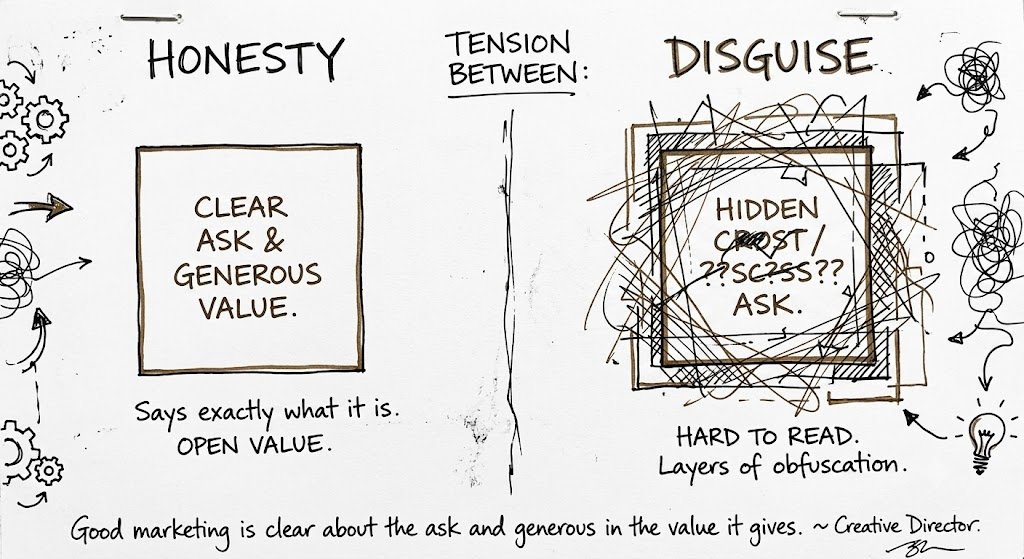
After working with a lot of technical founders, I started noticing the same thing again and again: the moment marketing feels like “selling,” they start pulling away from it. many think marketing becomes fake the moment it asks for something. That instinct is understandable but the real problem is usually not the ask itself ,it’s when the ask is hidden inside something that pretends not to be an ask. Good marketing is simple. It asks for attention honestly and it gives something useful in return. A demo request, a beta invite, a price page, a useful post n none of that is manipulation if it says what it is. What feels off is the post that looks like insight but is actually a funnel or the thread that reads like help but is clearly designed to make you click by line two. Founders,remember that clarity is part of trust. If you want a demo, say demo. If you want a signup, say signup. Then make the rest strong enough that even the people who do not buy still leave with something worth keeping. That is what earns attention from strangers in the first place. There is a simple test before publishing. If nobody clicks, does the reader still get value? If the answer is yes, the post is doing real work. If the answer is no, it is just an ad in disguise. The best marketing does not hide the request. It makes the request clear and the rest worth reading anyway.

@seeksahib ·
Perception is everything in marketing. Rolex never sold you a machine to tell time. They sold you a belief that Rolex on wrist says "I made it" without even saying it. They decided that meaning and defended it for centuries. Interesting part is the opinions you assign to these brands are not yours. The brand installed it intentionally. that's the play. Your product doesn't live in the market. It lives in your customer's head, as a perception they didn't choose and mostly can't explain. Marketing isn't about how you get attention. It's how you control what that attention thinks once it lands on you.

@arthuryuzbashew ·
Everyone thinks marketing is X, ads, paid influencers, SEO, UGC It’s not Great marketing is inventing a new problem in your customer’s mind, then building an exceptional product that solves it The best brands don’t capture a market, they create one: ChatGPT > LLM companion Cursor > AI code editor Notion > AI workspace Replit > AI app builder Each one revealed a need people didn’t know they had, then became THE answer Your job: 1. discover new emerging problem 2. uncover how it can help people 3. convince others of this new need 4. introduce your product as the solution 5. improve as more people discover it For @mediafa_st it’s Reddit marketing: founder posts on Reddit like everyone else > gets banned or fails > opens MediaFast so it’s 95% handled for him, safely > gets actually recommended by ChatGPT and Perplexity > wins the channel 99% of your marketing should be education Do this right and you build a monopoly Anyone who copies you stays a second rate player in the market YOU created Create your own market

@aaditsh ·
One exec posting about your launch is a post. Five execs posting is a moment. Most companies do this: CEO posts an announcement. Maybe marketing reshares it. That's it. The best companies do this: CEO, CMO, COO, VP of Product, engineers... all posting their perspective. Same day. Boosting each other. Different angles on the same story. One post is easy to scroll past. A coordinated wave takes over the timeline. The goal isn't to go viral. It's to be unavoidable.

@davidpantera_ ·
Working in "Marketing" was always like being a second-class citizen to product / eng on twitter they used to say things like "build a great product and ppl will come" to discredit the need for investing in marketing in the first place moving to PM from PMM gave me more influence over the roadmap but also recognition internally/externally, closer to users, and authority with leadership. ppl just take u more seriously but now that product/eng & even design becomes commoditized, the industry is using any word except "Marketing" to describe what's most important nowadays Theyll tell you it's "distribution", "growth", "momentum", "forward deployed engineers", etc bc they dont want to say its Marketing. bc that still carries a connotation. It's brand marketing, creative marketing, social marketing, events marketing, product marketing, channel marketing, etc
@pmitu ·
(almost) FREE marketing channels that still work 1/ X – you only need Premium 2/ Reddit 3/ Instagram/TikTok – only if relevant, don't waste your time if not 4/ Product Hunt, Indie Hackers etc. – still work, but not as good as before 5/ Micro influencer integrations – offer barter, choose the niche creators under 10K 6/ Networking groups (online & offline) – the best connections & deals happen in 1-1 dialogues 7/ SEO – works if you have a proper expertise and ready to put time into it 8/ Free educational materials – video courses and tutorials work best 9/ Referral program – let your users get you new users Did I forget anything?

@DivyanshT91162 ·
One idea. That's all this system needs. Everything else is just routing, context, and execution. Over the last few months, I've been building an AI marketing workflow that turns a single idea into an entire campaign. Not with one giant prompt. With a graph. Every campaign follows the same path. 1. Capture Everything starts as a messy brain dump. Voice notes. Random thoughts. Half-finished ideas. The goal isn't to write. It's to capture the raw thinking before it's lost. AI turns the chaos into a structured brief. 2. Explore From that brief, the system expands into multiple directions. Different hooks. Different audiences. Different positioning. Different offers. Most ideas get deleted. The best ones move forward. 3. Add context This is where the real work happens. Every agent gets the context it needs: → Brand voice → Previous campaigns → Customer pain points → Internal docs → Competitor research → Current market trends The quality of the output depends on the quality of the context. 4. Route intelligently Every task doesn't need the same model. Deep reasoning goes to stronger models. Production work goes to faster models. The workflow decides where each task belongs. 5. Review Nothing moves forward automatically. Every important output is evaluated. If it doesn't meet the bar... It goes back into the loop. 6. Build One approved strategy becomes: → Landing Page → Blog → X Thread → LinkedIn Post → Newsletter → Email Sequence → Video Script → Ad Creatives → Short-form Content One idea. A complete campaign. 7. Learn Once everything ships, the results come back into the system. What converted. What got shared. What failed. That becomes context for the next campaign. Everyone has access to the same AI models. The real advantage is building a system that makes them work together.


@jasonlk ·
.@samdblond AI marketing playbook, broken down objectively. He saw 200 AI sales startups at Founders Fund, then built @MonacoGTM. Here's what's actually working, and where to stay skeptical. The core move: one manufactured brand moment every month. Not when inspiration strikes. On a schedule. Most companies market in bursts around milestones, a launch, a raise, a conference. Blond's insight is that the gaps between milestones are the opportunity. When Monaco had no organic news between February and May, they threw a $100K poker tournament. The Monaco Invitational existed for one reason: to occupy a dead month. 🧮The mechanism is stacking. Billboards, the poker tournament, the Series B, and the SF plane all ran close together, and each made the others land harder. His math: not 1+1+1=3, closer to 4. Awareness compounds when moments overlap. The most replicable part is the process. A five-person creative team. A prompt sent 48 hours ahead: bring the craziest ideas to amplify the next event. Whiteboard five, apply budget, pick two or three. That system is what produces planes and poker tables instead of another booth raffling an iPad. 👀The #1 tactic to steal is attention math, not spend. The SF plane cost about $6K a day versus $120K a month for a 101 billboard. But the real edge wasn't price. It was that you're trained to ignore billboards and not trained to ignore a banner over downtown SF. He optimized for attention per dollar, not impressions per dollar. And the meta-move: he posted the plane's economics, and the post hit 3.6M views. The campaign became content about the campaign. That's the highest-leverage trick in the whole deck. Where to stay skeptical: - By his own admission, the ROI is anecdotal. Inbound messages and "people mention it on every call" are signals, not attribution. - The novelty advantage is real but temporary. "Nobody's done aerial ads in SF" stops being true the moment it works. The first mover owns the format. Copycats get diminishing returns. - And a lot of this is funded by venture dollars and a brand-fluent founder. The cadence is portable. The budget and the taste are not evenly distributed. Net read: the durable lesson isn't the plane. It's the operating system. A fixed monthly cadence, a small creative team, and a bias toward novelty will beat a bigger budget spent on formats everyone already ignores. https://t.co/U30z3RwAMu

@marketingeyeaus ·
Most marketing underperformance is not caused by poor effort. It is caused by poor sequencing. Teams launch campaigns before fixing positioning. They publish content before defining audience. They spend budget before agreeing on priorities. A stronger marketing strategy does not mean doing more. It means doing the right things in the right order. This month, I am sharing practical insights on how to make marketing more focused, measurable and commercially effective. #marketingstrategy #marketingplan #growthmarketing

@ChrisClickUp ·
I've spent years in B2B SaaS marketing and the best ideas I've ever had came from watching consumer brands. Here are 7 things B2B should steal from B2C that most marketing teams are too "professional" to try: 1. Make people FEEL before you make them think. Liquid Death sells water. Their marketing makes you feel like you're joining a rebellion. Meanwhile B2B brands are still leading with "streamline your workflows." Nobody wakes up wanting to streamline anything. 2. Your social media should have a personality disorder. Duolingo acts unhinged. Wendy's roasts competitors. B2B brands post "We're thrilled to announce." Pick a lane. Be someone. 3. Kill the stock photos. When was the last time a consumer brand used a stock photo of people shaking hands? Your customers are real. Show them. 4. User-generated content is your best performing content. A Dr Pepper fan made a jingle on TikTok. Dr Pepper turned it into a TV commercial. Your customers are already talking about you. Amplify them. 5. Scarcity and urgency actually work in B2B too. Supreme built a billion-dollar brand on limited drops. Try limiting access. Try waitlists. FOMO works. 6. Entertainment > education. ClickUp's most viral content never mentioned the product. 6.3M views on a video about HR meetings. 7. Speed of response IS the brand. If your approval chain has more than 2 people, you're too slow for 2026. The gap between B2B and B2C marketing isn't budget. It's courage.
@ChrisClickUp ·
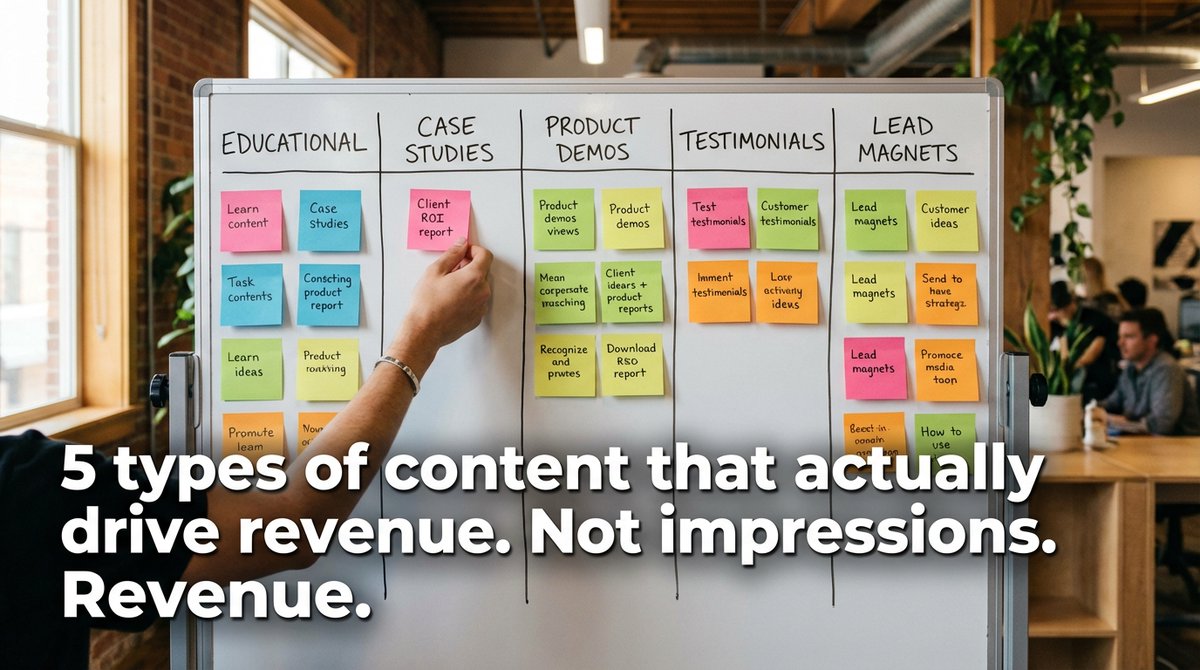
Most marketing teams measure content by impressions. Here are the 5 types that actually move the needle on revenue. I've tested all of these at ClickUp and across dozens of companies I advise. 1. The "I switched from X to Y" story. Not a product comparison. A customer telling their own story about why they switched. These convert better than any ad because the prospect sees themselves in the story. Find your best customers and help them tell their story publicly. 2. The how-to that solves a workflow problem. Not "how to use feature X." Instead: "how to run a marketing sprint in 2 weeks." The product is a tool inside the solution, not the hero. The search volume is in the problem, not your product name. 3. The contrarian take your CEO actually believes. Not manufactured controversy. Real opinions from the person building the product. "We think project management is broken and here's why" performs 10x better than "introducing our new dashboard." Founders have opinions. Let them share them. 4. The teardown. Pick something your audience cares about and break it down publicly. "We analyzed 500 landing pages and here's what the top 1% do differently." This builds authority faster than any other content type because you're demonstrating expertise, not claiming it. 5. The internal playbook made public. Share how your team actually works. Your sprint process. Your hiring rubric. Your content calendar. People are starving for "how does a real company actually do this" and almost nobody shares it. The companies that do build enormous trust. The common thread: none of these are about your product. They're all about your audience's problems. The product shows up naturally when the content is genuinely useful.
Best Tweets by Topic