Authenticity, personality, and distinctiveness
A memorable brand reflects a real person: lived experiences, opinions, quirks, story, and voice—not generic frameworks or a manufactured persona.
36%
Best tweets about Personal Branding
A curated collection of the sharpest, most-shared X posts about personal branding—saved so you do not have to dig through the timeline yourself. Updated weekly.
Building a name worth following—what worked, what felt fake, and the line between them.
Original Xholic analysis
The conversation frames personal branding as making an earned reputation visible: clear positioning, real proof, and sustained presence are recurring priorities. Its sharpest warning is against performative output—polished authority, generic advice, or public narration that outruns the work beneath it.
68% of posts
All-time engagement
62% of posts
Published in 90 days
Conversation map
A memorable brand reflects a real person: lived experiences, opinions, quirks, story, and voice—not generic frameworks or a manufactured persona.
36%
Making expertise discoverable creates inbound jobs, clients, partnerships, recruiting opportunities, and career-pivot options.
36%
Personal branding is framed as the cumulative reputation people form from reliable value, behavior, credibility, and the feeling attached to your name.
34%
Real work, skills, results, credentials, and documented experience are the foundation; polished content without substance is performative.
28%
Brands grow through repeated posting, learning from response, and sustained presence—especially through the quiet early period.
26%
Posts debate the value and risks of sharing the learning and building process publicly: honest documentation can create proof, while performative narration can distract from execution.
24%
Define a narrow audience, concrete outcome, distinctive strengths, and recognizable point of view rather than trying to appeal to everyone.
22%
Content should address the target buyer’s needs through coherent pillars, useful insights, stories, and platform choices—not algorithm-chasing or indiscriminate posting.
18%
Tone and stance
Performance benchmark
Posts with media make up 32% of this collection. Their median all-time score is 9.95, compared with 5.56 for text-only posts.
Format mix
Consensus and debate
Shared view
Posts repeatedly define the goal as being recognized and trusted by the right people, rather than merely accumulating followers or chasing virality.
Shared view
Credibility is presented as grounded in work, experience, skills, results, and context; presentation alone cannot supply a reason to trust someone.
Shared view
A narrow audience, concrete outcome, and distinct point of view are framed as more memorable than broad claims designed to appeal to everyone.
Shared view
Writers describe early invisibility as normal and argue that repeated publishing, learning from responses, and patience build familiarity over time.
Open debate
Some posts attribute job offers and inbound opportunities to documenting work publicly, while another argues that narrating the work can become a substitute for shipping it.
Open debate
One view urges creators to show personality and lived experience; another warns that “be yourself” becomes ineffective when content ignores what an ideal client values.
Open debate
Posts describe visibility as a source of leads and opportunities, while critics argue that posting can feel productive while delaying pricing, outreach, sales, and execution.
What performs
Story posts had a 12.767 median all-time score, above opinion posts at 5.336; case studies had the highest supplied format median at 13.594. The highest-scoring outlier was a story-format post about early growth and consistency.
Case studies recorded a 13.594 median all-time score, while opinion was the most common format at 62% and had a 5.336 median score.
Posts with media had a 9.95 median all-time score versus 5.56 for text-only posts. One case-study post describes a gardening video followed by an inbound brand inquiry.
Consistency, practice, and long-term compounding had an 11.857 median all-time score, higher than the other supplied theme medians.
Statistical standouts
Creator landscape
The five most represented creators account for 20% of the selected posts.
1. Alexa | Startup founder
@alexabelonix
2 posts
2. Avijeet | Personal Branding Strategist
@avijeet_writes
2 posts
3. Raksha Devi
@Rakshaweb3
2 posts
4. Sarah 🦕
@SarahLevinger
2 posts
5. Mubbu
@wizofecom
2 posts
6. FinegirlDami🧚🏾💜
@_FinegirlDami
1 post
avijeet_writes describes career changes, viral posts, job offers, and work with more than ten personal-brand clients. Rakshaweb3 emphasizes specific positioning and describes a client inquiry after months of consistent posting.
Creators argue that a brand should reflect actual personality, experiences, and point of view; automated comments and copied styles are framed as diluting that recognizability.
The evidence set covers 45 creators across 50 tweets, and the top five creators account for 20% of placements.
Since the previous snapshot
Themes, sentiment, stance, and post format are classified per tweet. All counts, shares, medians, creator concentration, freshness, and performance comparisons are then calculated directly from the published snapshot.
Xholic's all-time score compares engagement while accounting for reach, post age, and creator consistency. It is used for relative comparisons within this collection.
This report analyzes the exact 50-post snapshot shown below. AI identifies editorial categories and drafts explanations; all statistics are calculated from the snapshot, and every narrative claim is checked against cited posts before publication.
Best Personal Branding tweets
Ranked 01–50

@JamesMalsawm ·
Nobody cares about your content at first. When I started writing on X, no one noticed my content Low views. Few likes. No replies. It felt embarrassing when I think back. But here’s the truth: No one knows you yet. Trust takes time. You don’t build a brand in 30 days. You build it in quiet seasons. Every post is a brick. Most people quit before the wall is visible. If you’re serious about personal branding: Keep writing. Keep showing up. Keep your message clear. Attention comes later. Skill comes first.

@JokerVerse01 ·
Building in public is one of the most overrated ideas startup culture ever produced. It was supposed to be about radical transparency. Somewhere it became a content strategy for people who would rather post about building than actually build. I've done it myself. Announced the idea. Shared the vision. Documented the journey. The likes rolled in. The product didn't. The audience grew and the thing I was supposedly building quietly stopped moving. Every milestone tweet, every "lessons learned" thread, every "we just hit X users" update stopped being accountability and became personal branding dressed up as vulnerability. The builders who changed things weren't narrating their journey in real time. They were heads down, shipping. Somewhere along the way we confused audience-building with company-building, and the internet applauded because it made great content. Nobody ever built something great by narrating how they'd build it. @RallyOnChain What's something you finished before you told anyone about it?


@avijeet_writes ·
I changed my career path thrice in the last six years. I graduated with an IT engineering degree in 2021. Started my career as a .NET developer. Left that job within six months. Started preparing for UPSC for another 1.5 years It didn't work out. I started writing on Twitter. Went viral multiple times. Got multiple job offers from coaching institutes and startups. Joined a startup as a founder's office role and helped them build their entire product line, helped them scale, and built everything from scratch. Side by side, I started learning personal branding. Worked with more than ten clients, which included founders, creators, and coaches; helped them build an authority-led personal brand; and helped them in generating organic leads for their businesses. If you are also stuck in your career, let me tell you: you are just one decision away from changing your entire life.


@King_Vimalesh ·
how i think about personal branding is probably different from most people. i don't measure success by followers. i measure it by recognition. when the right person sees your post, they should immediately think, "this is exactly who i need." that's why every piece of content should do one of three things: • demonstrate expertise • reinforce positioning • build trust virality is optional, but recognition isn't.

@AunySillyMe ·
I started posting on X about crypto in 2021 because that was my job Being a content creator was never in the plans somewhere in between.. I started noticing what kind of content performs well what made people stop scrolling what got ignored so I started sharing what I was learning people started listening then asking questions then calling me an expert. I never chose personal branding or content strategy as my profession it found me Share what you know You never know what people find valuable You also never know who you can help 🌹


@Rakshaweb3 ·
The biggest myth in personal branding is that you need to be interesting. You don't. You need to be specific. "I help founders grow" is interesting to no one it's forgettable because it could describe ten thousand accounts. "I help SaaS founders turn cold followers into demo bookings without paid ads" is specific enough to be remembered by the three people in your feed who actually need it. Specificity is the whole game. Everything else is decoration.

@Extrastiv ·
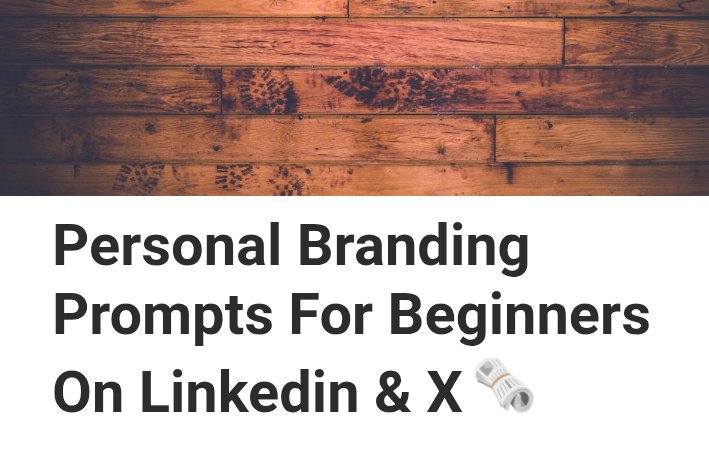
PERSONAL BRANDING PROMPT FOR FREELANCING NEWBIES ON LINKEDIN & X 🗞️✍🏿 ↪ Take a screenshot of your bio. ↪ Copy 10 each of your top performing posts on both platforms - especially the ones relevant to your niche. ↪ Upload it on Claude and insert this prompt: "I am a [your profession/title - e.g. content marketer, SaaS founder, career coach] who helps [your target audience — e.g. early-stage startups, 9-5 professionals, female entrepreneurs] achieve [specific outcome - e.g. consistent clients, career pivots, revenue growth] through [your method/approach - e.g. content marketing, storytelling, systems]. I have uploaded my LinkedIn and X bios + 10 top-performing posts from each platform. Do the following: 1. AUDIT MY POSITIONING Based on my bios and posts, tell me exactly how a stranger would describe what I do and who I help. Be brutally honest. Flag any confusion, contradiction, or vagueness. 2. IDENTIFY MY CONTENT PILLARS From my top posts, extract the 3–4 themes I keep returning to. Label them clearly. Tell me which one resonates most based on engagement patterns and specificity of language. 3. FIND MY SIGNATURE VOICE Pull 5 phrases, sentences, or structural patterns from my posts that sound uniquely like me. These are my voice fingerprints. List them so I can write more content that sounds like this intentionally. 4. SPOT THE GAPS What topics, pain points, or content formats is my audience likely expecting from someone in my niche that I am completely missing? Give me 5 specific gap opportunities. 5. REWRITE MY BIO Give me two versions of my bio for each platform. One that is authority-first (leads with credibility), one that is outcome-first (leads with what my audience gets). Keep it under 160 characters for X and under 220 words for LinkedIn. 6. GIVE ME A 30-DAY CONTENT PLAN Based on my niche ([insert niche]), audience ([insert audience]), and content pillars you identified, give me a 30-day posting plan. Mix educational, conversational, and conversion posts. Include specific post angles, not just categories. 7. WRITE MY FIRST 5 POSTS Using my voice fingerprints, write 5 ready-to-publish posts. Two for LinkedIn (long-form), three for X (punchy, single idea). Each post should speak directly to [your audience's biggest pain point — e.g. inconsistent income, fear of niching down, imposter syndrome]. My goal is [your specific 90-day goal — e.g. to land 3 new clients from content, to grow from 500 to 5,000 followers, to launch my first digital product to my audience]. Treat me like a client who is paying you to fix their personal brand from the ground up. Do not give generic advice. Everything must be specific to what you see in my content." Save this. Use it every 90 days. I hope this helps someone🤞

@kingblissweb3 ·
GN CT One of the biggest misconceptions about personal branding is that success comes from doing more. More platforms. More content. More trends. More everything. In reality, a lot of growth comes from knowing what to ignore. Every time you copy someone else's style, you make it harder for people to remember yours. Every time you chase a trend that has nothing to do with your niche, you weaken the message you're trying to build. Every time you post just because you feel pressured to stay active, you risk replacing quality with noise. A strong personal brand isn't built by trying to be everywhere or appeal to everyone. It's built when people consistently associate your name with a specific kind of value. That's why the most recognizable creators don't always create the most content. They simply create content that aligns with what they want to be known for. Building a personal brand isn't about adding more to your plate. It's about removing the distractions that pull you away from your purpose.


@Hartdrawss ·
a tweet at 417 followers landed me a $30,000 job offer. that was the moment i realised personal branding wasnt a strategy. it was infrastructure. 18 months later : - 20,000 followers - $7,500+ from brand deals and X payouts - 15M+ impressions on X - DreamLaunch built to $120K i didnt start with a content calendar. Harkirat from 100xdevs told everyone in a cohort to post. so i posted. what i was learning, what i was building, what was working, what wasnt. the accounts i watched fail were chasing trends or optimising for reach. the ones that grew were just people going deep on something real and writing about it consistently. live an interesting life. document your craft honestly. the audience follows the person, not the content.


@MaximilianHa4 ·
AI didn’t destroy personal branding. It finally destroyed unearned authority... Anyone can: Sound experienced Produce 30 posts before lunch Publish a polished framework now The advantage moved from sounding intelligent to being believable I see this as one of the biggest chances for people who care about what they do!

@wizofecom ·
Personal branding is one of the most misunderstood games in business. Most people are trying to become famous. When the real goal is becoming the person people tag when someone asks who to listen to. Founders start personal brands with all this experience and think “oh, people should listen to me.” But for the average scroller, it reads like unsolicited advice. → You share no credentials → Give no reason for someone to listen to you → And get ignored. You forget to give any context. Before anyone will listen to any post that’s a part of your strategy, you need to share a reason through your story • Who you are • What you've built • What you've suffered for The reputable content has to come first. Then the technical advice earns its audience after. It’s a compounding game, and it's slower than most people want it to be. But when you get there and you will if you stay consistent, then the right people start coming to you. Build the story first. The authority follows.

@AhsanJaveriya ·
I have 48,130 followers on LinkedIn. If I had to restart my LinkedIn growth from zero today, I’d ignore a lot of the advice I used to take seriously. I wouldn’t: 1. Trust every “secret” from LinkedIn gurus. 2. Believe every perfect growth screenshot. 3. Post daily just to feed the algorithm. 4. Spend hours making every post look perfect. 5. Chase viral content and ignore real conversations. 6. Write like a company instead of a person. 7. Panic when a good post gets low impressions. 8. Keep changing my content strategy because growth feels slow. A lot of personal branding advice is just people turning their own experience into a rule for everyone else. What actually helped me build an audience was much simpler. I stayed consistent. I paid attention to what people responded to. I improved my content over time. And I stopped trying to sound like everyone else. LinkedIn growth can feel slow in the beginning. That doesn’t always mean your strategy is wrong. Sometimes your personal brand just needs more time, and more of you in it.

@LawrenceDCodes ·
After watching an amazing resume review sesh by my man @Dthompsondev, I had some thoughts around personal branding. We keep throwing that phrase around and in many cases I think it’s not working for people because they're putting the cart before the horse. This won’t be a long essay, you can grasp and implement this right now. Think this way: 2 elements to personal brand: a. What you’ve done and can be trusted to do b. How you let people know. Too much focus has been on the b and not the a. You can write whatever bio you wish, get the most professional headshot, banner, have AI post 5 times a day on LinkedIn and Twitter and sell the course too. If you’re not doing anything and can’t be trusted to do anything, you don’t have brand management. You have a billboard with no legs. Focus on the a: What is it that you’re known for. I’m not going to lie and say every interview I have is 10/10 perfect but the majority of the time, the things I want to be known for are so readily accessible and have been catalogued over long enough period of time, the resume itself (or LInkedIn or Github) is almost secondary. The proof is in the pudding. If you suspect personal branding is a problem, I’m willing to bet 80% chance it's not how you're presenting but what you have to present. There’s a gospel song from back in the day “May The Work I’ve Done Speak for Me’. That’s what you want. Do more work. Spending hundreds to reformat a resume of bullet points representing no accomplishments is pure folly.

@_FinegirlDami ·
5 Tips for Positioning Yourself as an Expert in Your Niche 1. Stay intentional about improving your knowledge and sharpening your skills. You can only build expertise through consistent learning and practice. 2. Share what you know through writing, speaking, and content creation. Visibility builds authority when your posts consistently help others. 3. Build a professional online presence with a strong portfolio and good social media profiles that show your credibility. (If you don't know how to build your portfolio I shared the details in my newsletter.) 4. Engage with other experts and creators in your space. Meaningful relationships strengthen trust and expand your influence. 5. Let the quality of your work speak for you. Consistently delivering value builds trust, reputation, and long-term loyalty.

@ItsMeBenChan ·
“Be yourself” is the WORST personal branding advice if you want to grow fast. Everyone tells you to be yourself and be authentic online But this leads to people: - Tweeting inside jokes only 3 other people understand - Posting photos of their morning coffee - Reposting random movie quotes If you want a personal account, do what you want. But if you actually want to grow fast, build authority, and sign clients, you’ve got to approach social media from the lens of a consumer. What does your ideal client care about? What will they be interested in? Use that as a filter for your personal brand.

@Param_eth ·
This X account makes ~$44k/month from X subscriptions: > be Kevin Xu > broke, unemployed and two months away from homelessness. > starts trading stocks with just $35k in 2020 > goes all in on high conviction stocks > turns $35k into millions within a few years > publicly shares every portfolio milestone on X > works at Google/YouTube and Stripe before all this > Stanford graduate > launches AfterHour, a social trading app > Later built Alpha AI, an AI tool for investors > grows huge audience on X by posting trades and market ideas > now makes ~$44k/month from X subscriptions > portfolio crosses $11 million "He now makes more money sleeping than at his first job." Here's a lesson to learn: - Trade in public - Build personal branding in public. NFA

@wizofecom ·
My best friend does $1.5M/year selling real estate. Two years ago we bought our first AMGs together in the same week, and then took a photo with them side by side. He's not in tech, SaaS or even anywhere in the "money online" world. Me and him grew up together. He graduated from the best business school in the country, while I dropped out in my first year. He built a personal brand on IG, I built one on X. We have completely different paths but follow the same formula and apply it daily. We both show up every day, share results, and build trust in public. Now he's THE guy in his space. When people think of real estate in his niche, they think of him. I see people limit themselves by believing that personal branding only works for online businesses or it's some X-specific game for info guys / SaaS founders. But I see niche authorities building a community of trust buyers across real estate, dentistry, fitness, law, consulting, construction, recruiting, finance. Authority is authority.
@Rakshaweb3 ·
The day everything changed for me on X wasn't when I went viral. It was when a founder slid into my DMs and said: "I've been reading your content for 3 months. I trust you. Can you help me?" I hadn't pitched anything. I hadn't run ads. I hadn't even hit 1,000 followers. But I had shown up. Consistently. Honestly. Unapologetically. That's what personal branding actually is , not aesthetics, not hooks, not threads. It's making a stranger on the internet trust you before they've ever spoken to you. Build that. Everything else follows.

@princess_yfe ·
I know engineers who are technically brilliant and completely invisible That combination doesn't get you as far as people think Let me tell you what I've learned firsthand Skill gets you competent But personal branding gets you found Two engineers can have the exact same ability One documents their journey publicly One doesn't The one who shows up gets the DM, the opportunity, the invite to speak, the job offer before it's even posted It's not because they're more skilled, but because they were visible when it mattered I got a full-time job before I graduated because people already knew what I was capable of before they needed to hire someone It wasn't because I was the best in my class And that didn't happen by accident I documented my journey Shared what I was building Stayed consistent even when nobody was watching yet The beautiful thing is your skill is the foundation But your personal brand is what makes people trust that foundation before they've even worked with you So, my advice to you is to start documenting today Not when you feel "ready" You've got this And I'm rooting for you 👑

@naturallyshannn ·
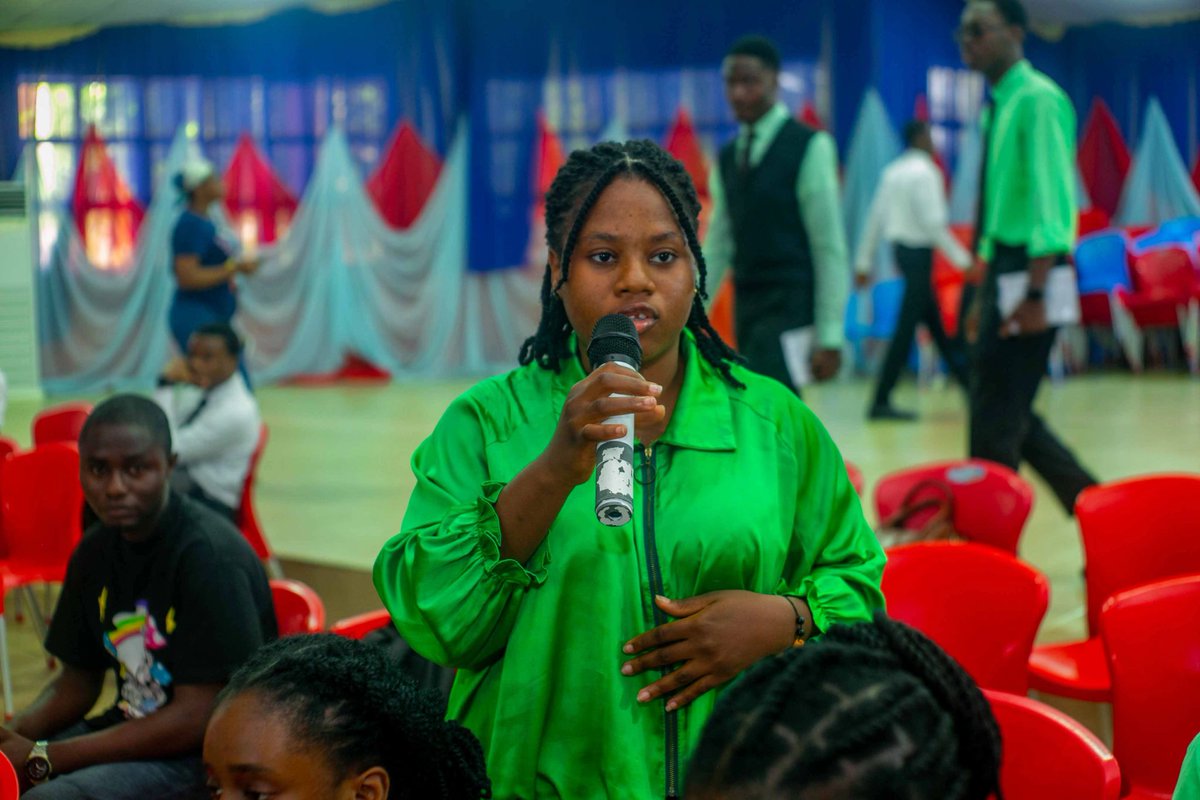
If you’re struggling with your personal brand, here’s what to do:👇 - turn the camera on, tap for a few mins each day about something you care about. Could be UGC related, doesn’t have to be - write down ALL the things you are interested in and start posting those things. Love makeup or skincare? Post your grwm routines. Love fashion? Show us your fits! Love outdoor activities? Show us what you’ve been up to lately! - post with AUTHORITY! When you post about UGC related things, come from a perspective of you being an expert. Got a 5 star review? Turn that into a 15s post with some broll of you working behind it. A concept or hooks performed well? Share WHY it did. - Along with that, speak directly to brands (they are your target audience, not creators, unless you’re a UGC coach) so direct your content to filter brands to reach out to you via email (I did this in a recent post by showing my hair and putting text on screen that said “waiting for all the hair brands to work with me”) - tell YOUR story! Where did you come from and where are you now? How did you get there? What struggles, successes, and challenges did you face? People want to get to know YOU and so do brands! Personal branding is overcomplicated so much but I’m telling you, it doesn’t have to be. Be yourself, show your personality, tell your story, and target brands you want to work with! #ugccreator #ugccommunity #ugccreators

@isacpetruu ·
if @nikitabier really gave us the 2023 algo back, there's a TON of money about to be made on X... content gets pushed to mutuals more meaning we are about to see a shift in the meta here's a couple of predictions: (from someone who lived both 2023 and 2026 twitter) 1/ the perfection game is dying pre-update, your only choice was optimizing for perceived value as much as possible your content was being shown to absolute randoms meaning you had to look your absolute best 24/7: > big claims > perfect case studies > flawless content with shock value now it won't matter as much because your mutuals see your content more, you won't have to be so tense about pushing case studies which leads us into prediction number 2 2/ personal branding is back in 2023, only the most recognizable people with a REAL, standout profile were popping off when they dropped a long form or lead magnet it felt like your favourite youtuber dropping a long awaited video pre-update, this was all meaningless anyone could go viral if they got lucky, posted a lie or some made-up story that never happened now you will need to stand out in order to get more genuine mutual connections 3/ communities will be back 2023 was peak community times certain people had their own audiences and were always: > backing you up > engaging with your content > recommending you under other people's posts this was already doing a ton for your trust since then people shifted from genuine connections to virality everyone is too focused on going viral now that content is pushed more to mutuals, building an engaged community will be easier than ever meaning selling to the right audience won't rely on constantly spamming "viral" content we might finally see the small creator selling high ticket again one of my clients already signed 2 high ticket deals off X and he barely has 200 followers 4/ initial engagement will matter more for virality until now, a post could be flat for 24h then randomly get picked up by the algo in 2023 it was different because your mutuals were the first to see your content, the performance of the post heavily depended on initial engagement now we might see a combination of that meaning a post can either go viral via initial engagement OR if it gets picked up by the algo (or both) 5/ small accounts finally get another chance to grow if you're a successful B2B agency owner, you are already halfway there you have the war stories, the results, the receipts the only thing missing was distribution and that's exactly what just changed the mutuals update will heavily promote personal stories if you've been in the trenches and you know what you're talking about, the right people are certain to find you first fully manual long form in a long while might do more of these if people like em but if you thought this was valuable, just wait till i drop the detailed guide on how to print your first $10k off X with the new algo this will be great whether you're just starting out or if you're already printing with your business but didn't nail X down yet stay tuned :) ~ Petru


@AndrewWriteCopy ·
Too many DMs I get are from the equivalent of the fat personal trainer. Don’t be the: • Social media growth expert with 17 followers. • Lead gen expert who can’t generate leads for himself. • Personal branding expert whose timeline’s full of generic platitudes. No one starts off as an expert, but try to demonstrate you have a rough idea of what you're doing.

@veemeta ·
Personal branding isn’t about manufacturing a personality, it’s about making your reputation easier to recognize. That’s a much stronger foundation than chasing attention 💯 Every interaction leaves a receipt. People may forget your words, but they rarely forget how consistently you acted over time💪 Your reputation is simply the collection of those receipts.
 Watch video

@misfitwriter_ ·
Personal branding ≠ posting content "I've been posting for 6 months... ....Now, Clients will come eventually." Wake up! You've been saying that for Two Years. The Reality? You're using content to delay making real business decisions. Because posting is safe. Building a business isn't. Content lets you feel productive... Without forcing you to commit. No pricing decisions. No outreach. No sales calls. No risk of hearing "no." Just another post tomorrow. Most people don't fear losing money. They fear discovering everyone who told them "don't start" was right. So they stay Half in. Half out. Busy enough to feel like an Entrepreneur. Safe enough to avoid becoming one....

@acagamic ·
POV: AI-native expertise in 2026. Every few weeks there’s a new prompt pack, a LinkedIn tactic that takes the edge off your judgement, or the inevitable “Experts are obsolete” take. But let's be real for a second: 1. Serious buyers will always search for visible expertise 2. AI-native expertise is mostly better thinking in public 3. Experts who ignore AI are giving juniors the room 4. Personal branding is just reputation made visible 5. Posting daily works. Automating slop burns trust 6. ChatGPT can’t replace 15 years of judgement 7. Voice clones don’t create a point of view It's getting louder. Noisier. But the core work hasn’t changed since the 2010s: • Build trust in public. • Write with rigour. • Think clearly. Stay boring and keep building visible expertise in public.


@kaitodan ·
They lied to you about Personal Branding. They made you think you need to be a billboard, to look good and look smart. They never told you to be yourself. Zlatan is proof that you can be yourself if you are good at what you do.
 Watch video

@ProofofIntern ·
you’re making content harder than it needs to be. you keep treating ideas like something you constantly have to think of or come up with something new each time. so you sit there staring at a blank post draft trying to come up with a clever angle, a stronger hook or a useful lesson that makes you sound like you know what you’re doing. that’s why the post comes out dead. because it didn’t come from anything real. the better post you had already happened to you. something stupid a founder said, something you staunchly disagreed with, the thing that annoyed you more than it should have, etc., etc. that’s what actually gets attention. and this is where you get it wrong with the whole 'personal branding' thing. you think the job is to keep proving you’re useful. so you keep posting your little advice, neat little lessons, clean little frameworks and safe opinions that offend no one and stick to no one. but being useful isn’t enough, especially when everyone else is also trying to be 'useful'. the point of a personal brand is not to show people you can write tips, it’s to make them feel like they understand how you see the world. that comes from your actual life. pay attention to your own week and stop trying to sound like a content machine. because when your post comes from your life, it gives people something to remember. but when it comes from your head, it sounds like another person trying to look smart on the internet.

@SarahLevinger ·
@natelagos likes steak.🥩 @DenneyDara likes fashion. 🧥 @herrmanndigital likes Olive Garden.🍝 I know this, because they post about it a lot on their socials (along with some of the best strategy, growth, and ad content on the platform.) Anytime I see a steak now, I think: Nate. Anytime I see an Olive Garden, I think: David. Anytime I see a really good outfit (specifically a blazer) I think: Dara. This happened slowly over time, but over the course of a few years my brain has internalized their “brand” into my world, and now I recall them outside of work a few times a week. And this is a problem… Because I’m highly invested and loyal to these personal brands, but I struggle to find any affinity towards DTC brands. 🤔 I wanna know: What does True Classic like? What does Huel like? What does Warby Parker like? What does Bloom like? What does Bombas like? What does Ritual like? Outside of the obvious (they’re committed to solving a pain point)…I couldn’t tell you who they are, I can only tell you what they do. I think I just realized how sterile brands have become. We’ve lost the ability to create brands that feel like someone…not something. The gap between corporate branding and personal branding in the modern attention economy is a deep blue ocean.

@neeya_o ·
People ask why I transitioned into personal branding and strategy. The answer is simple: I experienced the power of it myself. When I started building my personal brand, I wasn’t trying to become a strategist. I was just sharing what I was learning, documenting my work, and building in public. Over time, I noticed something. I wasn’t applying for as many opportunities anymore. Opportunities were finding me. People already knew my work before we ever spoke. My personal brand was doing the introduction long before I did. That completely changed how I think about visibility. Then I started talking to more professionals, founders, and business owners. The pattern was always the same. Brilliant people. Great work. Almost no online presence. Some didn’t know where to start. Others simply didn’t have the time. That’s when everything clicked for me. I wanted to help people communicate the value they already bring and become visible for the work they’re already doing. That’s what led me into personal branding and strategy. One thing I’ve learned: Sometimes the opportunity isn’t missing. Sometimes your visibility is.

@zakbrahmbhatt ·
One personal branding post changed the conversation. Earlier this week, I shared a gardening video simply because it's something I genuinely enjoy. It wasn't sponsored, it wasn't a pitch, and I wasn't trying to get a brand's attention. I was showing up as myself and sharing another layer of who I am. A few days later, I got an organic inbound email from a household name asking me to create a gardening concept for them. We're still ironing out the details, but it's shaping up to be a four-figure partnership. Moments like this are why I'm so invested in personal branding. People often think personal branding is about followers or vanity metrics. I see it differently. Every post is another data point that helps brands understand what you're capable of before you ever step into a discovery call. The opportunities that change your business rarely come from the content you post for brands. They come from the content that shows brands who you are. #ugc #ugccreator #ugccommunity

@dreamer_ilya ·
How personal branding works in Crypto Twitter A lot of people in CT is obsessed with "personal branding" right now, so I decided to sit down and see how it actually works. In 2026, this is no longer just casual blogging - it is a full-scale business process. A real Web3 profile requires a stack of hard skills: product marketing, basic design, copywriting, deep data analysis. Here are the 6 fundamental building blocks: 1. Tweet Credibility This is the foundation. A trust metric earned exclusively by publishing high-value, precise data like network analytics or on-chain metrics. You cannot buy it - using bots or engagement farming instantly kills your reputation among a tech-savvy community. 2. Narrow Niching A successful profile is never built on "crypto in general" - you have to niche down. Top creators choose hyper-specific sectors: smart contract auditing, DeFi liquidity optimization, Layer 2 architecture. 3. Content Strategy The system relies on 3-4 Content Pillars - core themes that make your output predictable and valuable for the reader. Growth is driven via a multi-tier funnel: from high-reach viral posts (Awareness) to deep technical research (Trust). 4. Cultural Code and Voice To be an insider, you must adopt the native CT slang, use memes, join the active debates of the day. But the most critical part is humanization: showing your learning process, admitting mistakes, sharing your progress in real time ("build in public"). 5. Consistency and Presence To maintain audience retention, you need a constant presence in the timeline. This trains your audience to build a habit around your content and publication schedule. 6. Security and Compliance A Web3 personal brand comes with strict operational security requirements. You must protect your account and maintain full disclosure regarding any promotional or partner ties. Why does this matter? A personal brand is the highest-yielding career asset in Web3. A strong profile differentiates you in any market condition, turning your account into a 24/7 inbound funnel that drops job offers, allocations, partnerships straight into your DMs. I am just at the starting line of this journey, but the process is officially live in runtime. Keep building. ⚙️
 Watch video

@yasminekho ·
The biggest personal branding mistake: Trying to look successful before becoming useful. The internet can feel the difference. You don’t need to pretend. Audience can watch 'incompetence to competence' happily but they’ll be pissed to know you are pretending to be competent. You need to build, learn, document, and share it online. That’s the brand.
@SarahLevinger ·
@natelagos likes steak. 🥩 @DenneyDara likes fashion.🧥 @herrmanndigital likes Olive Garden. 🍝 I know this, because they post about it a lot on their socials (along with some of the best strategy, growth, and ad content on the platform.) Anytime I see a steak now, I think: Nate. Anytime I see an Olive Garden, I think: David. Anytime I see a really good outfit (specifically a blazer) I think: Dara. This happened slowly over time, but over the course of a few years my brain has internalized their “brand” into my world, and now I recall them outside of work randomly throughout the week. And this is a problem… Because I’m highly committed to following these personal brands but I can’t seem to find that same affinity for any DTC brand.🤔 I wanna know… What does True Classic like? What does Huel like? What does Warby Parker like? Other than the obvious (their commitment to solving a pain point) …I don’t know. 🤷♀️ I think I just realized how sterile brands have become. The difference between corporate branding and personal branding in the modern attention economy is a huge blue ocean.

@jappleby ·
I'm laughing at myself so hard rn. I'm a ~personal branding expert~ who's built two personal media businesses with over 500,000 followers... and somehow missed the most basic branding advice. To quote one of my teammates: "You a distinctive ass looking motherfucker" I am a gigantic 6'5", with big cheeks that cover my eyes when I smile. Very happy-go-lucky, complete goofball, but I know how to share expertise while still being silly. But I built my first 250k followers through writing, and the next 250k with voiceover videos with long shots of me. Both are strong accomplishments, especially considering they're in two totally different niches with two totally different creative approaches. But the next phase of my biz & the thing that'll built true longevity for me is more of myself on camera, yapping. Not typical yap videos, but figuring out my personal approach to the format. I've held out because I don't really know video, production, or visual framing, buttt those are bad excuses. Time to figure it out.

@_SouthpawJosh ·
11,000 LINKEDIN followers. 😄 WOW. This is the exact follower count I had when LinkedIn took down my previous account. An account with exactly 11,000 followers. It hurt. I silently swallowed that pain for three months, and in March 2025, I started all over again. But this time, I made a decision. On my previous account, I had positioned myself as a freelance writer, especially since I started being serious with LinkedIn after I got my second job ever as an SEO writer for a blog back in 2022. Starting this new account in 2025, however, came with a different mindset. Between 2022 and 2025, I had learned a lot. I took courses, attended online seminars, read extensively, and invested heavily in my personal growth. That journey changed me. So instead of introducing myself as just a freelance writer, I repositioned myself as a personal branding strategist, someone who helps brands grow through storytelling. Today, it's been one year and five months of consistently building this new account. And every metric tells me I made the right decision. ✉️ My profile views crossed 1,000+... something I never achieved on my previous 11k account, where I struggled to get past 100. ✉️ My impressions crossed **100,000+... compared to the 3,000–5,000 range I used to celebrate. I also started posting videos about personal branding. Ironically, on a platform many people still see as "just for writing," those videos performed really well. Recently, , I even received a voice note from this user who commented on of the videos who said that whenever she hosts her next LinkedIn talk session, she wants me to be one of her speakers. That moment felt like confirmation. Like my rebranding had finally spoken for itself. But here's the interesting part... This didn't happen by luck. ✉️I invested my NYSC savings in taking professional studio photos after fighting with that thought a whole lot. ✉️ I optimized my profile. ✉️ I intentionally rebuilt my brand from the ground up. And maybe... That's the real message behind rebranding. Sometimes, you simply outgrow the version of yourself that people know. Sometimes, growth demands that your brand evolves too. The mistake many people make is asking: "Will this new audience accept this new version of me?" That's a valid fear. But if you're genuinely confident in your craft, you'll attract the people you're meant to serve. The internet is too big for you to think you've run out of people. YES, many will scroll past your content. But many others will discover you for the first time. Some will stay. Some will recommend you. Some will become clients. Some will become friends. So if you've been thinking about rebranding but fear what people will think... Maybe this is the sign you've been waiting for. Move on way from that stuck ground you've been on, learn, relearn, & build the brand that reflects who you've become, not who you used to be. And as always... Thank you for coming to my T€D Writes. ✍🏿 #tedwrites #linkedinprofile #socialmediatips #linkedintips #personalbranding


@collin_ruth89 ·
I started monetizing my personal brand 1.5 years ago and have made $500k from it since then (and it’s accelerating). Here are some things to think through: **What is your main goal with your personal brand?** The main benefits of a personal brand are “The Four R’s”: 1. Relationships 2. Revenue 3. Recruiting 4. Raising Capital Determine what your goal(s) are. **Build where your audience already consumes content.** If you build on the wrong platforms, your efforts are useless. I focus on X + LinkedIn because that’s where high-ticket B2B founders hang out (my target audience). I also don’t enjoy making videos and would much rather type something and press send. Doing something that drains your energy (for me, recording videos) won’t last long. **Stay consistent.** The BIGGEST reason people don’t succeed with building a personal brand online is because they stop doing it. “Life” gets in the way and content gets pushed to the bottom of the priority list. Make it a priority and keep it at the top. If you do it long enough, you WILL have success. But think in decades, not days. I drive dozens of sales calls every month from my personal accounts on X + LinkedIn. But it didn’t start that way. It takes time to build trust and authority. I always tell people “If you want leads in three weeks, go run paid ads. Personal branding might not be the right fit for you.” — I can nerd out on content / lead gen all day. Just send me a DM.

@DanielPriestley ·
Every time I come across a recurring problem in business, I turn it into a framework, I give it a name, and I let that name do the work. Digital transformation is a phrase a million people use, so we built the 24 Assets Method. Personal branding is a phrase a million people use, so we built the five steps to becoming a Key Person of Influence. The reason this matters is that frameworks travel. A framework can be taught, sold, licensed, written about, made into a book, turned into a course, referenced by other people. A loose collection of good ideas can't. It just sits in your head, getting re-explained every time someone asks. Name it, package it, and watch it become something people seek out by name. My friend Jodie Cook is running a free live workshop on building authority that attracts perfect-fit clients in the age of AI. She's one of the best examples of a Key Person of Influence I've ever seen: https://t.co/zjc0rQ4APu


@ralstoncrasta ·
you can't learn personal branding by watching videos about it. you learn it by posting, badly, over and over, until you can feel what lands. it's like football. juggling a ball 1000 times doesn't make you world-class. you get there on the field, under pressure, reading the play before it happens. that feel can't come from a video. so you can save 400 posts about hooks and buy every course. none of it compounds. you forget most of it by next week. knowledge you never use isn't knowledge. it's trivia. the founders who actually built a brand did it the boring way. they posted. badly at first. then less badly. then they started to feel which ideas would land before hitting publish. but here's what most people get wrong. reps alone are slow. a player who never watches film repeats the same mistake for years. the ones who compound fast pair reps with intelligence: study the game, spot the pattern, drill the right thing. posting is your time under tension. intelligence is your film room. do both, and 6 months of posts teach you what 3 years of guessing never could. you don't need more advice. you need reps, and a way to read the game faster.
@TheJobfather__ ·
Personal branding is not only for influencers. It can help experienced professionals rebuild visibility after a career gap, industry shift, or caregiving season. When people can find your thinking, projects, point of view, and professional interests online, it becomes easier for them to understand where you fit.

@sharyph_ ·
When the AI job displacement reports started dropping...Anthropic's research, Altman's admission that "nobody knows what to do about it". ..my reaction surprised even me. I wasn't scared. I was grateful. Not because I'm naive about what's happening. I'm not. The displacement is real. The timeline is accelerating faster than most people are publicly acknowledging. But I had already made the move...deliberately, not out of panic and I'm on the other side of it. Here's the version most people don't hear: A few years ago, I was leading a development team. Technical work, technical team, stable salary. By most measures, a good position to be in. But I could see the trajectory. The skills that made someone valuable in that world were becoming either automated or commoditized. What I knew how to do would eventually be done by a machine or outsourced to someone cheaper. Not because I wasn't good. But because the nature of that work was being structurally transformed. So I made a deliberate choice. I didn't wait for the disruption to reach me. I repositioned before I had to. I started writing. Built a personal brand. Focused on teaching what I knew about systems, AI, and building lean digital businesses. It was slower at first than I'd have liked. I sat at 3,000 followers for longer than I care to admit. But I kept building the foundation...the content systems, the newsletter infrastructure, the products...until it started to compound. Then it moved really fast. I'm not sharing this to flex. I'm sharing it because the AI displacement reports are going to trigger one of two responses in most people: paralysis or panic. And both of those responses waste the window that's actually open right now. The window is this: We are 12-24 months away from the point where repositioning becomes significantly harder. The people who move now...who build an audience, build an offer, build distribution they own...will be in a fundamentally different position than people who wait for certainty before acting. You don't need to quit your job. You don't need a perfect plan. You need a clear answer to one question: what can I teach, document, or systematize that is useful to a specific group of people? Start there. Build that. Don't wait for the displacement to make the decision for you. AI gives you speed. But you have to decide where to point it.
Best Tweets by Topic