Relationships, belonging, and trust
Earn loyalty through replies, recognition, generosity, honest communication, and consistent care for members and their relationships with one another.
60%
Best tweets about Community Building
Discover the best tweets about community building, covering belonging, engagement, events, moderation, member value, retention, and community-led growth.
Practical community design, member value, rituals, engagement, moderation, retention, operations, and measurable community outcomes.
Original Xholic analysis
Across 50 posts, community building is framed less as audience accumulation than as sustained member value, trust and participation. The practical advice is to welcome the right people, give them useful work to do together, recognize contributions and keep showing up. Contributors disagree on whether distribution or an early core comes first, while X’s move from Communities to group chats raises a concrete moderation-versus-continuity trade-off.
66% of posts
All-time engagement
52% of posts
Published in 90 days
Conversation map
Earn loyalty through replies, recognition, generosity, honest communication, and consistent care for members and their relationships with one another.
60%
Distinguish distribution from community, prioritize the right early members, nurture relationships over time, and sustain engagement beyond launches or hype cycles.
40%
Give members roles and ways to contribute, recognize their impact, and help them become organizers, creators, advocates, and community champions.
26%
Define manager and moderator responsibilities, establish rules and communication practices, coordinate outreach, protect quality, and handle spam or crises.
24%
Build around what members need: useful help, guidance, opportunities, feedback, and tangible progress rather than content or vanity metrics.
24%
Create recurring activities, accountability groups, events, and shared culture that give people a reason to return and do things together.
20%
Use member feedback, activity and retention signals, event outcomes, and small experiments to improve the community and demonstrate its value.
12%
Choose and structure chats, servers, forums, and subcommunities; adapt when platform features or moderation constraints change.
8%
Tone and stance
Performance benchmark
Posts with media make up 54% of this collection. Their median all-time score is 7.01, compared with 8.36 for text-only posts.
Format mix
Consensus and debate
Shared view
Replying, remembering members, sharing opportunities and communicating honestly are recurring alternatives to broadcasting updates. The goal is for members to feel known and connected, including to one another.
Shared view
Proposed designs include useful help, recurring accountability, visible roles and recognition. One founder describes live problem-solving and weekly check-ins; another argues that early membership, rituals and rewarded behavior deserve deliberate choices.
Shared view
Clear moderator roles, rules and communication channels help members know where to go and how to participate. Coordinated outreach and restraint around spam also protect the time and trust of neighboring communities.
Open debate
One post argues that projects must get people through the door before earning their loyalty. Another advises founders to cultivate early believers and a quality chat before large influencer campaigns. Both distinguish lasting relationships from raw exposure, but sequence the work differently.
Open debate
A critic calls private dinners and guest lists distribution dressed as community, judging a group by whether it persists beyond the event. Event organizers instead point to returning participants and existing online ties as signs that gatherings can deepen it.
Open debate
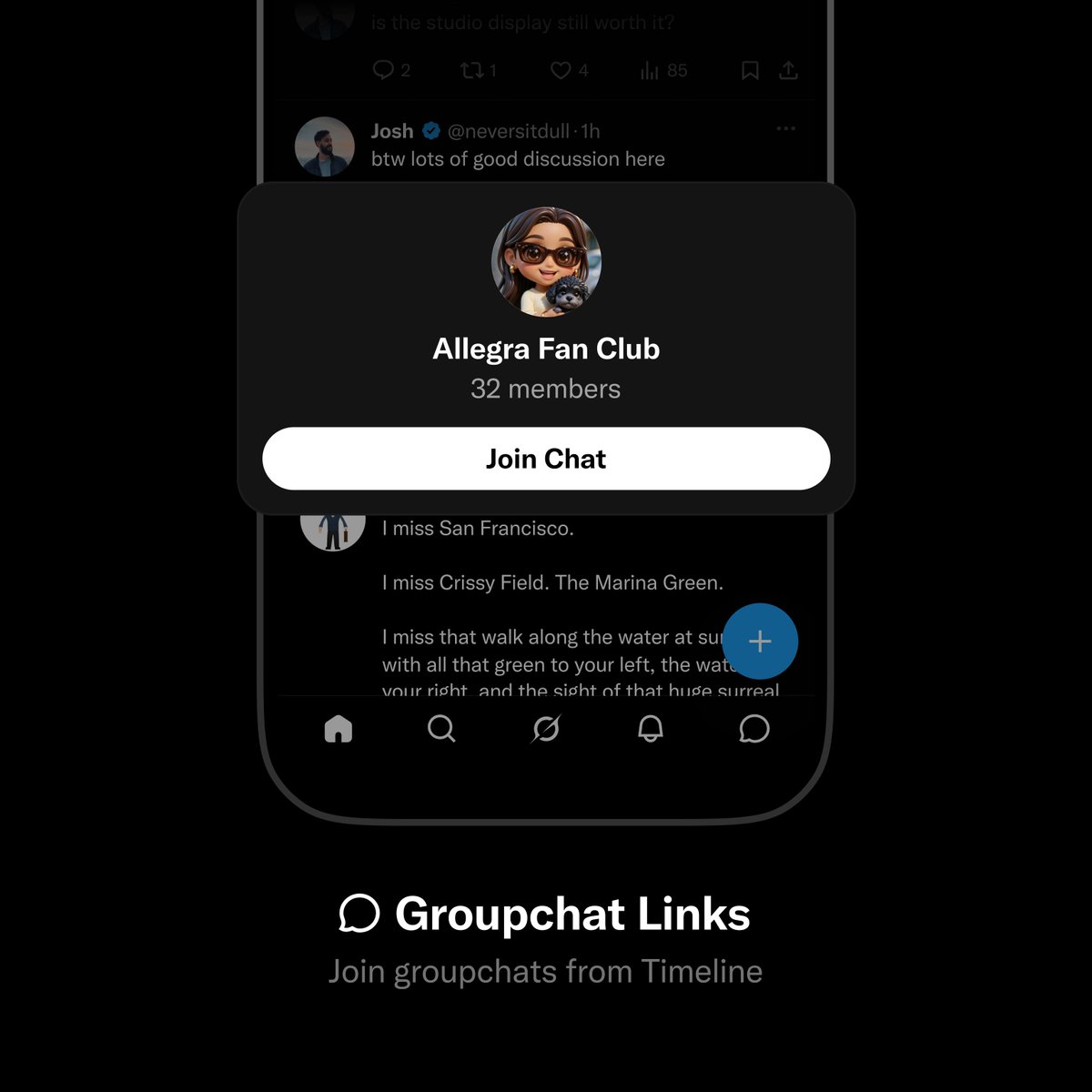
X announced joinable XChat links and the deprecation of X Communities, citing declining usage. A member argues that replacing a large, valued space with smaller chats leaves continuity and spam-control problems unresolved.
What performs
The supplied analytics put participation and member ownership at a 14.563 median all-time score, versus 2.56 for member value and 2.72 for measurement and iteration. These are performance comparisons, not evidence that participation causes engagement.
Tutorials have a 12.49 median all-time score; questions have 0.785. A founder-tip tutorial offers concrete choices about roles and rituals, while the cited question asks what members could do together.
The X product-change post scores 910.2, or 110.86 times the overall median of 8.21. Its scale warrants separate treatment from ordinary community-design advice; the analytics do not establish why it traveled further.
Statistical standouts
Creator landscape
The five most represented creators account for 20% of the selected posts.
1. Janet Machuka
@janetmachuka_
2 posts
2. Javi🥥.eth
@jgonzalezferrer
2 posts
3. k. dan
@kaitodan
2 posts
4. Lily yang
@lilyyang169
2 posts
5. Marianne
@mariannehere
2 posts
6. Terence
@terencebuilds
2 posts
Across two posts, @jgonzalezferrer connects early-member selection, roles and rituals with the less glamorous practice of answering replies and DMs. The supplied median all-time score for those posts is 48.37.
@mariannehere describes a path from helping a member to inviting and recognizing their contribution, then recommends documenting active members, response rates and results. The posts offer a way to connect member experience with operational evidence.
Since the previous snapshot
Themes, sentiment, stance, and post format are classified per tweet. All counts, shares, medians, creator concentration, freshness, and performance comparisons are then calculated directly from the published snapshot.
Xholic's all-time score compares engagement while accounting for reach, post age, and creator consistency. It is used for relative comparisons within this collection.
This report analyzes the exact 50-post snapshot shown below. AI identifies editorial categories and drafts explanations; all statistics are calculated from the snapshot, and every narrative claim is checked against cited posts before publication.
Best Community Building tweets
Ranked 01–50

@nikitabier ·
Today we're announcing two product changes for organizing communities on X: 1. XChat now supports joinable links for groupchats. Create a public link & share direct to Timeline. With support for 350 members per chat (and growing), Groupchat Links are the fastest way to bring people together on X. 2. Due to declining usage, we're deprecating X Communities on May 6. To migrate your Community's members, pin your groupchat link so people can join it over the next 2 weeks. This is part of our broader effort to simplify the experience on X. Make no mistake: we are investing heavily in niche communities with the launch of Custom Timelines—and much more to come.

@0xmelissa19 ·
A while ago I noticed something interesting in Web3. Two projects launched around the same time. Similar quality. Similar funding level. Similar amount of hype. But months later, one community was still active while the other became completely quiet. And honestly? The difference was not better marketing graphics. Not bigger influencers. Not even better technology. It was how they made people feel. The first project treated marketing like broadcasting. Post announcement. Drop partnership. Run giveaway. Repeat. The second project treated marketing like relationship building. They remembered community members. Quoted users often. Turned feedback into conversations. Made people feel involved in the journey. And slowly, something happened: The community stopped acting like an audience… And started acting like insiders. That changed how I started looking at Web3 marketing completely. Because people don’t stay loyal to projects just because of information. They stay because of emotional connection. One thing I learned from that experience is this: Good marketing gives updates. Great marketing creates attachment. And attachment usually comes from small things: • Consistency • Familiarity • Shared jokes • Community recognition • Honest communication during bad moments too That last part matters a lot. Because many projects know how to market during hype. Very few know how to communicate during quiet periods without disappearing. Another thing I noticed: The strongest communities usually feel human. Not overly polished. Not robotic. Not constantly trying to “sell.” Just real enough for people to trust. And honestly, that changed my own approach too. Now when thinking about campaigns or growth, I ask: “How do we make people feel part of this story?” Because once people emotionally connect to a project… Marketing becomes easier. The community starts carrying the narrative for you. And that’s when growth becomes powerful. What’s one Web3 project/community that genuinely made you feel included? 👇


@WavesOceannn ·
The X growth mistake almost no one talks about: You’re posting content, but you’re not building a community. Content gets likes. Community gets loyalty. Start replying like you’re building relationships, not just collecting impressions. Build the community.

@ItsNessaOnX ·
gYoukie Every feature we build gives the community another way to participate. Some people collect. Some compete. Some grind progression. Some create content. Some simply enjoy the characters. A healthy ecosystem should have room for all of them.


@TheSultaan001 ·
Community Manager Role This Role plays alot in a project or a Project Community. -The Community needs a Manager -The community needs a Moderator -The community needs a VC Mod -The community needs a Raid Setup manager -The community needs an hypeman The community needs a whole lot to keep it , Cool, Calm, away from fuds, active with so many activities ongoing and much more. The community manager , manages all just like the name sounds , he manages the affairs of the community, manages the other roles, Payments and also Manages the activities ongoing in the community. A Community Manager , gives the Devs ideas/ Strategies to grow on the right path,to avoid the Dev hiring incapable people to some certain roles in the community but conduct a proper interview for those looking to join the project team. The Community manager needs to understand the project he/She is managing in terms of - Tokenomics -Narrative -Roadmap/Whitepaper A whole lot of project manager or Community Manager needs to understand that they are given this role to manage the Positivity of this community with their energy and time directed into this exact project to yield growth and Value as it grows. SultaN.

@DontDiisturb ·
The future of online communities will need better ways to recognize contributors. People who consistently support ecosystems, create value, and participate meaningfully deserve more than just temporary attention. @NucleusCodes is exploring how reputation can capture these deeper signals. Building trust starts with understanding contribution.


@ssheyii ·
Hello CMs Just few hours into handling collab Sad to see we are still doing this in 2026. Let’s look at what keeps happening. Outreach problems - CMs reaching out from inactive communities - No research at all about the project before messaging (even little) - No patience at all (pinging thrice in a day forgetting hundreds of Communities are also reaching out Here is a simple example. - Chain is clearly written as Base - Still seeing people submit Sol or Ethereum - The answer is literally in front of you That speaks something. - You did not read the form - You are not interested in the project - You just want the spot Another issue - Community coordination - 5 CMs from the same community filling the same form (all 5 CMs want a feedback or response, would have responded to 4 other communities if only 1 applied that way things are smooth for both party) - No internal coordination - Turning outreach into a race instead of structured communication Founders should fix this. CM management - Have a group chat or channel in your server for all CMs - Coordinate outreach there before anyone reaches out - Avoid duplicate requests Then there is the support side. Collaboration expectations - Not wanting to support at all is a no - Support can come in different forms Collab is not only taking Collab is give and take. Your community presence also matters. Community activity - Your community Twitter should reflect what is happening inside your server - Even if you do not tweet every week - At least show activity once a month or every two months If nothing reflects outside, it is hard to believe anything is happening inside. Then there is the professionalism side. Outreach etiquette - Do not spam - Do not cold call on Discord - Do not reach out through Snapchat or WhatsApp 😭 Stick to professional channels. We all want NFTs to come back. But the ecosystem only improves if everyone does their part. Professional mindset - Treat this like a real job - Respect people’s time - Read instructions before applying - Communicate properly with your team Let’s do this right. Would genuinely love to hear other perspectives on this. No one knows it all 👩🍳

@jgonzalezferrer ·
Community tips I wish more founders understood 👇 A few things that matter more than most people think: • who you let in early • whether members have a real role • whether there are rituals worth returning for • what behavior gets rewarded • whether you protect quality when the community starts growing

@signulll ·
wherever you go building real community takes 12 months min, & that’s the optimistic case. but once upon a time community was simply a byproduct of other constraints (proximity, scarcity, shared necessity, etc.) & capitalism/modern life optimized all those constraints away. now it has to be pursued as an end, which is a much harder ask cuz intentional community building often reads as needy in a way that incidental community building never did.

@shivst3r ·
Turning our communities' weaknesses into our greatest strengths. 00:15 Identifying and attacking your weak points. 01:48 Champion your winners hard. 02:55 Create a sense of belonging from day one. 04:07 Let your community step up. 04:55 Grow your community from the grassroots.
 Watch video
@jgonzalezferrer ·
The biggest community growth hack is boring: answer your replies and your DMs Most projects want big communities before learning how to talk to 10 people

@Yusi0x ·
I’ve watched crypto project's communities grow, break, and disappear more times than I can count. Let me make this very simple. Think of a Web3 project like a small village. If the village is going to survive, it needs three things. Not ten. Not twenty. Just three strong pillars holding everything up. First pillar: Trust Imagine you tell a child you’ll come back with food, but you never return. Next time, they won’t believe you. That’s how communities work. If founders overpromise, stay silent, or disappear, the community slowly loses faith. And once trust is broken, no marketing can fix it. Trust is built by showing up, speaking clearly, and doing what you said you would do. Second pillar: Structure Now imagine a classroom with no teacher. Everyone shouting. No rules. No direction. That is what most Telegram groups look like. Structure means: Clear moderators Clear rules Clear communication People should know where to ask, what to do, and how to contribute. Without structure, even the best communities turn into noise. Third pillar: Energy This is the one many founders ignore. A community without energy is like a playground with no children playing. Silent chats No conversations No excitement Energy comes from daily engagement, small wins, recognition, and giving people reasons to participate. When energy is alive, people don’t just stay… they bring others. If you miss one of these pillars, the whole system becomes weak. No trust? People leave. No structure? Chaos takes over. No energy? Everything goes quiet. But when all three are strong, something different happens. Your community stops being just users. They become believers.

@alexutopia ·
X needs real community management. Not random employee posts. Not vague replies. Not users reading tea leaves like policy documents. When communication is unclear, rumors become instructions, and people act on nothing.

@Digital_Nmesoma ·
I was inactive for 4-5 days and my followers drastically went down from 8045 to 8004 But I’m happy about it and here’s why.👇 I’ve been creating content around Affiliate Marketing, sales and marketing and finance for the past 2 years and while the followers, likes and engagements are enticing, my goal was clear, ‘Build a community not followers’. And that is why everytime someone unfollows me, just like there is joy in heaven, there is joy in my heart Because I know I just lost a follower not a community, which makes sense because i wasn’t looking for followers at first. In a world today where everyone chase trends, follows for selfish reasons and temporarily, I choose to have a cult like community because a community: ✅ Engages even when a post isn’t beneficial to them ✅ Checks up on you when absent not unfollows ✅ Lasts long term, sometimes till you stop creating. So to the 41 people who unfollowed me, Thank You 🙏 for taking me 1 step closer to my goal.


@BigFloppaEth ·
Message to all founders of upcoming projects Most major projects are planning marketing budget only for upcoming stage, hiring agencies and collab leads until mint day Yes, it's extremely hard to reach out to the best communities with only in-house team, so well-connected agencies and collab leads who works with this communities every day can provide excellent spot distribution But the core issue is that projects often try to save money and only sign contracts until mint day To survive in today's market a project needs to overcome first massive sell waves, and continue to build a community after them So if your hired team contract ends at mint day you instantly lose all connections with your partners It becomes incredibly hard to share updates and push the project, making it almost impossible to gather the support needed to survive those dumps That's exactly why your marketing budget should cover not just the pre-mint phase but also the post-mint, at least until the real community of holders will be formed


@seeksahib ·
"Build community" is the most repeated bad advice in Web3. you can't build a community when nobody's in the room yet. community is who stays. distribution is how they get there in the first place. most early projects have neither. they throw a party, forget to invite anyone, then wonder why it's quiet. you don't have a community problem. you have a "nobody knows you exist" problem. get people through the door first. that's distribution. then earn the ones worth keeping. that's community. in that order. it's always been that order.

@AnthonyGaenzle ·
You don’t build a community by collecting followers. You build one by showing people you appreciate them. Reply to their posts. Celebrate their wins. Check in when they’re struggling. Followers are a number. Community is built through relationships.

@mariannehere ·
this post is going to change your entire marketing perspective, give me 3 minutes👇 the bear market is the best time to build community and here's exactly what that looks like in practice: >let the wrong people leave on their own the tourists and flippers are already heading for the exit the people still showing up are your real ones, treat them accordingly >go deeper with the people who stayed reply to every message start conversations, ask questions, remember names this is the season for relationship depth rather than crazy reach >steal other projects' community while they go quiet your competitors are pulling back on content and killing their engagement right now show up consistently and you will absorb the attention they're leaving on the table >ditch the announcements, have actual conversations a bear market community does not need hype it needs to feel like somewhere worth staying >find your future champions before the bull run does the person defending your project in someone else's server right now, find them that relationship is worth more than any influencer deal you'll pay for later >document everything like your next raise depends on it your engagement data, your active members, your response rates, the results you get, even the conversations you have the community you build now will be your biggest case study when the market turns the window is open but most projects won't touch this because it doesn't give them an instant dopamine hit & ego boost the gap you create in a bear market is almost impossible to close later
@livingwithwill ·
One of the incredible gifts I’m grateful to experience working in this Blockchain/Crypto/Digital Asset/Web3/Internet Capital Markets/Whatever We’re Calling It these days Industry is our ability to build sovreign and autonomous communities on top of this novel technology Born through common interest these communities and movements also inherently mean different things to different people and that’s what makes them so compelling to build to me When people are free to build, to drift, to gather, and to move in permissionless ways, true magic happens People build their own Communities and their own Movements within the whole It makes room for anyone brave enough to show up as themselves to thrive Autonomous communities don’t rely on a single voice or a single hero, in fact I’ve noticed they thrive the most when driven by the Whole! The beauty to me exists when the people involved shape and weave their own lived experience and expertise into the fabric of the tapestry that becomes the Whole. And it’s limitlessly compounding potential in this way. There is no final form. Communities in this industry are unlike any other! They are forever evolving and expanding (just like the universe is fr) Anyways I could write on this all day but it’s 3AM so to any aspiring community builders looking for unsolicited advice here’s some food for thought if you read this far: The magic isn’t in controlling a community you are building The magic is in letting it become what it wants to become And help it to grow in the ways that you can 💛 Your boy, Will


@tibo_maker ·
last month I did the most uncomfortable thing of my career I started a community for founders I've joined maybe 15 founder communities and muted 14 of them. that's the real problem with most of these. you pay, you lurk for two weeks, and it becomes another notification you swipe away so when my team pushed me to do this, I assumed ours would go exactly the same way but it sold out in 36 hours we started selling before anything existed. every single thing got built after 😂 I did a live AMA on video with the founders (yes live video 😬) we ran another session where we went deep on two founders' businesses at length, trying to solve their exact problems while everyone else watched and asked questions the conversations in the Slack groups go everywhere. someone shared their full AppSumo lifetime deal run. someone else broke down how they prepared for a launch we also set up small accountability groups. every week people post what they're going to ship and check in on each other it's much harder to quietly drop a goal when 7 people are going to ask you about it at the end of the week it's the first month, so there's plenty to improve. I have a list, mostly from feedback the founders gave me but overall this went better than I expected, and people seem to be getting real value out of it. that's the part I care about


@icreatelife ·
Community building is impossible without engaging posts and engaging posts don't mean engagement farming. How to spot the difference? A person who builds community actively visits feeds of people who commented on their posts, reposts their work, shares tutorials, offers prompts without asking anything in return, gifts subscriptions, supports as many people as possible. One takes. The other gives.

@harshitajain561 ·
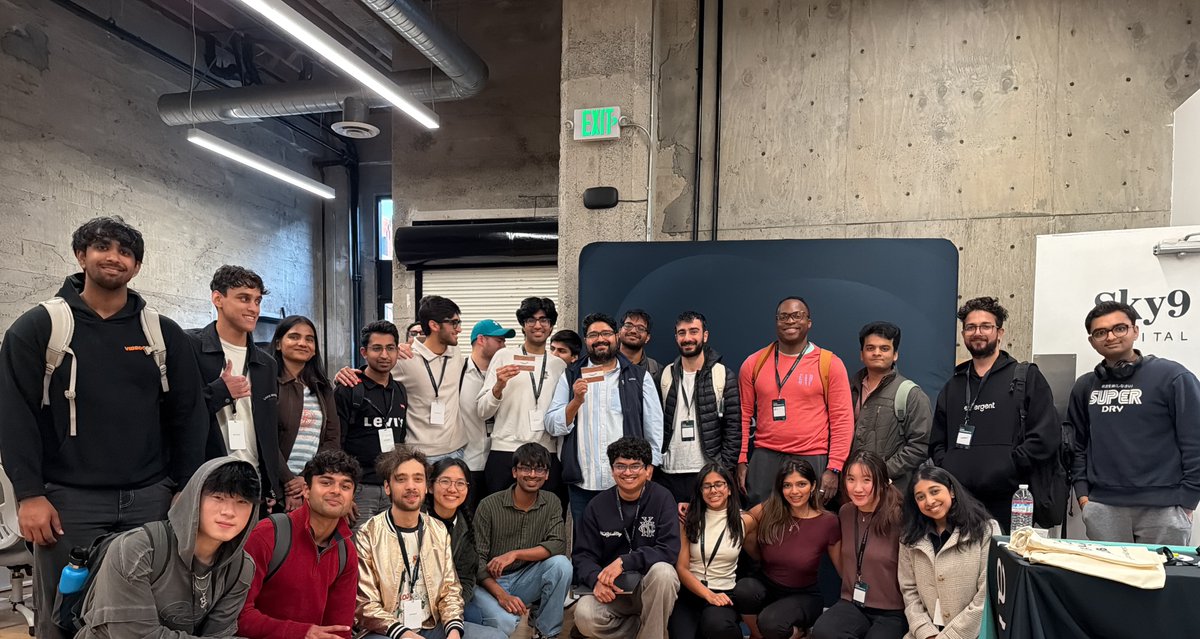
We just wrapped up our second Voice HackSprint by @smallest_AI, this time with @emergentlabs, @EntelligenceAI, @vallodev, @Sky9Capital and Topify joining us 🚀 Honestly, the best part wasn’t just new people showing up, it was seeing folks from the first one come back… and bring friends. That mix of returning hackers + first-timers is exactly the kind of momentum we strive for. Feels like a hacker community building on @smallest_AI forming real time rather than a one-off event anymore. Here’s to more rooms full of builders and more cracked demos!

@zarazhangrui ·
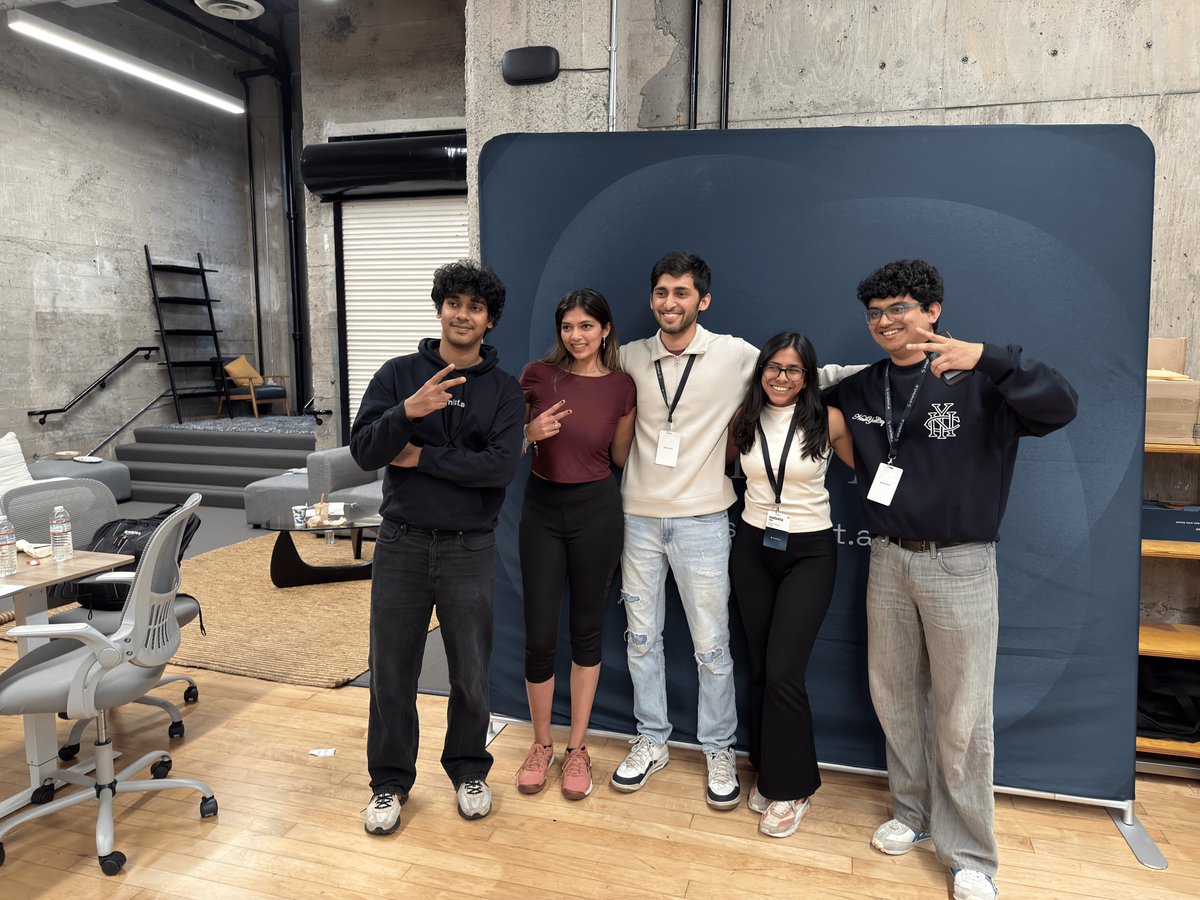
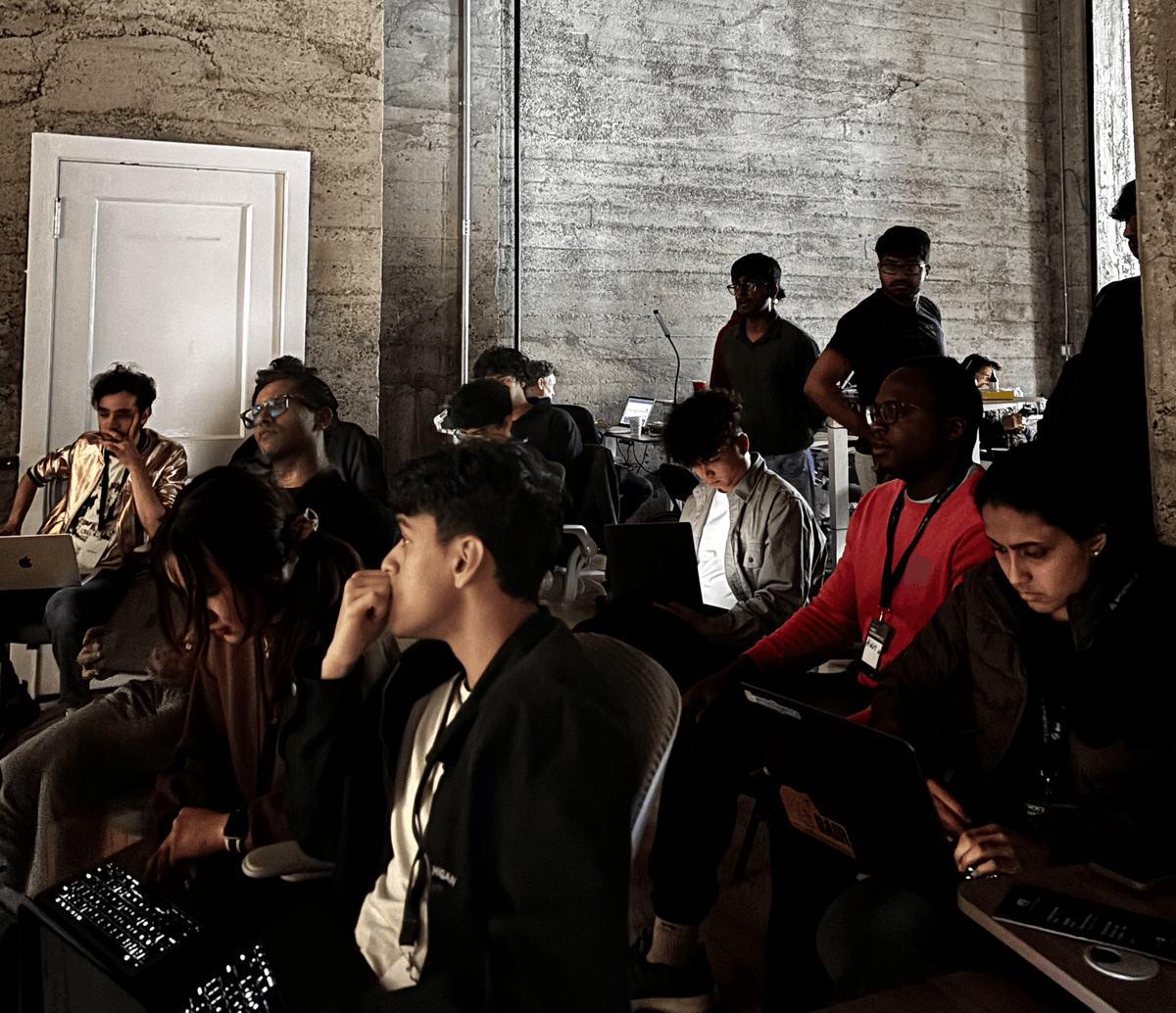
“Community is your users’ relationships with you and with each other, and most teams never think to design it Community is the new moat Features get copied. Belonging can’t” - from @figma Config session today
@mariannehere ·
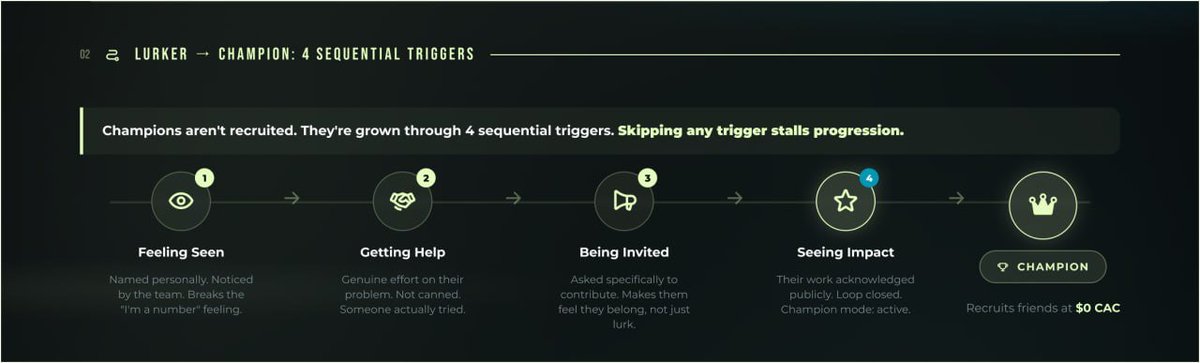
Most companies think they need more people What they actually need is transformation This is how a lurker becomes a champion it happens through a sequence that most miss >First, they feel seen someone notices them, says their name, acknowledges their presence >Then, they get help not a generic answer, but real effort put into their problem Then, they’re invited asked to contribute, included in something, given a reason to step in >Then, they see their impact their contribution is recognized, visible, meaningful At that point, everything changes -They stop being a member -they start acting like an owner -They bring people in -they defend the project -they create energy you can’t manufacture Most communities try to jump to the last step The real ones respect the process Once you see this, you can’t unsee it This is how communities grow without chasing growth

@kaitodan ·
Founder, stop wasting your money. You are paying a community builder, not an INTERN running discord or tg. Why should you hire a Community builder? And what should you ask them to do? 1. Community Assessment Put things in context + identify user target. 2. User Research and TAM Strategies and funnels, where is my user? 3. Community Funnels and Experiences How do I get my user in? How do I guide my user? 4. Community Management and Retention Culture, rituals, management, crisis management, etc.


@lilyyang169 ·
While community builders are focused on serving their community through value creation for their members, there is an undeniable need for community builders to gather to overcome shared struggles + increase our impact as a group. The demand speaks for itself: 700+ requests to join our community leaders group chat in the past 24 hours. Community is a positive-sum game. Even traditionally competitive companies can find ways to collaborate, because community, by nature, grows stronger through the value it creates for its members. Found a few very high quality community leads through the comments, grateful to Twitter for surfacing the new ecosystem builders! Grateful to @smallest_AI for investing in the ecosystem🫶


@MoneyCrptBunny ·
Want to build an active community? Here’s how we did it, and you can too! Follow these proven strategies to transform your project and engage your audience like never before. The best time to do this is at the very beginning. When you have no audience, but you're ready to build one properly. You need to lay the foundation. The best way is a combination of deep involvement from the founders and the first believers who genuinely care. These first people are your most important asset. For them, your chat needs to be more than just a place for updates. Define a range of adjacent topics that genuinely interest your audience. Your goal is retention and activity. Nobody can discuss your project 24/7. But if the topics are interesting and the people are interesting, the conversation never dies. Create a comfortable ecosystem for them. Tools, bots, moderators, and a steady flow of new, interesting members. You don’t need scale at this stage. You need quality. Then the founders step in and communicate actively. Not just about the project. Share insights, experience, even off-topic thoughts. The community values that access. Add incentives as team-building elements. Rewarding activity in the chat works. Giveaways for active members, poker nights, chess tournaments with a prize pool. The format doesn’t matter. The goal is to unite the community and show that you value them. Give them a sense of shared mission. A feeling that they are part of something bigger. Once this stage is done, you’ve built the foundation. An army of evangelists who will promote and defend your project. Part of this early community will become your best moderators. They will build tools, organize events, and take ownership organically. Only then should you bring in influencers and launch large campaigns. You can be confident this community will stay active. Just keep showing they matter and keep rewarding engagement. Retention is king. Always think about how to increase it.

@ashnichrist ·
The skills community managers should be growing in 2026: - personality (yes it is a skill) - facilitating inside jokes, culture, lore - active listening & implementation - memory about your community members - familiarity with AI tools to automate Discord, TG, Reddit processes
@kaitodan ·
A good simple web3 community setup 👇 Main platforms: 1. Discord or Telegram 2. Group Chats (X or any platform) 3. Bonus -> Forum on your official Website Community layers: 1. Core community 2. Sub-communities Retention: 1. Active high communication (when possible) 2. Active day-to-day communication (community team) 3. Rituals, events and cultural ceremonies Outreach: 1. Awareness as for CT timeline, content, public presence) 2. Activation as for DMs or group chats) 3. Conversion like direct calls and DMs


@Aabbhhz ·
we’re in the era of commercialized communities. private dinners, side events, and guest aren’t community building exercises. they’re just distribution channels dressed up as community. a good way to judge a real community is to see how well it lives beyond the guest list.



@janetmachuka_ ·
Throwback to building communities built on generosity. At some point in my journey, I stopped treating community like an audience and started treating it like a shared table. I learnt that real communities grow when: 1. Opportunities are shared without fear, 2. information isn’t hoarded, 3. People are celebrated even when it’s not strategic. I’ve seen it through trainings, gigs even heard about how I featured in rooms I wasn’t even present. I’ve seen @ATCDigitalAcad community that started at #AfricaTweetChat show up for each other. The quiet truth is that when people feel seen, they don’t just support you, they protect the space. 💯 Community is about creating a room where others feel safe enough to speak. 💯 We’re still building with it!


@gracepace_ ·
102K+ designers are in our Design Buddies Discord! My learnings from 6 years of community building here. Also you’re invited to join our (virtual) 100K party on Aug 18. 1. Build the community around people you personally want to hang out with. In 2020, I was a student looking to break into design. I wanted to learn design and land a job so I wanted to meet other designers! Design Buddies has helped me land my UX design job at Electronic Arts (EA) but also thousands of other designers land their jobs 2. Keep experimenting and don’t hold back. You get feedback right away! We’ve build products (Hop and Fluffle), had courses, events, and more. Especially with Claude and Codex, you can just build things and test right away. You don’t need permission. I was a college student when I built design buddies with 0 years of experience. I didn’t even have “designer” on my job title yet and thousands of people still joined. 3. Learning from churches and cults, but the good aspects. We have rituals (feedback Fridays/events), a shared identity (bunnies), a cult leader (Fluffle our bunny mascot), and create opportunities for everyone to meet amazing friends. Creating something of value so people keep coming back. 4. Having a team! Without our amazing mod team and active members, there would be no active design buddies. It’s important to choose people that make people welcome for your team. 5. It’s important to learn from both sides that disagree, and you don’t have to chose one. It always depends. And everyone’s trying their best. 6. Vibes are a valid KPI. My proudest @DsgnBuddies accomplishments - Thousands of members landing jobs, meeting lifelong friends, cofounders, and even romantic partners - Our world tour where we had events in 10 countries across 4 continents. - Hosting 2 conferences!! Also so many successful events and hackathons in partnership with amazing brands - Most recently: Building Hop! 1200+ sign ups in a few weeks, started making revenue in week 3. What would you like to see next in Design Buddies? 100K party (virtual), link in comments!! Coming up: My biggest mistakes when building a 100K community and also what we did every year to grow/what worked and what didnt work. Follow me on LinkedIn to stay tuned~


@fandompulse ·
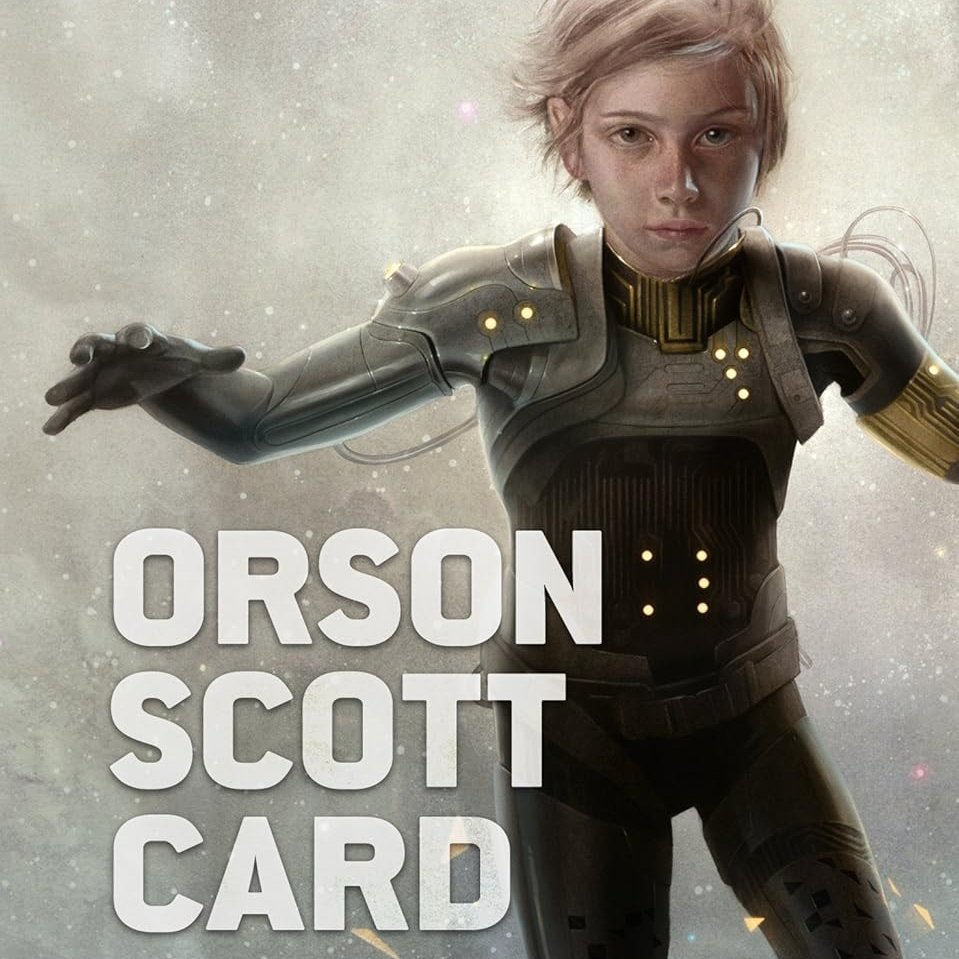
Orson Scott Card on why Ender's Game has endured over the decades: "What works with Ender’s Game is Ender’s community-building. There’s a disparate group of kids who could be rivals, and he’s able to bind them together through his personal service to them, through his loyalty, his trustworthiness. They know he’ll never waste them, that he’s not exploiting them for his own gain. I certainly was not conscious of it as I was writing him—I’m not much of a follower, and I’m not a good team player—and yet I created the kind of guy that I would follow." Is this why the book has endured?


@TheAntAcademy ·
Another thing that stands out in my data, research and those projects I’m in is how community led activity supports growth. When holders create content, tools or experiences it reduces reliance on the core team and strengthens the ecosystem.


@TheSzef ·
You can’t build a brand based on community and not get the people involved. One big shift I’ve made when posting on organic social is figuring out more ways to get our family of supporters involved. Collab posts have really enhanced that. If you tag us and want to collaborate we accept it. You don’t need the perfect photo. The brand isn’t bigger than the community that supports it. Lift up the ones that made it all happen!

@MillyTamati ·
How I balance 'shiny object syndrome' with LOCKING IN I've been working on Generalist World since 2022 meaning I, the queen of shiny objects, have committed to the bit **takes bow** I've locked in, and learned a few things 1. RUN TINY EXPERIMENTS (s/out @neuranne) Rn I'm experimenting with: ~ a weird job board (reached 700k+ and made $600+ in 2 weeks) ~ a GW facebook page (LOL, I know! Ask me about my thinking if you're interested) and if you're on FB plsssss go find us and like it At any one time in GW, I have multiple experiments running. This keeps my innovator itch happy. 2. A MISSION BIGGER THAN YOU I'm building the workforce of happy, thriving generalists. The 'job' is never done, and I find this incredibly motivating. We've already helped 100,000s. I want to help tens of millions. This is juicy and gets me fired up every morning. 3. COMPOUNDING IS CONTAGIOUS Do you know how much *easier* things get the longer you work on them? I didn't 😆 2022 was me screaming / begging / crying to have the world pay attention to generalists. 2026 I'm literally turning down opportunities every week. The compounding of brand, community, and just 'staying in the game' is underspoken about. 4. HIRE PEOPLE WHO THINK IN SYSTEMS Where oh where would I be without Ece and Mildred? (probs lost in 80,000 unorganised Notion pages and processes that take 10x as long lol). When you're the creative / visionary, you *need* people who say "why won't this work?" and "let's make a system for this" 5. 80/20 There's a literal graveyard of 'bets' I had about GW that didn't work. A tiny sprinkling did, and they did very well. Community at our core is one. The Generalist Quiz is another. We pour 80% of our energy into the 20% of things that work phenomenally and RIP the rest. 6. EMERGENCE A convo happened in the community on Friday that pivoted into a new channel of passionate members discussing a new model for IRL spaces in our communities, and how GW could be the vehicle to make it happen. This is emergence. I just create the space and things beyond my wildest dreams pop out of the ground. Have a question? Let me know in the replies 💛 Resonates? Reposts are appreciated 💛

@terencebuilds ·
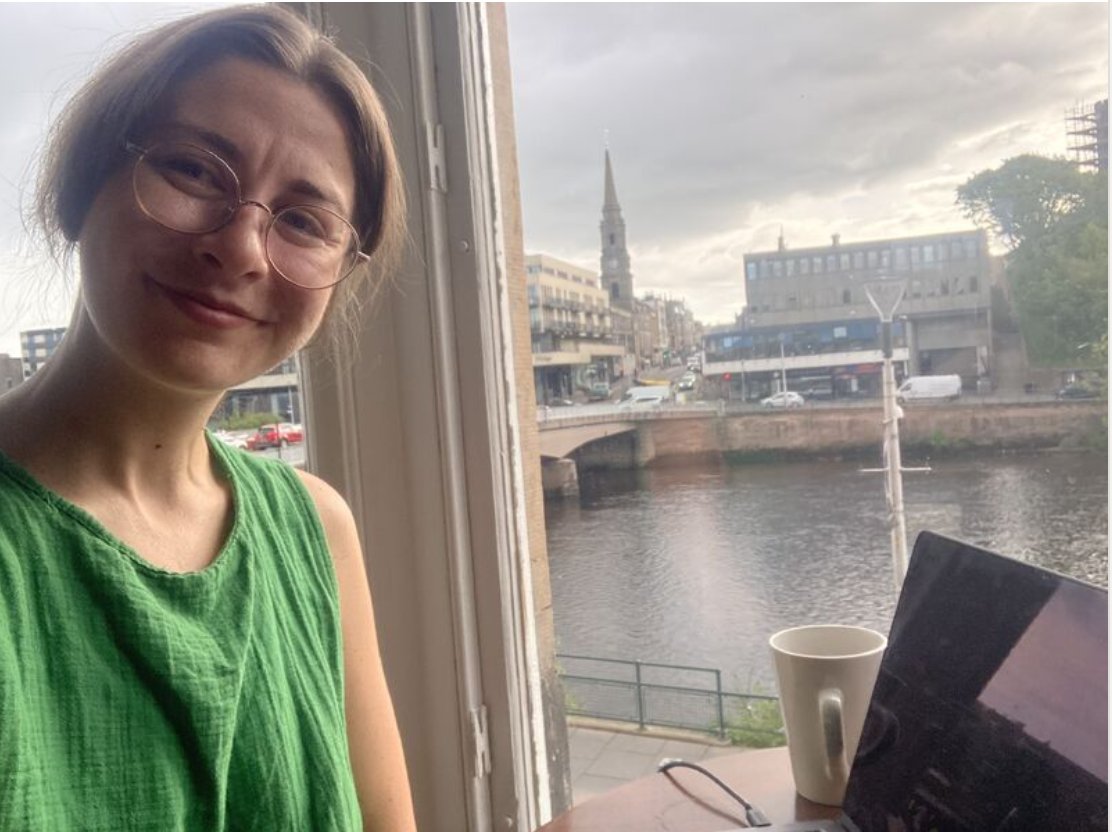
Why I spend 5 minutes of every 30 daily engaging here: This isn't social media. It's professional development disguised as X. Learning from other builders' mistakes. Getting feedback on ideas before coding them. Finding solutions to problems I haven't hit yet. The community investment pays compound returns #BuildInPublic

@sandeep_jain ·
One Lesson From Building a Community of Millions The biggest realization after building @geeksforgeeks : People don’t just want content - They want guidance, direction, and confidence. Content is scalable. Trust is earned. Every product decision we make today is centered around one question: “Does this genuinely help a learner succeed?” Building for impact > Building for vanity metrics. If you're building something - ask yourself the same question.
@janetmachuka_ ·
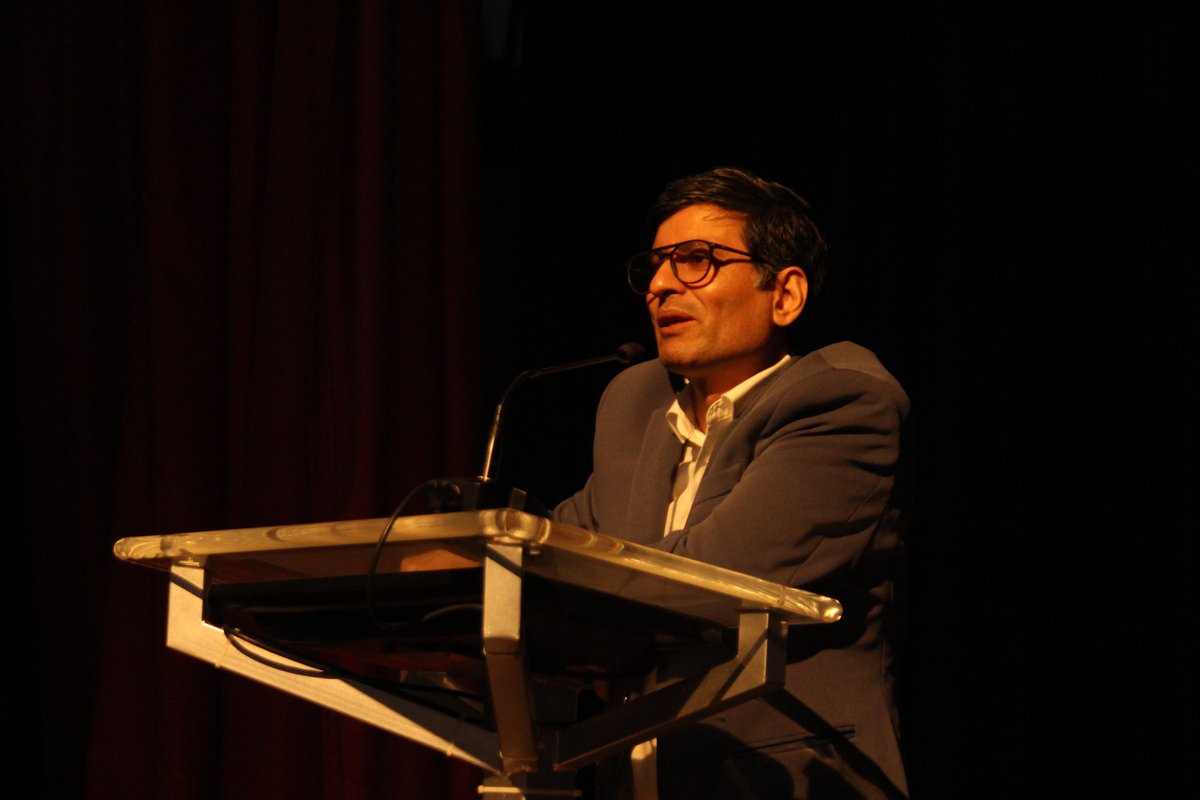
I'm the queen of community building. Put me in a room of beauty prenuers and l'll fit! 2 Weeks ago, l sat with beauty enthusiasts from Nigeria and Kenya to share insights on community building. Btw, l don't know if it's just me but l will show up at events with just a lip gloss and no makeup on and l'm okay with that. For a long time, entrepreneurship was seen as a solo journey. ⇒ Build your brand. ⇒ Protect your ideas. ⇒ Outperform your competitors. ⇒ I'm changing that, a community at a time, from one industry to another. Thanks to Jennifer Uloko, CEO YangaBeauty, for inviting a communications specialist like me to share on how we can succeed through communities that foster collaborations to achieve growth. One major lessons l learnt from building the #AfricaTweetChat community of marketers, business owners and techies is that you can build a fortune from a shared interest than when alone. We built @ATCDigitalAcad that has transformed businesses, individuals and non-profit organizations through training. Glad to share the stage with Marilyne Nimmoh Saki and Anita Foy.


@Insharamin ·
Community building is the most misunderstood skill in tech. People think it's: → Managing a Discord → Hosting AMAs → Posting memes It's actually: → Behavioral psychology → Product thinking → Storytelling → Data analysis It's a full-stack skill disguised as a soft one..
@lilyyang169 ·
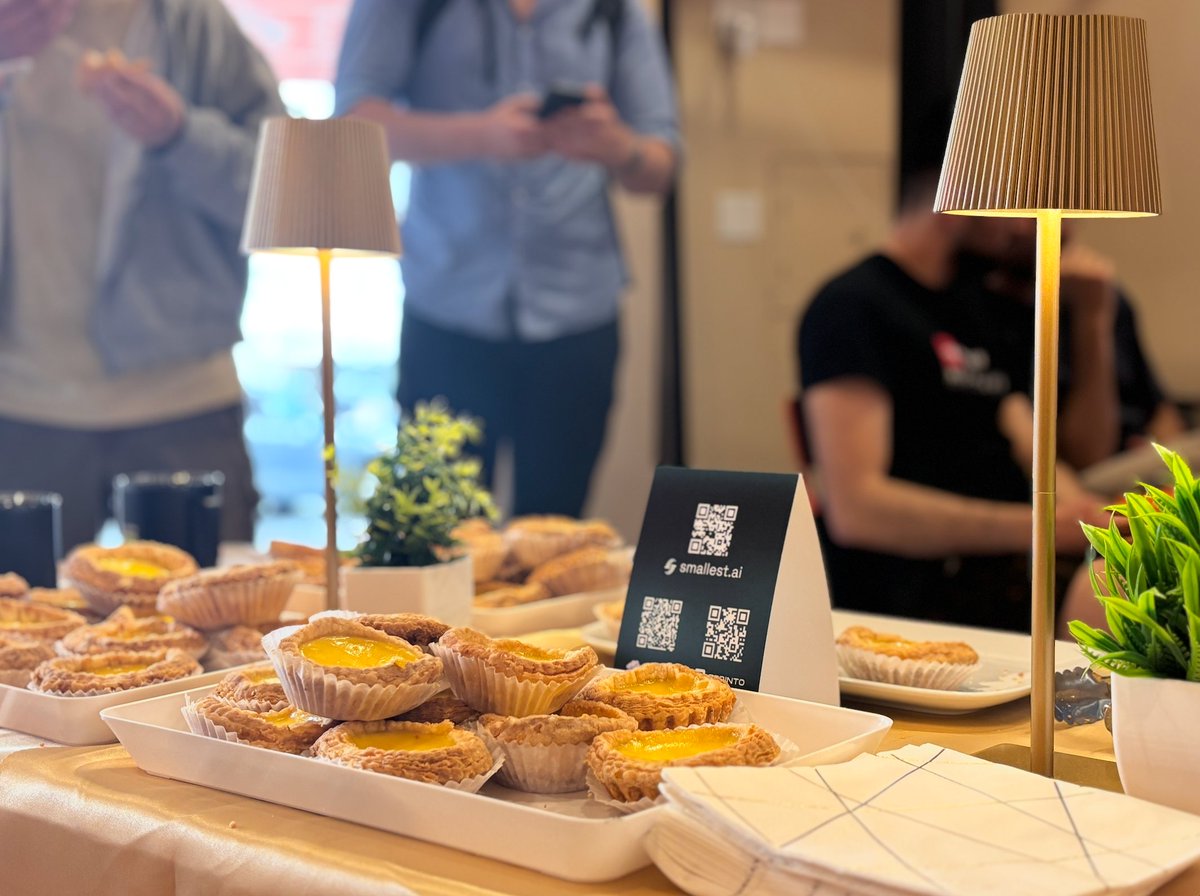
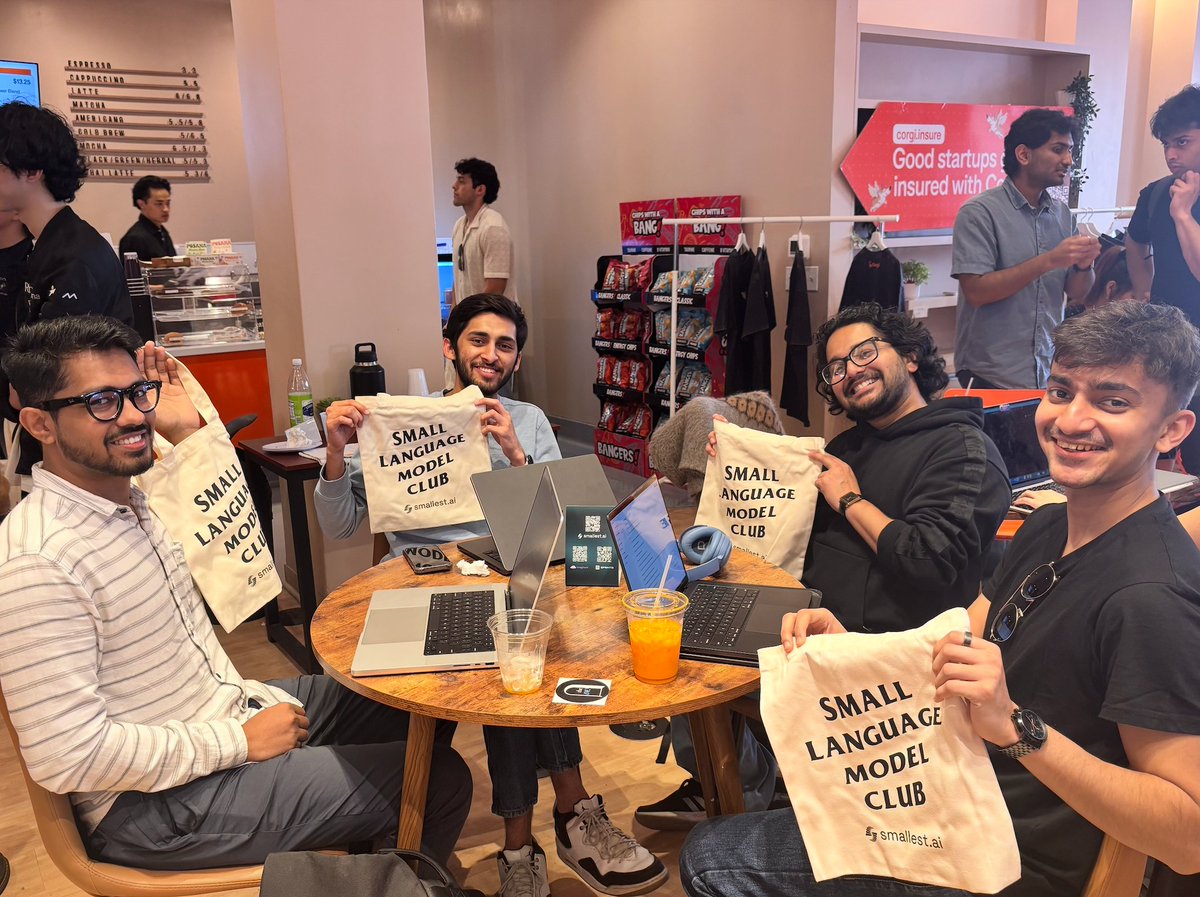
Last weekend, @smallest_AI, @imagineagi, and @sprintoHQ co-hosted the Golden Hour Co-Working session at the Corgi Cafe — bringing together 100 founders building in B2B SaaS. A cafe filled on a Saturday with seed+ founders says everything about the builders in SF. These are people who genuinely love what they're building. But what made this event especially meaningful to me was who I got to host it with. I've known @skygodkingdom , the founder of https://t.co/oypyiZTbbH, since his YC days. We'd show up to each other's events, talk about collaborating, and somehow never make it happen — until now! @ShankarAnoushka from Sprinto has been warm and supportive from the very first call. And Balu Murali, their SF-based team member, was an absolute pleasure to work alongside on the ground. The @UseCorgi team, especially @brookeleblanc, made us feel right at home – she's been quietly building one of SF's best spaces for the community, and it showed. This is what makes community-building such a rewarding role — the relationships we build with members of the community, and the people we are building alongside. @smallest_AI hosts events every week in SF — researcher poker nights, founder dinners, hikes, stargazing. We invest in the community because we want to do our part to support the people who've gotten us to where we are. Thank you to @imagineagi and @sprintoHQ for making this one happen. ❤️


@terencebuilds ·
What a sad day this is going to be for the Build In Public community. @nikitabier announced X Communities are getting killed off May 6. I get it from an operations perspective, less than 0.4% usage but 80% of spam reports. Half the team's time spent on moderation. But this feels like a band aid fix to me. The real problem isn't Communities. It's spam, scams, and bots flooding the platform. Shutting down Communities doesn't solve that, it just pushes the problem elsewhere. What about the actual users who found value here? I basically use X just for communities. The Build In Public community specifically, 255K members who are genuinely supportive and positive. Real conversations about actual struggles. People celebrating wins and sharing failures honestly. Now we're supposed to migrate to XChat with a 350 member limit? How does that math work? 255K members squeezed into multiple 350 person chat rooms? That's not migration thats just a nightmare. The handful of communities that worked well get lumped in with the spam factories. Real users become an afterthought to operational convenience. Maybe I'm missing something, but this feels like throwing out the good with the bad. Communities weren't inherently broken, they just needed better spam controls. Instead of fixing the moderation tools, we're killing the feature entirely. The Build In Public community will survive this somehow. We always do. But X is losing something valuable here. Anyone else feeling like the real users just got sacrificed for cleaner metrics? How are 255K builders supposed to fit into 350-member group chats? #BuildInPublic

@HustleFundVC ·
Ryan Hoover's take: community is an overplayed word. People want utility. And the best communities are really just utility with a social layer on top. Product Hunt is a place for founders to launch, get their first users, and get feedback. It's a place for consumers to find what's new. That's the core. The community is a byproduct. If you're building something and struggling to get people to care, ask yourself: what's the utility? What do people get out of showing up?
 Watch video
@davegerhardt ·
Two years ago after our first event - late night we joked "did we just become an events business?" After dragging my heels on becoming an events business - because of the costs, the travel, the stress. It's one thing if people don't show up to your webinar or no one listens to your podcast, but to deal with people getting plane tickets, flying across the country, and getting their butts in seats for your event, man that is a different kind of stress. But have ABSOLUTELY become an events business because in-person is an INCREDIBLE force multiplier for community. Because we have this online community (Exit Five) some percentages of event attendees feel like they already know each other, and even if that's only 25% of the room it makes a big, big difference. I am sure you saw the posts from attendees on LinkedIn over the last two weeks. That is the type of PR and brand you can't pay for it. It's genuine. It's real. As one CMO put it: "COMMUNITY EVENTS FEEL DIFFERENT. You can feel it the moment you walk in the room. Meeting people in real life for the first time after years of online connection *feels* fantastic. It's not “networking” — it's a reunion of people who actually care about each other. That doesn’t happen at most customer events." And the way I spin the story about IRL is that it's more important now, than ever, because we're all spending so much time working with AI, we can't forget about how great real human connection feels. I've been told this is a very American thing, but we put a lot of stock into what we do for work. Our jobs are a big part of our identity, and there's something millions of people on this earth who work in the world of B2B marketing. I'm honored that we've built something with Exit Five where we can sit at the middle of connecting those people. You! You people. I have LOTS of other event lessons and learnings, but I'm over the stage of sharing them now because we have something special and it's a secret sauce I'm keeping close. Granted, I didn't do anything for this event other than MC and post it about to all of my LinkedIn followers - but that's the power of building a great team at E5. Worth every penny of payroll going all in on this company after telling everyone I could only be solopreneur for life. We have something special. "Who cares it's just B2B marketing bro." Nah you don't get it then :) Here's a little recap video. PS. The NPS score from this event was an 89. Breaking our record of 88 from Drive 2024.
 Watch video
@maeveknows ·
you want to be part of a village? be a villager. the price of community is inconvenience. showing up when it’s not about you. helping when there’s nothing to gain. responding when it would’ve been easier to ignore. community isn’t built on vibes. it’s built on participation. checking in. supporting others. doing small things consistently. most people want the benefits of a village without paying the cost of being in one. but real communities remember. who showed up. who gave. who stayed when it wasn’t convenient. you don’t get to belong without contributing.

@yb_effect ·
"Members realize their community's purpose through the thing that they do together. What is something your people crave that would be better performed or experienced as a group?"
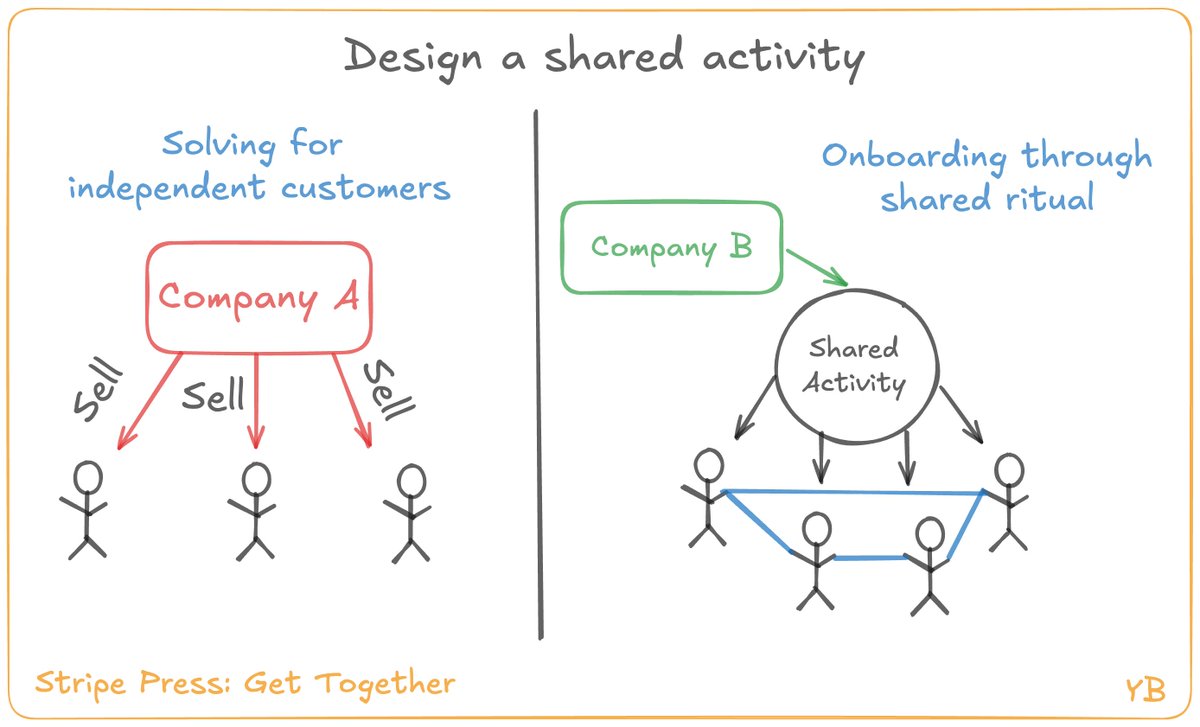

@Ldnbox ·
Selling brand mentions for Reddit is great, and also pretty profitable. But I think the next big thing would be community building for brands that want to own a subreddit. I'm not talking about branded subreddits but topical ones i.e. r/EmailMarketing. Building a good community is really hard and comes with many challenges, but this is why brands would pay big money for it.

@TheJobfather__ ·
Community is not built by throwing people in a room and hoping the magic happens. Community is designed through intention, structure, trust, shared context, and follow-up.

@yeskipras ·
"Community building" in crypto is just bribing people with token promises until they pretend to care about your mission. I know because I’ve seen communities go up and down with profit. Mine absolutely failed because I made these promises without having the proper backend Followers who instantly disappeared when the bribes ended A real community comes from real products. everything else is theatre.
@TheJobfather__ ·
If you care about community, start there. What do people keep asking for? Where are they stuck? What information do they not have? What opportunity did you wish someone gave you earlier?
Best Community Building tweets
Xholic studies what works in your niche, drafts posts in your voice and schedules them for the hours your audience is online.
$0 today · Cancel anytime
Browse all tweet collectionsKeep exploring