Product-led acquisition and distribution
Self-serve discovery through word of mouth, referrals, shareable product outputs, communities, content, SEO, integrations, and paid-channel validation.
46.5%
Best tweets about Product-Led Growth
Explore the best tweets about product-led growth, including activation, onboarding, free trials, virality, conversion, retention, pricing, and PLG metrics.
Product-led acquisition, activation, onboarding, conversion, retention, expansion, pricing, experiments, metrics, and verified company examples.
Original Xholic analysis
Across 43 tweets, recurring PLG themes include product-based distribution, faster activation, and retention. Several posters recommend improving core value and retention before scaling acquisition; others advocate paid acquisition to validate the funnel. Sales timing and free-versus-paid entry remain points of disagreement. Company outcomes are reported by posters and are not independently verified here.
60.5% of posts
All-time engagement
41.9% of posts
Published in 90 days
Conversation map
Self-serve discovery through word of mouth, referrals, shareable product outputs, communities, content, SEO, integrations, and paid-channel validation.
46.5%
Remove signup and setup friction, deliver a first-session quick win, and guide users to the action that predicts lasting value.
44.2%
Define the ideal customer, segment messaging and experiences, interview users, and prioritize fixes based on observed pain and outcomes.
32.6%
Track activation, trial-to-paid conversion, retention, LTV:CAC, CAC payback, and net revenue retention; locate drop-offs and test changes or channel incrementality.
32.6%
Test free plans, trials, paywalls, annual plans, and seat- or usage-based pricing; create in-app upsells and land-and-expand paths.
27.9%
Use retention curves, customer outcomes, product quality, deeper adoption, payment recovery, cancellation options, and win-back efforts to keep customers.
27.9%
Decide when the product can sell itself, when early demos accelerate learning, and when team pilots or enterprise sales should complement PLG.
27.9%
Examine reported tactics and results from companies including Facebook, Figma, Clay, Gamma, Calendly, Dropbox, and other self-serve SaaS products.
16.3%
Tone and stance
Performance benchmark
Posts with media make up 34.9% of this collection. Their median all-time score is 9.23, compared with 17.3 for text-only posts.
Format mix
Consensus and debate
Shared view
Recurring onboarding advice favors getting users to a meaningful action quickly rather than leading with forms or feature tours. The Facebook account describes an early engagement milestone, while Kelsey’s creator describes replacing manual setup with scanned and pre-filled information.
Shared view
Posters recommend inspecting retention curves, customer outcomes, and cancellation reasons before scaling acquisition. One churn case study reports product simplification and customer feedback alongside improved retention; it does not establish that those changes will work elsewhere.
Shared view
Shared outputs, invitations, communities, content, and integrations appear as proposed acquisition paths. The cited playbooks describe tactics and reported outcomes, but do not independently establish each tactic’s contribution.
Open debate
One post advocates paid acquisition as a fast way to test a PLG funnel. Others describe growing without ads or concentrating on an existing organic channel before adding more. These are different sequencing recommendations, not a settled rule.
Open debate
An RB2B account says removing its sales function did not change sales for its simple product. In contrast, Gamma’s CEO reportedly regretted adding sales late, and GojiberryAI’s creator plans a stronger sales motion. The accounts emphasize different considerations, including product complexity and demand from teams.
Open debate
One poster argues that a free plan brings users in; another recommends delivering a quick win followed by a hard paywall. A pricing critique warns against subsidized access followed by restrictions that change what users expected. None establishes a universal conversion model.
What performs
The supplied analytics place product-led acquisition at 46.5% of tweets and activation at 44.2%, making them the two most prevalent themes. Theme assignments overlap. Representative posts discuss product sharing and reaching core value quickly.
The churn checklist has an all-time score of 1042.62, with a supplied multiple of 81.37 times the dataset median of 12.813. This indicates unusually high performance under the supplied scoring, not that its recommendations are universally effective.
LIST posts have a median all-time score of 27.653, compared with 9.75 for CASE_STUDY and 7.512 for OPINION. The analytics do not isolate format as the cause of this difference. Cited lists cover churn, acquisition, and growth loops.
Statistical standouts
Creator landscape
The five most represented creators account for 18.6% of the selected posts.
1. Harshil Tomar
@Hartdrawss
2 posts
2. Randall Kanna Franson
@RandallKanna
2 posts
3. Romàn
@romanbuildsaas
2 posts
4. Dipo
@0xDipo
1 post
5. Alex Nguyen
@alexcooldev
1 post
6. Andrew
@andrewxroas
1 post
Romàn reports a PLG-first customer mix at GojiberryAI and plans a stronger sales motion. A separate post describes closing team-seat deals through pilots and says he may be shifting toward enterprise deals. Together, these posts document both self-serve and sales-assisted approaches.
Randall Kanna describes replacing a long setup form with scanned and pre-filled information to help users reach value sooner. The posts document the change and its intended benefit, but provide no measured conversion or retention result.
Since the previous snapshot
Themes, sentiment, stance, and post format are classified per tweet. All counts, shares, medians, creator concentration, freshness, and performance comparisons are then calculated directly from the published snapshot.
Xholic's all-time score compares engagement while accounting for reach, post age, and creator consistency. It is used for relative comparisons within this collection.
This report analyzes the exact 43-post snapshot shown below. AI identifies editorial categories and drafts explanations; all statistics are calculated from the snapshot, and every narrative claim is checked against cited posts before publication.
Best Product-Led Growth tweets
Ranked 01–43

@tibo_maker ·
I've built and sold 2 saas for $8m. now I run a saas portfolio doing $1m mrr churn has cost us more growth than anything else so I made my team a list of 12 reasons users churn. sharing them here too: 1. you sold to bad-fit customers. that churn was booked the day they signed. write down the 3 traits your best accounts share and disqualify leads who miss them, even when you need the cash 2. onboarding never hits the aha moment fast enough. find the one action that predicts retention and rebuild onboarding so every new user does it in session one 3. failed payments cause 10-20% of churn and nobody's watching. add dunning emails, card-expiry reminders, and smart retries. it's the easiest churn you'll ever win back 4. silent churn. they went quiet months before cancelling. build a health score from logins and core-feature usage and get pinged the moment it drops 5. usage isn't value, results are. define the outcome each customer came for and measure whether they hit it, not whether they logged in 6. "budget" is never the real reason. it's the polite version of "I stopped seeing value." when someone leaves on price, dig one layer down and close the value gap 7. you watch net retention and ignore gross. expansion hides a leaking base for a year. if the retention curve never flattens, fix the product before you spend another dollar on ads 8. no expansion revenue, so normal churn drags you backward. add one upsell or usage-based lever that lets good accounts grow, not just renew 9. the product stopped evolving. their needs moved, yours didn't. talk to churned power users and ship against what they outgrew 10. cancelling is all or nothing, so they pick nothing. offer a pause, a downgrade, or a heavy discount, plus a prompt asking why. save who you can, learn from who you can't. read every cancellation reason weekly and then act on it 11. no win-back motion. nearly half of returning customers come back within 30 days. fire a sequence the week after they leave and lead with something they never saw, a new feature or workflow 12. shallow usage means zero switching cost. drive adoption of a 2nd and 3rd feature until you're wired into their weekly workflow. depth is the moat hope it helps 🙏

@HarryStebbings ·
I have interviewed 100 of the best growth leaders in the world. @MattSwulinski is easily top 3. (alongside @alexschultz and Brian Hale) He scaled Wispr Flow to over $100M in ARR and built a UGC machine. He scaled Superhuman from founder personally onboarding every customer to a growth machine with $50M ARR. If you are an early stage founder or growth leader, this will be the best episode you will listen to this year! I condensed my biggest lessons from the discussion below: 1. The E-Commerce Playbook Is the Right Playbook for SaaS The e-commerce playbook, where every dollar spent ties directly to a purchase or conversion, is the right model for modern SaaS. With distribution becoming a critical moat in a crowded AI market, SaaS companies should deploy UGC creators, constantly test new creative, and diversify channels to build their brand. 2. Paid Acquisition Is the Fastest Way to Validate PLG Relying solely on organic content and word-of-mouth takes too long to validate product-market fit. Paid acquisition creates the fastest feedback loop for proving a PLG funnel works, allowing teams to test positioning, refine messaging, and optimize conversion within a single week. 3. You Only Need Three Core Channels to Scale to $10M ARR Startups often ruin their acquisition engines by trying to run ten channels poorly at once. Reaching the first $10M in ARR only requires mastering three core channels: video intent on Meta, search intent on Google, and lifecycle retention through email and SMS. 4. Scaling Paid Ads Requires 500 New Creatives Every Single Month On platforms like Meta, creative increasingly acts as the targeting algorithm. Scaling spend without hitting audience fatigue requires 400 to 500 new creative assets every month, produced through UGC revenue-share programs, specialized agencies, and internal teams. 5. How the Best Growth Leaders Test for True Spend Incrementally Blindly increasing ad spend wastes money on conversions that may have happened organically. The best growth leaders measure spend elasticity against ARR growth and run strict holdout tests to determine whether each additional dollar generates genuinely incremental revenue. 6. In Three Years, Companies Will Operate Like a Board of Directors Tech organizations are shifting away from manual execution. Within three years, lean human teams could operate more like boards of directors, spending 20% of their time on strategy while autonomous AI agents handle 80% of operational execution. 7. Fire Your Marketing Team if They Aren’t Systems Thinkers Marketers focused on repetitive manual tasks are becoming increasingly replaceable. High-performing teams need systems thinkers who can break their work into inputs and outputs, then build self-improving AI workflows that multiply their personal leverage by 10x. (links in comments)

@StartupArchive_ ·
Chamath Palihapitiya on the growth principles that got Facebook to billions of users “The most important thing we did was I teased out virality, and said, ‘You cannot do it. Don’t talk about it. Don’t touch it. I don’t want you to give me any product plans that revolve around this idea of virality. I don’t want to hear it.” Instead, Chamath urged the growth team at Facebook to focus on “the three most difficult and hard problems that any consumer product has to deal with”: How do you get people in the front door? How do you get them to an aha moment as quickly as possible? How do you deliver core product value as often as possible? Chamath warns that focusing on virality is why you see so many startups experience this amazingly steep rise and then fall off a cliff. The second thing he set out to do at Facebook was invalidate all of the lore: “In any given product, there’s always people who strut out around the office like, ‘I have this gut feeling.’ It’s all about gut feeling. And most people’s gut feelings are morons. They don’t know what they’re talking about. Gut feel is not useful because most people can’t predict correctly. We know this. So one of the most important things that we did was just invalidate all of the lore… You can’t believe your own BS. Because when you do, you start to compound these massively structural mistakes that don’t expose core product value… You don’t listen to customers because you think it’s all about your gut. You don’t bother doing any of the traditional, straightforward, obvious things, and you lose yourself.” As Chamath explains, a maniacal focus on delivering core product value as frequently and fast as possible is what led Facebook to its most important realization: “The single biggest thing we realized was to get any individual to 7 friends in 10 days. That was it… There was not much more complexity than that. There’s an entire team now of hundreds of people that have helped ramp this product to a billion users, based on that one simple rule — a very elegant statement of what it was to capture core product value… And then what we did at the company was talk about nothing else. Every Q&A. Every all-hands… It was the single, sole focus.” He continues: “You have to work backwards from: What is the thing that people are here to do? What is the ‘aha moment’ that they want? Why can I not give that to them as fast as possible? That’s how you win.” Chamath recommends starting with a cohort of your most engaged users — What features are they using? What pathways in your product did they take? Then work backwards and try to get all of your other users to that same state. Source: @gaganbiyani (Jan 2013)
 Watch video
@romanbuildsaas ·
GojiberryAI went from $0 to $4M ARR with a team of just 8 people. What got us there so fast: → PLG-first motion: only 3% of our customers come from sales calls. → Multi-channel marketing: Reddit, LinkedIn, Meta Ads, B2B influencers, X, YouTube... → Shipping fast: new features and improvements every single day. But what got us from $0 to $4M won't necessarily get us from $4M to $20M+. So we're using August to rethink how we operate and prepare for the next stage. The plan: → More marketing to massively expand the top of the funnel. → More features built specifically for sales teams and agencies, our highest-retention customers. → A much stronger sales motion. Right now, our CRM is a mess and we're leaving a lot of opportunities on the table. The first $4M ARR was about finding what works. The next $16M is about scaling it. Let's see how fast we can get there.
 Watch video
@getryze ·
i spent 1.5 days studying the growth loops behind the fastest-growing startups they're the closest thing to free distribution here are 7 brilliant ones: 1/ robinhood — you referred friends to jump the waitlist. 1m signups before launch, $0 on ads 2/ rogo — every report a banker exports says "powered by rogo," then gets forwarded around the firm. signups come in on their own 3/ gas — it pinged kids "someone in your grade likes you," they downloaded to find out who. #1 in the app store, then sold to discord 4/ tl;dv — after every meeting it emails a branded recap to everyone on the call, even non-users. each one turns into a lead 5/ calendly — every booking link you send puts calendly in front of whoever books. that's most of how it got to $100m+ ARR with barely any ads 6/ lovable — every app you build ships with an "edit with lovable" button. $10m ARR in ~2 months 7/ dropbox — invite a friend, you both get free storage. that loop took them from 100k to 4m users in 15 months if you want to build one, design for virality from the start: 1/ make sharing rewarding, low-friction, and tied directly to the aha moment 2/ validate the pmf first, then obsess over sharing 3/ make sharing feel like the natural, core reason the app exists, not something you bolt on after launch — or it won't spread. that's the mistake almost everyone makes: they launch, growth is flat, and only then do they think about it 4/ measure it — new users per user, and how fast they come a single loop like this has carried startups from $0 to $10m ARR with no ad spend

@alexcooldev ·
How I grew SaaS MRR without spending on ads: - Smooth onboarding → less churn - In-app upsells → more $$$ - SEO + case studies = free leads - Referrals still undefeated - Posted daily on X, Reddit, TikTok, LinkedIn - Integrated with tools (Zapier, Notion…) - A/B tested pricing + pushed annual plans No ads. No team. Just product + content.

@LoganTGott ·
Clay went from $0 to $30M ARR in 2 years. Most founders think it was the product (which is obviously solid) but really it was distribution. Here's what they actually did: 1. Picked ONE ICP (growth/ops teams) and refused to expand 2. Built a public Slack community where power users taught each other 3. Founder-led LinkedIn content (not corporate page slop) 4. Power users posting Clay workflows + results on LinkedIn for free 5. PLG first, then layered in sales motions as they scaled Clay didn't win on better outbound. They built a distribution funnel. Most SaaS founders are still scaling through paid ads. The ones winning are building audiences.

@StevenCravotta ·
Most apps treat onboarding like a feature tour. That's backwards thinking: You're not selling features. You're not explaining buttons. You're not giving a product demo. You're solving problems. Here's what converts: → Show immediate value in 30 seconds → Present pricing when they're hooked → Lead with their biggest pain point Smart onboarding is about activation. Take them through their pain and then show your app as THE solution. Your flow: ↳ Quick win delivery ↳ Problem recognition ↳ Hard paywall Don't give away everything for free. Start charging when users are most engaged.

@Hartdrawss ·
This Reddit user cut SaaS churn from 15% to 4.5% in 60 days. Here's the exact playbook: 1/ the problem > B2B SaaS at $15K MRR with 15% monthly churn > basically refilling a leaky bucket every single month > 200+ services listed, quality inconsistent, customers confused > support overwhelmed, lowest loyalty, worst customers 2/ what actually fixed it > killed 80% of the product catalog. analyzed which services drove 80% of revenue and axed everything else. fewer options, way better experience. churn dropped 4-5% right there. > built an automated 365-day guarantee system. detects delivery issues and compensates automatically. no tickets, no manual review. support load dropped 40%. churn fell another 3%. highest ROI thing they ever built. > raised prices 40% and repositioned. lost price-sensitive users, gained way better ones. net churn improved even though volume dipped short term. > added real-time order tracking and proactive delay notifications. customers stopped churning just because they didnt know what was happening. small engineering effort, massive trust payoff. > started weekly 15-min calls with churned and active users. not surveys. actual conversations. drove 60% of product decisions in the year that followed. 3/ the result > churn went from 15% to 4.5% in 2 months > MRR went from $15K to $40K in the year after > mostly because they stoped losing people the leaky bucket was never an acquisition problem. it was always a retention problem.


@tanayj ·
Clay's @vxanand had a great piece on lessons from their GTM playbook that allowed them to get to $100M ARR: • Using reverse demos to cut out friction and get to a self-serve product • Focus on Brand - premium domain (Clay dot com), distinct creative, hired head of Brand early; • Early to usage-based pricing in GTM tech which was aligned with efficiency & enabled true land-and-expand. • Agencies as GTM force multiplier - cold email agencies were buiding businesses on Clay & they leaned into and enabled them • Unconventional hiring with bias for product passion, customer empathy and technical curiosity • Created a new role (GTM engineering) and enabled the surrounding community around it

@TTrimoreau ·
Maybe having a free plan is the real growth strategy. X is free. Figma is free. Canva is free. GitHub is free. ChatGPT is free. Notion is free. Free gets people in. The product makes them stay.

@yasser_elsaid_ ·
The case for choosing to build a self serve product led startup instead of sales led: AI is the great equalizer. Before, the bottleneck for building was intelligence plus agency. Now intelligence is accessible. Agency is the only bottleneck left. That means more people will build, and the types of companies they build will not need more than 50 people to run. We are about to see an explosion of sub-50 employee companies. Enterprises have always run an extremely big chunk of the economy, and that will still be the case. But startups and SMBs will take more and more of that market share. Fewer 10,000+ employee companies. Way more sub-50 employee ones. If you're a founder building for this world, the best thing you can do is build the best self-serve platform possible. These companies have lean, fast teams that experiment with multiple products, use AI to help them choose, and move on. The strategy of a long sales cycle for a higher ACV account doesn't make sense here. Self-serve forces you to build a better product. There is no human hand-holding. No custom builds. If you don't build an intuitive product, people will churn. As simple as that. You won't have a business. So you spend your time optimizing the user experience. Which is arguably one of the few things that actually differentiate companies now, because AI commoditizes features. Features are not differentiators. UX and ease of use are the moat. The other problem with sales-led is that it assumes humans are making the buying decision. That has been true and will continue to be true, but to a lesser extent. More and more purchasing decisions will be made by agents. You're building something and you want a customer support tool. You ask Claude to integrate it into the site you're building. It will just integrate the tool it knows most about with a public docs website. Your docs become your sales team. Your API becomes your pitch deck. Sales-led makes more money right now. It's like consulting. Consulting makes money. But long term you need both. Companies like Stripe and Vercel are doing this. They built incredible self-serve products, and layered on strong sales. Companies of the future will look very similar to those two.
@romanbuildsaas ·
If you’re building a PLG SaaS, try this: 1) Send an outreach offer with a 2-week pilot for teams with 5+ seats 2) Get them in fast, set it up properly, and overdeliver hard 3) Convert the whole team Today I closed: 13 seats 17 seats 20 seats → 50 seats total → $5,000 in new MRR That’s the equivalent of 50 self-serve customers… But with way higher LTV. So realistically? It’s closer to 100+ customers. Same product. Same acquisition channel. Just packaged differently. I think I’m slowly shifting toward enterprise deals 👀


@lukesophinos ·
Your GTM motion is probably more important than your product. It's where 99% of founders fail. The best founders don't launch without confidence in their GTM. Some industries are just brutal slogs. Education is one. You can have the best product on earth and it'll still take a decade to scale. You have to think about GTM the same way you think about product. They work hand in hand. A good product without users is a shitty product. Some industries just aren't set up to adopt quickly, even when they desperately need what you're building. Here's what I strongly recommend before going all-in on a vertical: Study every company with real traction in that space. Is it sales led? Marketing led? How long did it take them? What's their ACV and how does that enable their motion? Test relentlessly. Spin up vaporware. Act like you have the best product the industry has ever seen. Try marketing led GTM and advertise on digital channels. Test sales led and see how long it takes to get to contract. Product led? Build a v1 and see if freemium conversion or expansion actually works. Track channels with insane intensity and intellectual honesty. What's working? What's not? If this persists, how long will it take to build the company I actually want to build? I've had ideas I was ecstatic about. The market needed it. Customers were begging for it. But the GTM motion wouldn't work. Too painful, too long. I abandoned ship. Don't fall into the GTM trap. Too many founders don't think about this until 1-2 years in. That's a painful time to realize you're facing a long, brutal slog. Validate your GTM motion like you validate your product.

@pmitu ·
🔖 If your SaaS is making less than $1k MRR do these 15 things: 1. Talk to EVERY user: learn why they signed up, what they use, and what they actually want, their pains 2. Segment your audience: different users need different messages 3. Test multiple positioning angles: what you are actually selling 4. Reach out to 100 ideal customers: sell directly + get feedback + earn reviews 5. Rewrite your copy: most landing pages explain features instead of value 6. Update your landing page around the positioning that converts best 7. Study Product-Led Growth: remove friction and help users experience value faster (onboarding + freemium + aha moment) 8. Improve your free plan: the easier it is to get value, the easier it is to convert to paid plans 9. Experiment with pricing: your current price is probably just a guess 10. Test annual plans and different discount levels 11. Partner with creators and niche influencers for reviews and exposure (grant them with free access) 12. Run an SEO audit with Claude and fix the obvious gaps 13. Publish content that solves customer problems on X, LinkedIn, Medium (not content that talks about your product) 14. Collect testimonials from every happy customer and showcase them everywhere (!!!) 15. Build social proof on review platforms like G2, Capterra, TrustPilot most SaaS founders don't need more traffic they need to understand their customers better first and create a space for growth this is marketing!

@jonwu_ ·
if you're a community-driven business i.e. your GTM motion depends on people sharing outputs from your product you need to be PUMPING use-case testimonials from your power users 1. capture e-mails at signup 2. enrich with Clay 3. feed to Claude and categorize by credibility according to a scorecard you determine (most of the time this is just title + company, but it could be e.g. social media followers for some products) 4. AS THE FOUNDER, hand-message the user and request an interview. if your product data shows they are a power user / superfan, this should have an insanely high close rate 5. ask to record the interview, then simply ask about the biggest wins and insights they've had using the product 6. ask for a headshot and permission to publish quotes 7. do 1 of these a week, every week in a many-to-many business, the user is not learning from you, they are learning *from other users,* so the social proof isn't "logos," it's use-cases. and a lot more businesses than you'd think are community-driven. AI coding tools, imagegen, even many (most) enterprise pro tools tl;dr - who are the legit-ass people using your product - what amazing things are they doing with it go forth

@antinertia ·
you all see companies going from $0 → $100m in months… but here’s the real math you should actually care about for plg saas / prosumer: - ltv:cac = 3:1 to 5:1 lower = not efficient higher = underinvesting - cac payback < 6–9 months how fast you get your money back after acquiring a user - nrr > 100% how much your existing customers grow your revenue (after churn) these are a few of the key metrics you need to track as a founder, and what your investors will ask for others include: - expansion revenue drivers what makes users pay more over time (credits top-ups, etc.) - one-and-done rate % of users who use once and never come back (this is very high in ai right now…) this is different for sales-led products (e.g. enterprise) just wanted to write this because twitter feels like an echo chamber, and no one talks about the real math behind those tech companies

@jacalulu ·
Go-to-market is having a moment. We talk a lot about how AI has made building easier. Anyone can ship. The question has shifted from can you build it to should you build it — and then, once you decide to build, can you make sure the right people know it's for them. GTM has always mattered. But I think it's becoming THE skill. Here's something that's been on my mind: vertical-specific marketing is not a new idea. Notion doesn't talk to a college student the same way it talks to an enterprise team or a solopreneur building their second brain. Stripe doesn't pitch a scrappy startup the same way it pitches a marketplace or a global enterprise. Different landing pages, different messaging, different entry points — all leading to essentially the same product underneath. The landing page did the work of making you feel seen. Then you dropped into the same experience as everyone else. AI changes that equation completely. The cost of building is approaching zero. The ability to understand context, adapt tone, surface the right features, and shape the entire experience around who you are — that's no longer a moonshot. It's just a product decision. Which means the vertical-specific landing page doesn't have to stop at the landing page anymore. It can carry through the onboarding. The default settings. The suggestions. The entire product surface. The student and the enterprise team don't just get different ads. They get different products — that happen to share the same infrastructure. We're at the beginning of a world where GTM and product are the same thing. Where the message you used to acquire a user becomes the experience that retains them. That's a pretty wild shift in how we should think about what gets built — and for whom.

@BusDownBonnor ·
Your ad that is break-even might actually be a winner if your product was better. - Make sure your onboarding is converting well - pricing is optimized with A/B tests - first time user experience is optimized so people don't cancel trials or refund I've seen 500% increases in LTV with minor tweaks to my product, but rarely do i have creatives that cut CAC by 500% Product > Distribution

@andrewxroas ·
Had one of my biggest plateaus last month: - CAC rising - Churn increasing - Spend stuck at $7k/day It could not continue this way, things would break I had no other choice but to do the unthinkable I started improving the product... I spent almost all month fixing issues reported by our users, removing all tech debt, adding requested features RESULT: Churn decreased and healthier LTV Now I'm going all in on acquisition again Here's what we're going to do: - more ads - better ads (more iterative approach, i have some great new processes with claude) - run a/b tests weekly and optimize the shit out of my funnel I'm confident we'll be able to push to $10k/day ad spend very quickly Soon after that to $20k/day Will update you soon

@mynameisyahia ·
No Y-axis will be shared, but I wanted to show what the ARR journey looks like for a product-led company You give up the massive early spikes that come from enterprise deals and focus almost entirely on building something people (in my case, developers) genuinely love The goal is to reach critical mass: enough developers love the product, share it with their network, and eventually each customer brings in more customers From what I’ve learned so far, product-led growth so far has come down to four things: - How much new revenue you can drive - How much existing customers expand - How many people discover you organically - How much enterprise revenue you layer on top (getting better at this now) Enterprise rev isn't included in this chart btw, this is just pure PLG ARR by week over the past 15 months
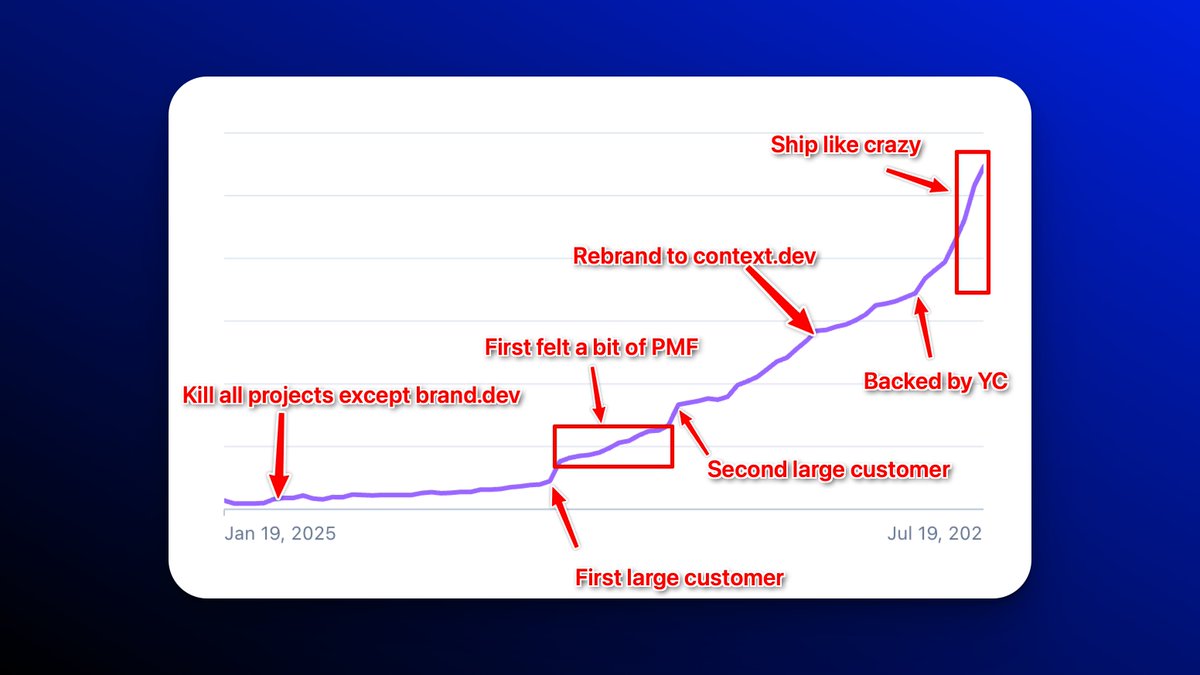

@bodefreelance ·
I really thought the way for SaaS to grow is… -> Adding more features. -> Making the UI smoother than others. -> Consistently talking about the app. Which worked a bit, but… Where I saw the most growth was when I started: -> Understanding the audience. -> Speaking with them daily to understand their pain. -> Asking for feedback consistently on their experience. That’s what actually works. If people feel cared about, they will stay. And even more… They will recommend their friends to you. You should focus more on the people than the product itself. How are you currently interacting with your ICP?

@BigBrainBizness ·
Facebook VP of Growth Alex Schultz on the single most important metric for startups: Alex has advised multiple startups throughout his career, including Airbnb and Coursera. Across all of them, one pattern keeps repeating itself. "Retention is the single most important thing for growth." He explains how to measure it: "If you look at this curve, percent monthly active versus number of days from acquisition, if you end up with a retention curve that asymptotes to a line parallel to the x-axis, you have a viable business and you have product market fit for some subset of market." In other words: plot your monthly active users against the number of days since they signed up. If that curve eventually flattens out into a horizontal line, you've found product-market fit with at least one segment of users. If it doesn't flatten? Alex is blunt about what to do next: "Don't go and do growth tactics. Don't go and do virality. Don't hire a growth hacker. Focus on getting product market fit. If you don't have a great product, there's no point executing well on growing it because it won't grow." This is the trap Alex sees founders fall into again and again: "Number one problem I've seen inside Facebook for new products, number one problem I've seen for a startups I've advised has been they don't actually have product market fit when they think they do." The lesson? Before you spend a dollar on growth, look at your retention curve. If it's still trending toward zero, no amount of clever marketing will save the business. Fix the product first, then pour fuel on the fire.
 Watch video
@stfu_aayushiii ·
Hidden Gems of the Internet In 2001, an 18-year-old self-taught programmer named Varun Shoor (@varunshoor) dropped out of college in Jalandhar, Punjab. He had a simple realization: the customer support software available for online businesses was slow, clunky, and incredibly expensive. Working alone from a small room in a tier-2 city, he coded a clean, lightweight helpdesk platform from scratch. Everyone told him it was impossible to build a global software-as-a-service (SaaS) company from a small town in India without a tech degree or outside capital. He ignored the noise. Since he couldn't afford a sales team, he relied heavily on product-led growth. He built an incredibly intuitive user interface, targeted small-and-medium internet companies globally, and let the software sell itself. While the tech world was obsessed with raising millions in funding rounds, Kayako remained 100% bootstrapped. That tiny, zero-funding operation in Punjab quietly scaled until it was serving over 50,000 corporate clients globally—including NASA and Sega—before being successfully acquired by a major US enterprise group. The takeaway: Pedigree and location are completely secondary to execution speed. If your product solves a universal bottleneck, the market doesn't care if you're building from Silicon Valley or Jalandhar. What do you think was the real turning point behind Kayako’s global scale?


@victor_bigfield ·
my exact distribution playbook for redditgrow, by revenue stage: $0 → $1: cold DMs on x. manual, awkward, the only thing that works when nobody knows you exist. $1 → $100: reddit replies. not promo. real answers in subreddits where people were already complaining about the problem. $100 → $500: one viral tweet. not planned. just posted my honest numbers and people shared it. $500 → to the moon : the product itself. users started telling other users. that part took 3 months and i still can't believe it works. 10 dead products taught me there is no clean funnel. there's just showing up in the right room at the right time with something that actually helps.


@iamfra5er ·
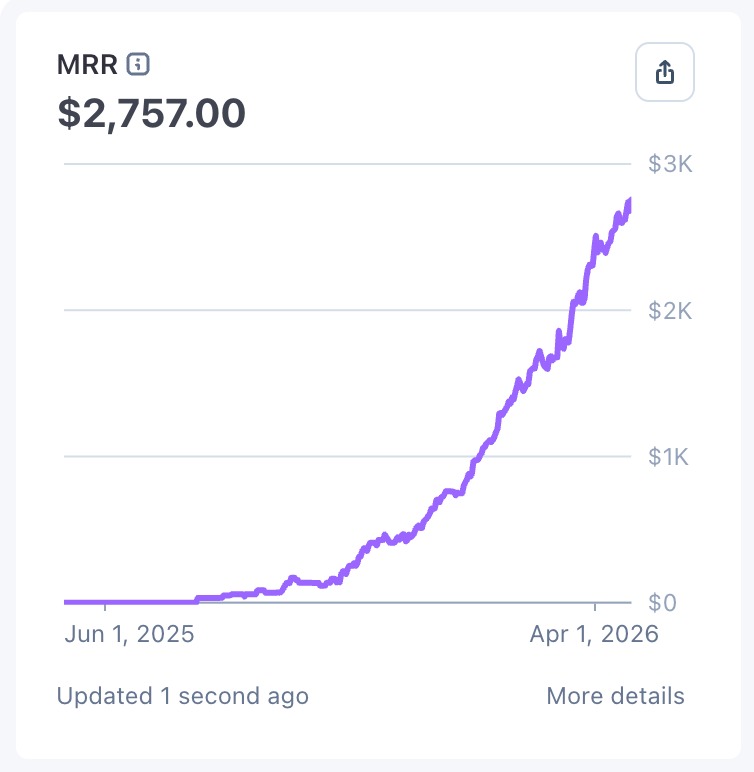
>Be Jakub Mužík >Launch Leadverse to help founders solve the real problem: selling what they built >Zero startup cost, all organic from Reddit >Post asking people what they're building >Run their tools through Leadverse >Send back 5 posts of people asking for their exact product >Most sign up, several convert >Start at $0 CAC — every customer from organic Reddit posts >Add automated DMs, competitor analysis, real-time alerts >Try Bluesky scanning >Discover the platform has literally zero posts asking for tools >Delete the feature >Want to quit multiple times because bootstrapping alone is brutal >Development, marketing, support, SEO — all you >Keep going anyway >Hit $2,757/mo at 70% margin Built a lead-gen SaaS with zero ad spend by being the product's own best use case. Jakub Mužík is absolutely insane

@nrmehta ·
Spoke to a CEO of a $140M ARR SaaS co yesterday. Profitable. Growing modestly. But churn is a big issue. The old playbook used to be to retain customers by: * Building a great product * Managing quality and uptime * Delivering rapid time to value * Ensuring strong adoption * Verify value and outcomes with your key stakeholders What's concerning now is many SaaS cos of all sizes (from AI native to mature) are experiencing churn even for customers that check all of those boxes. The work right now is to rethink your value proposition and reason for existence - not just shuffle deck chairs on the Titanic. This is not a Customer Success or CRO problem - it's a founder/CEO challenge. The captain needs to lead. Companies like Intercom show it's possible to not only avoid the glacier, but glide into open seas. But keep "sailing faster" at your own peril.

@0xDipo ·
Most web3 products aren’t meant to grow. They’re built by developers… for developers. And that’s the part nobody wants to admit. We keep talking about: • Growth strategies • Marketing funnels • KOL campaigns But ignore the obvious: You can’t grow what normal people can’t use. As someone transitioning from ghostwriting into growth… This is the hardest thing to unsee, and I’m beyond frustrated ngl. You look at most products and realize: They’re not designed for users. They’re designed for: • Other builders • Insiders • People who already “get it” So when a growth lead comes in… What exactly are they supposed to grow? Because growth isn’t magic. It’s not: • More tweets • More influencers • More noise Growth is: Making something easy to understand, easy to use, and easy to spread. But if the product itself isn’t consumer-facing… No strategy fixes that. And that’s why a lot of web3 “growth” feels like performance. Until web3 starts building for real users… “Growth” will keep looking like activity instead of results. This is me ranting to the timeline because I want better, better products, better key opinion leaders that actually lead opinions and copying it.

@RetentionAdam ·
Sometimes a salesperson gets in the way of your PLG, and we had it happen twice… So we removed our sales department entirely. The first one was trying to sell an enterprise version of the product… but the problem is that everything you need to build for an enterprise customer is completely different from everything you need to build for a PLG product. > Different onboarding > Different support > Different features > Different everything We were building a PLG product, so that rep was selling something that didn't exist yet, and probably shouldn't have existed at that stage anyway. (Which didn't work out) The second one was a good person, a normal sales rep. But people were just too lazy to use the self-serve channels, so they booked a call instead with our sales rep for support… So we removed both. Nothing changed in sales. You would have never known the function was ever there, and that told me everything I needed to know about what we'd actually built. RB2B is a dead-simple PLG product. It does one thing. You can watch it do that thing in about five minutes. Pre-sale for a product like this can be handled entirely by AI. The simpler your product, the more this applies. The more complex your software, the more you actually need humans involved. But if you're building PLG and your first instinct is to hire a sales rep, just ask yourself what they're actually going to do all day. If they’ll answer questions that the product could answer itself… you don’t need a sales team.

@omarships ·
Nobody talks about user activation. Founders obsess over acquisition and filling the top of the funnel. > Tweets > Reddit. > LinkedIn outreach. > Cold emails. > Content. Then they wonder why nobody converts. The difference between your product and your competitors product that prints revenue with the exact same features. If activation is a separate step, you’ve already lost.

@seraleev ·
Revenue growth can also come from product decisions. A simple example: a math-solving app. The standard flow: you take the user through onboarding, show a paywall and then drop them into the app where they have to figure things out. But you can do it smarter. Right after onboarding (or even during it), open the camera so the user starts with what actually matters – solving their problem. They scan a task and instantly see how the app helps. The difference is simple: in the first scenario, users might never tap the key button. In the second, you eliminate that risk by triggering the camera automatically.

@ttunguz ·
Yesterday, Figma filed its beautifully designed S-1. It reveals a product-led growth (PLG) business with a remarkable trajectory. Figma’s collaborative design tool platform disrupted the design market long-dominated by Adobe. Here’s how the two companies stack up on key metrics for their most recent fiscal year [see attached image]: Figma is about 3% the size of Adobe but growing 4x faster. The gross margins are identical. Figma’s 132% Net Dollar Retention is top decile. The data also shows Figma’s Research & Development spend nearly equals Sales & Marketing spend. This is the PLG model at its best. Figma’s product is its primary marketing engine. Its collaborative nature fosters viral, bottoms-up adoption, leading to a best-in-class sales efficiency of 1.0. For every dollar spent on sales & marketing in 2023, Figma generated a dollar of new gross profit in 2024. Adobe’s blended bottoms-up & sales-led model yields a more typical 0.39. The S-1 also highlights risks. The most significant is competition from AI products. While Figma is investing heavily in AI, the technology lowers the barrier for new entrants. Figma’s defense is its expanding platform—with products like FigJam, Dev Mode, & now Slides, Sites, & Make. These new product categories have driven many PLG AI software companies to tens & hundreds of millions in ARR in record time. Given its high growth & unique business model, how should the market value Figma? We can use a linear regression based on public SaaS companies to predict its forward revenue multiple. The model shows a modest correlation between revenue growth & valuation multiples (R² = 0.23). Figma, with its 48% growth, would be the fastest-growing software company in this cohort setting aside NVIDIA. A compelling case can be made that Figma should command a higher-than-predicted valuation. Its combination of hyper-growth, best-in-class sales efficiency, & a passionate, self-propagating user base is rare. Applying our model’s predicted 19.9x multiple to estimate forward revenue yields an estimated IPO valuation of approximately $21B 2 - a premium to the $20B Adobe offered for the company in 2022. The S-1 tells the story of a category-defining company that built a collaborative design product, developed a phenomenal PLG motion, & is pushing actively into AI. The $1.0 billion termination fee from Adobe was received in December 2023 and recorded as “Other income, net” in Fiscal Year 2024 (ending January 31, 2024). The large stock-based compensation charge of nearly $900 million is related to an employee tender offer in May 2024. Both of these are removed in the non-GAAP data cited above. By taking Figma’s 48.3% trailing twelve-month growth rate & discounting it by 15% (to account for a natural growth slowdown), the model produces a forward growth estimate of 41.1%. This would imply forward revenue of about $1.1b. https://t.co/gYQHAWxLco


@rheejust ·
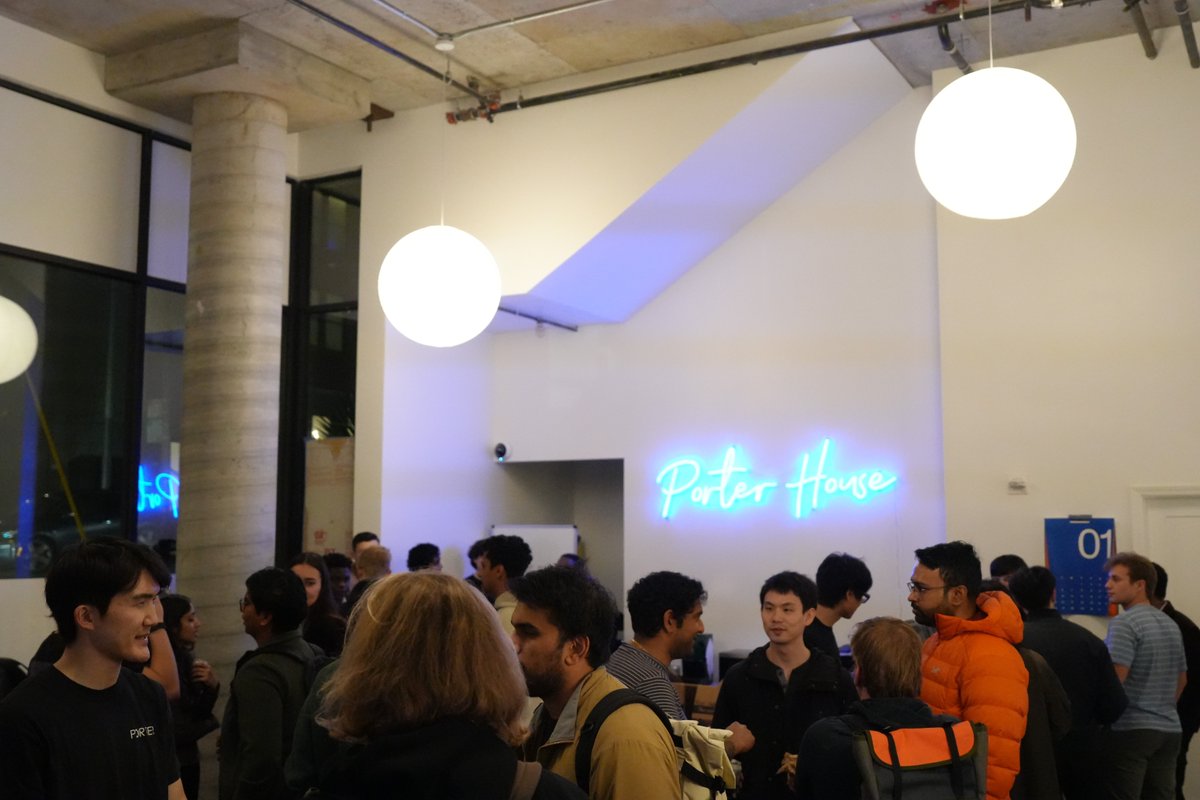
Porter just raised a $20M Series A with ZERO salespeople. Here's why: There are two schools of thought post Series A: School 1: Open every channel. Sales, marketing, paid ads, content, partnerships. Throw money at everything. School 2: Find the one channel that's already working and max it out until it returns diminish. Then add new channels. We're strictly camp 2. Our one channel: bottoms-up startup adoption, word of mouth, organic growth in YC, and product-led growth. Right now? It’s working. Hundreds of companies have moved away from Render, Heroku, Vercel and Railway without us having to hunt them down. Could we get positive ROI from sales? Probably. But to quote Pedro from Brex: "All growth is about alpha." At Series A, our view is that the primary game is identifying the one channel where there's maximum alpha and exploiting it completely. You put all your chips on red and go after it. Saturate it, max it out, and do everything you can until it's depleted. ONLY when marginal returns start to taper do you mix in new channels like sales and paid ads. But not before. Focus is the most important thing a startup can have. We're not ready to dilute attention across five growth channels. We're still extracting massive value from the one that works. When we see it plateau, we'll dive deep into sales and marketing.

@saguppa ·
6 habits that took my SaaS from $40K to $80K MRR in 12 months. Three years stuck at the same number. A new explanation for it every quarter. In 2025 I rebuilt our entire growth engine from scratch. If you're stuck between $10K and $100K MRR, the problem probably isn't effort. You're just doing things one at a time. That's the trap. Here are the 6 habits I now run in parallel, every single week: 1. 𝐅𝐢𝐱 𝐭𝐡𝐞 𝐩𝐫𝐨𝐝𝐮𝐜𝐭 𝐞𝐯𝐞𝐫𝐲 𝐰𝐞𝐞𝐤: I migrated our LinkedIn API backend in March 2025. Trial to campaign creation rate went from 20% to 50%. 3 years of flat growth came down to a backend problem I kept ignoring while pouring budget into marketing. You cannot outmarket a broken product. You have to have a solid engineering team, or yourself, or Claude Code agents fixing the product based on user feedback every week. We do one release per day now. 2. 𝐏𝐨𝐬𝐭 𝐨𝐧 𝐋𝐢𝐧𝐤𝐞𝐝𝐈𝐧, 𝐭𝐡𝐞𝐧 𝐟𝐨𝐥𝐥𝐨𝐰 𝐮𝐩 𝐞𝐯𝐞𝐫𝐲 𝐜𝐨𝐦𝐦𝐞𝐧𝐭𝐞𝐫: 5 people on my team post weekly, and we go viral every week. For example, one post hit 3,000 comments. Most of them would not have converted into revenue on their own. My AI reached out to every single commenter automatically. That turned into 652 free trials. And then $2K MRR. From one post. The content gets comments, and the system turns comments into pipeline. Without the system you're just building an audience that forgets you. 3. 𝐔𝐬𝐞 𝐲𝐨𝐮𝐫 𝐨𝐰𝐧 𝐩𝐫𝐨𝐝𝐮𝐜𝐭 𝐭𝐨 𝐠𝐫𝐨𝐰 𝐲𝐨𝐮𝐫 𝐨𝐰𝐧 𝐩𝐫𝐨𝐝𝐮𝐜𝐭: I put my own LinkedIn account through the exact setup I sell. Just last month, I sent 649 connection requests, out of which 56% accepted and 35% replied. With 0 bans in 7 months. That system now runs across 5 SDR accounts and generates $22K in monthly pipeline for $0 in tool cost. If your product works, put yourself on it and publish the real numbers. 4. 𝐂𝐨𝐥𝐝 𝐞𝐦𝐚𝐢𝐥 𝐨𝐧𝐥𝐲 𝐭𝐨 𝐥𝐨𝐨𝐤𝐚𝐥𝐢𝐤𝐞 𝐚𝐮𝐝𝐢𝐞𝐧𝐜𝐞𝐬: Mass cold email burned three hundred domains in a month. I rebuilt the whole approach around two audiences only: lead gen agencies looking to white label LinkedIn automation, and developers building on the LinkedIn API. One custom variable, a short message and one clear offer. Last month a $3K MRR deal closed from a cold email to an agency in Brazil. 5. 𝐀𝐭𝐭𝐞𝐧𝐝 𝐞𝐯𝐞𝐧𝐭𝐬, 𝐭𝐡𝐞𝐧 𝐞𝐦𝐚𝐢𝐥 𝐞𝐯𝐞𝐫𝐲 𝐚𝐭𝐭𝐞𝐧𝐝𝐞𝐞 𝐚𝐟𝐭𝐞𝐫𝐰𝐚𝐫𝐝: I go to SaaStr and SaaSBoomi every year. I don't only get leads from networking at the events. I also scrape the attendee list after. And mass email everyone. 6. 𝐓𝐫𝐞𝐚𝐭 𝐰𝐡𝐢𝐭𝐞 𝐥𝐚𝐛𝐞𝐥 𝐚𝐠𝐞𝐧𝐜𝐢𝐞𝐬 𝐥𝐢𝐤𝐞 𝐚 𝐝𝐢𝐬𝐭𝐫𝐢𝐛𝐮𝐭𝐢𝐨𝐧 𝐜𝐡𝐚𝐧𝐧𝐞𝐥: White label is 5% of my customers and 25% of my revenue. One UK agency signed up at 5 seats last March. They're at 80 now without a single additional sale on my end. When they grow, I grow. That only happens if you actively manage the relationship, not treat it like a pricing tier. What habits do you need to double your revenue?

@neilpatel ·
Most products make users jump through hoops before delivering a single moment of value. Email verification. Profile setup. Forced tutorials. Plan selection. That's not onboarding. That's a gauntlet. The brands winning on retention flip the sequence. Core value first. Everything else second. #SaaS #ProductMarketing #CustomerRetention #GrowthHacking
 Watch video
@JHTScherck ·
Hate to be the guy coining a new "led-growth" term, but we're seeing a new type of growth across our customer base: Vibe code-led growth. When people build their own tools with Claude and Codex, they often need additional services. AI is telling people what to buy (and what to avoid!) when vibe coding. AI is also price sensitive and wants you to avoid sales calls and just get to building. Adjust accordingly.
@Hartdrawss ·
This reddit user SaaS hit 0 → $25K MRR and exit in < 2 years his advice? painfully simple. here's the breakdown : 1/ PLG didn't get him from 0 to 1 >clean signup meant nothing without buying intent >he called almost every trial user early >most calls were awkward and useless >a few completely changed his positioning 2/ demos became the learning loop >self-serve didnt mean skipping the call >demos dont scale, but learning does >confused users exposed hidden product gaps >live objections made the product sharper 3/ content worked late, not early >he wrote zero content early, big mistake >old posts generated inbound near the sale >specific articles became long-term acquisition assets >content felt useless before it compounded 4/ specific content beat polished advice >generic startup advice got ignored fast >exact failures made the lessons believable >wrong assumptions created the strongest posts >founders trust scars more than frameworks 5/ boring problems made the business >B2B finance teams were leaking money >not sexy, but expensive enough to fix >clear ROI made buying easier >boring pain created real willingness to pay the actual lesson: >talk before automating >demo before scaling >write before ready 0 to 1 is uncomfortable. thats why founders avoid it.


@jasonlk ·
.@GammaApp hit $100M ARR with a team of 50. Profitably. 50M users, 600K paying subscribers. And they did most of it with zero sales team and zero marketing spend. Still ... CEO @thisisgrantlee wishes he'd added a sales team earlier. Grant broke down how at SaaStrAI 2026: 1⃣Build word of mouth before you spend a dollar on marketing. It's the one channel that amplifies everything else and can't be bought. 2⃣The first 30 seconds of your product have to be magical. Not good. Magical enough that users tell their friends unprompted. 3⃣Become a creator yourself before you run creator marketing. You can't coach a motion you've never done. 4⃣Dogfood to build conviction, not just catch bugs. Gamma ran two products in parallel for 6 months and let the energy decide which one to kill. 5⃣Pricing and packaging is never done. Seat vs usage vs API is a live question forever now. 6⃣Don't wait too long to add sales. This was Grant's biggest regret. They rode inbound so hard they never engaged their own self-serve base, and dropped real team and department demand sitting right in front of them. 👉Product-led doesn't mean sales-never. https://t.co/m0xIDTVOMT

@SSage38676 ·
Here's the 8-step process to crack your acquisition funnel : 1. Strategy not vibes Market + competitor + customer reviews → ICP → positioning → message architecture. Ex: "For solo founders drowning in spreadsheets, we turn tasks into a tracked workflow." 2. One North Star, tested in order Acquisition → Activation → Revenue. Test out of order, learn fake lessons. Ex: North Star = weekly active workspaces, not signups. 3. Demand in two stages Create (education, trust) → Capture (search, retargeting, lookalikes). Ex: Create = founder-led LinkedIn posts. Capture = comparison-page SEO + retargeting to trial. 4. Landing page does the heavy lifting Obvious offer, fast trust, frictionless next step. Ex: "Set up in 5 minutes" + one customer logo strip + one CTA + email-only signup. 5. Test the right layer Wrong test + wrong signal = noisy data, not insight. Ex: Don't tweak the form fields when nobody's clicking the CTA. Fix the CTA first. 6. Measure on purpose North Star → primary metrics → secondary diagnostics → leading signals when volume's low. Ex: Primary = trial-to-paid rate. Secondary = time-to-first-workflow. 7. CRO: find the drop-off, remove the friction Off-site vs on-site, then top-down: campaign → ad group → creative → page. Ex: Good CTR, nobody signs up = on-site trust problem, not a targeting one. 8. Make it repeatable 1-3 tests/week. Watch the right metrics. Ship one improvement, every week.

@jonahlau_ ·
Every product that removes features after launch follows the same playbook Subsidize early users to compete for market share. Build switching costs, and restrict access when unit economics catch up to growth targets The issue isn't pricing changes. Markets shift, costs increase, business models evolve The issue is selling something at one level and delivering something else after people already made the decision to commit This pattern shows up across SaaS and crypto. Products launch with generous limits then add paywalls. Protocols launch with high yields then cut rewards. Same incentive misalignment, different industries Companies optimize for metrics that look good in pitch decks instead of metrics that reflect sustainable value delivery User count goes up when you're giving away premium features below cost. Retention breaks when you pull those features because the economics never worked What's different about products that survive long-term is they price correctly from the start They don't use temporary subsidies to fake product-market fit. They set expectations based on what they can actually maintain at scale. They accept slower growth in exchange for user trust Most users care more about reliability than getting a deal. But most companies care more about acquisition velocity than retention quality So they promise what they can't deliver and act surprised when users feel misled

@bandanjot ·
Are we prioritizing the wrong metrics in product management? In the rush to deliver results, many Product Managers fixate on metrics that look good on paper but miss the crux of what truly drives growth: customer value and experience. Metrics like active users or feature usage rates are essential, but they often mask deeper issues—like a disengaged user base or features no one asked for. By focusing excessively on these vanity metrics, we end up in a feedback loop that reinforces our assumptions rather than challenging them. To break free, we need to embrace a mindset shift. What if we prioritized metrics that directly reflect user satisfaction and product impact? Instead of simply tracking usage, we could leverage qualitative insights like customer interviews and support feedback. This approach can guide our roadmap to foster genuine engagement and loyalty. Remember, the happiest products grow organically—not only through features but through a profound understanding of what users actually value.

@RandallKanna ·
I'm working on making Kelsey’s onboarding much faster after reading Product-Lead Onboarding by @RamliJohn. I'm obsessed! Discovered the book from ChatGPT search as well. I had users writing out a ton of website details before they got the 'Aha' moment. Now, a user enters their site and Kelsey scans it. We find the product name. business type, positioning, competitors, and prompt topics. Then the user can just verify what we've found. That feels much better than asking someone to fill out a LONG setup form before they know whether the product is useful.
@RandallKanna ·
Speeding up the onboarding flow for Kelsey. After starting Product-Led Onboarding this week, I wanted to get my user to a faster 'Aha' moment and see value from the app sooner. So I changed the flow to pre-fill user data for them instead of having the user add info.


Best Product-Led Growth tweets
Xholic studies what works in your niche, drafts posts in your voice and schedules them for the hours your audience is online.
$0 today · Cancel anytime
Browse all tweet collectionsKeep exploring