Messaging and product storytelling
Turn features into clear, customer-centered outcomes and a consistent, easily repeated story across websites, content, and sales.
52%
Best tweets about Product Marketing
Discover the best tweets about product marketing, including positioning, messaging, launches, research, adoption, enablement, and competitive strategy.
Product positioning, messaging, customer research, launches, adoption, competitive analysis, sales enablement, and measurable outcomes.
Original Xholic analysis
Product marketing in these posts starts with understanding the buyer and making the product’s value easy to explain, discover and test. Contributors emphasize customer language and outcomes over feature lists. They differ on whether weak traction calls for better positioning or changes to the product.
52% of posts
All-time engagement
38% of posts
Published in 90 days
Conversation map
Turn features into clear, customer-centered outcomes and a consistent, easily repeated story across websites, content, and sales.
52%
Define who a product is for, its category, distinctive value, and credible advantage over alternatives; reposition before assuming the product needs rebuilding.
36%
Build awareness before launch, coordinate announcements and advocates, publish across channels, and keep communicating after release.
34%
Identify target segments, customer pain, buying language, objections, demand, and competitive alternatives through conversations and market signals.
32%
Test products, offers, audiences, creative, and messages; use conversion, acquisition, retention, and customer behavior to distinguish marketing problems from product problems.
26%
Reduce friction from discovery to activation, amplify genuine user stories, and turn continued product improvements into confidence and advocacy.
24%
Connect product, marketing, and sales around one commercial story, including PMM ownership, sales enablement, launch coordination, and AI-assisted workflows.
22%
Frame emerging needs, establish a new point of view, and educate buyers when an unfamiliar product requires more than a feature pitch.
6%
Tone and stance
Performance benchmark
Posts with media make up 32% of this collection. Their median all-time score is 7.77, compared with 7.38 for text-only posts.
Format mix
Consensus and debate
Shared view
Start with the target segment, its problem and the language customers use. Translate features into recognizable benefits, and keep the story consistent across the website and sales conversations.
Shared view
Build awareness and check the path to the product before announcing it. Keep publishing and responding after release rather than treating the launch post as the finish line.
Shared view
Compare what customers want with what competitors claim, then emphasize a difference the product can substantiate. Sales objections and lost deals can inform that positioning.
Open debate
Some recommend changing the words, segment or distribution before rebuilding. Others caution that poor repeat use or persistently weak performance may point to the product itself. They propose checking customer behavior to help distinguish the problems.
Open debate
One view calls for educating buyers about an emerging need. Another warns that products requiring extensive explanation can be harder to acquire customers for through ads.
Open debate
A campaign participant describes coordinated paid influencer engagement around launches. A competing view warns against gaming attention and prioritizes clear messaging and retention.
What performs
The supplied theme median all-time scores are 11.09 for positioning and 12.873 for PMM operations, versus 7.65 overall. These describe the evidence set, not a measured effect of either practice.
Lists have a supplied median all-time score of 23.13, compared with 5.402 for opinions and 3.787 for case studies. One launch-and-reposition list is a major outlier and should not stand in for a typical post.
Contributors propose testing messages and offers against measures such as conversion and return on ad spend, then checking repeat use to help distinguish an awareness problem from a product problem. One CRO case reports a forecasted, not realized, revenue gain.
Statistical standouts
Creator landscape
The five most represented creators account for 20% of the selected posts.
1. Alexa | Startup founder
@alexabelonix
2 posts
2. Hardik Gohil
@GohilHardy
2 posts
3. Oliver Kenyon
@oliverkenyon
2 posts
4. Pe:p Laja
@peeplaja
2 posts
5. Paul Mit
@pmitu
2 posts
6. Abhz 💭
@Aabbhhz
1 post
One creator recommends PMM as an early marketing hire to handle positioning, launches and sales enablement. Another argues that product management should own messaging from the start so the product and its story develop together.
GohilHardy emphasizes launch preparation and follow-through; alexabelonix emphasizes testing language and defensible differentiation. Their paired posts offer complementary approaches to research and go-to-market execution.
Since the previous snapshot
Themes, sentiment, stance, and post format are classified per tweet. All counts, shares, medians, creator concentration, freshness, and performance comparisons are then calculated directly from the published snapshot.
Xholic's all-time score compares engagement while accounting for reach, post age, and creator consistency. It is used for relative comparisons within this collection.
This report analyzes the exact 50-post snapshot shown below. AI identifies editorial categories and drafts explanations; all statistics are calculated from the snapshot, and every narrative claim is checked against cited posts before publication.
Best Product Marketing tweets
Ranked 01–50

@marclou ·
Instead of adding more features, do this: 1. Launch everywhere (Hacker News, Product Hunt, Reddit, X, LinkedIn, YouTube etc.). Spend a week giving your MVP its best shot. 2. (if #1 didn't take off) — Rebrand. New name, new logo, new design, new landing page, new headline. Same product. Repeat #1 3. (if #2 didn't take off) — Target new market segment experiencing the same problem your product solves. Repeat #1. Repeat #2. If your startup isn't taking off, you need more marketing than coding.

@tfadell ·
Most tech companies break out product management and product marketing into two separate roles: Product management defines the product and gets it built. Product marketing wires the messaging- the facts you want to communicate to customers- and gets the product sold. But from my experience that's a grievous mistake. Those are, and should aways be, one job. There should be no separation between what the product will be and how it will be explained- the story has to be utterly cohesive from the beginning. Your messaging is your product. The story you're telling shapes the thing you're making. I learned story telling from Steve Jobs. I learned product management from Greg Joswiak. Joz, a fellow Wolverine, Michigander, and overall great person, has been at Apple since he left Ann Arbor in 1986 and has run product marketing for decades. And his superpower- the superpower of every truly great product manager- is empathy. He doesn't just understand the customer. He becomes the customer. So when Joz stepped into the world with his next-gen iPod to test it out, he fiddled with it like a beginner. He set aside all the tech specs- except one: battery life. The numbers were empty without customers, the facts meaningless without context. And, that's why product management has to own the messaging. The spec shows the features, the details of how a product will work, but the messaging predicts people's concerns and finds way to mitigate them. - #BUILD Chapter 5.5 The Point of PMs

@cjfeth ·
Lessons from 8 years of product testing: 1. Don’t get emotionally attached to a product, if you've pushed everything you can - cut & move on - no emotions, just learnings 2. Only test a product that has pre-existing PMF (unless very experienced & you feel confident in pioneering a product) - operate where there is alredy pre-existing demand & huge tam. Have multiple validation points. - Amazon volume - Traffic volume - Kalodata volume - Google volume - Reddit volume All of these can be used as signals 3. If only 1-2 competitors & they’re not scaling hard - red flag. either small tam, or not enough urgency/pain in the market 4. Don’t over-research before testing. Two weeks pre-launch research is wasted time. Should be 1-3 days max before launch, then continious. Focus on data, not assumptions & validate fast through metrics (hook/hold rates, atc %, ROAS etc.) 5. Build a framework for testing: validate problem size (search volume, forums, reddit, amazon reviews) validate urgency (are people actively solving it) validate scalability (look for those multiple competitors scaling hard already, look through all selling platforms) test 2-3 offers, multiple angles/avatars & 20-50 ads, get feedback, and move if no traction

@cormachayden_ ·
everyone thinks marketing is ads, influencers, seo and ugc it's not great marketing is inventing a new problem in your customer's mind then building an exceptional product that solves it the best brands don't capture a market, they create one: chatgpt > llm companion oura > fashionable health tracker cursor > ai code editor coinbase > crypto trading ag1 > daily greens each one revealed a need people didn't know they had, then became the dominate answer your job: 1. discover new emerging tech 2. uncover how it can help people 3. convince others of this new need 4. introduce your product as the solution 5. design a brand that becomes the trigger 6. improve the product as more people discover the opportunity 7. capture the mass market for oasis it's water: user faces a shelf of bottled water > remembers all water is different > opens oasis to find the best one 99% of your marketing should be education do this right and you build a monopoly anyone who copies you remains a second rate player in the market you created create your own market

@daviefogarty ·
How to launch an 8 figure ecom product the right way in 2026: 1. If nobody can see your product being used in public (or in a day in the life reel), it won't spread. 2. One product, one obsession. Don’t diversify until you've exhausted the first one. 3. Your product is your growth engine, not Facebook. 4. If only your old ads keep working and every new angle keeps dying, the product could have peaked. 5. Gross margin compression has killed more of my brands than bad new product launches ever did. 6 A second product will not fix a first product that’s underperforming. 7. Product timing windows are real. Miss them, and no amount of ad spend saves you. 8. Build products that work on Facebook without needing education. 9. Track creative fatigue monthly, not quarterly.

@brettberson ·
Supabase now has more than 7 million developers building on it. It all started with a tagline change. @kiwicopple changed @supabase's tagline to "Open-source Firebase alternative." Someone posted it to Hacker News the next day. It shot to the top. He hadn't shipped a single new feature. The product was identical to the days before. His takeaway: "Product-market fit is often just product-positioning fit. Before you pivot the product, try pivoting the words. My full conversation with Paul on his path to product market fit.
 Watch video
@Johnsjawn ·
Friend texted me: “If you were building a marketing team from the ground up, who are your first 3-5 hires?” My take: - PMM (best blend of strategic + execution, becomes hub for everything. owns the story; positioning + messaging, pitch/website, sales enablement, segmentation, product launches, and helps shape product direction. I’m biased but whenever I ask others they say PMM is best first hire. Many founders undervalue this and regret it later.) - Growth Marketer/PM (owns all digital channels, including in-product. Expands early traction, experiments to find new levers. very execution-heavy.) - Field Marketer or Community (depends on the company but events, content, forums to grow early customers and create magnets for new ones.) After that it really depends on the company and product... - Creative (identity + assets + ideas; if strong design founder or early hire prod designer that spends 50% of time on the brand then maybe good without FTE.) - Content creator (fuel to the channel engine, adjusted to the biz. customer stories, social / video, research and thought leadership.) - Program specific owner (go deep on a channel that's driving direct ROI; startup programs, influencer, BD style partnerships, affiliates, champions, etc.) - Comms / Storytelling (a point on all things corp and exec comms, new media, PR as needed; can own other things like social and corp marketing and campaigns as you build) Keep flat. The first 3-4 you don't need a head of marketing. They should report somewhere into founding team. Ultimately building toward 3 strong pillars and if you have those may not need a traditional CMO at all: - PMM - Growth / Demand - Comms / Storytelling

@bhalligan ·
The Marketing department is changing. The role of the CMO is changing. Across all the CEOs that I talk to, Marketing is the team that is using AI the most (second to Engineering). The role is becoming more cross functional, more dynamic. @ivanhzhao talks about how this shift at @NotionHQ: - Storytelling is now embedded with the Product team - Demand generation is serve the sales function Those that are part of the Marketing team are now Marketing "and Sales" or Marketing "and Product". This is the evolution to the five tool operator. Links below to my chat with Ivan 👇
 Watch video
@GohilHardy ·
Launching on X soon? Don't hit Post before checking these ☐ Profile optimized ☐ Clear bio ☐ Product link added ☐ Pinned post updated ☐ Landing page tested ☐ Analytics installed ☐ Screenshots/GIFs ready ☐ 20+ meaningful replies before launch ☐ Launch post drafted ☐ First comment prepared ☐ Friends/builders to notify ☐ Follow-up content planned Most launches fail before they launch. Nobody knew they existed.

@Iamceejaymac ·
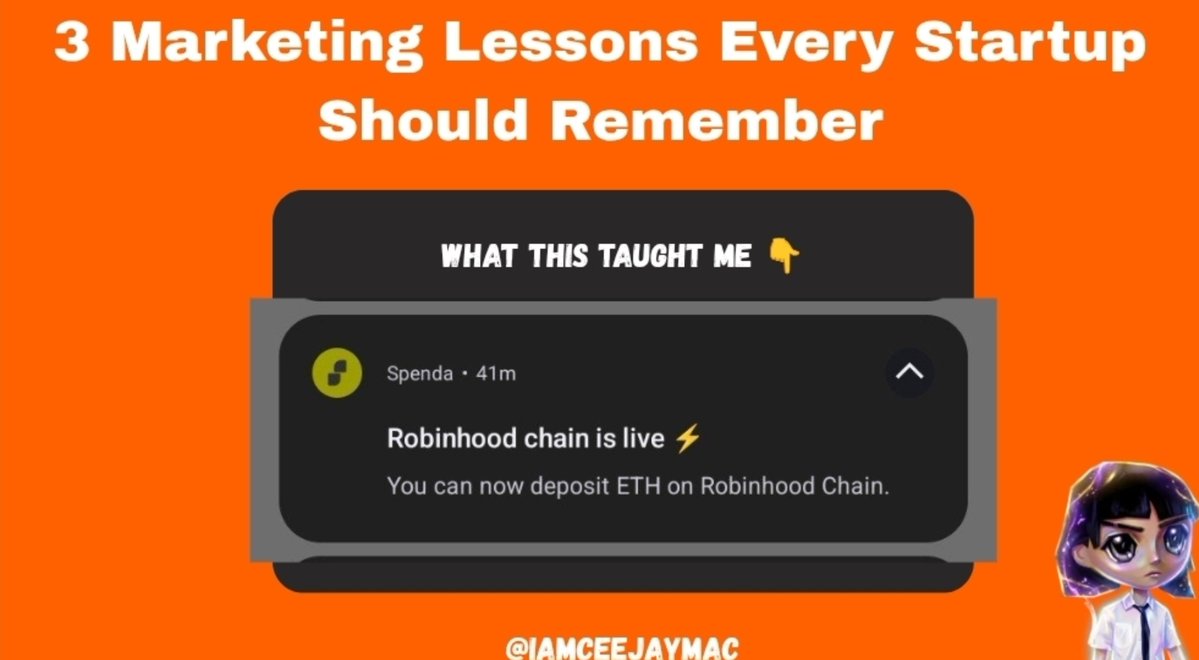
Yesterday, Spenda announced $ETH deposits on Robinhood Chain. Most people saw another product update. I saw three marketing lessons every startup should remember. 1. Distribution is part of the product: A feature doesn't create growth. But getting that feature in front of the right people does. A lot of startups spend months building features, then spend minutes thinking about how people will discover them. But the best teams think about both. 2. Market outcomes, not technology: Most users don't care about integrations tbh. They care about what those integrations let them do. From my experience, the best product marketing answers one question: «"What's better for me today than it was yesterday?"» So, features explain. But outcomes persuade. 3. Every launch is a chance to reinforce trust: One announcement creates awareness. Consistent shipping creates confidence. The products people recommend aren't always the ones with the biggest launches. They're the ones that consistently give users a reason to come back. One thing every founder should ask after shipping isn't: «"Did we build it?"» It's: «"Will the right people discover it, understand it, and care?"» Because marketing doesn't begin after the product is built. Marketing is the system that makes a great product impossible to ignore.

@coreyhainesco ·
The right way to use marketing-skills with Claude↓ Don't pick which skill to run first. You probably won't know the right order anyway. Start with product marketing context — your positioning, audience, and what makes you different. Once that's loaded, the model knows what it's working with. Run copywriting, seo, whatever, it grabs the right context automatically. Foundation first. Everything else follows.
 Watch video
@pmitu ·
👉 10 Marketing questions for builders BEFORE coding: 1. Who is your target audience? 2. Which segment of TA will you start with? 3. What is the one problem you’re solving? 4. What is the main value your product provides to your TA? 5. How will you promote the product? 6. What is your primary marketing channel? 7. Where will you find your first users? 8. What selling points will you use? 9. How are you better than your competitors? 10. What makes your product unique? Bookmark this list 🔖 → get answers → vibe code MVP

@businessbarista ·
Except for a few edge cases, slapping "AI" all over your website is now a negative signal. In the early hype cycle, let's say within a year of ChatGPT release, anchoring your product & marketing to AI made a ton of sense. It was super zeitgeisty and there wasn't a ton of competition yet, so you could earn a lot of cheap eyeballs by trend-jacking. Now, the world looks very different: - There are 60,000+ AI startups - People are jaded by many "AI" companies that are wrappers at best, snake oil salesman at worst - People are numb, AI is now the opposite of novel What does this mean? Lead with novel outcomes to customers' hair on fire problems, and if you're going to tattoo your marketing with AI, just know you're fighting embedded skepticism that's looking for every reason to believe you're all talk.

@darshal_ ·
Most smartphone launches feel the same. New specs. New features. Same story. POVA decided to do the opposite. I walked into a room flooded with deep red lighting, surrounded by designers, creators, and people obsessed with building things differently. And that’s what stood out. The conversation wasn't about megapixels or benchmarks. It was about design. About having a point of view. About creating products that don't disappear into a sea of lookalikes. The POVA8 reveal felt less like a product launch and more like a statement: Stop blending in. DeleteNormal. What impressed me most wasn't the phone itself. It was the confidence behind it. Most brands try to appeal to everyone. POVA seems comfortable appealing to the people who want something different. That's a much harder game to play. And honestly, it's cool to see a smartphone brand take creative risks when everyone else is playing it safe. POVA is cooking. Curious to see where they take this next. #POVA8 #DeleteNormal


@williamkast_ ·
"How to test a new product?" Launch 30 static ads with lots of angles, audiences, and main benefits. Determine what hits. Double down on the most profitable angles. First quantity, then quality.

@alexabelonix ·
The old founder playbook: build product raise money hire sales start marketing later The new playbook is messier: think in public attract the right people test language earn trust turn recurring pain into product sell into the market that watched you solve it A founder personal brand is not a “nice content habit.” It is market research with an audience. Every post is a small test: does this problem resonate? do people trust my framing? does this attract buyers, talent, investors, operators, or noise? Attention is the surface metric. Signal quality is the real one.

@nicktheriot_ ·
My 8 rules for positioning products in skeptical markets (hair growth, weight loss, anti-aging): 1. Align with existing beliefs, don't fight them ("manage pain" vs "cure pain") 2. Use AI animations or Shutterstock to explain mechanism 3. Compare to expensive alternative (position as affordable, not cheap) 4. Show visual product differentiation (wireless vs wired = obvious upgrade) 5. Switch voice narrator → user testimonial (creates dynamic) 6. For lower-funnel: "Spot the fake" ads (only works for viral products with large TAM) 7. Never make false claims without third-party lab proof (defamation lawsuits) 8. Compare process, not just product ("we do X, mass producers do Y") If you aren't using these, you're burning ad spend.

@codyschneider ·
the marketing agents you're building have them research your brand scrape everything it can about your company then have it interview you on where knowledge gaps exist give it raw unfiltered transcript responses once your marketing agents have the biology of your company, it can do 10x better work for you here's the most important things for it to know: Who you actually sell to — not "mid-market B2B" but the exact person. Name them. What keeps them up at night. What they've tried before that failed. Why they choose you — the real reason. Not your positioning deck. The actual moment a customer decides you're worth the money. What you uniquely know — the insights your team has gathered that no competitor can easily copy. The hard-won lessons. The unconventional takes. Where you lose deals — the objections you hear on sales calls. The questions that make prospects hesitate. The reasons deals die. Your voice — not brand guidelines. How you actually talk. The phrases you use. The things you'd never say. What you're building next — roadmap reveals intent. It shows your agent where the market is going before anyone else sees it. The stories that close — your best case studies, the narratives that make prospects say "that's us." this is the biology once your agent has this, it can write content that sounds like you, pitch angles that resonate, and create campaigns that feel like they came from someone who actually works there because they do your marketing agent is now the most aligned teammate you have and it doesn't sleep

@Hartdrawss ·
90% of founders don't even hit $1000 MRR. here's the full execution playbook ( 4-step Framework ) : 1/ TALK TO CUSTOMERS dont send a typeform. get on a call. ask 3 questions only: > what were you trying to do when you found us? > what almost stopped you from signing up? > what would you tell a friend this product does? shut up and listen. dont pitch. dont defend. 2/ IMPROVE THE PRODUCT dont build what sounds cool. build what came up in 3+ calls. framework: > if 1 person says it, note it > if 3 people say it, prioritize it > if 5 people say it, drop everything and ship it one improvement per week. no exceptions. 3/ CREATE CONTENT document the build. not the wins. the process. every week you should have: > 1 thing you learned from a customer call > 1 thing you shipped and why > 1 mistake you made and how you fixed it thats 3 posts. thats your content strategy ! 4/ FIND MORE CUSTOMERS TO TALK TO dont wait for inbound. go find them. where your ICP already hangs out: - reddit threads complaining about the problem you solve - twitter replies under relevant posts - discord/slack communities - cold DMs with a specific observation, not a pitch target: 5 new conversations booked every week. the loop: talk → build → document → find → repeat thats it. thats the entire pre-PMF playbook.
@pmitu ·
3 marketing principles that never stop working: 1 - Understand exactly who you're selling to 2 - Focus on the problems they desperately want solved 3 - Show how your product helps them get the outcome Marketing isn't complicated. It's just forgetting these fundamentals.
@GohilHardy ·
The product launch checklist that works: • Announce what you're building before it's ready • Share progress while building • Show the first working version • Ask for feedback publicly • Improve based on replies • Launch with people already aware • Keep talking after launch

@emmettshine ·
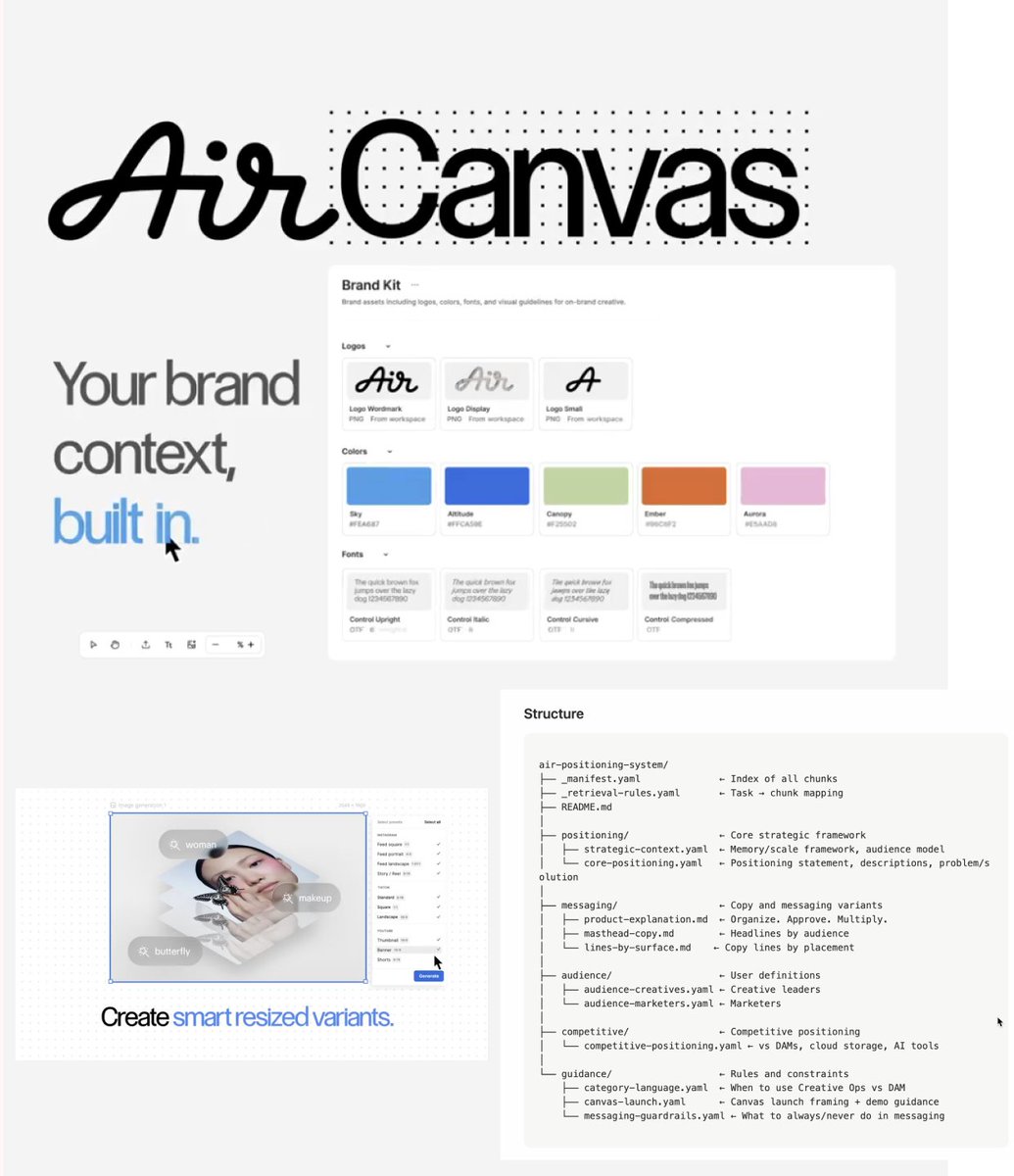
Air (@airHQ) Canvas is live! It’s a huge leap forward as a product, and service from Air, one we’re excited to use ourselves. @littleplainsxo helped with the strategic sprint behind this launch’s positioning a few months back: positioning, narrative architecture, messaging system; the foundational thinking that the product story and go-to-market are built on. For a powerful new AI-first tool, Air asked us to use our proprietary blends of AI-first research & strategy. You can see of our markdown files, Notion docs, strategy frameworks in the carousel - that helped inform that foundation. All the design, final copy, and advertising is Air’s team excellent work. Proud of this one. Congrats Air! Credits: @DanBatten - Lead Strategist, Generative Director Emmett Shine - Creative Director Caroline Bel-Kher - Lead Creative Product Manager @alexleiphart - Digital Strategy Michelle (Savino) Riis - Account Manager Laura Romero - Operations Client: @shanehegde - CEO, Lead Emmeline Vu - Product Marketing Lead + @arieljrubin - Chief Connections Officer

@denk_tweets ·
how to do a live product launch (from someone who just did one to nearly 15k people): I just spent the past 3 months of my life preparing to announce 7 products in a 21 minute stream… here's how we did it: 1. lock the timeline with product & engineering I needed to know exactly what would be going live as part of the event, and they needed to know that we were counting on them to deliver every other decision (branding, scripting, studio space, marketing) sits on top of that date 2. start a waitlist & brand it sexy this was one of my favorite parts, and I owe it all to our creative director and designers. they came up with a beautiful theme and design system to communicate "the future, in focus" then we built a landing page for people to sign up and RSVP 3. find the space & lock the date we discovered a beautiful loft in greenpoint and landed on a date in early may that worked with everyone's schedules 4. scripting (the hardest part) writing a script about products and features that are still several months away from launching isn't easy. and once the recording is complete, there's no going back 5. start marketing 10 weeks out we sent a steady stream of emails to our users to encourage them to join, kept a steady drip of social content running through the promotion period, and onboarded about a dozen beta users who got early access in exchange for promoting the event on their socials I've also tied it into my own socials and newsletter as organically as I could for the past few months 6. everyone is distribution the entire company updated their banners on their social profiles and added custom email footers encouraging recipients to RSVP 7. editing for the past month we were trading emails nonstop with production companies: iterating creative direction, offering feedback, and making edits around the clock the final version that aired on Thursday was almost unrecognizable from the first few cuts we received BONUS: pushups to get the flood flowing before recording // it's been a long few months, but it's genuinely the project I'm most proud of in my entire career. I wanted bigger and better this time around, and I think we delivered I went into a lot more detail on the BTS in my newsletter if you want to read it btw: https://t.co/KFix3ioENa


@askOkara ·
every feature you ship is a content opportunity most founders / marketers announce it on x and move on here's a better approach: 1. post the announcement on x 2. write a linkedin post announcing the feature 3. write a short article 4. find reddit threads where people complain about that exact problem and drop a comment 5. include that feature in the weekly email you send to users ship it once, publish everywhere
@alexabelonix ·
A practical positioning exercise: List: • what customers want • what competitors say • what you can prove • what you do differently Your positioning lives in the gap between sameness and proof.

@xelebofficial ·
Agentic AI is moving out of the demo phase. The clearest signal is not one product launch. It is the language the market is starting to use. Less: “AI assistant” “chatbot” “prompt tool” “cool demo” More: “workflow” “governance” “deployment” “memory” “permissions” “monitoring” “optimization” “business outcome” That shift matters. When a market changes its vocabulary, it usually means the buyer expectation is changing too. People are no longer impressed by agents that can perform one task in isolation. They want agents that can operate inside real workflows, remember context, respect permissions, improve over time, and create measurable value. This is the real agentic AI transition: from novelty to utility, from interaction to operation, from demo to infrastructure.


@yusukelp ·
Building my 2nd product made something click. It’s not about what you build. It’s about how you position it. There are always similar tools. But the sharper the angle, the faster the traction. Took me 100+ days with LandingBoost to realize this. Still not where I want monetization-wise but now I know why. It wasn’t the product. It was the positioning.

@oliverkenyon ·
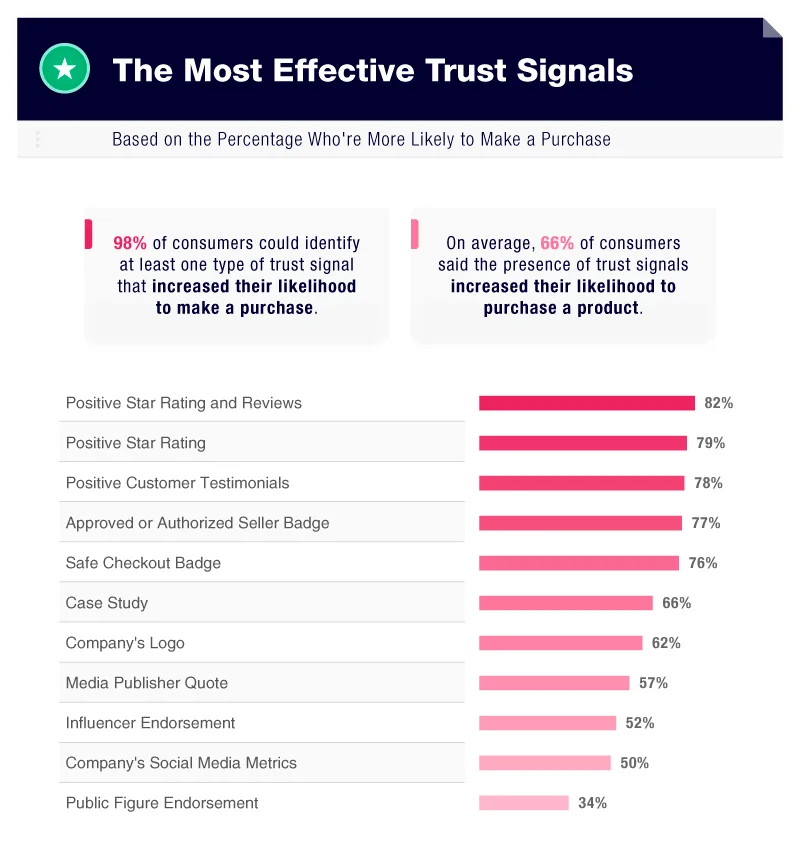
More information doesn’t always equal more conversions. 🧪 In this case, less copy unlocked +$47,795 per month. The Test: Optimising the mobile PDP above the fold by simplifying product messaging and re-prioritising key conversion elements. The Problem: The product page opened with 6–7 bullet points, all competing for attention and focused on features rather than outcomes. Important conversion drivers were being pushed too far down the page. On mobile, that’s a recipe for overwhelm. What We Changed: Replaced 6–7 feature-heavy bullets with 3 concise, benefit-driven bullets that were easy to scan. Used the saved space to bring high-impact elements above the fold, including the Add to Cart button and trust signals. Why It Worked: Visitors could instantly understand the value of the product without thinking. Clear benefits + visible CTA + trust = faster decisions. Less reading. Less friction. More buying. The Result: 👉 +$47,795 per month (forecasted) Driven by higher engagement above the fold, stronger ATC rates, and improved CVR. Another reminder that CRO isn’t about adding more, it’s about prioritising what actually matters. I’ll keep sharing the wins, the losses, and the learnings from real CRO tests. Give me a follow @oliverkenyon for more case studies. Cheers.


@seeksahib ·
You are solving the wrong problem. "marketing" isn't where the issue is "we don't know who this is for" is the root cause I get on calls with founders who want growth campaigns, KOL pushes, paid pumps, the whole thing... but when I ask them: who is this actually for? silence or worse "everyone in crypto." no marketing on earth can fix that. positioning is the work that has to happen before marketing. most founders skip it because it's slow and uncomfortable and doesn't feel like progress. but it plays a major part in your project foundation

@sabakarimm ·
A founder asked me why his content wasn't converting. I looked at it. Every post was about his product, his features, his launch. Not one was about the customer's problem. People don't share your product. They share the version of themselves your product helps them become. Flip the camera around. Make the customer the hero and watch what happens.

@timsoulo ·
"Vibe marketing" used to be an insult to our community. And I was publicly trashing it. Six months later, 99% of my work runs through Claude Code: ▪️ Letting AI analyze the job interviews I've conducted, point out my weak spots, and build me an "interview prep" skill to nail the next ones. ▪️ Building out a keynote for Ahrefs Evolve by dictating my thoughts and pasting in links to reference material. ▪️ Saving transcripts of every call, asking AI to clarify anything that went over my head and update my personal knowledgebase. ▪️ Creating product positioning draft by analyzing a dozen (somewhat) similar products and feeding in my team's Slack messages about what we're building. ▪️ Writing a draft script for a video ad idea in ~10 minutes. ▪️ Building dozens of small apps and automations (see my earlier post). ▪️ And finally… this very post — dictated freestyle and polished by Claude, using a skill I built earlier. I was so wrong about vibe marketing. In my defense, six months ago AI failed to impress me no matter what I asked it to do. But the tools have caught up. Now I'm a believer. And Claude Code isn't even built for marketers. You should see what we're building here at Ahrefs with Agent A. 👉 ahrefs(.)com/agent-a

@ThinksDylan ·
How to hard launch your first product from zero traction: 1. Ask everyone you know to repost and amplify your launch. 2. Keep posting and refining your hooks until one takes off. Once something works, keep repurposing and reposting it until the traffic and engagement slow down. Find your own hook and content that will spark interests from the market and keep posting about it. 3. Always think about conversion. Every post should include a clear CTA, backlink, or path for users to take action. 4. Make onboarding frictionless. The easier it is for people to try your product, the higher your conversion rate will be. 5. Triple down on social media. This is where people spend most of their days on. This is where traffic and attention are. Also it has 0 cost.

@Layton_Gott ·
STOP giving up on your product so fast. A lot of people kill a product that was never actually dead. They just couldn't tell the difference between a dead product and bad marketing. Here's how to actually tell. It comes down to one thing. The people who already used it. Ask yourself: • Did they come back on their own? • Did they use it more than once? • Did anyone tell someone else about it? If yes, your product works and you have a marketing problem. That's fine, marketing is fixable. If no, if people tried it and bounced and never thought about it again, that's a product problem. So here's the test. Low awareness but the people who use it love it means it's a marketing problem. Go get more eyes on it. High awareness but nobody sticks around means it's a product problem. Fix that before you spend another dollar getting people to it. Lastly, stop expecting it to be easy. It’s not.

@Aabbhhz ·
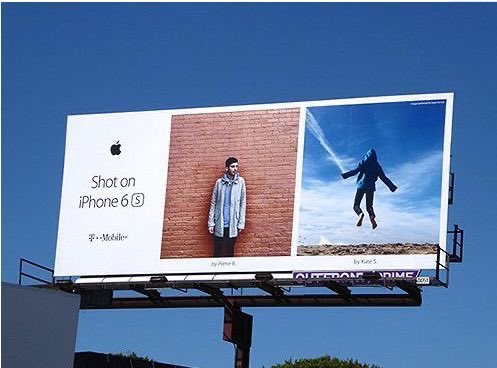
shot on iphone 6. one of my favourite smartphone marketing campaigns till date. no professional photography, no celebrity endorsements, no technical jargon. just everyday people. s-tier product marketing.




@peeplaja ·
Five things B2B companies getting AI ROI are doing. 23% of B2B marketing leaders say their AI investment is delivering strong ROI. Here's what they're doing differently. Yesterday I just shared a post about why 53% of B2B companies haven't seen AI ROI - almost always because they bought licenses and called it a strategy. But the 23% who said yes? Their answers were specific. They kept saying the same things. 1. Strategy first, AI second. A Director of PMM, mid-market SaaS: "It goes back to strong PMM fundamentals. Clear understanding of our ICP. Clear understanding of the problems we solve. Clear messaging. AI is just an accelerant of your strategy. Garbage in, garbage out. We found success by cleaning up the garbage." 2. Force multiplier, not efficiency machine. A Director of Global PMM, Enterprise: "They (management) didn't just start laying people off and tell teams to do better with AI. They invested early, let employees trial and error how AI works best, and see AI as a force multiplier rather than an efficiency machine." The "cut costs" framing makes AI a threat to operators. The "force multiplier" framing makes it a tool they want to learn. 3. Procurement discipline. A Sr Director PMM, Enterprise: "We've aggressively negotiated short term contracts to prove value. Our procurement process for AI is so onerous, we only buy tools we believe strongly in." Counter-intuitive but consistent: the companies with the most AI procurement friction get the best ROI. They don't buy junk. 4. Start with the stuck backlog. A Sr PMM, Enterprise: "They severely underestimated the size of the backlog of work that wasn't being acted upon. Internal dashboards, internal training materials. The friction was insurmountable before AI." The best first AI use case isn't replacing existing work. It's unblocking the work that was never going to happen. 5. Automate the workflows. A Director of PMM, mid-market: "We've been able to streamline so many previously manual processes and save time for every employee." A Director of PMM at an AI-native company: "Everyone is encouraged to automate as much as they can with AI. For product marketing, this means automating downstream assets like email copy and social posts for product launches, win-loss analysis, competitive analysis." TL;DR Strategy first. Force multiplier framing. Tight procurement. Start with the backlog nobody's been touching. Automate manual workflows.

@janetmachuka_ ·
Why most product launch posts go viral on X & LinkedIn! This is experience from campaigns I’ve been part of. The reason why most product launch posts go viral on any social media is because of strategic influencer and thought leadership marketing. A founder posts the launch content. Behind him are hundreds of paid thought leaders and influencers who were reached out before launch. Selection is always strategic. Select those with the most relevant audience, reach and style of communicating to make people consume it as it comes and believe it’s the next product to try out. You can call it paid social proof. In most cases, these groups of people already interacted with the product. Once the post is live, the 100 plus paid global industry leaders selected will engage the post within the first hour of launch. This way, the algorithm is tricked to push the post further hence going viral. But again, it sounds more organic and natural since no one uses a hashtag and everyone comments with their own experience with the product or how it’s gonna be a gamechanger. I’ve been part of these campaigns. They’re very interesting. Just imagine this, you build a campaign under one single post done by a founder or a specific selected industry expert. Now you know why y’all rust to try out some tools you see industry leaders suggesting.

@marketingeyeaus ·
Founders often know their product extremely well. What they do not always have is a structured way to take it to market. That is where marketing starts to fragment. The website says one thing, sales says another. Ads go in a different direction, content lacks focus. A strategy brings those moving parts back into one commercial story. That is when momentum starts to build. #founders #marketingstrategy #businessgrowth

@rokhladnik ·
Scaling doesn’t expose your winners. It exposes your bottlenecks. More ad spend won’t fix: ➡️ weak landing pages ➡️ unclear product messaging ➡️ limited creative variety ➡️ broken attribution Every account looks efficient at low spend. Real marketing starts when you try to scale.

@ybhrdwj ·
resist the urge to game your product launch video, spend less on influencers, more on communicating your message clearly. you can game attention but you must earn retention

@peeplaja ·
We surveyed 50 SMB founders on their marketing priorities and pain points. Buried in the data is a pattern nobody's talking about: Founders know their messaging is broken. And they're not fixing it. Direct quotes: "Our messaging is inconsistent and unclear. Docs site doesn't match marketing site." "Hard to communicate the value of what we do to people who've never used it before. Ends up being a lot of education before any real sales conversation happens, which slows everything down." "Customers are confused by the product offering." So what are they investing in instead? 52% → AI and automation 48% → Content creation 48% → Partnerships Only 20% are investing in product marketing. They're pouring fuel into channels while the engine misfires. More content doesn't help if the message is wrong. More AI doesn't help if you're automating confusion. More partnerships don't help if the partner can't explain what you do. Messaging is the foundation. Everything else compounds on top of it. The fix isn't expensive or slow. You can run a message test right now. See what lands and what confuses. Most founders skip this and chase the latest playbooks. But none of the playbooks work unless you know your ICP pain points and your messaging resonates.

@nick4iezos ·
red flag: "we're focusing on product first, marketing later" translation: we have no mechanism for finding out what our audience actually wants... ...and will be scrambling after product launch to figure that out. product is easier than ever. distribution is king. start early.

@heyblake ·
The company with better positioning doesn't always win. The company with clearer positioning does. Those are not the same company. Better positioning assumes a competition between two products. Clearer positioning assumes a competition between two buying decisions. When a buyer evaluates two options, they aren't comparing products on a feature grid. They're comparing how easy it is to explain each option to themselves. The product that wins is the one the buyer can describe in one sentence. Try the Explanation Test framework: Take your ideal buyer. Imagine they just saw your homepage for the first time. Thirty seconds later, someone asks them what your company does. What do they say? If what they say back sounds like your category, you've won the Explanation Test. If what they say back sounds like a feature, you've lost it. The goal is to be transferable. A buyer who can explain what you do is a buyer who can refer you. A buyer who can't explain what you do is a buyer who reads your page and leaves without knowing why they didn't convert. A worse product with clearer positioning beats a better product with murkier positioning every time the sales conversation includes the phrase let me explain what we do.

@MakadiaHarsh ·
one thing i've learned building products: marketing after the build is already too late the best launches happen when the story is written alongside the code, not after it when you figure out the narrative from day one, everything compounds social proof, trust, momentum

@IstvanicMarin ·
After spending $100M+ on FB ads across dozens of brands, I've noticed 3 patterns that separate the ones scaling smoothly from the ones constantly struggling. Most media buyers focus on tactics. The real edge is in what you're selling and how it's positioned. 1) Product-market fit isn't binary Everyone talks about PMF like you either have it or you don't. But in reality, it exists on a spectrum. Some products have such a strong PMF that even mediocre ads work. Others require flawless execution just to hit a 2 ROAS. Here's what I look for: Can you get a 2+ ROAS with average creative and basic targeting? If yes, you have room to scale. If you need perfect conditions just to break even, the product is the bottleneck. The ad account can't fix a weak product. But a strong product can survive weak ads long enough for you to dial them in. 2) The education tax is real If your product requires 3+ scroll-stops of explanation before someone understands what it does, your CAC will always be higher. That's not saying don't sell complex products. Just know what you're signing up for. The brands spending the least to acquire customers either: > Sell something instantly recognizable (apparel, basic accessories) > Or solve an obvious problem with a clearly superior mechanism Example: Everyone knows back pain sucks. But if your product is "ergonomic lumbar support," you're competing with 100 other solutions. If it's "the only chair cushion with memory foam that actually stays cool," now you have a unique mechanism. That difference shows up in your CPMs, CTR, and conversion rates immediately. 3) How you enter the market matters more than the market itself I've seen brands enter "saturated" markets and win because they positioned themselves differently. And I've seen brands enter "blue ocean" markets and bleed cash because no one cared. The question isn't "is there demand?" It's "can we capture attention and convert it profitably?" Sometimes that means riding existing demand (supplements, fitness gear). Sometimes it means creating a new category. But if you're creating a category, understand that your ad budget is doing double duty: awareness + conversion. That requires either deep pockets or an audience you already own. Bottom line: No ad strategy can overcome a product or positioning problem. But when those are dialed, even an average ad account can scale. That's why I always analyze the product and funnel before I touch the ad account.

@EricJorgenson ·
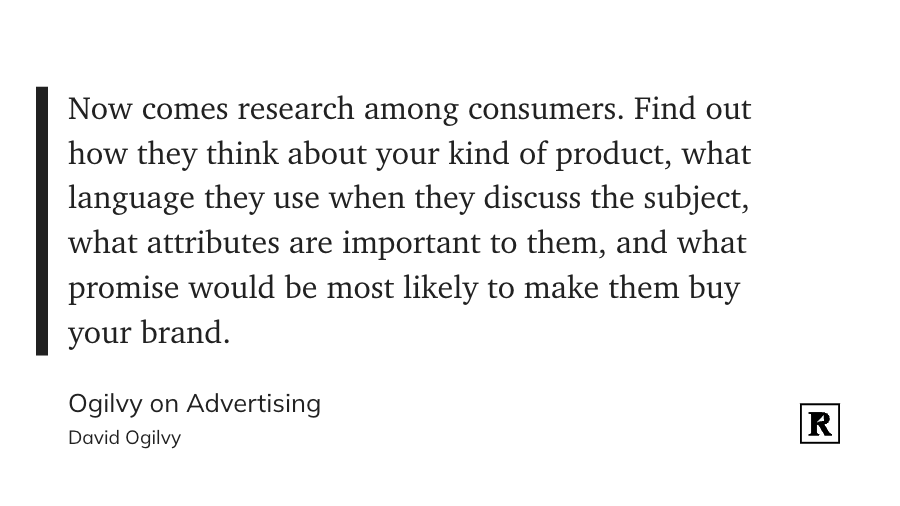
"Now comes research among consumers. Find out how they think about your kind of product, what language they use when they discuss the subject, what attributes are important to them, and what promise would be most likely to make them buy your brand."

@SSage38676 ·
Most founders say "Ads don’t work" or "My audience isn’t responding" Here’s the hard truth: It’s usually not the ads, the platform, or even the budget. It’s Message-Market Fit. You can have a strong product and real demand, but if your messaging doesn’t instantly connect with the right people, everything falls flat. Signs you don’t have Message-Market Fit: - Low click-through rates on ads - High bounce rates on landing pages - People say “interesting” but don’t buy - You’re explaining features instead of outcomes - Competitors with worse products are outselling you How to fix it: - Get brutally specific about who you’re talking to (narrow it down) - Lead with the painful problem + desired outcome (not your features) - Test 3-5 different angles until one clearly wins - Make your positioning outcome-driven and competitive When your message finally clicks with the market, your entire growth engine improves — higher conversions, better retention signals, and compounding results. Have you tested your messaging lately?

@NainKiriti ·
bumble markets itself like some revolutionary women first dating app, but if you really think about it, what actually makes it women centric? the main feature is basically just “women message first.” that is it. the matching system is the same. the attention dynamics are the same. the incentives are the same. the experience for most women is still an overwhelming amount of low quality interactions filtered through the same swipe based system every other dating app uses. it feels less like the app was fundamentally redesigned around women and more like one rule was added on top of the exact same dating app structure. which is interesting because the branding is incredibly strong. people genuinely perceive it differently. but product positioning and actual product design are not always the same thing.

@EnisHulli ·
If your product still requires a “book a demo” button, you’re already losing. book demo → wait 3 days → 30-min call → “let me get back to you” That entire flow is a workaround for bad software. AI changes this. The first touchpoint can now understand intent, personalize the experience, and guide users to activation. All in one loop. No handoffs. No delays. No context loss. Congrats to Georg and Uku on the new round 🤝 Handhold You know Kaan and @arinozkula don’t let me visit Estonia. Let’s meet elsewhere soon. What they’re building points to something bigger: The collapse of: sales + product marketing + onboarding → one interface The demo is no longer a step in the funnel. It is the product.


@ChrisClickUp ·
People ask me all the time how we think about marketing at ClickUp. Honestly, the biggest thing I've learned is that the best marketing doesn't come from the marketing team. It comes from the product. When someone consolidates 4 different tools into ClickUp and then tweets about how much simpler their workflow got, that one tweet does more than any ad I could ever run. When a YouTube creator makes a 20 minute video walking through how they use ClickUp to run their entire business, that's not influencer marketing. That's someone genuinely excited about a tool that works for them. My job isn't to manufacture stories. It's to find the real ones and amplify them. The best thing I ever did for our social presence was spend less time creating content and more time listening to what our users were already saying. Their words are always better than mine. If you're running marketing for a product company, spend an hour a day reading what your users post about you online. Not the support tickets. The unprompted stuff. The Reddit comments. The tweets. The YouTube reviews. That's your real brand. Everything else is just what you wish your brand was.

@oliverkenyon ·
Wow. What a week. First of all, thank you to everyone who grabbed one of our Founding Licenses for SURGE. We officially sold out all 500, and the support has genuinely meant a lot. And thank you as well to everyone who’s followed along and patiently put up with me talking about SURGE pretty much non-stop for the past month or so. I know it’s been a lot, but what a ride it’s been. The launch itself was a huge success. But in reality, the hard work actually starts now. Our focus moving forward is very clear: • Fixing any teething issues • Working through your suggestions and feedback • And long-term, partnering closely with our original 500 founders to make SURGE even better and turn it into the beast we know it can become For those of you who’ve emailed asking when doors will reopen, we will be opening SURGE up again, but not until at least the end of Q1 next year. We want to stay true to our promise of prioritising the original founders and making sure their launches run smoothly before we scale things further. This is our first proper product launch beyond a course in the last 12 years, and I’ll be honest, it didn’t come without its challenges. But the rewards have already been incredible. Seeing multiple stores live on SURGE already, and seeing early results coming through, has made it all worth it. Over the next few weeks you’ll see my content shift back a bit more CRO, more value-sharing, and more of the journey, as always. Thank you again for the trust, the support, and the belief. The SURGE launch was a success and we’re fully committed to making it the best-performing DTC Shopify theme on the planet. Right… let’s get back to it.
Best Product Marketing tweets
Xholic studies what works in your niche, drafts posts in your voice and schedules them for the hours your audience is online.
$0 today · Cancel anytime
Browse all tweet collectionsKeep exploring