Creative strategy and testing
Hooks, messaging angles, formats, personas, awareness levels, and systematic testing to find ads that resonate.
58%
Best tweets about Paid Advertising
Explore the best tweets about paid advertising, covering creative, targeting, bidding, attribution, testing, acquisition costs, and campaign performance.
Paid campaign strategy, ad creative, targeting, measurement, attribution, testing, unit economics, and verified performance lessons.
Original Xholic analysis
Across 50 posts, creative testing is the largest theme (29 posts; 58%), but the discussion does not treat better ads as a complete strategy. Contributors also examine offer and funnel fit, customer value, and whether attributed conversions are incremental. Case reports illustrate both profitable acquisition and revenue growth that concealed shrinking profit; these remain individual accounts, not general performance benchmarks.
52% of posts
All-time engagement
40% of posts
Published in 90 days
Conversation map
Hooks, messaging angles, formats, personas, awareness levels, and systematic testing to find ads that resonate.
58%
CAC, LTV, ROAS, payback, margin, cohort value, and cash flow as criteria for profitable scaling.
34%
Matching ads to buyer intent, moving prospects from awareness to conversion, and improving offers, pages, onboarding, and retention.
28%
Broad versus niche audiences, algorithmic targeting, exclusions, bidding, account structure, and budget allocation.
26%
App attribution, tracking tools, conversion signals, holdout tests, and separating ad-driven growth from conversions that would have happened anyway.
24%
Choosing and combining Meta, Google, YouTube, LinkedIn, X, AppLovin, retargeting, and offline ads across SaaS, apps, and ecommerce.
24%
Creative production cadence, performance review, automation, agency or in-house talent, and adapting campaigns as spend grows.
22%
UGC pipelines, influencer whitelisting, organic-to-paid promotion, and creator content used as scalable ad inventory.
18%
Tone and stance
Performance benchmark
Posts with media make up 38% of this collection. Their median all-time score is 13.3, compared with 9.52 for text-only posts.
Format mix
Consensus and debate
Shared view
Contributors recommend testing buyer motivations, problems and awareness levels rather than producing near-identical ads with new hooks or creators. One app case also links creative decisions to onboarding and paywall performance.
Shared view
Posts urge advertisers to connect spend to payments, gross margin, payback or downstream customer value. An agency operator reports that faster customer acquisition coincided with shrinking net profit after paid CAC was omitted from its compensation model.
Shared view
Ad promises need to match landing pages and offers; subscription-app performance also depends on onboarding and paywalls. These accounts caution against diagnosing every weak conversion rate as a creative or targeting failure.
Open debate
One proposed small-budget software plan reserves paid ads for retargeting, while another contributor argues that paid acquisition gives product-led SaaS a fast validation loop. A founder cautions that spending before the offer, page and retention work can waste runway.
Open debate
Some contributors favor broad delivery and letting platforms allocate spend while teams focus on creative. Others argue that account structure, exclusions and skilled buyer judgment remain necessary, particularly when platform-reported results favor warm audiences.
Open debate
Contributors advocate holdouts to distinguish added revenue from conversions that would have happened anyway. Another explicitly calls incrementality tests unhelpful for brands below its stated size threshold, favoring margin, cohorts and cash flow.
What performs
Creative strategy and testing appears in 29 of 50 posts (58%) and has a median all-time score of 13.773. Targeting and delivery appears in 13 (26%) but has a higher theme median of 56.292; those descriptive scores do not establish which lever improves campaign returns.
The supplied analytics classify 20 posts as tutorials, with a median all-time score of 21.61, versus 8 opinions with a median of 2.42. The leading scored post is a tutorial-style recap, not independent verification of its proposed rules.
An X ads case reports bot-heavy clicks but profitable trial conversion; a separate agency case reports rising revenue alongside falling net profit. Together, they show why clicks, trials and revenue should not be presented as interchangeable proof of success.
Statistical standouts
Creator landscape
The five most represented creators account for 20% of the selected posts.
1. Barry Hott ☄️
@binghott
2 posts
2. Cody Schneider
@codyschneider
2 posts
3. Evan Seech | Ads & Funnels
@evanseech
2 posts
4. HeyOz
@HeyOz_AI
2 posts
5. Ivan Sparrow
@ivesparrowai
2 posts
6. Jakub Jawniak
@niakjaw
2 posts
The analytics cover 39 creators across 50 posts; the five most-placed voices account for 20% of posts. Recurring contributors bring different emphases, including Cody Schneider on SaaS acquisition and Barry Hott on attribution and delivery.
Contributors describe promoting organic posts, licensing micro-creator content for ads and separating trusted influencer partnerships from high-volume UGC production. These are proposed operating approaches, not verified results across brands.
Since the previous snapshot
Themes, sentiment, stance, and post format are classified per tweet. All counts, shares, medians, creator concentration, freshness, and performance comparisons are then calculated directly from the published snapshot.
Xholic's all-time score compares engagement while accounting for reach, post age, and creator consistency. It is used for relative comparisons within this collection.
This report analyzes the exact 50-post snapshot shown below. AI identifies editorial categories and drafts explanations; all statistics are calculated from the snapshot, and every narrative claim is checked against cited posts before publication.
Best Paid Advertising tweets
Ranked 01–50

@tannerdripjobs ·
Listened to @AlexHormozi for 3 hours while driving yesterday. Lol this guy is something else 😂 Biggest takeaways from the videos I watched: 1. Bro really is cracked 2. Hooks are the single most important thing to focus on when creating content. He says he spends 80% of his energy on the hooks. 3. Mindset shift was that he said people need to be reminded more than they need to be taught new things. He says repackage your best information over and over again - it’s much more effective then trying to create new content / ads 4. More → Better → New. When starting, more is almost always the answer — the people ahead of you aren’t doing 2–3x your volume, often 100x. “Volume negates luck.” Only optimize for better once you have flow, and only try new when nothing’s working. 5. LTV:CAC is the only metric that matters. It’s lifetime gross profit (not revenue) divided by all-in cost to acquire . Rule of thumb 3:1 minimum. His biggest money came from 30:1 to 200:1 ratios — when you find one, dump in as much cash as possible because a lot of wealth is made in short punctuated periods 6. Only 4 ways to advertise. Warm outreach, cold outreach, content, paid ads (1-to-1 or 1-to-many × known or stranger). Most owners spend zero hours a day on these. Spend the first ~4 hours promoting. 7. State facts, tell the truth. If you don’t track, you don’t care — and measurement itself improves results. Track outcomes so claims become substantiated. Present data as: % of people / achieve X outcome / in Y time / under Z conditions — fewer conditions = more compelling. 8. Say/show what only you can. “Do epic stuff, then talk about what you did” (how-I, not how-to). Demos and live examples beat claims. What matters is value per second, not seconds of value. 9. Give away secrets, sell the implementation. Make your free stuff better than competitors’ paid stuff. 99% who consume your free content never buy, so your reputation is built by them . For CTAs, offer personalization, not “more.” 10. All advertising works — it’s about efficiency. The fix isn’t “Facebook doesn’t work,” it’s “I don’t know how to make it work yet.” Optimize ads front-to-back, but build the business back-to-front (LTV funds what you can spend). Scaling stalls usually mean your ads aren’t good enough to reach colder/less-aware audiences (Schwartz’s 5 levels of awareness).


@zach_yadegari ·
Pro tip for running paid ads for mobile apps: You can use a custom product pages as the app link and then see the exact revenue generated from that ad. This is huge because attribution is so tricky. This never lies. It will usually be 30% or so lower than what revenue from that ad really was because it doesn’t include people that saw the video and then went directly to the App Store. So factor that in. You can have up to 20 custom product pages doing this. Now you have no excuse not to scale to $100k a month. Your welcome 🫡

@codyschneider ·
stop everything that you're doing and read this if you're in b2b saas biggest arbitrage in the game right now strategy is do organic posts on linkedin with like comment for actions get organic reach / engagement then do thought leadership ads to these posts, with engagement campaign type targeting for these ads are your ICP accounts you're in an outbound motion for currently since there is all this social proof already for like / comment paid ads will create more all engagers scrape using apify appmaestro endpoint daily extract net new engagers put them into cold email sequence put them into cold dm sequence have agent manage the inboxes this is literally account based marketing + pipeline building in a single motion


@HarryStebbings ·
I have interviewed 100 of the best growth leaders in the world. @MattSwulinski is easily top 3. (alongside @alexschultz and Brian Hale) He scaled Wispr Flow to over $100M in ARR and built a UGC machine. He scaled Superhuman from founder personally onboarding every customer to a growth machine with $50M ARR. If you are an early stage founder or growth leader, this will be the best episode you will listen to this year! I condensed my biggest lessons from the discussion below: 1. The E-Commerce Playbook Is the Right Playbook for SaaS The e-commerce playbook, where every dollar spent ties directly to a purchase or conversion, is the right model for modern SaaS. With distribution becoming a critical moat in a crowded AI market, SaaS companies should deploy UGC creators, constantly test new creative, and diversify channels to build their brand. 2. Paid Acquisition Is the Fastest Way to Validate PLG Relying solely on organic content and word-of-mouth takes too long to validate product-market fit. Paid acquisition creates the fastest feedback loop for proving a PLG funnel works, allowing teams to test positioning, refine messaging, and optimize conversion within a single week. 3. You Only Need Three Core Channels to Scale to $10M ARR Startups often ruin their acquisition engines by trying to run ten channels poorly at once. Reaching the first $10M in ARR only requires mastering three core channels: video intent on Meta, search intent on Google, and lifecycle retention through email and SMS. 4. Scaling Paid Ads Requires 500 New Creatives Every Single Month On platforms like Meta, creative increasingly acts as the targeting algorithm. Scaling spend without hitting audience fatigue requires 400 to 500 new creative assets every month, produced through UGC revenue-share programs, specialized agencies, and internal teams. 5. How the Best Growth Leaders Test for True Spend Incrementally Blindly increasing ad spend wastes money on conversions that may have happened organically. The best growth leaders measure spend elasticity against ARR growth and run strict holdout tests to determine whether each additional dollar generates genuinely incremental revenue. 6. In Three Years, Companies Will Operate Like a Board of Directors Tech organizations are shifting away from manual execution. Within three years, lean human teams could operate more like boards of directors, spending 20% of their time on strategy while autonomous AI agents handle 80% of operational execution. 7. Fire Your Marketing Team if They Aren’t Systems Thinkers Marketers focused on repetitive manual tasks are becoming increasingly replaceable. High-performing teams need systems thinkers who can break their work into inputs and outputs, then build self-improving AI workflows that multiply their personal leverage by 10x. (links in comments)
@zach_yadegari ·
Very few people are capable of running paid ads for apps at scale. The best ad-buyers are used to ecom stores where attribution is very straight forward. When it comes to mobile apps, Apple makes attribution feel like advanced calculus. And the few people who understand all the nuances of Apple's attribution system are typically too data-driven to understand good creative. A successful formula I have found is bringing together both worlds. We have someone with an ecom background for creative strategy and someone with an app background for the general bid-setting. This team has help us to scale our ads super fast in just a few months.
@codyschneider ·
"paid ads for saas don't work we tried it" here's how to make them work without without spending 50+ hours watching youtube google ads: demand capture - target bottom-funnel keywords (people already shopping) - use phrase match bidding (sweet spot between broad and exact) - landing page formula: headline + first paragraph = your target keyword - track two things: signups and actual payments - that's it facebook ads: demand generation - target facebook entire platform - build creative that talks about pain points - test 10 new creatives weekly - winners get promoted to dedicated conversion campaigns - run until ad fatigue gets high - landing page rule: match your ad's promise in the headline and opening paragraph - same tracking: signups + payments dashboard for tracking - use Graphed .com - one metric matters: cac vs ltv vs payback period - simple math: $1 in, $5 lifetime value out = you win your KPI is customer lifetime value if CLV is 5x your acquisition cost, you're in the money everything else is vanity metrics

@JosephKChoi ·
spent an hour with a guy who scaled a single ad past $1M in spend with positive ROAS. broke down exactly what's working for subscription apps on Meta rn spoiler: it's not the talking-head UGC that works for ecom 0:00 - Intro: The High-Leverage Skill of App Scaling 2:20 - Marcus Burke’s Background: Transitioning from Air Traffic Control to Mobile Gaming UA (2012–2019) 4:31 - The Evolution of Mobile Ads: Gaming vs. Subscription App Verticals 5:15 - Moving to Blinkist & Pioneering the Web-to-App Blog Funnel 6:56 - Why In-App Optimization (Onboarding, Paywalls) Dictates Upper-Funnel Meta Ad Success 7:55 - Why E-commerce D2C Talking-Head UGC Formats Fail for Subscription Apps 8:11 - Mitigating App Store Friction: Priming Users in the Creative to Protect Install Rates 9:08 - Case Study: Deconstructing a 1M+ Spend Creative Concept for Moongate 11:13 - Algorithmic Targeting: Using Hyper-Specific Ad Copy to Inform the Meta Algorithm 12:13 - The Reddit + Claude Research Workflow: Extracting Vivid Emotional Language Patterns 14:33 - Soft CTAs vs. Feature Demos: Deciding Where the True "Sale" Happens 16:49 - Funnel Architecture Breakdown: Web Advertorials vs. Direct App Store Installs 18:53 - Static Image Ad Delivery Constraints in App Promotion Campaigns 21:40 - Integrating Generative AI (GPT Image, Google Nano) to Control Creative Testing Variables 38:11 - Top-Level Variables for Performance Scale: Message, Media, Content Type, and Funnel 40:52 - Media Buying Analytics: Evaluating Placement Composition and Demographic Purchase Power 43:42 - Correcting Trial-to-Paid Conversion Disparities Using Meta Value Rules 52:11 - Account Structuring: Leveraging Multi-Ad Set Budgets to Force Spend Across Distinct Niches 55:30 - Capitalizing on Cultural Micro-Trends (ADHD, Toxic Attachments) in Mental Wellness Creatives
 Watch video
@organicbond ·
i've managed around $15M in marketing budgets if I wanted to scale a software with $10K, here's what i'd do: - $4,000 on a content rewards UGC campaign. get 10-15 creators at 300-400/mo to post videos daily - $2,000 on 3-5 micro creators for long form reviews. youtube videos, twitter threads, detailed breakdowns. not influencers with millions of followers. creators with 5k-50k who actually have trust with their audience we used a similar strategy to run up our content rewards in house accounts - $1,500 on a simple landing page and funnel. nothing fancy. clear offer, clear CTA, fast load time. most startups overcomplicate this. one page is enough - $1,000 on retargeting ads. this is the ONLY paid ads i'd run. don't use ads to find cold traffic. use ads to follow up with people who already saw your organic content and visited your site. way cheaper, way higher conversion - $1,000 on tools and infrastructure. analytics, tracking, email setup, CRM. Boring shit that nobody wants to pay for but everything falls apart without - $500 reserved for testing. something will NOT work the way we planned. having budget left over to adjust and double down on what's actually performing is more valuable than spending every dollar upfront total: $10,000 the key is 60% of the budget goes to organic content. not any fancy ads or design, just content that real people make and real people watch you would be stupid if you take this $10K and dump it into Meta ads and burn through it in 3 weeks with nothing to show this approach builds assets that keep working after the money is spent
@binghott ·
I get paid $1,200/hr to solve this problem and I'm gonna share it with you for free: There's this crazy thing that happens when businesses use broad ad targeting without using exclusions or being thoughtful about attribution. You can prob ignore this post if you're: 1. Spending under $50k/month on Meta (for now, but bookmark for later). 2. Using incremental attribution setting 3. Excluding all customers from seeing your prospecting ads. 4. Ignorant or stubborn (lol) Still here? Cool: I've seen this hundreds of times. It's not new, but it's been getting worse as Meta keeps getting better at finding warmer audiences closest to the conversion event. As the brand gets bigger, this problem magnifies, but nobody sees or feels it. It's a frog boiling in a pot. The water's getting hotter and hotter, and nobody notices until it's too late. This media buying issue takes down the entire creative team and strategy with it. I see more creative teams optimizing off of bad data than ever. The ads that get the cheapest CPA and highest ROAS from the warmest users are often not the best ads for colder users. Buuuut creative teams chase what's working and make more of it, so they keep making lower and lower funnel creative. Annnnd the gap between warm and cold audience ad metrics grows, making it harder to justify making more cold audience creative. And the cycle continues. The system gets better creative for warmer audiences, the media buying goes after warmer audiences, until eventually... The warmer audiences start to dry up and you're left with creative that works with warmer audiences because the difference in cost between upper and lower funnel creative is so vast that it doesn't make sense to media buyers, creatives, or leadership. How do you fix and avoid this? 1. Be curious and thoughtful about the "why" behind your ad data. Empathize with how Meta's algo works and how Meta wants to get you the most "conversions" allowed by the rules you let it play by. If it can count a conversion by showing a cheap right column impression to a past customer, it will do that so in case that customer buys again, that ad can take credit for that conversion (even though it had no influence or impact on that conversion whatsoever). 2. Set the rules and boundaries for Meta to play by. Add existing customer exclusions or separate existing customers into their own campaign. 3. Empathize with the consumers. Understand why they're clicking and buying. What is their ad journey? What ads got them to start their journey vs what ads got them over the finish line? 4. Study your ads QUALITATIVELY! Look at your own ads in feed and figure out how they make users feel, and which users they're relevant to and whyyyyy! Intentionally make ads for colder audiences. Let those ads have higher CPAs, it's ok if it helps you scale and bring down your overall CPA. 5. Book a call with me to let me help you, your team, and/or leadership to see, deeply understand, and fix this problem. Oh, and if you're on the fence, I guarantee my consulting call at least pays for itself, or I'll happily refund you. (Refund hasn't been claimed once yet, btw)

@ivesparrowai ·
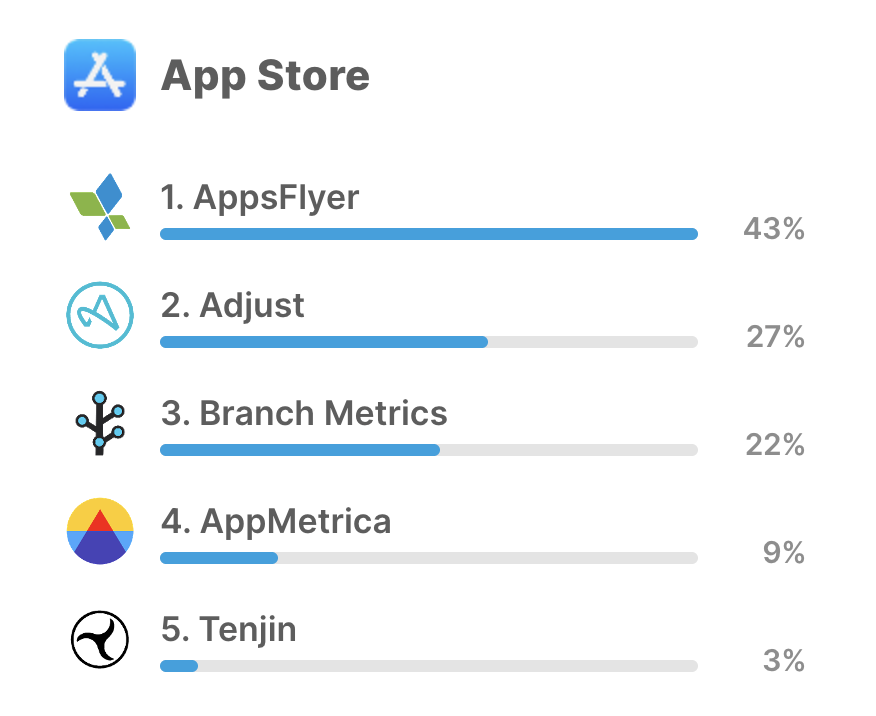
Which MMP is the best for paid ads and indie dev? 1) AppsFlyer – market leader. It offers 12k free conversions to start and pay-as-you-go pricing at $0.07 per conversion. 2) Adjust is significantly cheaper with roughly the same functionality. But there is no pay-as-you-go option, only contracts. 3) Branch is third, and I don't know a single product that uses it. Seriously. When I saw that it had 22% market share, I thought it was a mistake. 4) AppMetrica is a Russian MMP without Meta integration – not a choice. 5) Tenjin has flexible pricing from $0.03 down to $0.014 per conversion. The functionality is quite limited, but it is enough for basic tracking. If your unit economics allow you to pay $0.07 per conversion, AppsFlyer is the best choice. If not, choose Tenjin – I've been using it for the past week, will share some thoughts later.

@TamiloreAdewuyi ·
When it comes to succeeding with paid ads.... The creative is 80% of the work. Media buying is 20%. Most people have this backwards and that's why they struggle to scale their campaigns. Here’s why creative matters more than anything else in your ad account: The algorithm is smarter than you. Meta, Google, YouTube e.t.c, they know how to find the right people. That’s their job. Your job is to give them something worth showing and something that will resonate with your target audience. I’ve seen the same campaign, same audience, same budget produce completely different results just by changing the opening 3 seconds of a video ad. The hook is everything. Here’s what we test when we build ad creative for a client: Different hooks: Same message, different opening lines. We’ll test 5–10 hooks before settling on the top 3. Different angles: Pain-driven, aspiration-driven, story-driven, proof-driven. Each one hits a different segment of your audience. Different formats: Talking head, screen recording, testimonial style, text overlay. You almost cannot predict the format that will win. This applies whether you’re driving traffic to a webinar registration, a VSL, a quiz, or a booking page. The funnel type changes. The importance of the creative doesn’t. Master how to convey your message to your audience. The platform will do the rest. Finally, marketing is all about testing.... Keep testing!

@rokhladnik ·
Andromeda². Meta just published a very important article on where its ads system is heading. The simplest way to explain it: Meta is building a deeper map of how users, interests, products, advertisers, ads, and conversion events are connected. Not just: “This person clicked on this product.” But: “This person is interested in these broader and more specific concepts, similar people bought related products, and this new ad appears to serve the same underlying need.” That matters because purchase and lead events are rare compared to impressions, views, and clicks. So Meta is trying to infer deep-funnel intent even when direct conversion data is limited. It does this by combining: - User behavior - Ad copy - Images and video - Product catalogs - Landing pages - Advertiser data - Pixel and CAPI events - Relationships between similar users, products, and businesses The biggest takeaway for advertisers is not exactly new, but this article makes the direction very clear: Creative is becoming part of the targeting system. Before a customer even sees your ad, Meta’s models are already trying to understand: - What is this product? - Who is it for? - What problem does it solve? - Which interests and use cases does it relate to? - Which users are most likely to care? This is why “creative diversification” cannot just mean filming the same angle with five different creators. Five ads with different hooks but the same underlying message may still look almost identical to the algorithm. Real diversification means testing: - Different buyer motivations - Different problems - Different use cases - Different levels of awareness - Different customer identities - Different benefits and desired outcomes Each concept gives Meta another path to find demand. This also makes broad targeting even more logical. Your job is increasingly not to manually define the audience. Your job is to give Meta: 1. A clear conversion signal 2. Strong and accurate tracking 3. A product it can understand 4. Diverse creative concepts 5. Enough volume to learn Meta will do more of the audience discovery itself. The future of media buying is not just campaign structure. It is helping the algorithm understand exactly what you sell, who it is for, and why they should care. Every ad is now AI-first. Welcome to The Matrix.


@daviefogarty ·
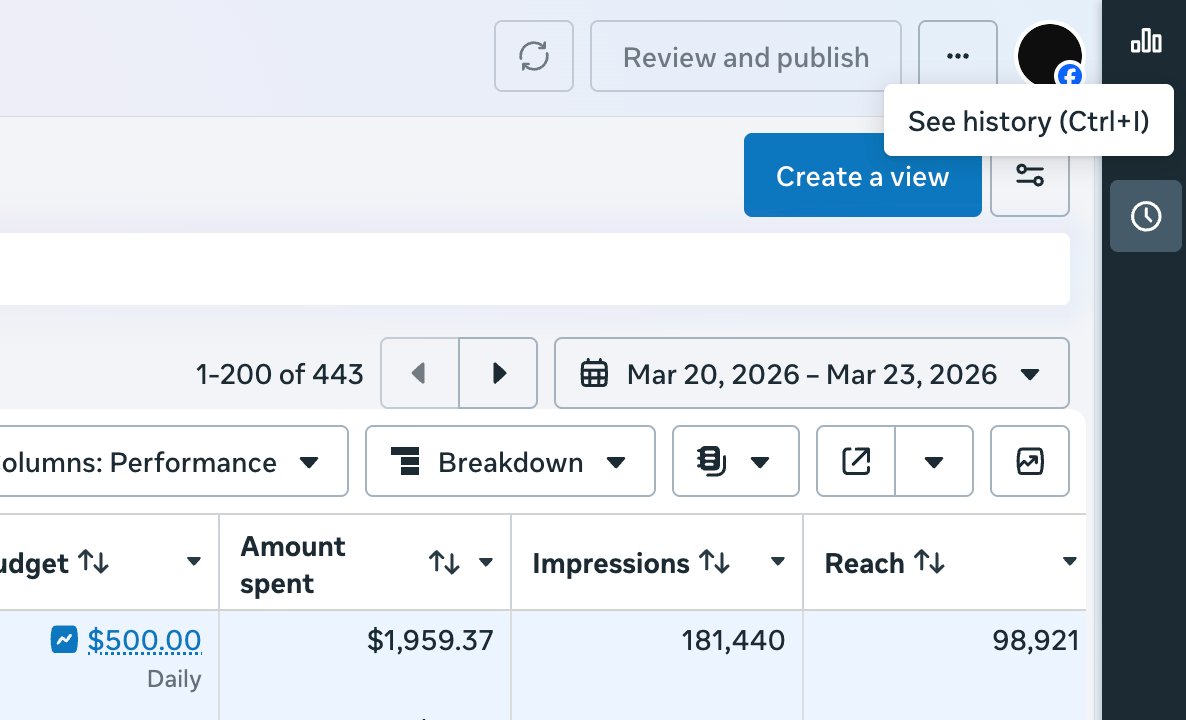
You should fire your meta agency. Go to your Facebook ad account, select all your campaigns, and click View History or view edits. Every single change your media buying agency has made will show up there. What you'll probably find is that they were barely doing anything. You could be paying $4,000/month, maybe a percentage of your revenue, and sometimes hundreds of thousands of dollars a year to a B-grade media buyer that some agency hired and put on your account. Introducing new creatives every single day or every single week is something you can and should be doing yourself for as long as you have the bandwidth, because: > You learn creative > You learn how to read data > You learn about processes and integrations > And you learn how your website connects to all of it All of that comes from taking control of your business's central revenue driver instead of paying someone else to handle half of it.

@blvckledge ·
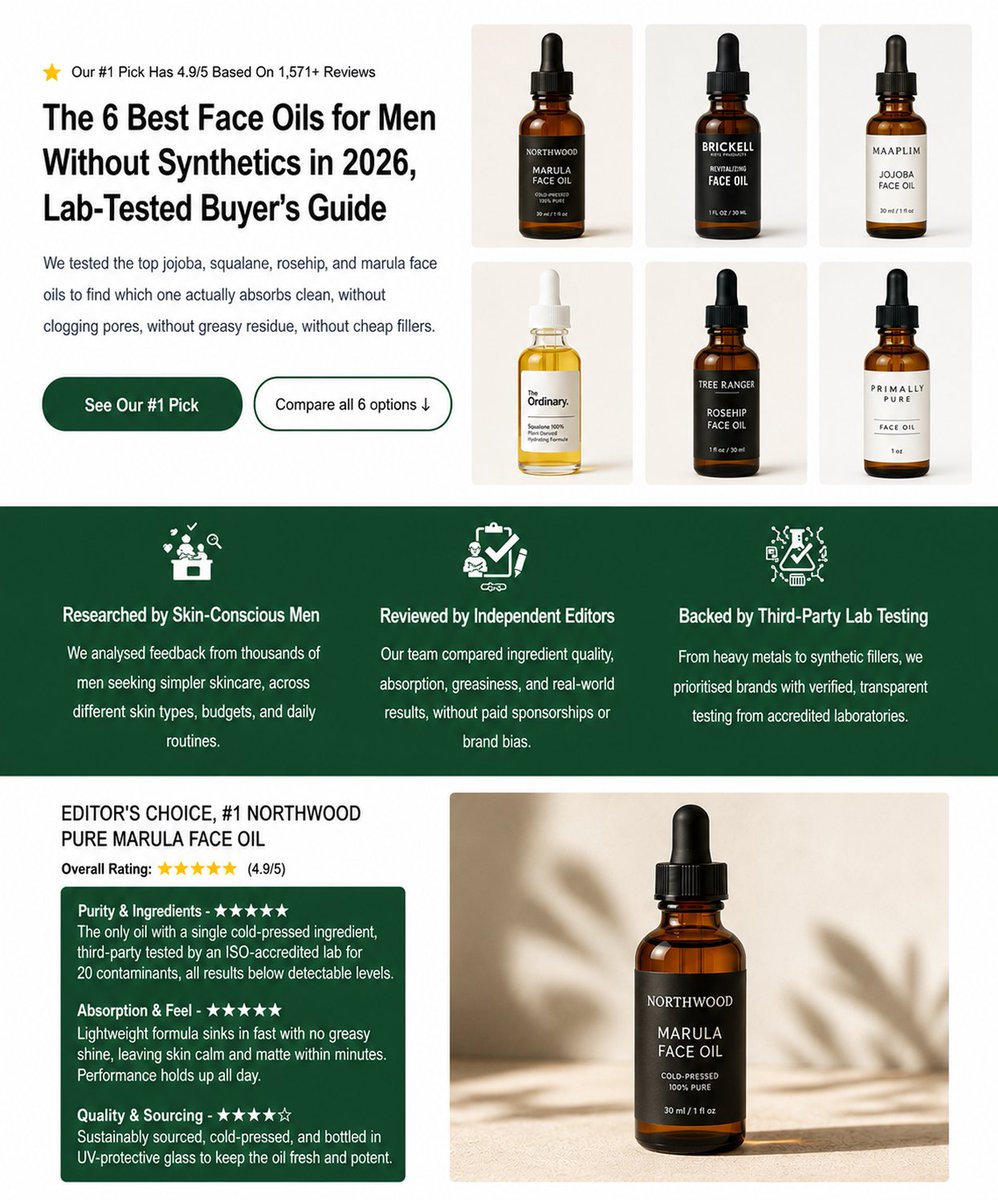
next winning funnel idea for ecom brands: "editorial" ad creative + 3rd-party comparison pages we've been seeing a lot of new winning campaigns running on YouTube right now. specifically Demand Gen ads going to comparison-style landing pages the idea of this funnel is to help people work out which brand is worth buying from. you package it as a review comparing the top brands in the category, written like a normal blog. the ad starts with the benefit people want and how the product solves it. then it explains why picking the right product or brand matters so much. and teaches people what separates high-quality products from average ones how different ingredients, formulas, sourcing, or quality standards can massively change the results they get once you've built that understanding walk people through what they should be looking for then show how your product checks those boxes you can do this with ugc, podcast-style, ai animation, vsl, whatever fits the category then send people to a 3rd-party-style comparison page where you show a ranked list of products in the category, written to read like a blog review. btw, this funnel works for pretty much any product out there even boring stuff like blankets, sofas, furniture, whatever you just need to take your product's usp and absolutely bang on about it in your ads take pet nail clippers for example: let's say yours uses a specific blade angle and grinding mechanism that won't damage the dog's quick. start by talking about how the wrong nail clip can cause pain, bleeding, and long-term joint issues for the dog. then explain why investing in a proper clipper saves money over time vs vet bills for fixing cut quicks or behavioural issues from a dog that's learned to hate paw handling. show how cheap guillotine-style clippers crush the nail before cutting, which splits and damages the quick over time. and how the poorly-designed ones cause dogs to develop a fear response that turns every nail trim into a two-person wrestling match. this works especially well in sophisticated markets, where buyers are more skeptical and the format lowers a lot of the sales resistance because it feels like educational content. highly recommend testing this on demand gen right now

@JamesonCamp ·
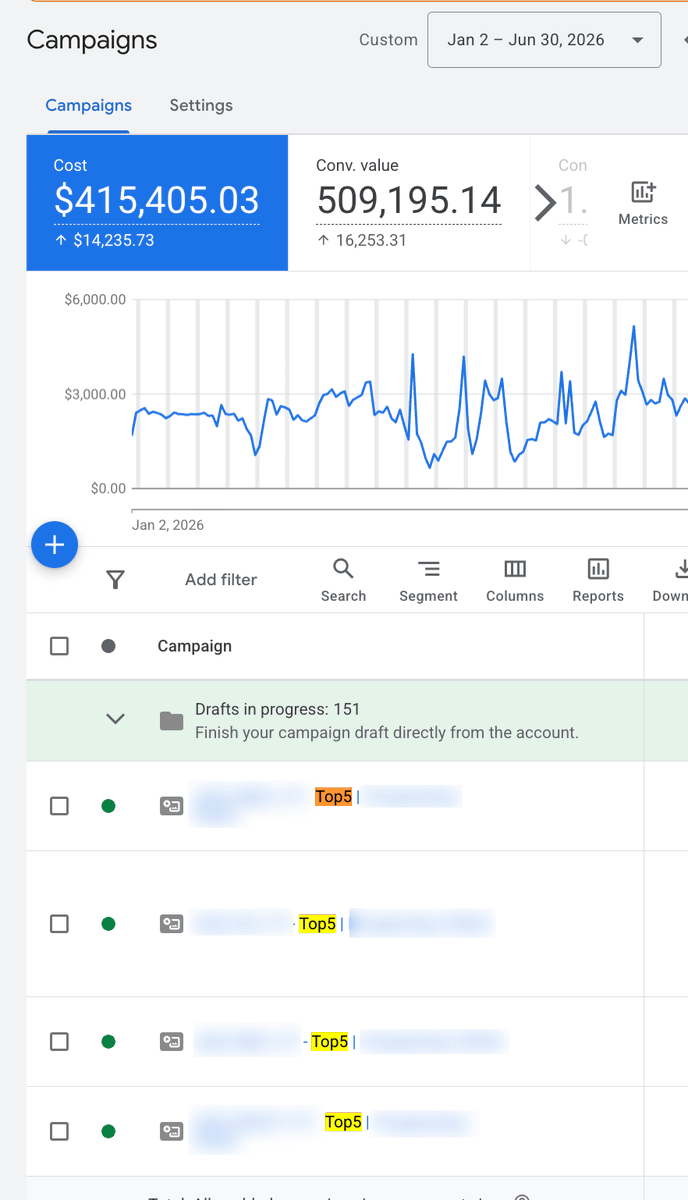
A beauty brand doing $8M/year just showed me their books. They're spending $50K/month on creators and losing money Marketing has completely changed in the last 24 months. And most people running brands haven't caught up yet. I've managed $11M+ P&Ls for ecom brands. The way we ran those in 2020 and 2022 would be completely different today. The playbook used to hold for 2-3 years. Now it shifts every 6-12 months. If you're running the same strategy you were 18 months ago, you're already behind. The new model has two layers and they need to be completely separate. Layer 1 is influence creators. People with ~100K followers and real audience trust, where you're paying $1-2k per deal and then whitelisting their accounts to run paid ads through them. Their face, their credibility, your ad budget behind it. Layer 2 is a UGC army. Totally different people. You're paying $15/video plus a $1 CPM bonus and generating mass volume of creative, statics included. Then you run the top performers as paid ads. Most individual pieces don't hit. That's fine. You're playing the law of averages. Enough volume and you consistently find viral hitters and great ad creative that you'd never have predicted in advance. AI has unlocked some new pieces of magic though: you can now spin up 20 landing pages in an afternoon, each one matched to a specific funnel or creative. Triple Whale can do this for example Single product pages convert way better than homepage dumps. This always worked but it used to take dev teams weeks. Now it's one afternoon. Content strategy is easier too. Ive been advising the Stan team on building @stanleybystan as an AI content strategist. It helps me translate my tweets into IG Reels pulling 100K+ views, helps me think about what a client can post, it solves much of the heavy content lift. There is a major opportunity right now But it will go away. As it always does Every brand still dumping $50K/month into last year's playbook is paying tuition on a lesson they refuse to learn.

@SinaSinry ·
"Paid ads are bad and brutal, it shows you do not have product market fit" 😒 This is one of the stupidest takes, usually from people who have never built anything, are just employees, and have never actually tried it. I am in Turkey, and I have friends and app studios/companies here making over $20M a year. I talk to them, and they do not rely on organic or influencer marketing. They are heavily focused on paid ads. Organic growth is for apps like ChatGPT, productivity apps, and some problem-solving apps. That is a different scenario. But for normal consumer apps, nothing works better than paid ads. The reason many people focus on organic growth is mostly because of budget limitations. I have spent over $800k on ads myself, and you can see my app growth in my past posts. So to all my fellow founders: Do not listen to these Silicon Valley folks who act like they know everything, when in reality they have never built anything.
@binghott ·
The biggest waste of time in modern media buying? Trying to manually control ad-level budget allocation. I see so many advertisers punishing their high-spend ads because the CPA (or worse, CPM or CPC lol) is higher than other ads 🤦♂️ 1. Ad-level CPA and ROAS is irrelevant! The system isn't trying to get you the best CPA on every individual ad, it's trying to get you the most possible conversions for your overall budget. It might spend more on ad A with a higher CPA so that ad B (and C, D, E, F, etc) can have lower CPAs, lowering the overall ad set, campaign, and account CPA. This is the breakdown effect in action. 2. The more you spend on an ad, the worse CPA is going to be. 3. The ads that get the most spend are the ones most likely to wear the scars of other/external performance shifts. Don't punish them for it. 4. The system already handles all of this for you! Stop worrying about ad level budget allocation, the system handles that better than any human can because the system has black box data that humans don't. 5. You're better off spending your time doing more qualitative and empathetic analysis on ads to see things like negative comments piling up on ads, and consider pruning comments and/or recreating the ad fresh, or iterating on it. Focus on the creative quality. Let the system focus on the delivery quantity.

@ProofofIntern ·
an ad formula you can steal for free. seeing a lot of crypto companies start to play with ads on twitter and i'm sure that's going to be followed by a bunch of people trying ads with a $50 budget, getting no results and calling it "broken" and then calling it a day. instead, steal this formula i always used when i ran paid ads for campaigns: awareness ad → consideration ad → conversion ad here's how it works in full: 1️⃣ awareness ad the only goal of this ad is exactly what it says in the name. get the right people to notice you. usually for this, i prefer to use a video when possible, but it doesn’t always need to be one. the main purpose is to stop someone mid-scroll and make them think, 'this is interesting'. this ad should be built around the problem, the belief, the market shift, the pain point or a thing your audience already feels but maybe hasn’t put into words yet. if your awareness ad is trying to convert cold traffic straight away, you’re doomed to fail. 2️⃣ consideration ad now your target audience has seen the first ad and maybe they watched your video, clicked your profile, or just didn't scroll past you as fast as usual. now you need to show them why this might actually interest them. this is the part of the 'funnel' where you show the product, explain the use case, or break down the old way vs the new way to make your solution feel obvious. but don't make it sound desperate. you're moving someone from "i've remember these people" to "i get why this exists" and not getting them to slap down their money straight away. because before someone converts, they need context: what problem you're solving, why now matters and why your version is worth it. this is also where you start retargeting people from before so you're not wasting money on complete strangers. 3️⃣ conversion this is where you finally ask for the "thing". it's all about an action: sign up, book a call, try the product, whatever the action is, the ad should be focused around this. but this *only* works if the earlier ads did their job. if someone has no clue who you are or why they should care then your conversion ad is doing way too much work. that's why most ads fail. the team thinks they have a paid ads problem when really they have a "we asked too early" problem. you can be direct here: tell people what they're getting, why it's relevant and what to do next without making them guess it themselves. warning: remember: paid ads don't fix weak messaging, they just accelerate the money you burn on bad copy.


@StevenCravotta ·
I don't optimize my paid ads for installs. I optimize for free trial conversions. Here's the difference: Optimizing for installs = you get cheap downloads that don't convert Optimizing for free trials = you get expensive downloads that actually pay Facebook lets you set up custom events. Tell it to optimize for users who start trials. Not just users who open the app.

@wearetheselect ·
Went all in on media buying and scaled a brand to $500M/year in under 4 years. Here are 5 things I did to take it from $100M > $250M > $500M+: 1. Launched three campaigns to hit $100K/month. A broad or Advantage+ campaign, a niche interest campaign, and a testing campaign. That, plus a good welcome offer and the basic email flows, gets any brand to 6 figures every time. 2. Expanded past one customer profile when I hit a wall. I scaled past $100M/year on dog owners alone, then hit a wall. So I built out ancillary profiles: cost-conscious buyers, clean freaks, and eco-friendly customers. Each got their own landing pages, ads, and campaigns. That took the brand from $100M to $250M, then to $500M+/year. 3. Ran influencer whitelisting to reach them faster. Every influencer is a customer profile. I ran dog, mom, sustainability, and clean freak influencers to hit each one. Going all in on whitelisting scaled this brand's ad budget by 35% in the first month. 4. Scaled everything together, not just the ads. At $500M/year, we were sending 5 to 7 emails and a few SMS every week. The campaigns only scaled when the email, SMS, and creative scaled with them. 5. Tested 100+ new creatives a week (and this was pre-andromeda) Way more than most people thought was reasonable at the time. 100+ ecom brands in my program have scale to 6, 7 and 8 figures all using the same framework.

@zaimiri ·
I built an agent that runs Meta ads. Not manages them. Actually runs them. Here's what it does without me touching anything: > Pulls performance data every 6 hours > Flags ads with CTR below threshold > Pauses underperformers automatically > Generates 3 new copy variations for flagged ads > Routes new copy for approval before launching One human decision point: approve the new copy or not. Everything else is automated. The old way: check dashboard daily, manually pause bad ads, brief a copywriter, wait 48 hours, launch. The new way: wake up, approve or reject 3 lines of copy, done. Same results. A fraction of the time. If you're running paid ads and doing this manually, that's the next thing to automate.
@ivesparrowai ·
I’m currently testing AppLovin for my app, and it’s looking promising. Meta, Google, TikTok, and Apple Ads are great channels, but they’re not the only ones. AppLovin is the #1 acquisition channel in mobile gaming for the last 2-3 years. And they’re trying to do the same in apps and ecommerce. They recently launched self-service (I hope their account managers become a little less arrogant), which means if you’re already running paid ads, it’s definitely worth testing. The setup is simple, creatives can be much more direct and sales-focused (you don’t need to stop someone from scrolling), and their algorithm figures out pretty quickly which users to target. Anyone here using AppLovin? Any tips?

@hustle_fred ·
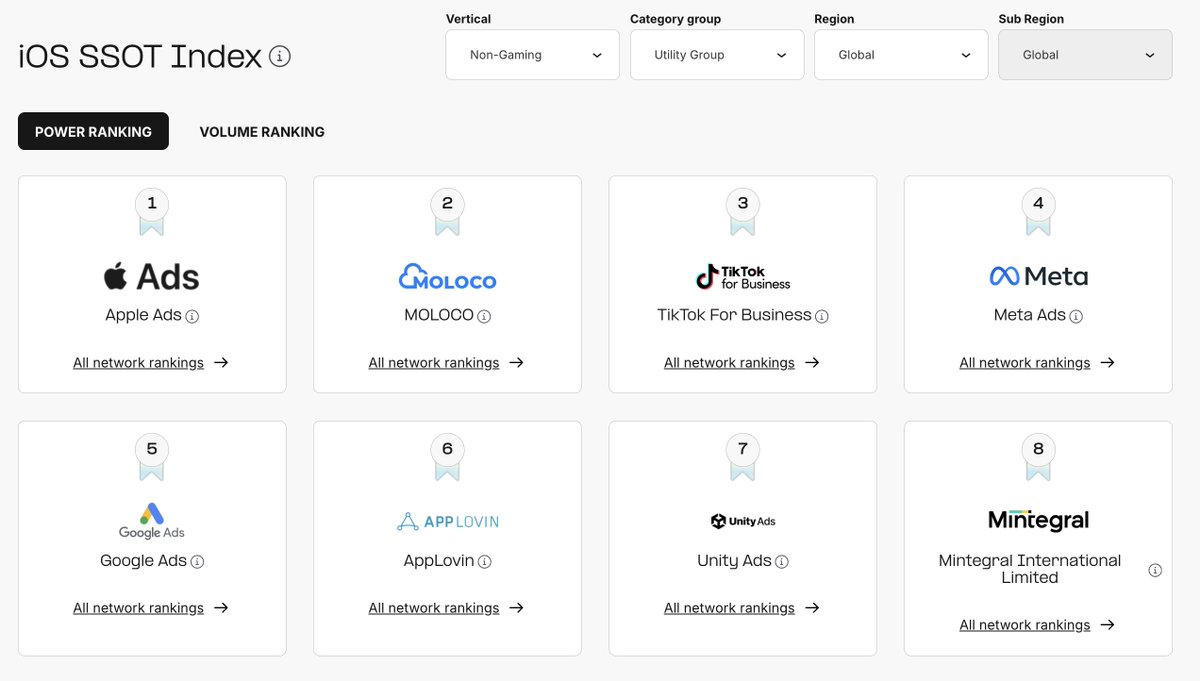
I spent $560 on X ads, here is what happened - 4.6m impressions - 40k clicks (90% are bots!) - 47 trials my goal was to promote @supabird_io did it work well for me? - $11 per trial (avg SaaS trial from paid ads is $30) - needed 15% trial to paid to break even, i hit 24% so despite bots i am actually profitable BUT i only got these results because i have experience running paid ads across platforms my brother spends ~$1m/mo on meta and i've worked with him if you need help with paid X ads, dm me. I plan to offer this inside SupaBird, but want to work manually with a few people first before automating

@heyitsalexP ·
I work with so many first time founders who are getting ripped off by their ads agencies. Sometimes it's ignorance–the founder sees low agency fees & doesn't realize they're getting outdated media buying strategies. Sometimes it's malice–the owner of the agency I speak about in the video started screaming at me when I tried to explain that their analytics were inaccurate and they were spending on non-incremental sales. If you're a founder who is trying to launch a brand with Meta ads, and you have minimal experience/knowledge of Meta, it's important to find the right partner. And there are really only two ways to guarantee a good partner: 1. Build a network of other founders who have gone from zero to at least $10M/year, and take referrals from them 2. Learn enough about Meta to do your own vetting, and potentially do GTM/proof of concept yourself When I share this, the follow-up question is always "where do I learn about Meta?" Honestly, this is a hard question to answer. There is a lot of good free content out there, but it can be very use-case specific (i.e. strategies for coaches or local SMBs or dropshippers) If you have any recs that are ecom-specific and free or low cost, let me know.
 Watch video
@CJSlattery ·
@herrmanndigital is one of the best Meta media buyers on the planet. Give him an account managed by an average buyer with the exact same creative and he will materially outperform them every single time. With the same ads, assets, and copy, he’ll outperform most because he’s the person making decisions about settings, structure, and how the account is built. People can understand this is true, yet keep saying media buying is commoditized, and that “the platforms do all the work now”. This would theoretically imply that everyone should be as good as David, and that is simply not true. Truth is, there are a massive number of ways to configure an ad account, and a huge percentage of those configurations are just wrong. The sliver of setups that are fully optimized is tiny, and it's different for every brand and every stage of that brand's growth. The people who can consistently find that sliver are rare. And because everyone wants to pay less for media buying, they hire cheaply, causing performance to tank, and leading them to believe paid media doesn't work. It works. The talent to run it well is just expensive because there's not a lot of it and everyone wants it. Supply and demand applies to media buyers the same way it applies to everything else. Don’t believe everything you hear.

@GeorgeLampro20 ·
It’s Week 6/12 on my challenge to scale 2 apps to 30k/month in under 90 days. (If you want to know my exact thought process on how to bounce back from a setback read till the end 👇) App 1: Was running 2.5-3X roas on $400 daily spend for like 10 days+ Yesterday it dropped to 1.5 roas Today literally 1x and I would technically lose money due to apples cut. Actually brutal. Not getting emotional. If you get to reactive in paid ads you’ll shoot yourself in the foot and kill your ads performance long term. So far: $16k in the last 28 days $20k in the total. App 2: Was also doing extremely well on paid 2-2.5x roas consistently then yesterday dropped to .8x (lost $40) and today 1.5x On $200/day spend. However we did just get onboarded onto RevenueCat payments this morning!!! The week started off great and has had a bit of a hiccup these days but it’s no worries. Trust the plan and move fast. So here’s everything I’m going to do to make sure both these apps hit 30k/month in the next 45 days. App one: With paid ads look at weeks not days. We’ve made $7k off $2400 in spend, no need to get fussy about 1-2 bad days. However I did see that the frequency for one of my higher spending adsets was getting a bit high and the cpa started to increase. This particular adset was by a creator who has recently posted 4 more videos very similar to the ones in the adset. So I added 2 new ads with these 4 creatives in the adset and merged 3 ads into one because they were essentially just variations of each other and meta was unnecessary spending trying to learn. As well as getting influencers back posting. Because I started focusing on paid, I stopped focusing on influencers because they grew slower and are more management heavy. The bottleneck is my partner just left the US to study abroad in Taiwan and he manages all of our creators and onboards them. With the timezone differences and classes it’s going to be a lot harder for him. But he’s gna have to figure ts out. App two: Okay the problem is we’re running only 4 ads right now that are winners and only spending $200 a day. So the idea is we’re now having other influencers make variations of the winning ads slowly expand the amount of ads. Going to do this very slow tho because we don’t want to waste money testing. Also now that we’re on revenue cat payments we’re scaling spend rapidly. This should let the fly wheel take off and bring us to $30k easy.
@M__Operators ·
You’re following terrible advice: Incrementality tests Reach campaigns Upper-funnel events Useless for <$10M brands aiming at +$25M. Here’s what works from @andrewjfaris + @couuor @codyplof - Master your message - With emotional resonance - Know your value metrics 1️⃣ Spend 2️⃣ Revenue 3️⃣ Gross margin - So you don’t lose money - Read that last one again - Drop the CPMr obsession - Offer = product + price - From natural consumption - Match offer to category - Empty your funnel 3–4/yr - Through a promo calendar - Test offers: months not days - Track cohorts (LTV) by month - And forecast the same way - Constrained by 13-wk cashflow - Use AI for repeatable systems - Know your subscriber CAC - Versus one-time buyers - AOV > subscription rate - So you don’t lose money - Yeah, that one’s important - Bundle to fix low AOV - BOGO, GWP preserve margin - Frame free shipping as value - Sample if trial-dependent - Go hard on affiliates for retail - Anchored in organic “halo” - Awareness drives in-store - Align your creative to channel - Especially signal strategy - When you go up-funnel - Agency vs in-house debates - <$50k/mo run Meta yourself - Develop media-buying POV - Get the best when >$50k/mo
 Watch video
@StevenCravotta ·
My organic to paid ads pipeline: 1: Post content organically on TikTok 2: The algorithm validates what works based on views 3: Build a library of hundreds of videos 4: Upload your best performers to the paid ads dashboard I had one video hit 6 million views organically. I took that exact video, put it on paid ads, and it ran profitably. I already knew it was going to work. When you find an ad that can run profitably, you can scale to the moon.

@NickAbraham12 ·
We turned on paid ads and started acquiring customers faster than ever before. It's one of my biggest regrets in running my agency. Because we saw revenue grow and thought it was working. But it took us two months to realize net profit was shrinking. It was like a revenue catfish. What happened: We didn't account for paid ads CAC in our sellers' comp plans or overall operating model. Commissions made sense on inbound and outbound-sourced leads, but paid ads came with a higher CAC price tag that I ultimately paid for out of our profits. This isn't to say paid ads are bad. But if you're going to run them without truly* understanding your numbers, skip a step and just light your money on fire. At least you'll save time.

@evanseech ·
When I was in high school, I ran ads for my family's restaurant Now I manage 7-figures/month in ad spend across 50+ niches. The turning point for me was embarrassingly simple. For YEARS I was all over the place. Trying different business models and getting distracted by shiny objects and never really breaking through. Then I locked tf in on one thing. Paid ads. That's it. I stopped taking meetings about side projects and quit exploring "opportunities" that had nothing to do with media buying. All my attention went into one skill. I went from running ads for a restaurant to interning under Cameron Fous, scaling a day trading and coaching company. Learned what real budget management looks like when there's real money on the line. That one decision created more momentum than the previous 4 years of trying everything combined. I've now launched 305+ funnels across 50+ niches and I've averaged close to 250% ROAS in the first 30 days across the entire portfolio. NONE of that happens if I'm still splitting time between ads, e-commerce, and whatever else looked interesting that month. So focus. On 1 thing. Everyone I see winning right now are the ones who picked one thing and just went all in on it.

@askOkara ·
a lot of founders kill their runway by running paid ads too early paid ads work when you have: - an offer that people want - a landing page that converts - a product that retains if you don't have all three, you're paying to find out your funnel is broken fix the funnel first, then spend money on the ads

@williamkast_ ·
Your offer matters 10x more than any of your ads. Most brands spend all their energy on creative and ignore the thing that actually closes the sale. Your ad's job is to get the click. Your offer's job is to convert it. If your ads are getting clicks but not converting, the problem probably isn't the ad creative. It's what happens after the click. A strong offer makes an average ad profitable. A weak offer makes even the best ad unprofitable. This is why it sits above creative in the testing hierarchy. Product > Offer > Creative. Before you test another batch of ads, ask yourself: Is the offer selling the desired outcome, not just a product? Is the offer structured to maximize AOV? Is the perceived likelihood of achieving the desired outcome high? Is there real risk reversal that addresses every possible objection? Most brands have never properly tested their offer. They just picked a price, threw it on the page, and started running ads. Then they blame the creative when performance is bad. Test the offer first. It might be the only thing you need to change.

@coleangelle ·
Dollar per booked call is the most underrated metric in high-ticket sales. Ask yourself this: For every call you put on a closer's calendar, how much revenue came back? That one number tells you the efficiency of every rep on your team. Tells you which reps are most efficient and deserve more volume or get you the highest return on your ad spend Tells you when to scale and when something is broken. Most offer owners have never calculated it. They know their revenue. Maybe their close rate. And they think that's enough. It's not. Cost per call. Show rate. Close rate. Dollar per booked call. ROAS. UTM-level attribution down to the exact source driving deals. These are the numbers that actually tell you what's happening inside your offer. Paid ads is a numbers game. I've said that forever. If your ROAS is above 5x and you have calendar space, raise the budget. Simple. But you have to know your numbers well enough to make that call with confidence. Revenue tells you what happened. These metrics tell you why. That's the difference.

@sab8a ·
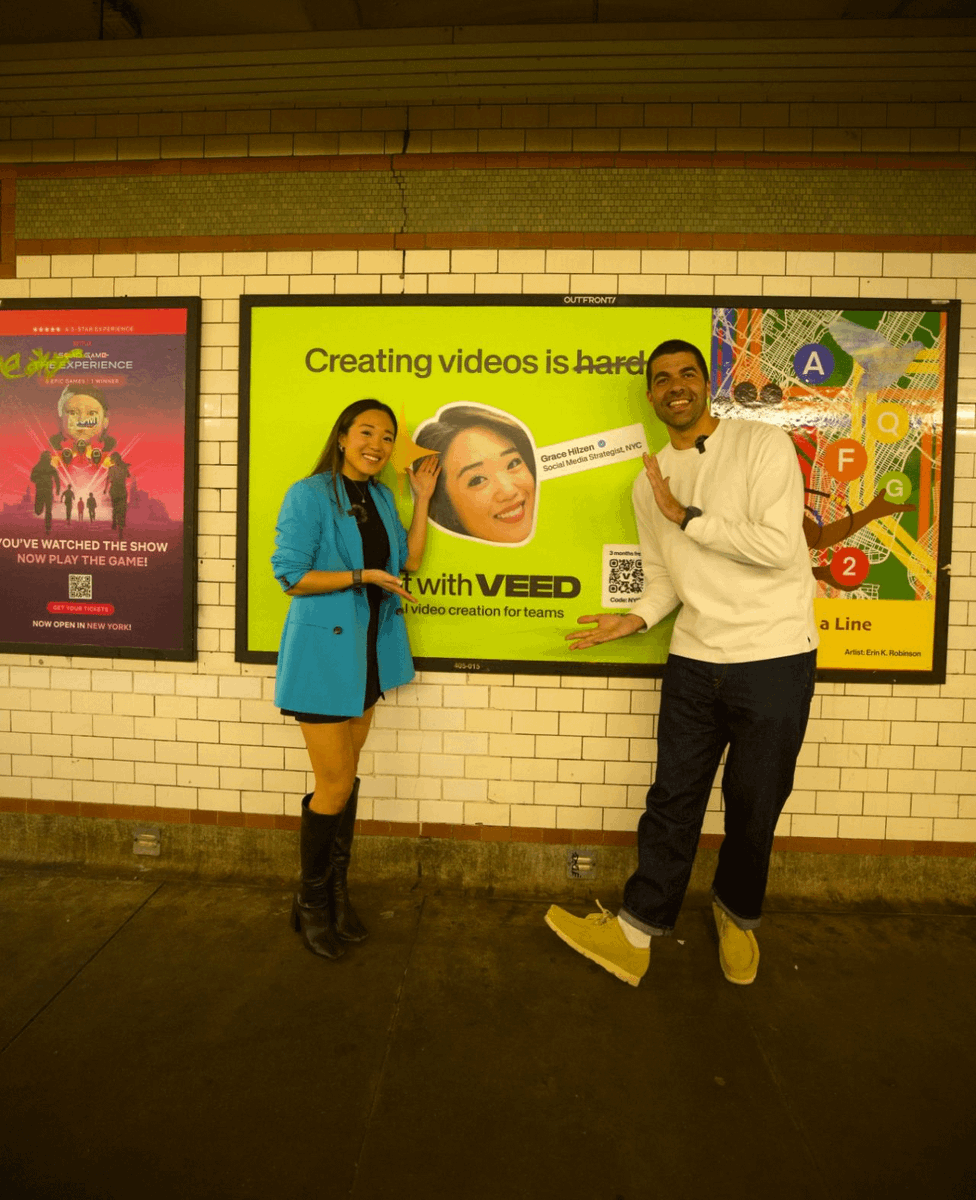
Last month, we hit the NYC subways with 2200+ ads. The results: – Brand search hit an all-time high – A 5-figure enterprise deal – A brand uplift: +2.5% – Massive word-of-mouth growth Here's the breakdown of how we did it👇 So… why go offline? Because digital is noisy. Everyone’s fighting for the same pixels. We wanted to pop up somewhere unexpected. Enter the NYC subway. Roughly 4M people commute via NYC subway daily!! The strategy was simple: Make the user the hero. We partnered with NYC-based creators and marketers with a loyal following→ Brandon, Gabe, Jazmin, Tameka, and Grace. They represent the kind of creators we built VEED for. So we put them on the billboards. Fun fact: Most of them had never been part of a traditional ad campaign. This wasn’t just exciting for us. It was a big moment for them, too. > Their audiences spotted them. > Snapped pics. Posted. Shared. > Then the creators visited their billboards. Tagged us. The snowball effect kicked in. Suddenly, @veedstudio was everywhere on social. A perfect overlap of OOH (out-of-home advertising) + creator-led marketing. Some takeaways: –– Make the user the "hero" (always) –– Tap into existing communities –– Choose the right creators (not just big ones) –– Do something unexpected to get people talking about you Where should we head next?

@evanseech ·
There are really only 3 ways to build a recurring revenue engine with paid ads. I've modeled all of them. (the one that works fastest is the one nobody talks about) Model 1: Direct Continuity Sell a subscription directly from your ads. Something like a $97/month membership or software. You run ads, people sign up, you collect monthly revenue. Works if your product has instant perceived value. Fails if your churn is high because your CAC gets eaten alive by people canceling in month 2. —- Model 2: Intro to Continuity • Run ads to a free or low-ticket offer on the front end. • Free trial, $1 trial, cheap introductory course. • Then convert them into a monthly subscription on the backend. Longer payback period but bigger LTV if your backend conversion is solid. — Model 3: Sprint Offer • Sell a ONE-time high-ticket engagement on the front end. • A 90-day sprint, a done-for-you buildout, a consulting package. • Then roll them into a monthly retainer once the sprint delivers results. This is what I run for my own agency. High-ticket sprint, then ongoing retainer. And it's the fastest path to profitability because you get paid upfront AND build a recurring base. The key number across all of them: your LTV-to-CAC ratio. If it's not 3:1 or better, you are NOT ready to scale. And if your monthly churn is above 10%, your offer needs work before you spend another dollar on ads. A 10% monthly churn means half your customers are gone in 6 months. No amount of ad spend fixes that.

@therahulissar ·
Most Creative Strategy Dies in Slack Threads. Real talk: Most brands have the right ideas... buried in Slack. -> Customer insights. -> Messaging angles. -> Creative learnings. But it dies in: ->Lack of process ->Creative turnover ->Testing bias ->Decision fatigue If your ad creative isn’t working, it’s maybe not a talent issue. It’s an operational one. Ask yourself: 1. Who owns the creative feedback loop? 2. How fast are you testing new concepts vs. new formats? 3. Are you making decisions off CPA, or contribution margin? Winning creative isn’t just clever. It’s repeatable. Which means someone has to build the machine that gets raw ideas from Slack into scalable ads. Until then, your best angles will stay buried.

@thePhilRivers ·
Email doesn’t compete with paid ads. It makes them 3x more effective. Example: One client improved their popup from 2.1% to 8.55%. Welcome flow revenue jumped from $11K to $44.5K/month. Same ads, the backend just caught more people. Fix the backend before you pour more into the frontend.

@niakjaw ·
According to Ludwig Magnusson, SOSCALE Founder, Hears did $5M+ revenue in the first 6 months. The problem they solve? Protecting your ears on loud events with noice reducing earplugs. This ad has been running for... 6 MONTHS. Here's the quick breakdown why it's working: 1. Primary text "Going to a loud event? Hears eliminates the damaging noise." Qualifying question and solving the problem with educating that what they do might be harmful for them, in the easiest way possible. Most creative strategists overcomplicate their copy... But here's the proof you don't need fancy wording to print cash. Just pointing out the problem and immediately presenting the solution. "While preserving the clarity of music. The beauty of all? feel like you are not even wearing it. The music remains, the hearing damage fades" Here's handling the most common objections before they even arise. 2. Ad creative Feels like article from "The Guardian" which perfectly matches native ad concept. It's not flashy and salesy. Focuses on curiosity. Warns the reader. Scroll-stops because you don't see this type of "news" image on Meta. And the headline is genius because it literally is the article that could be posted in "The Guardian" type of media. Native ads outperform flashy creatives on Meta because people scroll past anything that looks like an ad. If it looks like content, they stop. If it looks like a sale, they skip. 3. What I'd test - Advertorial after clicking the ad, right now it forwards traffic to the Hears website - Going deeper inside audience's struggles in the primary text. Example: "You spent $150 on concert tickets but stood in the back away from the speakers, missing the experience you actually paid for? Hears eliminates the damaging noise." - Fully editorial primary text about the problem from the ad creative so we could make it 100% native ad ==================================== Follow my profile for more daily ad breakdowns of +$1M/mo brands. Tomorrow I'm breaking down Huel.

@niakjaw ·
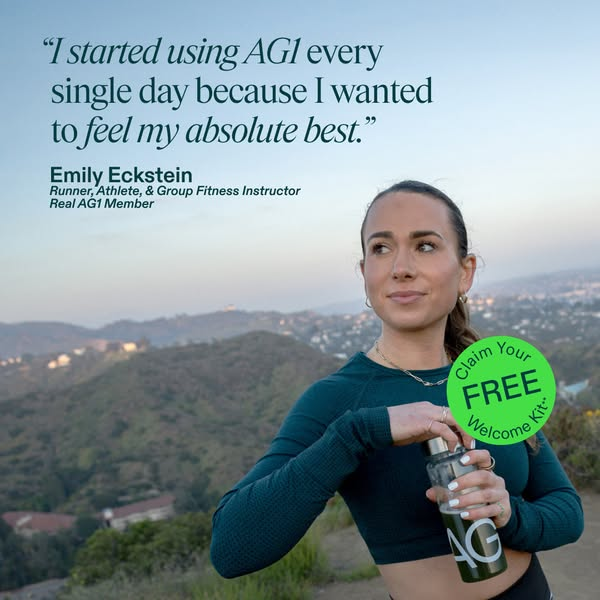
Here's something I found in AG1 ads library that prints them cash since December 2025... All of these statics have been active for 4 months. And if you go through them, you can see one thing they have in common... No, I'm not talking about green "Claim Your FREE Welcome Kit" circle. Under avatars' names, there's a specific occupation they do. Why is it so effective? People wanna buy from people they trust. And the trust comes from similarity. Fitness instructor is more likely to buy the product another fitness instructor recommended. Runner is more likely to buy the product another runner recommended. And so on... They think "this person is like me and they use this." So AG1's ad angles aren't only about benefits, outcome, transformations... But they also target different specific personas which makes their ads diverse and helps these personas associate with the product. I'd test making the occupation the actual hook tho. For example: "As a fitness instructor, I recommend supplements to clients every week. This is the only one I take myself." Follow for more daily breakdowns of brands doing $1M+/mo in paid ads.



@scibelli23 ·
Programmatic advertising might be the biggest scam in marketing history. And nobody talks about it. Billions of dollars a year flowing through a system so deliberately complex that by the time your budget hits an actual human eyeball - on an actual relevant website - half of it has already been skimmed by middlemen that added no real value. It was built for companies like Coca-Cola. Brands where "awareness" is a legitimate goal and nobody gets fired for buying impressions on sites nobody visits. For everyone else, it's just expensive noise with a nice-looking dashboard. The whole stack - DSPs, SSPs, DMPs, verification vendors, data brokers - exists to add layers between your dollar and your outcome. Budget's gone, campaign's over, here's a PDF with some charts. That's not media buying. That's a receipt. Meanwhile performance marketing has been sitting over here, unbothered, for 20 years. No mystery. No middleware. No "brand lift study" to justify where the money went. Just a click. A lead. A call. A sale. A number you can validate by end of day. Every platform change, every privacy update, every economic downturn - performance marketing didn't just survive, it thrived. Because at the end of the day, every CFO, every founder, every decision maker on the planet wants the same thing: Show me what I got for what I spent. Performance marketing has always been the answer to that question. It was before programmatic existed. It is today. And it'll still be the answer when the next overly complex ad tech revolution comes along. Measurable results aren't a feature. They're the whole game.

@Nate_Google_ ·
if you're spending over $300k/month on google, when is the last time you tested whether your branded traffic is actually incremental? actually driving net new revenue, not conversions you would have gotten anyway? we had a brand spending $350k/month on google sign with us because we didn't sound like every other google ads agency trying to sell them media buying. media buying is only half the battle. we do it the best, but that's not what brands at scale care about most. they care about measurement. proving the spend you're driving is added net new customer revenue. we have these conversations all the time. we're currently running a geo-holdout test for another brand that's been hesitant to scale youtube because they've scaled on meta for the life of the business, so youtube reads to them like a retargeting tool. we're taking youtube to $10k/day, then holding spend flat in a set of matched control DMAs while we scale the test markets. matched controls, not just our historically strong markets, because if you pull spend from your best DMAs you bake in selection bias and regression to the mean and your incrementality read is junk. this has to be done for both meta and youtube, because it resets the platform CAC and ROAS targets you've set in your MTA stack (northbeam, triple whale, etc). example: say you're running a $55 CAC target on both meta and youtube. if you find youtube's iROAS is higher than meta's, you can tolerate a higher reported CAC on youtube, because the true incremental cost per customer is lower than the platform number says. and you can't test it once. iROAS decays as you scale, so you re-test at different spend levels to see where diminishing returns kick in. youtube might run a 1.7x iROAS at $10k/day and a 1.5x at $30k/day. the CAC targets should move with the level of scale, not stay fixed. this is where MMM earns its place. incrementality experiments are point-in-time and you can't run them continuously across every channel. MMM is always-on. it captures cross-channel halo, saturation curves, and longer-term brand effects across the entire ecosystem, and you calibrate it with the geo experiments so the model is grounded in causal truth instead of correlation. that's how you keep making data-driven allocation decisions at scale instead of guessing why you can't hit CAC anymore. measurement triangulation, MTA plus incrementality experiments plus MMM, is one of the most important pieces of the puzzle for brands at scale. almost none of them are doing it correctly. we're working on getting certified through google's meridian partner program so we can build MMM and incrementality in-house. not renting another 3rd party platform's black box and trusting their number. owning the measurement.

@BallinFil ·
x is full of convos about media buying & how all ad agencies are bad but I want to call out a few things: - there is a shortage of great media buyers in ecom (ones who understand dynamics of meta, let alone multiple channels, understand copy and creative strategy, are up to date with AI tech). If you have this person you're lucky. - cracked media buyers charge 200/300k+. Really good ones become affiliates and run their own offers because they get tired of brands/agencies wasting their time. Or they become freelancers and help 2-3 brands at a time. - If you're complaining about your agency, see the two bullets above. Why would an ad agency work with you for 4k a month if they are truly good and great brands are willing to shell out $$$? Probably worth reassessing what you are paying for if you're in this boat. - the best & biggest brands are doing crazy things with AI generation at scale, and hiring video editors who are AI-first. That means every creative asset leverages AI clips, AI voice, etc. etc. Smaller brands can rely on ChatGPT/Gemini and still get away with good stuff though.

@ToriiRowe ·
Hot take: Ad account structure is not dead. Everyone is so locked in on creative and yes, creative is the biggest lever, that they've convinced themselves the structure around it doesn't matter. It does. How you physically set up an account. How you creative test. When you introduce new assets. How you scale winners. How you optimize based on what the data is actually telling you. All of it still matters. And here's what most people miss: The right structure isn't universal. It changes based on where you are. Spend tier. Brand catalog size. Inventory positioning. Whether you're acquiring or retaining. Whether cash is tight or you're pushing for growth. What the founder actually needs from the next 90 days. A brand doing $500K a month needs a different account architecture than a brand doing $5M a month. Now let's talk about ASC. Dumping mass creative into a single ASC and calling it a media buying strategy is not media buying. It's abdication. Here's what I mean by that. When you throw everything into one campaign and let Meta decide, you've stopped making decisions. The algorithm is driving now. And the algorithm doesn't know that you're about to stock out of your hero SKU. It doesn't know your CAC target needs to tighten this month because cash flow is tight. It doesn't know this creative works for cold audiences but destroys your returning customer efficiency. It has no margin sensitivity. No inventory awareness. No context on what the founder actually needs this quarter. Meta optimizes for what you tell it to optimize for. Nothing more. A real media buyer is making those calls constantly. Structuring the account so the right creative hits the right audience at the right time with the right budget behind it. Dumping everything into ASC and walking away feels like a strategy because the dashboard still moves. But you're not driving anymore. You're just watching. The brands winning right now have both. Strong creative AND a structure that knows how to deploy it, test it, scale it, and protect efficiency while doing it. One without the other leaves money on the table. Don't sleep on the physical craft.
@ToriiRowe ·
Most brands optimize for the cheapest customer. We're building something that tells you which customer is worth the most. Here's what that looks like in practice. We pulled cohort data across a client account. Women 25-34, Instagram, UGC creative speaking to a specific pain point, specific landing page. CPA was $10 above account average. On the surface, that looks like a worse ad. Most media buyers let that creative die. The algorithm buries it. The buyer moves on. But 6-month LTV for that cohort was 3x the broader buyer pool. The "expensive" customer was the most profitable customer in the account. The media buyer chasing lowest CPA was systematically killing the best creative in the account. That is not an edge case. That is how most accounts are being managed right now. What we're building runs that same logic across every meaningful variable simultaneously. Age, gender, region, platform, device, creative angle, format, landing page, offer type. The goal is simple: identify the highest-LTV cohort in every cut of the data and build a feedback loop where creative production and media buying are both pointed at acquiring more of that specific person not the cheapest version of anyone. This flips the entire acquisition model. CPA is a measure of cost. Not efficiency. Those are not the same number. A customer who costs $10 more to acquire but spends 3x as much over 6 months is not a problem to fix. It is a signal to follow. Aggressively. We're taking this further. Full MTA optimized toward downstream LTV not toward which ad got credit for the click. Every touchpoint in the customer journey evaluated on the quality of customer it produced, not the volume of conversions it claimed. And then feeding that back to creative. The brief writes itself from the data. The reason most brands never get here: connecting ad-level attribution to post-purchase cohort behavior across a meaningful time window requires data infrastructure that platform dashboards were never designed to provide. Most teams are flying blind past day one. We're in the middle of building it. Early outputs are already changing how we allocate budget and brief creative on the accounts we're running it on. How many brands here are actually making creative decisions based on downstream LTV data versus front-end CPA?

@TaylorLagace ·
We spent a few bucks on this ad creative and it's outperforming assets that cost 50x more to produce. - Seeded product to a micro-creator. - They posted because they genuinely liked it. - We got usage rights and launched it as an ad alongside everything else in the account. Our creative system is built to do this at scale: - 500 creators outreached per month - Every asset launched, - Cost caps as the filter. The ad account gets stronger every month without adding headcount or production budget. We used this creative pipeline to help grow Purdy & Figg from £452K to over £50M.
 Watch video
@HeyOz_AI ·
If I had to launch a new product with only 10 ad creatives, here’s exactly what I’d make (and why). 👇 Because most brands don’t have a media buying problem… They have a “we only tested 3 angles” problem. Here’s what usually happens: You spend weeks perfecting the product and landing page Then you rush the ads: 2–3 “nice looking” creatives All 3 say basically the same thing: “Here’s our product, it’s great, buy now” You turn on campaigns, results are mid, and the conclusion is: “Meta doesn’t work for us” “Our niche is too expensive” “We need a better media buyer” But the algorithm can only amplify what you feed it. If you only give it 3 similar ads: You’re not testing different hooks You’re not testing different problems or desires You’re not testing different levels of awareness You’re not actually testing — you’re just repeating. The brands that win treat creatives like a lab: Multiple hypotheses Multiple angles Multiple ways of telling the same story And they learn fast what the market cares about. So, if I had to cap myself at just 10 creatives, here’s my starter pack: 1–2: Pure “UGC problem rant” ads Someone talking straight to camera about the exact pain your product solves. Why: This builds emotional relevance. It’s not about the product yet, it’s about their frustration. 3: Founder story / “why this exists” Face-to-camera or overlaid text on b-roll: “I built this because…” Why: People buy from people. This builds trust and a reason to care. 4–5: Direct response product demo Clear, close-up demo of the product in use. Step-by-step, no fluff. Why: Removes friction. They should instantly understand what it does and how it works. 6: Before / After transformation Side-by-side or split-screen, with bold “BEFORE / AFTER” labels. Why: This is what performance ads are made of — visible change. 7: Social proof / testimonial mashup Screenshots of reviews, quick quotes, star ratings. Why: If strangers love it, I’m more likely to trust it (especially cold traffic). 8: “Objection killer” creative Call out the #1 doubt in the hook: “Too expensive?” “Will it actually work?” “Is this legit?” Why: Great ads answer objections before they’re asked. 9: Offer-focused creative Lead with the deal: free shipping, bundle, guarantee, limited-time launch offer. Why: Sometimes they already like it — they just need a nudge to act now. 10: Pattern-breaker / meme-style ad Something scroll-stopping, unexpected, a bit weird but still on-brand. Why: This wins impressions, curiosity, and cheap clicks you can retarget later. Launch with these 10 and suddenly you’re not just “running ads” — you’re learning what actually moves people to click and buy. 🧪 I’m building Oz exactly for this: paste in a product page, and spin up these 10 (and more) in minutes instead of weeks. If you want, I can break down how I’d structure these 10 creatives for your product. Just comment "CREATIVE" and I'll be in touch.


@sarah_carusona ·
If you think you're paying too much for your media buyer, you're not alone. I recently had multiple conversations with founders trying to hire a good one. And every single one had the same problem: They couldn't find someone they were excited about, at the price they wanted to pay. So here's an honest breakdown of the freelance media buying market right now👇 Tier 1 - Senior freelancers ($10K-15K+ / account): Strategy + reporting + some creative direction/production. They know their worth and they want upside, which usually means a flat fee + % of revenue, spend, or contribution. Tier 2 - Offshore or nearshore ($5-8K/account): Similar scope, better price point. Quality varies more but there's real talent if you vet well. Will likely get less creative direction and you're lucky for creative production. Tier 3 - Coordinators/assistants (~$2-3K/account): Someone else is running point on campaign structure, creative, and data analysis. You're getting execution, not strategy. And before you think "I'll just hire in-house," a good media buyer makes $15-20K/month running 3-4 accounts independently. Why would they take $10K to work for one brand? Yes, AI is helping. But it's not replacing the judgment calls yet. Just do a quick scroll through DTC LinkedIn/X and you'll see countless posts of media buyers who've made decisions that have transformed accounts. (And I'm certainly not trusting a tool with hundreds of thousands of dollars when I have to remind it 10x to stop using em dashes 😅 ). So what does this mean for you if you're a brand? Well, you're not getting it for free anytime soon..but you should understand if you're overpaying for just media buying when what you actually need is holistic growth strategy & execution. This is where the biggest shift is happening, and the best operators concentrate their dollars on the strategy. How does this sit with others who have been on the search for a good media buyer?
 Watch video
@HeyOz_AI ·
Your Meta ads aren’t dying because of targeting. They’re dying because you test 3 creatives a month. “The algorithm is cooked.” “iOS ruined tracking.” “Our media buyer isn’t good enough.” Meanwhile, your audience has seen the same 2–3 angles on repeat for weeks. Here’s the uncomfortable truth: Most brands don’t have a media buying problem. They have a creative velocity problem. You: Brief a designer Wait a week Argue over copy Launch 2–3 “safe” creatives Let them run for a month Meta: Decides in 48 hours your ad is stale Punishes you with higher CPMs Quietly shows your boring creative to fewer people You’re trying to “scale” with the creative volume of a tiny brand that posts on socials once a week. If you’re spending real money on ads and: You don’t know how many creatives you tested last week You can’t list 3 new angles you tried this month You’re still running “best performer from Q2” in Q4 …then targeting is not the problem. Your system for producing and testing creatives is. Before you touch interests, bid caps, or lookalikes, fix this. “How can we consistently test 10–30 new creatives every week, not 3 per month?” Most accounts unlock growth the moment that question becomes non-negotiable.

Best Tweets by Topic