Making a tweet go viral depends on two core factors: a compelling content structure with a hook, tension, and payoff, and high engagement velocity in the first hour after posting. On X (Twitter), the posts that spread far beyond your followers usually win twice: they stop the scroll in the first 5-10 seconds and they get fast early likes, replies, and reposts.
That’s the counterintuitive part. Many assume virality starts with a clever idea. It usually starts with a launch sequence. A strong tweet without early response often dies. A weaker tweet with a sharper hook, better timing, and immediate conversation can travel much farther.
If you want to learn how to make a tweet go viral, stop treating it like luck. Treat it like a repeatable system: study structures that already work, write for reaction instead of applause, post when your audience is active, and actively manage the momentum after publish. The goal isn’t just reach. It’s high-intent reach that attracts the right followers, replies, and opportunities.
The Anatomy of a Viral Tweet
Most viral tweets don’t look formulaic on the surface. Underneath, they usually are.
The cleanest model I’ve found is Hook, Tension, Payoff. If a tweet is missing one of those, it can still perform, but it usually won’t spread as far. The hook gets the stop. The tension creates a reason to keep reading. The payoff gives the reader something worth replying to, reposting, or bookmarking.
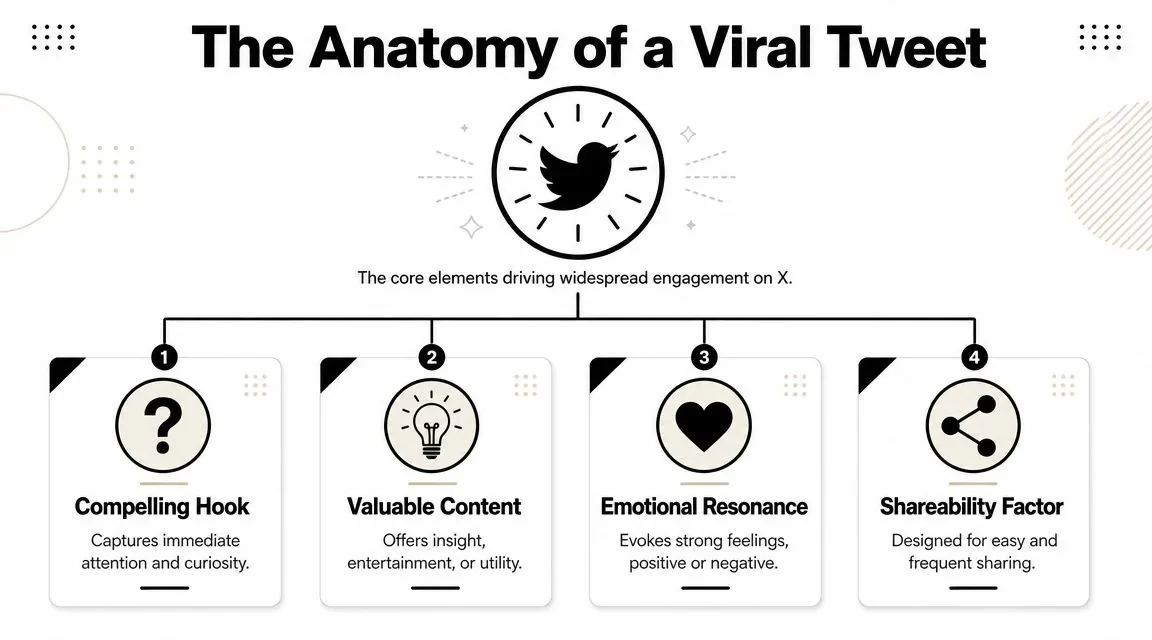
The three-part structure behind most breakout posts
Hook is the first line that earns attention. It can be a bold opinion, a surprising observation, a direct contradiction, or a sharp before-and-after contrast. If the first line is soft, the rest doesn’t matter.
Tension is what makes the reader lean in. This often comes from an unresolved gap:
- Conflict: a claim that challenges common advice
- Curiosity: a setup that implies a lesson is coming
- Specificity: a concrete scenario that feels real, not generic
Payoff is the reward. It’s the answer, insight, list, lesson, or phrasing that makes someone think, “I need to send this to someone.”
Practical rule: If your tweet can’t be reduced to “why stop, why continue, why share,” it probably isn’t ready.
This is why fluffy tweets stall. They may sound fine, but they don’t create movement. Movement comes from unresolved tension followed by a satisfying release.
A simple deconstruction example
Here’s a sample tweet structure for a founder audience:
Most startup content fails for one reason.
It explains the product before it names the pain.
Say the pain first, and your audience will write the pitch in their head.
Why this works:
- Hook: “Most startup content fails for one reason”
- Tension: the implied mistake creates a gap
- Payoff: a simple, memorable rule the audience can reuse
That pattern shows up in many effective posts, even when the wording changes. You can study more examples in this breakdown of tweets that actually work.
Xholic AI can be useful in a tool-driven workflow without turning the process into copy-paste content. You can send any post in Inspiration to Ask Xholic to break it into hook, tension, payoff, and reusable format, then Remix it in your voice, which is helpful when you want to learn the underlying pattern instead of imitating the wording.
How to Craft Viral Hooks and Content
A viral tweet usually reads fast and lands hard. That’s not because it’s casual. It’s because the writer did the hard work before posting.
Guidance summarized by Jasper recommends capturing attention in the first 5-10 seconds with a surprising stat, bold opinion, before-and-after result, or curiosity-driven one-line story, then keeping the post concise and value-dense. It also recommends reviewing your last 30 posts and testing 3-4 posting windows over two weeks rather than guessing, because timing depends on your audience, not a universal rule (Jasper’s viral tweet guidance).
Hooks that earn the stop
The strongest hooks usually do one of four jobs.
-
Contradict common advice
Example: “Posting more isn’t the fix. Posting clearer is.” -
Name a painful mistake
Example: “Most B2B tweets die because they sound approved, not believed.” -
Promise a useful payoff
Example: “A simple way to turn one insight into five tweets.” -
Create an information gap
Example: “The tweet format that gets attention without sounding thirsty.”
Notice what these have in common. They don’t warm up. They start at the sharpest point.
Templates you can adapt today
Use these as structures, not scripts.
| Format | Template | Best for |
|---|---|---|
| Contrarian take | Everyone says ___. The better move is ___. | Founders, marketers, analysts |
| Mistake and fix | If your tweets aren’t landing, stop ___. Start ___. | Educational content |
| Before and after | I used to think ___. Then I learned ___. | Personal lessons |
| One-line story | I changed one thing in my content, and suddenly ___. | Curiosity-driven posts |
| Clear payoff | The easiest way to get more replies is ___. | Tactical advice |
A good hook still needs a clear ending. Don’t open strong and finish vague. The payoff should be compact enough that someone can remember it after one read.
Viral writing on X is usually compressed thinking, not longer thinking.
For more starting points, these blank Twitter post templates are useful if you tend to lose momentum staring at an empty compose box.
How to build an idea pipeline instead of waiting for inspiration
The biggest content mistake isn’t bad writing. It’s trying to invent a fresh format every day.
A better system looks like this:
-
Collect posts that made you stop
Save tweets by hook type, topic, and emotional trigger. -
Label the reason they worked
Was it a sharp opinion, a simple framework, a story, or a useful list? -
Rewrite from lived experience
Keep the structure. Replace the content with your own angle, examples, and language. -
Prepare multiple versions
Sometimes the second or third hook is the one that pops.
A creator, founder, or social media manager who does this weekly will write faster and with more consistency than someone who chases novelty every morning.
Optimizing for Engagement Velocity
Virality on X is heavily shaped by engagement velocity, especially early interaction from your existing audience. Shopify notes that posts are most likely to break out when you catch followers while they’re active, and recommends using X analytics, reviewing your last 30 posts, and testing multiple time windows over two weeks instead of guessing. The same guidance highlights the first 5-10 seconds as the critical hook window. TweetArchivist echoes the timing pattern and says peak windows are often 9-11 AM and 2-4 PM in your audience’s timezone because more people are available to generate the initial signal the algorithm can amplify (Shopify’s guide to going viral on Twitter).
That means timing isn’t a finishing touch. It’s part of the mechanism.
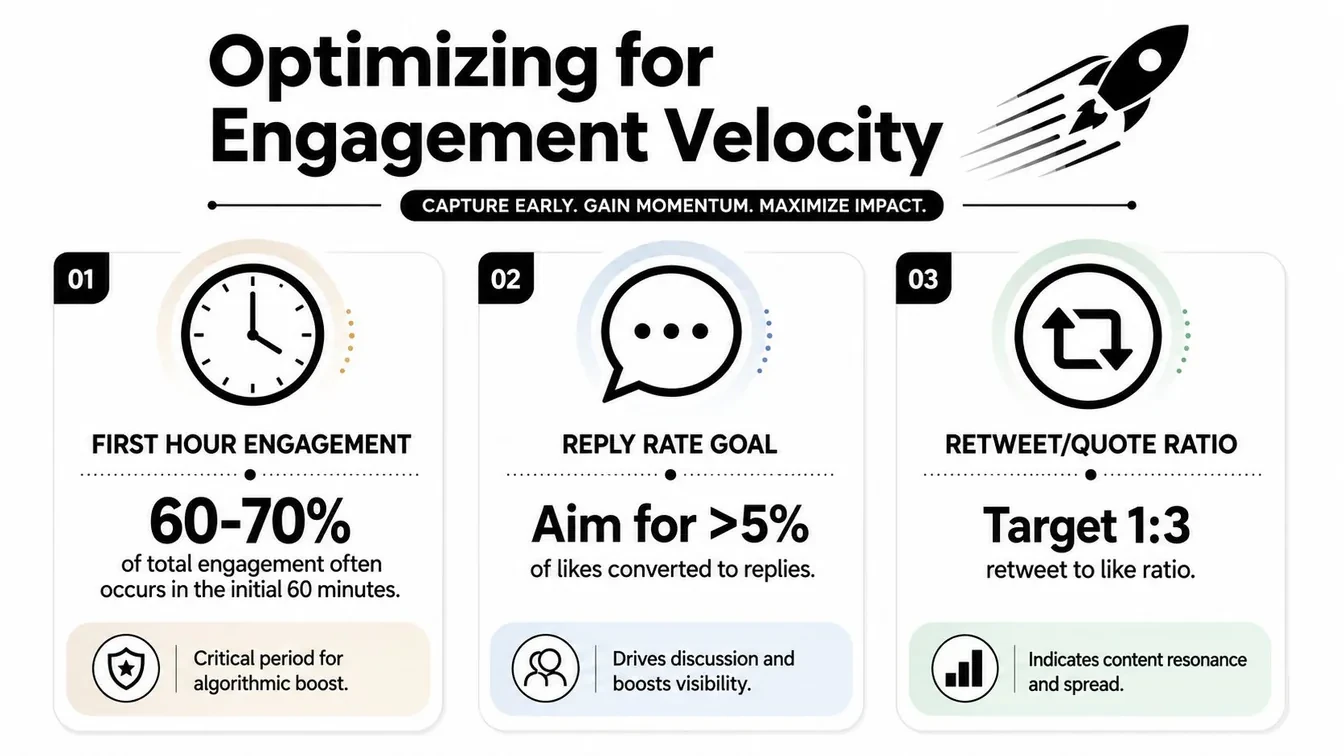
Timing is part of the content
A good tweet posted into a quiet room often fails. A good tweet posted when your audience is active has a chance to stack immediate signals.
Use your own analytics first. Broad windows can help, but your audience may behave differently depending on niche, geography, and whether your content is B2B, creator-focused, or news-reactive.
A practical testing loop:
- Review recent posts and log topic, format, and posting time
- Test several time windows over a short period
- Compare reply quality, not just impressions
- Keep the winners and drop the dead slots
For a deeper breakdown, this guide on the best time to post on Twitter is worth reading alongside your own analytics.
Your first-hour workflow
Don’t hit publish and disappear. The first hour is operational.
Here’s the launch sequence I’d use:
-
Post when people are online
Don’t waste a strong draft on a dead slot. -
Stay available immediately after posting
Fast replies help the tweet feel alive. -
Seed authentic early engagement
If you have a small circle of engaged supporters, make sure they see the post quickly. -
Answer good replies with substance
One thoughtful response can trigger a longer thread and keep the post circulating.
If you want viral behavior, create visible conversation fast.
This is also where workflow tools matter. Some creators use scheduling tools to queue content, but a scheduled post still needs live handling after it goes out.
Use replies before and after you post
One underused tactic is warming up your account before publishing. If you’ve been active in relevant conversations, more people are likely to notice your post when it lands.
A practical workflow is to spend a short window replying in your niche before posting your own tweet, then return to the tweet and handle early responses. If you use Xholic AI, its Engage surfaces high-momentum conversations and the Chrome extension lets you draft contextual replies from inside the feed, which can make that pre-post and post-publish routine easier to execute without switching tabs.
Later, this section’s video adds a visual walkthrough of engagement-focused posting behavior:
How to Amplify and Maintain Momentum
A tweet that starts working needs management. Many creators waste the opportunity at this point. They post, see it taking off, then leave it alone.
A more practical workflow is to actively build a second and third layer of exposure.
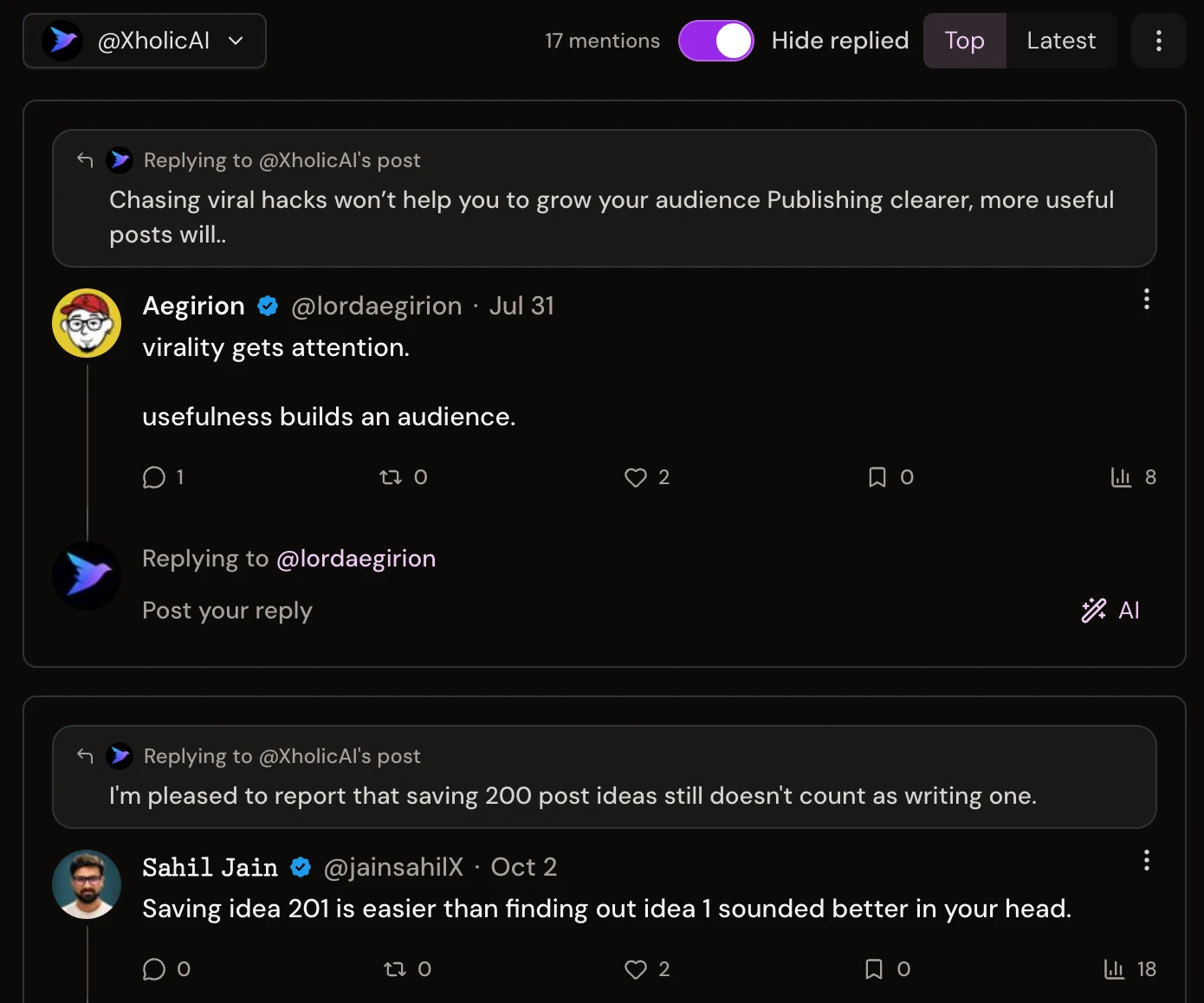
TweetArchivist recommends a practical sequence: post when your audience is active, immediately activate a small set of highly engaged supporters so the tweet gets fast likes, replies, and retweets, and then wait until the tweet has already built traction for several hours before quote-tweeting it to create a second amplification wave (TweetArchivist’s viral tweet workflow).
What to do when a tweet starts moving
When your post is getting traction, do these in order:
-
Reply to strong comments first
Prioritize replies that open a conversation, ask for clarification, or add a useful counterpoint. -
Pinpoint what people are reacting to
Are they sharing the opinion, the phrasing, or the use case? That tells you what to reinforce in follow-up content. -
Visit relevant parallel conversations
While your own tweet is active, thoughtful replies elsewhere can pull new people back to your profile. -
Update your profile context if needed
If a tweet is sending fresh profile visits, make sure your bio and pinned post explain who you help and what you talk about.
Often, creators turn a spike into actual follower growth. A viral tweet brings attention. Your profile and replies determine whether that attention converts.
The second-wave quote tweet
A quote tweet on your own post works best when it adds a new angle. Don’t repeat the same statement.
Good second-wave quote tweets:
- Add an example that wasn’t in the original
- Answer the most common objection from replies
- Expand the idea into a mini-thread
- Reframe the post for a slightly different audience
Bad second-wave quote tweets:
- “This is going crazy”
- “Still true”
- “In case you missed it”
Those add nothing. They just ask for more attention.
If you want a broader workflow for launch, scheduling, and post-publish handling, this guide on using social media management tools to go viral on Twitter X covers the trade-offs well.
Best Practices and Common Mistakes to Avoid
The hardest truth about viral tweets is that high reach and useful reach are not the same thing.
Recent advice around X is more nuanced than the usual “get more impressions” mindset. Some guidance recommends not chasing generic virality at all, and instead leaning into contrarian or insight-driven posts, reply activity, and structured threads that can be reused across platforms. The more interesting trade-off is high reach versus high-intent reach, especially for founders, analysts, and marketers who need the right audience, not just a larger one (Conbersa’s discussion of viral tweets and high-intent reach).
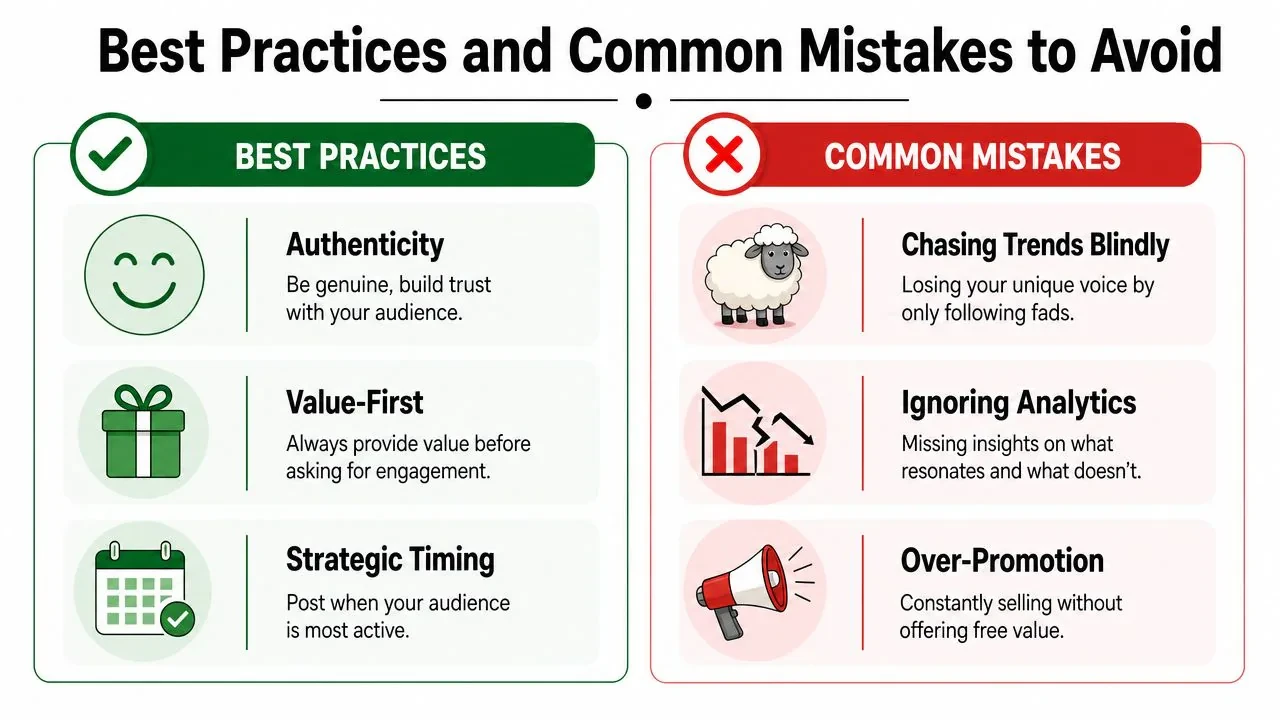
High reach versus high-intent reach
If you post a generic meme about startup life, you may get broad engagement. That doesn’t mean you’ll attract buyers, peers, collaborators, or the kind of followers who come back.
A high-intent post usually has these traits:
-
It speaks to a specific problem
Example: a founder pain point, a marketer workflow, a creator bottleneck. -
It signals expertise without sounding polished to death
Readers should feel lived experience, not committee writing. -
It creates the right replies
The best replies are thoughtful, specific, and from people you’d actually want in your audience.
The best viral tweet isn’t always the one with the widest reach. It’s often the one that pulls the right people into your orbit.
Mistakes that kill durable growth
Some mistakes hurt reach. Others hurt audience quality. The second group is worse.
-
Chasing trends blindly
If the trend doesn’t connect to your niche, you might get noise instead of meaningful attention. -
Using engagement bait
“Agree?” and “Retweet if true” can get shallow interaction, but they rarely build credibility. -
Overexplaining the point
Long setup, soft language, and unnecessary context kill momentum. -
Ignoring replies
Replies are where strangers become followers. -
Treating every post like a campaign
Some of the best-performing tweets feel immediate and human, not overproduced.
There’s also a practical planning point here. If you need to mock up post ideas for a deck, client approval, or campaign review, a fake tweet generator can help you visualize examples responsibly. Mockups should be labeled clearly when needed and shouldn’t be used to impersonate people, fabricate evidence, or mislead viewers.
A better operating rhythm
Trying to “go viral” every day is a fast way to lose your voice. A healthier rhythm is to mix:
- Bread-and-butter posts that train audience expectations
- Reply-led visibility that keeps you present in the right circles
- Occasional swing posts with stronger tension and broader shareability
That creates a repeatable system. It also makes analytics more useful, because you can compare formats and intent, not just chase spikes.
Frequently Asked Questions About Viral Tweets
Some tactical questions don’t fit neatly into the main framework, but they matter when you’re posting. Here are the answers I’d want on hand.
Can a small account go viral on X?
Yes. A small account can still break out if the post has a sharp structure and gets fast early engagement. You don’t need a huge following to get distribution beyond your existing audience.
Should I use threads or single tweets?
Use a single tweet when the idea is punchy and self-contained. Use a thread when the payoff needs depth, examples, or multiple steps. The opening tweet still has to work on its own.
How short should a viral tweet be?
Short enough to read fast, long enough to deliver a complete payoff. Don’t cut useful detail just to be brief. Cut anything that delays the point.
Do replies matter more than likes?
Replies are often more useful because they create visible conversation and extend the life of the post. A tweet with active discussion usually has more upside than one with passive approval.
Should I delete tweets that flop?
Usually no. Keep posting and learn from the misses. Delete only when the tweet is inaccurate, off-brand, or something you no longer want attached to your profile.
Is it worth scheduling tweets?
Yes, if scheduling helps you stay consistent and hit better posting windows. But don’t confuse scheduling with automation of quality. You still need review, timing judgment, and post-publish follow-up.
What’s the best kind of tweet for founders or marketers?
Insight-driven tweets usually outperform generic motivation. Strong opinions, process breakdowns, mistakes learned, and concise frameworks tend to attract higher-intent attention.
How do I know if a tweet helped growth, not just impressions?
Look at the quality of replies, profile visits, follower fit, and whether the post leads to the kinds of conversations you want more of. Impressions alone don’t tell you much.
If you want a more repeatable workflow for discovering strong tweet structures, finding live conversations worth replying to, organizing saved examples, and scheduling approved posts, try Xholic AI. It’s built for people who want to grow on X with a system instead of relying on lucky one-offs.
The Viral Tweet Flywheel
Virality is rarely one isolated trick. The repeatable system is a loop:
- Find momentum early. Watch conversations in your niche before every large account has joined them.
- Publish a specific hook. Make the promise, tension, or surprising point clear in the first line.
- Create fast conversation. Answer substantive replies while the post is still being distributed.
- Extend the useful idea. Turn the strongest question into a follow-up post, thread, or example.
- Review the right signals. Look beyond likes to replies, reposts, profile visits, and follows.
If a post does break out, do not immediately repeat the same wording. Capture the underlying topic and structure, then publish a useful follow-up for the new visitors reaching your profile. That converts a temporary spike into durable audience growth.
Before you judge a post by likes alone, review what Twitter impressions actually are and how distribution differs from response.
Related Xholic Resources
Virality is easier to use responsibly when it sits inside a repeatable publishing habit. The Twitter creator tips guide shows how to turn isolated wins into a more consistent research, writing, and engagement workflow.