The most common Twitter bio mistake is trying to say too much. A bio filled with disconnected labels like “founder,” “builder,” and “marketer” confuses visitors and fails to explain what content they will get by following you.
Your X bio is costing you followers because it shapes trust, discoverability, and audience fit before anyone reads your posts. On X (Twitter), that tiny profile block does a lot of work. It helps people decide whether to follow, and it helps the platform understand what your account is about. If your bio is vague, bloated, outdated, or misaligned with your feed, you make that decision harder than it needs to be.
I’ve made this mistake myself. When I tried to stuff software development, SEO, SaaS, AI, and building Xholic into one bio, it became accurate but unfocused. A better bio isn’t a compressed résumé. It’s a positioning statement. If you want better profile conversion, more relevant followers, and a clearer connection between your posts and your account, fix the seven mistakes below. If you also want broader profile and content improvements, these effective social media tactics are worth pairing with a bio cleanup.
1. Trying to Say Too Much in Your Bio
This is the biggest mistake I see. New creators try to fit every title, skill, interest, and ambition into one line, then wonder why the account attracts random followers or no followers at all.
A bio isn’t there to document your entire career. It’s there to help a visitor understand your current focus in a few seconds. If every phrase competes for attention, none of them wins.
What works instead
Before: Software Developer | SaaS Founder | AI Builder | SEO Expert | X Growth Coach | Helping You Grow
After: Building Xholic. Learning and sharing what works on X for growth, replies, and distribution.
Before: Entrepreneur | Mentor | Investor | Tech Enthusiast | Coffee Lover | Crypto Guy
After: Helping founders go from idea to first 1K users. Sharing what I learn building in public.
Practical rule: If someone reads your bio, they should be able to predict your next three posts.
X officially caps bios at 160 characters. That sounds generous until you start listing roles. Then you burn space fast and end up with fragments instead of positioning. The same source notes that blank bios are the worst version of this mistake because they skip the field entirely, and it also argues that bios using the space poorly or treating it like a mini-resume hurt discoverability and clarity.
A simple editing test works well here:
- Pick one primary identity: Choose the role that matches what you publish now, not what used to describe you.
- Cut prestige filler: If a title doesn’t help someone decide to follow, remove it.
- Check content fit: Read your last month of posts and ask whether the bio matches them.
If you want examples of tighter positioning, this guide to Twitter biography ideas for 2026 is a useful reference point.
2. Using Vague Help or Growth Promises
“Helping you grow on X” sounds polished. It also sounds like a hundred other bios in the same niche.
The problem with broad promise language is that it tells people the intended result but not the method, story, or reason to believe you. When every account says it helps creators grow, none of them becomes memorable.

Replace the promise with the proof
Generic: Helping creators grow on X | Sharing daily tips | Building community
Specific: Documenting my attempt to grow from 50 to 10K followers on X. Sharing what works.
Generic: Helping founders to build in public and scale their businesses
Specific: Building Xholic, an AI X growth toolkit. Learning how to help founders find better conversations and save time replying.
Generic: Growth hacker | Sharing strategies | Follow for success
Specific: I help teams run tweet remixing workflows. Currently testing whether semantic search finds better reply opportunities.
This shift matters because concise bios tend to read better on mobile. One analysis cited that bios in the 90 to 100 character range outperform max-length bios for readability and follow-through, and it tied overlong bios to truncation fatigue on mobile. You don’t need to fill every character just because the platform allows it.
Specificity creates trust faster than confidence-sounding marketing language.
A strong replacement formula is simple: current project + audience + angle.
For example: Building Xholic for founders and creators who want better replies, stronger content ideas, and less time wasted in the feed.
That gives people something concrete to latch onto. It also gives you room to evolve later because you’re describing what you’re doing now, not claiming permanent guru status.
3. Ignoring Your Actual Content Output
Your bio sets expectations. Your feed either confirms them or breaks them.
If your bio says “daily AI insights and tutorials” but your timeline is personal observations, memes, and occasional product updates, people notice the mismatch immediately. They may still like you, but they won’t trust the account positioning.
A lot of creators write the bio for the audience they want, not the content they publish. That’s backwards.
A quick example: Bio says “Building in public: the journey from idea to product.” Feed shows launch announcements, reposts, and no behind-the-scenes thinking.
That bio isn’t wrong in theory. It’s wrong for that account.
Audit the last 30 posts
Start with your recent output, not your aspiration.
- Review real themes: What topics show up in your posts, replies, and quote tweets?
- Look for repetition: If the same theme keeps appearing, that’s probably your real positioning.
- Change the feed first: If you want a new identity on X, publish into that identity before rewriting the bio.
Xholic’s content ideation workflows can help here because they make it easier to see what kinds of posts you’re consistently generating and saving. Home and the streak heatmap in Analytics are useful for the same reason. They reveal whether your stated focus is showing up in your daily behavior.
If you’re trying to build a repeatable content engine from other channels too, these strategies for podcast repurposing can help tighten message consistency across formats.
Here’s a simple X-specific workflow I like:
- Pull your last 30 posts.
- Group them into 3 to 5 themes.
- Keep the theme you want to be known for at the top of your bio.
- Publish more of that theme for the next few weeks.
A short walkthrough can also help if you’re stuck on what your feed is signaling now:
4. Using Outdated Information or Old Job Titles
Outdated bios create friction fast. If someone visits your profile and sees a role you left long ago, they have to do extra work to understand what you do now.
That confusion matters because a bio should reduce uncertainty, not create it. On X, people follow current work, current ideas, and current projects.
Lead with now, not then
Before: Former Google | Stripe | Current: Building Xholic
After: Building Xholic, an AI X growth toolkit. Sharing what I learn.
Before: VP of Marketing at TechCorp (2018–2021) | Now doing consulting
After: Helping early-stage teams grow on X. Consulting on content strategy.
Before: Founder of OldStartup (acquired 2019) | Angel Investor | Speaker
After: Building my second company. Sharing lessons from the first exit.
Past achievements aren’t useless. They’re just often in the wrong position. If a previous role adds credibility and directly supports your current work, keep it secondary. If it distracts from the thing you want people to follow, cut it.
Profiles also lose trust when the link setup feels off. One source argues that accounts omitting a clickable link or relying on pre-shortened URLs can reduce conversion from profile views to site visits, and it specifically advises using direct domain links over shortened profile URLs. The same source warns against spammy bio CTAs like “turn on notifications.”
Your bio should answer “what are you doing now?” before it answers “what have you done before?”
A quarterly audit is enough for many users. If your role, project, niche, or posting angle changes, update the bio the same week. Xholic’s X profile audit guide is a good checklist if you want a structured way to review it.
5. Burying Your Real Differentiator
A lot of bios have an interesting angle buried at the end like an afterthought. That’s a missed opportunity.
If you’re running a public experiment, building an unusual product, documenting a challenge, or sharing a specific niche obsession, that’s usually more compelling than a list of generic credentials.
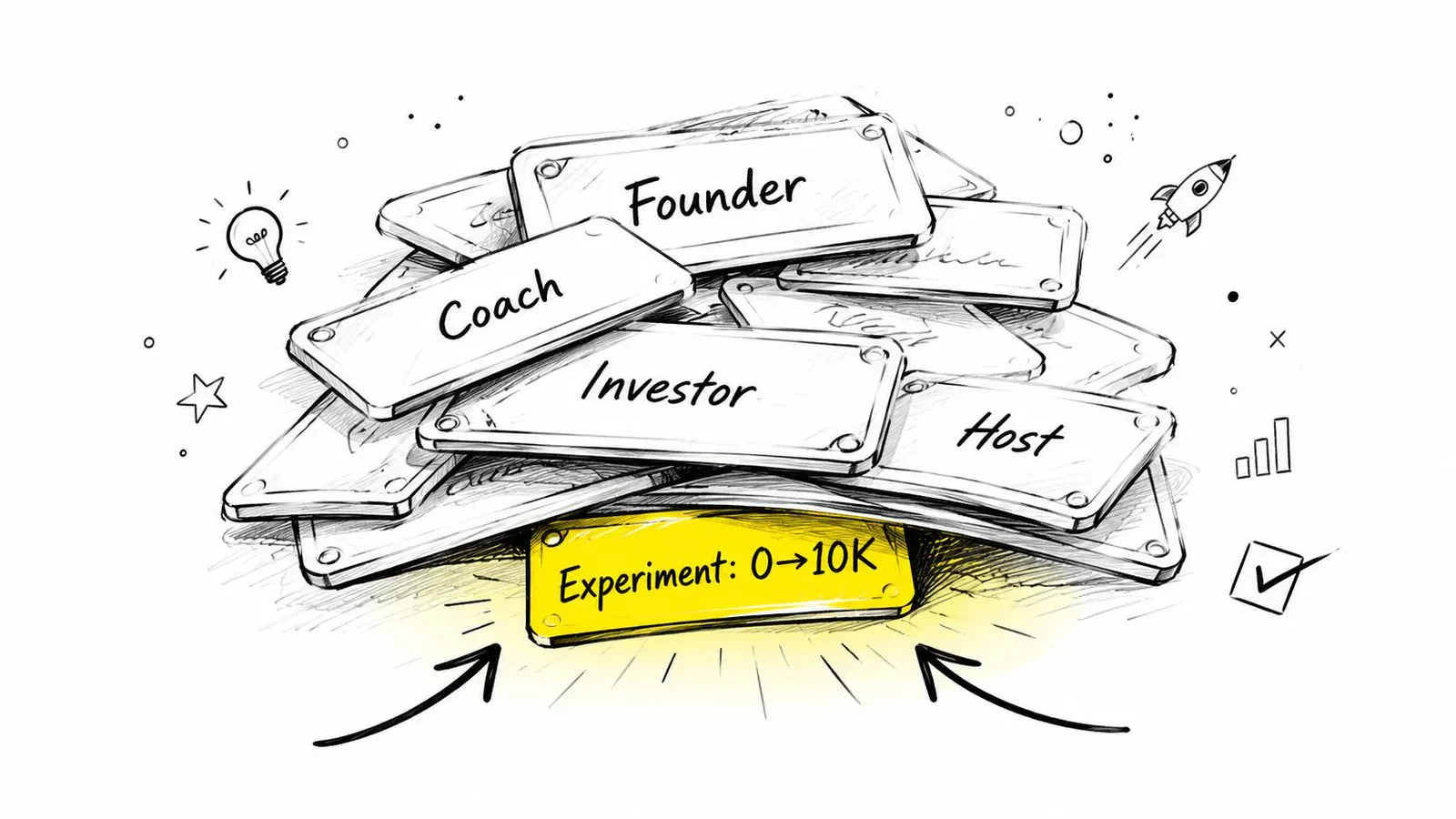
Put the hook first
Before: Founder | Coach | Advisor | Writing about X growth
After: Growing an account from zero to 10K on X. Documenting what works.
Before: Marketing Manager | Content Creator | AI Enthusiast | Running an experiment on viral loops
After: Testing what makes tweets spread. Documenting the patterns publicly.
Before: Full-stack developer | Indie hacker | Building stuff | Also learning about X growth
After: Building 3 products in public on X. Sharing the build logs.
The strongest differentiator is usually one of these:
- A live experiment: Something people can follow over time.
- A sharp niche: Not “marketing,” but “reply-driven growth for founders.”
- A documented mission: A visible goal, challenge, or build-in-public project.
If you use Xholic’s Inspiration search or Saved & Collections, this becomes easier. You can study how strong creators position their angle, save the best examples, and notice that the memorable bios usually lead with one clear story instead of five identity tags.
A bio should make a stranger curious enough to scroll. Curiosity usually comes from a project, a tension, or a specific point of view. It rarely comes from “entrepreneur | mentor | investor.”
6. Not Signaling Your Niche or Who You’re Speaking To
Some bios are so broad they don’t feel relevant to anyone.
“Sharing knowledge” sounds harmless, but it doesn’t tell founders, marketers, creators, analysts, or indie hackers whether the account is meant for them. The result is weak audience fit. You may still get followers, but they’re less likely to care about the same topics, engage with the same posts, or stick around.
Make the right people feel included
Vague: Sharing insights and ideas for everyone
Clear: Helping founders grow on X with better replies and content.
Vague: Content about business, tech, and life
Clear: Building in public. Content for indie hackers launching their first product.
Vague: Thoughts on growth and success
Clear: SaaS growth strategies and what I’m learning building Xholic.
A useful test is this: can the right follower answer “is this account for me?” in under three seconds?
The niche signal can be role-based, problem-based, or context-based:
- Role-based: founders, creators, marketers, analysts, traders
- Problem-based: better replies, content systems, distribution, launch positioning
- Context-based: building in public, growing a niche account, shipping a SaaS product
This doesn’t mean you need to exclude everyone else. It means you should make your intended audience visible. In practice, that usually improves audience relevance and makes your profile-to-follow decision easier.
If you’re unsure who your audience really is, Engage can help. The creators whose conversations you naturally join, and whose audiences respond to your replies, often reveal your best-fit niche faster than your assumptions do.
7. Inconsistency Between Your Bio and Your Engagement Pattern
A bio can make a claim. Your replies prove whether that claim holds up.
If your bio says you’re an X growth expert but your replies are generic encouragement, emoji reactions, or low-effort comments, the positioning falls apart. People don’t just evaluate your profile. They evaluate how you show up in conversations.
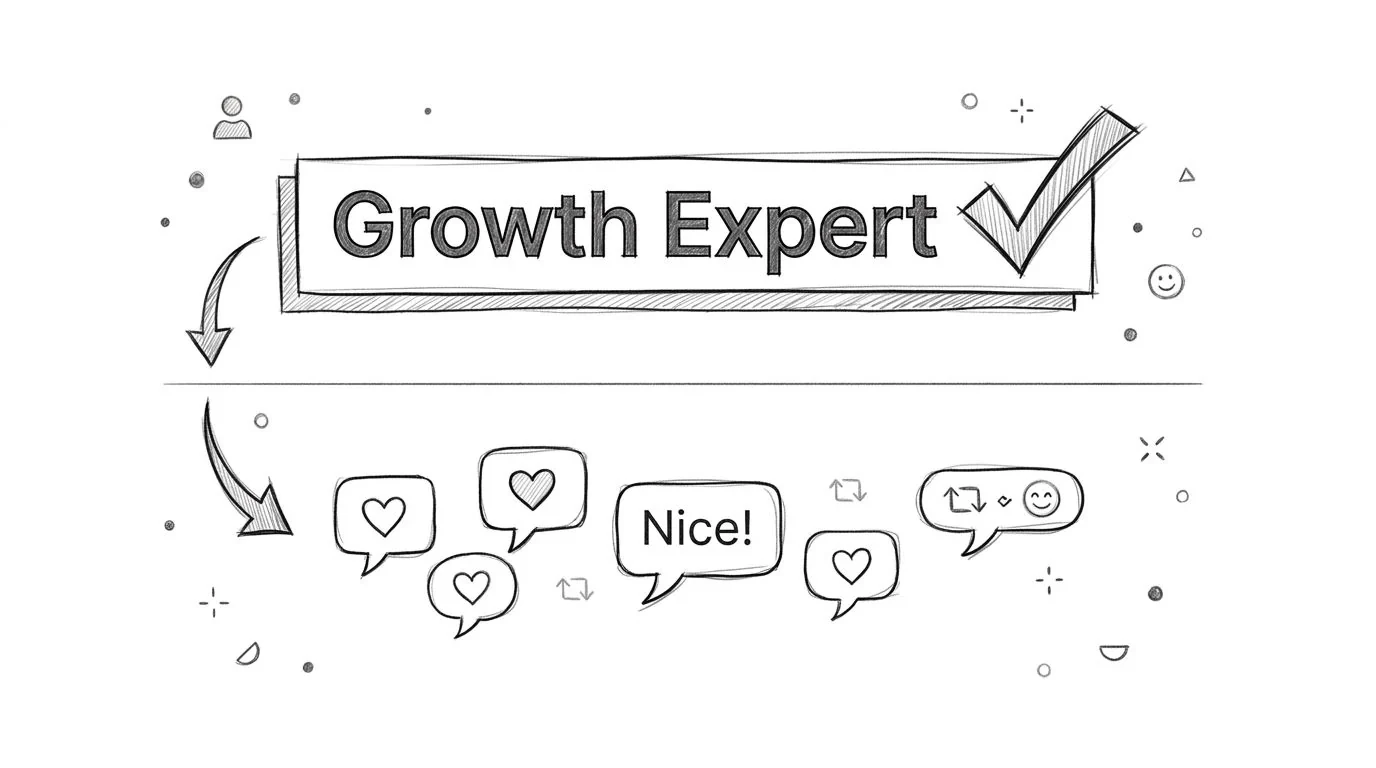
Your replies are part of your positioning
This matters even more because timing affects visibility. The first 5 to 10 minutes after posting are especially important for algorithmic amplification, which means joining relevant conversations early can compound reach if your reply adds actual value.
Here’s the difference.
Weak reply: “Great post. Keep going.”
Stronger reply: “Agreed on tightening the hook. I’ve found that if the first line names the audience and the pain point, the rest of the post has a much easier job. Especially on mobile.”
Weak bio: Growth strategist
Stronger bio: Learning X growth in public. Sharing what I test in replies, posts, and distribution.
Don’t claim a level of authority your reply history doesn’t support yet.
A practical workflow:
- Find early conversations: Engage surfaces posts that are already gaining momentum in your niche.
- Draft with context: Use the Chrome extension and AI Reply Composer to write a reply that matches your voice and references the post itself.
- Track consistency: The streak heatmap in Analytics shows whether the habit is holding, especially if your positioning depends on active participation.
Brand and industry benchmarks also help keep your expectations realistic. Hootsuite reports an overall X engagement rate of 1.6% and 1.7% for entertainment and media, while Sprout Social cites a median brand engagement rate of 0.015% and notes that at least 0.020% is generally considered good. The takeaway isn’t to obsess over averages. It’s to focus on actions that improve relevance, conversation quality, and audience fit.
If your bio says you’re learning, that’s fine. Beginners can position themselves accurately and still grow fast if the replies are thoughtful. This guide on how to increase Twitter engagement is useful if you want to tighten that loop between profile, replies, and results.
7 Twitter Bio Mistakes Compared
| Bio Mistake | 🔄 Implementation complexity | ⚡ Resource requirements | 📊 Expected outcomes | 💡 Ideal use cases | ⭐ Key advantages |
|---|---|---|---|---|---|
| Trying to Say Too Much in Your Bio, The Unfocused Career Dump | Low, simple edit and pruning | Minimal, few minutes to choose focus and test | Clearer positioning; fewer random followers; better first impression | When you currently juggle many roles but want a single public focus | ⭐ More persuasive, easier to scan |
| Using Vague Help or Growth Promises That Everyone Else Is Using | Low, replace generic claims with specifics | Minimal, gather one or two concrete examples or projects | Better differentiation; higher follow conversion when unique proof is shown | If you have an ongoing experiment, metric, or distinct method to share | ⭐ More memorable and credible |
| Ignoring Your Actual Content Output and Positioning Yourself as Something Else | Medium, requires audit and alignment of feed + bio | Moderate, audit 30 days of posts and adjust content cadence | Lower churn; higher follower relevance and engagement | When bio claims don’t match recent posts or content pattern | ⭐ Authentic positioning that attracts loyal followers |
| Using Outdated Information or Old Job Titles When You’ve Moved On | Low, update titles and lead with current project | Minimal, quarterly review and quick edits | Immediate clarity on current work; avoids confusion and stale impressions | After a role change, pivot, or project launch | ⭐ Restores relevance and trust quickly |
| Burying Your Real Differentiator or Unique Angle Under Generic Fluff | Low–Medium, reorder and emphasize the hook | Minimal, decide on the hook and rewrite bio lead | Stronger hook, improved curiosity and follow-through | When you run a unique experiment or have a time‑bound project | ⭐ Helps you stand out and increases engagement |
| Not Signaling Your Niche or Who You’re Speaking To, So Everyone Feels Excluded | Medium, requires audience definition and testing | Moderate, analyze follower engagement and refine language | Higher engagement rate and better-fit followers | Building a community or targeting a specific role/industry | ⭐ Attracts the right audience and reduces irrelevant follows |
| Inconsistency Between Your Bio and Your Actual Engagement Pattern | High, demands sustained behavior change | High, time investment to engage thoughtfully and consistently | Earned credibility; stronger authority and longer-term engagement | When claiming expertise or documenting learning publicly | ⭐ Authentic authority backed by demonstrated engagement |
From Bio Mistake to Growth Engine
Fixing Twitter bio mistakes comes down to clarity. Not cleverness, not title stacking, and not trying to impress everyone who lands on your profile.
A strong bio tells the right person three things fast: what you talk about, who it’s for, and why your account is worth following. That’s it. When you get those three right, your profile starts working like a filter. It attracts more relevant followers and repels the people who were never a fit anyway. That’s a good trade.
The biggest shift for most creators is moving from identity language to positioning language. “Founder, builder, marketer” describes you. “Building Xholic and sharing what I learn about X growth, replies, and distribution” describes the reason to follow. The second one is more useful because it connects directly to the feed, the replies, and the expectations you’re setting.
You don’t need a perfect bio. You need an honest one that matches your content and your behavior on the platform. If you’re still learning, say that. If you’re documenting an experiment, lead with it. If your niche is founders, marketers, or indie hackers, name them. If you’ve moved on from an old title, remove it. These are small edits, but they change how people read the whole profile.
The same goes for workflow. A better bio helps, but growth usually comes from a loop: discover strong conversations early, write useful replies, save winning structures, remix good ideas into your own voice, schedule approved posts, and stay consistent long enough for the account to compound. That’s why the bio fix works best when it sits inside a real operating system for X.
If you want more inspiration, this roundup of effective Twitter bios for brands is also useful for studying positioning patterns.
If you want a faster way to turn these ideas into a repeatable X workflow, try Xholic AI. It helps you discover high-momentum tweets, draft contextual replies in your voice, remix proven posts, organize saved ideas, see your posting streak, and schedule approved posts with Smart Scheduler, all without spending all day inside the feed.