You don’t need to post more to build a personal brand on X (formerly Twitter). You need to become recognizable in the right conversations, with a point of view people can trust.
That’s the shift most guides miss. Personal branding has roots long before social media, and the practical reason it matters now is simple, trust beats noise when people decide who to follow, hire, or buy from as independent reporting on the history of thought leadership and personal brand building explains. For founders, creators, and operators, the job isn’t to look busy. It’s to show repeated proof that you know what you’re talking about.
Why Your Current Branding Approach Might Be Backfiring
Why does a polished posting routine still leave your name forgettable?
The problem is usually not effort. It is weak signal. Posting frequently, repeating broad advice, and polishing every sentence can make an X account look active while giving readers no clear reason to remember it. A crowded feed rewards relevance and specificity, not a higher content quota.
A personal brand earns strength when your expertise becomes visible in how you respond, explain, and choose examples. The 2024 Edelman-LinkedIn B2B Thought Leadership Impact Report found that 73% of B2B decision-makers considered an organization’s thought leadership a more trustworthy basis for assessing capabilities than marketing materials (source). The practical lesson is simple: show judgment in public instead of relying on polished self-promotion.

Broadcasting is easy, differentiation is hard
X gives you two ways to become visible: publish another general post, or add a useful point to a conversation your audience already follows. The second option takes more judgment, but it creates stronger recognition.
A generic post says, “Consistency is the key to growing a startup.” A differentiated version says, “I stopped measuring startup content by likes. The replies from qualified operators showed me which problems deserved a product conversation.” The first could come from almost any founder. The second reveals an operating choice, a point of view, and evidence of experience.
Targeted replies can carry the same identity. Answer a narrow question with a specific example, challenge a popular claim with a reason, or explain the trade-off behind a decision. After several interactions, people should understand what you know and how you think.
The LinkedIn personal brand blueprint offers a useful reference for making that value proposition clear, even though the platform dynamics differ.
Practical rule: before publishing, name the experience or judgment that makes the post yours.
Impressions measure distribution, not trust. A smaller post that attracts thoughtful replies, relevant DMs, and follows from the right people can build more durable recognition than a generic post that travels widely. Participation is not a lighter version of content creation. Done well, it is the clearest proof of how you think.
Defining Your Unique Position and Audience
What would someone remember about your work after reading one post or reply? A useful position sits at the intersection of your experience, your judgment, and a specific audience problem. It should be narrow enough to recognize and broad enough to support years of useful conversations.
Find the lane you can actually sustain
Start with a real person, not an abstract audience. Consider an indie founder who has learned how to turn customer conversations on X into product insight. Their position might focus on practical audience research, founder-led distribution, and the decisions behind both. That is clearer than calling themselves a creator, builder, or growth expert.
Test the position against three questions:
| Diagnostic | What to examine |
|---|---|
| Experience | Which problems have you handled often enough to explain with concrete examples? |
| Interest | Which subjects will you still discuss when they attract little attention? |
| Audience fit | Which people can apply your judgment immediately? |
If you need a structured way to choose a focused lane on X, use this guide on how to choose your Twitter niche. The goal is not to restrict every future topic. It is to give your audience a reliable reason to recognize your name.
Specificity also improves differentiation. Research on personal brand equity identifies appeal, differentiation, and recognition as measurable dimensions, so being likable alone does not establish a distinct position (systematic review). Your audience should be able to describe what you notice, which problems you address, and why your perspective is credible.
Turn the position into a clear promise
Write one sentence that names the problem, the audience, and your distinctive approach. “I help indie founders turn targeted replies on X into useful customer conversations” gives you a clearer operating direction than “I write about growth.” It also tells you which discussions to join and which topics to leave alone.
Your profile, original posts, and replies should reinforce the same promise without repeating identical wording. A targeted reply can demonstrate your position faster than another broad announcement because it places your judgment beside a problem your audience already cares about.
Your visual presentation supports that recognition. A consistent profile image, clear bio, and credible headshot help people place you quickly. If you need new images, tools that let you upload 15 photos to create a professional headshot can support a consistent profile across channels.
Building a Sustainable Content Strategy
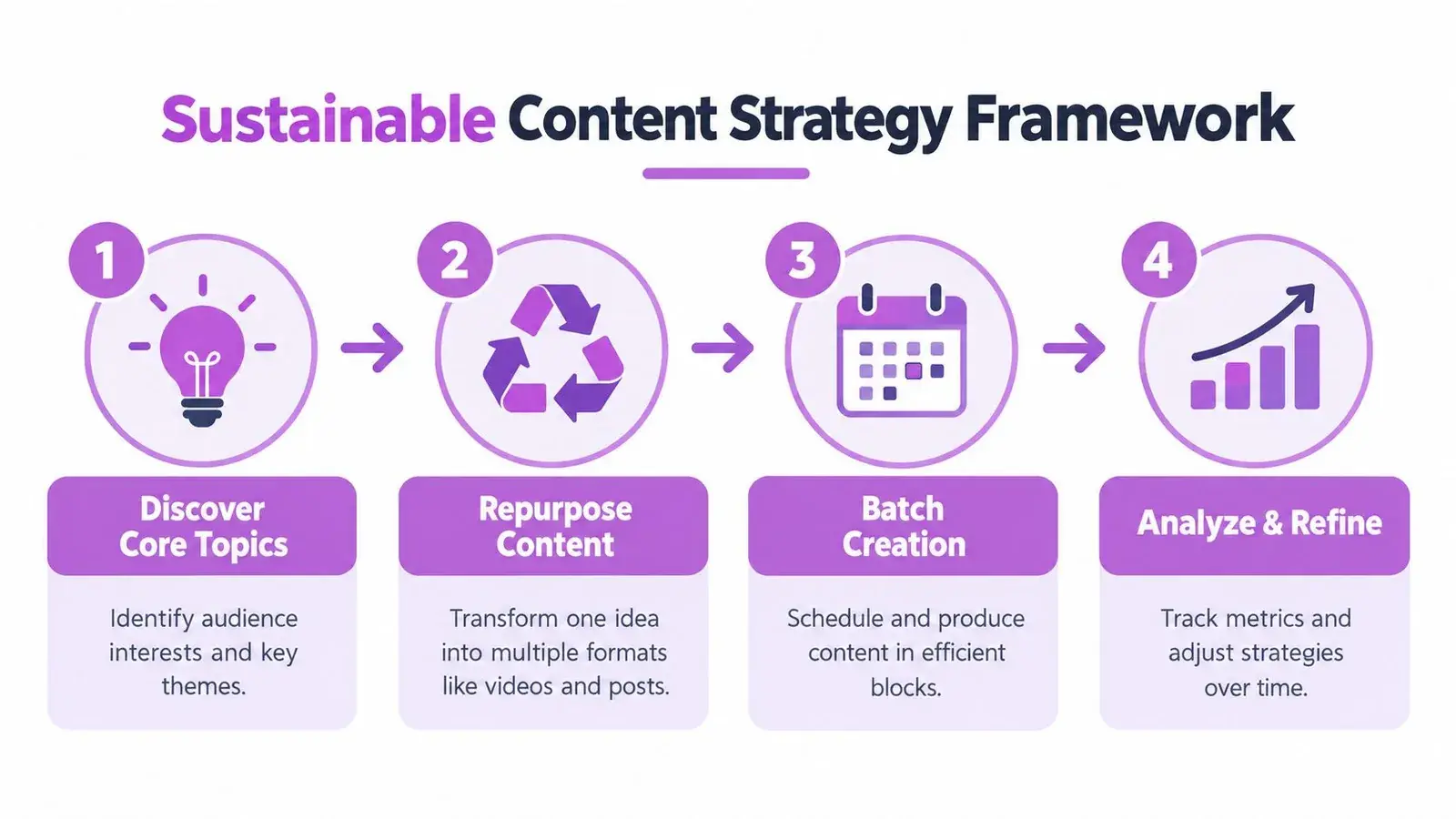
A personal brand gets fragile when every post depends on fresh inspiration. The accounts that last usually have a system for turning one idea into several useful posts, replies, and formats without sounding recycled. That’s the work, and it’s much more practical than chasing constant originality.
Build around a few repeatable content pillars
Your content pillars should match the way your audience thinks, not the way you want to sound. For a founder on X, that might mean product lessons, growth observations, operator workflows, and opinions about the market. For a creator, it might be craft, tools, experiments, and audience building.
The point is repetition with variation. If people only see one angle from you, they won’t understand the full shape of your expertise. If they see too many angles, they won’t know what you’re known for.
A simple workflow helps:
- Capture ideas fast. Save posts, screenshots, and notes the moment they feel useful.
- Group them by topic. That’s where content pillars earn their keep.
- Remix, don’t copy. Take the underlying lesson, then make it fit your voice and audience.
- Ship on a schedule. Consistency matters more than perfect timing.
If you want a deeper framework for topic selection and recurring themes, the guide on Twitter content pillars is a practical companion.
Use the right tools for the job
The best tool is the one that helps you turn attention into a repeatable process. A content library, a scheduler, and a place to save strong posts are usually more useful than a giant idea list you never revisit. If you work with video or multi-format repurposing, you can also repurpose with RemotionAI to turn one strong idea into more than one asset.
That matters because good personal branding isn’t just posting from scratch. It’s recognizing what already worked, then adapting it into a format you can sustain. Xholic AI is one option for that kind of workflow because it combines personalized replies, a reply discovery system, remixing, and a memory layer that learns from your voice, niche, and approvals.
For inspiration and structure, this video is a useful walkthrough of content planning habits:
The goal isn’t to sound active all day. It’s to build a system that keeps producing recognizable, useful content when you’re busy.
That’s where many creators break. They rely on motivation, then disappear for a week, then come back with a different tone. Sustainable branding depends on a narrower promise and a steadier delivery rhythm.
The Power of Engagement Over Broadcasting
If you want a personal brand on X, posting is only half the work. The other half happens in replies, quote posts, and conversations where other people are already paying attention. That’s where your name becomes attached to a point of view instead of just another standalone post.
Why replies deserve more of your time
Most activity on X is conversational or distributive rather than purely original. A Pew Research Center-based summary reported that 40% of posts are replies and 35% are reposts, which means 75% of observed posts were not standalone originals (summary). That doesn’t mean originals don’t matter. It means the platform rewards participation, not just publication.
Many people leave reach on the table. They draft a post, hit publish, and move on. A better approach is to treat replies as part of the brand itself, because people often meet you through a comment before they ever see your profile.
There’s also a practical engagement reason to care. Buffer’s X guide says replying to comments on your own posts can boost engagement by 8% on X (guide). If engagement is the signal you’re trying to strengthen, replies aren’t optional cleanup. They’re part of the content.
How to pick conversations worth joining
Not every thread deserves your time. The right ones usually have one of three traits, relevance to your niche, an active audience, or a clear opening for insight you can add. You want discussions where your experience adds signal, not where you’re just repeating what everyone else already said.
A useful filter is simple.
- Relevance: Does this connect to what you do or know?
- Timing: Is the conversation still active enough to matter?
- Angle: Can you add a detail, example, or contradiction that others missed?
The strongest replies usually do one of three things. They clarify a point, extend it with a concrete example, or add a useful counterpoint. A good reply should make the original poster think, “That’s a smart addition,” not “That’s nice.”
If you’re managing this manually, the internal guide on Twitter engagement is a useful reference for sharpening reply strategy without drifting into spammy behavior.
Short version: broadcasting gets you seen. Targeted participation gets you remembered.
That’s the shift. On X, high-trust participation often compounds faster than volume because it places your voice inside existing attention streams instead of asking strangers to find you from scratch.
Measuring Progress and Staying Consistent
A personal brand grows when people recognize your judgment, not merely when an account collects impressions. Track whether your ideas attract the right conversations, then review patterns instead of treating one post as a verdict.
Use the right metrics
X provides practical signals such as impressions, engagements, engagement rate, link clicks, reposts, likes, and replies. The standard engagement-rate formula is engagements divided by impressions times 100, as explained in this analytics guide. Use it to compare topics, formats, and calls to action without letting follower count dominate the review.
Match the metric to the job. Authority shows up in thoughtful replies and follow-up questions. Demand appears through link clicks, direct messages, and inbound interest. Recognition becomes visible when the same people return to your ideas, mention your perspective, or involve you in relevant discussions. A high-reach post with no meaningful response may be less useful than a smaller thread that puts your name in front of the right audience.
A summary reports that 50% of American professionals say a strong personal brand matters more than a strong resume, 61% of business executives hold the same view, and 32% are actively repositioning their brand for a new role or industry. The practical implication is clear: your public body of work can shape credibility before a direct conversation begins.
Build consistency around review, not mood
Consistency works better as an operating routine than as a motivation test. Set a weekly review slot, examine which posts and replies created useful conversations, and choose one or two angles to repeat. If a post underperforms, inspect the hook, timing, audience fit, and framing before discarding the subject.
Use a short checklist:
- Review saved ideas. Keep only ideas that still support your position.
- Find repeatable angles. Turn strong posts into adaptable formats, not copies.
- Assess response quality. A specific reply or returning participant can matter more than raw reach.
- Protect your voice. Change the wording when needed, while keeping the recognizable point of view.
Personal branding is a strategic process of establishing, maintaining, and developing a professional identity, so the identity should become clearer through repeated use rather than aim for perfection immediately, as described in this systematic review. For a practical measurement routine, use this Twitter analytics guide to organize what you track and the decision each metric supports.
The durable accounts do not publish more. They learn which ideas their audience remembers, contribute those ideas in targeted conversations, and keep returning to the same useful lane.
If you need help turning that routine into a workflow, Xholic AI can help find relevant conversations, rewrite strong ideas in your own voice, and support consistent participation without requiring hours of scrolling.