Paid media and measurement
Scaling Meta, Google, YouTube, TikTok, and emerging ad channels with creative strategy, incrementality, new-customer metrics, blended efficiency, and budget allocation.
28%
Best tweets about Ecommerce
A curated collection of the sharpest, most-shared X posts about ecommerce—saved so you do not have to dig through the timeline yourself. Updated weekly.
Store owners on margins, ad spend, and what actually moved the needle this quarter.
Original Xholic analysis
The discussion emphasizes execution fundamentals: profitable acquisition, cash-flow management, product-page and checkout clarity, and retention. Posts also discuss AI and newer channels, but commonly frame them around specific workflows, measurement, or the customer experience rather than as stand-alone fixes.
58% of posts
All-time engagement
34% of posts
Published in 90 days
Conversation map
Scaling Meta, Google, YouTube, TikTok, and emerging ad channels with creative strategy, incrementality, new-customer metrics, blended efficiency, and budget allocation.
28%
Launching and operating Shopify stores, selecting apps and themes, building integrations, and learning product opportunities through firsthand merchant experience.
28%
Managing contribution margin, CAC-to-LTV, MER, first-order profitability, cash conversion cycles, supplier terms, reserves, and financial discipline.
28%
Reducing purchase friction through persuasive PDPs, landing pages, carts, checkout design, bundles, trust signals, account flow improvements, and post-purchase experience.
26%
Prioritizing products, offers, creative, landing pages, CRO, retention, and rapid testing over low-impact operational busywork.
24%
Using AI for creative production, customer research, product imagery, CRO analysis, content generation, automation, and operational workflows.
22%
Capturing organic and shopping traffic with product feeds, Merchant Center, structured data, inventory accuracy, sitemaps, PDP content, and informational content.
12%
Growing customer lifetime value through retention, email and SMS automations, deliverability, customer communication, and repeat purchase behavior.
12%
Tone and stance
Performance benchmark
Posts with media make up 62% of this collection. Their median all-time score is 12.6, compared with 8.41 for text-only posts.
Format mix
Consensus and debate
Shared view
Several posts prioritize products, creative, landing pages/CRO, and retention over logo work, elaborate SOPs, or other activities portrayed as lower priority before a business is at scale.
Shared view
Posts argue for profitable acquisition and lean operating costs, while one detailed operator account warns that a business can be profitable on paper yet face a cash gap from ad-payment timing, supplier terms, and refunds. That post recommends weekly contribution-margin reviews and cash reserves before aggressive scaling.
Shared view
Suggested store improvements include communicating product specifications and objections clearly, surfacing trust and social-proof cues, simplifying account access, and using cart-level offers or reassurance. These are recommendations and examples from the cited posts, not controlled performance results.
Shared view
One post illustrates how longer retention changes LTV relative to CAC, while others emphasize retention among core ecommerce levers and outline email deliverability practices that can support lifecycle programs.
Open debate
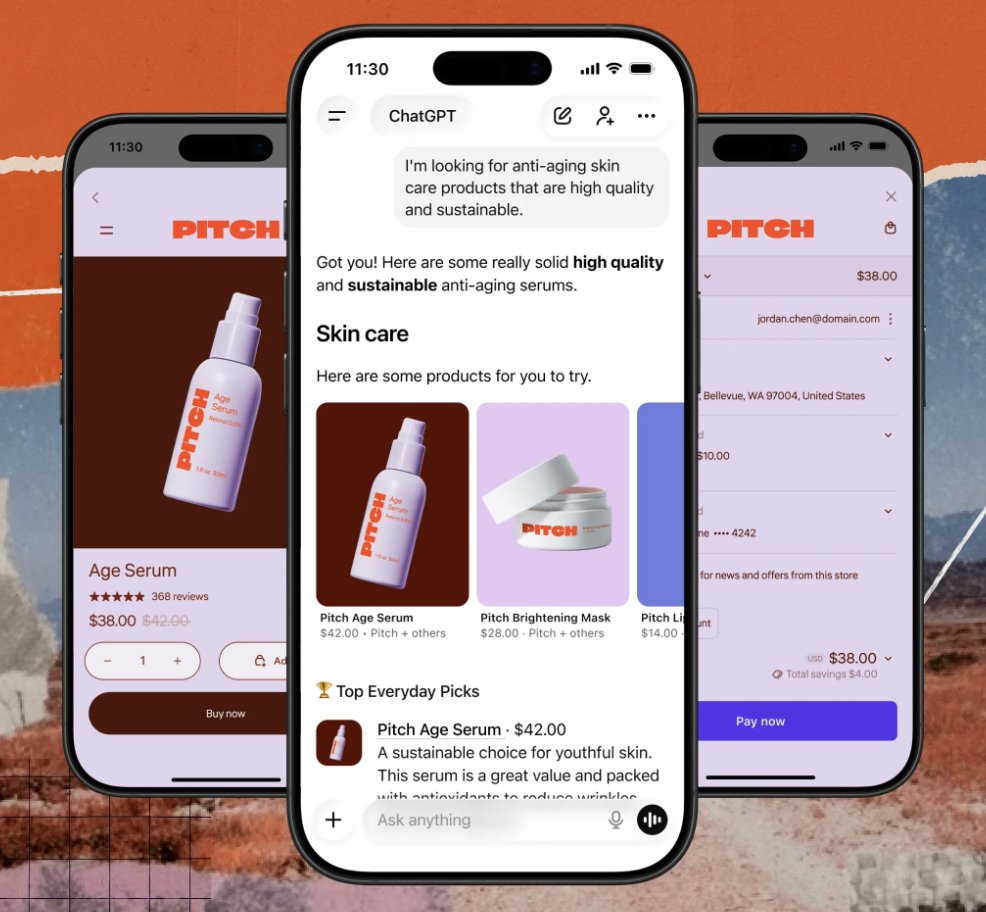
Posts describe agentic storefront and AI-assisted operational opportunities. A separate post reports that, in Walmart’s cited test, direct in-chat purchases converted at one-third the rate of click-outs, suggesting that direct agentic checkout may not yet match owned-site conversion in that example.
Open debate
One set of posts recommends blended MER, incrementality testing, and new-visitor percentage rather than relying on last-click ROAS. Another argues that, amid higher Meta CPMs, blended efficiency and contribution margin should guide decisions.
Open debate
One post presents geographic expansion as a possible response to concentration in the US market. Another cautions that European markets differ in language, payments, logistics, regulation, and shopping behavior, making a direct US playbook unsuitable.
What performs
Tutorials had a median all-time score of 18.335 and case studies 18.35, versus 8.408 for opinion posts. The outlier list includes an execution-focused opinion post and a Shopify-friction story among the strongest individual posts.
Media appeared in 31 of 50 tweets (62%). Media posts had a 12.63 median all-time score, compared with 8.408 for text posts.
Three high-scoring posts offer concrete operating examples: executing on established demand, reducing merchant setup friction, and naming a focused set of growth levers. This is a descriptive pattern in the sample, not evidence that the pattern caused performance.
Statistical standouts
Creator landscape
The five most represented creators account for 20% of the selected posts.
1. Aleyda Solis 🕊️
@aleyda
2 posts
2. Brodie Clark
@brodieseo
2 posts
3. Common Thread Collective
@CommnThreadCo
2 posts
4. Davie Fogarty
@daviefogarty
2 posts
5. Chase Dimond | Email Marketing Nerd 📧
@ecomchasedimond
2 posts
6. Alex Fedotoff
@FedotOff90
2 posts
Cited contributors cover SEO and product-feed work, Shopify store building, email deliverability, and Google/YouTube measurement. The analytics identify 39 creators overall, with no single creator accounting for more than two tweets in the listed top voices.
Examples include firsthand Shopify-store operation, account-level channel measurement, and a diagnosis of conflicting inventory signals in Merchant Center. These details make the scope of each recommendation clearer than a general ecommerce claim.
Since the previous snapshot
Themes, sentiment, stance, and post format are classified per tweet. All counts, shares, medians, creator concentration, freshness, and performance comparisons are then calculated directly from the published snapshot.
Xholic's all-time score compares engagement while accounting for reach, post age, and creator consistency. It is used for relative comparisons within this collection.
This report analyzes the exact 50-post snapshot shown below. AI identifies editorial categories and drafts explanations; all statistics are calculated from the snapshot, and every narrative claim is checked against cited posts before publication.
Best Ecommerce tweets
Ranked 01–50

@JamesonCamp ·
Instagram straight up copied Stories from Snapchat and it became the most used feature on the platform Google was the 18th search engine. Zoom launched into a market Skype had owned for a decade. Shopify didn't invent ecommerce. I grew a hearing aid brand 8x in a market that had existed for literally 100 years. Bought media properties that were already profitable. Never invented a single thing. Originality is overrated. The money is in executing better on something people already want.

@StartupArchive_ ·
Tobi Lutke explains what the VCs who passed on Shopify got wrong Tobi recounts pitching Shopify to VCs on Sand Hill Road a few years after founding Shopify. Investors passed because they thought the addressable market was too small. At the time, there were about 40,000-50,000 online stores, and even if Shopify captured 50% of the market, that still wouldn’t be a venture-scale business. When Tobi ran into the VC partner a few years ago, the partner asked Tobi what he missed (Shopify is valued at almost $100 billion today). Tobi explained: “You were actually correct, but what you didn’t realize was that Shopify was the solution to the very problem you identified. The reason there was only 40,000 online stores was because it was hard, expensive, and everyone who tried ran into all these brick walls of complexity, which Shopify, one after another, smoothed over and made simple to do.” Tobi believes this is a common mistake: “What a lot of free-market thinkers don’t understand is that between the demand and eventual supply lies friction. And I actually think that friction is probably the most potent force for shaping the planet that people just generally do not acknowledge… That was my theory when I turned my snowboard store into Shopify: there was a lot more people like me except there was too much friction which we needed to solve. And Shopify has proven out that every time we make the process simpler, there’s more consumption. At this point, we have a million merchants on Shopify, which is a mind-blowing number. So friction is a major component, and it’s something that software is uniquely good at reducing.” Video source: @danmartell (2019)
 Watch video

@jforjacob ·
There are only a very select few things that move the needle in ecommerce and you are likely spending most of your time doing stuff that in the grand scheme of things does not matter Things that matter and will put more money in your bank account: New products Creative Landing Pages / CRO Retention If you are spending any of your time outside of these areas, seriously audit your life Perfecting SOP's, creating fancy spreadsheets, vibe coding apps with AI etc do not move the needle Of course once you are at scale things like contingency planning, asset protection and general securityu activities become more important But get money first and then worry about everything else There is no point "optimising" when the cost of doing so is greater than the sum of your worth

@EXM7777 ·
ecommerce is one of the best niches to sell AI and if you've done dropshipping or any ecom in the past, you literally cannot fail think about it... every brand doing seven to eight figures has the exact same problems you dealt with when you were running your store, except they're dealing with it at massive scale content production is way too slow and they can't test creative fast enough, their agencies are charging $15k/month for work that takes a week, manual workflows are killing their margins and nobody on their team knows how to fix it plus they're throwing money at traditional agencies who don't understand ecommerce operations the way you do - you know what a good product photo needs to include because you've tested hundreds of them - you know what copy converts because you've written it and watched the data - you know which workflows eat up the most time because you've lived through the hell of scaling so here's what you do: take your ecom knowledge, build AI systems that solve ONE of these problems really well, then reach out to brands with actual budgets >sell them automated asset creation like mockups, lifestyle shots, and product variants that match their brand >sell them content systems that pump out UGC, ads, and product descriptions at the scale they need >sell them workflow automation for order processing, customer support, and inventory management these brands are already spending $20k to $30k per month on this stuff using manual processes and traditional agencies all you have to do is show them how to do it better, faster, and cheaper with AI systems... and take a piece of that budget for yourself

@goyalshaliniuk ·
Ever wondered what happens after you click “Checkout”? Let me try to explain the core building blocks of an E-Commerce Architecture. Here’s a breakdown of the journey of an online order using a microservices-based architecture - where each step, from cart to shipping, is handled by an independent service. The process kicks off when a customer places an order, which is managed by the Shopping Cart microservice via a REST API. The order then flows into the Order Placement service, which records and broadcasts the order details through an event stream. Next, the Inventory service checks stock levels and interacts with the Supplier backorder system if needed. The Payment microservice integrates with third-party providers (via SOAP or REST) to process payments securely. Once payment is confirmed, the Shipping service prepares the consignment, updates order status, and notifies the Operations team for dispatch. Meanwhile, reporting tools consume order and inventory events and store them in an OLAP database for analytics and dashboards. Don’t forget to save this for later !
 Watch video

@Seanfrank ·
What makes for a good DTC brand is ruined when you introduce excess capital. - ruthless cost cutting in opex The best brands are running sub 8% now - fanatical obsession with acquiring customers profitably Every single great brand has a bigger marketing department than any other department The alpha isn’t in color or brand or logo, it’s in the ads - fast reaction and pivots Supplier fucks you? Shipment delayed? Facebook stops working? Bank goes down? The best brands solve it in hours, days- not weeks. — Too much money ruins all of this. They had dtc brands spending 25% of revenue on people… AND NOT EVEN FUCKING MANUFACTURING THEIR OWN STUFF OR RUNNING A WAREHOUSE 25% of revenue going to office staff? Too much money lets you sit and wait it out… but what if it isn’t a storm, what if it is a new normal. So many brands just stopped spending on ads in 2021 and just.. never started again. Didn’t even try to learn the new game. VC has a great place in this world. Build the rockets, the B2b saas, the data centers. But Shopify armed the rebels. And rebels need to act like it. Small, nimble, aggressive. More money isn’t the solution. Better ads are.

@daviefogarty ·
How to build a profitable ecommerce brand using AI from zero (I tested this myself and got my first sale 1 hour after launching ads): 1. Find a product you're passionate about/know a little something about. Chances are you already know the avatar you're trying to sell to. 2. Make your brand name domainable, trademarkable, or flexible. You want a name that lets you expand later, not one that boxes you in. 3. Use mega prompts. “Create me a brand name for a slipper brand,” gives you good names, but definitely not great ones. Tell AI it's a senior brand strategist, give it non-negotiables, and it performs so much better. 4. Build product images without ordering samples. Find inspiration on Pinterest, take it to ChatGPT, ask it to “create a JSON file to create a similar scene but different enough,” then paste that into another AI tool to generate a brand-new, unique image. 5. Write the product page to build trust. Make sure you have the unique selling propositions, the specs, and any objections the customer might have before buying. If you communicate what type of fabric it is and how the sizing works, people are much more likely to buy. 6. Animate your product images into ads, but prompt for natural movements. Otherwise, it can be very cinematic and not trustworthy. Facebook ads nowadays are actually shot on an iPhone, replicate that style. Launch on FB.

@brodieseo ·
Ecommerce SEO: here's how we increased merchant listing traffic for my client by 368% YoY. For this client, the uplift YoY compared to 2024 was so significant that it made 2025 a challenge to outperform... but we managed to do it anyway. Here are 5 strategies we employed to achieve consistent results for non-branded queries (all with a similar number of products): 1. Increasing unique product description rollout speed We have now incorporated AI more heavily into our product description creation process in a sustainable way by leveraging various spreadsheets for data points. It was previously impossible to do this at scale in a helpful way for users when managing thousands of products. 2. Optimising feed titles & attributes as query volume changes Don't ignore the power behind feed title formatting and keyword optimisation. It can go a long way, especially if you are missing out on core terms that have considerable volume behind them, which can add up when spanning across entire product ranges. The same goes for feed attributes more broadly, which we've had some success with. 3. Rolling out a local inventory feed for increased SERP market share Truth be told, getting the local inventory feed operating correctly has been a major contributor. It has allowed us to rank more prominently in both the Popular Products grid and the In Store Nearby grid, which frequently show on page 1 of Google. The key here is getting it to "operate correctly", which can come with some challenges due to the complexity of the supplementary feed integration and nationwide inventory management. 4. Consistently maintaining the Top Quality Store badge You need to be so good across all metrics that you're well above the threshold among the "Great" to "Exceptional" categorisation. This has been a goal for some time now, and we have been able to ensure that the badge has consistently shown for almost a year, with my client now being on par with their closest competitors. 5. Ensuring cleaner product range transitions with XML sitemaps Another very underrated principle of free listing results. If your stock is frequently changing and you don't have a rock-solid PDP sitemap strategy, then you're often going to delay the impact of free listings due to discoverability issues. Yes, your product feeds are important, but the structured data and content on your PDPs need to first be indexed in the traditional sense in order to break through. Why wouldn't you focus on free listings? These features allow you to capture more non-branded traffic for highly competitive queries, they allow your products to become more visible, and they often have at least double the conversion rate of standard organic traffic.


@oliverkenyon ·
Luxury brand. Non-luxury UX. NEST has incredible products and world-class brand equity but their site is missing core persuasion levers 👇 Here’s how I’d optimize their store after 12+ years improving 3,500+ ecommerce brands: 1/ Homepage Above-The-Fold → Clear, high-contrast reassurance bar (“FREE Shipping for orders over $125”) → Added trust icons for credibility (Easy Return, Super Fast Delivery, Quality You Trust) → Stronger navigation shortcuts (Candles, Perfumes, Diffusers, Bath & Body, Gifts) → Added review score (4.7/5 by 3,000+ customers) for instant social proof → Benefit-driven headline: Where Luxury Meets Every Moment → Supporting bullets: Iconic scents, Everyday luxury, Elegant gifts → Strong CTA shift from generic to Shop Bestsellers → Introduced visual scroller for browsing key products 2/ Product Page Enhancements → Reassurance bar added at the top for consistency → Quality indicators added under header (Easy Return, Fast Delivery, Quality Guarantee) → Clean, spacious product gallery with directional cues → Social proof surfaced under product name (4.7/5 by 140+ customers) → Clear pricing hierarchy with sale callout (“Save 20%”) → Bullet-point benefits: Seasonal fragrance, Clean & cruelty-free, Reusable glass holder → Strong, anchored Add to Bag CTA → Trust badges added under CTA (Cruelty-Free & Vegan, No Toxic Chemicals, Lead-Free Clean Burn) 3/ Cart Page Transformation → Reinforced free shipping bar to increase AOV → Progress bar toward free shipping to drive additional spend → Gift wrapping callout moved into high-visibility section → Strong cross-sells with clear “Add” buttons and ratings → Savings broken out visually → Cleaner subtotal and tax messaging → Higher-contrast checkout CTA → Payment icons added for trust and friction reduction These are proven CRO playbooks and even without a full redesign, changes like these routinely unlock meaningful lifts in conversion rate, AOV, and revenue per session. Follow @oliverkenyon for more landing page & DTC tips.



@malisauskasLT ·
The best thing you could do as a Shopify app developer is start your own store. Not a test store, a real one. For the past three months I've been running my football club's merchandising. I got to experience everything first-hand. Switching to Shopify, choosing and modifying a theme. Creating products, structuring navigation, setting up payments & shipping. Trying some of the best Shopify apps, appreciating nice UX things (and getting lots of ideas). Of course I used my own apps heavily and noticed things that could be improved. But the best thing was seeing my apps actually generating real value for my store. 💸


@MnkeDaniel ·
$MELI One-Pager: - First-ever company to show 30% YoY growth for 28 quarters in a row - E-Commerce in LATAM is still far behind global peers, and $MELI is the dominant player - Flywheel of e-commerce, payments, credit, and logistics - $MELI has the biggest commerce advertising business in LATAM The flywheel keeps spinning, and the current investments already show signs of success, given the improved unit economics of logistics and the size of the marketplace, as well as Mercado Pago (the fintech arm).


@conortrains ·
This ecom stuff feels like GTA where you’re building up your resources to get fancier things and advance up the ranks - First you scrap your way to the first 1k days and 10k profit any way you can - Then you get smart and take a chance on some UGC ($200 per concept really stings at this stage) - Then you start to hit some bigger numbers and get bigger POs and ad budgets - Eventually you know what works for you better and build up to being able to risk a retainer and rev share with @aaronmtrx and @harrydelmege_ to take it to the next level - You then start dialling in LTV and unit economics to kill off competition - When you’re ripping you go and start another brand, and go right back to the beginning to live it all again Just you and your Shopify store against the world anon 🫡

@daviefogarty ·
ChatGPT + Claude has levelled the playing field between year 10 and year 0 brands with their creative strategies. Every new technological shift creates a window where experience matters less than execution speed. AI is that ‘window’ right now - and the reason it's still wide open is the friction in it. Things are confusing, things are going to break. That friction is your opportunity to create value that's not being created in this world and make a lot of money from it. When I look at where AI should be used in e-commerce, I use a few criteria: > I look at volume. It handles it very well. > Then I look at value. How much will it actually improve things? > Then I look at variability. If the situation is unpredictable, you need human input. > Then I look at verifiability. AI can hallucinate, so you need to make sure what it outputs is actually accurate. The reason AI is so good for e-commerce is that you can build 10 advertorials in a day with AI, and volume negates luck. Here’s how I’d start leveraging AI with creatives ASAP: 1. Download all your customer reviews, your competitors' reviews, and your top advertorials, then feed them into ChatGPT. 2. Run deep research and create everything you need to know about your customer. 3. Put that customer doc into Claude and give it the structure of the advertorial you want to write with a proper prompt. 4. Break it up and baby it through each step, because AI doesn't handle large blobs of data well. Give it 12 angles first, select the best ones, then prompt it with questions about what you know about your customer. From there, you'll start to get a lot more winners. 90% of people will use AI to do tasks. The 10% who win will use AI to direct outcomes. AI doesn't replace your best creative yet, but it makes everything around it significantly stronger.
@oliverkenyon ·
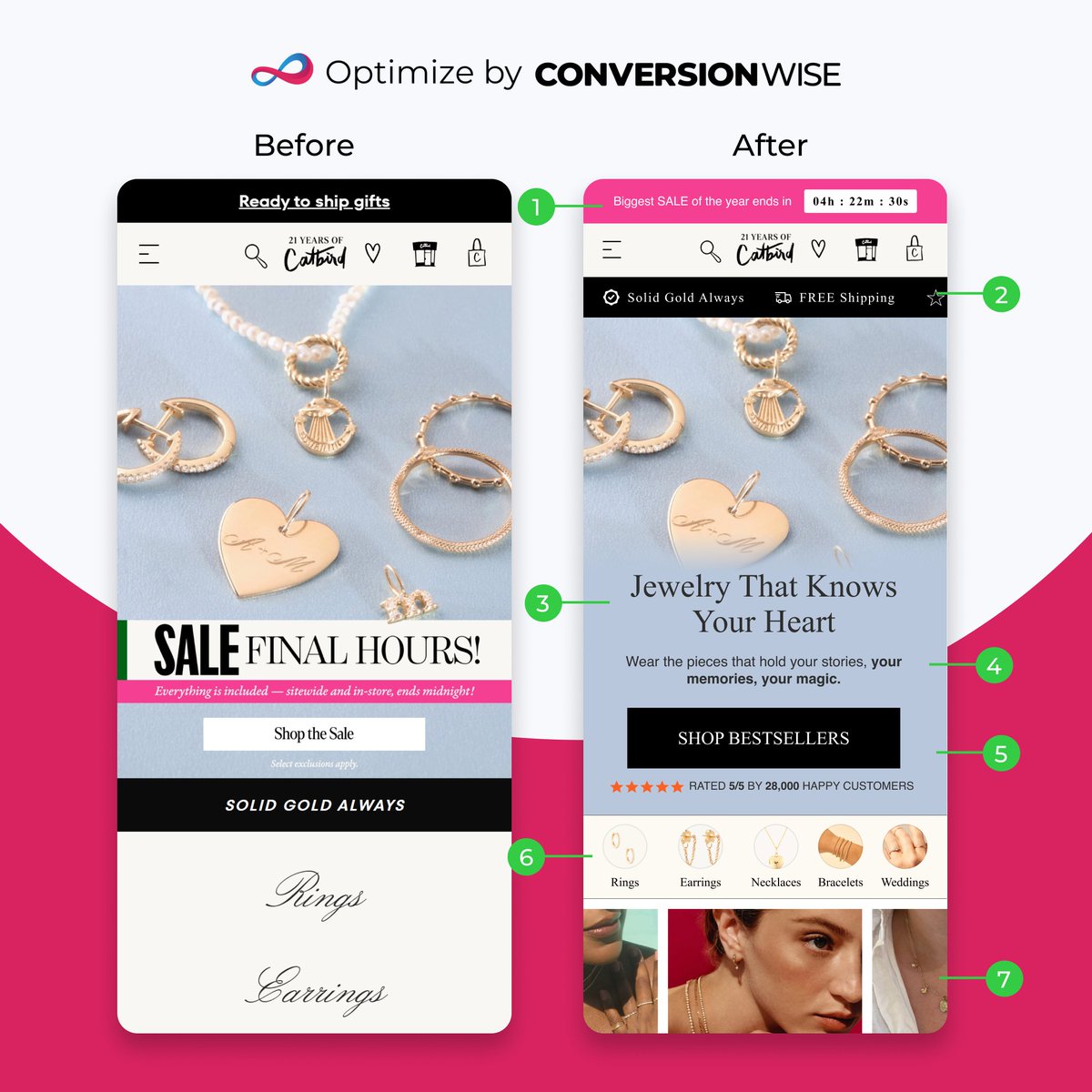
Luxury pricing demands luxury persuasion. @catbirdnyc jewellery is beautiful but their UX wasn’t doing the product justice 👇 Here’s how I’d optimize their experience after 12+ years improving 3,500+ ecommerce brands: 1/ Homepage Above-The-Fold → Introduced a high-urgency sale bar with real-time countdown → Added reassurance icons (Solid Gold Always, Free Shipping) → Replaced sale-heavy messaging with an emotional, brand-led headline: Jewelry That Knows Your Heart → Benefit-led subcopy connecting product to meaning, memory, and story → Strong primary CTA: Shop Bestsellers → Social proof surfaced early (Rated 5/5 by 28,000 happy customers) → Clear category shortcuts for faster browsing 2/ Product Page Enhancements → Sale urgency reinforced at the very top → Trust bar added (Solid Gold Always, Free Shipping) → Social proof brought above the fold (5/5 from 28,000 customers) → Clear savings callout with strike-through pricing → Benefit-driven bullets (timeless, recycled gold, built to last) → Simplified option selection with clearer hierarchy → Reduced visual noise around size and metal selection 3/ Cart Page Transformation → Strong urgency banner carried into cart experience → Clear pricing comparison with savings highlighted → Added reassurance message: ready to ship, gift-wrapped for holidays → Introduced relevant cross-sells with ratings and “Add” buttons → Savings surfaced clearly (“You Saved”) → Cleaner subtotal section → High-contrast checkout CTA → Payment icons added to reduce checkout friction These aren’t cosmetic tweaks, they’re proven CRO levers. When you’re asking someone to spend $2,000+, clarity, confidence, and urgency matter more than aesthetics. Follow @oliverkenyon for more landing page & DTC teardown insights.



@Molson_Hart ·
This is going to sound dumb, but retail margins blow my mind. I'm so accustomed to selling a $20 item and eeking out a $4 or $5 profit (if we're lucky) after all the costs associated with ecommerce. We recently had the opportunity to sell our products at full retail prices in-person and I was just floored by how much more money we were making per unit. A sale at full retail price in person was 3.5x the profit as the same product sold via ecommerce. If you can get high throughput on a retail store or a reasonable rent, the profit generation is amazing. The ecommerce mind cannot comprehend it.

@RapiHodler ·
A basic black pant you can find anywhere. EluroCo. Just a men's stretch pant. Nothing revolutionary about it. Hit AliExpress, you'll find the exact same one for 6 dollars. Amazon, 19. It's everywhere. They sell it at 39.99. And it's printing. I looked at their page in detail. Here's what changes everything. A clean bundle structure. 1 pant. 2 pants at -15%. 3 pants at -20%. 4 pants at -25%. With "Most Popular" locked on 2 pants. A visitor who grabs 2 instead of 1 = +70% AOV. A visitor who goes for 4 = 120 dollars instead of 40. Same product. Same ad. Same traffic. But the AOV doubles or triples depending on the buyer. That's exactly why they're running with only 47 live ads and already pulling 12K monthly visits in 3 months. The product is not the moat. The product has never been the moat on Shopify. What separates a struggling seller from a scaling one is what happens between the ad click and the checkout. Visible tiers. Pre-selection. Progressive discounts. It's not sexy. But it's what keeps stores alive.

@brodieseo ·
Ecommerce SEO: this online store was experiencing "out of stock" products at scale, but the products were actually in stock. This issue had a far-reaching impact on SEO, considering the product pages were no longer ranking highly and organic shopping results were nonexistent. On-page signals, such as the product page content and the schema markup (including extensive information on product variants), all said the product was in stock. So what was the issue? It turned out that even though the item was being reflected correctly on the various on-page levels, there were conflicting signals being communicated at the feed level within Merchant Center. Within GMC Next, the online product was showing as "in stock", yet every physical store location (implemented through a local inventory feed) had the item as "out of stock". This was primarily due to the specific item being a "made-to-order" one, where the local inventory component wasn't being managed correctly from an automation standpoint. The result of this conflict was that Google was seeing that the product was apparently in stock online, but none of the stores were offering it across the entire country. So Google's automated systems deemed it to be 'out of stock' at scale, so they were essentially excluding it from being able to rank in search results... Thankfully, the solution was simple, where all we needed to do was fill out the inventory at the local level for these items (because it made sense to do so), and we were able to get them showing as "in stock" and ranking across the various surfaces once again – resulting in more traffic and revenue.



@FedotOff90 ·
More ecom brands die from cash flow than bad ads. I've watched operators with 3x MER and 40% contribution margins nearly go bankrupt. Sounds impossible until you understand cash conversion cycles. You spend $500k on Meta in March. Meta charges you in real time. 1-5% of customers dispute, refund, or chargeback over 60 days. Shopify holds funds 3-5 business days. Supplier needs payment in 30 days. You're cash negative for 30-60 days on every dollar spent even when the business is profitable on paper. At $30k/day ad spend that gap can kill you. Three things the operators printing at $50-100k/day do differently: They negotiate Net 60 minimum with suppliers. If your supplier won't give terms find one who will. They run contribution margin analysis weekly not monthly. You need to know within 7 days if a scaling push is working or bleeding. They keep 60-90 days of operating expenses in cash reserves before scaling aggressively. Not revenue. Not projected profit. Cash. I almost learned this the hard way early on. The unsexy truth is your finance stack matters more than your ad stack once you pass $1M/month.

@CodeByPoonam ·
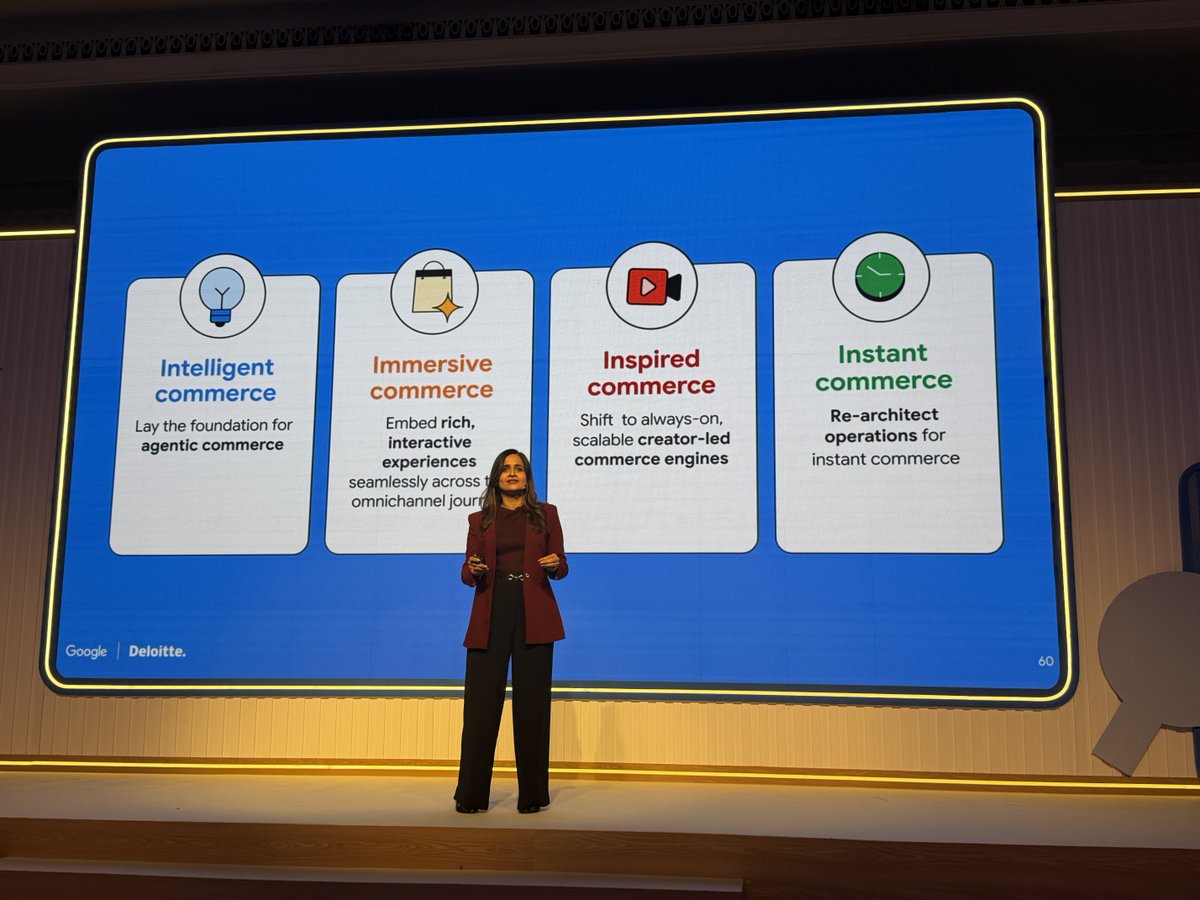
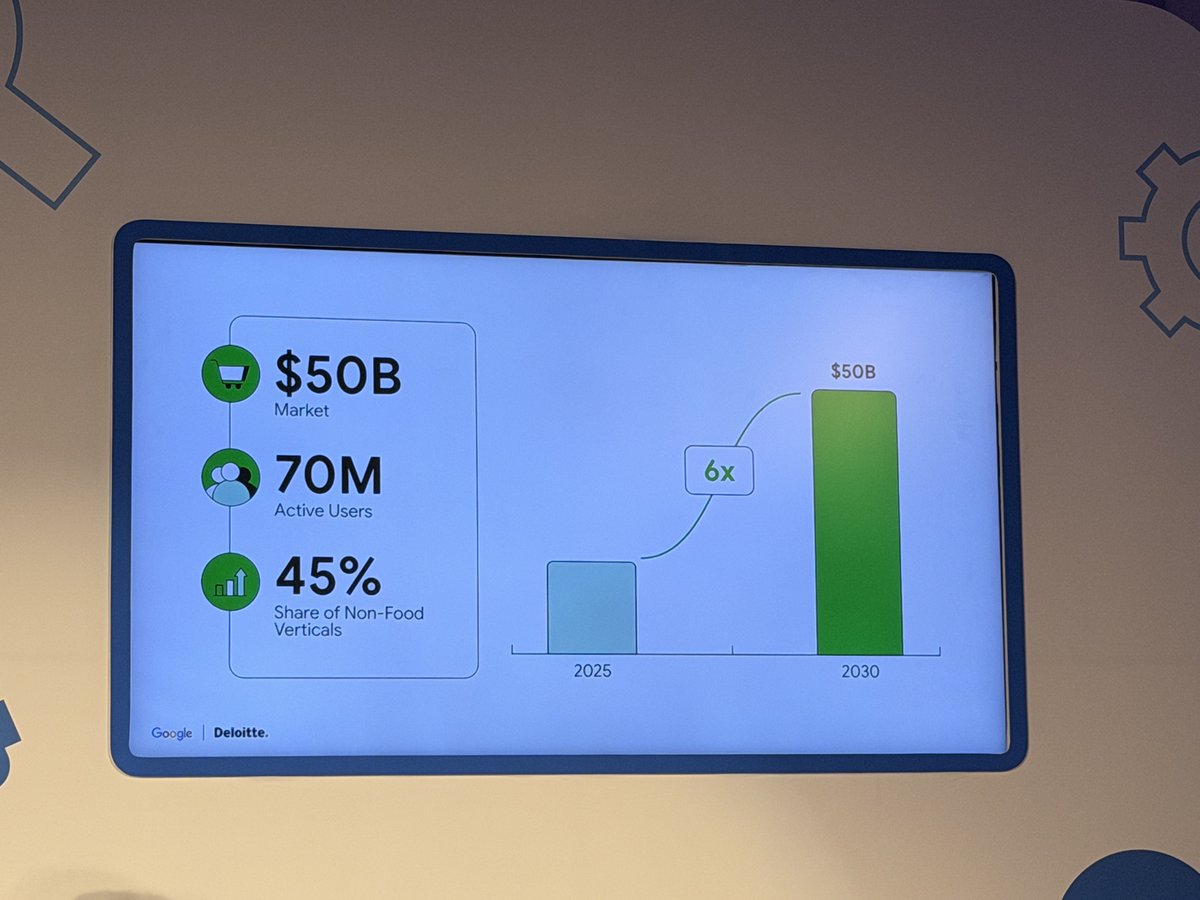
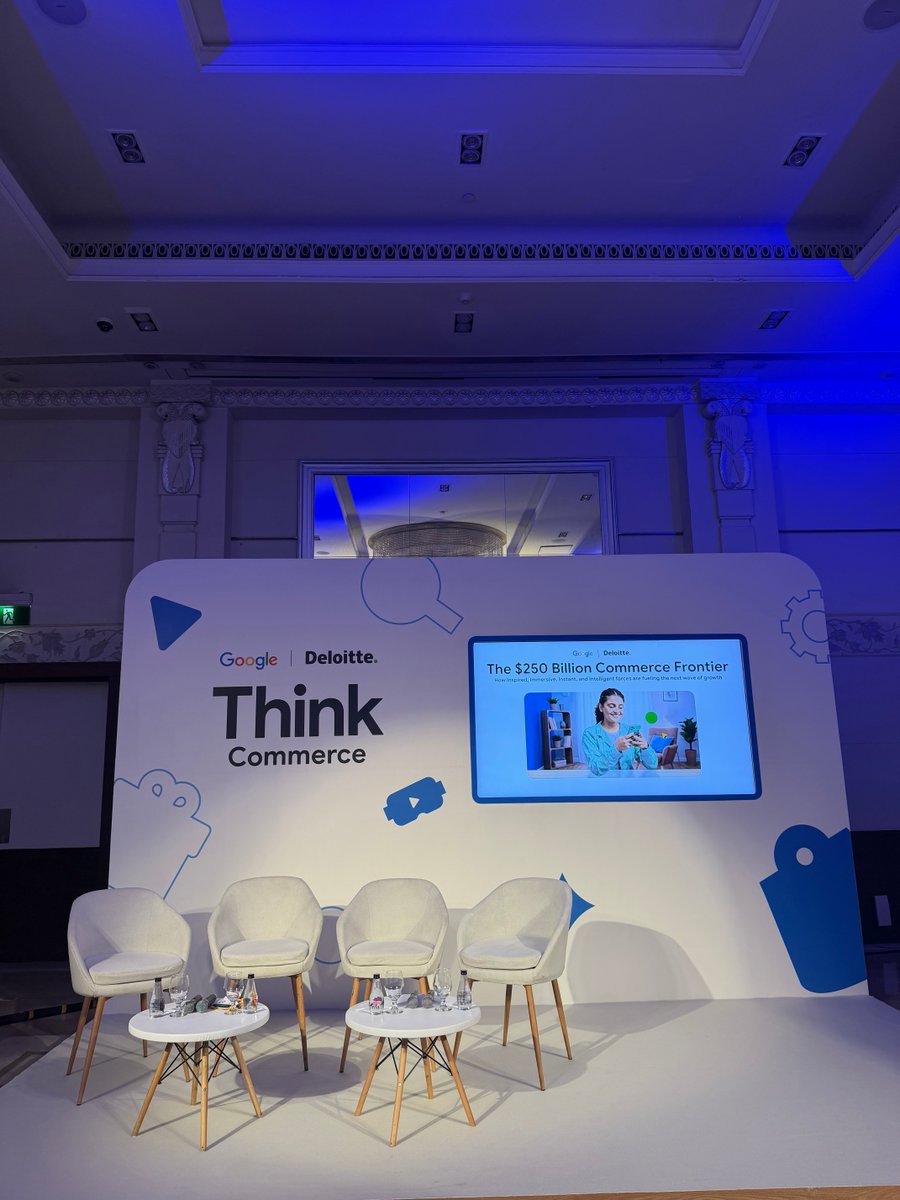
🚨BREAKING: Agentic Commerce is the next big thing. I heard it straight from Google. Here's what it means for you. I attended Google x Deloitte Think Commerce 2026 in Bengaluru. The report they dropped? India's e-commerce is heading to $250 BILLION by 2030. Here's everything that matters 👇 India's e-commerce right now: ↳ $90B today → $250B by 2030 ↳ 150 million NEW shoppers entering digital economy ↳ Online is still only ~7% of total retail The 4 forces driving the next $100B: 1. Inspired Commerce → Creators will influence 30% of ALL retail spend by 2030 → 1 in 10 purchases directly from a creator storefront → Live commerce hitting $7-8B 2. Intelligent Commerce (Agentic AI) → Google's AI Mode queries are 3X longer than traditional search → AI anticipates what you want before you search → Completes purchases instantly, with your permission 3. Instant Commerce → Quick commerce scaling to $50B powerhouse → Shopper base doubling to 70M users → Non-food categories (beauty, fashion, electronics) = 45% of spend 4. Immersive Commerce → 1 in 3 Indian shoppers now prefer virtual try-on → 89% want a single cart that follows them phone → store → 72% will pay a premium for tech-enabled expertise And Gen Z? → 220 million strong. → Commanding 45% of all online spend. The brands that win won't just sell products. They'll be the ones an AI agent recommends at the right moment. India's commerce isn't just growing. It's being completely rewired.


@jackdoesecom ·
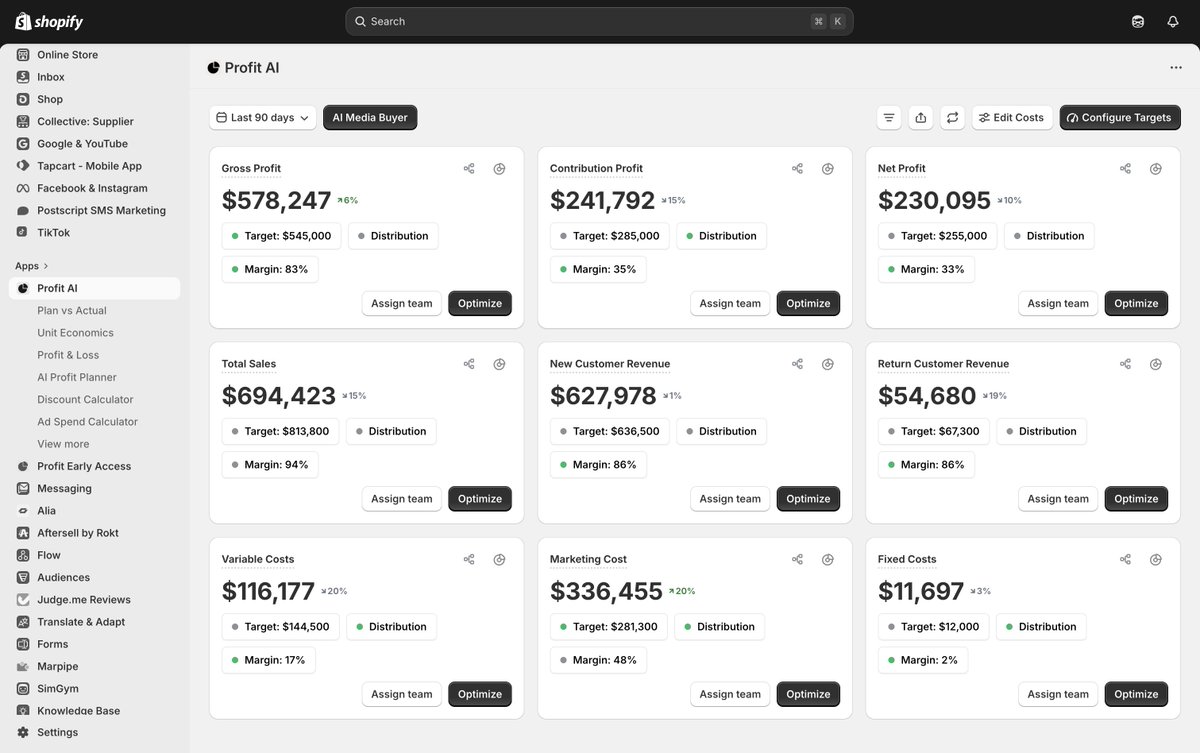
I'll never understand doomer takes on ecommerce. "I would never start a @Shopify store in {insert year}" "You're not profitable until you hit X" "You have to launch thousands of ads" (way too sweaty) My favorite one is "The economy" It's all so noisy and honestly such a bad vibe (sorry if you're a bad vibe) My store is coming up on 2 years old and just passed $1m net. And I'm not trying that hard. I'm paying attention to other things. This is everything that we're doing. My VA sends email & sms with Shopify messaging Nearly all my ad spend is on catalog ads and I have 6 paid apps @Marpipe_HQ by @danpantelo @aftersell by @varkundra @KnoCommerce by @JeremiahPrummer @VideoWiseHQ by @claudiucioba @tapcart, I don't know who made tapcart. and @AliaPopups by @iamshaanarora and @corylgill What else... We just got @memelordtech by @iamjasonlevin for $20 a month and it's rad, so we're going to try launching meme ads and we're tracking our competitors with @foreplay_co If you have an idea for a physical product that people might like, Shopify has made it pretty easy. Don't let the doomers stop you.

@hasantoxr ·
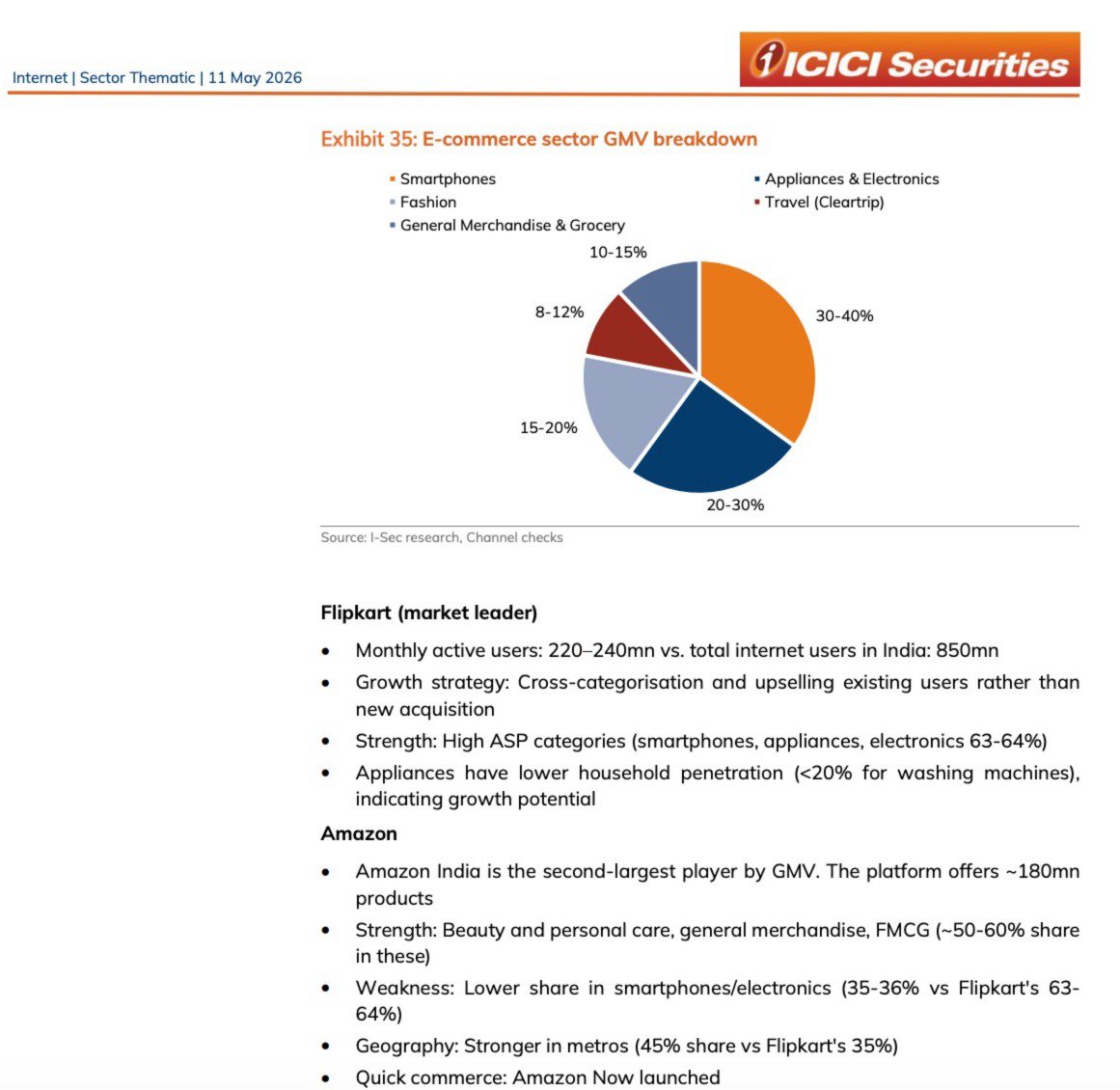
The ICICI Securities report puts Indian e-commerce on track to nearly triple by 2030, but the more useful read is which part of that growth is genuinely up for grabs. High-ASP categories like smartphones, appliances and electronics, where household penetration is still under 50%, are where most of the expansion will likely sit. Flipkart holds 63-64% share there today, which puts it in as good a position as anyone to capture a meaningful share of what comes next.

@Nate_Google_ ·
$11.7 million spent on youtube ads for a single ecom brand in the last 12 months. projecting $25 million this year $0.99 average CPC 2.6 billion impressions 11.8 million clicks all through Demand Gen (Youtube) campaigns look at that spend curve we started under $5K/day and scaled to over $150K/day in spend here's why most brands will never do this: they tested youtube once, ran some skippable in-stream ads with a repurposed meta creative, saw a bad CPA in their google ads dashboard after 2 weeks, and decided "youtube doesn't work for us" that's like test driving a car in first gear and deciding the engine is broken what actually makes youtube work at this scale: the creative can be very different from meta. cold audience creative needs to be 45-90 seconds, tell a story, and hook in the first 5 seconds. you can't just resize a meta UGC clip and expect results measurement has to change. if you're judging youtube on last-click ROAS in google ads you'll lose every time. youtube drives new customers that convert later through branded search, direct, and organic. we use blended MER, Google only LPs, Incrementality tools like WorkMagic and Northbeam, and geo holdout tests to measure true incrementality the new visitor percentage is the number nobody talks about. across our entire book of business, youtube drives 75%+ new visitors vs meta at 55% - at scale, on average. that means youtube is finding people who have never heard of your brand at a better iROAS than meta Demand Gen is the campaign type. not skippable in-stream. not video action campaigns. Demand Gen with the right targeting. most brands put too much on retargeting and wonder why they can't scale... we're averaging around 70% of an account's budget on Youtube Ads at scale and 30% on Search, Shopping, P MAX we manage $200M+/year in google and youtube ad spend the brands doing $100K+/day almost always have youtube as their biggest growth lever. their competitors aren't running it, or they tested it once and gave up this is the most underleveraged channel in ecommerce in 2026 the data is sitting right here


@ecomchasedimond ·
Most ecommerce brands are still optimizing email for a version of the inbox that stopped existing a few years ago. Here are 5 inbox placement rules you need to know: → Stop treating the Promotions tab like a penalty box → Stop trusting your open rate after Apple's privacy changes → Check placement separately for Gmail and Apple Mail → Sunset unengaged subscribers to protect placement for the whole list → Account for the attribution data Apple now strips from your links


@semrush ·
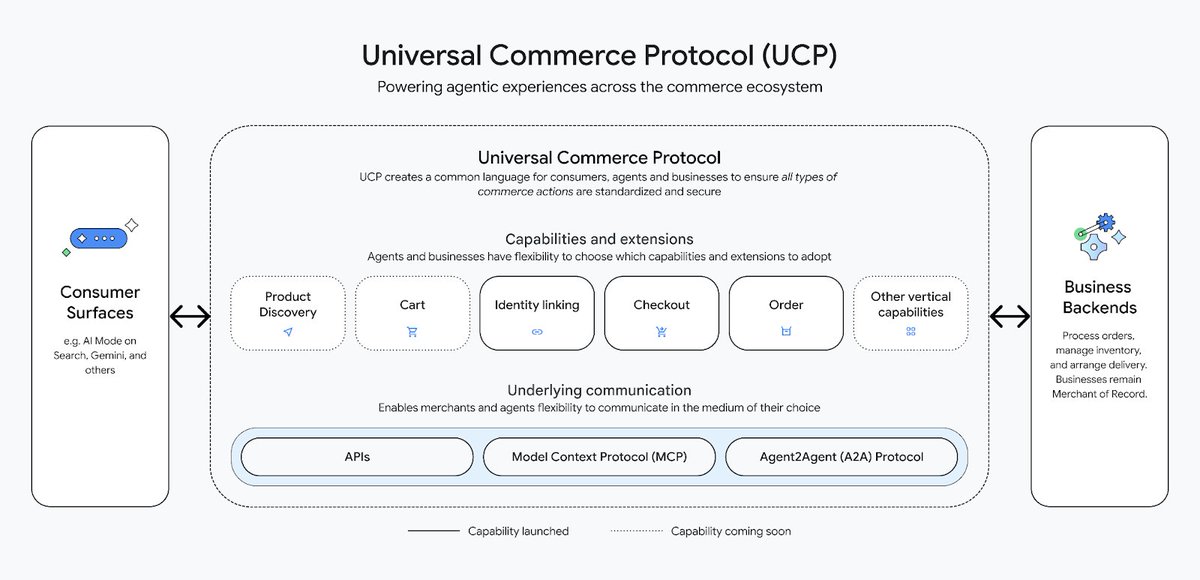
Google released a major update to the Universal Commerce Protocol (UCP) in March 2026. UCP is an open standard that enables AI agents to communicate with ecommerce platforms and complete purchases on behalf of users. For example, when a user asks Gemini, “Find the best running shoes under $100,” the AI agent can run a search, browse products across retailers, and present relevant options. With user approval, it can then complete the purchase – all enabled by UCP. The March 2026 update introduces new capabilities, including cart support and access to product catalogs. Google has also simplified onboarding through Merchant Center to attract more retailers. UCP-powered checkout is currently available to eligible U.S.-based merchants, with global expansion planned throughout 2026. Here's how to prepare your business now: https://t.co/NI1rDr06I6.

@BigBrainBizness ·
Vice Chairman of Ogilvy UK Rory Sutherland on the fatal flaw in most e-commerce businesses: the experience after you click "buy" is a world of pain. Rory has spent decades at Ogilvy studying what actually drives customer behaviour. When asked for advice on launching a new apparel brand, his answer was about what happens after the sale. He explains that marketers spend too much energy adding positives when the real opportunity is removing negatives: "What seems to happen in most e-commerce is you have what you might call the sales area, which is everything that happens up to and including a point of purchase. And everything there is glorious and attractive and slick. What then happens is if something goes wrong with your experience, either the delivery of the experience or you need to cancel something, as soon as you deviate from that very narrowly preconceived purchase funnel, you enter a world of pain." The handover is where it breaks. Once the customer clicks buy, responsibility shifts to teams whose metrics have nothing to do with customer satisfaction: "Their metrics are cost reduction. How can we make sure that nobody phones us up? How can we make sure that every phone call is as brief as is feasibly possible. And how can we minimize the cost of delivery and distribution?" Rory's two specific fixes are the kind of thing most operators would never consider: First, let customers choose their delivery courier. Most companies funnel everything through a single carrier to maximise volume rebates. @rorysutherland thinks that's a mistake: "If you don't get to choose how your item's delivered, if anything goes wrong, you blame the company. You don't blame the delivery company or yourself. If I'd chosen to have it delivered by Royal Mail and it went missing, I blame Royal Mail." He adds that local courier quality varies wildly by postcode, and forcing customers into one option ignores that reality. Second, stop hiding your phone number. He calls the standard practice of burying contact details a way of treating anyone with a problem "like a second class citizen." The summary line is the one every e-commerce founder should put on their wall: "When it goes well, it's miraculously good. But the second anything out of the ordinary happens, you enter a world of pain. And I think that is a fundamental failing."
 Watch video
@JamesonCamp ·
Everybody is trying to squeeze another 2% out of their landing page. Meanwhile the biggest lever in any business is how long your customers stay. I learned this early in ecommerce. Now I'm seeing it again in software. It's true everywhere. Look at a $79/mo product with a $134 CAC: 2 months retained = $158 LTV = 1.2x return (you're dying) 6 months = $474 LTV = 3.5x (healthy) 12 months = $948 LTV = 7x (great) 24 months = $1,896 LTV = 14x (you can afford to acquire customers almost any way you want) The only variable is how long they stay. A 2% conversion rate bump looks cute next to doubling retention.

@eric_seufert ·
I think any company that principally sells digital goods, but even potentially DTC / eCommerce brands, should position the CMO role as a marketing economist, primarily focusing on measurement and optimal budget allocation. Digital marketing is increasingly opaque, with the largest platforms absorbing placement-level and audience logic. This requires measurement to be abstracted upward into a full-time executive role that can a) align disparate marketing functions and b) maintain harmony with the CFO’s office. “Marketing economist” strikes me as the right profile to meet those demands. I know this role indeed exists at many large CPG brands, but what I’m claiming here is that it should exist at digital-first companies as the head of the marketing organization.


@neilpatel ·
Jared Spool audited a major retailer and found one thing killing conversions. Not pricing. Not shipping. A register button. 160,000 password reset requests a day. Customers leaving because they couldn't remember which account they'd used. They swapped it for one word. Continue. Sales went up 45% in month one. The problem was never the customer. It was a door nobody thought to remove. What friction are you still asking people to push through? #Ecommerce #UXDesign #ConversionOptimization #DigitalMarketing
 Watch video

@theperryecom ·
One of my ecommerce stores has done over $2,000,000 in sales… The logo? Plain text. Never changed it. Never redesigned it. Never “rebranded”. Still prints. Meanwhile I see dumbasses: - Spending weeks on logos - Paying designers hundreds - Delaying launch for “branding” And making $0. Your logo isn’t your problem. No customer has ever said: “Wow this logo is insane, I need to buy this” They buy because: - The product solves something real - The ad grabs attention instantly - The offer makes it a no-brainer That’s what moves money. I’ve scaled stores with: - Basic fonts - No fancy branding - Simple product pages Because none of that matters if: Your ads convert. If your CPA is high → it’s your creatives If you’re not getting sales → it’s your product/offer If you’re stuck → you’re not testing enough Not your logo. Stop hiding behind perfection. Launch ugly. Test fast. Scale what works. That’s how you hit real numbers!

@mbertulli ·
You don’t need to sell powders, gummies or beauty products to win in ecommerce. This is a common trope in ecommerce. That if you don’t have a problem, you can’t sell a solution. Sometimes... Sometimes you can sell your favorite hobby. Today we’re talking with operators who’ve done just this. They took a personal experience and turned it into a brand. Something you’d never expect to get to the scale that gets them on this show. Let alone getting them into a Super Bowl commercial, onto Shark Tank, getting offers and walking away from all of them. They call what they sell Fiero — the love of discovery and the joy of triumph. And ohhhhh yes, this episode is all about The Woobles. (@thewoobles ) Featuring two of my favorite people I've met in the world of consumer brands.
 Watch video

@aleyda ·
💰 Ecommerce: Stop overlooking informational content investment, especially now with AI platforms. This is content that should be used not only for a comprehensive “learn” or “inspirational” section, with tips written by real experts and based on experience. This is particularly important for ecommerce sites because: * It establishes real topical authority in your vertical, which has been shown to play a more important role in search results in recent years. This type of content also tends to get shared and naturally attract backlinks and citations, establishing authority not only for traditional search results but also for AI answers. * With AI platforms, you’re optimizing for comprehensive, well-structured content that AI can flexibly extract from any accessible page rather than relying on rigid query-to-page matching, so this information can be surfaced at any stage of the customer journey. * Finally, this content can be reused to enhance and enrich your PDP and PLP content for better rankings, inclusion, and visibility. It's interesting to see the important role that the blogs/learn/inspiration section plays in AI traffic across many ecommerce that invest in informational content: Chewy, Gymshark, REI (much easier now with @Similarweb folder view in the AI traffic report, btw, completely spontaneous and free shout-out). So if you haven't prioritized it in your ecommerce 2026 investment, do it now 🙌


@AmannaPrerana ·
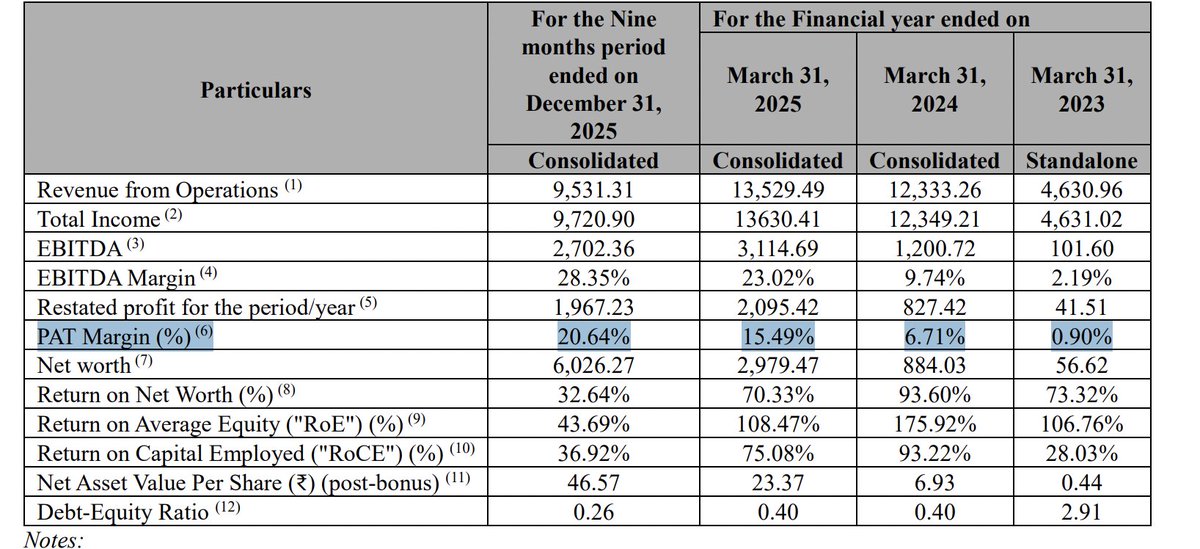
Brandman Retail: 1. The company works with 7 premium international brands to sell their products ( apparel, footwear and accessories ) in India. 2. Brandman is responsible for the entire distribution. From setting up stores ( both EBO and MBO) and for online sales for these International Brands. 3. Few noteworthy brands in their portfolio are : New Balance, Sperry, Timberland, Gfore, Jansport. > Shoes contributes 75% of sales ( makes sense considering the brands in the PF) 4. EBO and MBO contributes 42% while the rest of the sale is coming from E commerce. Ecommerce sale is from third party platforms such as Myntra, Amazon Tata Cliq etc and their own website brandmanretail and sneakerz 5. The contract varies for each brand. With some brands they have exclusive agreement while for other they could be handling only one part of the PF. 6. Domestic business contributes 51% where as exports contributes the rest. The export business is strictly limited to one geography ie Dubai. 7. The company plans to use the IPO money for scaling of EBO stores. As of 9M FY26, co has 14 EBO stores. Al of which are COCO. They want to add 15 more ( not specific as to by when) 8. They have a order book of 80 Cr as of Jan, 26. (again no specifics on when this should be executed) 8. Few things that are odd or I have no answers for from RHP : >> The sudden expansion in margins. >> Customer concentration has changed massively in last 9M. 9. Last year they did 135 Cr, in 9M FY26 they have already done 95 Cr. To get a 25% growth in FY26 they need to do 73 Cr in Q4. So sales growth could be likely muted in FY26? Very interesting model , but lot of unanswered questions.



@kzitouni1 ·
The 7 highest ROI habits if you're building a Shopify store: - talk to a customer - check your heatmaps - review your active tests - look at revenue per visitor, not just CVR - review a losing test before you archive it - gym (non-negotiable) - know what you're testing next week before this week ends - do nothing if the data says do nothing Compounding effects are insane.
@Nate_Google_ ·
i have ONE METRIC that would help fix 99% of failing ecommerce brands NVP -> New Visitor Percentage it's important to understand where most of your NEW customers are coming from and also what the current difference is between all of your marketing channels. this can help understand: 1. Creative Fatigue 2. Spend Distribution 3. Incrementality etc. etc. etc. we recently had a brand that came to us and mentioned that they haven't been able to push their NVP % above 50% at scale on Meta Youtube was at a 75% NVP, so we shifted marketing budget over to Google and now they're able to scale Meta up further because we're driving even more NEW customer traffic through Google another scenario... we had a brand that was wondering why the past couple weeks have been pretty bad for them their Meta NVP % was at 55%, and therefore they went and dug deep into their creatives to see what was going on after further analyzing, they had a hunch that they were putting too many discounts in their ads, so they launched a new batch of ads with their strongest marketing angle, no discount 75%+ New Visitor Percentage right out of the gate the greater that your new visitor percentage is, and the lower your cost per new visitor is at scale, will allow you to scale much greater than keeping it around 50%-60% your email marketing will have a great impact, you'll convert more organically, retargeting will be more effective, the list goes on MAKE SURE to look at NVP

@aleyda ·
📣 Shopify has announced that starting this week, millions of merchants can sell to ChatGPT users via Agentic Storefronts 👇 Agentic storefronts are active by default for eligible stores, and stores can manage channel permissions and setup in the Settings > Sales channels section of Shopify admin. If checkout is activated for an agentic storefront, then customers can purchase products directly in the AI channel without having to leave their conversation. "Products stay synchronized across surfaces, with real-time inventory and pricing. There’s no need to build separate apps or manage fragmented feeds—brands are syndicated and shoppable, while still owning the purchase journey through their online store." Interesting that this integration is announced right after Walmart said conversion rates for purchases made directly inside ChatGPT were three times lower than when users clicked through to its website after testing 200,000 items 🤔 "Daniel Danker, Walmart’s EVP of product and design, said those in-chat purchases converted at one-third the rate of click-out transactions. He called the experience “unsatisfying” and confirmed Walmart is moving away from it... This suggests agentic commerce isn’t ready to replace traditional shopping. Sending users to owned environments still drives higher conversion rates" See the announcement: https://t.co/iasIp98Jjb as well as Walmart test coverage: https://t.co/SnyyjO9Qth

@prakdadlani ·
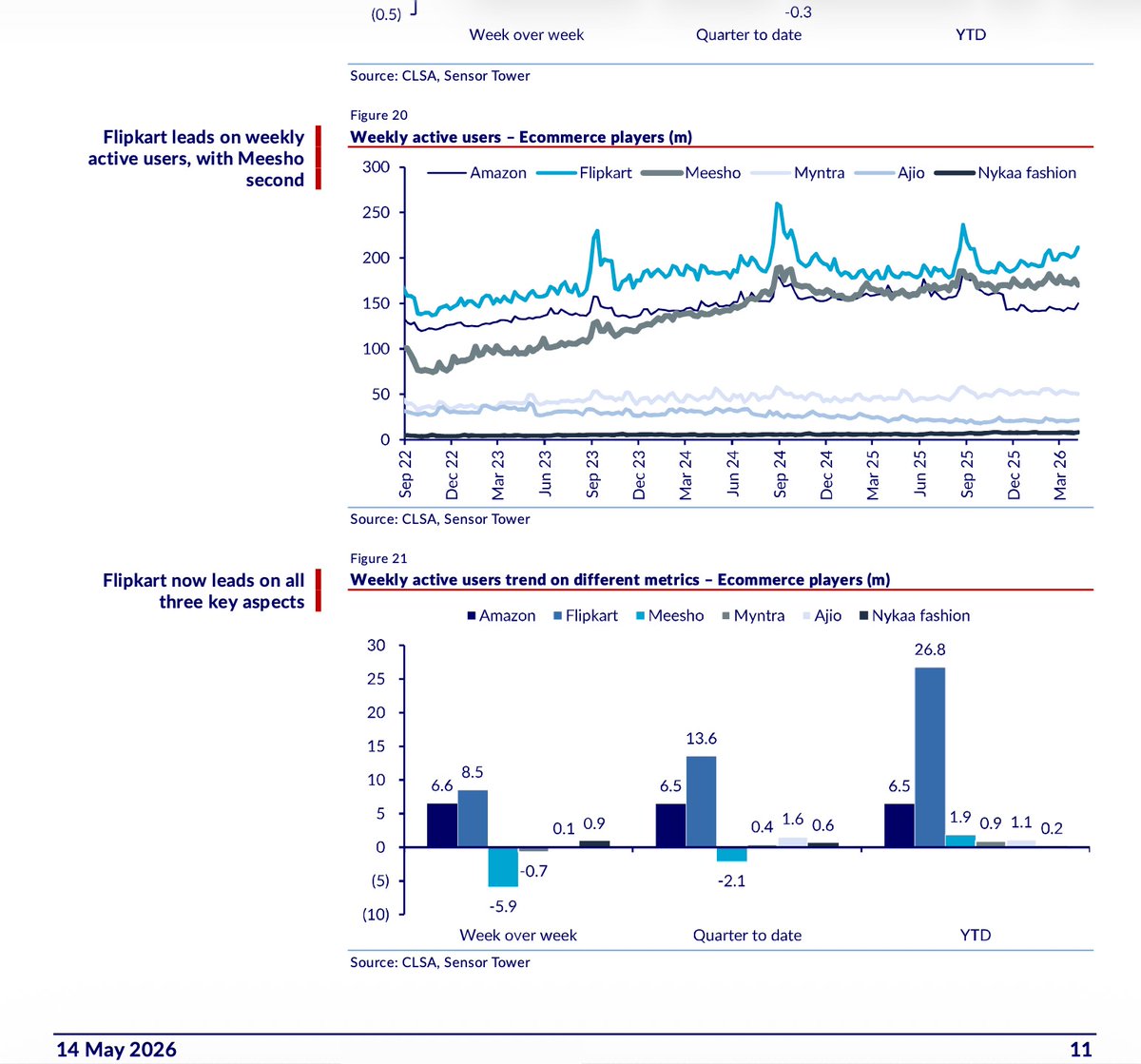
You don't realise the scale of e-commerce in India. Indian ecommerce continues to grow fast, but user growth is getting increasingly concentrated. According to CLSA’s latest tracker, Flipkart alone added 26.8M weekly active users YTD. The rest of the ecommerce ecosystem combined added 10.6M. Scale in internet businesses compounds hard once distribution starts pulling away. Worth watching how the gap evolves over the next few quarters.


@CJSlattery ·
$60 CPMs for ChatGPT ads are an INCREDIBLE deal. I know that's not the popular take right now. Everyone's comparing the $60 to Meta's $20 CPMs and acting like OpenAI lost the plot. That comparison tells you more about the person making it than the actual ad unit. We primarily work with ecommerce accounts, so I’ll use data from there. Our Google search CPMs hover around $54. So, $60 for an ad served to someone who just typed a specific product question into an AI is basically search pricing. And the intent signal might actually be stronger. Think about what's happening when someone interacts with an LLM. They're typing "what's the best running shoe for flat feet" or "best HVAC company in New York City." Their intent is at least 5x stronger than someone doom-scrolling Instagram and getting served an ad based on half-decent targeting. More than that, run the click math. If these ads generate clicks at a 4-5% rate, which is realistic for high-intent contextual placements, you're looking at about 50 clicks for $60. That's roughly $1.20 per click for prime contextual traffic (which I’ll take all day long). My point: - The platform is early - The optimization algo will be rough - The minimums are high - Native measurement isn’t great yet …but you're getting high quality intent traffic while OpenAI is still validating the system and pricing hasn't caught up to actual value. That window won't stay open forever.
 Watch video
@neilpatel ·
Here's the mistake almost every brand makes. They get serious about TikTok Shop, open the catalog, and pick the highest-margin products. Sounds smart. It's backwards. The volume lives lower than you'd think: 44% of sales fall between $5 and $15, another 37% between $16 and $30. Price above $50 and you're competing for a sliver of demand. Your margins don't set the rules here. The platform does. #TikTokShop #Ecommerce #SocialCommerce #OnlineSelling
 Watch video

@sarah_carusona ·
I've always hated "e-commerce playbooks." Because there isn't 𝘖𝘕𝘌. Every brand has different unit economics, different customers, different product margins, different team resources. That said...after working across 7-9-figure brands for 10 years, there ARE three things I'd put in any "plabook." 1️⃣ Know your unit economics cold. What does a customer cost you on the first purchase? What do they generate in 3, 6, and 12 months? These are non-negotiable numbers to understand. They tell you what your aMER should be, what your pricing and discount strategy should look like, and which product you should be leading with. 2️⃣ Make it stupidly simple for the consumer. Don't get cute with the offer. Don't over-engineer the landing page. Don't give them 7 options when 1 would do. Tell them what the product is, why they need it, and make it easy to buy. 3️⃣ Get really, really good at 1-2 media channels. Meta. Google. TikTok. Pick the ones that make sense for your brand and get excellent at them. That's all you need to get to $10M, honestly even $20M. Affiliates and YouTube can be worth exploring depending on the brand, but only after you've mastered the fundamentals. Complexity is the enemy of growth for fast growing 7-8 figure brands. Stay focused and execute exceptionally on the basics. Don't chase every new shiny thing you see on X / LinkedIn. What would you add to this list? Maybe I will come out with a playbook 😅

@codyschneider ·
If you're an e-commerce food brand company, a highly effective way to sell your product is to have AI write recipe articles that include your product the process is straightforward ask Claude Code: What recipes could my product be put into? Give me categories then use the Ahrefs MCP to find recipes that fit those categories then a claude code, write those, and publish them to your Shopify inject call-to-actions throughout Shopify blog posts: 25%, 50%, and 75% down the page for your product set up conversion-rate tracking that isolates these pages as the landing page by connecting all your ecom data to graphed .com analyze which pages are generating the most revenue make more pages like the best performers virtuous flywheel
@ecomchasedimond ·
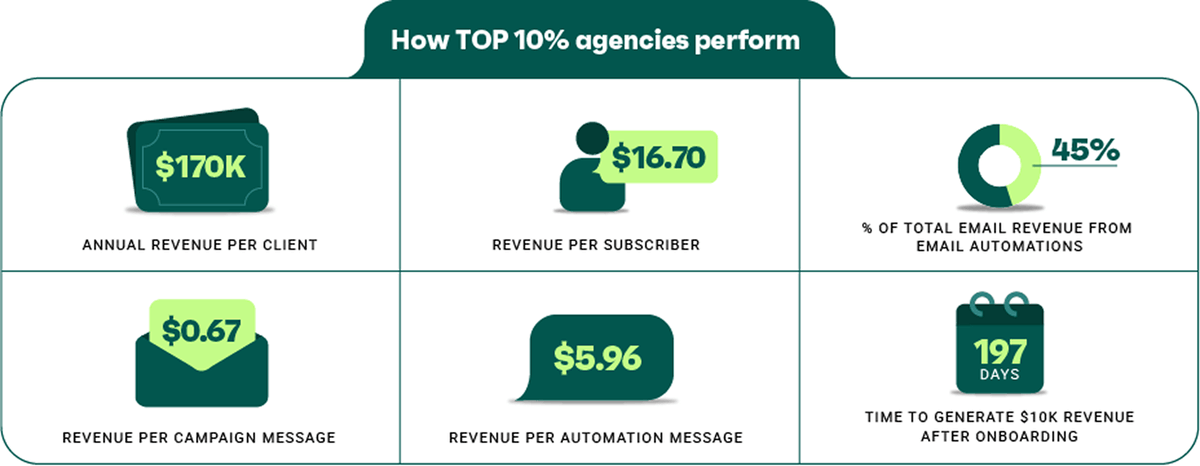
Here's how you know if your agency is in the top 10% of ecommerce marketing agencies: @Omnisend just analyzed 717 agencies managing almost 3,000 brands, and the gap between the best and everyone else is bigger than you'd think. The top agencies generate $5.96 per automated message for their clients. The average agency generates $0.67. That's a 9x difference on the same channel, and it comes down to how seriously you treat automations. At the top agencies, 45% of email revenue comes from automations alone. They're also running about 5.3 active flows per client and launching their first automation within 8 days of onboarding. Not 30 days, not "once we finish the strategy deck." But eight days. SMS is the other big separator. Agencies using SMS generate 202% more revenue on average than those that don't. That's a 3x difference, and it's still the channel most agencies are "planning to roll out eventually." So if you're wondering where you stack up: how many active automations are you running per client? How fast do you launch them? Are you using SMS? The top agencies keep clients for almost 3 years because those answers compound over time. The full report is worth a read if you run an agency or manage retention for ecom brands: https://t.co/157PQaAgMV

@kevin_miguet ·
If you're an ecommerce manager, AI is amazing. Gets you infinite CRO ideas for no money. But you don't need infinite ideas. You need VALUABLE stuff, in the highest volume possible. Here is how to improve what you get from AI : 1. Connect your data to AI with MCP connectors (Shopify Analytics, Google Analytics, Meta, Google search console...) 2. Use proper skills/prompt that turn your LLM into an expert. BAD : "what should I improve on my website to make more money ?" GOOD : "Using this skill that contains a 32-steps method with proven frameworks, edge cases + explaination on how to extract data with no errors, tell me what should I improve on my website to make more money?" 3. Ask AI to note everything it learns in files, so it gets better with time. BONUS : Treat AI like the smart kid it is. Don't micro manage it. Describe your end goal to AI rather than how to reach it. (cool kids call this "reverse prompting") BAD : do this do that. GOOD : new clients don't spend enough and we loose money. How can we raise the value of our first orders ? If you apply these 4, you will get better results. But don't forget : you still need to use your brain. If things go bad, you'll be the one responsible, so it's better if you understand what is happenning.
@sarah_carusona ·
90% of brands don’t have full clarity on their numbers… Contribution per distribution channel First purchase profitability Net LTV : CAC Goal performance metrics by media channel Many tools provide some visibility or guidance on the above, but rarely ever do they give you the full picture. Especially for brands across Amazon, Shopify, and TikTok shop. Knowing how to parse all the data together from various sources to make the right decision for a business is not easy. It takes knowing where there are often hidden costs, and how the numbers work together in the context of the overall business. My favorite moment with a new brand is when we compile all of this data together and the strategic steps forward become clear. Because numbers don’t lie…
@FedotOff90 ·
Most ecom brands die in one market. Not because the product stopped working. Because they let US ad costs eat their margins and never looked outside the border. The operators printing at scale in 2026 think about geography the way smart investors think about diversification. The US is the primary market. UK and Australia are the first expansion. Germany or the Netherlands for European volume. Brazil or Mexico for LatAm. Stack the markets right and you've got the same product running profitably across 5 geos while your competitor is fighting over the same exhausted US audience. Global distribution is the most underutilized system in e-commerce Also PE's and acquirers love the idea of possibility of global expansion and if you show proof of concept with that, helps to get higher multiples.

@blvckledge ·
been auditing a lot of ecommerce google ads accounts this quarter and the same mistakes keep turning up at every spend level. made a video breaking it down: - what your prospecting campaigns are actually buying when you think you're buying new customers - settings that inflate every conversion number your agency sends you - where 30 to 40% of your daily budget goes before an ad gets a chance to convert - why adding more campaigns is the reason yours never leave the learning phase - what it actually takes to scale search "Jackson Blackledge" on youtube to watch it


@rokhladnik ·
The EU is not a mini America. A lot of US e-commerce brands blindly copy their US playbooks and try to apply them to the European market. At @FlatCircleAds we now mostly manage US brands selling in the US or worldwide. But in the beginning, a big part of our work was helping US brands scale in Europe (like @hexclad and @ridgewallet) And I’m still seeing the same pattern today: Brands enter Europe assuming things will work the same way. But they don’t. In the US, you have one massive market, one dominant language, one dominant shopping culture, and a much more aggressive approach to growth. In Europe, you have 27 different realities. Different languages. Different payment habits. Different logistics. Different customers. GDPR. Smaller national markets. A different attitude toward discounts. And often less of the venture-backed “growth at all costs” mentality. That’s why copy-paste strategies often fail. What works in California won’t necessarily work in Slovenia, Germany, Italy, or Croatia. American e-commerce advice can be extremely useful. But in Europe, you have to translate it. Not just linguistically. Strategically.

@CommnThreadCo ·
Meta CPMs are up 20% year over year. Average ecommerce return on ad spend dropped to 2.87:1. Prospecting efficiency is down 13%. Most brands are responding by cutting spend or consolidating campaigns. The brands actually growing right now stopped optimizing for channel-level ad returns entirely. They're measuring blended marketing efficiency across the full business and using contribution margin as the decision layer. That's exactly what Prophit Engine does. When you measure the right thing, rising costs become a signal, not a crisis.
Best Tweets by Topic