Authentic Creative & UGC
Creator-led content that is native, authentic, varied, product-demonstrative, and adapted to each creator’s established format.
40%
Best tweets about Influencer Marketing
Browse the best tweets about influencer marketing, from creator selection and briefs to pricing, attribution, campaigns, partnerships, and performance.
Influencer and creator campaigns, partner selection, briefs, pricing, attribution, operations, brand fit, fraud, and measurable results.
Original Xholic analysis
Creator Selection & Audience Fit and Authentic Creative & UGC are the two most prevalent themes, each appearing in 20 of 50 tweets (40%). Attribution & ROI appears in 19 tweets (38%). Pricing, Deals & Incentives has the highest theme median all-time score (28.152). Posts span tactical advice on creator selection, creative execution, deal structures, measurement, and operations, alongside skepticism about rigid briefs, pay-per-post models, and AI-generated authenticity.
64% of posts
All-time engagement
100% of posts
Published in 90 days
Conversation map
Creator-led content that is native, authentic, varied, product-demonstrative, and adapted to each creator’s established format.
40%
Finding creators by audience fit, niche expertise, engagement quality, customer personas, and audience overlap rather than follower count.
40%
Performance measurement through attribution, tracked clicks and conversions, engagement quality, CPM/CPA, view guarantees, and revenue impact.
38%
Campaign compensation, rate benchmarks, negotiation levers, performance clauses, affiliate commissions, and outcome-based payouts.
22%
Micro- and nano-creators outperforming large accounts through trust, relevance, relatability, and tighter communities.
18%
Scaling creator programs through broad testing, high content volume, repeatable formats, viral-hit iteration, reposting, and paid-ad amplification.
16%
Building durable creator portfolios through retainers, equity or revenue share, affiliate pipelines, product seeding, and long-term relationships.
16%
Operational systems for creator discovery, outreach, follow-up, CRM management, briefs, and creator-program workflows, increasingly using AI agents.
14%
Tone and stance
Performance benchmark
Posts with media make up 56% of this collection. Their median all-time score is 8.22, compared with 18.7 for text-only posts.
Format mix
Consensus and debate
Shared view
Posts commonly recommend screening for audience relevance and engagement quality—including who comments and whether comments are substantive—rather than relying on follower totals alone.
Shared view
Posts advocate creator-native, product-demonstrative content and variation across creators. One creator reports that an overly rigid brief performed poorly and asks brands to trust creators’ established formats.
Shared view
Measurement appears as a recurring topic, with posts discussing App Store download spikes, outcome-based compensation, server-side click capture, view clauses, CPM, and revenue impact.
Open debate
Some posts declare traditional or pay-per-post influencer marketing ineffective or obsolete. Others discuss standard paid structures, CPM arrangements, minimum-view clauses, bonuses, and the importance of determining what content to make.
Open debate
One creator reports that a rigid B2B brief hurt performance and argues for creator control over format. Another campaign account describes handling the post, lead magnet, and creator instructions itself.
Open debate
One post forecasts a model in which brands license a creator’s face and distribution for AI-generated content. Other posts warn that AI can undermine authenticity or contrast low-cost AI content with slower, trusted human UGC.
What performs
The analytics identify five score outliers: 2052472822820385013 at 613.37, 2064434988695671031 at 150.37, 2012963102015234112 at 110.16, 2043813014676345067 at 88.34, and 2041165305578160160 at 81.09.
Across 50 tweets, median all-time score is 9.95, with median likes of 28, median views of 2,893, median replies of 8, and median reposts of 1. The format classifier labels all 50 posts as announcements.
Media appears in 28 of 50 posts (56%). The median all-time score is 18.71 for text posts and 8.22 for posts with media. This is descriptive and does not establish that media caused the difference.
Statistical standouts
Creator landscape
The five most represented creators account for 20% of the selected posts.
1. Cody Schneider
@codyschneider
2 posts
2. Connor Rolain
@connorrolain
2 posts
3. Joseph Choi
@JosephKChoi
2 posts
4. Romàn
@romanbuildsaas
2 posts
5. Influence360
@theinfluence360
2 posts
6. Shash Singh 🔮
@_theshash
1 post
Cody Schneider’s two posts outline AI-supported creator operations: discovery, personalized outreach, follow-ups, inbox handling, and pricing databases. His longer workflow reserves contracts, briefs, and high-stakes decisions for human oversight.
Romàn describes B2B creator buying through engagement review, reduced creator workload, packaged negotiation, view guarantees, and public lead-magnet replies intended to make engagement observable.
Joseph Choi’s interview posts cover app-growth topics that include influencer format fit, deal structures, creative freedom, attribution, and product experiences that creators can demonstrate quickly.
Themes, sentiment, stance, and post format are classified per tweet. All counts, shares, medians, creator concentration, freshness, and performance comparisons are then calculated directly from the published snapshot.
Xholic's all-time score compares engagement while accounting for reach, post age, and creator consistency. It is used for relative comparisons within this collection.
This report analyzes the exact 50-post snapshot shown below. AI identifies editorial categories and drafts explanations; all statistics are calculated from the snapshot, and every narrative claim is checked against cited posts before publication.
Best Influencer Marketing tweets
Ranked 01–50
@JosephKChoi ·
so apparently the head of product at Cal AI previously founded a $2M ARR dating profile analyzer app AND was a designer at Robinhood, Snap, Meta most ppl see Cal AI as "the influencer growth case study" but when you watch how this guy thinks it's obvious that a thoughtful product team was key to the Cal AI story 0:00 Intro 1:48 Why Daniel picked the dating niche 4:45 The pre-launch Instagram playbook 5:39 Charging $15 for manual profile reviews before the app existed 6:30 The TikTok slideshow system 8:10 Unbranded to branded: how to warm up a new account 9:22 The Christmas Day post that did $5-6K in a single day 10:30 Scaling past organic with paid ads 11:05 Working with one influencer to fuel ad creative 13:14 Why the dating niche is brutal for influencer marketing 18:51 The photo pack upsell and the whales theory 19:36 Why he defaults the paywall to annual 23:02 The psychology behind onboarding screen order 26:03 Retention features that survive the 3-day trial 27:42 Groups, streaks, milestones, building network effects 30:23 What he learned at Cal AI, Robinhood, Snap, and Meta 35:32 Cal AI's design philosophy: three screens an influencer can show 37:10 Daniel's framework for picking a new app idea 40:53 Finding viral content niches before you build 44:27 The influencer-equity playbook for shipping multiple apps 46:52 Distribution strategies that are dying vs coming up 48:57 The Cal AI acquisition by MyFitnessPal 51:07 Final Thoughts
@JosephKChoi ·
the 14-year-old brother of @zach_yadegari hit $14k/mo on his own app. tested every channel himself until one worked. he's in 9th grade lol 👇 full interview with @EvanYadegari 0:00 - Introduction: The 14-Year-Old Founder Making $14K/Month 2:20 - The Yadegari Backstory: From Roblox Games to Gaming Sites (Totally Science) 3:53 - The Genesis of Locked: Turning Gen Z Self-Improvement Into a Video Game 5:14 - Vibe Coding Prototypes: Building in Figma & Scripting via Claude 6:07 - Why Influencer Marketing Crushed Paid Ads, Reddit, and X 7:22 - The "Day in the Life" Format Fit: Reaching Gen Z Audiences Automatically 8:06 - Video Deconstruction: A $3,000 Single-Post Case Study 9:08 - Breaking Down App Economics: Conversion Rates & Ad RPM Metrics 9:47 - Vanity vs. Reality: Identifying Engaged Audiences via Content Comments 11:20 - Outreaching at Scale: Managing Manual DMs, Account Limits, and Verification 12:55 - The Hooked DM Template: Forcing Creators From DMs to Negotiation Calls 13:37 - 4 Influencer Deal Structures (Standard, CPM, Minimum View Clause, Bonus) 14:46 - AI Growth Hack: Sourcing High-Leverage Outlier Formats with Spy Talk 15:50 - Constructing Minimum View Clauses & Campaign Creative Freedom 17:44 - Attribution Strategy: Monitoring App Store Download Spikes 18:23 - The Risk Mindset: Lessons Learned From Chasing Empty Vanity Metrics 20:04 - Evolving Creative Channels: Unblocked Gaming to Productivity Software 21:28 - What’s Next: Scaling 10X (The Shopify for Apps Engine) 22:38 - High School Entrepreneurship & Normanizing Gen Z Side Hustles 24:27 - 2026 Consumer App Trend Predictions: AI Model Arbitrage & Viral Party Formats 25:57 - The Speedrun Playbook: How to Launch to $10K/Month From Scratch
@romanbuildsaas ·
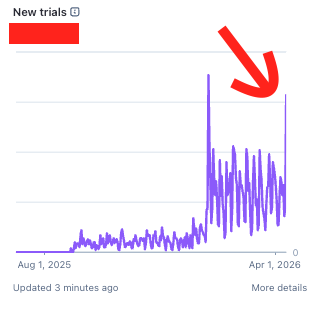
What a crazy day. It’s our second-best free trial day ever. The first time came from a viral video. This time, it came from a B2B influencer campaign and I’m going to break it all down. B2B influencers on LinkedIn are massively underpriced. An Instagram influencer with a few thousand non-targeted followers can cost thousands of dollars. Meanwhile, a B2B influencer with an audience that can spend hundreds of thousands will sometimes charge just $200. There’s a huge market inefficiency here and it won’t last. Step 1: find the right influencers We identify around 50 B2B influencers. We analyze their engagement deeply: who likes, who comments. If it’s always the same people, we skip. Step 2: reach out We contact them one by one and ask if they do sponsored lead magnet posts. Simple pricing framework: • small: $200 (~100 comments on a lead magnet post) • mid: $500 (~500 comments) • large: $750 (1000+ comments) Step 3: do everything for them We handle everything: the post, the lead magnet, the instructions. To reduce friction, we pay upfront. Key rule: they must reply publicly to every single comment with the lead magnet. No sending via DMs. You can’t verify it, and most people won’t comment anyway. Step 4: capture the demand We use GojiberryAI to extract everyone who engaged (likes, comments), then reach out via email and LinkedIn with contextual messages. Step 5: watch the spike Result: a massive surge in signups. Simple strategy and massively underused. And right now, you can still buy high-quality attention for cheap.
@romanbuildsaas ·
I book 30+ B2B influencers every week. Here are the 6 tactics I use EVERY day to pay less and get even bigger ROI: 1/ The market method Ask for the price of 1 LinkedIn post. Then ask the price for 3 posts/month → the per-post price automatically drops. Then tell them: "OK for the 3 posts, but I'll pay for them one by one." You just saved 30% on your first payment. 2/ The "we do everything for you" Influencers always justify their price with creation time (post, visual, resources...). Reply: "OK, but we deliver EVERYTHING ready to go. Post written, image done, you just copy-paste." → 30-40% off the price. 3/ The upfront payment Offer: "I'll pay 100% upfront, but at -30%." Trust goes up, price goes down. 4/ The views guarantee Ask their average views per post. If they do 10,000, tell them: "If the post gets less than 10K views, you post a second one for free." Happened to us plenty of times... and the 2nd post often outperformed the 1st. Result: 2 posts for the price of 1. 5/ Your tool in the package If the influencer is your ICP, they NEED your tool. We've paid next to nothing for posts just by throwing in free access. 6/ The "post & forget" On a lead magnet post, tell them your team handles all the DMs and comments. They just post and forget. Less work for them = lower price for you. These 6 levers save us thousands of $$ every single week. Bookmark this before your next negotiation
@kyparus ·
when companies need to explain complex products, ads stop working so they go to influencers but manual influencer selection usually leads to the same "overhyped" top creators AI changes this by surfacing smaller expert creators with higher audience trust that's where the highest-ROI distribution lives
@codyschneider ·
How to Build an AI Agent for Influencer Outreach Outreach is the grunt work of influencer marketing. You find creators, vet them, personalize every email, follow up multiple times, and hope they reply. Most brands burn out after week two. What if an AI agent could do 80% of this for you—on autopilot? Here's how to build one. The Problem With Manual Outreach Traditional influencer outreach is broken: Slow. One person can manage ~50 emails a day before quality drops. Generic. "Hey love your content!" gets ignored 97% of the time. Inconsistent. Follow-ups get forgotten. Relationships fall through the cracks. The influencer marketing industry is projected to hit $32.55 billion by 2025. Brands still doing outreach manually are getting left behind. The solution isn't another tool. It's an agent. AI Tools vs. AI Agents AI Tools Requires prompts for every task Helps you do the work AI Agents Executes multi-step workflows autonomously Does the work for you Your outreach agent should handle discovery, personalization, outreach, follow-ups, and tracking—without you touching the keyboard. The 3-Step Framework Step 1: Content-Matched Discovery Don't filter by follower count. That's vanity metrics. Your agent should analyze: Video content & hooks – Find creators whose aesthetic matches your brand Engagement quality – Comment sentiment, not just likes Audience demographics – Does their crowd align with your target customer? Pull this data from APIs like SociaVault or platform APIs directly. Feed your agent real-time data, not stale databases. Step 2: Hyper-Personalized Outreach This is where most outreach fails. Generic templates = generic results. Your agent should: Pull the creator's last 10 posts Extract their hashtags, themes, content style Generate a personalized pitch referencing their actual work Instead of: "Hey! Love your content. Want to collab?" Your agent sends: "Hey [Name], been following your [specific video]—the way you broke down [specific topic] was exactly what I needed. Our product [specific benefit] would be a natural fit for your audience." That gets responses. Step 3: Automated Follow-Ups (With Human Oversight) Outreach takes 5-7 touches to get a response. Your agent should: Schedule follow-ups based on response or silence Manage multiple outreach threads in a CRM Escalate to humans for contracts and negotiations Human-in-the-Loop (HITL) matters. Let the AI handle logistics. Humans sign off on contracts, creative briefs, and high-stakes decisions. What Your Agent Can Do ✅ Discover creators based on content, not follower count ✅ Analyze engagement quality and audience fit ✅ Generate personalized outreach emails ✅ Send initial outreach + automated follow-ups ✅ Track replies and update your CRM ✅ Flag opportunities needing human attention One person with this agent can do the work of an entire outreach team. The Bottom Line The brands winning at influencer marketing aren't working harder. They're working smarter. An AI outreach agent removes the busywork so you can focus on creative and relational parts that actually close deals. Start small. Build discovery first, then outreach. Layer in follow-ups and CRM integration as you go. The future of influencer marketing isn't more tools. It's agents that actually get stuff done.
@Defi_Scribbler ·
Creator Pay by Niche (Micro Influencer: 10K–100K) Food/Travel: $60 – $600 per post Entertainment: $80 – $700 per post Lifestyle/Beauty: $100 – $800 per post Health/Fitness: $100 – $900 per post Tech/SaaS: $150 – $1,500 per post Finance/Investing: $200 – $2,000 per post Crypto: $500 – $15,000 per post Crypto creators are eating GOOD
@davidonchainx ·
I think UGC style marketing is such a huge growth opportunity for crypto and AI companies right now Up until now influencer marketing (especially in crypto) has always been boring and ineffective Most campaigns are just paying KOLs to say "wow this is so cool" Instead the campaigns should be about getting KOLs to show why it's cool The campaign should be about getting influencers to use the product and post content with proof (photos, videos using it, etc) This allows for way higher conversions, better brand discoverability, and more unique content on the timeline It also gives brands content that they can repurpose for other social platforms or use for paid ads The brands that figure how to build distribution machine with UGC campaigns will win
@orenmeetsworld ·
Brands should think of influencers as teams. - You have your superstar that you probably pay really well and you want to have on a long-term contract. Ideally 2. - You have a couple supporting players with varying degrees of efficacy. - You have a bench of people to support them. - You have rookies that you’re bringing up around them. - You’re constantly having tryouts of people that you want to audition or keep an eye on and you’re scouting. Excellent metaphor for creators. And applies for your internal on-camera + on-social media talent as well if you're running that playbook.
@SarahLevinger ·
17 things you need to know before you market to millennial women (from a millennial woman): 1. We are not 25 anymore. The oldest millennial woman is 45 this year. The youngest is around 30. We’re buying mortgages, running companies, managing perimenopause symptoms, and raising teenagers. Stop putting us in crop tops and calling it a day. 2. We’re loyal as hell (until you give us a reason not to be.) One bad CX experience and we’re gone… and we’re telling 12 friends in the group chat on the way out. 3. We grew up being marketed to harder than any generation before us. We can smell a “girlboss” campaign from 400 yards away so do not take the lazy way out on your marketing. 4. Gendered design is lazy and we kinda hate it. The brands winning us over (Liquid Death, Graza, Our Place) don’t have to (and shouldn’t) scream “THIS IS FOR THE GIRLS!!). Just make it something cool, we’ll buy, I promise. 5. We don’t want to be “empowered” by your yogurt (or supplement or SaaS tool…what have you.) We just want the product to be well made, the packaging to not embarrass us, and the brand to not have a weird CEO tweet history. 6. People say we’re teaching our kids not to consume stuff but that’s not it at all. We’re just teaching them to be selective because we entered the workforce during a recession, had babies in Covid and are currently raising them in another recession. Math is a thing. 7. Nostalgia is a cheat code… but only if it’s specific. “Remember the 90s?” = lazy. “Remember the exact sound of a Tamagotchi dying while you were at school?” = take my money. 8. We research. A LOT. Before I buy a $40 face wash I’ve read 14 Reddit threads, watched 20+ TikToks, and checked if the founder is still on her own skincare journey (spoiler: it’s better if she is). Make your content easy to find, I will consume it. 9. We don’t hate ads. We hate BAD ads. We will happily watch a 4-minute brand documentary. We have zero tolerance for insulting our intelligence (and infinite patience for ads that respect it.) 10. We are exhausted. Not quirky-tired. Actually exhausted. If your product saves us time, or more importantly: MENTAL LOAD, lead with that. Not “self-care,” that makes you look tone deaf. 11. Influencer marketing is ok, mega-influencers are not. The micro creator with 8K followers who actually uses your serum runs our freaking wallets. I will not watch anyone who claims to have the same problems as me while she drives around in her Maserati. 12. We’ve been sold “community” so many times the word is basically meaningless. A Facebook group is not a community. A Discord is not a community. Shared values + real utility in a place I already like to converse with people = community. Do the work. 13. Price transparency is non-negotiable. Hidden fees at checkout are the #1 way to lose us. We’ve been burned by enough “free trials” and subscriptions that don’t make sense to assume the worst until you prove otherwise. 14. We don’t want to participate in the “clean girl minimalism” trend. Millennial women contain all sorts of personalities (sometimes within one person): maximalists, cottagecore moms, techwear nerds, horse girls grown up. Segment carefully, we hate being put in a box. 15. We talk. Group chats, Marco Polo, Voxer, the moms’ Slack, the book club text chain…doesn’t matter where, if you’re not worth the money we’ll tell everyone we know. We’ll also tell everyone we know if you are. 16. We will absolutely pay more for better. The “millennial women are broke” narrative and the “millennial women splurge on $70 candles” narrative are both true. We’ll skip dinner out to buy the good skincare, I kid you not. Price isn’t the barrier for us, only perceived value is. 17. Hire us. Pay us. Put us on the team. Put us on the creative team, the leadership team, and the focus group. The brands that get millennial women right aren’t guessing. They’re hiring us to tell them. Should I do millennial men next? 🤔 👋🤖
@PrettyFavy17 ·
I think one of the most interesting trends in the creator economy is the rise of creators who do more than entertain. The creators gaining the most trust are the ones who can break down complicated topics, explain what is happening in real time, and help their audience make sense of fast moving industries. That is why Clasho stands out to me. It is building a system where creators can be rewarded for the quality and impact of their work, not just the size of their following. For brands and platforms, that creates a much better signal for discovering creators who can genuinely educate, influence, and engage their communities. The brand I would love to see on Clasho is Polymarket. Prediction markets have become one of the most fascinating intersections of information, finance, and public opinion. A Clasho campaign around Polymarket could encourage creators to analyze major events, explain how prediction markets work, compare market probabilities with real world news, or track how sentiment changes over time. What makes this especially interesting is that different creators would approach the same market from completely different angles. A sports creator could analyze a championship market, a politics creator could explain election probabilities, a crypto creator could discuss how traders react to major announcements, and a data creator could visualize how odds change throughout the day. That kind of campaign would produce content that is educational, timely, and genuinely useful for viewers. It would also reward creators who can research well, communicate clearly, and provide insight rather than simply repeat headlines. I believe that is the direction creator marketing should move toward. Instead of rewarding the loudest content, platforms should reward content that helps people understand the world a little better. If Clasho can continue surfacing creators who create that kind of value, it has the potential to become much more than a typical creator platform. @clashoAi
@galileowilson ·
Influencer marketing is a volume & content game. Don’t let anyone tell you otherwise. Some projects partner with ~10 influencers, push the same exact message across all of them, then wonder why every post performs trash. It’s predictable, the content is the same and posted at the same time... After running hundreds of campaigns, the pattern is very clear: the most successful campaigns are the ones with scale and variation.. You should work with dozens of creators, they must produce with their own voice, angle.. let them come up with it. Most posts will perform normally, some will underperform, but one or two should go viral. Those viral posts are where the majority of the ROI comes from. One strong viral post can outperform 50 average ones combined, which is fine. The key is not just volume tho, but smart volume. Start with defining your ideal customer profile: Who are they? Where do they spend time online? Who do they follow? Which influencer is influential in x niche? What format do they naturally engage with? Once you understand that, you brief creators in a way that aligns with - their - audience’s behavior The formula is simple: Clear ICP → many creators → authentic content → a few viral hits → outsized ROI
@iamberzio ·
Web3 influencer marketing has mostly meant prepaid attention dressed up as traction. Rally Beta feels different because it changes the payout rails, not just the pitch deck. With @RallyOnChain Beta, campaigns can distribute Rally Points, native tokens, or stablecoins directly based on measured performance. That flips the incentive stack. Creators are not chasing empty impressions anymore. They are competing for aligned capital tied to real outcomes. The scoring engine upgrade is what really stands out. The anti lazy filters actively downrank copy paste threads and generic noise. Contextual, original work is what scores. Quality is not subjective here. It is enforced by the system itself. That matters. When rewards are programmable and evaluation is stricter, both creators and projects have to level up. Better content. Better alignment. Better capital efficiency. Rally Beta is not a cosmetic refresh. It is infrastructure turning marketing into coordinated economics. That shift does not roll back.
@codyschneider ·
marketing engineering today youtube influencer marketing agent researches youtube channels in category using scrape creators api then extracts their email from about section using apify or extracts email from website by scraping then email gets moved to instantly ai email is SUBJECT: can we collab Hey Name Could I get pricing for 3 video package posted of 6 weeks? I'll also give you 30% affiliate commission. Name agent manages instantly inbox via webhooks, negotiates price and builds database of influencer pricing email 1000 people 10 will underprice themselves work with those 10 put the best 2 on retainer repeat
@tibo_maker ·
influencer marketing is going to get very weird brands won’t pay creators to make content they’ll pay to license their face + distribution the brand writes the script generates the video with ai sends it to the creator for approval creator posts it it will be somewhat fake but actually so real than "who cares?"
@StevenCravotta ·
I spent hours talking to the most CRACKED 18 year olds on Tiktok marketing. A few lessons I learned 💡 — If you don’t live on TikTok, hire someone who does. Your early 20's creator knows the platform better than your 10-year marketer. — Your best videos won’t look like ads. UGC that feels native converts best... sometimes the product isn’t even mentioned, the comments do the selling. — Hooks drive everything. 3 seconds to stop the scroll. Posted helps clients test 100+ hook variations per week to find what the algorithm loves. — When a format works, scale it. Remix top-performing templates across dozens of creators. Volume beats luck. — Manage creators like assets, not influencers. One person can oversee 100+ micro-creators through Posted’s Deals feature: test, measure, double down. — Consistency compounds. Multiple drops per week keep the algo warm and your data flowing. — Your best creators can become your community core. We’ve seen part-time UGC creators evolve into full-time creative partners running 6-figure ad pipelines. Posted’s system turns what used to take an in-house team of 5 into one operator + 50,000 creators. → Daily content drops → Real-time paid ad feedback → Zero wasted media spend
@GeorgeLampro20 ·
Influencer marketing works if you can master these 4 things: 1. Sourcing: Can you differentiate what makes a good and bad influencer for your product) 2. Quantity: Can you find so many of these people and outreach to them that the shear amount of volume guarentees 3. Negotiation: Can you negotiate these deals for fair prices. 4. Creative Strategy: this is for both product and content. For product, is your product intuitive enough where a user can see your product for 5 seconds and instantly understand what it does. For content can you craft intelligent ways to subtly show your product so it doesnt kill organic reach while CTA'ing it hard enough so it still drives conversions. If your influencer marketing isnt working you can trace back the reason to these 4 and then focus on getting better at it.
@connorrolain ·
we have an exciting new influencer partnership dropping soon @hexclad ... it's exciting because we've have never activated with this type of creator before. he's in the personal development, wealth building, and productivity niche. i've always had a hunch this niche can be high performing, but an @getoutersignal identified persona is what finally gave me the confidence to act on it. i read the persona description and knew EXACTLY who the perfect creator was... the hypothesis is simple. a high percentage of our customers already fall under this persona, and this has happened almost entirely organically. i believe there's a lot of performance upside by creating funnels targeting this persona specifically. or as @couuor puts it, we're only 1/4 of the way to the peak of this ad angle's local maximum.
@0xRexnftcrypto ·
They're checking out a new idea at @3look_io. Brands have long partnered with creators who have huge followings, thinking more followers equal more value. But many accounts with 100K+ fans get almost no real interactions. So, what's better for brands: raw numbers or true engagement? This platform rewards based on content performance, like replies, chats, and community vibes. Brands seek genuine attention, not just posts. If it succeeds, influencer marketing could flip small creators with loyal crowds might outshine big, quiet ones. Soon, the key question may shift from "How many followers?" to "How much interaction can you drive?"
@NainsiDwiv50980 ·
Most marketers don't have a traffic problem. They have an attribution problem. You're making decisions based on dashboards that quietly miss part of your data. Campaigns get killed. Creators get blamed. Budgets get shifted. Not because they failed. Because your analytics never saw the full picture. That's why LnkFlow caught my attention. Instead of relying on browser-side tracking that ad blockers can interfere with, it captures clicks server-side and shows exactly which creator, campaign, or channel actually drove the visit. Simple idea. Massive impact. If you spend money on growth, influencer marketing, newsletters, or paid ads, this is one of those products that's worth knowing about. Launching on Product Hunt today: https://t.co/pTWhuOoQIq
@natiakourdadze ·
David Park literally shared the $10 Million AI SaaS Playbook for startup founders! Here're my notes: Step 1. Growth Framework Distribution → Get users aware (TikTok, IG Reels, Shorts) Conversion → Landing page → Trial → Paid Retention → Deliver promised value Focus in Playbook → Distribution via short-form video Step 2. Distribution System A. 3-Step Process Gather Ingredients → Study users, influencers, competitors Explore → Test hooks, creators, editing, accounts Exploit → Scale winning formats into series, paid ads, reposts B. Ingredients Ask users for IG handles → See who they follow Analyze what they consume (hooks, hashtags, tones) Step 3: Influencer Hunting Use TikTok/IG “Suggested Accounts” Spot influencers with viral ceiling (1M+ views), not floor Step 4: Analyze Competitor Content See what formats & hooks work in your niche Step 5: Test the variables On-camera person (influencers, friends, UGC creators) Hooks (text/voice in first second) Editing (fast cuts vs casual) Lighting (cinematic vs raw) Accounts (restart if “100–300 view hell”) Step 6: Collect Hook Examples “Top 10 reasons…” “I hate when…” “The worst mistake…” Step 7: Influencer Outreach Channels: Email + DMs (higher response rate) Best Practices: Personalize (“Loved your last video on…”) Concise, tailored, fan-first Follow-ups every few days Expect >50% rejection Keep compounding learnings Step 8: Deal Structures Align Incentives Split payments (half upfront, half performance-based) Track conversions via coupon codes / UTMs Bonuses for views or link clicks Bundle videos (3 for $1,200 vs 1 for $500) Multi-platform posting (+30% for TikTok + Reels) Strip extras (rights, exclusivity) to drop cost Aim for stable, repeat partnerships UGC (User-Generated Content) In-house creators 20–30 posts/month Base salary ~$2K/mo + performance incentives Hiring influencers as UGC creators $3–5K/mo + incentives Step 8: Structure Daily posting → stable + scalable Bonuses for conversions/views to avoid laziness Platforms: TikTok, IG Reels, YT Shorts Frequency: At least 1 post/day Optimization: Native hooks per platform No watermarks Start similar to influencer’s main content → then expand Cut flops, double down on winners Step 9: Scaling Virality Take one hit → Repurpose endlessly Slight tweaks → Different settings/hooks, same core video Example: POV “You have a paper due” (Jenny AI) You can get hundreds of millions of views Tens of thousands of paid users $500 K+ revenue from 1 series Multi-Account Strategy: 5+ accounts per platform Recreate viral hits across niches/languages Small accounts (50 followers) can outperform large ones Increase odds of hitting multiple TikTok “pockets” (engineering majors, literature majors, etc.) Extending Lifespan: Repost across accounts Translate videos (Mandarin, German, etc.) Push to meme pages / aggregator accounts ($50–100/post) Milk until saturation → restart cycle Step 10: Success Metrics Not just views/shares → but evangelized conversions 10K targeted views > 1M lukewarm views Optimize for ROI, not vanity metrics Extra effort & creativity wins Smaller niche influencers > big agents Tailor content to influencer’s existing viral series/jokes Early failures = tuition for later wins One great influencer/video can offset 10 failures 👉 This mindmap is your tactical blueprint: Research users + influencers Test hooks, creators, and content Negotiate smart influencer/UGC deals Post daily + track ruthlessly Milk viral hits into series + multi-accounts Reinvest learnings into next cycle
@neilpatel ·
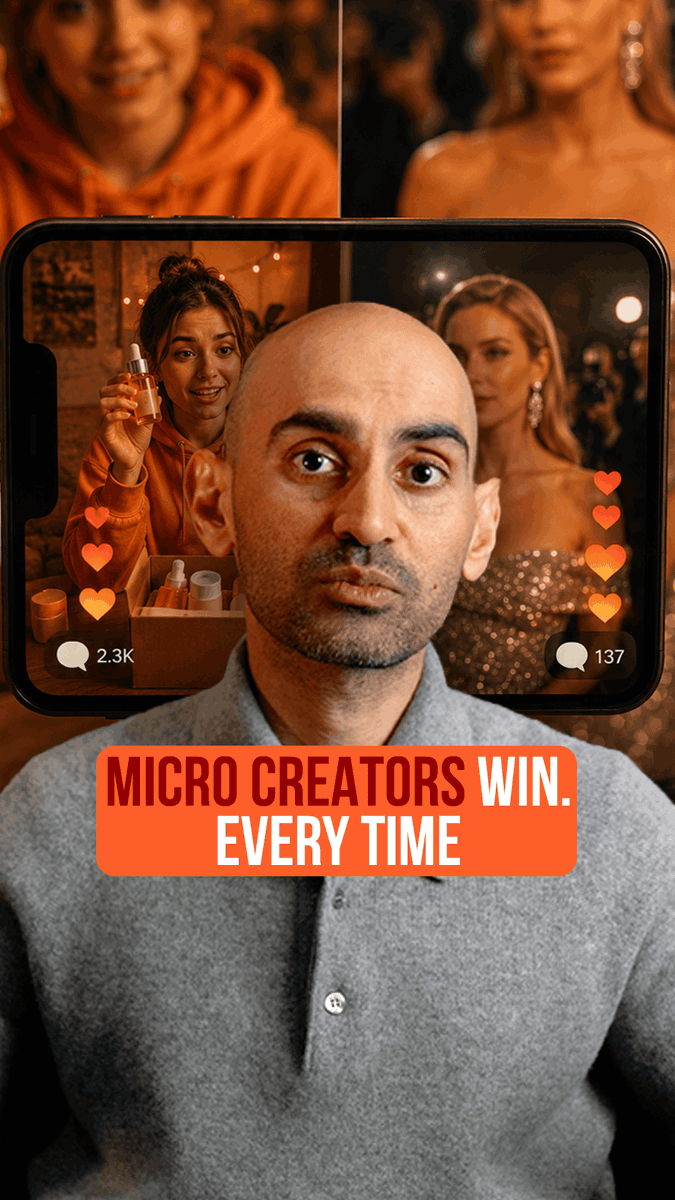
Almost everyone gets creator marketing backwards. They pay for the biggest following they can afford and spend it all at the top. But at the awareness stage, a creator saves you about 5% of the customer journey. At the interest stage, when someone's already considering a product like yours, it's 39%. That's the whole game. So don't blow it on one giant name. Spread it across 3 to 5 smaller creators who actually live in your category, where people are already decided. #InfluencerMarketing #CreatorEconomy #TikTokShop #Ecommerce #MarketingStrategy
Watch video
@connorrolain ·
stop cold pitching high-profile influencers and creators...try this work flow instead 1. use @outersignal to get notified when influential people buy from you 2. reach out, tell them you're excited for them to try it 3. offer free product in exchange for a post we've driven 6 figures in impressions from this workflow alone — and we're just getting started. and the best part is that the content feels super organic, because it is! these are influences and creators already bought organically, so we're just pouring gas on the fire... excited to see how this scales.
@Gavel_on_X ·
Creator Connect: before small creators celebrate, understand what X is actually launching You will probably read a lot of headlines saying that X is finally helping small creators and opening new monetization opportunities for everyone. That interpretation may be too optimistic. First, an important clarification: Creator Connect is not a new Creator Revenue program and it is not X paying creators directly. This is essentially a matching system for brands. A company comes to X with a campaign and specific goals. Instead of manually searching for influencers, X uses AI to scan the platform and identify creators that could fit those requirements. According to X, the system may consider things such as content themes, audience interests, conversations, trends and creator style. The goal is to help brands discover creators that they normally would not find through simple follower counts. For example, a laptop company may not want "technology creators" in general. It may specifically want creators discussing technology who also have a strong interest in Formula 1. Instead of searching manually through thousands of accounts, X wants AI to do that work. This is the part many people are presenting as good news. Until now, larger creators had a natural advantage because brands often looked at visibility first. Creator Connect could potentially give smaller niche creators more exposure if they have a specific audience and clear authority in a topic. However, there is a less discussed side of this announcement. Having 500, 2,000 or even 10,000 followers does not suddenly mean sponsorship opportunities will start appearing everywhere. X is not saying that small creators will be automatically rewarded. X is saying that AI will try to identify the most suitable creators. Suitability is very different from size. A creator with 5,000 followers focused entirely on AI tools could become attractive to a relevant company. A creator with 50,000 followers posting random trends, memes, motivation, politics and unrelated topics may be less useful for a specific campaign. The uncomfortable possibility is that creators may soon be competing not only for attention, but also for clarity. Humans can enjoy messy personalities. Algorithms usually prefer clear labels.
@louiseivan ·
What does a founder week actually look like fully remote? Here's mine. > Built our scaling influencer strategy off 8 weeks of real testing data: what worked, what didn’t, how we should scale & ask our finance overlord @MarvinJanssen for budget approval for next iteration > Finalized the B2B partnership plan & send the pitch for initial review to one key partner and get sentiment to see what lands before revising > Wrote a rebuttal doc with our wiz engineer for an Italian KOL review that got key facts wrong > Building a 500-creator affiliate pipeline (still in progress) > Intro call with a new VCs, we founders are always raising > Handled customer support on Gorgias + stayed active replying on X > Scheduled 3 weeks of Ryder social content, this I further optimize per week btw. Content comes from @nishoutofwater > Pushed new Shopify orders, I do this everyday > Creating tailored offers for VIP creators I’ll manage personally > Suppored @nishoutofwater on our press > Still have finance + legal for the weekend list </3, I hate this part Thank God, we have @claudeai or I lose my hair > Also I'm training 6x/week now, checking my macros to be a fitboy + starting to build my Instagram. Go follow "@louise.ivan" I post about everything and 0 niche > I also started vibe coding a peptide trackers on claude If you ask what I do for fun… this is fun
@CJSlattery ·
On the other side of partnership ads are 19% lower CPMs, 2x CTR, and 58% lower CPAs. Here’s everything we learned about working with creators to achieve this: (note: I can't guarantee those metrics for you…but these are our blended figures for clients): 1. Follower count doesn't predict performance. We've had 2,000-follower partners outperform 200,000-follower partners when the smaller account had genuine engagement and actual product experience. 2. Under 2% engagement rate is a hard pass for us now. No questions asked.k naturally on camera, do they have a real relationship with the product, and does their audience trust them? 3. Under 2% engagement rate is a hard pass for us now. No questions asked. 4. For accounts spending under $50k/month, micro-creators in the 5k-50k follower range are almost always our best performers. They're cheaper, more authentic, and their audiences are tighter. 5. Real customer partners at $100-300/video outperform professional UGC creators at $300-700/video more often than you'd expect. 6. Cap affiliate commissions on subscription products at first order value. 7. You need at least 5 active partnership ads live for the algorithm to have anything to work with. At scale, we aim for 15. I'll continue to share learnings, but if you want us to run this for you, DM me. We're already doing it for dozens of brands.
@0xvinhpham ·
6 years & millions spent working with crypto creators — straight from @Jackhaldorsson @LunarStrategy > Stop chasing vanity metrics. > Stop sending weak briefs. > Stop doing random one-off collabs. 2026 playbook: → Target creators with real 'smart followers' (VCs, builders & investors) → Choose long term partnerships over single posts → Send crystal clear campaign briefs + banger creative → Track everything: CPM under $50 and real revenue impact My personal take: > The biggest mistake most projects make is rushing the selection process. > Spend serious time finding the RIGHT creators/KOLs. Watch their content deeply, check what kind of audience they actually attract, and study how they communicate. Garbage in = garbage out. Your input selection is the most important decision in the entire campaign. What's your biggest mistake when working with crypto influencers ? Drop it below 👇
@alexwtlf ·
you have $100 to market your brand, where's it going? - AI influencers: $50/month, unlimited content, but people can tell it's AI - UGC creator: $50/video, slow and expensive, but real and trusted btw the video below is an Al influencer. made in seconds.
@youfadedwealth ·
I wrote this article after a profound realization I had with the Clipur team earlier this week... Influencer marketing builds trust Content distribution creates familiarity Paid Ads weaponizes both for direct conversions I have 4 subscribers on Medium, but I've been regularly posting my thoughts for the last few years Hope you enjoy it, and drop any questions in the comments
@iamshackelford ·
Before the end of this year AI will be able to fabricate authenticity so good it'll look completely real. This is gonna wreck absolute havoc on influencer marketing and authentic brand growth. The old playbook - grow a massive audience, influence them through content to sell products is on its way out if not already out, and soon every person will be able to create content that looks authentic using AI and “build an audience” BUT.. if AI can fabricate authenticity, then by definition it's not authentic anymore. So now if you are building a winning brand you have to build true customer stories you can’t fake. REAL, 100%, genuine, authentic testimonials/results/reviews. You can fake individual videos pretty easily now. But you can't fake it at scale (despite knowing a few doing it now) with massive legal risk. People will be made examples of this year, you lose everything and it’s because you trusted someone to make you AI ads. So how risky do you want to be vs how authentic do you want to be? The influencer model as we know it is pretty much dead. The future belongs to brands with genuine customer stories and founders willing to bet on real content over reproduced slop.
@kaleighf ·
I was recently hired through a creator matching platform to do a Twitter collab, and the brief they gave me was *incredibly* rigid. Shocker: it did not perform well. I am begging B2B software companies entering the influencer marketing landscape to stop being so prescriptive and trust people who've built audiences to use the formats they know work! Hats off to this person, though, for taking the feedback well.
@_theshash ·
Most people use AI the wrong way to do outbound... So my co-founder Wesley runs an YouTube channel with 28k subs, and is currently creating AI content (with some videos getting 10k+ views). One of the strategies we've gotten really good at Crescendo is creator programs which we built out extensively for our web 3 clients. Wesley is a creator and understands how to talk to them. So an offer we're testing out is creator marketing programs for AI and creator tooling teams. My best guess at people who're actively thinking about this but not executing yet are teams who are hiring influencer, afffiliate or partnerships managers. I used Claude code with apify, firecrawl, apollo and bam.... Early results from the first 2 days: From the first 15 messages sent from his profile --> 5 replies and 2 booked calls. We still have 80+ teams to reach out and can probably scrape many more Importantly, we did not automate the copywriting. Each message was customized with unique insights from our in-house creator audit tool. Next up, I've built out a list of teams that have raised money and spend on paid ads, but don't have an in-house KOL manager. Creators are likely a great UA channel for them as well
@etnshow ·
"UGC farms is the play right now" Will Caplan (@CaplanWill) on why UGC is replacing traditional paid influencer marketing: "CPMs are super low, you get thousands of videos and the algo just pushes out whichever one people like". "99% of the content doesn't go anywhere but thats fine. The cost is super low." "The traditional playbook pay-for-play, like pay for one post, is useless ubless you have big, big budgets... it can be, too much of a barrier for a lot of companies".
@theandreboso ·
I told a friend he should run an influencer campaign to grow his app and he said they don’t even reply to his emails. He’s literally offering them money and they’re ignoring him. I know a few of them so I wanted to hear their side of the story. It looks like companies are so stressed by search traffic shrinking and social media not working as well as it used to that they’re going all in on influencers. They’re getting so many messages that they don’t even reply to most of them especially the pay per post ones. They want long term sponsorships or nothing. So if you're trying to break in don't lead with how much per post but pitch the long game opportunity.
@TaylorLagace ·
I would rather pour my money down the drain than pay another influencer for a post. The pay-per-post model hasn't worked since 2020, but brands keep doing it anyway. You're dropping $5K on one Instagram story that disappears in 24 hours and drives maybe three clicks. Then you do it again next month because "we need influencer content." What actually works? - Seed the product. - Build real relationships. - Invite them to your events. - Create content from actual experiences instead of scripted posts. Here’s how we've used this to scale brands like M&Ms, WildBird, Animal House, without burning budgets on vanity posts.
@0xTommyThomas ·
almost half of all influencer marketing money now goes to the smallest accounts. micro and nano, a lot of them under 10,000 followers. it isn't a discount play. on instagram, nano accounts run 2.7 to 3.9% engagement. celebrity accounts run 0.8 to 1.2%. the tier everyone treats as a waiting room is the tier that converts. 1,000 real followers is a rate card now.
@theinfluence360 ·
𝗜𝗻𝗳𝗹𝘂𝗲𝗻𝗰𝗲𝗿 𝗠𝗮𝗿𝗸𝗲𝘁𝗶𝗻𝗴 𝗕𝗿𝗲𝗮𝗸𝗱𝗼𝘄𝗻 — 𝗘𝗱𝘂𝗰𝗮𝘁𝗶𝗼𝗻𝗮𝗹 𝗦𝗲𝗿𝗶𝗲𝘀 #𝟭 Influencer marketing is not ads. It’s trust at scale. Most companies treat influencers like Google Ads and expect instant sales. That’s not how it works. Influencers don’t push cold products to cold audiences. They transfer trust to a brand. There are 3 stages: 1. Awareness — people discover your brand 2. Consideration — they start trusting it 3. Conversion — they are ready to buy The mistake is using influencers only for direct sales without building the earlier stages. It’s not about big vs small influencers, it’s about the level of attention your product needs. Influencers don’t replace strategy. They accelerate trust. If you use them only as performance media, you’re overpaying for the wrong use of the channel.
@nevmed ·
I've been seeing more and more local companies doing "influencer campaigns" by simply inviting influencers out and throwing a party for them. This is a new waterpark that's trying to generate buzz, and they're inviting anyone with 10,000+ followers to see it before anyone else. The crazy thing is if even ONE of these influencers posts something that goes mega viral, this can be ROI-positive for them instantly.
@ActivateSignal ·
Arun Srinivas, Managing Director and Head of Meta in India, sits down with Varun Mayya and Pratyush Choudhury at Mumbai Tech Week to break down how Indians actually buy, and where AI and creators fit into it. With nearly three decades spanning FMCG at Hindustan Unilever and now leading Meta's India business, Arun has watched consumption shift from the Doordarshan era to a moment where a viewer in Kanpur follows the same creators and reels as one in Mumbai. He makes the case that the metro versus small-town divide is collapsing, that creators could influence up to a trillion dollars of purchases in India over the next decade, and that the real power of AI sits in the backend, not the buttons a user sees. In this conversation, they go deep on: 0:00 Intro: Arun on FMCG, Meta, and how Indians buy 0:45 Why fundamental consumer habits haven't changed 3:08 Indian vs global consumer: the blurring lines 4:53 Why rural and metro India now want the same thing 6:07 Influencer marketing: why it's just beginning 6:38 Why brands need a source of authority 8:03 The $1 trillion creator influence stat 8:33 PolicyBazaar and native-language creators 9:42 The US "clipping" trend and Meesho's 10,000 creators 11:16 Micro-dramas, viral series, and brand tie-ins 13:33 How tier-2 and tier-3 India uses Meta differently 15:25 Why founders and creators need to put themselves out there If you're a founder, marketer or builder thinking about AI, consumer behavior, or the creator economy, this one's for you. @aakrit @177pc @waitin4agi_ @Meta @metaindia
@madhurahoval ·
tiktok broke traditional influencer marketing more creators shorter attention spans infinite content every second earns attention or dies your hook your visuals your words your text overlay all compete with the scroll high production lost relatability wins people want creators who feel like them same problems same curiosity same situation hence micro-creators beat influencers social authority means nothing if viewers can't see themselves in you and marketing that sounds like marketing dies immediately
@iHarnoorSingh ·
interesting insights on influencer marketing 45% of brand influencer spend is now going to creators under 20k followers. It was 19.5% in 2021. coming from 8 yrs of making videos and I get that micro accounts average 3.2% engagement on shortform due to novelty, big tier influencers averages 1.1% same time 18x more cost but i disagree in long form context but yeah shortform kinda true ~ Emarketer
@theinfluence360 ·
The crypto influencer marketing space doesn't have a people problem. It has an infrastructure problem. What's actually missing: 1. No standardized briefs — every campaign starts from scratch 2. No escrow protecting either side — someone always takes the trust risk 3. No shared performance data — nothing compounds between campaigns 4. No way to compare what you're actually getting per dollar across creators Both sides deserve better. That's what we're building.
Best Tweets by Topic