Program design and commission economics
Commission rates, recurring payouts, cookie windows, incentives, margins, cash flow, and program setup.
41.2%
Best tweets about Affiliate Marketing
Find the best tweets about affiliate marketing, including offers, content, attribution, partnerships, compliance, conversion, and sustainable revenue.
Affiliate programs, content strategy, partner selection, attribution, conversion, economics, compliance, and verified revenue lessons.
Original Xholic analysis
Affiliate marketing emerges here as a trust-and-operations channel, not effortless revenue. Posts favor credible users, useful content, workable commissions and tracking through to paid customers. Founders report substantial results, while others describe difficult recruitment, attribution gaps, program disputes and search-placement incentives. These are reported experiences, not verified revenue outcomes. [2061953003704471802,2043584145037631893,2038345011683561889,2056526506537386286]
47.1% of posts
All-time engagement
29.4% of posts
Published in 90 days
Conversation map
Commission rates, recurring payouts, cookie windows, incentives, margins, cash flow, and program setup.
41.2%
Tracking clicks through paid customers, reconciling commissions, evaluating partner ROI, and reported affiliate revenue results.
32.4%
Finding trusted customers and creators, overcoming recruitment friction, and giving partners assets, follow-up, and ongoing support.
32.4%
Why firsthand product experience, audience trust, and genuine customer enthusiasm matter more than follower counts or a program launch.
29.4%
Self-referrals, brand bidding, fraud controls, program removals, offer or platform disruptions, and diversification of affiliate income.
26.5%
SEO and AI-answer exposure through reviews and listicles, including paid placements, publisher leverage, and search spam.
20.6%
YouTube, TikTok Shop, and Facebook affiliate features, plus licensing or promoting proven creator content as ads.
17.6%
Specific reviews, tutorials, listicles, creator videos, and shopping tags that turn recommendations into sales.
8.8%
Tone and stance
Performance benchmark
Posts with media make up 44.1% of this collection. Their median all-time score is 12.5, compared with 6.02 for text-only posts.
Format mix
Consensus and debate
Shared view
Several posts favor customers or creators who know the product over follower count alone. They recommend giving partners a clear audience, use case and promotional assets rather than expecting a link to sell itself. [2036111041390633402,2061953003704471802,2048856466552226295]
Shared view
Program advice pairs motivating commissions with margin limits, payout and cookie rules, and tracking from clicks to paid customers. The proposed rates are examples, not a universal benchmark. [2059304574729720300,2057409427385287145,2061953003704471802]
Open debate
Founders reporting affiliate revenue describe simple starts and product-led interest; another says outreach to newsletter owners and TikTok creators produced no partners despite a 40% lifetime offer. Their experiences differ on how readily partners can be found. [2061953003704471802,2040094066076172641,2043584145037631893]
Open debate
A founder tolerates affiliates bidding on its brand name, while posts dispute how to handle self-referrals. Listicle publishers also describe commission-driven placement and leverage after program removal—reasons to set and enforce clear rules. [2037936231187972288,2038688879432376813,2064121005778370728,2076715650437771434]
What performs
Founders report $218,014.41 in affiliate-generated revenue, $67,000+ for GojiberryAI and €162,000+ for Outrank. The posts do not establish comparable time periods, net profit or independent verification. [2061953003704471802,2040094066076172641,2039991145552581108]
Deterministic analytics put announcements at a 53.36 median all-time score, versus 7.79 for tutorials. YouTube eligibility announcements are among the supplied outliers; that comparison describes this set, not an effect of format. [2037227048813682783,2037238210804539555,2048856466552226295]
Operators call for tracing clicks, signups and paying customers and reconciling commissions; another warns that a prominent landing-page CTA can lift clicks while hurting conversion. The shared test is revenue rather than surface engagement. [2061953003704471802,2029635872979599376,2034124249460252872]
Statistical standouts
Creator landscape
The five most represented creators account for 26.5% of the selected posts.
1. ILIAS ISM
@illyism
2 posts
2. Roas ROI
@roasroi
2 posts
3. Romàn
@romanbuildsaas
2 posts
4. Dmitrii Volosatov
@volosatovde
2 posts
5. 1752vc
@1752vc
1 post
6. Aaron Orendorff
@AaronOrendorff
1 post
Posts advocate firsthand reviews and task-specific walkthroughs; a founder says two affiliates earned money by handling intimidating setup for customers. These examples make the recommendation useful beyond a generic product link. [2063758337712291858,2083915795009057199,2061953003704471802]
One playbook proposes promoting strong affiliate videos as paid media; another describes licensing TikTok Shop videos that sold products. YouTube also expanded shopping-tag eligibility to Partner Program creators with 500 subscribers. [2036111041390633402,2037899506617061659,2037238210804539555]
Since the previous snapshot
Themes, sentiment, stance, and post format are classified per tweet. All counts, shares, medians, creator concentration, freshness, and performance comparisons are then calculated directly from the published snapshot.
Xholic's all-time score compares engagement while accounting for reach, post age, and creator consistency. It is used for relative comparisons within this collection.
This report analyzes the exact 34-post snapshot shown below. AI identifies editorial categories and drafts explanations; all statistics are calculated from the snapshot, and every narrative claim is checked against cited posts before publication.
Best Affiliate Marketing tweets
Ranked 01–34

@AaronOrendorff ·
.@Seanfrank explained to @MBertulli how to build an affiliate army from absolute zero. The twist? Sean stole the entire playbook. He went to a closed Beverly Hills mastermind, heard @ItsHudsonBlake – founder of Comfrt – break it down, came back, and blew Matt’s mind. Here’s the framework ↓ - Recruit people with low-to-zero followers. Non-creators become the loyalists - Run content challenges at absurd scale. $10K for 1,000 videos in a month. 5,000+ entered. 10 emerged as elite content machines - No mission, no army. The product has to solve a problem people feel personally - Commission-chasers leave for the next bag. You want missionaries, not mercenaries - Nurture them like salespeople. Daily Discord. Two-hour weekly calls. One-on-ones with top performers - Take the best affiliate content and run it as paid media. Hudson is the #1 spender on Snapchat ($100K+/day). Affiliates earn commission on those sales too - Pay affiliates after the sale. That AR/AP difference buys you cash flow margin Meta never will Hudson’s Comfrt will do roughly $600M this year. Third full year of business. Sean sat down with Hudson for a full Operators Titans episode and broke down the entire playbook, unfiltered.

@UpdatesFromYT ·
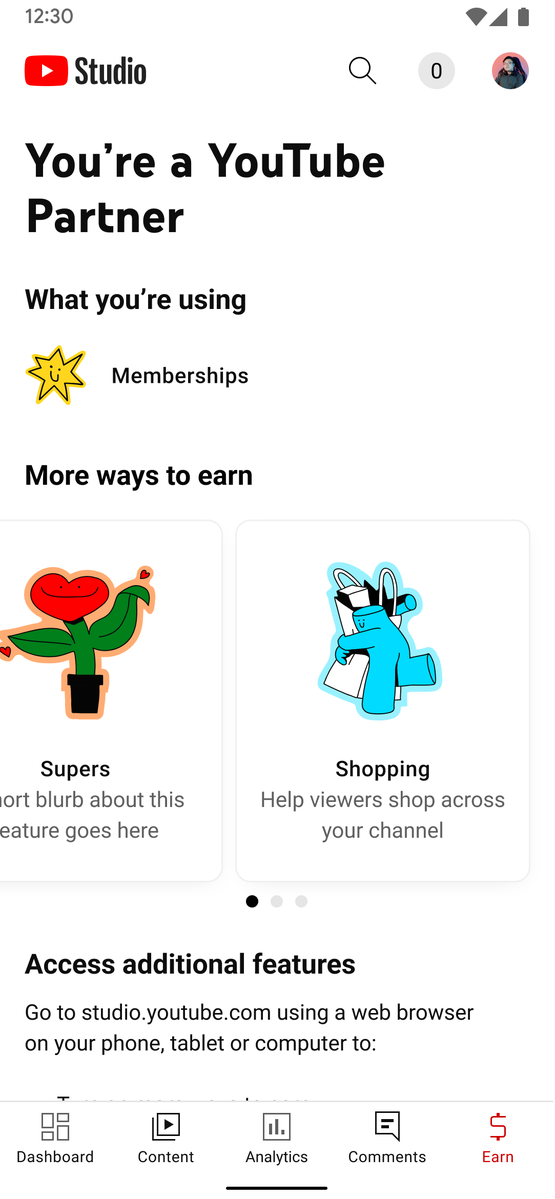
Regardless of audience size, we know viewers trust creator shopping recommendations. 🛍️ Now, all @youtubecreators in the YouTube Partner Program with at least 500 subscribers will have access to the YouTube Shopping affiliate program, meaning eligible creators can tag products from brands across Shorts, videos and livestreams.

@gumroad ·
Your best salespeople are your happiest customers. Here's how to turn them into an affiliate army: Step 1: Enable Gumroad's affiliate program on your product. Set the commission between 20 and 30%. This is generous enough to motivate people without eating your margin. Step 2: After someone buys and has had time to use your product, send them an email. "Hey, glad you're enjoying [product]. If you know anyone who'd benefit from it, here's your personal affiliate link. You'll earn [X]% on every sale." Step 3: Make it easy for them to promote. Give them a few pre-written tweets, a short product description they can copy/paste, and a summary of who the product is best for. Remove the friction. Step 4: Celebrate your top affiliates publicly (with their permission). "Shoutout to [name] who just helped 15 people discover [product]." This motivates everyone else. Step 5: Create bonus incentives. "Top affiliate this month gets a free 1-on-1 call with me" or "Hit 10 referrals and unlock my premium template pack." The beauty of affiliates is that they scale your reach without scaling your workload. Every affiliate is out there telling their audience about your product while you sleep. You built the product once. Let other people help you sell it forever.
@nealmohan ·
We’re bringing shopping content to more corners of @YouTube so you can buy the products you love directly from the creators you trust 🛍️ Eligible @YouTubeCreators can now join our YouTube Shopping Affiliate program if they have 500 subscribers (versus the previous 5,000). Once enrolled, you can earn commissions by tagging products from affiliated brands across formats.
 Watch video
@daviefogarty ·
Creator ops for any brand that is scaling are an absolute mess. If someone can solve all these problems using AI, it will make them richer than they could imagine. - Outreach volume. The bigger companies need to be contacting hundreds of creators to make a difference. Most brands hire an influencer manager who can maybe handle 20-30 relationships properly, but that's not enough volume to find consistent winners. - Follow-ups. This is where 80% of potential deals die. The creator says they're interested, you send a product, then nothing. No one has time to chase 200 people who ghosted. - Negotiation. Every creator wants different terms. Flat fee, affiliate, hybrid, usage rights, exclusivity. It turns into a full-time job just managing contracts. - Content approvals. The creator sends content, it doesn't match the brief, you go back and forth five times, by the time it's approved, the moment has passed. - Tracking ROI. Which creators actually drove revenue? Most brands have no idea. They're guessing based on vibes. Payments. Chasing invoices, managing payouts, reconciling affiliate commissions. Administrative nightmare. This is why most brands either give up on influencer marketing entirely or throw money at agencies that charge 20-30% and deliver inconsistent results. So how do you build this with AI? Step 1: Define your ideal creator profile Feed the agent your ideal metrics. Follower range, engagement rate, niche, content style. Give it examples of creators who've worked for you before so it knows what "good" looks like. Step 2: Automated outreach at volume The agent DMs creators directly. Makes it personalised based on their content but the pitch is simple: we'd love to send you product, no strings attached. Replicate mass seeding where volume is the game. You're not trying to close deals, you're trying to get products in the hands of as many people as you can. Step 3: Automated follow-up sequence Did you like the product? What did you think? Would you be open to posting about it? The agent handles all of this and keeps the conversation going without you touching it. Step 4: Affiliate pitch Once they've tried the product and responded positively, the agent pitches the affiliate program. "We have a performance-based program. You get x% of revenue from your code. If your content works as a paid ad, you get a percentage of the ad revenue too." This filters for creators who actually believe in the product. They only make money if they drive sales. Step 5: Voice messages Founder voice DMs get opened because they feel personal, and they can't be skimmed/ignored. Pull a database of your best performing creators and creatives. Let the AI use those as examples when explaining what works. Step 6: Everything stays in DMs Don't try to move people to email or a portal. Keep the conversation where it started. Less friction, higher response rates. The whole system runs on volume, automated follow-up, and performance-based compensation. You're not paying $5K flat fees hoping it works. You're seeding product widely, following up automatically, and only paying creators who actually drive revenue. An influencer manager running this manually can maybe handle 30 relationships. An AI agent running this system can handle 300. Same playbook, but 10x the output. This is the agentic agency model I keep talking about. The brands that figure this out in 2026 will have a structural advantage that's almost impossible to compete with.

@Charles_SEO ·
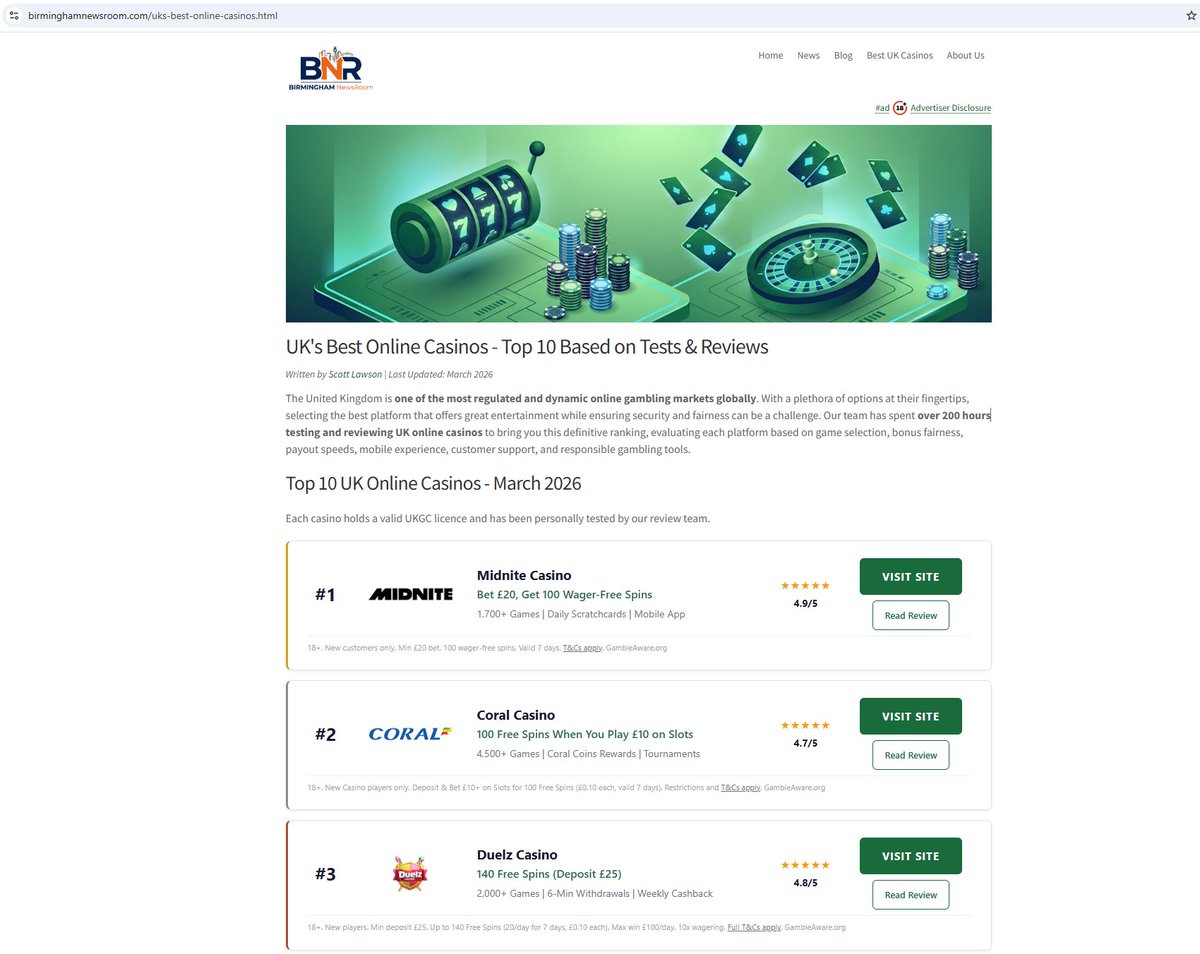
Google just dropped a spam update AND a core update in the same week... And from the competitive SERPs I'm mostly tracking, have just rewarded MORE black hat techniques 🎩 Exhibit A: Google is now rewarding FAKE parasites 🤣 - A FAKE local news site from my home city registered 5 years ago - Almost entirely AI-generated content - ZERO Backlinks (All Telegram Spam) - No Google News approval - FAKE editorial team, authorship or about us (NICE REAL WORLD EEAT VALIDATION) - ONLY launched casino affiliate pages at the end of January - Traffic has EXPLODED since ($400k/mo according to Ahrefs - Likely $1m/mo+ in commissions...) - Traffic value has TRIPLED in March alone during these latest updates... This is EXACTLY the type of page Google says its spam policies target: Third-party affiliate content on a site with no topical authority in gambling, no editorial expertise, and low quality generated filler content. And yet it's not just surviving the spam update, it's THRIVING in them, and seemingly doing the exact same during the core update too. At some point you have to stop listening to what Google SAYS the updates do and start looking at what the SERPs ACTUALLY show. I genuinely can't tell if Google's spam team doesn't know this exists (and a LOT more), or if their systems literally can't detect it because the root domain passes the trust threshold. The algo might be so far gone, they have really lost control of the black box and are just waiting for AI "to fix this" 🙃



@illyism ·
A $2B company kicked me out of their affiliate program after I met the founder IRL, no warning, just an email. Fair game, I guess they control their program. But they don't control my top 10 listicles 😏 So I: 1️⃣ Moved them to the bottom of my top 10 articles 2️⃣ Messaged their competitors 3️⃣ Negotiating a better deal + backlink Good to own the listicles!
 Watch video
@tibo_maker ·
2 affiliates are making money off a flaw in my product 😅 quick context: Outrank auto-publishes SEO content on Shopify stores and mentions your products in a really natural way it works great.. but honestly the setup is intimidating for non-tech people so these 2 affiliates started doing it manually FOR non-tech store owners they onboard the store, configure everything, content starts publishing on autopilot they've now made $10k+ doing this and it compounds: every store they set up keeps running, keeps ranking, keeps paying them (min $30/month/store in aff commission for life) love seeing this

@romanbuildsaas ·
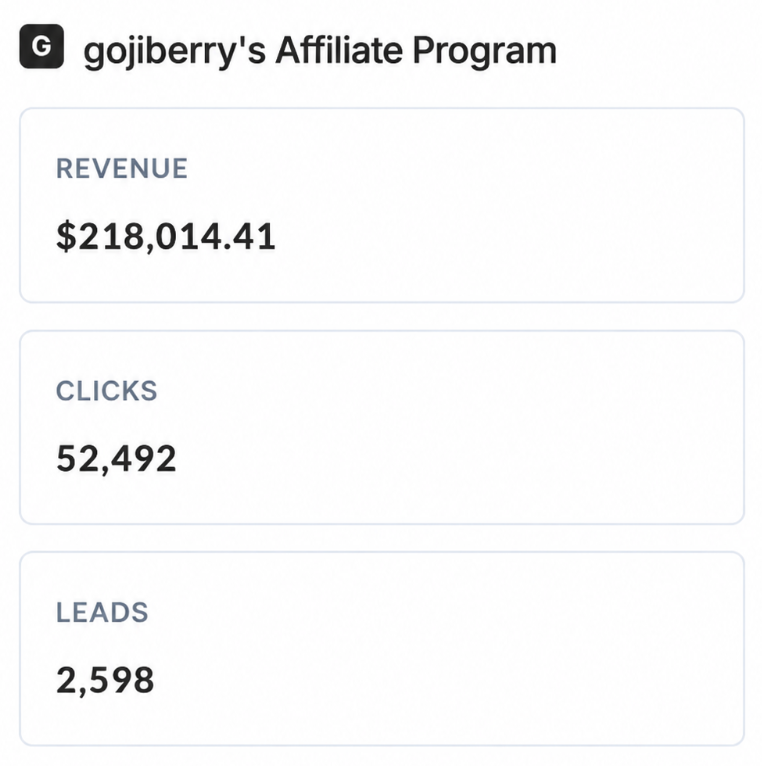
Our affiliate program has generated $218,014.41 in revenue. Pretty insane for something that started very simple. Most founders make partnerships way too complicated. They think they need a huge launch, a partner portal, a perfect commission structure, a big announcement, all of it. We didn’t have any of that at the beginning. We just asked: who already has the audience we want? For us, that meant people already talking to founders, sales teams, growth operators, and B2B teams. Then we made the offer easy to understand. What the product does. Who it helps. Why their audience would care. How much they get paid. That’s basically it. The playbook: 1. Find people with actual trust A creator with 5,000 people who buy from them is way more useful than a huge account with random followers. Reach is cool. Buyers are better. 2. Give them the angle Nobody wants to post “try this tool.” They need the story. The pain. The use case. The before/after. Why it matters right now. Make the post easy for them to write. 3. Make the payout worth it If they can make more from one sponsored post than from months of affiliate commissions, they won’t care. The math has to make sense. 4. Track everything Who sent clicks. Who sent signups. Who sent actual customers. Otherwise you’re just guessing. 5. Double down on the few that work Most affiliates won’t do much. A few will quietly drive most of the revenue. Those people are not “referrals.” They are a channel. The mistake is thinking affiliate = free revenue. It’s not. It’s borrowing trust from people who already earned it. And in B2B, that’s usually the hardest part.

@pierreeliottlal ·
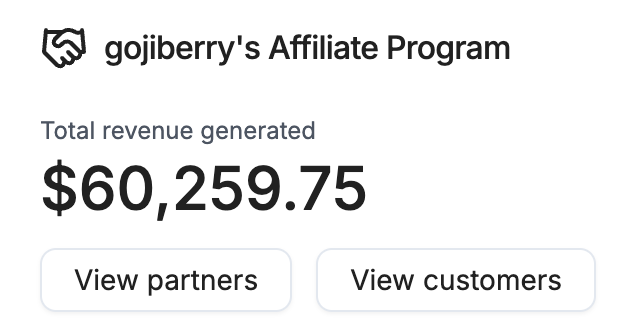
Affiliates have generated $60,000+ for https://t.co/X4xiTXDiU5 in the past few months. And the best part: - We never promoted the program. - One affiliate alone is bringing in $6K+ in new MRR every month. The downside: some affiliates are bidding on our own brand name, but we’re tolerating it for now.

@RossHudgens ·
The SEO career path of the future includes affiliate marketing. In the past, partnerships and affiliate would sit under paid teams, but within organizations where organic is by far the most dominant channel, having that sit under a “Director of Organic Acquisition" now makes the most sense. This would allow organic teams to collaborate seamlessly with partnership teams, aligning LLM strategy across the organization instead of siloing it within paid programs. The SEO skillset is deeply valuable to affiliate motions: being able to properly quantify and find search demand, as well as being able to accurately model the upside of LLM improvements are all valuable skillsets when determining appropriate budgets across services. Within companies where paid marketing is a significant spend or otherwise, affiliate is such a big part of the company’s revenue as to dwarf search, placing it under paid teams may still make sense. Organic social also has a place in this structure, too. Reddit and LinkedIn are best managed by social engagement teams, not SEOs. For those teams to be most aware of the influence they are having on LLMs, they should frequently collaborate with their search professional teammates. That’s only possible within an organizational design that supports it. Will your organizational design move towards an LLM future? Now might be the right time to argue for it to best drive performance at your company.

@neilpatel ·
Affiliates account for roughly 10% of ChatGPT ads on commercial terms. Adthena looked at 580 ads on commercial terms, and found that affiliates are the main bidders. If affiliates are buying, chances are, it is extremely profitable.


@jordantwestecom ·
I had an insane call with one of our clients yesterday!! Get this!!👇👇 He told me their UGC budget is now virtually zero. 🎬 Not because they stopped using video content... Because TikTok Shop affiliates produce it automatically. Every creator who sells your product makes a video. You just license the ones that actually convert. (We help with that) And here's the part that blew my mind... That affiliate content shot in someone's living room is now outperforming what used to be your number one creative on Meta. The $5K studio video. The talent fee. The photographer. The usage rights. And the crazy part is that you only licence the videos that you know already are performing on TikTok shop, so you already get the top 1% of videos. 💰 All of it... replaced by a creator who just loved the product. TikTok Shop didn't just change how brands sell. It changed who makes the content. And most brands haven't caught up TBH
@romanbuildsaas ·
Affiliates have generated $67,000+ for GojiberryAI. We’ve never really promoted the program. Some affiliates are making $7k+ per month in recurring revenue. People get affiliate programs wrong. Most of the time, a great affiliate program isn’t about tactics. It’s about having a product people genuinely want to talk about. No one wants to promote a tool that makes $0. Get traction first. Affiliates will follow.


@roasroi ·
affiliate income is completely unpredictable But there are ways to build a floor. treat your best month as an anomaly, not a baseline When you hit $8k, don't mentally spend $8k/month going forward. Bank the difference, keep your personal expenses fixed to your worst recent month. The affiliates who survive long term live below their average, not their peak. diversify verticals before you need to When one vertical dries up - and it will - you want something else already running. Testing a new vertical when you're broke and panicking is the worst time to do it. Build the second income stream while the first is healthy. track your 3-month rolling average, not monthly numbers Monthly income in affiliate marketing is noise. A 90-day rolling average is signal. It smooths out the spikes, shows you if you're actually growing, and stops you from panicking or celebrating too early. keep 3 months of expenses in cash, always Non-negotiable. Affiliate income can go to zero with one ban, one offer pause, one algorithm change. Three months of runway is the difference between pivoting calmly and making desperate decisions. (better 6, so 3 month is really the bare minimum) build an email list from your traffic Every visitor you don't capture is gone forever. An email list is the only traffic asset you actually own. Even a small engaged list gives you something to monetize when paid campaigns break down. the floor comes from systems, not luck The affiliates with stable income aren't necessarily better at media buying. They have more offers running, more traffic sources, owned assets, and backup plans.

@CJSlattery ·
On the other side of partnership ads are 19% lower CPMs, 2x CTR, and 58% lower CPAs. Here’s everything we learned about working with creators to achieve this: (note: I can't guarantee those metrics for you…but these are our blended figures for clients): 1. Follower count doesn't predict performance. We've had 2,000-follower partners outperform 200,000-follower partners when the smaller account had genuine engagement and actual product experience. 2. Under 2% engagement rate is a hard pass for us now. No questions asked.k naturally on camera, do they have a real relationship with the product, and does their audience trust them? 3. Under 2% engagement rate is a hard pass for us now. No questions asked. 4. For accounts spending under $50k/month, micro-creators in the 5k-50k follower range are almost always our best performers. They're cheaper, more authentic, and their audiences are tighter. 5. Real customer partners at $100-300/video outperform professional UGC creators at $300-700/video more often than you'd expect. 6. Cap affiliate commissions on subscription products at first order value. 7. You need at least 5 active partnership ads live for the algorithm to have anything to work with. At scale, we aim for 15. I'll continue to share learnings, but if you want us to run this for you, DM me. We're already doing it for dozens of brands.

@adrien_brbr ·
I emailed 130 newsletter owners to promote my SaaS. 40% lifetime commission. Good product. Clear pitch. 2 replied. Zero said yes. Tried TikTok creators too. Zero. "Build an affiliate program" is the laziest growth advice on the internet. Nobody tells you that finding affiliates is harder than finding customers.

@dudufolio ·
STOP banning affiliates for self-referral. It's counterproductive. I just got banned from an affiliate program for earning $1.90 on my own account upgrade. I'm an actual customer using their product in two upcoming launches. I clicked my own affiliate link to check where it lands, triggered the cookie window, a month passed and I upgraded my account, got a $1.90 commission, and got BANNED the next day. I was planning on talking about them when I launch, but now I'm just pissed at the principle of it that I don't even want to. They will remain on Toolfolio because I think its an awesome tool and i don't believe my bias should be reflected on Toolfolio. Two reasons this policy makes no sense: 1. Affiliates who are customers are your best promoters. Don't punish them, instead encourage them to self affiliate or even give them a generous discount. 2. If you're worried about abuse, raise the payout or referral threshold. Don't punish real customers that also want to sell for you.

@eugZolotarenko ·
Affiliates have generated €162,000+ for Outrank 😎 What this taught me: - good products create their own momentum - we didn’t have to push the affiliate program that hard, yet 961 people still signed up to promote it. It's a sign that the product is solving a real problem - when that happens, distribution becomes a result of product value, not just marketing effort So I think a lot of founders do it wrong... They try to engineer distribution before they've built something people naturally want to share. But when you build something that actually helps people: - people talk about it - people recommend it - people want to be part of it because doing so makes sense for them too.

@roasroi ·
This week a guy from out TG group reached out. Said he would like to give affiliate marketing a go, as his agency is quite demanding and this could be a good passive income source... "You just find a winning angle, link to offer and that is it, right?" Affiliate marketing is the opposite of "passive" (and sometimes even opposite of "income") Apart from "just finding" the right angle, you are constantly putting out some kind of fires somewhere. FB/G/TT has a bad day accs got suspended tracking is wrong attribution is wrong offer is paused (nobody told you) offer changed funnel (nobody told you) 50+ people started promoting the same thing your ads are great... so now there are at the top of every spy service your ads are stolen bank asks questions it never ends anyway, I explained that give what he told me - continuing with the agency would seem to be a better choice (given his unrealistic expectations of affiliate marketing)

@fatjoedavies ·
Don't overcomplicate this. AI doesn't have it's own opinions. It uses ranking 'listicles' or 'reviews' and summarises them. If a brand shows up multiple times across multiple listicles, it has a lot of confidence to show that brand in its answer. That's it. So, as a marketer, or SEO, the focus should be getting included in Listicles and reviews across the web. Sounds dated because SEO's can turn anything innocent into a dirty old tactic. But people love listicles. They are timeless. They are easy to digest (for humans and bots). They are easy to synthesise and summarise programmatically. I'm just telling you what's working + and you can verify it yourself at the sources being used in AI. You can do this by: 1. Outreaching to media outlets with ranking listicles. 2. Commissioning new listicles on relevant media If applicable, start an affiliate program, and ensure there's attractive incentive to show your brand. You can transcend 'tactics' by creating a more holistic marketing campaign that bolsters your brand and reputation - until your brand becomes an 'obvious' choice to include in lists. Think hubspot for CRMs or fatjoe for link building providers or ahrefs for SEO tools etc But I say, do both. Tactics while you wait for the world to catch up with how good your brand/solution is from your brand marketing.


@coreyhainesco ·
When affiliate marketing works for your SaaS, it's one of the best scalable channels out there. Variable cost. Compounds over time. Pays you in customers you didn't have to acquire. But "works" doesn't happen by accident. It takes deliberate program design. I've codified everything I've learned running affiliate programs across all my SaaS products (most notably TrueList — all powered by Rewardful) into a "referrals" AI skill. Full playbook with commission structures, recruitment templates, enablement, fraud prevention, the works. TLDR of the playbook I actually use: 1. Design the offer 30% recurring for 12 months is the sweet spot for most SaaS. High enough to motivate, low enough to protect margin. 60-day cookie window. Pay monthly. 2. Pick a tool that gets out of your way For Stripe-based SaaS: @getrewardful. Setup takes ~15 minutes per product. Syncs with Stripe automatically, every paid signup gets attributed without me touching anything, no transaction fees on top. 3. Recruit customers first, not strangers Your best affiliates already pay you. They know the product. They can write about it credibly. DM your top 10 power users before anyone else. 4. Enable them properly Swipe copy. Screenshots. A one-pager on who it's for. Most programs fail because affiliates have no idea how to write about the product. 5. Promote the program itself Page on your site. Mention in onboarding. Email existing customers. Most founders launch a program and never tell anyone it exists. Affiliate revenue compounds in a way most paid channels don't — customers who refer customers tend to be stickier themselves. Lower CAC, higher LTV, durable distribution once it's running. (Rewardful + the full skill linked below.)

@brock_mammoser ·
Ok I keep seeing this in the comments, "this looks like a pyramid scheme" It's not lol A real pyramid scheme is where people make money recruiting other people, not actually selling anything The money just trickles up to the top That's not what we're doing at all Everyone in our program makes 15% of sales The "tiers" are just VIP levels If you sell a lot, you get early access to new drops, new colors in advance, more communication from us That's it Nobody is getting paid to recruit anyone I'm pretty sure that would actually be illegal Just a normal affiliate program Sell product, make money

@Whiskeyatx ·
Every once in a while you come across something that's ironic. Today I saw an ad for ATO, which is affiliate takeover, a massive conference for affiliates, guys who are performance-minded, performance-driven. My wife flew out there today for her job. I fly out there on Thursday to speak at the conference on the backend of it. I just clicked the link on and ad, and I looked at their landing page. Mistake number one and mistake number 100: Having a CTA at the top of your page outside of Google search will increase your CTR and destroy your conversion rate Be an affiliate and push those customers down a funnel where they have to read all the shit and then click to buy Don't focus on vanity metrics; focus on dollar in dollar out


@volosatovde ·
TinyAffiliate now tracks Paddle payments @PaddleHQ The integration is officially available. Now you can attribute affiliate revenue directly from Paddle payments and understand which partners actually drive sales. Still building in public. More updates coming.


@danclachar ·
Smart SaaS companies turn happy users into a growth channel. That’s affiliate marketing. I earn recurring affiliate income by recommending SaaS I actually use. Not because I built the software. Because I use it for my clients and in my own online business, and I genuinely like it. I still don’t understand why more developers don’t build affiliate programs in from day one.
@illyism ·
Why your competitors get the #1 spot in every listicle: 👉 Affiliate deals Top 10? Anyone with a credit card Top 3? Better offer + bigger payouts You can pay for a listicle But you can't pay your way to #1 without a better product (or commission) Welcome to SaaS SEO 😅
@volosatovde ·
I have compiled a list of 50 examples of SaaS affiliate programs. Most of them follow the same pattern: • 20–30% commission • 30–90 day cookie window • monthly payouts • clear refund & clawback rules If you’re building a SaaS affiliate program, don’t start from zero. Benchmark first 👇

@1752vc ·
Founders sleep on affiliate programs. It's one of the lowest-cost growth levers you've got. The setup is simple: 1. Get a program live — Rewardful, or whatever tool you prefer. 2. Pay generously. 20–30% recurring for the first 6–12 months is the sweet spot. 3. Remove all the friction. Give affiliates plug-and-play assets: demos, screenshots, copy. Better yet, hand over the actual posts and videos that have already converted for you — no guesswork on their end. 4. Start with the fans. Your happiest users are the obvious first recruits. They're already sold. 5. Put it in front of people. Announce it to your email list, stand up a dedicated page, work it into your social rotation, drop a link in your footer, and get listed in the affiliate directories. 6. Go recruit on purpose. Reach out to YouTubers, newsletter operators, and directory owners and pitch them directly. Do the work to make it easy, and your best customers will do the selling for you.

@Nickeubanks ·
Affiliate marketing has a perception problem. People hear "affiliate" and think coupon sites and spam. The reality: the top 500 affiliates on @Digistore24 are sophisticated media buyers, content operators, and community builders running 7-figure businesses. The label undersells the category.

@thebrianjung ·
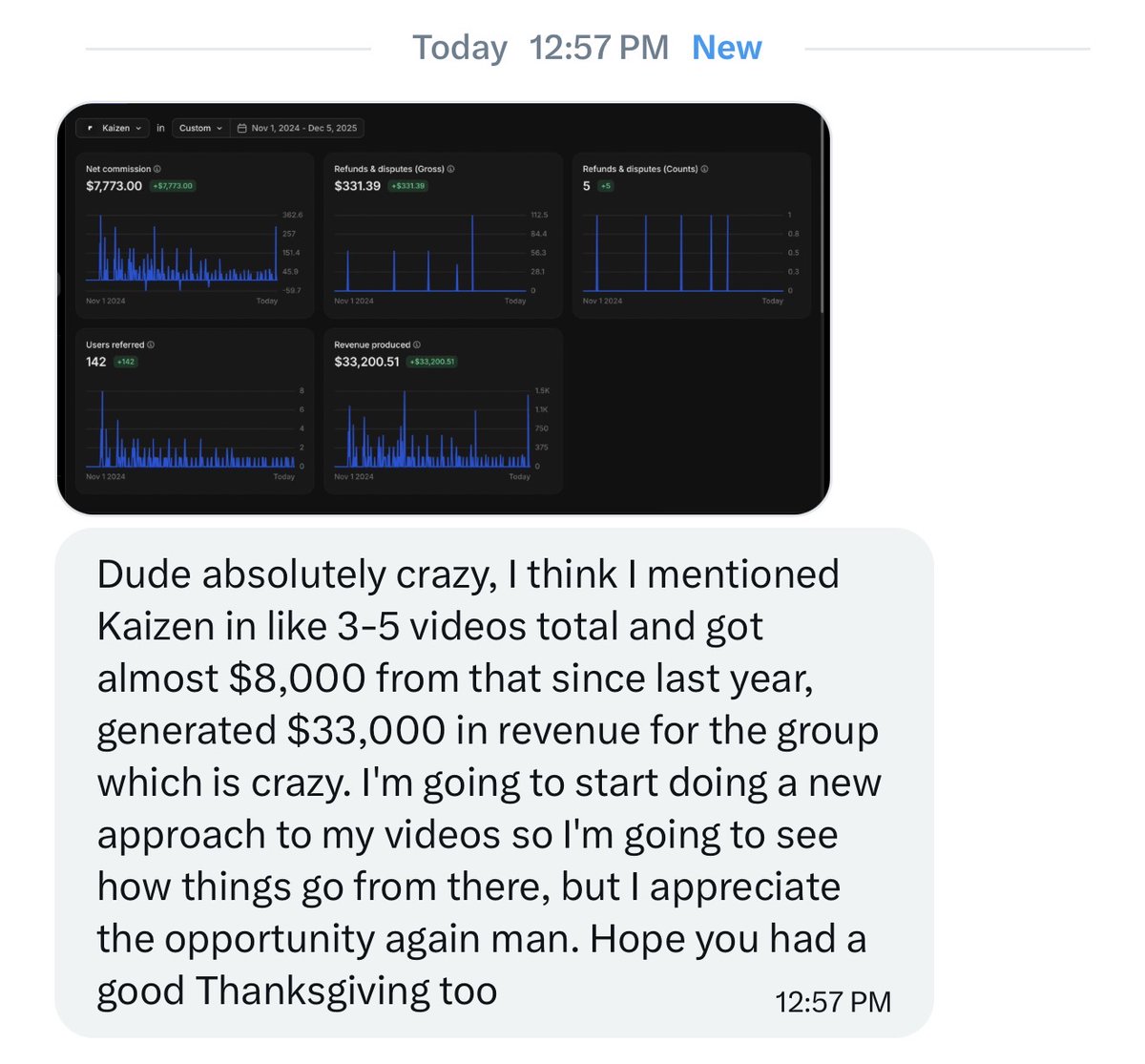
Just got this DM from one of our affiliate partners for @kaizen This person had just a couple thousand subs on his YouTube channel and generated $8k in affiliates since last year. Affiliates have always been one of my favorite ways to earn additional income. If you find a good program that gives MRR and has sticky retention it can add up.

@AlexEngineerAI ·
Most people using AI tools every day don't realize those same tools have affiliate programs that pay recurring commissions. Jasper, ElevenLabs, https://t.co/pJL9cngdW7, Writesonic, Beehiiv -- most have them. The way to find out: search "[tool name] affiliate program" or look for a footer link that says Affiliates or Partners. Many run through platforms like PartnerStack or Impact where you can see the commission structure before you even apply. The beginner play: pick 2 or 3 tools you genuinely use, create honest review content about them (a blog post, a YouTube walkthrough, a detailed write-up), and link through your affiliate links. When someone signs up, you earn. The difference between affiliate income that compounds and affiliate income that stalls is specificity. "I use this tool for [very specific task] and here is exactly what happened" converts. "This is a great tool, check it out" does not. You do not need an audience to start. You need one piece of very specific, helpful content on each tool. That content can rank in Google, get shared on Reddit, or get found in niche communities. The distribution is part of the work. Realistic timeline: 3 to 6 months before you see meaningful recurring income. But the content keeps working after you publish it. More AI income models at https://t.co/TjW1ATrxAO

@JackEllis ·
So it's a people self-referring themselves via our affiliate program kind of day. I've got a love hate relationship with our affiliate program. It's a small amount of people carrying the whole program. I think it's time to move to a "partnership" or "application only" approach 😂

@glenngabe ·
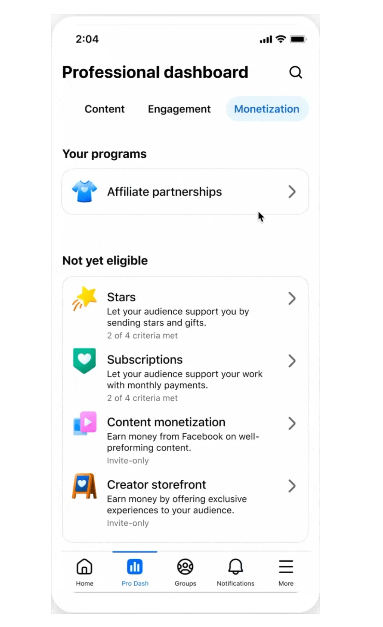
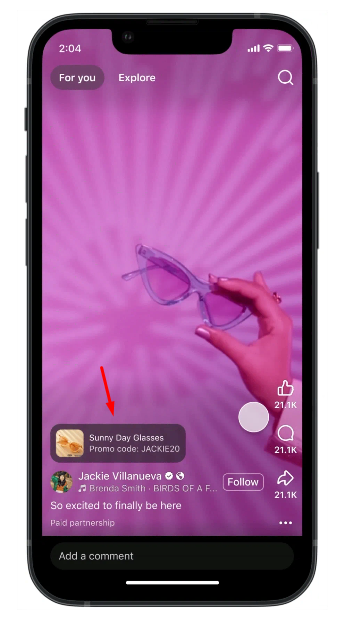
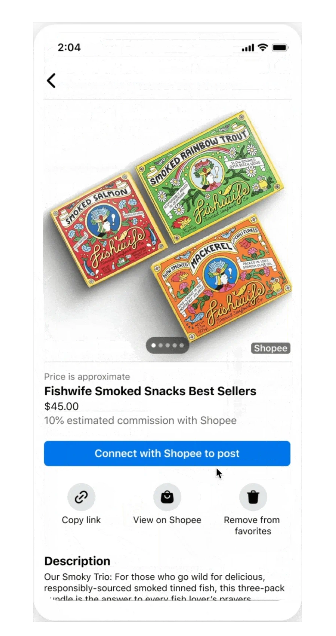
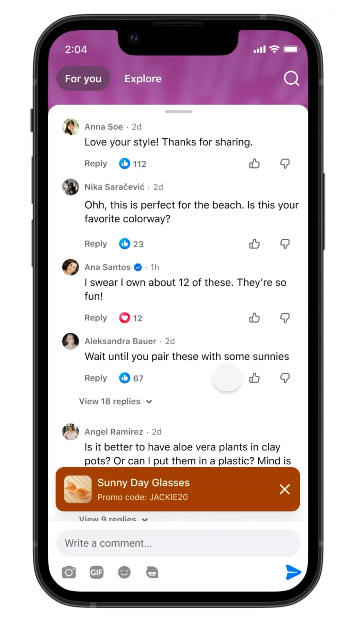
Focus on affiliate marketing? I shared the other day about Facebook's new affiliate partnership program that was announced on 3/26. The launch partners are Amazon and Shopee. One piece I missed was that eBay will be included in the coming months. Posts and Reels can include tagged products. https://t.co/8HsGnrS5DY
Best Affiliate Marketing tweets
Xholic studies what works in your niche, drafts posts in your voice and schedules them for the hours your audience is online.
$0 today · Cancel anytime
Browse all tweet collectionsKeep exploring