Find problems in the wild
Mine personal frustrations, operator experience, communities, reviews, and failed products for recurring complaints and improvised workarounds.
42%
Best tweets about Startup Ideas
Explore the best tweets about startup ideas, from customer problems and market gaps to validation, timing, distribution, business models, and execution.
Specific startup opportunities grounded in customer pain, market change, validation evidence, distribution, defensibility, and execution insight.
Original Xholic analysis
The conversation favors finding recurring customer pain over brainstorming novelty. Concrete proposals include niche SMB social-media services, home-maintenance coordination, and neglected vertical workflows. The key tension is validation: repeated complaints identify candidates, while payments, usage, and switching incentives offer additional tests. Posts frame AI as expanding feasibility, with distribution and defensibility remaining separate considerations.
72% of posts
All-time engagement
28% of posts
Published in 90 days
Conversation map
Mine personal frustrations, operator experience, communities, reviews, and failed products for recurring complaints and improvised workarounds.
42%
Use customer conversations, proposals, small experiments, and behavioral signals to distinguish urgent, funded problems from mild inconveniences.
36%
Assess market size, technology or economic shifts, incumbent weaknesses, competition, and why an idea is viable now rather than merely attractive.
32%
Turn previously uneconomic services and workflows into products as models improve, automation becomes practical, and software gets cheaper to build.
32%
Use domain expertise, firsthand product use, complementary skills, hands-on iteration, and existing assets to execute on opportunities others miss.
28%
Reach a defined niche through audience-building, direct outreach, trust, or local relationships; adapt proven products and open-source tools into paid offerings.
24%
Explore concrete openings in home services, small-business procurement, creator monetization, identity verification, robotics, finance, and other overlooked customer segments.
20%
Build focused tools for specific professions where spreadsheets, paperwork, manual coordination, and existing software leave costly gaps.
16%
Tone and stance
Performance benchmark
Posts with media make up 44% of this collection. Their median all-time score is 10.8, compared with 8.12 for text-only posts.
Format mix
Consensus and debate
Shared view
Find problems in the wild is the largest theme: 21 tweets (42%). Professional communities, personal frustrations, and manual workflows supply opportunity candidates—not demonstrated businesses.
Shared view
One proposal wraps Postiz in niche-specific social-media services, with approvals and audience-led acquisition. Other candidates include trade-specific field service and insurance-claim tracking. These are proposed opportunities, not verified demand or returns.
Shared view
A homeowner expresses personal willingness to pay for one contact coordinating maintenance and consolidated billing. The post also identifies local provider relationships as a potential scaling constraint; its sales projections are speculative.
Shared view
Validation appears in 18 tweets (36%). Posts recommend priced proposals, customer conversations, and attention to engagement signals rather than relying on stated interest alone. A reported photography-marketplace failure highlights the risk of customers bypassing the platform.
Open debate
Om Patel treats repeated independent complaints as sufficient validation. Ash Maurya distinguishes responses from payments, while another founder asks whether collaborator discovery is painful enough to overcome existing alternatives and cold start.
Open debate
The Postiz proposal locates margin in customer relationships around free code. The Altman excerpt warns against crowded, commoditized ideas without pricing power. These offer contrasting lenses on accessible launches and defensible businesses, rather than a direct exchange between the authors.
Open debate
The Altman excerpt favors good ideas that appear bad. Staysaasy limits a similar heuristic to consumer startups, arguing that strong enterprise ideas often sound obviously useful but boring.
What performs
AI-enabled opportunities have the highest supplied theme median all-time score at 19.85, versus 3.23 for specific market gaps and 4.59 for distribution. These scores measure post performance, not commercial viability.
QUESTION posts have a median all-time score of 52.57; LIST posts score 20.58 and TUTORIAL posts 14.5. These supplied format medians do not establish that asking questions causes stronger performance.
The Postiz tutorial scores 1632.69, or 160.38 times the supplied median. The dead-startup directory post scores 757.02, or 74.36 times the median. Neither engagement result validates the underlying opportunities.
Statistical standouts
Creator landscape
The five most represented creators account for 20% of the selected posts.
1. Alexa | Startup founder
@alexabelonix
2 posts
2. Ash Maurya
@ashmaurya
2 posts
3. Daniel Priestley
@DanielPriestley
2 posts
4. GREG ISENBERG
@gregisenberg
2 posts
5. Om Patel
@om_patel5
2 posts
6. Sergio Pereira
@SergioRocks
2 posts
Greg Isenberg's two posts have a supplied median all-time score of 1015.32. They pair professional-community pain discovery with a concrete niche-service packaging and acquisition playbook.
Ash Maurya's two posts emphasize priced proposals and small willingness-to-pay tests before major commitment. Their supplied median all-time score is 1.35, substantially below the leading Postiz playbook's score; this comparison does not establish the relative value of the advice.
Sergio Pereira argues that domain knowledge reveals where workflows fail and what creates value. Alexa's posts offer a related buyer-budget filter and a reported example of customer discovery with SaaS CFOs.
Since the previous snapshot
Themes, sentiment, stance, and post format are classified per tweet. All counts, shares, medians, creator concentration, freshness, and performance comparisons are then calculated directly from the published snapshot.
Xholic's all-time score compares engagement while accounting for reach, post age, and creator consistency. It is used for relative comparisons within this collection.
This report analyzes the exact 50-post snapshot shown below. AI identifies editorial categories and drafts explanations; all statistics are calculated from the snapshot, and every narrative claim is checked against cited posts before publication.
Best Startup Ideas tweets
Ranked 01–50

@gregisenberg ·
startup idea for you use postiz (20k+ github stars project) to sell AI social media content/management to 1 niche of SMBs. what's postiz? it's an open source social media scheduler with AI built in. basically buffer + AI and free to download. 1. self-host postiz. use codex/claude code to help you figure this out in an afternoon. 2. pick one niche. dentists, realtors, lawyers. can even go a subniche like orthodentists vs dentists. family law over of lawyers. 2. wrap it in their language. "AI social media for dental practices" 3. add "we write your captions with AI" as the hook. that's what they're actually paying for. 4. plug it into n8n, make, or zapier so posting, scheduling, and approvals run on autopilot. the client approves with one tap. everything else is handled. 5. charge $50/mo-$100 per seat. that's nothing to a business paying $2,000/mo for a social media freelancer. you're 25x cheaper and 10x more reliable because the system runs whether you're awake or not. win-win for everyone. 6. build one landing page. run one onboarding call. that's the whole sales motion. 7. build media to attract customers. post tips for that niche on X, tiktok, youtube. become the "social media for dentists" person. 8. reinvest profits to build other tools that serve that same niche. scheduling, reviews, patient intake. build those tools or plug in more open source projects. now you own the vertical. these businesses KNOW they need to post. they hate doing it. they will never find postiz on github. they will google "someone please handle my social media." that's you open source is the new wholesale. the code is free. the customer relationship is where the margin lives. you can do this as one person. you can do this as a two person team. you don't need funding. you don't need an office. you need a laptop, a niche, and the willingness to start. someone is going to do this. might as well be you.


@DeRonin_ ·
Somebody released a directory of 1,700+ dead startups (backed by YC) here is the link: https://t.co/sEdUPd5Dqv all of them have deep analysis of product inside and full funding story (in short, 100% product's description) many of these startups failed not because the idea was bad, but because they launched at the wrong time or were just grant cash grabs the ideas themselves are still worth drawing inspiration from (i've already found few ideas of my further startups btw) [ BOOKMARK ]
 Watch video
@gregisenberg ·
There are more startup ideas in a single 100,000+ person subreddit than in every Y Combinator batch combined. r/accounting, r/realtors, r/dentistry, r/insurance etc. Every post that starts with "is there a better way to do this" is a product waiting to be built with AI.

@Founder_Mode_ ·
Marc Andreessen explains the 3 Necessities for Start-up Success: "The general criteria for a successful high-tech startup, in my view, you see different sort of rules of thumb from different people. But the three big things you always come back to are, is there a big market? And by the way, that comes in two parts. Is there a big existing market that you think you can go after and sort of displace incumbents or do you believe there will be a new market that will be big? So big market. Is there a fundamental technology or economic change that causes you to basically justify having a new company? And that's really important. And the way I always think about that is, is there a 10X change happening in the technology landscape? Is something 10X faster or 10X cheaper or 10X better? And if it's not 10X, we as both VCs and entrepreneurs, we really have to ask ourselves like, is it really worth doing? Because it's really hard. I mean, it's really hard to start new companies. new companies generally shouldn't exist. Existing companies are usually pretty good at what they do. And so for a new company to exist, it not only has to like come in and go into business and bring a product to market, but it has to bring a product to market that's so much better than what already exists that it punches through the sort of status quo. And most customers in most markets are pretty happy buying from the current suppliers and so there has to be a real kind of edge on the thing and we look for that in either a technology change, usually a technology change or an economic change. which are often the same thing. And then the third is team. Is the team outstanding? And if you think about this as an entrepreneur, it becomes a question of the founding team. Some companies are solo founders and they can work, but generally most of us, like myself, we're human beings, we're mortal. You want to have a founding team of complementary skill sets. And so you want to have at least one super strong technologist, quite possibly more than one. Some of the best startups are actually more than one founding technologist and then it often helps to have somebody who's like a product or who's a market or sales person or has a sort of really good understanding of business on the team, certainly helps a lot. And so we sort of look at market, product, and team. And the reality is you need all three. I would say, interestingly, if you're going to compromise as an investor, if we're going to compromise on one of those, it would actually be the product. And the reason I say that is because a great market is a lot easier to make up for with iterative product execution than a poor market. Because the problem with a poor market, a small market, is even if you do a great job on the product, there just aren't that many customers. It's hard to ever get big."
 Watch video
@SahilBloom ·
There’s a huge opportunity in solving this problem: The friction of home ownership vs. renting. When you rent, you have a single point-of-contact for all problems. When you own, you have to somehow stay on top of the long list of recurring and one-off maintenance things. I’d gladly pay $500+ per month to have 24/7 access to a “home manager” who could be the single point-of-contact for my home. • Schedules all recurring services • Coordinates all one-off services • Consolidates all service costs into one bill It’s probably a local/regional business (probably hard to coordinate the service provider relationships at scale), but a huge opportunity nonetheless. Could be a franchise model with software at top and local franchises. It solves a real home ownership pain point, so I’d bet a young hustler could go door to door and probably sell 100 houses at $500 per month over a single weekend… I’m sure there are some people trying to do this, but I haven’t ever been pitched on it for my homes, so it clearly hasn’t scaled yet. It feels similar to the local/regional pest control business opportunity that has now become pretty saturated. What am I missing?

@ai ·
Haptic scraped all 64 episodes of @RoboPapers (@chris_j_paxton + @micoolcho) and ranked every pain point in physical AI research. The top 10, by mention frequency: 1. Scalable data collection 2. Generalization / zero-shot robustness 3. Dexterous manipulation 4. Teleoperation / whole-body data 5. Sim-to-real transfer 6. Evaluation / benchmarking 7. VLAs / foundation models for control 8. Human video to robot transfer 9. Long-horizon memory 10. RL scaling / offline-to-online Code keeps getting cheaper. Atoms stay expensive. That's the entire startup opportunity in physical AI right now. https://t.co/HZGBsk7OXS

@StartupArchive_ ·
Elon Musk explains how to get startup ideas When asked how he comes up with startup ideas, Elon responds: “I tend to think of things from a sort of physics standpoint… what’s the best way to accomplish something? And then pursue that. That’s also a good way to determine if something’s far from its optimum.” He gives rockets as an example: “You could reason by analogy and say the rocket is going to cost a certain amount because that’s what prior rockets have cost. Or you can say, well, what is a rocket made of? What are the material constituents? What do they weigh? What’s the cost per unit mass? And that sets the limit asymptotically for what a rocket can be. So if you can figure out some creative way to rearrange those elements into a rocket shape, then you can achieve a much better outcome.” He also thinks combining ideas from different industries is really helpful for innovation: “What have people discovered in one industry and can that be applied to other industries? That’s I think also a great source of ideas. But usually you just struggle on a solution and try a bunch of things. Most of them don’t work and occasionally one does.” Source: @VanityFair (Oct 2014)
 Watch video
@tibo_maker ·
ok the secret is PG is my business coach for the last 10 years every time I'm stuck on a product issue, a team decision, or whatever I go back to him (through his essays 😅 ) & find the answers these are the 10 essays (out of 231) I re-read at least once a year: 1. do things that don't scale the best founders don't wait for systems. they do things by hand, one by one, doing whatever it takes I still do this - every new product, I'm the first customer support rep. you learn more in a week of manual work than a month of dashboards. 2. how to start a startup three things kill most startups: the wrong people, building something nobody wants, and running out of money. fix all 3 & you'll probably survive sounds obvious - but most people don't do it 3. how to get startup ideas the best ideas come from living at the edge of a problem, not from trying to brainstorm your way to a billion-dollar market every product I've built started with something that annoyed me personally - not a market research doc 4. maker's schedule, manager's schedule makers need half-day blocks to do real work. a single interruption doesn't cost 30 mins, it costs the whole morning I took it further. no meetings at all - everything async on Slack 5. startup = growth a startup is defined by only one thing: being designed to grow fast. if you're not growing fast, you're a business, not a startup most people confuse the two. both are fine, but they require completely different decisions 6. how to do great work great work sits at the intersection of what you're naturally good at, what you're genuinely obsessed with & where there's real room to do something ambitious it's not about startups at all. it's about not wasting your life 7. the 18 mistakes that kill startups every way a startup dies traces back to the same root: not building something people actually want I use this as a checklist before launching anything. I've personally made at least half the mistakes on the list. some of them even twice. 8. founder mode the advice "hire good people & give them room" works for professional managers. it's often the wrong playbook for founders, who need to stay close to the details to keep the company alive standard management advice nearly broke two of my products. this essay made me feel less crazy for ignoring it. 9. life is short life being short isn't just a figure of speech. it's a filter. if something isn't worth the finite time you have, you should cut it this one isn't about startups, it's about everything else. I think about it when I'm about to say yes to something that doesn't actually matter 10. how to make wealth wealth isn't money. money is just how wealth moves around. a startup is a way to create real value for people, not extract it this one shifted my whole frame. building isn't about capturing a slice of something. it's about making something that didn't exist before -- it's the most valuable startup education on the internet


@om_patel5 ·
HOW TO FIND A VALIDATED STARTUP IDEA IN UNDER 4 MINUTES most people brainstorm ideas in their head or AI generate them and that's why most people build things nobody wants. here's what actually works: step 1: pick a niche go to any subreddit in the niche that you're building in. r/marketing, r/smallbusiness, r/freelance, whatever. step 2: scrape the posts/comments/threads pull posts and comments where people are venting about tools they hate, workflows that are broken, or tasks they're still doing manually. you want threads where someone says "i'm still using spreadsheets for this" or "why does no tool do X properly" built a Reddit MCP that you can use that DOES NOT require you to have a Reddit API or any external API the system is hosted on our servers for you to use which is insane (<30 second setup) step 3: feed it to an AI model take all those posts and comments. dump them into opus 4.6 or gpt 5.4, whatever you prefer. ask it to: > find recurring pain points across all the threads > identify which complaints show up in 5+ different posts > give you startup ideas based on problems real users described > link back to every post and comment it used step 4: validate the pattern if the same complaint shows up across multiple subreddits from different people who don't know each other, that's the signal that you should build it. now how do you do this? I broke down how to do each step (1-4) in UNDER 4 MINUTES from how to SCRAPE the posts/comments easily using a Reddit MCP + how to use it to find validated ideas
 Watch video
@StartupArchive_ ·
Sam Altman on what startup ideas actually work “What you are looking for are good ideas that look like bad ideas. These are things that you can articulate why there’s a reason this is going to be huge that most of the world is missing. Unfortunately, what most people end up chasing are bad ideas that look like good ideas. I would say this is where 90% of all angel capital in the startup ecosystem goes.” Sam elaborates on why founders and investors alike make this mistake so frequently: “The one common way that people make this mistake (pursuing bad ideas that look like good ideas) is chasing the thing that worked two years ago. If you ever find yourself doing that, be very skeptical. If you find yourself tempted to invest in a company where there are hundreds of others working on the same thing, be very skeptical. If you find yourself tempted to invest in something that the founders work super hard to convince you is not going to be a long-term commodity, be very skeptical. It is absolutely true that you want something that has real pricing power that comes from a network effect, a moat, a barrier to entry, whatever it is. But when that’s true, it’s so obvious. So the more a founder tries to sell you on why they’re super differentiated and why they have this long-term competitive advantage, the more skeptical you should be.” He continues: “I have found this framework of asking, ‘Is this a good idea that seems bad? Or is this a bad idea that seems good?’ has helped me make good decisions a bunch of times.” Source: @ycombinator (Mar 2018)
 Watch video
@nateliason ·
1. Expertise 2. Audience 3. Product This is the theory & model underlying Founders School and why we believe teenagers can become millionaires. 1: Expertise With the Internet + AI anyone can develop expertise on their own. They do not need a degree. Rather they need good research skills and a habit of turning what they're learning into artifacts (e.g. essays, posts, videos) that consolidate their knowledge. An active, not passive process, through which they're developing elite knowledge in a subject at record speeds. Not "studying." 2: Audience You do not need credentials in a subject if you can build an audience in it. The audience is the credential. Audience building is also how you test that you're developing real expertise. If you are not able to synthesize interesting insights or perspectives on a topic, no one will follow you or engage. Finally, an audience is how a teen with no capital can bootstrap a million dollar business. No need for insider connections or outside capital. 3: Product Through developing expertise and getting exposure to the market via your audience, product opportunities will naturally emerge. Most teens have bad startup ideas because they have no expertise, and no exposure to the world beyond their school. But these are solvable problems. Teach them how to develop deep expertise. Teach them how to build an audience around their knowledge. Then help them identify the best opportunity that emerges, and support them as they build a business from it.

@amix3k ·
AI is giving software companies massive leverage. One response is to reduce headcount while maintaining the same output. Another is to keep building and attempt things that previously required a much larger company. At Todoist, we’re now 108 people, the largest team we’ve ever had. We’re also taking on two major new challenges. One of them is Todoist Automations. Without AI, we wouldn’t have attempted it at all, because automation is an incredibly hard problem to solve well. Yet our research and customer feedback revealed a huge gap: many customers want to automate their work, but only around 10% actually do. The opportunity is enormous. We’re approaching it with the same craft we bring to Todoist. The entire interface is built around natural language. On the engineering side, we’ve created a workflow engine that can run automations affordably and at scale. And it won’t be limited to Todoist. People will be able to automate work across Gmail, Notion, Outlook, spreadsheets, and many other tools. I’m not sharing this to promote what we’re building. I’m sharing it because it’s a concrete example of what AI is making possible and what I expect many software companies will do next. The result for customers will be far more choice, much stronger competition, lower prices, and rapidly improving software. And because almost every industry now runs on software, the impact won’t stop at tech. It will raise the productivity and efficiency of entire markets and society as a whole. --- And of course, this would not be a full post if I didn’t include a little leak of the direction we are going! 😁


@dharmvir_ ·
If you want to build your own startup, explore these websites: • product Hunt - see new products every day • Indie hackers - founders sharing what they're building • reddit - real problems people talk about • hacker news - discussions around tech & startups • failory - lessons from failed startups • G2 - discover popular SaaS tools • crunchbase - funded startup ideas • google trends - rising search topics • starter story - breakdowns of real startups

@itsolelehmann ·
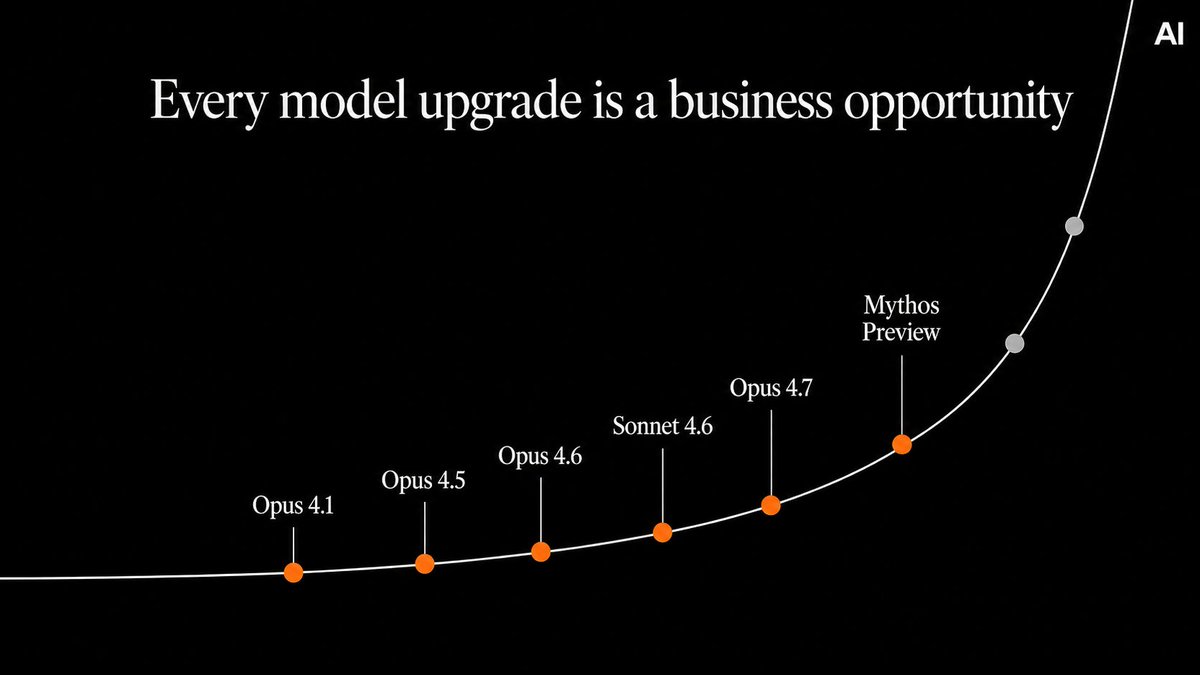
some anthropic alpha from yesterday: "you should be building things that don't even work yet." their idea is simple: claude gets meaningfully smarter every few months. and every time it does, ideas that used to fail suddenly work. but the people who capitalized first already had the idea built and waiting. for example, 12 months ago none of these workflows really worked: > cold outbound that runs itself for a week > 200 pages of board docs turned into a polished memo > daily competitor monitoring that pings you when something changes > 100 ad variations created in figma and pushed to facebook on its own today all 4 work because the model capabilities caught up model upgrades are a business opportunity. now think about today... there's a bunch of stuff that still fails, but eventually will work: > agents that run for weeks without you ever checking in > your full inbox replied to in your voice with no review needed > a full sales cycle from cold pitch to closed deal with no human > a saas that ships, sells, and grows while you sleep so here's the playbook: 1. keep a list of ideas that fail on today's claude 2. write a simple eval for each one (ex: "reply to 10 emails in my voice, get 8 right") 3. rerun those tests every time a new model drops 4. first one that passes, ship it that week tldr: be more ambitious go build shit that doesn't even work yet because one day it will, and you'll be the first to capitalize on it "you mustn't be afraid to dream a little bigger, darling"

@XenBH ·
One lens I keep coming back to for startup ideas: things currently only available to the wealthy that new technology can make universal. Before Uber, only the wealthy had a private driver. Before Ford, only the wealthy had a car. In the 80s, a mobile phone was a Wall Street status symbol. Now 5 billion people have one. I think one of the biggest examples of this pattern will be finance. Right now, mainly wealthy people: • Borrow against their assets • Use derivatives to manage risk • Get access to venture deals • Hedge against inflation • Have wealth managers and tax advisors That's now changing. AI handles the advice layer whilst crypto handles the access layer. Together they open all of this up to everyone. We've barely started. Feels like a very large demand space for builders.

@Mike_Scully_ ·
Reddit is basically free market research. Search r/SomebodyMakeThis. People are literally posting problems they want solved. Find one that sounds painful. Open Claude Code. Build the first version in a weekend. You don’t need a genius startup idea. You need a real problem, a simple tool, and the ability to ship fast.

@Tocelot ·
there's a rare skill to how the best founders gather user feedback. it's not enough to just ask customers what they want - the best founders also listen for what customers don't say delayed replies to your emails. product engagement only when you nudge. the service goes down and they don't notice for 2 days. these are all signals you're not solving the right problem on the other hand - lots of bug reports being filed for a feature you didn't think was that important. an offhand comment about a loosely related capability leads to a flurry of follow-up questions in a meeting. these signal you might be onto something real this skill matters more than ever today and is a true test of entrepreneurial judgement. with AI, it's easier to pivot than ever before. what used to take years can now ship in weeks. this means spending months going after the wrong problem is very costly a few other tactics i've noticed the best founders do with customers: they focus on problems, not solutions. customers love prescribing solutions (the "faster horse" fallacy) but the real job is understanding the root problem and how AI can solve it today and 6 months from now they also don't stress over early pricing. get in the door, focus on learning. an extra $5-10k ACV here and there is noise compared to finding the right problem to solve. remember - early customers aren't just revenue, they're also your most valuable research!

@sickdotdev ·
I’m validating a startup idea and need brutal honesty. Idea: a platform to help people find collaborators for real projects. Users create profiles based on skills, interests, and what they want to build. The platform matches them with relevant people, projects, or small teams. Target users: - college students - beginner devs - indie builders - hackathon participants - early-stage creators My concern: is this actually a painful enough problem to make people adopt a new platform? People already use LinkedIn, Discord, Reddit, Telegram, hackathons, college circles, and private networks. So I’m trying to understand: - Is finding collaborators a real pain point or just a mild inconvenience? - Why would anyone switch from existing platforms? - What makes them come back after day 1? - Does this die because of the cold-start problem? - What’s the smallest experiment you’d run before building anything? If you’ve built projects, looked for cofounders, joined hackathons, or run communities, tear this apart. I’d rather kill a bad idea now than waste 6 months building it.

@hridoyreh ·
How to validate an idea using Reddit: 1. Search the Problem Go to Reddit and search for the pain point (e.g., "hate managing invoices" or "can't find good freelance designers") your idea solves. And set the filter to Top / All Time. 2. Read the Posts Like a Heatmap If you see dozens of threads complaining about the same problem across multiple subreddits, that's a real problem. Then, we all realize there is no solution or only a partial one. 3. Check the Upvotes / Comments High upvotes + many comments = strong pain, active community, real demand. Low engagement = niche problem or weak urgency, people don't care enough 4. "Someone Should Build This" Signal Search phrases like "I wish there was an app", "why doesn't X exist", or "I'd pay for...", these are goldmines. Users are literally handing you validated ideas. 5. Spot the Workarounds If people are sharing DIY solutions (spreadsheets, manual processes, duct-tape tools), that's a strong signal. This means the problem is real and no good solution exists yet. 6. Find Targeted Subreddit Check which subreddit the complaints live in. That community = your first customer base. You can post there, run surveys, or do direct outreach.
 Watch video
@mal_shaik ·
i've noticed in the tech sf founder circle ppl mostly build for social status within the bubble. meaning even if its not something they are actually interested in, or have some unique insight on, they will persue it just cuz it sounds cool to their founder friends. everyone has a unique advantage in their life that they can use to find some niche problem to solve instead of hopping on the next trend.

@Layton_Gott ·
Stop asking "what should I build?" Look at what annoyed you last week. Then check if other people are annoyed by it too. If they are and they're already paying for bad solutions, you found your SaaS. Scribe exists because my brother and I got tired of writing content manually across platforms and we weren't the only ones. Your best product idea isn't on some startup ideas list. It's in your own frustration plus proof that other people share it. Find the pain. Validate it. Build the fix. Ship it before someone else does.

@DanielPriestley ·
We're not just looking for a good idea - we're looking for a Founder Opportunity Fit. This nuanced concept in entrepreneurship means identifying an idea that aligns with your origin story, case studies, and background. Focus on finding something that feels like the right next step for you.
 Watch video
@alexabelonix ·
If you’re brave enough to build a startup, here’s what you should know. Day 182: Startup idea filter: Find an industry where people still do important work in a stupid way. Then ask: → why is this still manual? → who suffers from it daily? → who has budget? → why has nobody fixed it well? Boring workflow pain is underrated.

@Hartdrawss ·
I've sat across 100+ founders in discovery calls. the ones who burned $8,000+ and never launched all couldn't answer one question ! is someone's bonus, reputation or revenue tied to this problem right now? a founder from Singapore came to us wanting to build Uber for photographers. booking platform, all levels, end to end. we asked him that question before opening figma. he couldn't answer it. we built the POC anyway. it failed but not because the product was bad. photographers moved off platform the moment they had a direct relationship with the client. availability was impossible to standardise. the marketplace dynamic that makes Uber work doesn't exist when your supply side has creative preferences and repeat client relationships. the problem wasn't painful enough to trap both sides in a platform. here's the filter i use now before we build anything at DreamLaunch: - is there a metric someone actually checks every week because of this? if it's not sitting in a spreadsheet somewhere, it's probably not a real pain - does fixing this help someone personally - make them look good to their boss, get them closer to a promotion? if it doesn't move anyone forward at work, it won't move revenue either - is there actual money set aside for this every quarter? if the problem is real but there's no budget near it, you're not selling a solution. you're selling hope vitamins get "this is so cool, let me think about it." painkillers get "can we start this week." if your product moves a number someone checks every monday morning, you have something. if it just makes people feel better, you'll be stuck pitching forever.


@Joey_Walker82 ·
No-code plus app store data is a product idea cheat code. So I spent months studying how top indie founders validate ideas before writing a single line of code. Here are 8 must-know validation moves to find your next winning product: 1. Mine 1-star reviews for repeated pain points 2. Search "this app needs" in review sections 3. Track category rankings weekly - rising apps = rising demand 4. Look for apps with high downloads but low ratings 5. Find features users beg for in comments 6. Check update logs - devs reveal what users complained about 7. Build the fix, not a copycat 8. Launch fast, iterate with real feedback The idea is already out there. Builders just need to know where to look.

@forgebitz ·
if you want to find good business ideas, work at a good business they are constantly looking for ways to grow that is where the problem/solution space of successful startups is
@om_patel5 ·
THE TOP 10 PROBLEM SOLVING STARTUP IDEAS RIGHT NOW i analyzed over 1 million complaints, negative reviews and discussions across reddit, capterra, g2 and the app stores to find them every idea is tied to a documented problem with real people asking for a solution, scored by severity out of 5 the highest scoring gaps in the entire dataset: > field service app for one trade, severity 4.5. plumbers and hvac techs still run jobs on text messages and paper calendars > tenant maintenance tracker, severity 4.5. right now its a black hole of emails and texts > real time inventory sync for small retailers, severity 4.5. they lose $20,000 a year to out of stocks and mismatches > lease renewal tracker, severity 4.5. property managers lose 5 to 10 hours every renewal cycle > insurance claim status tracker, severity 4.4. small practices burn paid staff hours sitting on hold the pattern across all 10 is the same every single one attaches to a problem somebody already pays to solve badly no current spend is a red flag, not a green flag and the winning move is almost always going vertical instead of general generic ai note takers are dead, 15+ funded players already. but building the one document a specific profession dreads, a soap note for a therapist or a site report for a contractor, that gap is wide open heres the rule i use: when five people in five different threads describe the same problem in their own words, you dont need to validate it any further full breakdown of all 10 ideas is in the video
 Watch video
@CichyKrzysztof ·
If you have no idea what to build, check this out. Y Combinator has a page where they share startup ideas and problems they think are worth solving right now. It's called Requests for Startups. Basically, YC is telling founders: "Here are some areas we think have potential. Go build something." Could be a good place to find your next SaaS idea instead of trying to come up with something completely from scratch.


@staysaasy ·
The canonical observation that "the best startup ideas sound dumb at first" really only applies to consumer startups. I think the best b2b startup ideas generally sound like a great idea at first. Almost every steong enterprise startup I've heard of sounded boring AF at first but I can't think of any that actually seemed like an obviously bad idea. Consumer startups are like art and enterprise startups are like airport restaurants.

@AtSynct ·
Do you actually use what you're building? I've got several projects ... some of which I actively use and some of which I ... don't. We all know that using your own product helps you find bugs, improve usability, etc. But I've also noticed that it brings a different level of caring. I WANT to fix bugs in the products I also use. I care to improve the UX/UI. I worry a lot more about whether a new interaction will be the right one. For stuff I don't use myself ... it's not that I do not care ... it's that I care more about the stuff I do use. It's natural, but it also reflects in the results. I think that's why the standard advice in finding a problem to solve is to work in an industry and then solve the problems you run into yourself. And I think that's why a lot of the actually-successful projects we talk about in the indie hacker community are projects that solve our own issues.

@alexwtlf ·
Startup idea: Prediction market for startups. People bet on whether your startup succeeds or fails. The market assigns your startup a probability of success. Founders get validation. 1-3% of betting volume goes directly to the startup.

@alexabelonix ·
If you’re brave enough to build a startup, here’s what you should know Day 149: Nicholas did not start with code. He started with 20 calls with CFOs of SaaS companies to understand where international expansion actually hurt. That is how real startup ideas get found.

@ankrgyl ·
one of the ironies of commercial open source software is that it's usually harder to self-host than proprietary software. if it weren't, there would be no business opportunity.
@DanielPriestley ·
There’s a massive business opportunity I’m seeing. Big companies put our requests for proposals and tenders when they spend £50k+. Historically only larger consulting and outsourcing firms can wade through the tender process. This “paperwork moat” has allowed them to charge a premium and secure endless contracts. Often these contracts are for pretty simple things like basic training, support services, solving basic IT issues … it’s not the work that’s hard it’s the paperwork to win the work. It’s also highly paid. Often these contracts are £50k to £250k for things a small business would just do themselves for next to nothing. But … the paperwork industrial complex keeps small companies from bidding. AI changes all of that. Using Claude a small business can indeed win these lucrative contracts. The same is true for winning awards. Many small businesses are brilliant at what they do but suck at proving it. If they could jump through the hoops of entering for awards they’d win and have an easy way to prove their worth. AI is making this easier too. In fact we’re about to launch a platform that makes it super easy. It’s looking so good. Check it out - https://t.co/wjsC7uGGpe

@rcmisk ·
Paul Graham said, "The way to get startup ideas is to look for problems, preferably problems you have yourself." Validation is not just research. It means shipping something real. You learn through feedback, data, and traction. Build to discover, not to confirm.

@lottsnomad ·
$500k in exits, three apps prayscreen. magic music. bible buddy. none of them started as good ideas they all started as something that already worked, with one variable changed: • the audience • the price • the platform find proof before you find originality

@_baretto ·
Big UK business opportunity 💰 I spent hours looking for a solution but couldn't find it. 💡Idea: High quality custom merch printers. Key features: 1️⃣ High quality - pick the best possible t-shirt, hats, water bottles etc. I want merch people wear outside not to bed. 2️⃣ Don't make me think - best but limited options so I don't need to make decisions. I don't want to spend 30 mins picking the best t-shirt quality. 3️⃣ Fast shipping - get it to me within a week Honestly couldn't find a vendor like this and Im not alone. Someone please build it 🙏

@SergioRocks ·
The best startup ideas are usually hiding inside existing businesses. Not in brainstorming sessions. In everyday operational pain. The spreadsheet everyone depends on. The workflow nobody likes. The process that always slows things down. Most people ignore those things because they feel “normal.” But pperators don’t. They see: - Where time gets wasted - Where mistakes happen repeatedly - Where people are compensating for broken systems manually That’s where the opportunity is. AI didn’t create new problems. It made it possible to finally turn existing workflows into software. That’s why some of the best Founders right now are not traditional tech people. They’re operators who deeply understand how an industry actually works. And can finally build around it.

@bricexeth ·
Stop waiting for decentralized startup ideas. The core protocols of the new internet are just the old ones rewritten for trustlessness. Here is a Web3 build list: build your own ENS-based url shortener build your own P2P encrypted chat server build your own on-chain password manager build your own decentralized search engine build your own distributed oracle cache build your own cross-chain message queue build your own trustless api gateway build your own p2p reverse proxy build your own DePIN load balancer build your own modular database build your own subgraph query engine build your own content-addressed key-value store build your own reputation-based recommendation system build your own sovereign vector database build your own CRDT collaboration engine build your own open-source smart contract search engine build your own decentralized ai inference server build your own TEE-based serverless runtime build your own zk-verifiable container runtime build your own IPFS-backed package registry build your own on-chain observability stack build your own consensus metrics system build your own immutable logging pipeline build your own event-streaming rollup build your own distributed validator task queue build your own multi-chain data pipeline orchestrator The blockchain itself is a productive project list.
 Watch video
@tarunmallappa ·
If you are a founder iterating on a deep-tech problem, watch this interview. The manner in which this founder frames the deep-tech iteration journey is just simply brilliant and will give any deep-tech founder the mental wherewithal to weather the difficult journey. (I have tried to capture the essence here but listen directly to the founder. Watch from 12:41 to 18:00.) TL:DR 12:41 : How did you take such a big leap of faith ? Founder: Engineer + Economics both have to work; And if the economics are clear, taking engineering bets is a very low-risk approach because everything is in your control. You just need to put a solid team together and keep iterating on the problem to solve. In a non-deeptech venture, the customer need may not be very obvious and hence the adoption cycles may go a long way however companies solving in a deep-tech domain are actually solving for a customer need. IN the founders' words - deep-tech companies are delivering magical experiences at disruptively low price point; So many nuggets from @Arun_Vinayak_S who is building a full-stack energy platform to support the shift towards electric mobility in India. Credit: @LightspeedIndia @kumarharsha2212
 Watch video
@ashmaurya ·
The fastest way to validate a B2B startup: Don't build a product. Build a proposal. Write a one-page description of the outcome you'll deliver, the price, and the timeline. Send it to 10 potential customers. See who responds. Responses are signal. Payments are proof.

@kylegawley ·
Paid ads are a terrible strategy for validating a new startup idea Ads work when: 1. You know who your customer is 2. You have clear messaging 3. Your landing page converts You don't have any of these things on day 1 This is what I do instead: 1. Go to LinkedIn 3. Search for job titles of your ideal customer 4. Send 100 connection requests with no note 5. When they accept, send a DM 6. Ask them if they have a min to answer a few questions 7. See if they have the problem you're trying to solve Most people will respond if you just ask for help DO NOT SELL in your opening message, just ask for help You're there to learn Do people have this problem? Yes → ask if they'd pay for a solution. You will get lots of useful data this way. Then present your solution and ask for the sale.

@sylviahchannel ·
💡Did you know Slack reportedly came from a video game that failed? Before Slack became a workplace communication platform, its founders were building an online multiplayer game called Glitch. The game was shut down after failing to become commercially sustainable. But the project had produced something valuable. The team had built its own internal communication system to share messages, files and information while developing the game. It solved a genuine workplace problem so well that the team turned it into the product that became Slack 🔥 A business that didn't take off may still leave behind valuable technology, customer insight, specialist knowledge, processes, or tools. Before discarding everything, look for what worked unusually well, what people relied on, and what solved a problem beyond the original idea. The strongest business opportunity may be the useful asset you had to build along the way. 👉 Follow @bMightie for more founder intelligence for the solo and bootstrapped business journey from day zero to takeoff. #gotomarket #startupstory #entrepreneurship
 Watch video
@TJLarkin23 ·
Was a speaker on a 90min mastermind call yesterday (about meta ads) with 25 multi million dollar biz owners in the local media space AI only came up in the last 20 minutes or so, from a speaker teaching them about connecting using Claude to streamline analytics I can tell you that everything you're hearing about how far behind most smb owners are is true, and that many of them would pay for help to learn it and incorporate it The real problem to solve is sales And best way to do that is building trust, because that will your biggest barrier to sales My version of solving that is via in person events Regular Ai networking events, free or cheap in person AI 101 trainings And potentially soon: curated biz owner dinners I've already cracked the code on this one via meta ads, doing it for someone else Can't recommend getting out there in person as much as you can

@TimStodz ·
The biggest business opportunity in history is currently being ignored. 🏠 51% of U.S. wealth is owned by people 65+. While every startup fights over the attention of Gen Z, the Boomer market is ready for innovation in health, leisure, and home services. Don't build for the people with the most social media influence. Build for the people with the most capital. 🛠️
 Watch video
@theinfluence360 ·
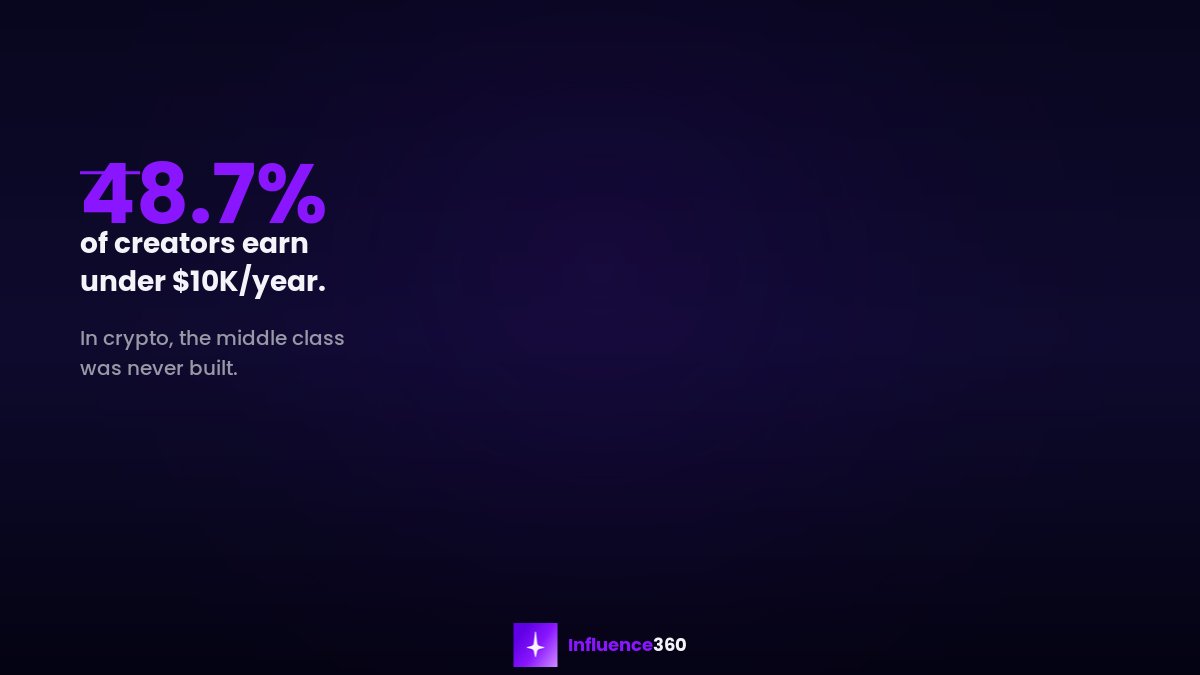
New data on the creator economy: 48.7% of creators earn under $10K/year 45.6% earn $10-100K 5.7% earn above $100K A real middle class is forming in Web2. Almost half of all creators now earn a livable side income. Brand partnerships account for roughly 70% of total creator income. In crypto? That middle class doesn't exist. There's no tiered brand deal structure. No recurring ambassador programs. No performance-based pay that rewards consistency over follower count. You're either a top-tier KOL who got booked in the last cycle. Or you're a mid-tier creator with no infrastructure to monetize. Web2 creators have platforms, agencies, and standardized rate cards fighting for their attention. Web3 creators have a Telegram DM and spreadsheets. The infrastructure for mid-tier crypto creators to build sustainable income was never built. And right now, with campaigns at an all-time low, those creators have zero options. That's not a feature gap. That's a market gap.

@nikillinit ·
Fake doctors online are a growing problem and I think I know how to solve it In the last couple of years, AI has made it easier than ever to fake being a doctor and social media amplifies it This stems from the fact that we don't have a digital identity layer than can actually verify if a person that says they're a doctor has a credential In today's post, we walk through - Some specific scams that are using fake doctors - Suggestions on a system that can fix it - Startup ideas that could exist only if you had a digital ID layer full post in the next tweet
 Watch video
@SergioRocks ·
Most industries are full of software opportunities. They just don’t look like “startup ideas.” They look like: - Extra headcount - Manual reviews - Spreadsheet-heavy workflows - Teams compensating for broken processes That’s what makes this moment so interesting. For the first time, non-technical operators can realistically turn those workflows into products. Without needing a huge engineering organization upfront. The important part is not the technology. It’s understanding the work deeply enough to know: - What should happen - What usually goes wrong - What actually creates value for the customer That’s the hard part. And that’s why domain expertise is becoming such a strong advantage in AI startups. The workflows already exist. The opportunity is turning them into automated AI-assisted products that companies will pay to use.

@GJarrosson ·
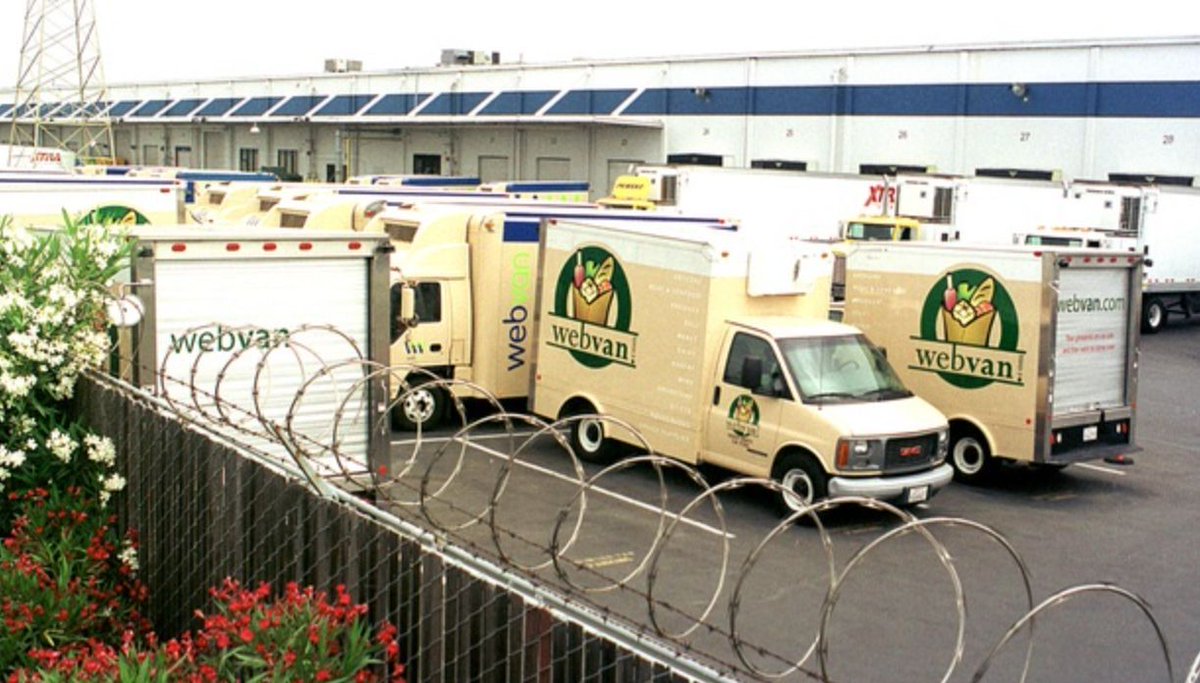
You only get three or four real startup ideas in your life. Choose the right time to launch them. Webvan was grocery delivery in 1999. Great idea. Still burned $800 million and died. The timing was wrong Smartphones didn't exist yet, and GPS wasn't in everyone's pocket. The startup graveyard is full of stories like these….the right ideas built at the wrong time. The question I ask founders is “Why is this solvable today?” -Did regulation change? -Did a big incumbent exit the market? -Did customer behavior shift? Or is it just new AI capabilities that make this exist at all? If you can't answer that, the timing probably isn't right. The founders who win in 2026 aren't just finding the right market. Healthcare has an 18x gap between market size and AI usage. Finance has a 13.8 point gap. The gaps exist. What's not obvious is whether right now is the best time to build.
@ashmaurya ·
You don't need to quit to start. Most first-time founders wait until they have permission, savings, or a co-founder. That's not preparation — that's procrastination dressed up in practical language. A weekend validation sprint costs nothing but time. 10 customer conversations. One clear problem. One rough test of willingness to pay. That's not a startup. That's evidence. And evidence is what earns the right to leap.
Best Startup Ideas tweets
Xholic studies what works in your niche, drafts posts in your voice and schedules them for the hours your audience is online.
$0 today · Cancel anytime
Browse all tweet collectionsKeep exploring