Creative Testing & Iteration
Studying viral formats, iterating hooks and concepts, validating organic winners, and scaling proven creative patterns.
38%
Best tweets about User-Generated Content
Browse the best tweets about user-generated content, including UGC strategy, creator briefs, sourcing, rights, ads, community, conversion, and campaign results.
UGC sourcing, creator briefs, rights, incentives, organic content, paid creative, community, measurement, and demonstrated marketing results.
Original Xholic analysis
Across the 50-tweet set, UGC discussion frequently links creator sourcing, detailed briefs, high-volume testing, performance measurement, and paid amplification. The analytics identify Creative Testing & Iteration as the largest theme (19 tweets; 38%), while the cited posts offer reported campaign results and sourcing examples. Posts also disagree on customer versus creator sourcing and on how AI should fit into the workflow. [2051036381359849697, 2057513296639483931, 2039690319126548956]
58% of posts
All-time engagement
38% of posts
Published in 90 days
Conversation map
Studying viral formats, iterating hooks and concepts, validating organic winners, and scaling proven creative patterns.
38%
High-volume creator seeding and rapid production of many UGC assets, posts, hooks, and variations across accounts and platforms.
32%
Measurement of views, CPM, CPI, engagement, watch time, installs, conversion, CLV, and demonstrated campaign outcomes.
28%
Organic UGC distribution through creator and owned social accounts, with emphasis on algorithm-native content and zero- or low-CAC growth.
26%
Performance-based creator compensation, CPM and milestone bonuses, commissions, payout structures, and campaign economics.
22%
Creator briefs, scripts, format direction, table reads, and repeatable creative frameworks for stronger UGC execution.
20%
Finding, recruiting, vetting, and managing UGC creators, including dedicated creators, owned accounts, outreach, and creator career positioning.
20%
Using creator content in Spark Ads, whitelisting, partnership ads, paid social, and cross-channel performance creative.
16%
Tone and stance
Performance benchmark
Posts with media make up 54% of this collection. Their median all-time score is 8.90, compared with 12.3 for text-only posts.
Format mix
Consensus and debate
Shared view
A recurring workflow in the posts is to test hooks and formats at volume, use performance signals to identify stronger concepts, and then brief, remix, or extend those concepts across creators or channels.
Shared view
Several posts describe creator content as both a creative supply and a distribution input: assets may be reposted or, where permissions and platform tools allow, amplified through Spark Ads, partnership ads, or other paid placements.
Shared view
Briefing posts emphasize personas, hooks, variants, scripts, visual direction, delivery requirements, and pre-shoot script reads as inputs to creator production.
Shared view
Posts discuss metrics beyond views, including CPM, CPI, impression-to-install ratio, downloads, engagement, watch time, CLV, and conversion-oriented creative evaluation.
Open debate
One post favors real customers for authentic and compliant testimonials; other posts advocate broad creator seeding or a dedicated recurring brand face. These are competing sourcing models rather than a settled recommendation.
Open debate
Posts position AI as a way to generate hooks and variations quickly, while other posts argue that choosing worthwhile tests still requires judgment; one author assigns human creators a greater role in trust and conversion.
Open debate
Individual posts report different creative outcomes: one cites a 20–40-second ad sweet spot, another says a raw demo generated more leads than promotional UGC, and another calls a simple founder video a top account performer.
What performs
The five score outliers identified in the analytics include posts about creator seeding and commissions, ICP-matched outreach, app-campaign results, campaign-scale outputs, and a data-connected creative workflow. They include both reported cases and a how-to workflow.
These posts report outcomes such as views, post volume, creator participation, downloads, CPM, CPI, and engagement. The figures are author-reported campaign claims.
Tutorial-format posts describe workflows for researching formats, producing creative volume, testing hooks, and analyzing or scaling winners. Tutorials are the largest format category in the analytics, at 19 of 50 tweets (38%).
Statistical standouts
Creator landscape
The five most represented creators account for 20% of the selected posts.
1. david 🔛⛓️
@davidonchainx
2 posts
2. Lotanna Ezeike 💳
@lottsnomad
2 posts
3. Madhura
@madhurahoval
2 posts
4. Masterhooks🪝
@masterhooks_
2 posts
5. Mike ✦ viral.app
@mikey_starts
2 posts
6. Nick Lawton
@nicholasnlawton
2 posts
Examples include ICP-matched outreach, location-based creator discoverability, and testing creators before considering a longer-term internal role.
The cited posts describe base fees combined with commissions, CPM payments, or view milestones, alongside defined payout cycles and eligibility windows.
Creator-side advice argues for building a personal audience and, in one post, prioritizing clients with recurring-revenue economics rather than relying only on one-off UGC work.
Themes, sentiment, stance, and post format are classified per tweet. All counts, shares, medians, creator concentration, freshness, and performance comparisons are then calculated directly from the published snapshot.
Xholic's all-time score compares engagement while accounting for reach, post age, and creator consistency. It is used for relative comparisons within this collection.
This report analyzes the exact 50-post snapshot shown below. AI identifies editorial categories and drafts explanations; all statistics are calculated from the snapshot, and every narrative claim is checked against cited posts before publication.
Best User-Generated Content tweets
Ranked 01–50
@Seanfrank ·
I have personally seen 6 brands restart growth using the "hudson method" we are talking 5m a year brands to 100m a year brands. the steps: 1- seed hundreds of creators on tik tok small, new accounts, no one famous 2- pay them per video PLUS commission BUT heavily incentives them to post LOTS of videos bonuses for posting 100+ videos a month 3- take all the creative, load it into every ad channel you just solved creative bottlenecks and unlocked infinite ad angles 4- scale ad spend on EVERYTHING, while still paying the creators commission on the ad sales -- it isnt about tik tok shop sales. it isnt about gmv max. its all of it. you get free cpms on tik tok. you get unlimited content. and it jump starts the whole business more ads, more angles, more channels. this is named after the legendary founder of comfrt, hudson. all hail the ugc king.
@jameshyujinlee ·
Started using Manus for UGC creator outreach. We've been getting into Meta Creator Marketplace and I needed to find creators that match our exact ICP. I asked Manus to find 100 qualified creators who have experience producing UGC content that match our persona. Guess how much it cost? $3 Manus came back with a full CSV with invitation links + personalized outreach messages for each creator. The quality of creators they found actually matched our exact customer profile.
@JosephKChoi ·
these guys just spent $33k on UGC and got $0.13 per app install-- I got @Canyon_Pergande on a private call w/ app founders to share all the numbers: results - 60m organic views, 6.8k posts (~10k views per post) - 75+ creators - 162k app downloads - $33k spent, $0.56 CPM, $0.13 per install payment structure - $500/mo for 60 unique videos (posted on both tt + ig) - $1 CPM, or milestone bonuses: -- 50k = $75 -- 100k = $100 -- 500k = $475 -- 1M = $850 - campaign manager $2k/mo, 20 creators each there was a pretty steep power law dynamic - 43% of the creators broke 100k views - top 13% of creators drove 70% of all views but i think this is the actual sauce: - when vids get 8%+ engagement they boost it on tiktok spark ads / meta partnership ads - costs about 20% flat fee on top of base payment - gets them millions more views at $2-3 CPM we're wrapping back around to influencers, in a way. influencers -> UGC -> influencer ads. the UGC validates your content formats -> give those to influencers without worrying about bad performance. i think this structure will dominate next 3mo of app marketing
@codyschneider ·
gtm engineeering today how to make 100+ AI UGC ads for saas scrape reddit for pain points your product solves using exa ai they have claude write scripts based on this this script sent to heygen api then raw heygen video gets silenced removed with ffmpeg then json2video api ads captions publish to FB conntect your FB data, google analytics data, and posthog and stripe data to graphed .com to analyze winners actually creating CLV then the winners get remixed repeat the growth loop PROTIP build designated landing pages for the winners
@maubaron ·
this is how to get 360k views in 7 days from one of your UGC creators🔥 first stop treating marketing and virality like a bet and make it inevitable instead how do you do that? with volume and iteration an INSANE amount of it spamming the tl is the first step but with each post you need to learn something new - which text hook? - which clothes? - in the car, in the house or somewhere else? - background color? - which script works best? - how can you incentivize comments? - how can you incentivize shares? - what about likes? first take competitor's videos or viral formats in your niche as your starting point then nail your hook look for consistent 3k views per video once you have that spam the same hook with small variations like clothing or text then work towards the body and CTA of the video most of your work will actually be on the hook tho do this for a couple of months and there's no way you don't have a working format in your hands there's an intangible step here that's actually coming up with the hooks and body but the only way to get this is by brainrotting and just making content there's no way around it no amount of studying or research will teach you how to make good content other than actually making content
@ssheyii ·
7 weeks working with @magicburp here is what that actually looked like I have been doing outbound collab management since 2023. paused for a while because I am genuinely selective. most projects are not worth the energy. what made Goblynz different was MagicBurp himself. first week he announced @GoblynzNFT, the hype was real. he didn’t chase it. he slowed down, thought it through, and built something meant to last. that is rare. that is why I applied. people think collab management is just handling spots. it is not. here is what 7 weeks actually looked like 👇 - lots of team meetings, strategic discussions and more - 200+ communities reached - every collab, every status, every deliverable. nothing fell through the cracks. - filtering: the most underrated part of this job. not every community that wants a collab deserves one. protecting the quality of the Den was non negotiable. - UGC strategy: getting community members creating real content around Goblynz. not engagement farming. actual creative participation. - negotiations: structuring every collab so both sides actually got value. not just ticking boxes. grateful to every community that supported and those still showing love after the collab concluded. you know who you are 🙏 we are not in a favorable market for NFTs right now. everyone knows that. but I am genuinely rooting for this project. this is my lowest paid role in a while. I took it because I believe in it. that is not something I say lightly. now we let the market decide. see you all on the 25th 🧌
@nicholasnlawton ·
Last month, a popular brand spammed 80,000 TikToks… This brand hired and ran a massive army of UGC creators and created over 80,000 pieces of content They got 2.1 BILLION views and a ~1.50 CPM This is truly the future of organic marketing.
@onlinedopamine ·
this ugc campaign by fashion app alta is genius (2.6m views) it borrows from a currently popular format, namely "my boyfriend made me this.." in this case, they adopted it in an absolutely genius way by using the relationship angle, she gets free reign to basically describe the app while packaging it as an ad these types of videos work especially well when the app is visual / well designed like the one in the video that said, the ugc creator also does some heavy lifting here with her acting
@Web3Alex_ ·
UGC is the most underrated lever in Web3 marketing. Recent campaign results: → 166 posts → 118,300 views → 7.32% engagement rate → $12 CPM Industry average CPM? $15–$30. 30 niche creators create a wave of mentions across communities. One big account creates a spike that disappears in 24h. Volume + authenticity + low cost. Hard to beat.
@nicktheriot_ ·
The 2026 creative volume strategy RYZE uses to run 5,500+ active ads (and how you can apply): 1. Build 5+ personas (expand beyond core audience) 2. Create 7+ ad formats per persona (features, science, demos, reviews, comparisons, lifestyle, ingredients) 3. Hire 50+ UGC creators (daily content production) 4. Launch 50-100 new ads weekly (constant rotation) 5. Target 1,000+ active ads across multiple ad accounts 6. Apply 4-campaign method (testing → scaling → vertical → rapid) 7. Use microbudget shifting (optimize spend without raising budgets) Don't overthink creative volume. Just hire UGC creators, build persona-specific briefs, and cycle new ads weekly.
@alexcooldev ·
Most ads fail. The real advantage is generating and testing more creatives faster. I asked it to create a TikTok-style UGC reaction video directly in one chat. Instead of recording every variation manually, I can generate multiple UGC reactions, test different hooks, and iterate much faster. For anyone running TikTok or Meta ads, this is one of the fastest ways I’ve found to scale creative production. Organic and paid are both volume games. One creative isn’t enough. The more hooks and UGC variations you can test, the higher your chances of finding winners.
@VadimStrizheus ·
my app crossed 17,000 users in 4 months after doing UGC content if you’re struggling to grow your app, read this: 1. I didn’t use AI 2. I didn’t create AI videos All I did was STEAL like an artist I would search up my competitors in the TikTok and Instagram search bar, look up specific keywords within your niche, and STUDY EACH VIRAL REEL the hooks the demo the cta then steal each viral concept and post 3x a day on Instagram and Facebook (these 2 platforms are the best conversion wise)
@BL3_EED ·
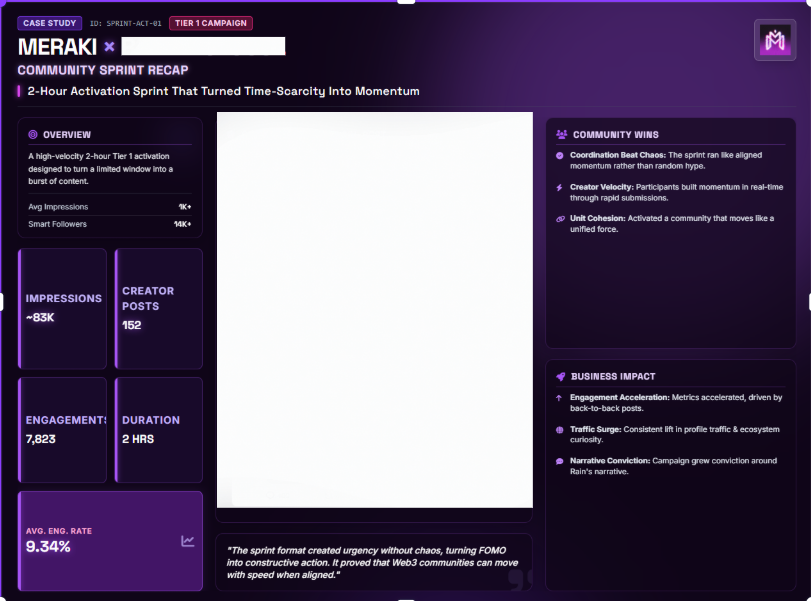
We at @Meraki_Web3 have been running quiet a lot of UGC + Creator campaigns. (Ran 20+ this quarter alone) The results for 1 of the campaigns : >> 80k+ Impressions >> 150+ creator posts >> 9.3% engagement rate >> 2 hrs of duration (Sprint format) >> $3.994 CPM (One of the lowest) This was for a major Web3 brand push, with Meraki prioritizing both quality and quantity. I’ll share many more campaign updates, and the results will be impressive. Meraki Coded.
@nicholasnlawton ·
5 creators × $500 = $2,500 30 videos per creator = 150 videos / month Just 5,000 views per video = 750,000 views $2,500 ÷ 750,000 views = $3.33 CPM And now you have 150 pieces of UGC that can be reposted, run as Spark Ads, used on O&O, landing pages, etc. hard to find another channel that gives you both distribution and creative at that price. High volume UGC is the first step in short form creative testing !
@oliverbrocato ·
3 people I know personally hit their first $1M this year doing the EXACT same thing: 1. Finding viral content in their niche. 2. Paying a UGC creator $200 to remake it. 3. Running paid behind whatever pops. That's it. Embarrassingly simple. Which is exactly why most people won't do it. They'd rather spend 6mos building something "original"
@sourfraser ·
Founder ads don't need to be a big deal. This one is literally just the founder talking to a camera. We stripped it back Treated them like a UGC creator No production fuss It's now one of the top performers in the account.
@Web3Alex_ ·
Your project can have the best tokenomics in the space BUT If nobody is creating content about it organically, you don’t exist in the feed. UGC isn’t a bonus anymore. It’s how trust gets built in public, at scale without burning your entire marketing budget on paid placements. The goal ? Build a system that turns your most engaged community members into content creators. Give them the tools, the narrative, and the incentive. That’s your real marketing engine.
@daviefogarty ·
How to launch a licensed product that does millions in its first month: (We’ve followed this exact process to get household name brands to license The Oodie) Find a license that matches your audience. Don't shoot for the biggest name on day one. Find someone more in your size and slightly niche. ↓ Negotiate the minimum guarantee. Get this number wrong, and you lose money before you sell a single unit. ↓ Get the style guide from the licensor and dissect it. Create new patterns, designs, and colourways from what they give you. ↓ Apply the license across your strongest product categories, not just one SKU. ↓ Run a single shoot that produces everything. Product photography, email assets, website banners, and video for Facebook creatives. ↓ Lead with UGC ads. User-generated content has been 70% of our ad budget for a very long time. ↓ Launch wave one and let sales data tell you what's working. One of our stronger creatives was just a really clean static with the licensing branding on it. ↓ For wave two, introduce more creatives, customise the offer, and let your email team re-engage past customers and communicate the product more effectively. ↓ Scale the winners.
@sourfraser ·
People are always blaming the creator for bad UGC, but 99% of the time it’s a horrible brief. I wrote down everything I could think of to write the perfect brief: (Save this before your next shoot.) - Creator name, brand, product. Basic stuff. - Delivery instructions front and center. - Targeted persona (and why you’re targeting them) - Video format: Raw? One take? High production? - Concept overview. What's actually happening here? - Concept reasoning. WHY are we testing this? - Link example ads/inspo. Gives creator a clear visual. - Every hook variation with scripts (3-5) - All planned variations listed clearly. - Full shot list. Every hook, every body shot, the CTA. Script, visual direction, notes. All of it. Anything less than this and you're not arming the creator with what they need to make a great ad.
@VaibhavSisinty ·
This guy was broke, building an adult AI app, and disgusted with himself. One year later he's making $25K a month from a Christian prayer app he built in 3 days. 🤯 His name is Mau Baron. Mexican. Finance major. Zero tech background. In January 2025, he was building an adult content AI app. When he finished it, he felt so disgusted he made the weirdest pivot in history went all in on the Christian space to reconnect with his faith. Spent 3 months building apps nobody wanted. Then he found a competitor called PrayScreen that blocked your phone until you prayed. He studied it and said "I can do this better." So he built Prayer Lock. In 3 days. Using Cursor and ChatGPT. The app is dead simple. You open Instagram → it blocks you → asks 2 questions → gives you an AI-generated prayer → you recite it → apps unlock → streak and Bible verse. No login. No database. No authentication. Everything saved on device. He launched in June 2025. Had zero marketing budget. So he posted 40 times a day across 12 accounts to find what worked. His wife filmed the reaction videos. That format cracked it. After 40 posts, one hook finally worked. He spammed that format on TikTok and Instagram. 10K views a day. 200-300 downloads daily. Then he threw his $4,000 savings into TikTok Spark Ads. Found a 15-year-old UGC creator on TikTok who was getting insane engagement. Cost per trial: $1.88. On a $50/year subscription. → October: $10K → November: $15K → December: $21K → Now: $25K/month and scaling to $1M/month 58K downloads. 6.7K reviews at 4.9 stars. 43% conversion rate. His entire stack costs under $100/month: Cursor, ChatGPT, Superwall, Gemini Flash, AWS. His advice: "Don't build the app of your dreams first. Improve an already successful app. Add your personality. Copy their distribution. Then go bigger." Follow his journey → @maubaron
@onlinedopamine ·
absolute masterclass in ugc marketing by @blakeandersonw's ecogpt (1.5 million views) the first reason why this video works is simply because everyone hates ai for various reasons next, and you'll see all of eco's ugc creators using it now, is the brown water bottle prop instantly provides that visual hook for someone to stop their scroll secondly, she spends the first 3/4 of the video not promoting anything this builds trust with the audience that she truly cares about water consumption, the environment, and such when the sell ultimately arrives, it piggybacks off of all of these previously discussed aspects at a point where the viewer is already enraged and likely much more agreeable it's always interesting seeing how a given ugc program evolves because if you search for ecogpt, you'll find that almost all their creators started using that water bottle prop 1-3 weeks ago which brings me to the final point: iterate, iterate, iterate and then scale across your creator base
@reachwithrae ·
The possibilities of location-based SEO are bigger than most creators realize. A local Tourism Board recently followed me on Instagram and reached out to collaborate. It had me wondering how they found me in the first place, and then it clicked. Every personal branding post I share includes location-based SEO like "Content Creator in Southern California" and "USA-based UGC Creator." If someone is searching for a creator in my area, I want my content to have a chance of showing up!! It isn't the first time it's happened, either. A local coffee shop found me the same way after seeing the location-specific coffee content I was posting on another account. Ever since, I've treated location-based SEO as part of my personal brand, NOT just something I add to my videos. If you're hoping to land more local opportunities, START adding location-based SEO to your captions. It might be the reason the right brand or business finds you!! #ugc #ugccreator #ugccommunity
@VadimStrizheus ·
Every app founder needs to learn marketing. I started posting on my UGC accounts a week ago, and we’re averaging 50+ trials a day. no ai slop no SEO no paid ads Simple organic + viral UGC videos on Instagram. My CAC is $0 right now and we’re just getting started. also never have a free tier on your app if you’re bootstrapped, ever since we incorporated a trial out MRR increases by 207% (but meta decided to ban 3 of those accounts, so we’re trying to get them back 😭)
@madhurahoval ·
3 things that drive organic growth for consumer apps 1) Find the winning format UGC Slideshows Faceless Storytimes If the format doesn’t work, posting more won’t fix it. You’ll just get 300-view videos faster. 2) Then push volume Hire creators. Have them iterate the same winning format. 1 - 3 posts per day Across multiple accounts. 3) Track the right metrics First: - CPI - Impression → Install ratio - Total downloads Then: - Watch time - Engagement - Views Conversion > virality.
@lottsnomad ·
one of the most underrated moves you can make as a b2c founder: test features before you build them the process: 1/ mock it up: create a few simple figma screens to show what the feature does 2/ turn it into content: record an organic-style walkthrough or have a creator react to it as if it already exists distribute it: post it or run it as an ad then analyze behavior: - do people comment? - do they ask when it’s launching? - do they tag friends? - do they save it? - do they scroll past? you’ll learn more in a week of distribution than in a month of isolated building, and it’s almost always cheaper than fully developing something no one ends up using ugc is more than a growth channel it’s a validation engine let users tell you what they want then build it for them
@CJSlattery ·
UGC agencies have convinced an entire generation of DTC founders that paying strangers to pretend they use your product is a creative strategy. It works okay. But actual customers who are actually happy about your product are so much better than random creators reading a script (we’ll spend >$150M on ads this year and I believe this to my core). And if you're in telehealth, supplements, or anything health-adjacent, real customer content is also what keeps you on the right side of the FTC. Random creators making claims about a product they've never used is how you get a knock at the door. The sourcing playbook: 1. Find customers who've already left a text testimonial on your site or have some kind of public profile. Pay them the same way you'd pay a regular UGC creator. 2. Run the content through whitelisting the same way you would with any other creator partnership. 3. If it hits, layer on affiliate commissions. Give them a code, let them earn on purchases. But you don't lead with that. Start with paid content, prove the concept, then expand. This applies way beyond telehealth. If you sell anything where customer experience matters to the purchase decision, your best creative assets are already in your customer base. Really, you just need a system to activate them.
@profitfounder ·
How to Market a Viral App with UGC 0:00 intro 1:07 why care about ugc? 2:03 what results to expect? 2:38 getting your first download 4:16 starting on tiktok from zero 6:13 brand account vs personal account? 7:51 what to talk about? 9:48 a structure that always works 11:04 why not mention the app name? 12:19 are comments more important? 13:41 finding the right vocabulary 14:35 can i fake engagement? 15:22 30 videos, no virality, now what? 16:47 the secret that always works 18:10 should b2b saas avoid ugc? 19:02 does this work for older audiences? 20:28 100k views, how to replicate it? 22:31 how to actually get downloads 23:51 tiktok vs instagram - same videos? 24:47 posting on both platforms at once? 25:24 biggest mistake founders make 26:19 how to scale and delegate content 27:47 how to spot a good creator 29:08 how much to pay creators? 29:43 how fast to expect roi? 30:33 managing and tracking everything 32:07 what does playkit do? 33:09 case studies and results 35:46 one advice for founders starting today with @juliapintar
@mikey_starts ·
It's over for traditional UGC Why should a brand pay $2k to a creator for the usage rights of a single video?? "Fewer assets" -> everyone who is really doing marketing with budget responsibility will disagree (holds true for organic AND paid) While others are overpaying, here is how you can crack UGC in 2026👇 - Identify the CURRENTLY best performing content and formats in your niche. If you leave this to the "creativity" of the creator, you will have to pay a way higher rate and usually end up with low performing content - Don't overpay for a studio-quality video. For the same budget, you can hire a student posting one video per day for an entire month. Provide a clear briefing on the formats & hooks you want. This way, you can test 30 different angles to find the one winning format - Have the creator set up a fresh TikTok or Instagram account that is owned by you. You are not paying for any followers but for posting algo-optimized content that will outperform any average video on a high-follower account - Track the performance and engagement of all videos posted. Also understand your conversion rate to find winning formats. Now, you can boost all outliers and naturally outperform any random UGC creative that was has not proven to perform organically
@SarahLevinger ·
Pro tip: have your UGC creators do a table read of all the scripts you want them to film a week before they film it. That way you can spot any sections where they fall flat, deliver the line weirdly, or just...don't do it right. 😅 (UGC creators are paid actors who usually have no formal acting training. They're doing their best, so we need to do ours...support your local UGC creator today!)
@leaf_swan ·
Lately I studied the @KiiChainio infrastructure and how they want to solve the main issues in the crypto space! KiiChain is building infrastructure for on-chain foreign exchange (FX), stablecoin payments, and real-world assets (RWAs) Also, it was interesting to see a different approach with the Kii UGC Article Campaign, an approach based on quality not noise! Kii sent an invitation for the community to tell the story of an emerging blockchain ecosystem. The age of user-generated content empowers participants to create original articles, threads, tutorials, analyses, and educational pieces that showcase Kii Chain's technology and real-world applications. Participants are tasked with researching Kii Chain, crafting original content around its ecosystem and use cases, and publishing their work on platforms such as Medium, Mirror, Substack, or social media. The contributions are evaluated based on quality, creativity, and engagement, with top performers earning leaderboard positions, points, and potential rewards. Beyond the incentives, the campaign serves a broader purpose. It helps educate new users, encourages deeper community participation, and creates a growing library of content that makes Kii Chain more accessible to the wider Web3 audience. It's a win-win model, where creators are rewarded for their insights and @KiiChainio benefits from a diverse range of perspectives!
@masterhooks_ ·
Stop making 60+ seconds UGC ads. We've tested 50k+ videos & the sweet spot is 20-40 seconds.
@zakbrahmbhatt ·
One of the biggest mindset shifts I've had over the last year is this: I stopped thinking of myself as a UGC creator. I'm a content creator whose business includes UGC. That one shift changed everything. Personal branding stopped feeling optional. It became part of my job. I spend time every week refreshing my content calendar, collecting ideas throughout the day, studying content that performs well, and making sure there's always something ready to post. It doesn't matter how busy client work gets, my content still goes out. 96% of the opportunities coming my way now started with someone finding my content long before they ever sent me an email or I ever pitched to them. That's why I treat my personal brand like my most important client. Huge credit to @mehrrajputUGC for pushing me to think bigger about what I was building, move from "just being a UGC creator" to being a FULL-TIME CONTENT CREATOR. That mindset and those habits completely changed the way I approach this business. #ugc #ugccreator #ugccommunity #maleugccreator
@StevenCravotta ·
We just launched the craziest feature on Posted. CPM-based creator campaigns. Here's how it works: Brands set their budget, for example: · $10 flat rate (every creator gets paid if content follows the brief) · $2 CPM (per 1,000 views the content gets) Everything happens automatically: · Content gets approved · Flat rate gets paid · Creator earns based on views Brands get a dashboard to track: · Views over time · All submissions · All creators We've turned creator marketing into a paid ads dashboard. You own the video. You own the ad code. It's all yours forever. Run paid ads, but with creator content.

@mikey_starts ·
How do UGC campaigns reach CPM <$1? By paying their creators based on video performance. Here's how you can do it 👇 1. Define your payout cycle - the trend goes towards shorter weekly creator payouts 2. Define your base fee per video posted - this incentivizes your creator to post constantly 3. Create a bonus incentive - performance-based compensation fully aligns the creators motivation to perform with your business goals 4. Define your eligibility window - this has a huge effect on your effective CPM. The smaller the period, the more upside for you You can manage and track all of this directly in https://t.co/ITQEk5ZQZt, the operating system for UGC campaigns :)
@theaaron ·
Someone texted me asking if they should become a UGC creator and make money with brand deals in 2026. My answer: if you're starting from zero, building a channel just to sell someone else's product is a terrible strategy. Followers matter less than reach now. You should pick the platform you actually like. And brands are changing the old UGC playbook with AI avatars and in-house creator channels. If you already have an audience, sure, UGC can pay for things here and there. But if you don't, build your own following before you try to sell someone else's products. 0:59 My answer for 2026 1:49 Build your own audience first 3:33 Followers vs. reach 4:41 Pick the platform you actually like 7:22 Build trust before selling 7:55 Why AI cannot pick winners 8:22 The old UGC playbook 9:12 The 2026 UGC playbook 10:09 The Arby's Boys example 11:40 The real skill UGC creators need 13:04 My final answer
@CommnThreadCo ·
Most brands source UGC from 50 creators and hope 2 out of 10 are usable. The dedicated creator model: one person who becomes your brand's face on paid social. Same face across ASMR, product walkthrough, day in the life, green screen. Users see consistency. Trust builds. Conversions follow. High quality. High volume. High diversity. One creator.
@gannonbreslin ·
Hot take: If you're a UGC creator trying to actually make money, stop optimizing for "fun brands to work with" here's why: -> a CPG brand pays you based on what one sale is worth today, usually has thin margins per unit, and their budget gets capped hard -> on the other hand, tech companies pay you based on what a customer is worth over the next 12-24 months -> same video and same effort, but a wildly different budget to pull from -> subscriptions pay better because customers are worth more, and are reoccurring so start optimizing for business models with recurring revenue aka tech UGC
@brahma_4u ·
Raw product DEMO >> Promotional UGC videos This raw product demo got us more leads than those fancy UGC ads, which constantly name the product until it hurts your ears. Although EV DOCTOR is a plug and play device, the process of using it for getting an EV battery diagnostics done in 15 min (world's fastest battery testing tech btw) directly helps them understand the value they can fetch out of it. Generally that value is additional revenues from checkups and repair margins.
@masterhooks_ ·
We've consulted for 15+ AI Companies on their UGC strategy 🪝 Every Single One was making these 4 mistakes: 1. Too Polished Videos. UGC works because it looks raw. Videos should have a facetime feeling to it. 2. Horrible Hooks and No Clear CTA. 3. Not recreating viral formats (biggest mistake) 4. Testing a small batch creators, seeing no results, and giving up. The winners test 10-20 (minimum), law of large numbers. We did 60+ million views in March just following the same principles.
@ashley_wright ·
“Should we use AI UGC or real creators?” The answer is both, but for different purposes. In our client programs we split them clearly. AI content handles scale: • Testing hooks • Angle variation • Top-of-funnel reach • Filling the content pipeline You can test 20 hooks in the time it takes to brief one creator. It’s the fastest way to find what actually makes people stop scrolling. But when someone is actually considering buying, AI usually loses. That’s where real creators win. Human creators handle trust: • Product storytelling • Authentic reactions • Niche audience credibility • The final conversion push A skeptical buyer doesn’t want to feel sold to by a machine. They want to hear a real person explain why the product works. That’s what closes the deal. So the strategy is simple: Use AI to find the winning angles. Use real creators to scale the trust signal. Treating them as interchangeable is where most brands go wrong.
@dsqjaffa ·
this is going to make some ecom brands uncomfortable: but your marketing team sucks. and you're getting carried by random UGC creators who don't even get paid (u know who u are) imagine having: - an entire brand account - full content team - budget and a strategy just to get outperformed by a hungry UGC girly with 4K followers who just genuinely likes your product embarrasing... UGC is clearly ur most lucrative channel and yet you show it no attention. she doesn't have a brief, a content calendar, and she definitely doesn't have a $30K/month stripe deposit waiting for her - but the algorithm pushes her sh*t harder than anything ur team has ever posted. with claude now practically running businesses? you're running out of excuses... figure out which formats actually perform: - find & hire creators already grinding for similar brands - build proper briefs - set up a real UGC creator pipeline and start turning flukes into repeatable systems stop relying on others...
@oliverbrocato ·
Everyone thought AI would make UGC ads a level playing field. It did the opposite. Now every brand can pump out 100 creatives a week. 98 are garbage. The unlock before: can u make an ad? The unlock now: do u know what's actually worth testing? That's the game. AI will give you hooks, scripts, edits, voiceovers. It won't tell you which one makes someone pull their card out. That comes from reps. Spending real money. Watching ads die. Figuring out why. Going again. Experienced founders can feel it in 2 seconds: When a hook is dead. When to kill the test. What to double down on. Give that person AI and it's over.
@madhurahoval ·
why founders think organic ugc doesn’t work post random videos get 200 views real issue: bad execution and system tiktok works w/ volume + systems build owned distribution first - hire gen z creators or students - pay $20–50 per post - target undiscovered talent - creators post on accounts you own > obsess over watch time stuck at 200 views? > your hook is broken fix the first 5 seconds viral formats can scale. failed videos give data
@rokhladnik ·
Nothing wrong with discovering in May 2026 that whitelisting, partnership ads, or even dark posts are a thing. I’ve been posting about this for months. In the best-performing ad accounts, whitelisting and partnership ads can make up 50%+ of total ad spend. Because the game is finding as much content as possible that resonates with your audience, then running it through creator profiles. The best-performing creatives are usually a mix of typical UGC-style videos and organic-looking posts. Not polished brand ads. Content that feels native to the feed. And the bonus? You get extra frequency and more impression opportunities across placements because your ads are not only running from your brand profiles.
Best Tweets by Topic