Retention and churn prevention
Improve repeat usage and renewals through engagement, cancellation feedback, churn interventions, and better product experiences.
44%
Best tweets about Customer Success
Discover the best tweets about customer success, covering onboarding, adoption, retention, expansion, health scores, support, teams, and operating playbooks.
Customer onboarding, adoption, retention, expansion, health scoring, support, team operations, metrics, and firsthand company lessons.
Original Xholic analysis
In this 50-tweet sample, Customer Success is framed as helping customers reach value, then supporting adoption through feedback and proactive care. Retention is the largest theme (44%), followed by communication and support (42%) and onboarding (38%). Firsthand accounts also highlight limits: requested features may not attract expected usage, demonstrated ROI may not secure renewals, and enterprise exceptions can divert a small SaaS roadmap.
84% of posts
All-time engagement
40% of posts
Published in 90 days
Conversation map
Improve repeat usage and renewals through engagement, cancellation feedback, churn interventions, and better product experiences.
44%
Build trust with responsive support, proactive updates, clear expectations, founder outreach, and hands-on care.
42%
Simplify first-use flows, remove setup friction, and guide customers to an early aha moment and faster time-to-value.
38%
Use customer calls, surveys, support conversations, and behavioral evidence to understand needs and guide product decisions.
26%
Hire for customer and industry understanding, structure CS handoffs and responsibilities, and adapt service models to enterprise or vertical customers.
24%
Combine usage and relationship signals to prioritize accounts, spot churn risk, and automate actionable post-sales workflows.
16%
Grow existing accounts through adoption, upsell, reactivation, champion development, and deliberate renewal management.
14%
Tone and stance
Performance benchmark
Posts with media make up 54% of this collection. Their median all-time score is 13.4, compared with 6.29 for text-only posts.
Format mix
Consensus and debate
Shared view
Posts recommend reducing setup friction and directing users toward an early experience of value. Suggestions include focused onboarding steps, example data, and studying where successful customers first experience the product's value.
Shared view
Posts advocate using customer calls, surveys, support records, and usage data to inform decisions. Examples include identifying stalled workflows, contacting specific users, fixing bugs, and changing a marketing angle based on recurring feedback.
Shared view
Recommendations include clear first-week scope, visible progress, early disclosure of delays, and direct CEO outreach. One post recommends acknowledging customers who report issues with extra credits, priority support, or free usage.
Shared view
Expansion advice includes usage-based upsell triggers, champion programs, renewal reminders, and staying useful to former customers or pilots. One hiring account explicitly combines adoption, churn reduction, and upsell and cross-sell responsibilities.
Open debate
Some founders advocate building from customer conversations or survey feedback. A contrasting launch account describes customer enthusiasm without expected usage and recommends quantifying expansion commitments or selling a feature before building it.
Open debate
Hiring customer ambassadors and deepening hands-on relationships are presented as priorities. A cautionary post describes how enterprise exceptions—such as bespoke onboarding, permissions, and reporting—can divert a small SaaS roadmap toward one account. These posts highlight a service-design tension rather than a direct disagreement over identical circumstances.
Open debate
Time-to-value is promoted as a retention input. SeamlessMD's firsthand account offers a qualification: demonstrated ROI did not always secure renewal when champions departed or organizational priorities and partnerships changed. That account emphasizes ongoing executive alignment and champion development alongside measured outcomes.
Open debate
One prediction advocates investing in onboarding agents before hiring reps. Other accounts emphasize personal onboarding or distinguishing automated self-service from human support. These are different service models, not evidence that one universally outperforms the others.
What performs
Customer health and AI-assisted CS accounts for 8 tweets (16%) with a median all-time score of 55.09, versus 16.409 for onboarding and 12.18 for retention. These supplied analytics establish a score difference within the sample, not an AI-driven performance effect.
The daily customer-signal file post scores 2977.8, or 410.73 times the sample median; the founder's 12-rule list scores 1309.14, or 180.57 times the median. Both connect customer understanding with operating practices, but their scores do not establish why they performed strongly.
Tutorials account for 20 tweets (40%) with a median all-time score of 11.29; case studies account for 17 (34%) with a median of 5.092. The LIST median of 1309.14 comes from one tweet and should not be read as a repeatable format advantage.
Statistical standouts
Creator landscape
The five most represented creators account for 20% of the selected posts.
1. Corey Haines
@coreyhainesco
2 posts
2. Harshil Tomar
@Hartdrawss
2 posts
3. Jason ✨👾SaaStr.Ai✨ Lemkin
@jasonlk
2 posts
4. Luke Sophinos
@lukesophinos
2 posts
5. Harsh Makadia
@MakadiaHarsh
2 posts
6. Nate.Google
@Nate_Google_
2 posts
Haines contributes two posts with a supplied median all-time score of 21.27. Both introduce /onboarding-cro, describing funnel diagnosis, aha-moment identification, checklists, and behavioral nudges. The posts describe the tool's intended functions rather than independently verified retention results.
Luke Sophinos pairs time-to-value accountability with a CourseKey hiring lesson favoring industry experience. Nick Mehta emphasizes enterprise empathy and customer-centered questions. Both emphasize understanding the customer's work rather than relying only on SaaS mechanics.
Since the previous snapshot
Themes, sentiment, stance, and post format are classified per tweet. All counts, shares, medians, creator concentration, freshness, and performance comparisons are then calculated directly from the published snapshot.
Xholic's all-time score compares engagement while accounting for reach, post age, and creator consistency. It is used for relative comparisons within this collection.
This report analyzes the exact 50-post snapshot shown below. AI identifies editorial categories and drafts explanations; all statistics are calculated from the snapshot, and every narrative claim is checked against cited posts before publication.
Best Customer Success tweets
Ranked 01–50

@gregisenberg ·
Every startup should have a daily markdown file called "what_the_market_is_telling_us.md" It updates every morning from the places where customer truth already lives: 1. Stripe for who pays, upgrades, downgrades, and churns 2. PostHog for what people actually do in the product 3. Intercom or Plain for support tickets/complaints 4. Granola or Gmeet transcriptions for sales calls/ customer interviews 5. HubSpot or Salesforce for CRM notes/lost deal reasons 6. Linear, Jira, or GitHub Issues for bugs and feature requests etc 7. Ideabrowser MCP for outside market signal: startup ideas, trend reports, social/search demand, AI research reports, and builder prompts that show what people are starting to want before it shows up in your own customer data. Basically, the file should notice what changed in the business this week and not just be this summary of here’s what happened (which I think a lot of people have their agents do). Why this is valuable: 1. Maybe new buyers are using different words than they were a month ago. 2. Maybe trial users are getting stuck in the same place. 3. Maybe upgraded customers all touched one feature right before they paid. 4. Maybe churned customers keep mentioning setup confusion. 5. Maybe sales calls are suddenly losing to a competitor you used to beat. 6. Maybe support tickets are revealing a workflow your product accidentally became responsible for. You get the point. The fastest way to PMF is understanding customers better than anyone else, and the highest signal customer insight is usually a change in behavior. So I’d have the agent update the file every morning with the pattern it found, the receipts behind it, and the product or GTM decision it might affect. For example: “3 customers who churned this week all mentioned setup confusion, and 2 of them never invited a teammate. This looks more like an activation problem than a pricing problem, so I’d look at team invite and onboarding before building another analytics feature.” A little helpful tip for all those out there looking to get more from their LLMs.

@fin465 ·
We went from 0 to 1,000+ paid customers in our first 20 weeks by religiously following these @ycombinator 12 rules: 1/ grow retention before growth. we didn't run a single growth campaign until we hit 90% weekly retention. scaling a leaky bucket just means you fail faster 2/ ignore everyone who isn't your customer. i stopped reading competitor blogs, industry news, and most of twitter. the only company that can kill you in year one is your own 3/ manual is faster than perfect. our first 50 users each got a personal onboarding call from me. you can't automate what you don't understand yet 4/ validate before you build. we put a credit card gate on @origamichat on day 2. it's easy to convince yourself people want your product when nobody's paying 5/ ugly product > no product. we shipped a barely-working version to 30 people in a week. real users teach you more in 7 days than 6 months of polishing in the dark 6/ your customers write your roadmap. i still spend 3 hours a day on user calls. every feature we've shipped came from a conversation, not a planning session 7/ fire bad fits early. we've fired customers who were wrong for our product. 10 people who love you beat 1,000 who kind of like you. every time 8/ ship every week without exception. we push code to production every friday. consistency compounds in ways you can't see at first 9/ stay small longer than feels comfortable. we were 2 people for a very longtime. Headcount is not progress. every great startup was embarrassingly small for embarrassingly long 10/ know your burn, know your runway. we track default alive on a whiteboard every week. scary but necessary. most startups don't die from the market, they die from running out of time 11/ expect things to break constantly. we've had 3 near-death moments. the game isn't avoiding fires, it's how fast you put them out 12/ honest conflict > polite silence. brutal honesty with your cofounder is the cheapest insurance you'll ever buy good luck and dont forget to have fun


@nikitabier ·
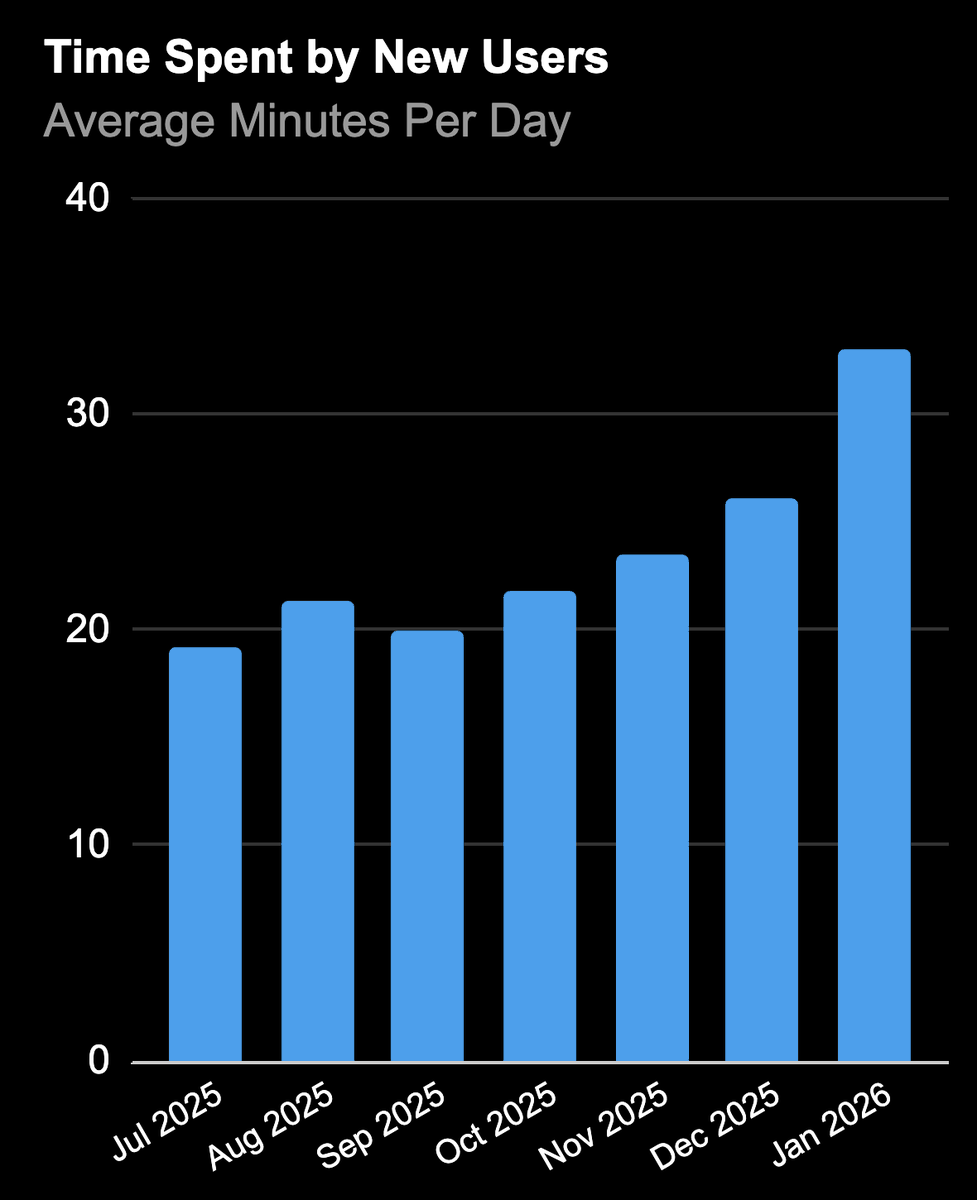
Before I took this job, I got breakfast with @joshelman, one of the first product managers at the company and my mentor for the last 10 years. He said getting new accounts ramped up on X has been one of the app's toughest challenges -- and the most important thing to unlock growth. And it's obvious to people who use the app: once you get out the mainstream timeline of news & politics and into your niche, you really unlock the magic of X. However, X is an interest-based graph, you can't simply "sync your contacts" and have a relevant feed. Power users like me have spent years finding accounts and curating our timeline. But that problem is now getting fixed: Over the last 6 months, we've been iterating each day to make it quicker & easier for new accounts to find their interests on X. The pieces are finally coming together -- and it's been amazing to watch.

@averycode ·
My app's churn dropped from 85% to 41% It’s far from perfect, but here's everything that worked: ☑️ Send notifications There's a lot of advice saying not to send notifications bc it'll remind them to cancel, but if most users were already canceling, what did I have to lose? For my app, it was the opposite - good notifications got more users back into the app ☑️ Obsess over data Stop improving features you like but nobody uses Track everything, what users are engaging with most, where they’re converting from, where they're dropping off. The posthog mcp makes this way easier ☑️ Improve the product This sounds obvious, but my mvp was so bad Keep iterating - the better your product, the more value users get from it (and they’ll be less inclined to leave) ☑️ Changing my mindset Some apps naturally have higher churn, especially ai and one time use apps I thought this at first, but it's a mistake to simply accept it as a fact and not try to improve There’s probably 100 more things you can test ☑️ Build a community Special callout: I haven't tried this for my apps, but @maubaron gave this tip A community creates a stronger two way connection w users, gonna try it soon Reducing churn is one of the biggest growth levers Higher retention = higher LTV Hope this helps 🫡


@JasonrShuman ·
The best vertical AI companies in 2027 won’t just have an onboarding team. They’ll have a team of onboarding agents. Onboarding doesn’t fail just because it’s slow. It fails for two reasons: First, the setup never gets finished. The integrations stall, the data migration drags, and the customer is stuck in a half-configured product that can’t deliver value. Second, even when setup is done, nobody engineers the jaw-dropping moments that make a customer feel the ROI. They get a generic walkthrough instead of an experience that changes how they work. AI solves both sides. If I were building a vertical AI company today, here’s where I’d invest before hiring a single onboarding rep: https://t.co/gWIzCzQRpi config and migration agents. An AI that interviews the customer about their workflows, auto-generates the system configuration, connects their integrations, and migrates their data. The 3-week services engagement that delays time-to-value is gone. This is the foundation. Nothing else works until this is right. 2.A digital twin of the customer’s real environment. Clone their actual data, workflows, and integrations into a sandbox. Every demo, every training moment happens in their world, not with fake data they can’t relate to. This is what makes the magic moments feel real. 3.A cross-customer activation engine. Study how your highest-value customers reached their aha moment. Find the pattern. Auto-sequence every new customer through the fastest path to value based on companies like them. Don’t hope they find the magic. Engineer it. https://t.co/LT1fDAT34v AI voice agent that delivers the magic moments live. Not a chatbot. A voice agent that calls the customer on their schedule, walks them through the specific workflows that will blow their mind, and doesn’t move on until they’ve felt the product working for them. https://t.co/L7XHvCJHbN AI avatar that makes onboarding feel human. A synthetic video persona that greets the customer by name, references their specific use case, and walks them through the workflows that matter most to them. Not a Loom library. A 1:1 experience at scale. 6.A predictive intervention agent that protects the magic. AI that detects when a customer is drifting, skipping logins, ignoring features, disengaging, and autonomously re-engages them with the next jaw-dropping moment. Not a drip campaign. A system that continuously pulls them back to value. The mental model shift for founders: onboarding is a two-part problem. Get the setup right so the magic is possible. Then relentlessly engineer the moments that make your customer feel the ROI. The companies that nail both sides will have activation rates and NRR their competitors can’t touch. Dialed in on this in Vertical AI? I want to talk.

@dan__rosenthal ·
We've helped dozens of YC startups and enterprise B2B companies build their go-to-market motions. All of our top performing accounts follow this exact 6-stage modular system: (bookmark this): 1️⃣ The 6 stages: → Traffic Generation → Lead Capture → Lead Nurturing → Qualification → Conversion → Retention & Expansion Each stage feeds the next. Retention feeds traffic. That's what makes it a flywheel instead of a funnel. 2️⃣ TRAFFIC: There are 4 channels that actually work in B2B right now: • Content marketing (LinkedIn, SEO, YouTube, podcasts) • Paid ads (Google, LinkedIn, Meta, Reddit) • Outbound (cold email, LinkedIn DMs, calls) • Partnerships (referrals, integrations, joint webinars) Pick 1 or 2 first. Validate before adding more. 3️⃣ CAPTURE: Most teams stop at landing page forms. But capture goes way beyond that. • Lead magnets (checklists, templates, calculators) • Social followers as a passive signal • Social engagement (comments, DMs, shares, poll responses) Every one of these is a signal you can activate later. 4️⃣ QUALIFICATION: Most GTM systems break right here. AI-driven lead scoring combines firmographic signals with behavioral signals. Smart forms with progressive fields enrich the profile over multiple interactions. Automated intent signals route high-scoring leads to reps in realtime. 5️⃣ RETENTION: Companies underinvest here and it costs them. • Structured onboarding and regular business reviews • Private communities and champion programs • Usage-based upsell triggers • Referral and affiliate programs Track NRR, CLV, and customer health score. — You don't have to activate everything at once. Pick 1-2 channels per stage. Validate that the unit economics work. Then expand. The teams that scale are the ones that prove each stage works before adding complexity.


@marclou ·
Even my granda could complete my startup's onboarding flow. - 1 page = 1 step - Each step is documented - Every other feature is invisible Complex onboarding is killing your SaaS. All paths should lead to the aha moment, that's it.


@felixleezd ·
Every designer knows onboarding is where user is won or lost. What most don't do is actually go through different onboarding flows back to back, because it takes forever. I was an early @SimularAI user and gave it a list of products I wanted to study. Told it to go through each onboarding, screenshot every step, and flag where each product asked for something before delivering value. It worked through all of them inside its own always-on workspace. Then back with a doc mapping every friction point across all 10 flows. An always-on agent for founders who care for growth design. 🆒
 Watch video
@Nate_Google_ ·
what are ideal supplement MRR metrics that you should be shooting for? - 80%+ Subscription Rate - <15% Churn Rate - AT LEAST Breakeven ROAS on 1st Purchase what are the best subscription tools at the moment? - Loop - https://t.co/NHXLd7mfSP - used for Subscriptions. most brands start with Seal and then transfer over to Loop... this is still a good progression - Churnbuster - https://t.co/0jp4dAk1gd - used for reducing Active and Passive Churn - Grapevine - https://t.co/feTkRO9MJ2 - used for Post Purchase Surveys if you want to truly REDUCE CHURN, then you need to be taking Post-Purchase Surveys seriously learn why your customer like your product, and learn why they DON'T like your product, then build your churn flows around them happy scaling 🚀


@DanielSmidstrup ·
Hermes is my first employee. Its job is to find ways to create value for ClimbX every day. Without a clear use case, AI agents become another distraction. So my first real use case is "customer success" for ClimbX. It runs every morning and reviews: 1. Trial and paying user counts 2. Login-to-trial conversion 3. Unusual user behaviour 4. Users who may need help 5. Features people are not using It only has read-only access to usage data. Every morning, Hermes then gives me three actionable things we can do: 1. Get more data 2. Talk to a specific user 3. Keep improving ClimbX based on what the data shows That turns product activity into a simple daily loop: 1. Find the signal. 2. Take action. 3. Make the product better. The goal is simple: turn product activity into clear actions before small problems become churn.


@athcanft ·
when a customer has an issue - reward them they've taken the time to tell you about an issue with your product extra credits, priority support, a free 7 days of usage... reward them for contacting you - and they might just stay


@codyplof ·
I know I talk about Claude a lot lately but there’s another thing I’ve been just as obsessive about lately and that is talking to customers. I have a Customer Advisory Board of 250 customers currently and I’m the only one in it right now. I talk to them daily, send multiple surveys per week, etc. We also have a FB group of 90k people that I’m active in as well daily. Not only is going above and beyond extremely important to us but our # goal this year is to be customer obsessed. We now won’t make any decisions without their input. In planning some in person forums as well. Almost no cost but the value has been insane in just a few months. And there’s really no reason anyone can’t be doing this.

@coreyhainesco ·
I built a skill for Claude Code that fixes post-signup onboarding when users sign up but never come back. It maps your activation funnel step by step and shows you exactly where people drop off. If 72% create a project but only 31% invite a teammate, that's your problem — and it tells you how to fix it. In-app prompts, progress bars, pre-populated sample data, email nudges for inactive users. Every recommendation targets the specific drop-off point that matters most. Activation is the most underworked part of most SaaS funnels. You're paying to acquire users who never experience your product's value. It's called /onboarding-cro and it's part of Marketing Skills — a free, open source collection of 32 marketing skills for AI agents like Claude Code, Cursor, and Codex.


@jasonlk ·
Customers love, love, love to hear from the CEO This alone is one reason why start-ups have an edge Take advantage: - Go talk to 10+ of them a week - Do a user conference, it's OK to start small - Meet every larger customer in person - If there are bumps, just email them directly It's not perfect. It doesn't always work. But it is ... magical
@Nate_Google_ ·
i keep getting asked about Grapevine -https://t.co/feTkRO9eTu we use this to decrease our churn and increase our subscription rate by learning the psychology behind why customers buy our products here are the exact questions that i often start with: 1. "What is the #1 health goal you are hoping to achieve with this product?" Insight: Allows you to send personalized education/reminders based on their specific "Why." 2. "How often do you plan on taking this supplement?" Insight: Identifies if their subscription frequency (e.g., every 30 days) matches their actual usage to prevent "product stockpile" cancellations. 3. "Did you switch from another brand to try us today?" Insight: Helps you understand what the "other guys" did wrong so you can double down on doing that right. 4. "How would you describe your experience with [Health Issue] before finding us?" Insight: Captures the "pain point" language you can use in retention emails to remind them of the progress they are making. 5. "How did you first hear about us?" Insight: Identifies which marketing channels bring in the most loyal, long-term subscribers versus "one-and-done" buyers. 6. "What was the main thing that convinced you to buy from us today?" Insight: Tells you if they value your science, your price, or your reviews, so you can reinforce those values in your churn-save flows. 7. "Have you ever tried this type of supplement (e.g., Magnesium, Collagen) before?" Insight: New users need "how-to" guides to prevent churn; experienced users just need easy management of their subscription. 8. "What is your biggest concern or hesitation about starting this new routine?" Insight: Lets you address fears (taste, side effects, price) immediately in the post-purchase "thank you" flow before they decide to cancel.


@MediaKing ·
Founders who sprint from $1M to $30M on paid acquisition often arrive with thin margins and no buffer. The ones who paused to invest in customer success and track time-to-value often end up with better unit economics and less fragility. Same product. Different sequencing.

@Hartdrawss ·
PRO TIP for FOUNDERS : your onboarding screen is the second UX decision your user experiences. most products nail the auth screen and then completely abandon the user the moment they log in for the first time. here's what we ship on every first-login state : 1/ give them a win in under 60 seconds > empty state is not a blank page. its an invitation. show them exactly what to do first > one action. not five. if the first screen has 5 CTAs the user does none of them > progress indicator if setup takes multiple steps. users dont abandon flows they can see the end of 2/ design for the confused user, not the happy path > tooltip on first login, not buried in a help doc > pre-filled example data where possible. blank forms are terrifying > "skip for now" on every non-critical setup step 3/ trust signals before they do anything > show them what they're building toward. screenshot, preview, or sample output > name them. "welcome, harshil" beats "welcome, user" in retention data 4/ then lock the backend > session scoped to the device. cross-device requires re-auth > onboarding state persisted so they continue where they left off, not back to step 1 the first 60 seconds after login determines whether they come back on day 2.


@coreyhainesco ·
I built a skill that optimizes post-signup onboarding for activation — aha moment identification, welcome flows, activation checklists, empty states, and behavioral email sequences. You describe your product and it maps the shortest path to value: identifies the aha moment, removes friction before it, and builds the checklist and email nudges that get users there. Most users who churn never experienced the product's core value. This makes sure they hit the aha moment as fast as possible. It's called /onboarding-cro and it's part of Marketing Skills — a free, open source collection of 40 marketing skills for AI agents like Claude Code, Cursor, and Codex. npx skills add coreyhaines31/marketingskills
 Watch video
@Hartdrawss ·
one underrated mobile app truth nobody talks about: your onboarding is where the money lives, not your features It is usually the point where maximum conversions happen and ratings are decided for the application every week i see founders who spent 3 months on the product and 3 hours on onboarding most people skip straight to the paywall... or worse, gate the entire app behind signup here's the problem : the more friction you stack before the first "damn this works" moment, the worse you convert so i follow the same structure on every build: > no forced signup before value > show the core outcome in under 3 taps > delay paywall until after the first win > have a retention offer ready if they skip the result: users who actually stick around past day 1 pro tip: do a 2-week audit of your onboarding drop-off before touching any new feature retention starts at install, not at week 4

@MakadiaHarsh ·
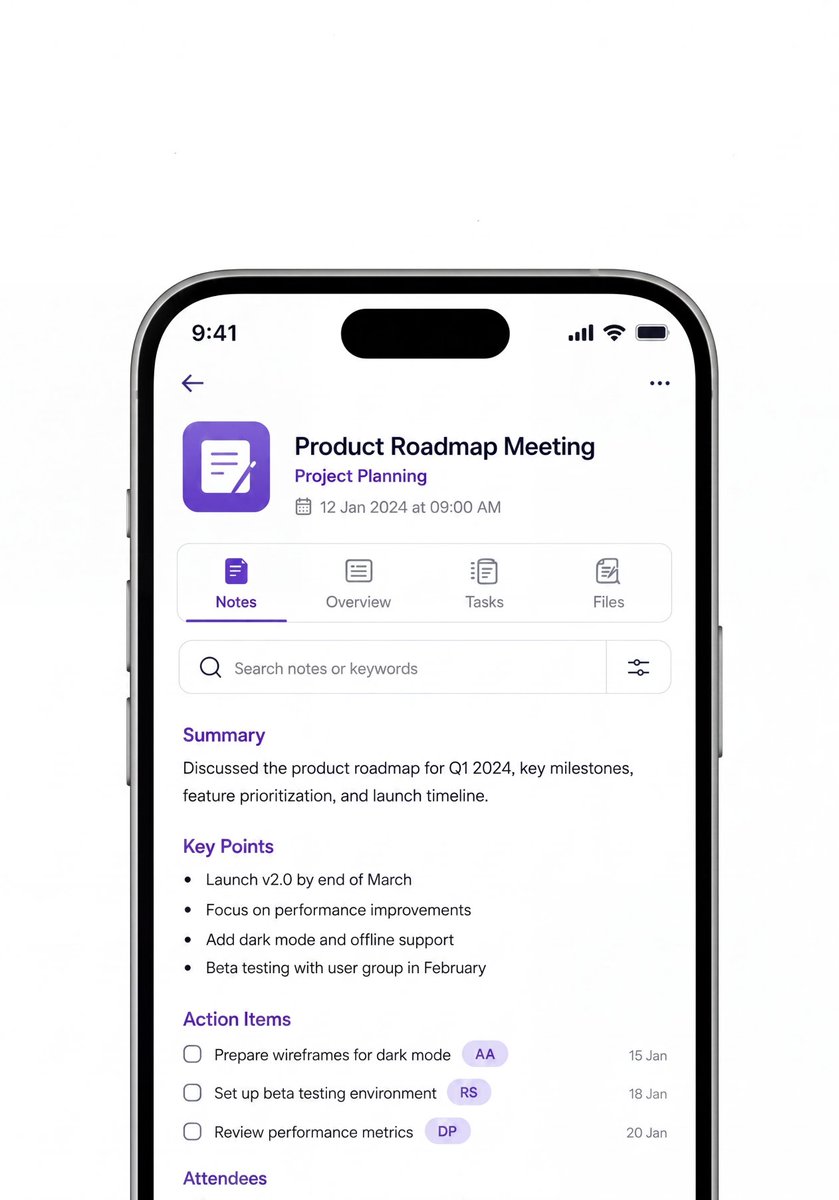
My exact onboarding process that keeps clients from ever saying "this isn’t what I expected": Day 1: - 45-min kickoff call - I record everything - Client gets the recording Day 2: - I send a 1-page scope doc - Not 20 pages - What we're building - What we're NOT building - When they'll see it Day 3-5: - I build the first thing they can click on Day 5: - Loom walkthrough - Here's progress - Here's what's next - Here's where I need your input Expectations aren't set on the sales call. They're set in the first week of work.

@Tobby_scraper ·
New signups feel good on iOS Aps. 3 things that changed my retention: - Onboarding emails day 1, 3, 7 - In-app wins that make users feel progress - A cancellation survey I actually act on Retention > Acquisition. Every time

@alexabelonix ·
The hidden revenue channel is keeping contact with people who already trust you. Most founders think revenue growth means more acquisition. But expansion and reactivation are often sitting right there: old customers old pilots old waitlist old users old champions old “not now” old newsletter replies old communities Build a touch system: product update case study new workflow relevant insight feature release personal check-in renewal reminder expansion idea The point is not to “nurture leads” like a dead marketing PDF. The point is to stay useful until timing becomes real.


@devXritesh ·
The biggest mistake in SaaS development? Building features before fixing onboarding If users can't experience your product's value in the first 5 minutes... The next 50 features won't save it. Retention starts with the first impression, not the next release.

@oliverbrocato ·
Over the last 2 months we hired 3 full-time Client Success Managers. The goal: 5x the quality we deliver clients. Their job is simple: Be the client’s ambassador. Serve the client above the company - and by doing that, serve the company. * Reduce churn * Increase product adoption * Upsell + cross-sell * Generate testimonials, case studies + referrals Take insanely good care of customers and everything else follows.
@MakadiaHarsh ·
My exact system for keeping clients happy between milestones: 1. Never go more than 3 days without showing something Even if it's ugly. Even if it's half-done. 2. Screenshots > status updates Here's what it looks like right now beats "we're on track" every time. 3. When something goes wrong - tell them before they notice Heads up, X is delayed by 2 days because Y. That one message buys more trust than a month of perfect work. 4. Celebrate small wins with them Just got the auth flow working - want to test it? makes them feel part of the build. 5. End every week with: "Anything feel off?" Three words. Takes 5 seconds. Prevents 90% of blowups. Retention isn't about delivering perfectly. It's about communicating constantly.

@SimonHoiberg ·
I get nervous when a small SaaS I really like celebrates its first big enterprise customer too much. The contract is bigger, the logo looks good and then suddenly everyone forgets how expensive weird requests are. Custom report here, strange SSO setup there, one-off onboarding, special invoice terms, some permission thing nobody else needs and now half the roadmap is just keeping one customer happy. I have seen this too many times now. If one customer gets that much influence over what you build, many otherwise great products just starts degrading really fast.

@daviefogarty ·
We launched EPL Oodies for kids and their parents and had no idea if the collaboration would work. We originally launched without a clear angle. We knew matching outfits could work, but we weren't sure how to market it. Then in a voice of customer meeting, we saw multiple customers commenting: "It was so fun to have a matching outfit with my dad at the game." Voice of Customer is a monthly presentation where our customer experience manager shares consistent feedback to the entire company. So we took that feedback, and it became the marketing angle. Father-son game day moments. The whole purpose of VOC is to surface marketing angles you'd never think of in a conference room. It also catches operational issues before they become disasters. If fulfilment is slipping or product quality is dropping, customers will tell you before the metrics show it. But if you want it to succeed, make it company-wide. Everyone from product to marketing to ops needs to hear what customers are saying. So if you haven’t heard of this before, set up a monthly Voice of Customer meeting. You’ll be surprised at the benefits it provides your business.

@yasser_elsaid_ ·
✅Build a great product ✅Talk about it in public ✅Talk to your customers ✅Tell their stories This is a full customer story with @opalapp on how they're using @chatbase. @kschlenker on choosing Chatbase: "We wanted to figure out what parts we can automate with high quality self-serve, and what parts need personal human support. Chatbase has been a great partner for us to do that." It's super impressive what they've been able to build and how much they care about customer experience. I am a very happy user of Opal too, it's my secret to locking in.
 Watch video
@ttunguz ·
What happens when technology evolves faster than your sales process can adapt? The last fifteen years, startups focused on building software around very well understood processes. We had built an assembly line for software sales, SDR to AE to customer success manager. We calculated ratios between these three total cost of sales and drove the factory to ever improved yields. AI is upending all of that. The underlying workflows are changing so quickly, software buyers no longer know what the ideal processes are, much less which is the best software to buy. Model capabilities have evolved at 10x improvements every two years. Users are grappling to understand how to take advantage of these advances while boards are pressing teams to adopt AI. A combination of all these factors has led to a reinvention of customer success : the forward deployed engineer. Forward deployed engineers (FDEs) are the new customer success managers, the new solutions architects. They spend their time working with customers, understanding business challenge, and using technology to solve them - selling usage & outcomes. In a software sales environment where buyers seek education, the underlying technology is advancing very quickly and there’s no stability. There’s no surprise that this role has become critical. OpenAI has offered consulting services as well as Anthropic for custom enterprise deployments. Anthropic builds specialized enterprise implementation teams. Sierra employs agent engineers. Palantir created this model. Their core insight, success comes from delivering outcomes on some software platform is now the standard for mid-market and enterprise software. The costs simply don’t justify themselves below price points of $100,000 or less per contract. Staffing a FDE costing $200k for a $10k contract - the math doesn’t work. These forward-deployed engineers take the core platforms of AI and then mold them and tune them to work, defining new ways of building sales and marketing. Marketing and engineering teams - for example, agent managers. The ability for customer success managers of the future to vibe code new platforms to deliver success on a basic platform is real . And it will be a requisite for these teams in an age where customer expectations of delivering value are shorter than ever. https://t.co/luEvGhkxgd

@lukesophinos ·
Customer retention is an output. Outputs do not matter without the right inputs. The input that drives retention: time to value. Time to value is how long it takes a customer to hit the moment where your product clicks. The "aha" moment. The faster you get them there, the lower the churn. The longer it takes, the higher the risk they leave. Dropbox figured this out early. Their TTV metric is a user uploading their first few files. Once someone uploads a handful of documents, churn drops dramatically. So they optimized every pixel of the UI to push users toward that moment. Bumble did the same thing. Their former COO said the most important metric was successful conversations, defined as users trading phone numbers. Everything was built to create more of those. How to build your own TTV metric: Study your best customers. What do they have in common? How fast did they onboard? What did they do in the first 30 days? Study your worst customers. What made them unsuccessful? Where did they stall? Pick a metric and iterate. Speed matters more than perfection. Once you have the metric, hold people accountable to it. Tie compensation to TTV. Bonus teams quarterly on it. Track it weekly. Money drives behavior. Then bake it into the product. Build UI that pushes users toward the aha moment. Make TTV the center of your onboarding process. Talk about it constantly in all hands and standups. Strong time to value equals high retention. High retention is the foundation of every durable SaaS business.


@nrmehta ·
In enterprise AI startups, one of the top things I’d recommend hiring for is Empathy for the Enterprise. I proudly live in the Bay Area and have since college (don’t ask how long ago!) I love the spirit here: * Constant reinvention. * Not getting tied to the past. * Risk taking. * Copious wearing of Patagonia vests. But I also think those same virtues can cause people here to not be able to connect with corporate customers. I’ll often hear language like: * “What does that company even do anymore?” * “Do they still exist?” * “They have no idea what they’re doing.” * “Big companies are all politics.” I get it because you have to internalize the Goliath mindset and consider the David to be a lumbering giant, if you want to defeat your large competitors. But when you start applying this same psyche to your clients, you have a big problem (or at least I have a big problem with hiring people like that). Alternate framings are: * “Wow it’s incredible they’ve evolved what they do over time. Marriott Hotels started out as a root beer stand?” [true story] * “I’m so impressed by how they’ve weathered the storm and stayed alive for many times the amount of years I’ve been alive.” * “It must be so complex to run a company that big.” * “I can see why an organization that large has warring factions over time - each is operating from a point of logical local optimization.” Ultimately, I think it’s about curiosity. Curiosity about your customers, their business, their history, the tough tradeoffs they make and the humans that make them. Way back in time (like 3 years ago!), SaaS was a bit easier. You were selling more of a tool. So you needed to be somewhat curious. But your software was still slightly more abstracted from the client’s business than AI software is. Then still, the best Sales and Customer Success people (and founders) were deeply curious about clients. With AI, the bar has been raised. If we want our AI startups to transform enterprises, we’d better start getting as curious about them and empathetic for them as we are about the latest X fight over open versus closed models.

@Zubairey0 ·
One of the most underrated ways to beat competitors is not pricing. It’s not even always product. It’s customer success and response time. Saw this happen last week while helping a client with card issuance. We connected them with a few providers. One provider took days to reply. The other was responsive, clear, and kept the process moving. Guess who won the client? The responsive one. Same category. Similar offering. But one made the client feel like they were already being taken care of before the deal even closed. That matters more than people think. If a prospect has to chase you before becoming a customer, imagine what they think support will be like after signing. I even DM’d the other team and told them straight up: you didn’t lose because the client wasn’t interested. You lost because you were slow.
@lukesophinos ·
Stop hiring "SaaS" Customer Success leaders for your vertical business. That CS leader with a decade at Salesforce or HubSpot? They probably won't work out. Here's why: Horizontal SaaS CS is built for sophisticated software buyers. Your customer is a VP of Marketing who's implemented fifteen tools. They understand adoption metrics, QBRs, and feature releases. Your CS leader drives product adoption, identifies expansion, manages renewals. Clean playbook. Vertical SaaS is different. Your customer is an HVAC contractor who started as a field tech twenty years ago. Works seventy hour weeks. Never used Salesforce. He doesn't trust the "Cloud" because he got burned by QuickBooks Online. His previous software was a filing cabinet and a spiral notebook. When your SaaS CS leader schedules a QBR to review adoption metrics, he has no idea what you're talking about. He just wants to know if his techs are logging jobs and whether he can stop doing payroll manually. The credibility gap kills you. At CourseKey, we sold to trade schools. I hired a CS leader from horizontal SaaS. Smart. Great resume. Within two months, customers said: "They don't understand our business." The breakthrough came when I hired someone who'd spent twelve years working at a trade school. She'd implemented technology. Lived through software migrations. Understood the pain intimately. When she talked to customers, they immediately knew she got it. Our retention went up twenty percent plus over the next twenty-four months. The rule: In vertical SaaS, industry credibility beats SaaS expertise every time. Hire someone who's spent five to ten years working in your target industry. Not selling to it. Working in it. Someone who's implemented technology and lived with the consequences. Trained users. Proved ROI. Dealt with the field tech who refused to use the tablet. You can teach them SaaS metrics in ninety days. You can't teach them ten years of industry knowledge. Hire from the industry. Teach them SaaS. Watch retention transform.

@TheJobfather__ ·
Customer Success Operations is a sleeper role for people who understand customers, systems, and retention. CS Ops helps teams track renewals, onboarding, customer health, churn risk, and support handoffs. To build proof, create a mock customer health score. Include usage, support tickets, renewal date, NPS, and risk level. Then explain how a CSM should prioritize accounts based on that score. That is practical, visible proof.

@ayushagarwal ·
the most underrated distribution channel for B2B SaaS is existing customers expanding their usage. net revenue retention above 120% means your existing customers grow faster than your churn. that's compounding growth without a single new sale.

@raducopy ·
If you have a low return customer rate, this is how to fix it: 1. Add 1-3 emails after purchase to set expectations for the product. Vital 2. Do a weekly check-in (first 30 days) on what they should be feeling & get replies. 3. Use success stories to increase hope of results

@keean_edward ·
you can learn a lot about what makes a good product by trying different SAAS products and observing your own behavior. today i've looked at two different tools for growing on X and within 10 minutes of using both, i canceled. i was genuinely interested in the idea of those products, it would be nice to have more followers. what i realized is that the reason i canceled those subs right away is where i've made the biggest mistake with my own SAAS. within 5 minutes of using a product you should know how to extract the value for your use case. good onboarding is not enough - you need to specifically direct people to the value and to do that you as the founder need to know exactly what specific part of the problem you're solving.

@Lukealexxander ·
I spent this week on back-to-back calls with Kendo customers. Every call opened with the same ask: give me the good, the bad, and the ugly. How you actually use the product, where it saves you time, and where it makes you frustrated. Feedback loops are one of the most critical systems inside a startup. The speed you learn what's broken decides the speed you build what's next. Plus no dashboard will tell you what a customer will tell you in ten minutes if you ask them straight. Some of what I heard was hard to hear. Good. That's what the calls are for. One customer was manually downloading and uploading every sales call as a text file. We have a push API that automates all of it. Just had to direct them to our help docs. I'm walking out of the week with a stack of bugs to fix, a page of new ideas, and a much clearer picture of what we build next. If you're a founder and you haven't talked to a customer this week, do it. Back to building ⚔️

@jasonlk ·
"When you hire a VP Customer Success or VP of Sales, before you send the offer letter ... Ask them to send you 2 customers to talk to. Any strong leader here will have 2 customers they worked with, that will take your call. Any."
 Watch video
@ThePeelPod ·
I talked to @chrishlad about turning every customer into a raving fan: "To keep growing past your first 5, 10, 15 customers, you need to make sure everyone becomes a raving fan of the product. And this is a very different philosophy than just thinking about a sales guy closing deals for commission checks. If our number one goal at @hanoverpark in 2026 is every customer is a raving fan, that's nearly impossible in our industry (fund admin). That's the craziest thing you could propose considering how unhappy everyone is with their current providers. You need to set and manage expectations around making sure new customers are successful in the first 100 days. Prove you can do it with 5 other customers that are their peers, and we'll do it for you too."
 Watch video
@TheChowdhary ·
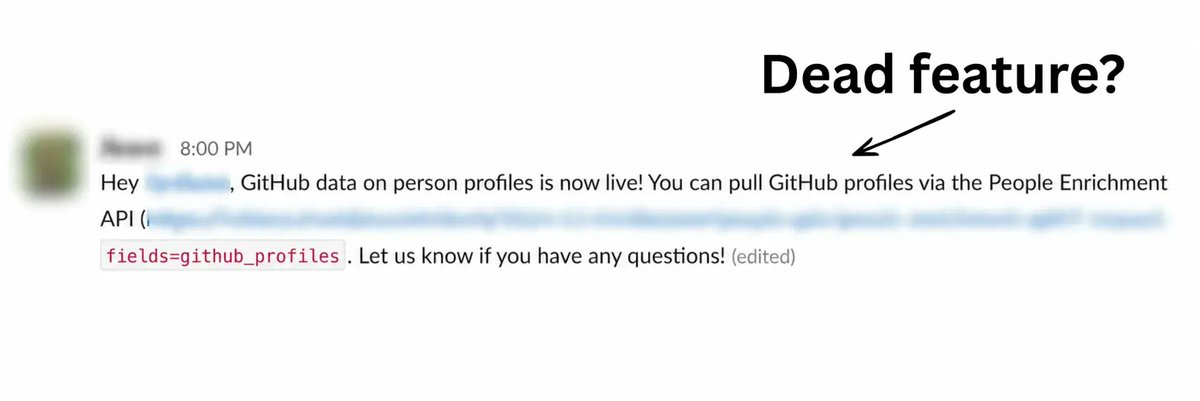
Almost every YC founder I speak with has a "product graveyard" Here is ours: A few months ago we launched GitHub data as a new source I went through hundreds of sales demos, Intercom messages and feature requests... It was obvious that the market was looking for GitHub data at scale, mapped to the right person It would unlock several use cases: sourcing engineers by what they build, dev-tool companies building target lists from repo activity, screening candidates by commit history,... We pitched it to customers and they got excited, so we got excited Our data and ML team spent weeks mapping millions of GitHub profiles to the right entities and we scaled our infra to support this new use-case Months later - after launching all of this, only 48 customers have hit this endpoint in the last 90 days Even though the customers who did try it use it heavily, every day, the usage we expected just isn't there yet Was it our marketing? Was it a nice-to-have all along? we're still trying to figure it out Every company has a "product graveyard" - I don't think you can really avoid it We do everything it takes to minimize the amount of these features And while I still believe in this use-case (especially for recruiting) This is what we learned to do when we joined YC: 1) When someone asks for a feature, ask if they'd expand their contract if it existed - and quantify it as much as possible. by how much? starting when? 2) Try to sell the feature before building it - a contract contingent on shipping by a date. we did this in the early days and I push our sales team to do it today as well. many customers love thinking about new ideas and features, but it's literally not part of their buying decision 3) Every launch gets an owner. their job is to research - who asked for this feature? is it a must-have or a nice-to-have for them? - and then follow up with every one of them the day it ships

@imrayjohnston ·
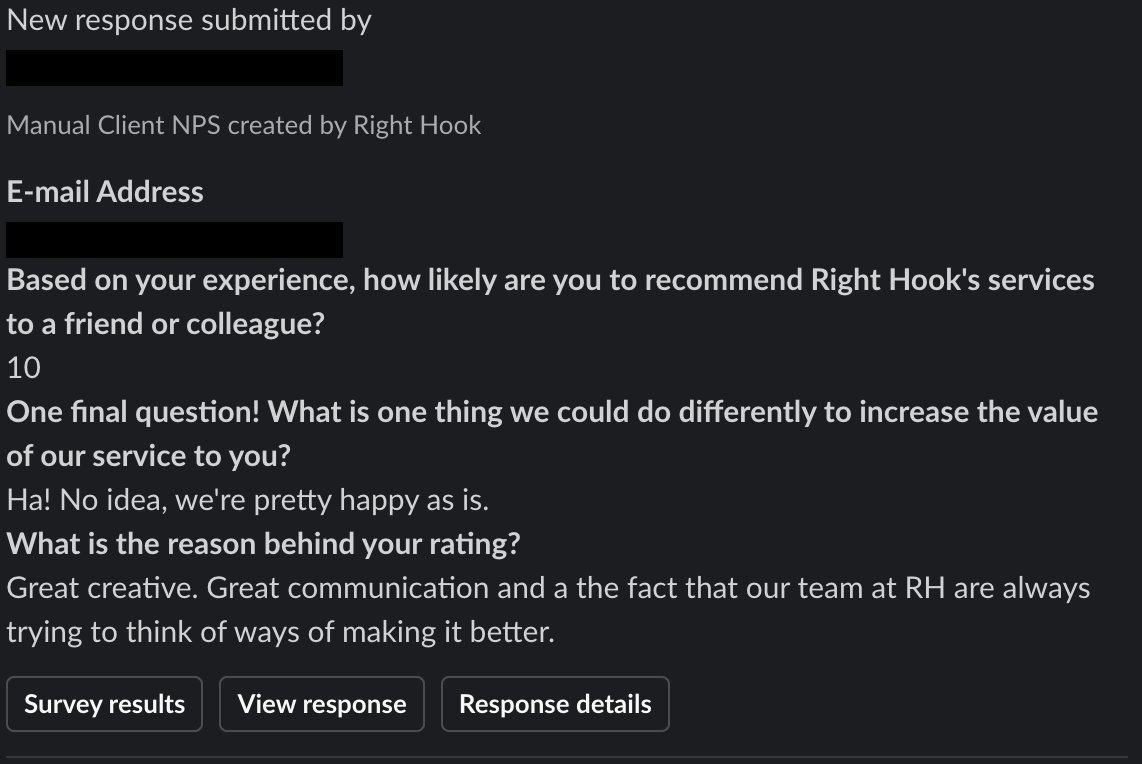
The source of innovation last 2 years has come from this.. NPS survey. We started doing that a few years ago, and it's radically changed our company. (pictured is an 8-fig brand of our teams) Every month we send our brands an NPS question to get their feedback. We pipe it into our Slack for the whole team to see. Because of this feedback, we've: - overhauled creative systems - hired new roles - changed how we forecast for them - how we scale them - how we strategize with clients - AI creative It's literally been the seeds of innovation. Why struggle figuring out what to improve? Just do what your customers want and they will stay. Every founder I mentor (outside of running my BIZ) I tell them to do this. Over the next 1-2 years, your retention rate will go up.

@rheejust ·
30% of new YC companies use Porter. We got there by doing the exact opposite of what every growth playbook says. After raising our $20M Series A, my chief of staff Shankar came to me with a plan. The natural instinct after raising is to expand: deploy resources across every channel and hope something compounds. How other well-funded startups run GTM: - Sophisticated multi-channel motions - In-person events - Partnerships etc. His pitch was reasonable: we need to start doing all of that. We need to mature. We need to expand. My thought was the exact opposite, because of one piece of YC advice I think about constantly: as you grow, you don't trade "[doing] things that don't scale" for only doing scalable things. → You just hire more people to "do things that don't scale." We needed to go more individual, more personal, and do more things that didn't scale. Every growth playbook tells you to diversify your channels at this stage. Instead, we focused everything into one place: we "spiraled in." We doubled down on the YC ground game: 1. The 1:1 founder relationships 2. The office visits 3. The hands-on customer success Obviously the other channels could work, but this one was already working, and we hadn't come even close to exhausting it. We put all our energy into making this one channel impossible to ignore, and the results were dramatically stronger than anything we could have achieved by spreading thin across ten channels at once.


@joshuapliu ·
The real measure of success for your Health Tech startup’s partnership with a health system is NOT the ROI you demonstrate - it’s actually this: Whether the health system renews your contract, year after year. I can give you many painful examples I’ve experienced at @SeamlessMD where we hit all the targets and demonstrated ROI, only to ultimately fail: → The health system that used our product to cut LOS and readmissions across many service lines enterprise-wide… only for our executive sponsors and service line champions to all leave the organization, and the new folks who took over, just wanted to do things differently. → The hospital who piloted our product and reduced readmissions by 50%+... only for the CEO to tell us that if he reduced readmissions, the government would think he needed less money next year and fund them less. → The health system we helped cut LOS and readmissions across a few priority service lines… only to find out their C-suite signed a broader partnership with a “similar” vendor so we were disposable Early on in my career those were gut punches, but now that I’m 13+ years into this journey, those are just par for the course. Now I know better. I now recognize that having C-suite buy-in and alignment with a strategic priority matters more than any amount of ROI and clinical evidence we could generate (but we do work hard to measure results anyhow, because we care that our Tech actually improves patient outcomes!). If anything, my recurring experience is that “ROI” is used to justify a decision already made. I now recognize that for innovation that improves clinical outcomes - which often is not as important a priority as increasing revenue or decreasing clinician burnout - having strong champions is absolutely critical. And your champions won’t last forever… many often change roles, change organizations, etc. If you don’t continuously mobilize more and more champions all the time, one day you’ll wake up with a great ROI and no one who cares to fight for you at the annual budget meeting. Which means Health Tech startups need to earn those contract renewals year after year, and it’s not just about the numbers and ROI. Sometimes it is, but often it isn’t. It’s about engaged C-suite, engaged champions, deep integrations/workflow alignment, and so much more. Yes, this means you can’t “set it and forget it”. Most Health Tech startups aren’t selling Office 365 anyone can buy with a click - most of us are selling a mixture of Tech + Services + Transformation. That’s a lot of change. Which means you don’t truly know if your innovation is sticky until a health system actually renews. And even if it’s sticky right now… it may not be sticky forever. Even if you cut LOS and readmissions by 50%... it’s often not enough. You have to earn it. Again. Every single year. But if you do… you can have amazing health system partners for life.


@chrisbarber ·
The value of ai coworker products is proportional to the integrations that someone has, data in and data out. AI companies would benefit from spending a lot of time observing users that do and don't have integrations set up. What are those who have it set up getting the most value from? What are those that don't doing without as workarounds? And, observe people in the onboarding/integration setup. Which points are confusing? Which permissions are scary? Goal is to remove the confusion and also show the benefits up front. Think about how this often happens in person or over text: you show your friend something cool, they ask how you did it, you show them, and then maybe you help them set it up. In that scenario, you've a) made the perceived reward really high and b) reduced the perceived effort and uncertainty. You want to replicate that experience for all users. How can all users see as much perceived upside, and have as low uncertainty, as one who got a demo and a personalized onboarding from their friend sitting next to them? (This applies both to signing up for the product in general, and to setting up each high-effort feature, e.g. each integration)
@nrmehta ·
Be Curious: 5 Weak and 5 Strong Questions to Ask B2B Customers: Everyone in B2B, whether you're a brand new AI startup founder, an experienced software exec or a customer-facing individual contributor, wants one thing - stronger customer relationships. In a world where software is a commodity, relationships are often the difference between a win and a loss, a "closed" and a "not now" or a renewal and a churn. I've written about techniques to meet with customers. But what do you say when you see them across the Zoom screen or Starbucks table? I've been there when I asked the weak questions that showed a lack of curiosity, no point of view and no confidence: 1. "What's your feedback on our product?" (maybe they didn't even try it) 2. "What feature do you like the best?" (the buyer may have no idea) 3. "How do we compare to our competitors?" (me me me) 4. "What are your goals?" (as if the buyer wants to just open his/her OKRs and share them) 5. "Are you ready to buy this quarter?" (umm...) The common thread between those weak questions is that they are about you, not the customer. By contrast, there is a plethora of powerful questions the best ask. I've stolen many, including: 1. "I was able to meet with a dozen CIOs last week. Every single one seems to be struggling to figure out the productivity impact of AI. How are you handling that? I can even send you a survey we did around this." (shows you have expertise) 2. "I noticed your team was called out in the last earnings call in a good way. That's amazing. How did that make you feel? What are you doing to sustain the work?" (shows you're paying attention) 3. "I'm hearing more and more that this budgeting season is hard since 2027 is so murky. How are you approaching prioritization?" (shows that you get the real world) 4. "I can only imagine how many vendors you get pitched by about AI. Who are some of the best partners for you and what are they doing to truly help you?" (shows you want to be a true partner too and are open to feedback) 5. "Ultimately, software - including ours - are just tools. I've found that the real impact comes in making sure its rolled out aligned to the client's goals. Is there one company priority that you heard about in your CEO's all hands that we should align around for the deployment? Is there a milestone where a win by then would help the company?" (figure out how to strategically ladder up and start identifying a compelling date) As one of the all time great entrepreneurs said, it's about being curious...
 Watch video
@RealPlantBrah ·
One of the most useful tools I learned at my first SaaS startup was how to write an effective user story. User stories should be a tool as you develop any process in your company. "As a customer who just had an estimate appointment I want confirmation that something is happening So that I am not wondering whether we forgot" cool. whats the acceptance criteria for a good process? Customer first. Service as a Service.

@mdjunaidap ·
The 3 questions I ask every customer call: 1. What were you using before this? 2. What stopped you from signing up? 3. If we disappeared tomorrow, what would you miss? Their answers tell you: ➭ Your real competitors ➭ Your friction points ➭ Your actual value Ask these. Take notes. Build better.

@marty_kausas ·
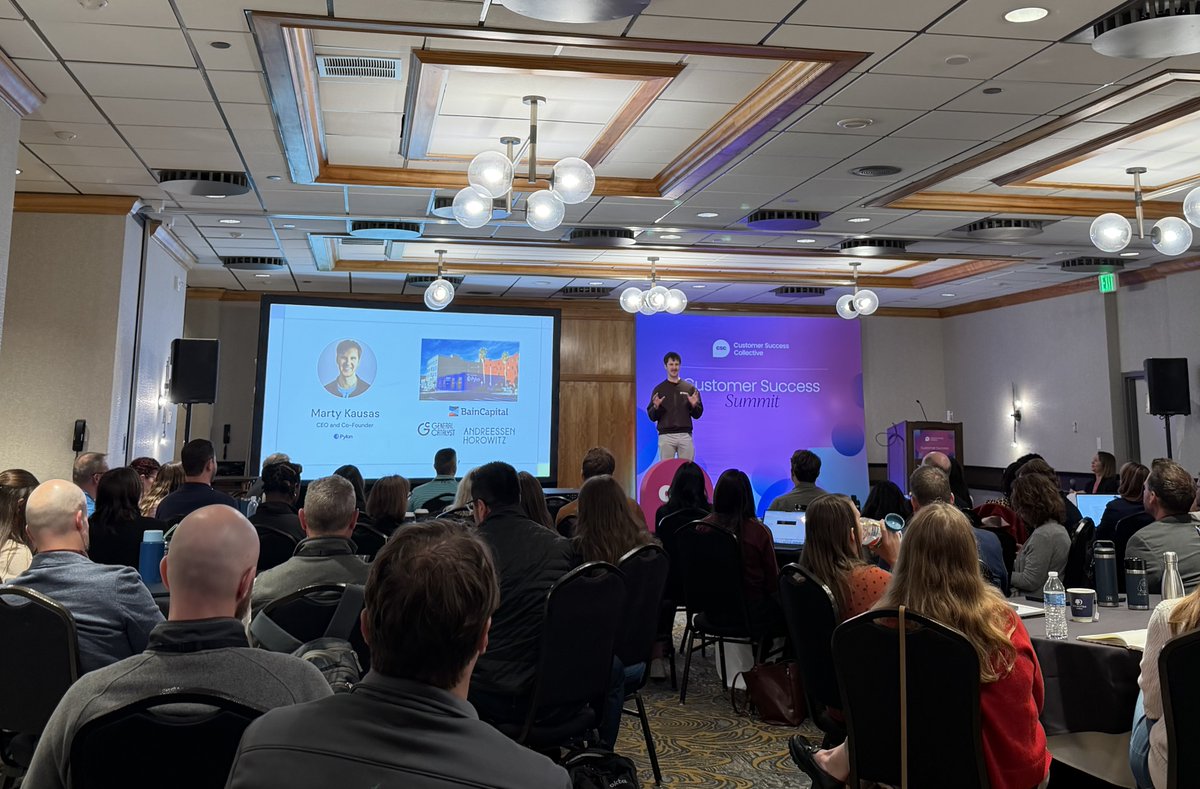
Every CS leader in this room wanted to hear about one thing: How to implement AI Instead of talking about AI broadly, we walked through our own journey of how we scaled Pylon's customer success motion to thousands of customers across a mix of scaled and enterprise accounts. We showed specific examples live of how we prioritize accounts, what data is helpful, and more. The takeaways: 𝟭/ 𝗕𝗲 𝗵𝗼𝗻𝗲𝘀𝘁 𝘄𝗶𝘁𝗵 𝘄𝗵𝗮𝘁'𝘀 𝗻𝗼𝘁 𝘄𝗼𝗿𝗸𝗶𝗻𝗴 𝘁𝗼𝗱𝗮𝘆 I asked the audience how many of them use a Customer Success Platform today (~50% raised their hand). Then I asked how many of them are happy with what they have (0 people raised their hand). 𝟮/ 𝗜𝗳 𝘆𝗼𝘂 𝗰𝗮𝗻'𝘁 𝗶𝗻𝘁𝗲𝗴𝗿𝗮𝘁𝗲 𝘆𝗼𝘂𝗿 𝗰𝘂𝘀𝘁𝗼𝗺𝗲𝗿 𝗱𝗮𝘁𝗮, 𝗻𝗼𝘁𝗵𝗶𝗻𝗴 𝗲𝗹𝘀𝗲 𝗺𝗮𝘁𝘁𝗲𝗿𝘀. In CS you've historically been able to leverage quantitative metrics (like product usage), but that leaves all the qualitative stuff (emails, tickets, calls, etc) out. What's unlocked with LLMs is that you can now structure both. Aim to consolidate product usage, tickets, call recordings, notes, CRM data, calendar events, internal slack conversations, and more. 𝟯/ 𝗟𝗲𝘃𝗲𝗿𝗮𝗴𝗲 𝗔𝗜 𝗮𝗰𝗿𝗼𝘀𝘀 𝘁𝗵𝗿𝗲𝗲 𝗹𝗲𝘃𝗲𝗹𝘀: - Account-level (sentiment, priorities, contacts, meeting prep) - Book of business-level (who is upsellable, who is a risk of churn, who needs help) - All accounts (feature requests, trends, upcoming risks). — Thank you to all the attendees! Great meeting many of you and getting to chat about AI-enabling your post-sales teams. The talk did so well that I'm hosting a follow-up webinar on this topic on April 23! I'll deep dive into the points above (+ more), show you some of the AI workflows teams have set up in Pylon, and answer any questions live. Register to join: https://t.co/otYRIeUhBs

@villageglobal ·
"Are you sure you really want to create a category? I always joke: 'I'm actually 25 years old. This is just what category creation does to you.'" @nrmehta ran the customer success platform @GainsightHQ as CEO for 13 years. Vista Equity Partners acquired the company for $1.1 billion in 2020. When he started in 2013, there were about a thousand customer success managers in the world. Now there are hundreds of thousands. @sniyogi sits down with Nick to talk about how it all happened. A few moments that stood out: "We went to Safeway, got the cheapest wine, the cheapest cheese tray. Put it on a ping pong table because we didn't have a conference table. 75 people showed up and stayed till 10 PM. They weren't there because of us — they were there because of each other." "I literally started going there, sitting in their lobby. I knew the Wi-Fi password. I knew the front desk receptionist — she was into Disney movies." "Humans buy software for their human needs and then they justify it to their business. I wanna get promoted. I don't wanna get fired. I'm worried about my job." "I decided to get up on stage, just coming off pneumonia, and literally talk about being lonely as a kid — which I was, extremely lonely."
 Watch video
Best Customer Success tweets
Xholic studies what works in your niche, drafts posts in your voice and schedules them for the hours your audience is online.
$0 today · Cancel anytime
Browse all tweet collectionsKeep exploring