Signal-based targeting and lead lists
Build ICP-fit lists from funding, hiring, website visits, social engagement, and other buying signals rather than broad databases.
48%
Best tweets about Cold Email
Discover the best tweets about cold email, including targeting, offers, subject lines, personalization, deliverability, follow-ups, and campaign results.
Specific cold-email campaigns, targeting, copy, offers, deliverability, sequences, testing, and measured outcomes.
Original Xholic analysis
Cold-email operators favor tighter targeting, specific offers and reliable inbox placement over generic blasts. Reported campaigns show that changing the recipient list can shift replies and meetings even when copy stays fixed; other posts argue that warm audiences and useful assets make the first email easier to answer. These are campaign reports and practitioner claims, not a universal conversion benchmark. (2037798601876005047, 2052492670577357084, 2031645506774925484)
66% of posts
All-time engagement
100% of posts
Published in 90 days
Conversation map
Build ICP-fit lists from funding, hiring, website visits, social engagement, and other buying signals rather than broad databases.
48%
Compare segments, offers, and copy using reply rates, meetings, customers, and acquisition costs; scale what converts.
38%
Write concise, human emails that reflect the recipient’s context and problem; avoid generic claims and superficial personalization.
34%
Protect inbox placement with secondary domains, authentication, warmup, verified lists, controlled volume, and low-friction email formatting.
24%
Lead with specific, relevant offers, blueprints, audits, lead magnets, or other useful assets instead of immediately asking for a meeting.
24%
Coordinate email follow-ups with LinkedIn, calls, and timely reply handling to turn interest into conversations.
24%
Use AI agents and connected tools to research and score leads, draft sequences, launch campaigns, and manage responses, with human direction.
12%
Cold-email people who already recognize or engage with a brand through content, ads, social posts, or site visits.
10%
Tone and stance
Performance benchmark
Posts with media make up 30% of this collection. Their median all-time score is 16.2, compared with 10.6 for text-only posts.
Format mix
Consensus and debate
Shared view
In a reported A/B campaign using the same script and 4,200 leads per group, a list built around publicly expressed problems drew a 2.9% reply rate and 41 calls, versus 0.4% and four calls for a general list. Another operator reports a reply-rate improvement after narrowing the buyer profile while keeping the offer and emails nearly unchanged.
Shared view
Operators describe asking permission to send a blueprint, offering a relevant lead magnet, or plainly stating what is being sold rather than opening with a vague growth promise or immediate meeting request.
Shared view
Posts recommend authenticated secondary domains, verified lists and controlled sending; one cautions that delivery alone does not establish that a person saw the message. These are operating recommendations, not measured guarantees of inbox placement.
Open debate
One sender says 7,700 emails at a 1.3% reply rate brought customers and supports relevant volume. Others warn that bigger lists cannot compensate for weak targeting, pointing to their segment comparisons instead.
Open debate
Infrastructure advice favors secondary domains to shield a company's primary inbox. A contrasting post recommends sending plain, untracked messages from a personal email and reports quick replies from its test.
Open debate
A recipient says they would not buy from a cold sequence but might answer a simple, genuinely contextual human note. Senders counter with reported customers, sales and conversations from cold-email campaigns.
What performs
One campaign reports 344,600 sends, 4,273 replies, 2,597 blueprint requests, 200+ customers and $20k+ in new MRR. Another reports 8,900 sends to past LinkedIn commenters, yielding 101 replies, five demos and nine self-serve customers in 48 hours. Both are self-reported outcomes.
The supplied analytics give warm-audience outbound a median all-time score of 40.263 and sequences/multichannel 25.96, versus 14.31 overall. Examples include outreach to site visitors and a timed LinkedIn–email–call sequence; scores measure performance in this set, not campaign effectiveness.
The highest-scoring outliers describe finding newly funded startups (248.02), emailing LinkedIn engagers (224.35), and combining lead sources, blueprints and sending infrastructure (158.47). Their scores are respectively 17.33, 15.68 and 11.07 times the supplied median.
Statistical standouts
Creator landscape
The five most represented creators account for 20% of the selected posts.
1. Adam Rahman
@AdamrahmanGTM
2 posts
2. Ahmad Hajj
@ahmadafterhours
2 posts
3. Alex Berman® 👑 Galadon
@alxberman
2 posts
4. Christian
@cbwritescopy
2 posts
5. Cem Hasoglu
@cem_hasoglu
2 posts
6. Cody Schneider
@codyschneider
2 posts
Schneider's two posts propose sourcing leads from LinkedIn engagement and testing offer headlines in ads before using the winners in cold email. The supplied creator analytics assign his two posts a median all-time score of 137.38.
Christian's posts advocate saying exactly what is sold and offering a relevant asset upfront. The supplied creator analytics assign these two posts a median all-time score of 43.2; neither post supplies a controlled comparison for the proposed lead-magnet approach.
One creator describes an AI-built lead list and three-step sequence that drew 30 interested creators in 24 hours. Another advises using AI for a draft framework while supplying business-specific angles and direction rather than handing it full control.
Since the previous snapshot
Themes, sentiment, stance, and post format are classified per tweet. All counts, shares, medians, creator concentration, freshness, and performance comparisons are then calculated directly from the published snapshot.
Xholic's all-time score compares engagement while accounting for reach, post age, and creator consistency. It is used for relative comparisons within this collection.
This report analyzes the exact 50-post snapshot shown below. AI identifies editorial categories and drafts explanations; all statistics are calculated from the snapshot, and every narrative claim is checked against cited posts before publication.
Best Cold Email tweets
Ranked 01–50

@codyschneider ·
cold email getting so rough the best signals are people engaging on linkedin posts we see highest response rate from this the content people engage with, they are hand raising for you they are your target customer find 20 influencers in your category use apify to scrape their posts use apify to scrape their engagers use getleads IO and then waterfall enrichment to find their emails cold email them with you no brainer offer

@omoalhajaabiola ·
Easy stuff 1. Go to google 2. Enter this “healthcare startup raised series A”. 3. Click on search tools and change “any time” to “past month” 4. Take note of the startups that were recently funded 5. Connect with their decision makers on LinkedIn 6. Have a warm into 7. Scrape their contact and cold email them The only thing that beats this strategy are referrals and recommendations. All the best


@seanlongden ·
Cold email system we set up for B2B clients in an afternoon: Claude CoWork → ICP research + positioning Claude Skill → Email sequences + offer copy Lovable → Landing page + lead magnet DiscoLike → Super-targeted lead list Instantly → Distribution (Claude MCP) Used to take 2 people 2 days Now it's done in 2 hours

@romanbuildsaas ·
Is cold email still worth it in 2026? For https://t.co/D9GRoGg9PY, we sent 453,000 emails in 141 days. More than 6,200 people replied (auto-replies excluded). That’s 43 new conversations every day. Here’s exactly how we do it. 1) How we find leads : 1. High-intent leads detected by GojiberryAI 2. Databases like SaasyDB 3. Scraping targeted profiles Then we enrich the data using GojiberryAI or Airscale (and of course we debounce everything). 2) What we send For the past two years, I stopped trying to book demos directly. Instead, I ask permission to send a blueprint. Inside those blueprints, I include as much value as possible. People read them, find them useful, and then either buy or book a demo. Another interesting thing: a lot of people visit our website without replying to the email. So replies only show part of the impact. 3) Our infrastructure 40+ domains 120+ inboxes Around 50 emails per inbox per day Total cost: about $500 per month. That’s less than $0.40 per conversation. Cold email in 2026? 100% worth it.


@pierreeliottlal ·
Cold email results from the last 3 months for https://t.co/M4KDDGVEKr : 344,600 emails sent 4273 replies 2597 people accepted to receive a blueprint 200+ new customers $20k+ in new MRR Total cost: $500 per month (infrastructure) That’s ~$7.5 CAC per customer


@NickAbraham12 ·
talked to a huge SaaS operator printing leads with cold email told me his strategy is just using cold email as a marketing and distribution channel and not an acquisition one He: 1. Found third-party documentation comparing his product to competitors (fairly competitive space) 2. Sent copy to his list saying: [Name] - [third-party company] ran a comparison test of us vs. [competitors] - turns out we beat them on [thing]. Thought I'd send because you follow [relevant account on social]. Feel free to book a call if you're in the market" There's something to be said about this.

@RetentionAdam ·
COLD EMAIL IS DEAD. People doing outbound right now are only sending more emails to fix the exact problems that sending more emails caused. We went the other direction. Our campaign is dead simple: Someone lands on RB2B(.)com We identify them And we send an email. “Hey, saw you on our site. Do you have any questions?” That campaign converts at over 10%. One signup for every 10 emails sent. For context, standard cold email right now converts at about 1 in 500. And getting worse. Stop emailing strangers and focus on those people who already know you exist. Tools like Clay, Smartlead, and Instantly made high-volume personalized outbound so easy that everyone started doing it at the same time. What used to be a competitive advantage became noise. Spam filters got smarter. More volume going out, harder filters coming in. The only response most people have is to send even more email, which makes the problem worse for everyone. What converts 10 to 30 times better is inbound-led outbound. Drive people to your site first, identify who they are, then reach out while they're still warm. RB2B makes the middle step possible. The moment someone lands on your website, you get their… > Full name > Job title > Company > LinkedIn profile > Every page they visited …pushed to Slack or your CRM instantly. If someone was just on your pricing page, that's high intent. If they looked at three case studies, they're doing research. You know exactly who to prioritize and exactly what to say. From there, use Clay to enrich the data and filter by ICP, then push to Instantly or Smartlead for sending. The email goes out while they're still warm. AND KEEP YOUR COPY SIMPLE. Our prospecting email has some light AI personalization about who the customer is actually targeting, but the core message is completely plain. “We have a product that identifies anonymous website visitors and sends their LinkedIn profiles to your Slack in real time. It's free. Reply yes if you're interested, reply no if you're not.” Yes gets a signup link. No gets an unsubscribe. That's the whole system.

@salesxsaas ·
One of my go-to cold outreach sequences: Day 1: LinkedIn connection + quick email Day 3: Call (voicemail) + email w context Day 10: LinkedIn message/Inmail Day 20: Final email Then recycle with new angle every ~3 months

@cbwritescopy ·
Ive had tremendous success over cold email & ads simply by saying WHAT is being sold "We have 1.1 million eCommerce contacts in a database" "We can make 2,000 cold calls per day for your business" "We can send 1,000 cold emails per day for you" Tends to perform much better than pitching the benefit of these services "grow your pipeline" "Scale your business"
@codyschneider ·
paid ads the best way to find your offer for cold email scrape reddit using exa ai / firecrawl for pain points and outcomes your target customer then run display ads with the headlines of different offers the best performing ads this is your cold email text

@paolo_scales ·
the best leads you'll ever get are already raising their hand on linkedin right now find the top 20 influencers in your category, use apify to scrape everyone who commented on their last 30 posts, enrich them through clay with waterfall enrichment across apollo, prospeo and origami, score them by ICP fit, and auto-upload the ones above 80% match straight into instantly for cold email and then heyreach for linkedin outbound the people commenting on competitor content have already told you they have the problem you solve you're just collecting them
@cbwritescopy ·
The most cracked cold email strategy of all time is pitching a lead magnet upfront "I have 2 ops managers, a crane operator and a line manager looking for a new role - and I have their resumes on hand. Mind if I shoot them over?" "I created a 3-step email flow that'll boost your revenue by 10k - guaranteed or you don't pay. Interested in checking them out?"

@danielhangan_ ·
needed 3 ugc creators for a campaign yesterday. told my AI agent the budget and a rough brief. it: > scraped tiktok for ugc creators in my niche > pulled 250 leads with emails in their bios > built a 3-step cold email sequence in instantly > launched the campaign 24 hours later: 30 interested creators. i have zero cold email experience. the playbook just changed.

@scaling_shields ·
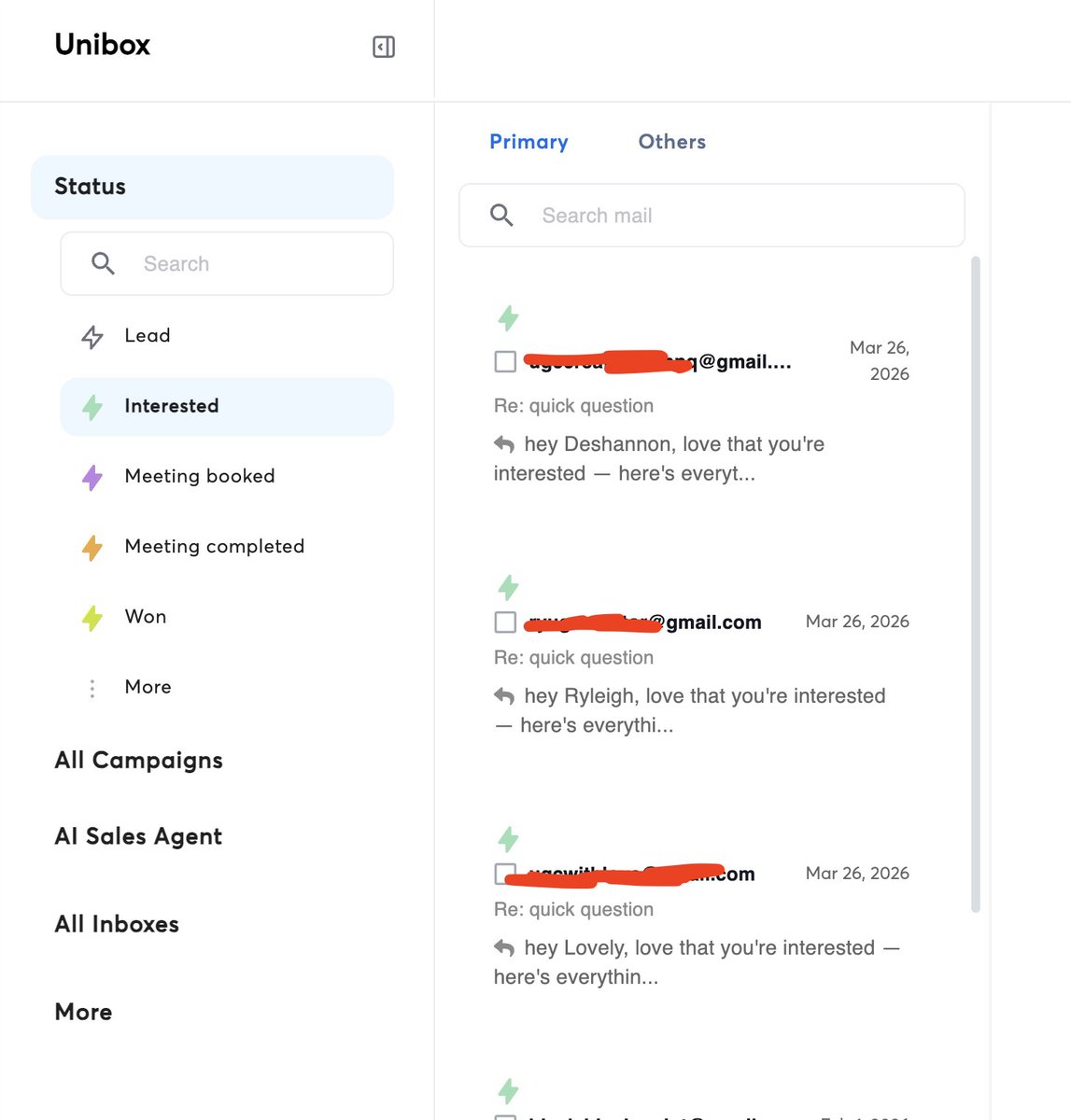
i cold email my own followers and it built a $480K/year business this is the full system on camera - the scripts word for word - the campaign that books 1 call per 300 emails - the method i use to turn twitter followers into paying clients been asked to make this a paid course about 100 times nah its free
 Watch video
@MichLieben ·
The biggest lie in cold outreach: more emails = more leads. We generated 25,000+ leads in 2026 at ColdIQ ($7M ARR). The difference was targeting and tiering, not blasting bigger lists. 1. Segment before you send anything. Companies engaging with your brand, lookalikes of your best clients, and companies showing buying intent in your category. These are the easy targeting wins most teams overlook when they start cold outreach. 2. Map your entire TAM through @clay, Wiza, and @prospeo_io. Then research every account and split them into three tiers. Your dream clients (Tier 1), strong fits (Tier 2), and everyone else you can genuinely help (Tier 3). 3. Each tier gets a completely different outreach motion. Tier 1 is manual AE outreach, one by one: phone (we use Nooks), LinkedIn, and email. Tier 2 is personalized multichannel through @clay + @lemlist. Tier 3 is your experimental playground through @InstantlyAI where you test copywriting frameworks at scale. 4. Write 25-50 messages by hand before automating a single one. The early replies teach you patterns that no template will give you. This step feels slow. It saves months later. 5. Lead with free value, not an ask. For Tier 2, I think about what's the first thing I'd do if I signed them as a client, then I do it already, for free. Example: building a niche lead list with companies and people data of their ideal clients. Reply speed determines your pipeline. Every hour between their positive response and your follow-up costs you meetings. Save the infographic. It shows the full flow from segments to closed won.
 Watch video
@romanbuildsaas ·
Just launched a new cold email campaign targeting people who commented on my LinkedIn posts over the last 6 months. Some of them probably aren’t high intent anymore… But the results were still interesting 👀 In just 48 hours: → 8,900 emails sent → 101 replies → 60 people requested the lead magnet → 5 demos booked → 9 self-serve customers And that’s from an audience that was already “warming up” months ago. Most people massively underestimate the value of their past engagement. Your old LinkedIn comments are basically a hidden retargeting list. Definitely need to run more campaigns like this.

@salesxsaas ·
While I 100% believe every sales org needs to be cold calling & utilizing LinkedIn, cold email remains the most effective way to engage top executives. - cold calling for info gathering below the line - cold email for engaging above the line - LinkedIn for nurturing across org
@scaling_shields ·
i ran two identical cold email campaigns last month to prove a theory that pissed off EVERYONE in my team we used the same script word for word 4,200 leads in each campaign campaign A: 0.4% reply rate. 11 interested. 4 calls booked campaign B: 2.9% reply rate. 74 interested. 41 calls booked 10x the result the only difference was WHO received it campaign A went to a normal apollo list of agency owners campaign B went to agency owners who had ALREADY publicly told the internet they have the exact problem we solve and didnt even know they were doing it let me explain what "publicly told the internet" actually means because businesses are confessing their problems in public every single day and almost nobody is paying attention signal 1: companies posting jobs for SDRs and BDRs when a company posts a job listing for a sales rep theyre not just "hiring" theyre publicly admitting their pipeline is broken that theyve allocated $60-80K in budget to fix it and that theyre desperate enough to wait 3 months for a stranger to ramp up you can email the VP of sales today and say "saw youre hiring a BDR. what if i could get you 30 booked calls this month while you find the right person. you only pay for calls that show up" youre not pitching but simply arriving at the exact moment they admitted the problem exists signal 2: employee reviews on indeed and glassdoor when 3 employees at the same company write "no leads provided" and "impossible quotas" and "marketing generates nothing" thats an internal memo that got accidentally published you now know their lead gen is broken before THEY would ever admit it to a stranger on a cold email signal 3: funding rounds on crunchbase every company that just raised series A or B told their investors the money goes to growth they have a board meeting in 90 days where someone has to show pipeline numbers they HAVE to spend on client acquisition and they have a deadline to prove it worked signal 4: founders posting "anyone know a good [service]?" on linkedin someone literally typed their problem into a public post and 99% of cold emailers never see it because theyre too busy blasting apollo lists to people who dont know they need help yet the difference between campaign A and campaign B wasnt copy it was demand campaign A tried to CREATE demand in people who didnt know they had a problem campaign B CAPTURED demand from people who already admitted it publicly your reply rate is most likely a targeting problem stop trying to convince people they need you start finding the ones who already know they do

@Bencera ·
"Polsia is a spam machine." Polsia lets anyone start and run a company with an AI team. That AI team knows the playbooks: growth, marketing, outreach, support. The same playbooks every YC company and every growth agency already uses. One personalized cold email by one company is smart outreach. A thousand personalized cold emails by a thousand companies is a problem. I didn't anticipate this. I should have. When you give millions of people access to elite execution at the same time, things that used to be best practices become noise. That's new. No one has had to deal with it before, and we're the first ones here. What we're doing now: → 2 outreach emails per company per day (already live) → 500 max outreach per day across the entire platform (already live) → Per-recipient limits rolling out today: no one should get bombarded If you're getting too many emails from Polsia companies, tell me. I'll fix it. I'm building in public. That means you see the wins and the mistakes. This is a mistake I'm fixing in real time.

@volosatovde ·
I’ve sent 7,700 cold emails. Reply rate: 1.3%. And cold email is already bringing me customers. That’s why I’m convinced volume still matters. 1.3% doesn’t look huge. But at scale, it works. Send more relevant emails → get more replies → start more conversations → close more customers. Now I’m working on the second part of the equation: improving conversion. That’s what I’m building ClientDoneForYou (.)com for: ICP → buying signals → decision maker → personalized outreach. More volume gets you more opportunities. Better targeting makes every email worth more.


@ivanburazin ·
There's a zero chance that I'd buy something or take a meeting from a cold email sequence. The volume of inbound I get is nuts. But I also clear all the unreads religiously every Sunday. Most of them are shit. If your cold email has an unsubscribe link at the bottom, I immediately click it to get rid of any more. If it has one of those CTAs where they ask, "Just say yes, and I'll tell you more" I instantly type "no" and hit reply without reading a single word. If it starts with "Daytona raised $24M, which means..." I archive it immediately. But if an actual human writes it, makes sense in context, and is simple enough that I don't need AI to summarize it, I might actually reply. The bar has fallen so hard that I can't recall a single such interaction in the last 4-5 weeks.

@omarships ·
Today on Ep.4 of "How to Build a Startup," Anthony Baltodano (450M cold emails/month, powering YC startups' email infra) broke down cold email A→Z. Some takeaways: → Buy alt domains, warm up your mailboxes before sending → Prioritize Google inboxes — better landing rates → Don't track opens/clicks. You'll burn your mailboxes. → Google & Outlook now read your copy. Inconsistent signatures, repeated templates, links, and hard CTAs get you flagged. → Spintax everything so every send is a variation → Personalize by pain point in batches, not one email at a time Intelligence is cheap. Deliverability is the moat.
 Watch video
@AdamrahmanGTM ·
The 80/20 of cold email that most teams get backwards: 80% of results come from: > Picking the right segment (industry + company size + buyer persona) > Hitting the inbox (infrastructure + verification + domain health) > Responding fast (sub-5-minute reply management) > Testing offers, not copy (the offer determines the reply, the copy just delivers it) 20% of results come from: > Subject line optimization > Send time testing > Copy wordsmithing > Personalization tokens > A/B testing email length Revenue teams that spend 80% of their time on the bottom list and 20% on the top list have the worst results. Flip the ratio. Spend 80% of your time on segment selection, infrastructure health, reply management, and offer testing. Spend 20% on copy refinement. The highest-leverage hour in outbound: one hour spent analyzing which segments respond best beats 10 hours of copy editing.

@itsalexvacca ·
Everyone's obsessing over cold email copy, subject lines, and list size. The actual cheat code? Put a lead magnet inside the email instead of asking for a meeting. Every cold email out there asks for time. But who wants to give time to a stranger? But give something useful first and they actually engage. Once they engage with your lead magnet, you're not cold anymore. They're in your orbit now. You can track the intent, guide the conversation, and book the call without ever having to chase.

@JanuBuilds ·
YAY! We just made our first sale from cold mailing. 🥳 After over a year of failing at it. I tried it for @FeatherFlowTech, my product studio. Hired different cold mailing specialists. Tried different angles, different tools. Nothing worked. So I wrote it off. Then I realised: maybe the problem wasn't the channel. Maybe it was the offer I was pitching. FeatherFlow is high ticket. It requires a lot of trust before someone buys. Cold outreach gives you very little time to build that. So I tried cold mailing with Effortless Backlinks instead. Lower price point. Easier decision. Less trust needed upfront. A no-brainer offer. Month one, we failed again. Almost pulled the plug. Month two, we rewrote the message and improved our deliverability. 5 to 6 leads in a single day. One of them just converted into a sale. 🥰 Before you write off cold outreach, ask yourself: is your offer actually right for it?


@MartinGTobias ·
The most repeated fundraising advice on this app is "just send more cold emails to investors." I think it's actively bad advice for 90% of pre-seed founders. Thread: --- Cold outreach to VCs converts at roughly 5-15% reply rate when it's targeted. Untargeted blasts (wrong stage, wrong check size, wrong thesis) run closer to 95% non-reply. That's not a pitch problem. That's a targeting problem. --- I watch founders send 150 emails to "anyone who invests in software" and get 2 replies. Then I watch a founder send 25 emails to a list filtered on stage + check size + actual thesis match, and get 6 real conversations. --- Same effort. 6x the outcome. The difference was 20 minutes of research before the first email, not a better subject line. --- The volume-first advice persists because it's easy to give and easy to follow. "Send more" requires no judgment. "Send fewer, better-targeted" requires you to actually study who you're emailing. --- If you're fundraising right now: before you send email #50, go back and cut your list to the 20 investors who've actually written checks in your stage and sector in the last 12 months. You'll get more replies from fewer sends.

@Oliver_Clingain ·
"Cold email is dead." I use it every day. "LinkedIn outreach is dead." I close deals from it every month. "Outbound is dead." I built my whole company on it. You know what's actually dead? Sending the same copy-paste message to 1,000 people and expecting results. That was never outbound. That was spam. 1. I follow up 5+ times 2. I research every prospect 3. I personalize every message That's why it works for me and doesn't work for you.
@ivanburazin ·
Conventional startup wisdom says you need warm introductions to investors, and cold emails rarely work. Meanwhile, a little over 400 cold emails formed the backbone of our entire pre-seed raise. We had no fancy network/YC backing/intro from a famous founder when we started. Just a team of Croatians nobody knew, betting big on granular research + high degree of personalization + traction. Even @HarryStebbings from 20VC argues that a well researched, concise cold email can be more effective than a warm intro. Warm intros help, especially at later stages (we closed both our seed & series A in ~3 weeks). But if you've done your homework, have real traction, and can articulate why they specifically should care, cold outreach works wonders in the very beginning.
@AdamrahmanGTM ·
The 4 things that actually matter in cold email: 1/ Strong infrastructure Deliverability is table stakes. 98%+ or don't bother. 2/ Validated lead source Fresh data, right ICP, verified emails. 3/ Relevant offer Something they actually want. Free audit > "let's chat." 4/ Reliable inbox management Sub-5-minute replies. Don't let leads go cold. Everything else is secondary. Nail these four.

@alexabelonix ·
If you’re brave enough to build a startup, here’s what you should know Day 111: A great cold email feels light to read but heavy with signal. Simple words. Clear ask. Strong context. That combination gets replies.

@zaimiri ·
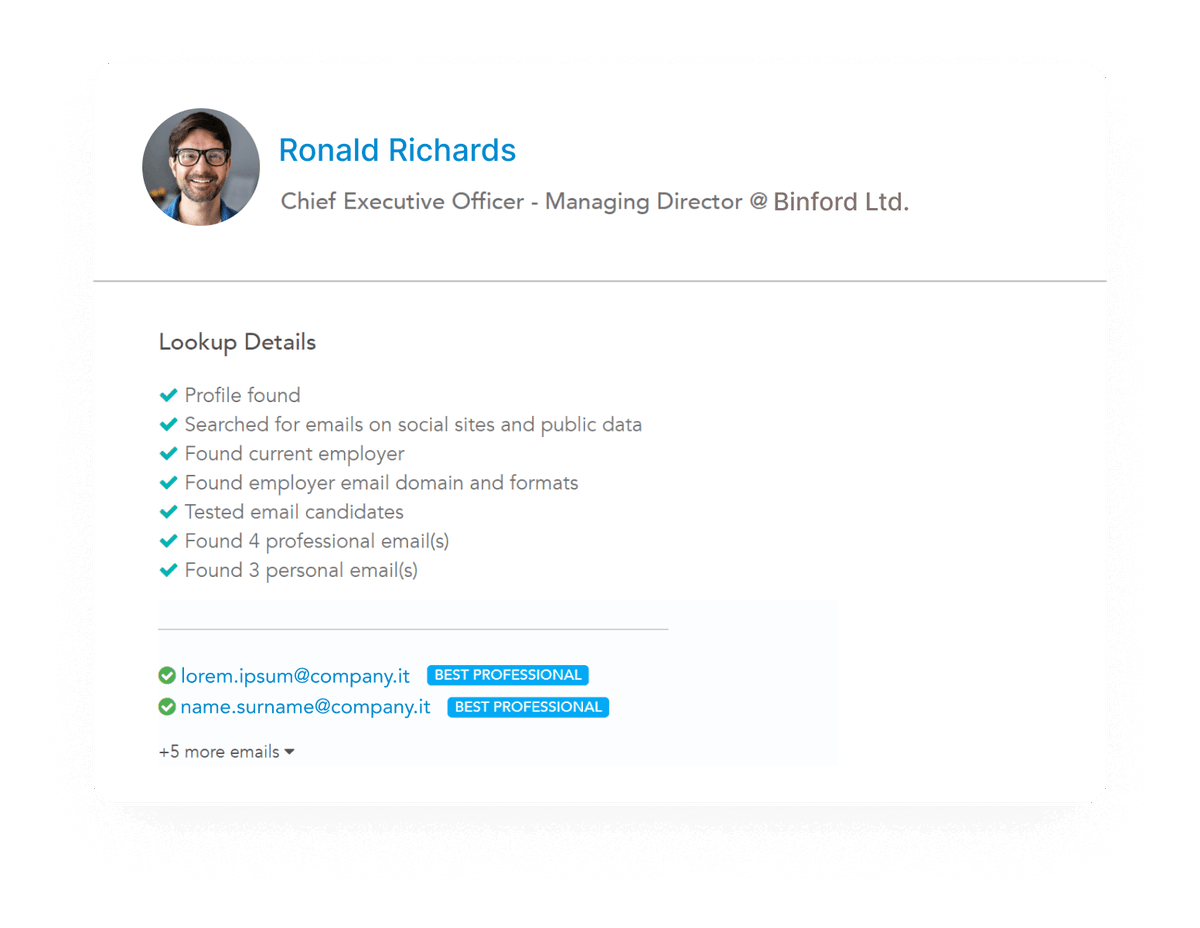
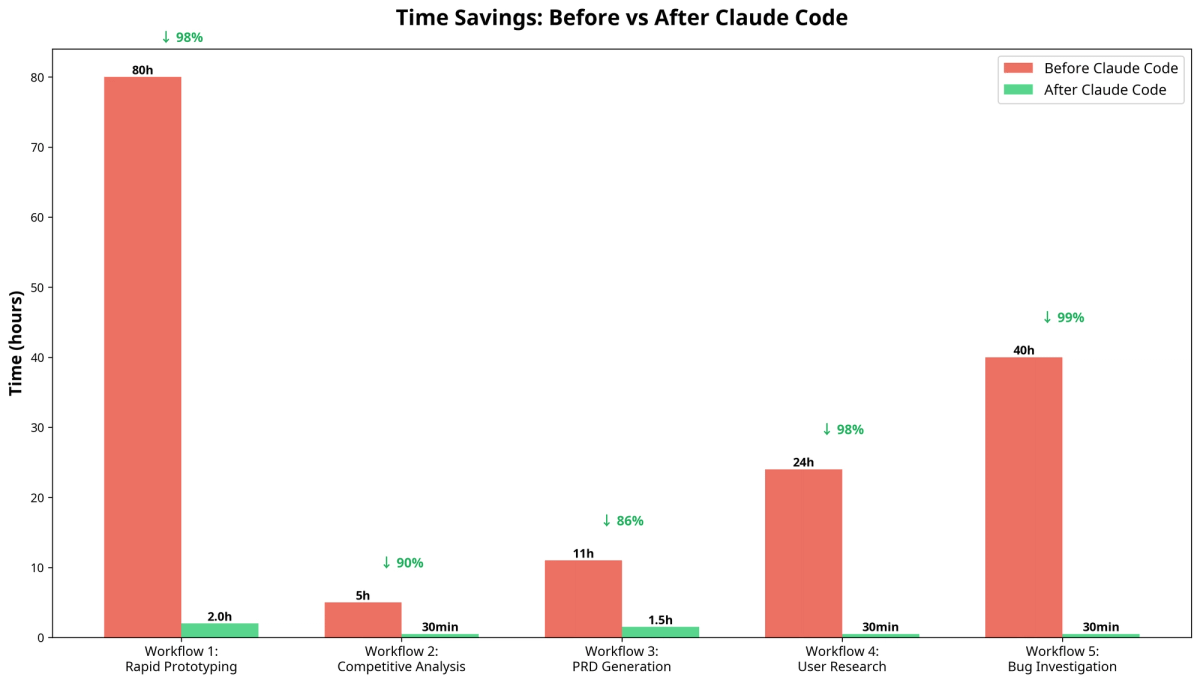
Bayram Annakov built a daily AI sales agent in Claude Code. > 38x cold outreach response rate. Everyone thinks AI sales agents win by writing more emails faster. The hidden mechanic is different. Most cold outreach averages 3% response. Scaling mediocrity doesn't help (who would've thought). Bayram's real move: find the micro-segments that convert at 10%+ then only scale those. The workflow: - Define your process table: lead_id | source | segment | message | sent_at | response_at | outcome - Ask Claude to calculate input, output, and time by segment - Split the average: segments above 3% vs below - Create three commands: /double-down /kill-segment /rewrite-underperformers - Daily loop: import new leads, tag segment, only send to approved segments - Weekly: Claude generates an audit of what improved and what died Not more emails. Better segmentation.

@ahmadafterhours ·
Your cold outreach is quietly killing your main domain. Most founders send outreach from their primary inbox. One spam flag and your CEO's emails start landing in junk too. Here's how to protect yourself: Burner domains — Buy a lookalike (https://t.co/as97duKk4v, https://t.co/C4OXtdM3ks) and send all outreach from there. Your core domain stays clean. Watch your bounce rate — Anything over 2% is a red flag for Google & Outlook. "Verified" lists aren't clean enough. Always re-verify before sending. Warm before you blast — A cold domain on day 1 goes straight to spam. 2–4 weeks of warming builds the sender rep you need. Sequences > one-shots — One email is a coin flip. Three touches is a strategy. Automate the follow-ups. Your pipeline lives or dies on deliverability. Most founders only learn this after the damage is done.

@StephNass ·
"Warm intros lead to 13x higher chance of funding than cold emails" Not exactly. The 13x number comes from a UK study from 2017. But there’s one important nuance. Anyone can email a VC, but not everyone can get an intro. So intros aren’t just a sourcing function, they’re also a screening function. Because of that, a lot of "bad" founders end up in the cold email pool, which naturally lowers the average success rate of cold emails as a channel. But if you look at it for a given founder, the difference is likely much smaller than 13x! Put another way: only the "best" founders get intros, so intros have a higher success rate not just because they’re a better channel, but because the average founder quality is higher. Of course, intros do work better than cold emails. Just not by 13x. That number is mostly a statistical artifact. NB: "Good" founders have traction + track record. Bad founders have none. No judgement here. We all start as "bad" founders, and some become "good". :)

@SalesBlastBen ·
I know this guy who’s been in the cold email game for a long time (you know him well lol). He ran a cold email test recently: Email 1 = 3 sentences (75+ words) Email 2 = 1 sentence (under 75 words) Email 2 got 3x more replies. Do with that what you can.
@NickAbraham12 ·
On the surface, this looks like a great cold email. In reality, it's terrible. 1. Targeting is weak (pitching a lead gen company on lead gen) 2. Clearly just shoe-horning variables in to make it look "personalized". There's much more to it than getting a Clay table to work.

@volosatovde ·
If you don’t have an audience and you’re building a B2B product, do this: > Buy 5 domains > Create inboxes per domain = 25 in total > Warm them up for 10–15 days > Build a targeted list of your ICP > Slowly ramp up to ~25 emails/inbox/day > Personalize every email > Lead with value or a lead magnet — don’t sell in the first email 25 inboxes × 25 emails = 625 emails/day That’s roughly 16,000 cold emails/month. Then: More inboxes. More qualified leads. More experiments. Repeat what works. Cold email is still one of the fastest ways to create distribution when you’re starting from zero.

@IamMLeclercq ·
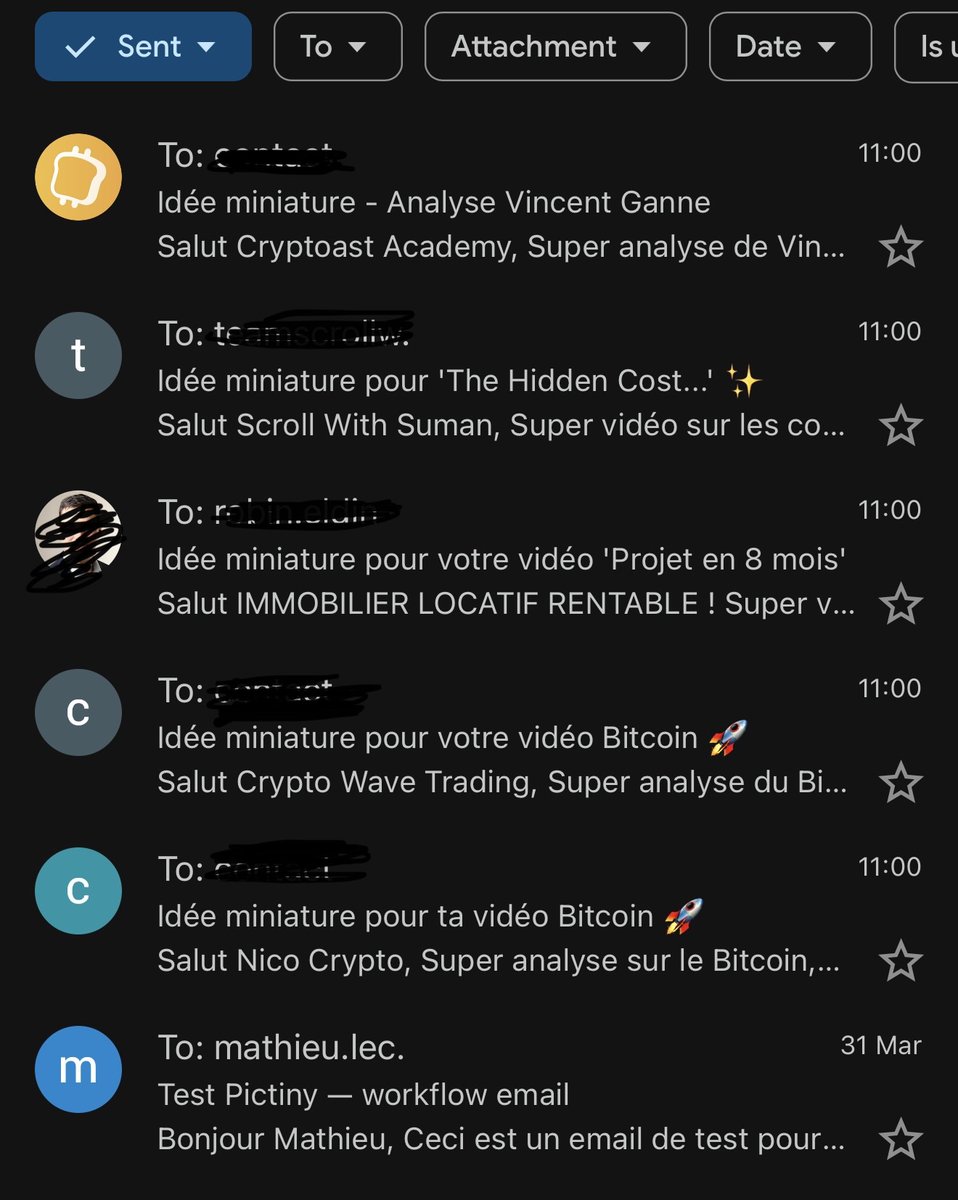
Turned an old PC into a 100% automated cold email machine for Pictiny🚀 Running my own local dashboard. Here is what the engine does on autopilot every single day : - 02:00 AM: Scrapes YouTube & generates 15 new targeted leads using Gemini - 09:00 AM: Sends initial cold emails to the "To Do" list - 09:30 AM: Triggers the Day+3 and Day+7 automatic follow-ups - 24/7: A watcher checks Gmail every 5 mins and updates lead statuses to "Replied" instantly It costs me zero monthly fees and runs while I slee🚀


@hridoyreh ·
Cold email isn’t dead. Bad targeting is. 1,000 emails → 5 replies → 1 client → $2,000 deal. One good list beats 100 bad campaigns...

@codeMdSanto ·
I gave Perplexity Computer my ICP and a list of 50 leads. It researched every one and wrote PERSONALIZED cold emails for all 50. Took 12 minutes. Here’s how to turn Computer into your SDR: “Here’s my ICP: [paste]. Research these 50 companies and tell me which ones match.” “For each matching company, find the decision-maker’s name, title, and LinkedIn.” “Write a personalized 3-line cold email for each lead referencing something specific about their company.” “Score these leads 1–10 based on company size, funding stage, and tech stack fit.” “Draft a follow-up sequence — 3 emails, spaced 3 days apart — for leads that don’t reply.” “Pull recent news about each company so I can reference it in my outreach.” My outbound reply rate went from 3% to 14%.
 Watch video
@alxberman ·
80% of cold email positive responses turn into meetings. Most people never hit that number because they're fixing the wrong thing. They rewrite the copy. They change the subject line. They test a new CTA. The problem is usually the list. Bad data = bad results. Doesn't matter how good the email is. Fix the data first. Then tweak the copy.

@cem_hasoglu ·
something i wish someone told me 3 years ago about cold email the script matters maybe 20% the infrastructure matters maybe 30% the lead list matters at least 50% you can write the perfect email and send it from perfectly warmed domains with perfect authentication and if youre sending it to the wrong people nothing happens i had a client come to us after spending 4 months sending cold emails to "marketing managers at saas companies" thats not a lead list. thats a category. there are 80,000 marketing managers at saas companies. most of them cant even buy what youre selling. we rebuilt his list from scratch instead of "marketing managers at saas companies" we targeted "heads of demand gen at series B saas companies with 50 to 200 employees who are currently running google ads and dont have a podcast" why that specific? because his service was podcast production for saas companies and the ones already spending on demand gen have budget and the ones without a podcast are the ones who need him went from a 0.3% reply rate to a 4.1% reply rate same offer. same price. same emails almost word for word. different list. if your campaign isnt working stop rewriting the email for the 6th time and go look at who youre sending to. pull up 10 random leads from your list and ask yourself "if this person replied right now would they actually be a good client" if the answer is "maybe" or "i dont know" your list is the problem

@therealobsty ·
We just set up cold email outreach for Arvow. Sounds simple but it's not, one wrong move and your domains get burned. So we: - bought secondary domains with URL forwarding - set up dedicated google workspace inboxes - configured all the DNS + DMARC, SPF, DKIM records - started a 14 day warmup process before sending a single email. While inboxes warm up we're sourcing leads - decision makers only within our ICP (seo agencies in US, CA, UK) The biggest challenge so far is the copy. Businesses get hundreds of cold emails a day so if yours reads like one it's getting deleted. Our approach: reach out with a personalized bait, get their permission, then send a real Loom video with actual value for their business. CTA is embedded inside the video to book a demo call. 25 emails per day per inbox. 6 inboxes. Always try new stuff

@MichLieben ·
We spent $50K promoting our best LinkedIn posts through ads. But not to generate inbound leads. To make cold email convert better. When prospects have seen your content 5 to 15 times before the email lands, everything changes. Reply rates went up without touching a word of copy. Same sequences and targeting. The variable? Recognition. Content doesn't replace outbound. It pre-loads the trust so outbound actually works
@SalesBlastBen ·
How to create a unique offer messaging for cold email (that’s ACTUALLY unique): 1) Deconstruct your offer. 2) Choose a targetable sub-niche. 3) Deep market research on sub-niche w/ ChatGPT 4) Produce a individualized offer for niche by identifying unique pain points and relevant technology specific to that niche (and common advantages your solution can bring to the said market) 5) Call out your researched, relevant data points and offer 1-of-1 solution specific to that market This way you’re making the service unique to the niche you’re targeting to create a unique mechanism.

@Ugbuericsam ·
the best cold outreach i’ve ever received didn’t explain the product. it explained my problem back to me so accurately i had to check if we’d spoken before. that’s the whole job.
@cem_hasoglu ·
90% of people saying “cold email is dead” are basically doing this: They’re sending messages and assuming “delivered” means “seen.” It doesn’t. Delivered means a server accepted it. That’s it. That’s a receipt, not a result. And then they do the classic spiral: “No replies... copy must suck.” “Maybe the offer is bad.” “Maybe the niche is wrong.” “Maybe I need a course.” “Maybe I need a new tool.” No bro. Your message is probably sitting in: spam promotions a quarantine folder or filtered so hard it’s basically invisible What actually moves the needle in 2026 isn’t “crazy copy.” It’s boring fundamentals: proper SPF/DKIM/DMARC clean list (relevance matters more than volume) consistent sending patterns (no random spikes) simple plain text easy opt-out not tracking like a weirdo If you’re not getting replies, don’t rewrite your script 20 times. Check if humans can even see it first.
@ahmadafterhours ·
cold email advice nobody follows: send it from your personal email. no template, no design, no tracking pixels. write it like you'd write to a friend. one question, not three. make "just hit reply" the only CTA. tried it with Agently users today and got replies within the hour — people answer people, not companies.
@itsalexvacca ·
5 signs your cold email problem isn't the copy: 1. Reply rate under 2% across every campaign 2. One ICP list for your entire market 3. Same email going to 5-person startups and 500-person enterprises 4. No trigger events in your targeting 5. You've rewritten the subject line but never tested a new segment Fix the list before you fix the email.
@alxberman ·
Clients always ask me why their cold email isn't landing meetings. I ask them one question: "What does your offer actually say?" Nine times out of ten it's something like "we help businesses grow revenue." That sentence closes nothing. "We do cold email setup for B2B agencies doing under $50k/month who just lost a major client" closes something. Specificity is not a style choice. It's the whole game.

@Michael_Fenech_ ·
Everyone is using AI in cold email marketing - but handing full control over is risky. Why? No one knows your business like you do. An AI model can scrape your website and have a base knowledge of what your business does, but it can’t tap into the years of meetings, positive responses and successful deals that you’ve created. Here’s my tip: Allow AI to create the base framework - but give it points, angles and clarity on what you need to communicate. Use dot points and then allow the model to output the sequence. You’ll find it improves the output 10 fold with this method.
Best Cold Email tweets
Xholic studies what works in your niche, drafts posts in your voice and schedules them for the hours your audience is online.
$0 today · Cancel anytime
Browse all tweet collectionsKeep exploring