Engineering judgment and human oversight
Experienced developers define scope, assess correctness, make architectural and security decisions, and supervise rather than blindly delegate.
32%
Best tweets about AI Coding
Explore the best tweets about AI coding, coding agents, AI developer tools, software workflows, and production lessons. Updated weekly.
Code-first examples showing where AI improves software work, where it fails, and how experienced developers use it.
Original Xholic analysis
AI-coding discussion generally favors leverage with guardrails: agents can accelerate scoped work, while developers still provide context, verification, and architectural judgment. A central tension is whether greater code output translates into reliable delivery and maintainable systems.
46% of posts
All-time engagement
50% of posts
Published in 90 days
Conversation map
Experienced developers define scope, assess correctness, make architectural and security decisions, and supervise rather than blindly delegate.
32%
Testing, reviews, CI, minimal diffs, auditability, debugging, and the risks of brittle, insecure, overly complex, or unmaintainable AI-generated code.
28%
Goal-driven agents, parallel subagents, long-running loops, task decomposition, checkpoints, and structured workflows that take work from spec through shipping.
26%
CLI agents, IDE environments, MCP integrations, reusable skills, open-source agent implementations, and tool ecosystems for AI development.
26%
Small well-scoped tasks, explicit constraints, fresh sessions, clear conventions, project docs, model selection, and iterative collaboration with agents.
26%
Knowledge graphs, dependency maps, persistent project memory, focused context, and repo instructions that help agents navigate large codebases accurately.
20%
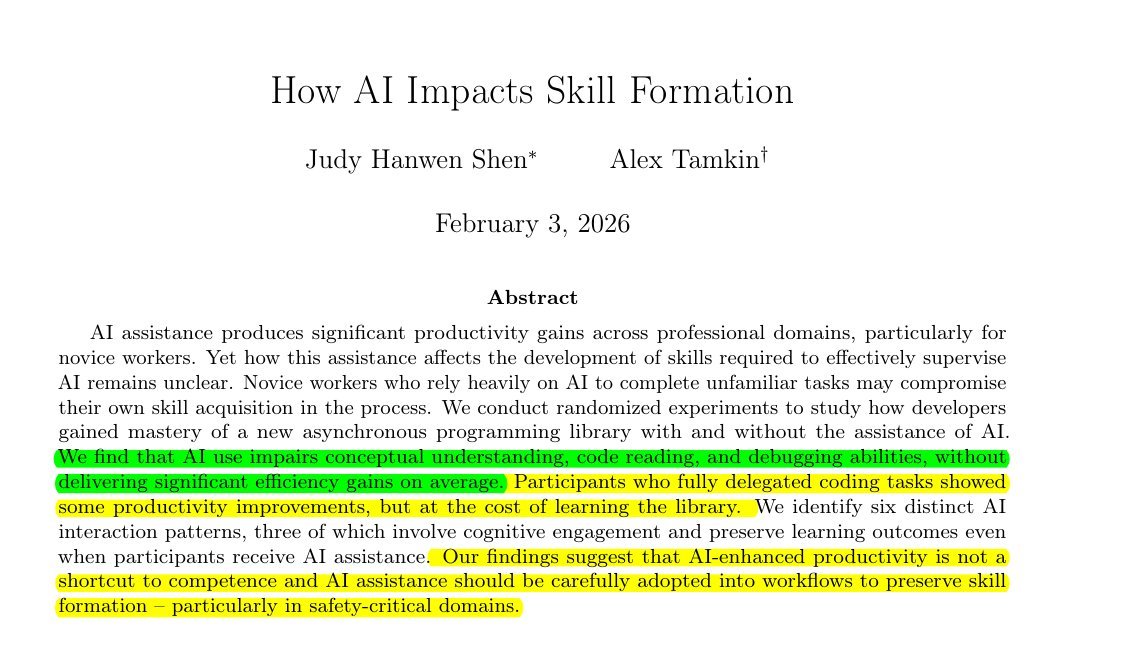
AI-assisted coding can weaken comprehension, debugging, and learning when developers outsource thinking and lose their mental model of the system.
20%
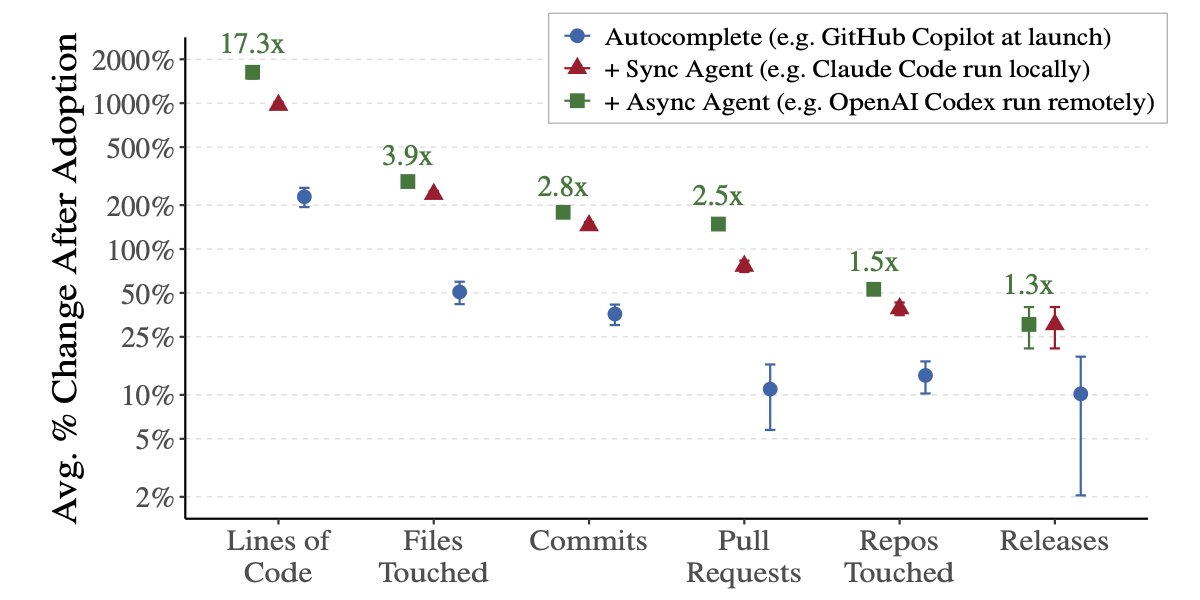
AI increases code output, but review, release, product decisions, adoption, and quality constraints limit realized business value.
18%
Tone and stance
Performance benchmark
Posts with media make up 66% of this collection. Their median all-time score is 22.9, compared with 12.7 for text-only posts.
Format mix
Consensus and debate
Shared view
Across practical and opinion-led posts, agents are framed as tools whose outputs still need people to define scope, assess correctness, and make security and architecture decisions.
Shared view
Posts repeatedly recommend narrow scope: one task per session, relevant files and constraints, small changes, and asking the agent to explain its work.
Shared view
Tests, linting, type checks, review, surfaced validation results, and auditability are presented as practices for making agent-assisted work more trustworthy rather than leaving checks to a final cleanup phase.
Shared view
Several posts argue that useful agent performance depends on locating relevant code, dependencies, conventions, and durable project context—not only generating syntax.
Open debate
Some posts advocate long-running, goal-driven, and parallel-agent workflows; others argue that autonomous loops can be costly or risky without substantial technical setup and oversight.
Open debate
Posts claiming much higher code output sit beside posts summarizing research that reports review, release, adoption, and quality constraints can narrow end-to-end gains.
Open debate
Some practical advice treats AI as a multiplier for developers who understand systems, while posts summarizing a study warn that full delegation can weaken comprehension and debugging.
What performs
The single question-format post had a median all-time score of 260.044, compared with 36.71 for tutorials, 22.86 for announcements, and 5.16 for opinions. Because there was only one question-format post, this is a descriptive comparison rather than a reliable format-level conclusion.
The /goal prompting workflow was the highest all-time-score outlier at 1478.17, followed by the semantic repository-context tool post at 1108.32.
The post summarizing claims about comprehension, debugging, and efficiency had an all-time score of 763.83, placing it among the supplied benchmark outliers.
Posts with media had a median all-time score of 22.86 versus 12.667 for text-only posts. This is an association in the supplied analytics, not proof that media caused stronger performance.
Statistical standouts
Creator landscape
The five most represented creators account for 20% of the selected posts.
1. Vaishnavi
@_vmlops
2 posts
2. aditya
@adxtyahq
2 posts
3. Alex Finn
@AlexFinn
2 posts
4. divyansh tiwari
@DivyanshT91162
2 posts
5. John Crickett
@johncrickett
2 posts
6. Layton Gott
@Layton_Gott
2 posts
Alex Finn posted two evidence tweets and has the highest listed top-voice median all-time score, 868.7. One post describes a goal-driven agent workflow, while the other recommends close, incremental supervision.
John Crickett’s two posts argue that prompt fluency is not engineering expertise and recommend a focused-context workflow. His listed median all-time score is 88.01.
Posts about coding-agent tools describe mechanisms such as semantic repository graphs, structured workflow skills, and transparent agent loops rather than making only broad capability claims.
Since the previous snapshot
Themes, sentiment, stance, and post format are classified per tweet. All counts, shares, medians, creator concentration, freshness, and performance comparisons are then calculated directly from the published snapshot.
Xholic's all-time score compares engagement while accounting for reach, post age, and creator consistency. It is used for relative comparisons within this collection.
This report analyzes the exact 50-post snapshot shown below. AI identifies editorial categories and drafts explanations; all statistics are calculated from the snapshot, and every narrative claim is checked against cited posts before publication.
Best AI Coding tweets
Ranked 01–50

@AlexFinn ·
The biggest advancement in AI coding this year has been /goal And it isn't even close It allows your AI agent to quite literally work for days without stopping. You give a mission. It works until the mission is complete Here's the thing though: /goal is useless if you don't use it properly You NEED a good prompt for it I found basically any prompt I hand write after /goal is never good enough. It produces results that might as well have been a normal prompt Meta prompting is the answer Go to any AI that has context around the project you're working on Say "I'm working with Codex and I want to use their new /goal feature. Please research their /goal feature. Then, take a look at our project and give me 3 options for how we could use /goal to be maximally productive. Then give me a highly detailed /goal prompt for each" Take one of the prompts then go into the Codex CLI and type /goal then give the new prompt I 100% guarantee the AI does better work than you've ever seen before


@Suryanshti777 ·
This is wild 🤯 Somebody finally realized AI coding agents spend half their time searching your codebase instead of actually understanding it. So they built a local knowledge graph for Claude Code, Cursor, Codex CLI, OpenCode, and Hermes Agent. Not another wrapper Not another “AI devtool” landing page An actual semantic layer that indexes your entire repo and lets agents query relationships, call graphs, routes, symbols, and dependencies instantly. The wild part? On real repos like VS Code, Django, Excalidraw, Tokio, and OkHttp, CodeGraph cut: → ~59% tokens → ~70% tool calls → ~49% execution time → ~35% cost Instead of Claude Code or Codex endlessly grepping files and spawning exploration agents, they query a pre-built graph and move straight to the relevant context. That changes the feel of AI coding completely. Especially on larger codebases where Cursor, Claude Code, and Codex usually start drowning in file reads. And the setup is absurdly simple: npx @colbymchenry/codegraph No external APIs No cloud dependency No weird config hell Just local semantic intelligence for your codebase. This is one of those repos where you instantly understand why it blew up to 14k+ stars so fast. 100% open source Link in comments


@pvergadia ·
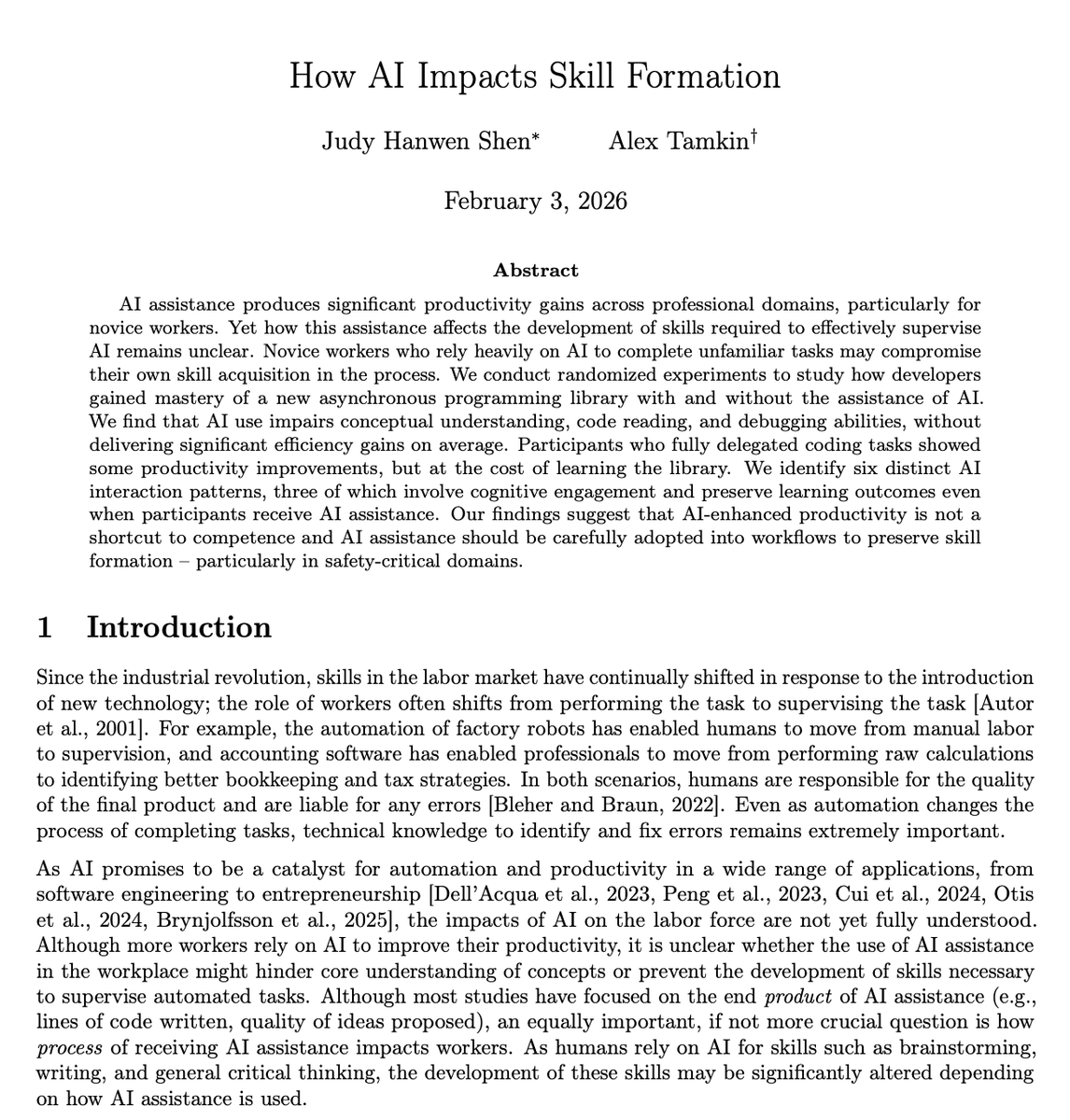
JUST DROPPED: Anthropic's research proves AI coding tools are secretly making developers worse. "AI use impairs conceptual understanding, code reading, and debugging without delivering significant efficiency gains." -- That's the paper's actual conclusion. 17% score drop learning new libraries with AI. Sub-40% scores when AI wrote everything. 0 measurable speed improvement. → Prompting replaces thinking, not just typing → Comprehension gaps compound — you ship code you can't debug → The productivity illusion hides until something breaks in prod Here's why this changes everything: Speed metrics look fine on a dashboard. Understanding gaps don't show up until a critical failur and when they do the whole team is lost. Forcing AI adoption for "10x output" is a slow-burning technical debt nobody is measuring. Full paper: https://t.co/JeRZr6up6P


@realBigBrainAI ·
Marc Andreessen explains how AI turned the valley's best programmers into sleep-deprived "vampires": Marc points out a counterintuitive twist in what AI coding has done to developers. You'd expect one of two outcomes, he says. Either coders would leave the profession entirely "because there's no point anymore," or they'd simply have better lives, working a fraction of the hours now that AI makes them so productive. Neither happened. As Marc puts it: "What's actually happened is virtually to a person, they're all working more hours than ever. To the point where there is a new term of art that's used in the valley called the AI vampire...You're up all night doing AI coding because you are so productive." The reason they can't switch off is opportunity cost: "If you go to sleep, you won't be with your 20 AI coding agents keeping them working on all the projects that you have them working on. And so people stop sleeping." Marc describes friends, some of them famous, who look visibly worse than they did six months ago. Sleep-deprived, bags under their eyes, clearly not taking care of themselves. And yet "they are absolutely ecstatic because they are able to produce five times, 10 times, 20 times more code per hour than they could in the past." He shares one example, a Wall Street friend with a 35-year-old computer science degree from MIT who had long stopped coding: "He's picked up coding with AI. He's completely reanimated his entire house." AI jukebox, security cameras, robot pet dogs, smart fridges, every project he'd ever imagined. In his spare time, the friend has "generated 500,000 lines of code just by working with AI." The same thing is playing out inside companies. At leading-edge tech firms, Marc says, coders using AI are estimated to be "20 times more productive than they were before they started using AI." So what happens when code becomes that cheap to produce? @pmarca points to an elasticity effect: "It turns out there's way more demand for code in the world than was ever able to be satisfied under the old economics. Every company I know has a thousand things that they've wanted to have code for that they've never been able to get to." Now they can do all of it. Companies are shipping products faster, adding features faster, moving into "turbo mode." Coding salaries have inflated to match. According to Marc, the top coders in AI now make $50 million a year, because "they've got the silver bullet. They've got the philosopher's stone." Asked whether any of this is sustainable, his answer is blunt: "Not only is this sustainable, this is going to intensify."
 Watch video
@AlexFinn ·
Everyone on X talking about building AI coding loops I think for 99% of people it's horrible advice. Mostly being promoted by people who profit off token burn Unless you are deeply technical, you are going to build flimsy apps and burn outrageous amounts of money Engineering a loop that produces high quality code requires insane amounts of setup and oversight to make sure it's done the right way For a vast majority of people the best AI coding strategy is: 1. Work closely with your agent, ask it to build the next smallest people of functionality you can think of 2. After each small chunk, ask the AI what it did. Tell it to describe it to you concisely 3. If anything is too technical, ask it to explain in a non technical way so you deepen your knowledge 4. Have it continuously maintain a current state doc you can feed to another LLM to get 2nd perspectives on crucial decisions 5. Mute influencers who give you vague advice that doesn't really mean anything This will actually save more time in the long run because you won't have to untangle code you don't understand

@rohanpaul_ai ·
Anthropic's own study proves Vibe-Coding and AI coding assistants harm skill building. "AI use impairs conceptual understanding, code reading, and debugging abilities, without delivering significant efficiency gains on average" Developers learning 1 new Python library scored 17% lower on tests when using AI. Delegating code generation to AI stops you from actually understanding the software. Using AI did not make the programmers statistically faster at completing tasks. Participants wasted time writing prompts instead of actually coding. Scores crashed below 40% when developers let AI write everything. Developers who only asked AI for simple concepts scored above 65%. Managers should not pressure engineers to use AI for endless productivity. Forcing top speed means workers lose the ability to debug systems later. ---- Paper Link – arxiv. org/abs/2601.20245 Paper Title: "How AI Impacts Skill Formation"

@johncrickett ·
“Software engineers who don’t know how to use AI coding agents will fall behind.” No. AI coding agents are not the hard part of building software. They’re a simple tool. You can learn to use them in a few days. The hard part is knowing what to ask for. Knowing whether the answer is any good. Knowing when the code is brittle, overcomplicated, insecure, or just plain wrong. It’s the judgement required to use them well. That’s software engineering. And that takes decades to learn properly. The people at risk aren’t engineers who haven’t mastered using coding agents yet. It’s people who only know how to prompt one.

@VaibhavSisinty ·
A Director at Google just open-sourced the exact engineering playbook their senior engineers follow. 🤯 It's called Agent Skills by Addy Osmani. 23 production-grade skills that teach AI coding agents to work like a senior engineer. Not generic prompts. Structured workflows with steps, quality gates, and verification at every stage. 7 commands that map to how real software gets built: → /spec : define what to build before writing code → /plan : break it into small atomic tasks → /build : implement one slice at a time → /test : prove it works with real evidence → /review : five-axis code review before merge → /code-simplify : clarity over cleverness → /ship : deploy with confidence Every skill has an anti-rationalization table the excuses AI agents make to skip steps like "I'll add tests later" with documented counter-arguments built in. Works with Claude Code, Cursor, Gemini CLI, GitHub Copilot, Codex, and Windsurf. Based on Google's internal engineering practices. Free. MIT license.


@HedgieMarkets ·
🦔An NBER study by MIT and Wharton researchers tracked 100,000 GitHub developers before and after adopting AI coding tools. Autonomous agents produced 17x more lines of code. But by the time that work went through review and release, the uplift shrank to 30%. When they checked four major app marketplaces, they found more new apps but no increase in total usage or downloads. More software shipped, but nobody used it. My Take The bottleneck in software has always been deciding what to build, reviewing whether it works, and convincing someone to use it. AI accelerated the typing and left all three of those untouched. The entire financial case for the AI buildout assumes faster output translates to more economic value. This study measured it and found that it mostly doesn't, at least not yet. Alphabet reports Wednesday with $180 billion in capex guidance. If the productivity gains from AI coding tools can't survive contact with the rest of the production chain, the revenue assumptions underneath that spending need to be a lot more conservative than what these companies are currently projecting. Hedgie🤗


@Hesamation ·
this is 80% of all you need to know about AI coding. the rest is useful only if you follow these principles, which top engineers practiced even *before* AI. these are 8 fundamental tips on aimaxxing: > learn how to program first. AI is a multiplier of what you already know. > be as specific as possible. communication is an important skill in software now. > the smaller the tasks the better results. break down big problems to smaller ones. this is a basic engineering skill you must know anyways. > do not let AI do all the thinking for you. that makes you useless. > tell AI what you don’t want to avoid slop. put a do-not section in the prompt/markdown. > use markdown files for the agent so it remembers. > don’t sleep on MCPs. they’re super easy to use by now. have a few necessary MCPs and don’t clutter it. > give AI a way to verify its work. CI/CD pipelines, test cases, etc. make it yourself or have the ai make it.


@kimmonismus ·
Google has formed a dedicated strike team within Google DeepMind to improve its AI coding models, driven partly by pressure from Anthropic, whose tools are seen internally as more advanced. Leadership, including Sergey Brin (!), is pushing urgently toward “agentic” AI systems capable of handling complex, multi-step coding tasks and eventually automating AI research itself. Coding is the way to win.


@sentient_agency ·
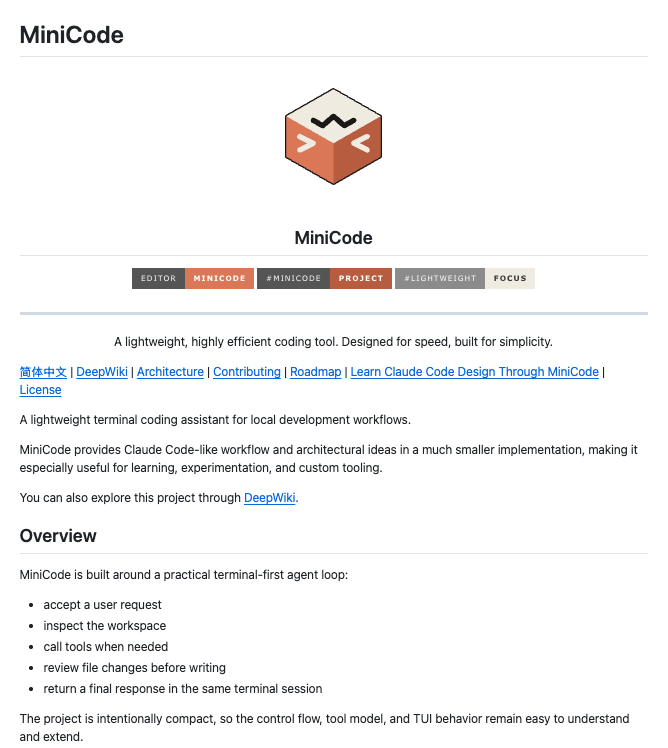
Say goodbye to black-box AI coding agents. Someone just built Claude Code's open twin and published every line of it. MiniCode is a terminal coding assistant with the same agent loop, tool model, and TUI architecture built to be understood, not just used. The gap vs Claude Code is only two things: price and team size. Everything architectural is replicated: → model → tool → model loop running until task is done → review-before-write with unified diff before any file changes land → dynamic MCP over stdio connects any server, auto-registers tools → local skills via SKILL.md same pattern Claude Code uses → reject with guidance push corrective instructions back mid-loop → run_command with single-string invocations and auto arg splitting → explicit background shell commands surfaced as lightweight shell tasks Three implementations. One ecosystem. TypeScript is the reference. Rust stores conversation history inside the working directory so project context moves with the codebase. Python version is shipping soon. The entire project structure is documented with an architecture guide that walks you through every module and why each decision was made. This is the fastest way to go from "I use AI coding agents" to "I understand how AI coding agents work." MIT License. 100% Opensource

@DAIEvolutionHub ·
Self-Taught Vibe Coding: Just Check Out These Three Open-Source Projects, No Need to Buy Courses A lot of AI Coding course materials come from here, and the original versions are actually more systematic 1. Easy-Vibe A systematic tutorial produced by DataWhale, with 5k stars. Divided into three stages: starting with an intro to AI programming mini-games, then product ideas + Web prototypes, and finally desktop apps and multi-Agent collaboration. Beginner-friendly, mainly in Chinese https://t.co/j02Nvaiu9k 2. vibe-coding-cn The Chinese translation version of the original EnzeD/vibe-coding, with 11k stars. Three main sections: Prompt tips, Skill library, Workflow. Emphasizes planning first, modular breakdown, interfaces upfront—turning vibe coding from casual improvisation into repeatable engineering https://t.co/w6005aPekW 3. awesome-vibe-coding The most comprehensive Vibe Coding resources awesome list, with 4k stars. Covers browser tools, IDEs, mobile apps, plugins, CLI tools. A master directory of all mainstream vibe coding tools https://t.co/azoZhLgkvG Read through these three first, and you'll gain a whole new understanding of AI Coding


@oliviscusAI ·
Anthropic's research proves AI coding tools are secretly making developers worse. They split developers into two groups. One used an AI assistant. The other just used normal documentation. The group that used AI performed significantly worse. They scored 17% lower on comprehension tests. That is a drop of two full letter grades. It impaired conceptual understanding. It impaired code reading. And worst of all, it decimated their ability to debug. The control group, forced to struggle through errors manually, actually learned the library. The AI group bypassed the struggle. And they learned nothing. Here is the most dangerous part. Researchers identified a "Speed Illusion." Participants who simply copy-pasted AI code finished their tasks the fastest, but had the absolute lowest comprehension. They outsourced their cognitive effort. The researchers uncovered what they call the "Supervision Trap." As AI gets more advanced, the human role is shifting. We are moving from writing code to supervising AI agents. But to supervise AI effectively, you need to be able to spot subtle bugs, hallucinations, and architectural flaws. You need elite debugging skills. If you rely on AI to do the work, debugging is the exact skill you fail to develop. This creates a fatal loop. Companies are pushing junior workers to use AI to maximize immediate productivity. But in the process, they are preventing them from ever developing the senior-level skills required to actually manage the AI.

@Trader_XO ·
I’ve been in the AI trenches for a few months now, and it’s never been more evident as to why clean code still matters, just as it did prior to agentic coding. Eg when I’ve set up a project the way any seasoned senior engineer would, with clear structure, solid conventions and defined boundaries, the codebase grows in a much healthier way. It sounds obvious, but AI makes the difference more extreme. AI does not fix weak structure or semantics, it builds on whatever is already there. What has worked well for me is keeping a clean directory structure from day one, building shared utilities such as consistent error handling, enforcing tight naming conventions, and defining clear rules for APIs and design patterns through lifecycle hooks - pre and post. When the foundations are in place, new features are ‘simpler’ to roll out. When the basics are rushed, the problems scales just as quickly. Small inconsistencies turn into bigger ones. Technical debt builds faster than it used to, 1000 lines of code grows very quickly to 10000 lines of unstructured mess. What’s helped before building is having a common framework for using AI tools, because early structure matters more than ever. Code reviews need to be tighter, not looser. Moving fast and fixing later becomes more expensive. Senior engineers matter because they set the patterns the AI will copy. AI speeds up whatever direction you are heading from the base up.

@adxtyahq ·
"design Claude Code from scratch" apparently this was asked in an Anthropic interview round. came across it somewhere on the internet and honestly it's a much more interesting AI systems problem than most classic distributed systems questions 1. understand the repository - build an AST + dependency graph - extract symbols, imports and cross-file relationships instead of relying on raw text 2. retrieve only relevant context - use embeddings + graph traversal to fetch the right files - sending an entire codebase to the model doesn't scale 3. plan before writing code - identify which files need changes - break the task into small executable steps before generating edits 4. edit incrementally - generate minimal diffs instead of rewriting files - preserve existing architecture, naming conventions and formatting 5. validate every change - run linting, type checks and tests after each edit - failed validation should trigger another reasoning pass 6. use tools, not just the model - search, terminal, git and diagnostics become tools the agent can call whenever needed 7. remember context across the session - keep track of previous edits and architectural decisions - avoid repeatedly solving the same problem 8. explain every edit - show why each file changed - surface tool outputs and validation results so developers can trust the agent Probably not how Claude Code is actually built, but this is how I'd structure the system based on what I've learned about AI coding agents.


@milan_milanovic ·
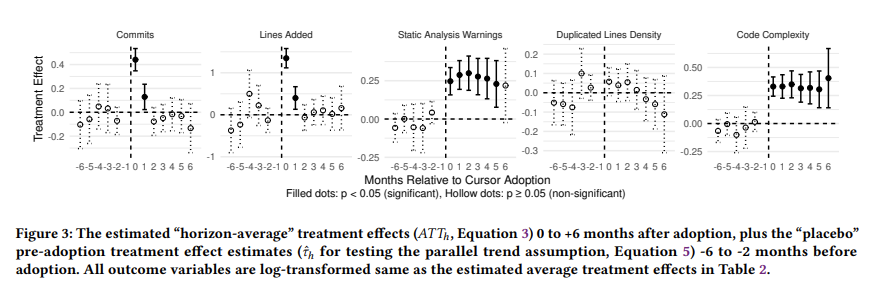
𝗗𝗼𝗲𝘀 𝗔𝗜-𝗣𝗼𝘄𝗲𝗿𝗲𝗱 𝗖𝗼𝗱𝗶𝗻𝗴 𝗧𝗿𝗮𝗱𝗲 𝗦𝗽𝗲𝗲𝗱 𝗳𝗼𝗿 𝗧𝗲𝗰𝗵𝗻𝗶𝗰𝗮𝗹 𝗗𝗲𝗯𝘁? Developers report 10x productivity gains from AI coding agents, yet a Carnegie Mellon study of 806 open-source GitHub repositories found something different. Researchers compared Cursor-adopting projects against 1,380 matched control repositories by tracking code output and quality monthly with SonarQube. Here are the key findings: 𝟭. 𝗧𝗵𝗲 𝘃𝗲𝗹𝗼𝗰𝗶𝘁𝘆 𝗯𝗼𝗼𝘀𝘁 𝗶𝘀 𝗿𝗲𝗮𝗹 𝗯𝘂𝘁 𝗱𝗶𝘀𝗮𝗽𝗽𝗲𝗮𝗿𝘀 𝗳𝗮𝘀𝘁 Projects saw a 𝟮𝟴𝟭% 𝗶𝗻𝗰𝗿𝗲𝗮𝘀𝗲 𝗶𝗻 𝗹𝗶𝗻𝗲𝘀 𝗮𝗱𝗱𝗲𝗱 and a 𝟱𝟱% 𝗶𝗻𝗰𝗿𝗲𝗮𝘀𝗲 𝗶𝗻 𝗰𝗼𝗺𝗺𝗶𝘁𝘀 during the first month after Cursor adoption. By month three, both metrics dropped back to pre-Cursor levels. The spike looks great on a dashboard. It just doesn't last. 𝟮. 𝗧𝗲𝗰𝗵𝗻𝗶𝗰𝗮𝗹 𝗱𝗲𝗯𝘁 𝗮𝗰𝗰𝘂𝗺𝘂𝗹𝗮𝘁𝗲𝘀 𝗮𝗻𝗱 𝘀𝘁𝗮𝘆𝘀 Static analysis warnings rose by 𝟯𝟬% and code complexity increased by 𝟰𝟭% on average. This decline of quality was persistent in the project. 𝟯. 𝗧𝗵𝗮𝘁 𝗱𝗲𝗯𝘁 𝗰𝗿𝗲𝗮𝘁𝗲𝘀 𝗮 𝘀𝗲𝗹𝗳-𝗿𝗲𝗶𝗻𝗳𝗼𝗿𝗰𝗶𝗻𝗴 𝘀𝗹𝗼𝘄𝗱𝗼𝘄𝗻 The researchers found a feedback loop between quality and velocity. A 𝟭𝟬𝟬% 𝗶𝗻𝗰𝗿𝗲𝗮𝘀𝗲 𝗶𝗻 𝗰𝗼𝗱𝗲 𝗰𝗼𝗺𝗽𝗹𝗲𝘅𝗶𝘁𝘆 caused a 𝟲𝟰.𝟱% 𝗱𝗲𝗰𝗿𝗲𝗮𝘀𝗲 in future development velocity. A 𝟭𝟬𝟬% 𝗶𝗻𝗰𝗿𝗲𝗮𝘀𝗲 𝗶𝗻 𝘀𝘁𝗮𝘁𝗶𝗰 𝗮𝗻𝗮𝗹𝘆𝘀𝗶𝘀 𝘄𝗮𝗿𝗻𝗶𝗻𝗴𝘀 caused a 𝟱𝟬.𝟯% 𝗱𝗿𝗼𝗽 in lines added. The two-month speed boost generates enough technical debt to drag down productivity for months afterward. 𝟰. 𝗔𝗜 𝘄𝗿𝗶𝘁𝗲𝘀 𝗺𝗼𝗿𝗲 𝗰𝗼𝗺𝗽𝗹𝗲𝘅 𝗰𝗼𝗱𝗲 𝘁𝗵𝗮𝗻 𝗵𝘂𝗺𝗮𝗻𝘀 Regardless of the codebase's size, Cursor-adopting projects still had 𝟵% 𝗵𝗶𝗴𝗵𝗲𝗿 𝗰𝗼𝗱𝗲 𝗰𝗼𝗺𝗽𝗹𝗲𝘅𝗶𝘁𝘆 than comparable projects producing the same volume of code. This means that such projects are harder to maintain. QA has to keep up with higher output. We can say that teams adopting agentic coding tools without upgrading their processes are borrowing speed from the future. The paper even suggests tools should consider "self-throttling," reducing suggestion volume when project complexity crosses healthy thresholds. 𝗟𝗶𝗻𝗲𝘀 𝗼𝗳 𝗰𝗼𝗱𝗲 𝗽𝗿𝗼𝗱𝘂𝗰𝗲𝗱 𝗶𝘀 𝗻𝗼𝘁 𝘁𝗵𝗲 𝘀𝗮𝗺𝗲 𝗮𝘀 𝗽𝗿𝗼𝗴𝗿𝗲𝘀𝘀 𝗺𝗮𝗱𝗲 What processes has your team put in place to manage code quality alongside AI coding tools?

@msnmongare ·
Someone reached out to me recently "Bro, niaje. My payments on the system are showing duplicates whenever someone pays successfully" Then came the follow-up: "Someone on TikTok, a popular developer vibe-coded my app. I know he's your friend." That conversation got me thinking. Vibe Coding Ends in Production Agentic AI coding is incredibly powerful 🔥 You can describe an idea, and within minutes, an AI agent can generate a payment integration, API, database schema, authentication, webhooks, and an entire application. What I learnt is; The problem is not that AI-generated code cannot work. The problem is deploying code you don't fully understand, especially in domains where you lack the fundamentals. Moral lesson: 👇🏾👇🏾 The more I use AI coding agents, the more convinced I become that software engineering fundamentals matter more than ever. AI can write code. Engineers understand systems.


@AntoineRSX ·
A chinese lab just open-sourced an AI that builds video games from one prompt. It's actually not a toy. Building a playable game is the hardest test for a coding agent. Every file has to stay wired to every other file. Cursor, lovable, claude code all weaken there. If this generalizes.. SaaS, dashboards, internal tools will be much easier to build in one prompt. It's not a game release. It's a possible blueprint for better AI coding.
 Watch video

@smratitiwa86867 ·
Andrej Karpathy just explained the future of software engineering without directly saying it. The best AI engineers are no longer “prompting.” They’re building systems around the agents. Karpathy’s biggest insight wasn’t: “Claude can code.” It was: LLMs become dramatically better when you force them into disciplined workflows. That’s why "CLAUDE.md" files are suddenly everywhere. Not because they’re prompts. Because they behave like an operating system for the agent. Karpathy called out the exact problems with AI coding: - models assume instead of asking - they overengineer simple tasks - they hide confusion - they rewrite unrelated code - they optimize for completion, not correctness So developers started encoding rules directly into the workflow: → Think before coding → Simplicity first → Surgical edits only → Goal-driven execution And the results are wild. People are now running multiple Claude Code agents in parallel like engineering teams: • one agent researching • one debugging • one writing tests • one optimizing code • one validating outputs Not “AI assistance.” Actual orchestration. And this part from Karpathy changes everything: “Don’t tell the model what to do. Give it success criteria and let it loop.” That is the shift. From: “write this function” To: “here’s the goal, constraints, tests, and verification system — now iterate until correct.” The craziest part? This already feels like a phase shift in engineering. A lot of developers quietly went from: 80% manual coding → to 80% agent-driven coding in just months. Not because AI became perfect. Because the leverage became impossible to ignore. We’re entering an era where the highest leverage engineers won’t necessarily be the best coders. They’ll be the people who build the best systems around AI agents.


@Shruti_0810 ·
An 82K⭐ GitHub repo is built around one painfully obvious idea: AI coding agents waste more time **searching** your code than understanding it. Graphify maps the repo once into a queryable knowledge graph. So instead of: → grep → open 20 files → lose context The agent asks one question... > "How does authentication reach the database?" ...and gets the exact path. No embeddings. No vector database. No LLM. The future of AI coding isn't bigger context windows. It's making agents stop reading the same files over and over. GitHub: https://t.co/ovZM6eWx6R
 Watch video

@Layton_Gott ·
9 things I've learned about AI coding that took me way too long to figure out: 1. AI will cheat on its own tests. It'll hardcode the answer or mock the exact function it's supposed to be testing so everything passes. Green checkmarks that prove nothing. Read the tests, not just the results. 2. More code is not more progress. AI loves to over build. Every extra line it writes is another place a bug can hide. The best AI sessions delete as much as they add. 3. It writes code that looks done and isn't. Less experienced devs can't tell the difference between code that works and code that lasts. That gap is the whole job now. 4. Tell it what NOT to touch. "Don't change anything I didn't ask for" saves you from it quietly renaming things and adding features you never wanted. 5. One chat, one task. The second you pile three things into one conversation the quality drops. Fresh thread per feature. 6. The stack matters more than people admit. AI is way better at popular, well documented tools because it trained on them. Pick a weird stack and you're on your own. 7. Three failed fixes means start over. If it can't fix the error in three tries, the chat is poisoned. Don't keep digging. Reset with a clearer prompt. 8. Prototyping is where it actually shines. Want to see what a big refactor looks like? Let it rip. The bar is low when you're throwing it away anyway. 9. It's an intern, not a senior. Great to start things, less useful the deeper and more complex it gets. Treat it like that and it stops disappointing you. The people getting burned by AI all treat it like it's smarter than it is. The ones shipping treat it like exactly what it is and build around the gaps.

@techNmak ·
I miss one very specific feeling from coding. You spend an hour chasing a bug that makes absolutely no sense. You print variables everywhere, question your understanding of the language, change something that shouldn't possibly matter, restart your editor for no reason because at that point you're not debugging anymore you're just praying, and then it works. Sometimes you never even find out why. That little moment of satisfaction was one of the best parts of programming. AI coding agents are changing that experience in a way I didn't expect. Today I can describe the problem, let an agent inspect the repository, make the changes, run the tests, hit an error, fix its own mistake, and come back with a working result. Objectively that's incredible, but it doesn't always feel the same. Watching it happen isn't the same as doing it. At the same time, I'm not sure AI is taking the joy out of programming. Maybe it's just moving it somewhere else. The satisfying moment used to be "I finally solved it." Now it can be "I had an idea this morning and it exists this afternoon." Which makes me wonder if we actually loved writing code as much as we thought we did. Maybe what we loved was getting a computer to do something that had only existed in our head before. AI is removing a lot of the friction between those two things. Some of that friction absolutely deserved to die. I'm not convinced all of it did.
@Suryanshti777 ·
The hottest take in AI right now: the IDE is becoming the operating system for autonomous agents. Claude Code's new desktop launch isn't another coding assistant. It's an attempt to replace the entire developer workflow. One app now has: • Parallel AI coding sessions with Git isolation • Browser, terminal, editor and diff in one workspace • Autonomous testing and self-verification • Background cloud sessions that keep working after you close your laptop • CI monitoring and auto-merge • Phone-to-code dispatching • Connectors, MCP servers and plugins The important shift isn't "Claude can code." It's that Claude is starting to: understand → build → test → debug → review → ship with increasingly little human intervention. We're moving from: copilot → coworker → autonomous software engineer. I don't think the winners of this decade will be the models with the best autocomplete. They'll be the systems that can own the entire software development loop.
 Watch video

@DivyanshT91162 ·
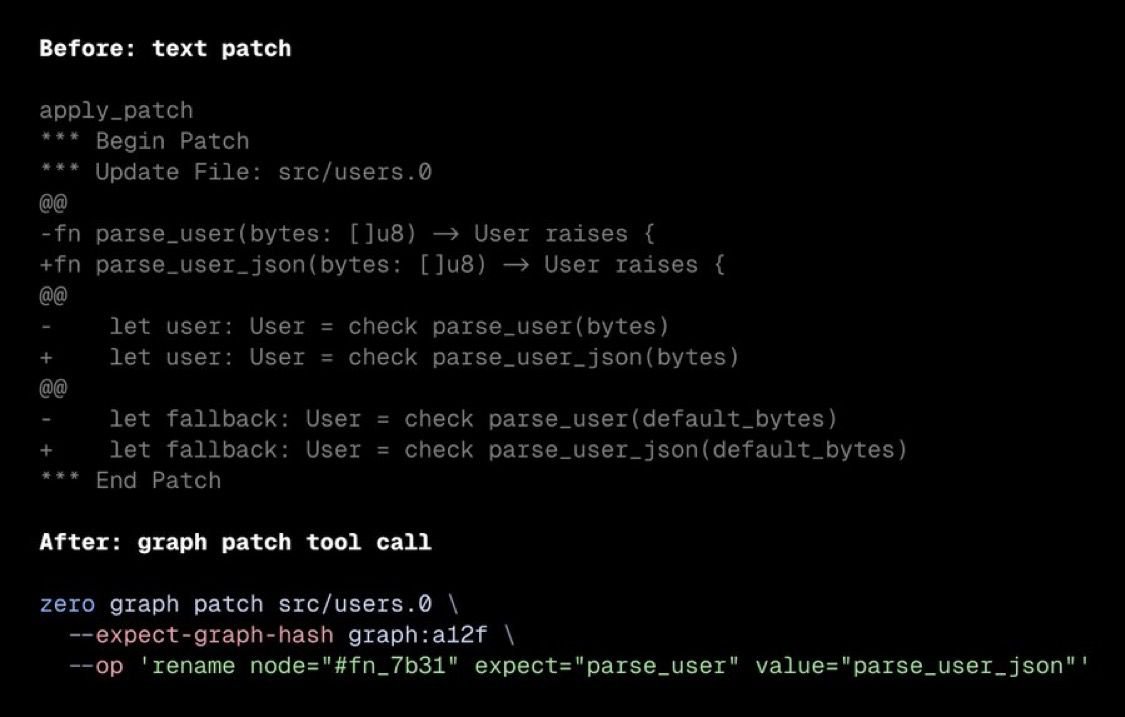
AI agents may stop editing code the way humans do. Instead of reading thousands of source files line by line, they're starting to work from a structured graph of the codebase. Zero Graph gives agents a map before they make changes: • dependency relationships • code ownership • type information • semantic context and summaries That means safer patches, fewer hallucinated edits, and a much better understanding of how changes ripple through a system. The future of AI coding might not be smarter code generation. It might be giving agents a better representation of the code they're already working on. 👀 Repo👇
@johncrickett ·
Tips for AI-Assisted software development: Avoid context clash to get cleaner code, faster iterations, and more reliable AI outputs. Context clash happens when you feed an AI coding agent conflicting context, unrelated code, mixed architectural patterns, or multiple objectives. When too many tasks, requirements, or codebases compete for attention, the model starts blending concepts that shouldn't be combined. AI performs best when context is relevant. The goal isn't to give the model more information, it's to give it just enough of the right information. A common example is asking an AI to write an authentication route while also providing unrelated database migrations, infrastructure code, or references to multiple frameworks. The result is often a Frankenstein solution that mixes patterns, introduces unnecessary complexity, and requires multiple rounds of corrections. Focused context produces better outcomes. When the model only sees the files, requirements, and constraints relevant to the task, it generates more accurate code, follows instructions more consistently, and reduces hallucinated carryover between tasks. The most common mistake is simply continuing a session after the original task has changed. Every additional task dilutes the quality of the context and potentially creates a clash. Do this in practice: - Use one chat per task. Keep tasks separate. - Start a fresh context window when switching to a new task. - Provide only the files, requirements, and goals relevant to the current task. - Use explicit file references or selections instead of sharing large sections of unrelated code. - Define architectural patterns and coding conventions upfront. - Restate critical constraints at the start of each session (better yet turn them into a file that can be ingested as part of the tasks context). One task. One session. Ship it. Then start fresh.

@_vmlops ·
I've been testing Graft, and it fixes one of the biggest pain points with AI coding agents. Normally, every new task starts from scratch. The agent spends time grepping files, following imports, and rebuilding context before it can actually code. Graft changes that by creating a version-controlled knowledge graph as linked Markdown files inside your repo. The agent reads that context first and keeps it updated as the codebase evolves. In my testing, it noticeably reduced unnecessary tool calls and made coding tasks feel much faster, all without sacrificing output quality. No embeddings. No vector DB. No daemon. Just Markdown files that live in your repository. Works with Claude Code, Cursor, Codex, and Gemini. Definitely worth checking out if you're building with AI coding agents. #AI #Coding #OpenSource #DeveloperTools #ClaudeCode #Cursor #Codex #Gemini #LLM
 Watch video
@Shruti_0810 ·
204,000 GitHub stars just turned AI coding agents into senior developers. Claude Code. Codex. Cursor. All upgraded overnight. The problem with AI agents was never coding. It was thinking like a senior engineer. They skipped planning. Ignored tests. Hallucinated on large codebases. This fixes that. New flow: Brainstorm → Spec → Plan → TDD → Subagents → Review → Ship No tests? The code gets deleted. One open-source repo just changed AI coding forever.


@augmentcode ·
Adobe Principal Engineer Lars @trieloff shares his top 3 tips for getting real results from AI coding agents. Use your actual codebase, pick the right model for the task, and know when to step in yourself
 Watch video

@phuctm97 ·
AI-coding agents seem to be making open-source software more viable. Most AI agents nowadays are built on top of coding agents, and coding agents prefer open-source solutions when they're trying to do something for their humans. But it often costs more for an AI agent to self-host an open-source product than just paying for a managed version. So the AI agents and their humans themselves are very likely to go with a managed version of an open-source product these days.
@_vmlops ·
1.19M+ SKILLS HAVE BEEN INSTALLED FOR AI CODING AGENTS ON A SINGLE SITE AI agents now have an App Store https://t.co/dLbqnsXASY is an open directory where you install reusable "skills" for coding agents with a single command → npx skills add <owner/repo> and you're done, no manual setup → works across claude code, cursor, codex, copilot, windsurf, gemini, cline, and a dozen+ other agents → leaderboard sorted by trending/hot/all-time → top skills right now: a "find-skills" meta-skill, frontend design, TDD, code review, azure ops, prisma, supabase, and a wall of "taste" and design-system skills → official packs from anthropic, microsoft, vercel, prisma, supabase, firebase already live basically npm, but for the procedural knowledge you hand your agent instead of the code it runs
 Watch video

@asaio87 ·
I think, along with AI Agents, we enter in a phase of software development that's called: "its good enough" Thats how ai coding agents work, and while its not the best coding out there, its good enough. We have two choices: 1/ go with the flow, as most apps dont get to have more than 10,000 users anyway, so any average coder can code that, let alone AI this is the path that 95% of people will follow and will fall into 2/ the apps that are made to scale, really need to be orchestrated more manual, than with AI and then ai can be used to write the boilerplace. The speed gain here is less than 10-20%
@smratitiwa86867 ·
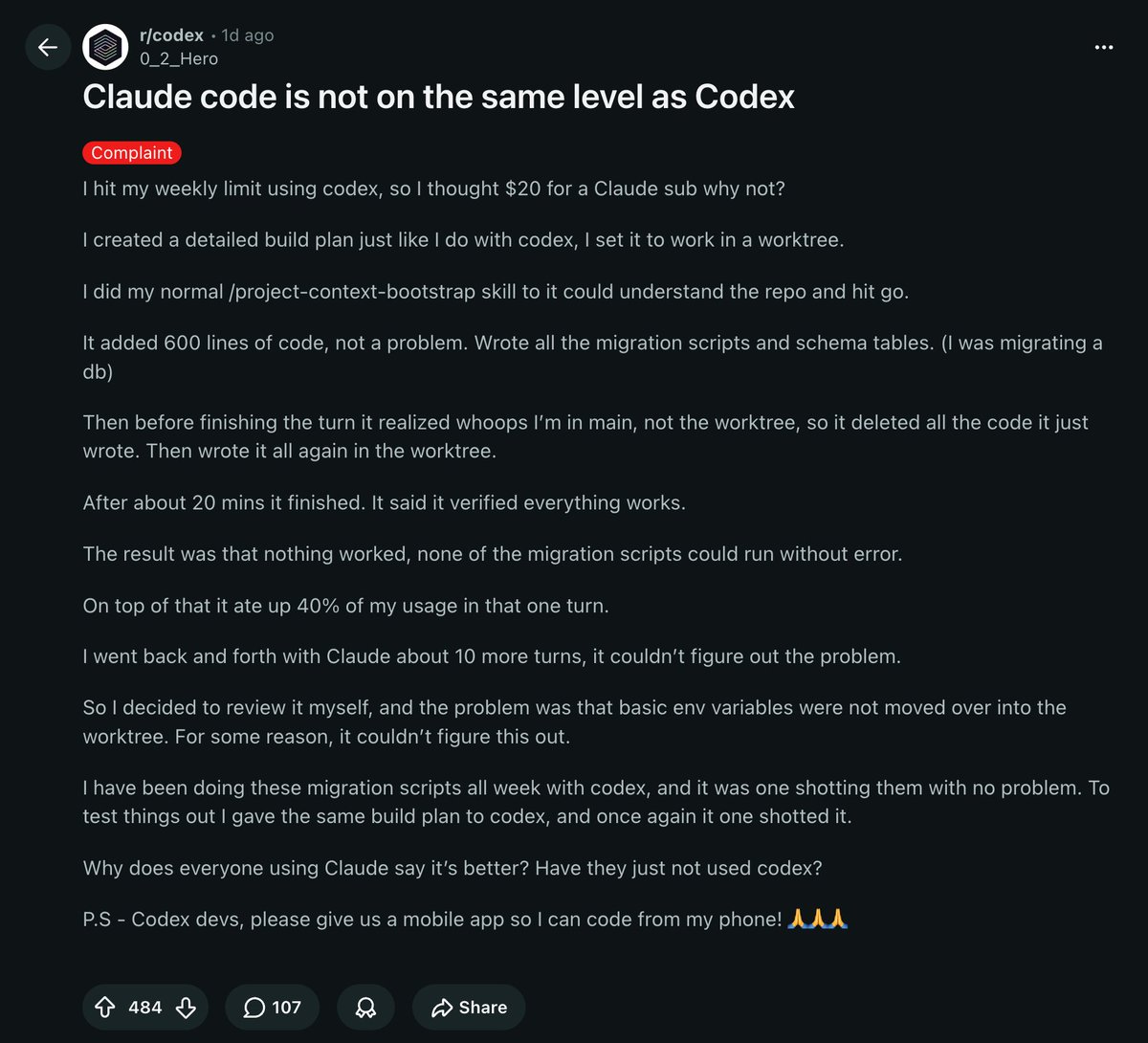
People are finally realizing something important: AI coding tools are not interchangeable anymore. One Reddit developer said Claude Code burned 40% of his usage, rewrote code twice, failed migrations, and still couldn’t find a basic env issue. Then Codex one-shotted the same task. We’re entering the phase where “which model” matters less than: → tool reliability → repo understanding → debugging accuracy → autonomous decision making → knowing when NOT to act The gap between AI demos and production-grade coding agents is becoming very visible very fast.

@xelebofficial ·
Autonomous does not mean unsupervised. Around 60% of development work now involves AI assistance, yet developers fully delegate only 0 to 20% of tasks. This is not a lack of trust. It is professional judgment applied correctly. In practice, work falls into three zones: 1. Safe to delegate: boilerplate, tests, documentation, refactoring. AI executes, humans review. 2. Collaborative: complex features, debugging, code review. AI accelerates, humans stay involved. 3. Human owned: architecture, security, critical decisions. These remain non-negotiable. As agents become capable of writing code, deploying systems, and running for extended periods, the natural tendency is to push more work into the first category. Anthropic’s 2026 Agentic Coding Report identifies this as a key risk, including scope creep, hallucinated code reaching production, and agents operating beyond defined boundaries. The engineers navigating this shift most effectively are not those who delegate the most, but those who understand exactly where the boundary lies and enforce it. That judgment is becoming one of the most valuable skills in this transition. Source: Anthropic 2026 Agentic Coding Report


@pascal_bornet ·
Being a developer in 2026 may look like scrolling your phone while AI writes the code. But that is not the real job. The real job is knowing whether the code should exist at all. This is the funny part of the AI coding era: AI can generate nonstop. Functions. Tests. Docs. Fixes. More fixes for the fixes. Meanwhile, the human looks “relaxed.” But the best developers will not be paid for typing every line. They will be paid for judgment. → What problem are we solving? → Is this architecture right? → Is the output secure? → What breaks at scale? → What should not be automated? For me, this is the shift leaders need to understand: 𝗖𝗼𝗱𝗶𝗻𝗴 𝗶𝘀 𝗺𝗼𝘃𝗶𝗻𝗴 𝗳𝗿𝗼𝗺 𝘄𝗿𝗶𝘁𝗶𝗻𝗴 𝗲𝘃𝗲𝗿𝘆 𝗹𝗶𝗻𝗲 𝘁𝗼 𝗱𝗶𝗿𝗲𝗰𝘁𝗶𝗻𝗴 𝘁𝗵𝗲 𝘀𝘆𝘀𝘁𝗲𝗺. That does not make developers obsolete. It makes weak developers exposed. Because if AI can write the first draft, the value moves to reviewing, testing, designing, deciding, and taking responsibility for what ships. The future developer may type less. But they will need to think more. And yes, maybe scroll a little while the agent works. 😅 𝗪𝗵𝗮𝘁 𝘀𝗸𝗶𝗹𝗹 𝗯𝗲𝗰𝗼𝗺𝗲𝘀 𝗺𝗼𝘀𝘁 𝗶𝗺𝗽𝗼𝗿𝘁𝗮𝗻𝘁 𝘄𝗵𝗲𝗻 𝗔𝗜 𝗰𝗮𝗻 𝘄𝗿𝗶𝘁𝗲 𝗰𝗼𝗱𝗲 𝗳𝗼𝗿 𝘂𝘀? #ArtificialIntelligence #AI #SoftwareEngineering #FutureOfWork #Developers #Coding #Automation #Leadership #HumanCenteredAI #DigitalTransformation
 Watch video

@chappyasel ·
I watched a video this week that gave me the perfect term for something I’ve been feeling in myself and seeing in a lot of other people building with AI: Cognitive debt. Such a good phrase!! Technical debt is the obvious stuff. Legacy patterns, messy abstractions, tests that are either missing or secretly useless. Cognitive debt is the scarier version because it lives in your own head. It’s the gap between what your system does and what you can actually explain, debug, and safely change. This hit me because I am wildly bullish on AI coding. I use these tools constantly. They are incredible. It really does feel like having a team of tireless, slightly overconfident junior engineers next to you who will happily crank forever if you point them in a direction. And that is exactly why the phrase landed so hard. The code can start moving faster than your understanding. You ask for a feature. It creates plausible files. You ask for a refactor. It touches ten places. You ask for tests. They pass. Everything feels like progress until you hit a subtle product decision, a weird bug, or a teammate asks why something works the way it does. Then you realize the agent kept moving, and your mental model never caught up. That’s cognitive debt. The framework I’ve been using for myself is basically a speed governor for AI-assisted building: 1️⃣ Determine the longevity of the project and how grokable it needs to be 2️⃣ Determine your quality bar for the product 3️⃣ Assess the current quality of coding agents 4️⃣ Align with your team on how fast the product of ↑ allows you to move 5️⃣ Continuously update ↑ I’m more excited than ever about AI coding – I just think the bottleneck is shifting! The question is no longer only “how much code can we produce?” – it’s “how much of what we produce can we still understand?”

@DivyanshT91162 ·
Most "AI coding agents" are just fancy autocomplete. Then you see a project like this. An open-source coding agent terminal that comes with: → LSP integration → DAP debugger support → Persistent Python & Bun kernels → Agent ↔ tool calling loops → Benchmark harness tested model by model Meaning the agent can write code, run it, debug it, use tools, keep context, and interact with a real development environment. This is the kind of infrastructure that moves AI coding from demos to actual engineering workflows. Repo👇
 Watch video

@ThePracticalDev ·
AI coding agents still struggle with repo context, not syntax. Things like which test command to run, what naming conventions are used, or what tooling is configured. This dev built Agentskill to compile repository reality into agent-usable instructions. { author: @airscript } https://t.co/h2DXLIuaae

@JustAnotherPM ·
Most people think AI coding agents make engineering easier. Unfortunately, that is not true. The real unlock is that they make junior engineering nearly impossible, and senior engineering exhausting. Without a decade of pattern matching, you cannot tell when an agent is hallucinating an architecture, eating its own context, or about to corrupt a migration. If you have no senior judgement, an agent is just a faster way to ship the wrong thing. If you have senior judgement, an agent is a 4x multiplier. But it taxes that judgement on every single decision you make. Two things this changes for AI PMs in 2026: 𝟭. The most valuable hire on your team is the engineer who has built and broken systems for ten years. They are the only one who can keep agents in line. 𝟮. The most valuable habit you can build is reading agent transcripts every day. Not the output. The reasoning. That is where the failure modes hide. The teams that figure this out are shipping in days. The teams that hand agents to juniors and walk away are spending the same six months as before. They just have prettier diffs.
Best Tweets by Topic