Tooling and developer workflows
Linting migrations, editor setup, type generation, AST utilities, monorepo tooling, and running or bundling TypeScript.
37.9%
Best tweets about TypeScript
Browse the best tweets about TypeScript, from type-system techniques and releases to tooling, architecture, migrations, libraries, and developer workflows.
Technical TypeScript language features, type patterns, tooling, migrations, architecture, releases, and real codebase lessons.
Original Xholic analysis
The supplied conversation centers on practical type safety and developer workflows, with release news and real-system implementations attracting standout scores. Shared API types and enforced module seams sit alongside cautions about security and CLI deployment. These are contrasting engineering priorities, not evidence of a single preferred stack.
58.6% of posts
All-time engagement
37.9% of posts
Published in 90 days
Conversation map
Linting migrations, editor setup, type generation, AST utilities, monorepo tooling, and running or bundling TypeScript.
37.9%
Strictness, null handling, type coverage, inferred predicates, type-only exports, and the limits of compile-time guarantees.
37.9%
Native-speed compiler plans, Rust-backed frameworks, TypeScript optimization, and decisions to use Go or other languages for CLIs.
20.7%
TypeScript 6 and 7 updates, inference improvements, module behavior, standard library additions, and compiler changes.
20.7%
Practical implementations spanning UI layout, games, MCP servers, and other applications, including packaging and security lessons.
20.7%
Enforced module boundaries, typed plugin systems, shared API types, and organizing TypeScript frameworks and specifications.
13.8%
Tone and stance
Performance benchmark
Posts with media make up 62.1% of this collection. Their median all-time score is 7.01, compared with 18.1 for text-only posts.
Format mix
Consensus and debate
Shared view
Posts advocate shared frontend/backend types, type-safe plugin interfaces, and coverage checks for assertions and untyped code. The common emphasis is applying TypeScript to concrete development workflows.
Shared view
Module-boundary enforcement, lazy-loaded plugins, and vertically organized specification files offer distinct approaches to organizing applications. The posts describe dependency-cruiser enforcement, typed plugin architecture, and TypeScript-based specification tooling, respectively.
Shared view
Official TypeScript 6.0 posts highlight inference, module and standard-library changes while pointing toward native-speed 7.0. A separate Zed post flags the need for a new tsgo extension and configuration when using TypeScript 7.
Open debate
Go advocates emphasize CLI installation and resource costs, while an autorouter anecdote reports optimized TypeScript outperforming its Rust version at the expense of readability. These are workload-specific claims, not comparable benchmarks.
Open debate
An experimental Ultra Strict proposal aims to constrain AI-generated code through compilation errors. Other posts flag a TypeScript-related security failure and exposed source maps. These posts raise different concerns rather than establish a direct disagreement over strictness.
What performs
The text-measurement announcement scores 8339.23, or 863.63 times the supplied median. TypeScript 6.0's release and beta score 658.25 and 206.2. These outliers spotlight an implementation announcement and official release news without establishing why they performed well.
Tooling and type safety each account for 11 tweets (37.9%), with median scores of 10.872 and 9.656. Real systems and releases each account for 6 (20.7%), with medians of 66.24 and 66.09. Theme frequency and median performance tell different stories.
The supplied format analytics give CASE_STUDY a median score of 78.65 across 2 posts, versus 23.86 for 11 ANNOUNCEMENT posts and 4.368 for 5 TUTORIAL posts. The small case-study group limits generalization.
Statistical standouts
Creator landscape
The five most represented creators account for 31% of the selected posts.
1. freeCodeCamp.org
@freeCodeCamp
2 posts
2. GitHub Projects Community
@GithubProjects
2 posts
3. Petar Ivanov
@petarivanovv9
2 posts
4. TypeScript
@typescript
2 posts
5. Cheng Lou
@_chenglou
1 post
6. beeman 📱
@beeman_nl
1 post
The TypeScript account contributes 2 posts with a supplied median score of 432.22. Its beta and release announcements provide concrete feature coverage and positioning for the move toward native-speed 7.0.
freeCodeCamp's 2 posts cover plugin architecture and shared API types, with a median score of 32.2. Petar Ivanov's 2 posts focus on type coverage and inferred predicates, with a median of 2.7. Their contributions span system design and focused typing practices.
Since the previous snapshot
Themes, sentiment, stance, and post format are classified per tweet. All counts, shares, medians, creator concentration, freshness, and performance comparisons are then calculated directly from the published snapshot.
Xholic's all-time score compares engagement while accounting for reach, post age, and creator consistency. It is used for relative comparisons within this collection.
This report analyzes the exact 29-post snapshot shown below. AI identifies editorial categories and drafts explanations; all statistics are calculated from the snapshot, and every narrative claim is checked against cited posts before publication.
Best TypeScript tweets
Ranked 01–29

@_chenglou ·
My dear front-end developers (and anyone who’s interested in the future of interfaces): I have crawled through depths of hell to bring you, for the foreseeable years, one of the more important foundational pieces of UI engineering (if not in implementation then certainly at least in concept): Fast, accurate and comprehensive userland text measurement algorithm in pure TypeScript, usable for laying out entire web pages without CSS, bypassing DOM measurements and reflow
 Watch video
@typescript ·
TypeScript 6.0 is now available! This release brings better type-checking for methods, new standard library features, new module features for Node.js, and more! But most important, this release brings us one step closer to the upcoming native-speed 7.0! https://t.co/hon0RU1L5B
@typescript ·
TypeScript 6.0 beta is now published! This release brings - inference improvements for functions - updates to package.json 'imports' - the Temporal APIs - alignments for the upcoming TypeScript 7.0 - & more! Try it today! https://t.co/vAnfKvrei1

@encoredotdev ·
We wrote 60,000 lines of Rust to power a TypeScript framework. Here's the full story of how we got here, what broke along the way, and what we'd do differently. https://t.co/ANCL5PWAh4

@justinstorre ·
I am experimenting with something I call "Typescript Ultra Strict". Basically, typescript with no nulls, no classes, no undefineds, no switch statements, and no vars + the addition of match macros. Basically forcing AI to write functional AI code through compilation errors that is more deterministic and testable. Back in 2008 Chrome built the V8 Javascript engine and the entire world built edge compute on top of this amazing primitive. However, Javascript had it's short comings so we made Typescript, but Typescript still was "too friendly", mainly to appeal to a human audience. We no longer have humans writing code, so why not give the AI something less clunky and more clanky 😉 UX - write .tsus files - add a one-line plugin to webpack, Vite, esbuild, or Bun Features include: - Option/Result runtime, with boundary helpers that turn the outside world's nulls and throws into Option and Result - match macros - good error messages, so an agent can fix its own errors in a loop


@GithubProjects ·
KAPLAY.js is a 2D game library for JavaScript and TypeScript designed to make game development feel as fun as playing a game, with a built-in web-based editor. - Composes game objects from simple, powerful components like rect, pos, area, and body - Includes a web-based playground with over 90 examples for instant code testing - Supports TypeScript with global types and full type import options - Offers multiple installation methods including create-kaplay, npm, and CDN Explore it here: https://t.co/wmmd7PgYuB


@mattpocockuk ·
Here's a skill you can run once to set up deep modules in any TypeScript codebase: - Each 'package' lives at src/packages/<name> (name/path is totally customizable) - From outside the package, you can only import from <name>/index.ts - Tests for the package live at <name>/tests, and can only import from index.ts - No circular dependencies between packages - Puts a context pointer inside AGENTS.md so the agent knows about it (no skills needed) - Works with frontend or backend code (even Effect code!) - Enforced by dependency-cruiser This means you can hide stuff inside modules, with only a single test seam exposed. Clear seams, deterministically enforced: no more shit tests. Awaiting a merge. Should I ship it? https://t.co/6VGvNb6tMl

@freeCodeCamp ·
Large React apps get harder to scale when every feature has to live inside the core codebase. In this tutorial, Jessica shows you how to design a React plugin architecture with TypeScript that is type-safe, lazy-loaded, and secure. You'll also learn about hosting APIs, plugin lifecycles, separate bundling, runtime loading, and more. https://t.co/SsT4uIKAnH

@freeCodeCamp ·
Did you know – you can get end-to-end type safety in full-stack TypeScript apps without schema files or code generation. In this guide, @itsTarun24 shows you how to use tRPC and Hono to build APIs where the backend and frontend share types automatically. You'll learn when to use each tool and how they improve reliability, catch errors at compile time, and speed up development. https://t.co/jPqlzN44oH


@PentesterLab ·
𝗥𝗲𝘀𝗲𝗮𝗿𝗰𝗵 𝗪𝗼𝗿𝘁𝗵 𝗥𝗲𝗮𝗱𝗶𝗻𝗴 - 𝗪𝗲𝗲𝗸 𝟳, 𝟮𝟬𝟮𝟲 Parser Differential, TypeScript and AI ⨐ 𝗕𝗿𝗲𝗮𝗸𝗶𝗻𝗴 𝗗𝗼𝘄𝗻 𝗖𝗩𝗘-𝟮𝟬𝟮𝟲-𝟮𝟱𝟬𝟰𝟵: 𝗛𝗼𝘄 𝗧𝘆𝗽𝗲𝗦𝗰𝗿𝗶𝗽𝘁 𝗧𝘆𝗽𝗲𝘀 𝗙𝗮𝗶𝗹𝗲𝗱 𝗻𝟴𝗻'𝘀 𝗦𝗲𝗰𝘂𝗿𝗶𝘁𝘆 A great explanation of the recent vulnerabilities impacting n8n. If you are working in security on TypeScript projects, it's a must read. https://t.co/9cqTpEAluI. ⚒️ 𝗜𝗻𝘁𝗿𝗼𝗱𝘂𝗰𝗶𝗻𝗴 𝗔𝘂𝗴𝘂𝘀𝘁𝘂𝘀: 𝗢𝗽𝗲𝗻 𝗦𝗼𝘂𝗿𝗰𝗲 𝗟𝗟𝗠 𝗣𝗿𝗼𝗺𝗽𝘁 𝗜𝗻𝗷𝗲𝗰𝘁𝗶𝗼𝗻 𝗧𝗼𝗼𝗹 Praetorian is back with another tool (one of their 12 Caesars): Augustus... Make sure you check it out! https://t.co/kIgkNwiNMM. 🤺 𝗪𝗵𝗲𝗻 𝗧𝘄𝗼 𝗣𝗮𝗿𝘀𝗲𝗿𝘀 𝗗𝗶𝘀𝗮𝗴𝗿𝗲𝗲: 𝗘𝘅𝗽𝗹𝗼𝗶𝘁𝗶𝗻𝗴 𝗤𝘂𝗲𝗿𝘆 𝗦𝘁𝗿𝗶𝗻𝗴 𝗗𝗶𝗳𝗳𝗲𝗿𝗲𝗻𝘁𝗶𝗮𝗹𝘀 𝗳𝗼𝗿 𝗫𝗦𝗦 If you enjoy parser differential issues, you are going to love this exploit. Don't think "It's a CTF challenge" or "It's just an XSS", read between the lines to find the real gold. https://t.co/rwf2BGnerh. 🤖 𝗥𝗖𝗘 𝗶𝗻 𝗚𝗼𝗼𝗴𝗹𝗲'𝘀 𝗔𝗜 𝗰𝗼𝗱𝗲 𝗲𝗱𝗶𝘁𝗼𝗿 𝗔𝗻𝘁𝗶𝗴𝗿𝗮𝘃𝗶𝘁𝘆 - $𝟭𝟬𝟬𝟬𝟬 𝗕𝗼𝘂𝗻𝘁𝘆 A detailed blog post on hacking Antigravity with a lot of interesting details on its inner workings. https://t.co/3ExHVYrf9X. 🚛 𝗧𝗿𝗮𝗶𝗹𝗶𝗻𝗴 𝗗𝗮𝗻𝗴𝗲𝗿: 𝗲𝘅𝗽𝗹𝗼𝗿𝗶𝗻𝗴 𝗛𝗧𝗧𝗣 𝗧𝗿𝗮𝗶𝗹𝗲𝗿 𝗽𝗮𝗿𝘀𝗶𝗻𝗴 𝗱𝗶𝘀𝗰𝗿𝗲𝗽𝗮𝗻𝗰𝗶𝗲𝘀 Probably one of the lesser-known features of HTTP... Trailers. This post provides details on the feature and explains how they can be leveraged to find security issues. https://t.co/I2J8yvXdpa.

@dshukertjr ·
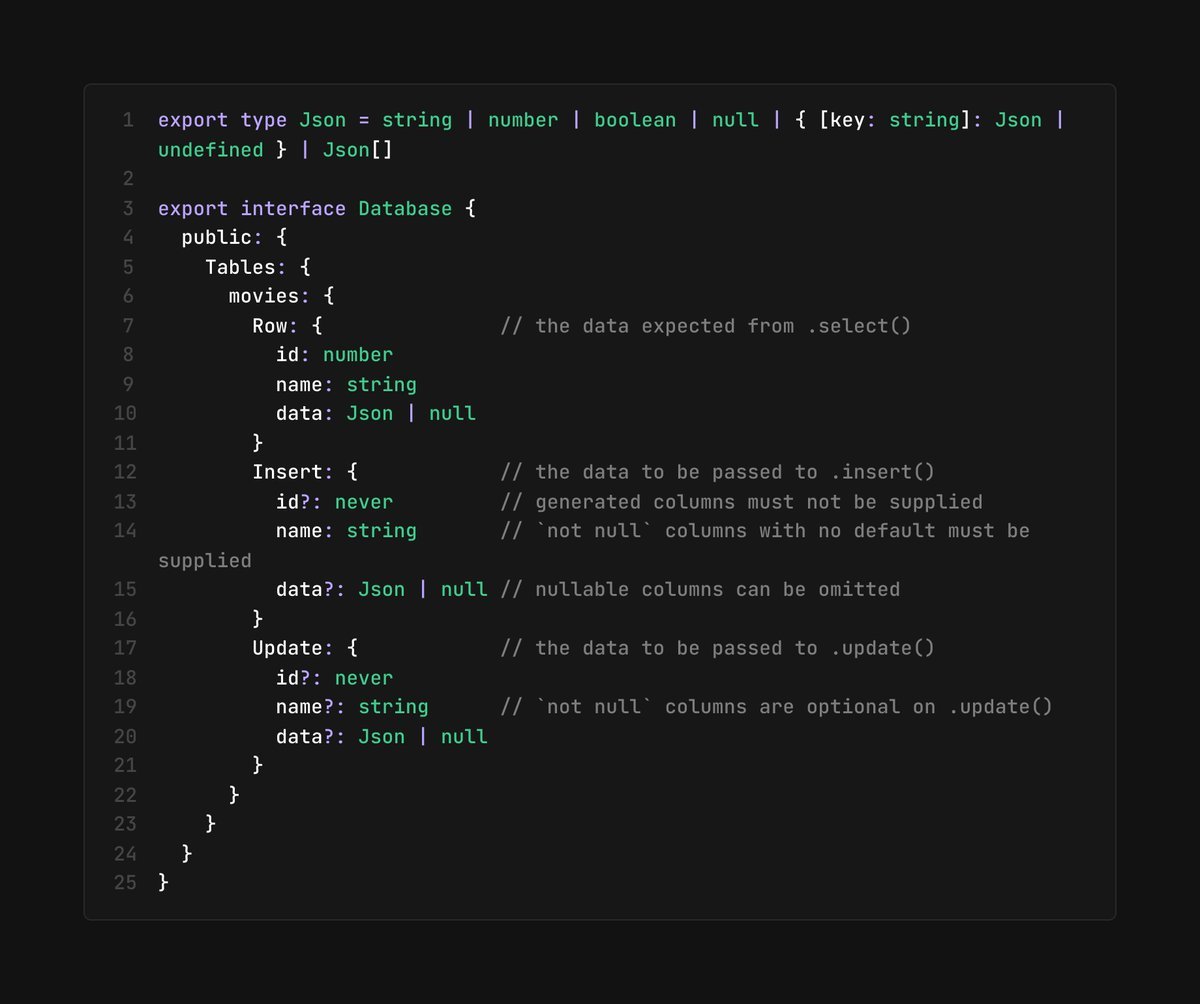
Supabase automatically generating TypeScript types is still one of my favorite features! Supports various column types, views, and functions so that you can develop apps with a fully typed setup!

@mehulmpt ·
Nub by @colinhacks is a big deal and a long time coming. Bun made running TypeScript cool locally, without worrying about transpiling or fighting with your own code. Today in 2026, `tsx` package, and other tooling combined with pnpm, a faster laptop, and a little patience and ecosystem knowledge, allows you to get the stability of Node with the experience you'd want from a runtime like Bun. That bun <> node gap closed a little today with Nub, which I spent some time reading about and playing with. Made me remember the 2021-2022ish broken esbuild local setup systems we used to have to run the code locally. We have come a long way from that. Talking about that in a video today

@GithubProjects ·
This is the monorepo behind the TypeScript website, containing the playground, sandbox, and documentation tooling. - Uses pnpm workspaces with node 20+ and watchman for file watching. - All packages support `pnpm build`, `pnpm test`, and debug logging via the `debug` package. - Deployment is automatic: pushes to the `v2` branch deploy to production. - Changesets manage version bumps for public packages like `@typescript/twoslash` and `@typescript/sandbox`.


@GergelyOrosz ·
Sometimes I hate being a dev who can debug JavaScript because I see the absolute careless code another dev pushed to prod. It is impossible to print package labels on the NL Post site (@PostNL) b/c of this unhandled null breaks everything Use TypeScript and handle nulls, OK?!


@rseroter ·
The smart team at open platform provider @appwrite switched their CLI from TypeScript to Go. The results? ✅ Starts 17x faster ✅ Installs 2 packages instead of 330 ✅ 66MB --> 14MB binary ✅ 1/10 the memory footprint https://t.co/P1KRHTUYSW

@petarivanovv9 ·
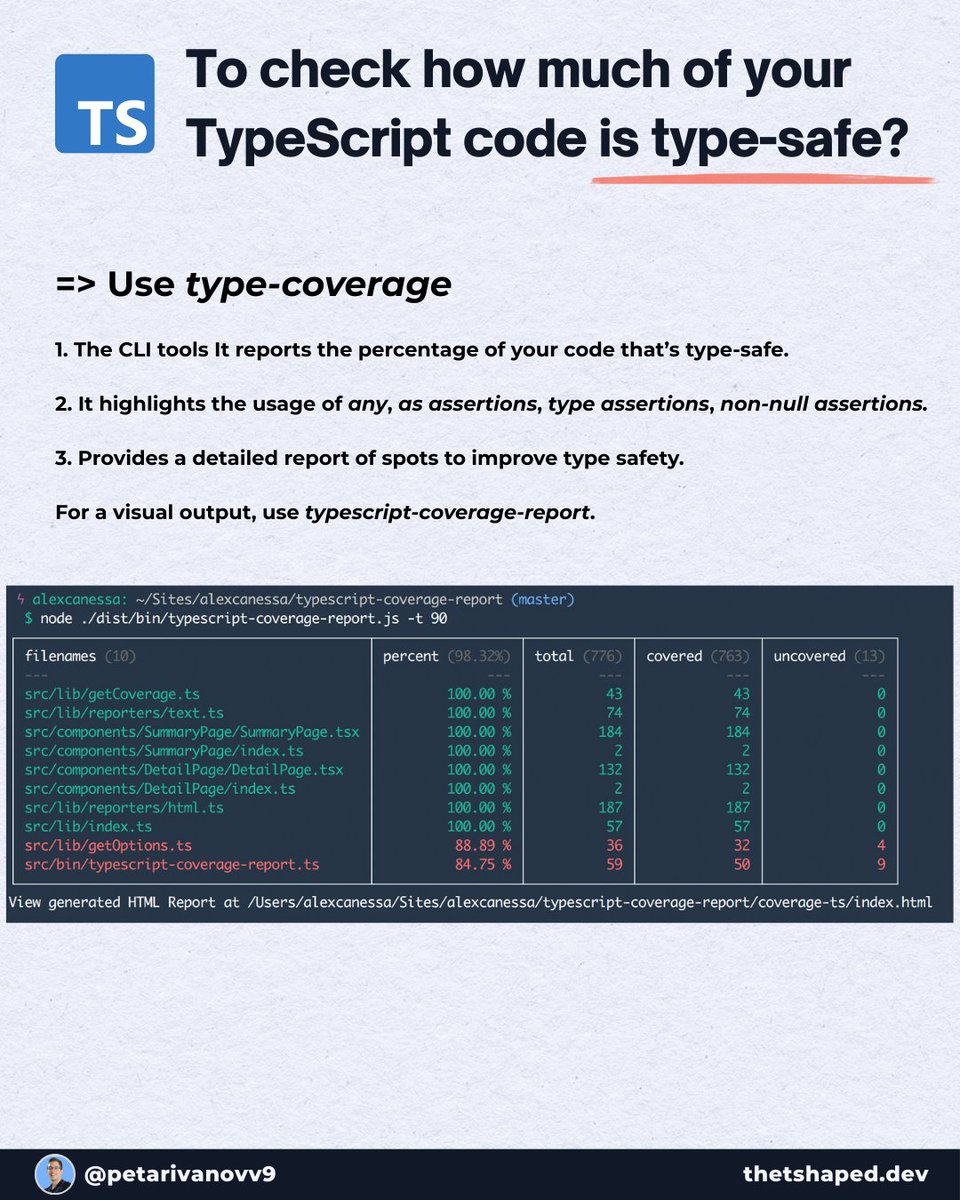
Do you want to know how much of your TypeScript code is type-safe? If yes, use type-coverage. Why? 1. This CLI tool reports the percentage of your code that’s type-safe. 2. It highlights the usage of: • any • as assertions (foo as string) • type assertions (<string>foo) • Non-null assertions (foo!) • Plain Object type (Object or {}) 3. Provides a detailed report of spots to improve type safety. 4. For a visual output, use typescript-coverage-report. Bonus: With a strict 𝘵𝘴𝘤𝘰𝘯𝘧𝘪𝘨.𝘫𝘴𝘰𝘯, we can enable the IDE to highlight untyped code. This will naturally motivate the developer to look at the warning and fulfill the missing type safety. Links 👇 —— 💾 Save this for later. ♻ Repost to help others find it. ➕ Follow @petarivanovv9 + turn on notifications. #typescript #softwareengineering #programming

@dan_note ·
QuickBEAM v0.7.1–0.8 updates N-API addon support 𝚀𝚞𝚒𝚌𝚔𝙱𝙴𝙰𝙼.𝚕𝚘𝚊𝚍_𝚊𝚍𝚍𝚘𝚗(𝚛𝚝, "𝚌𝚛𝚌𝟹𝟸.𝚗𝚘𝚍𝚎", 𝚊𝚜: "𝚌𝚛𝚌𝟹𝟸") {:𝚘𝚔, 𝟿𝟶𝟽_𝟶𝟼𝟶_𝟾𝟽𝟶} = 𝚀𝚞𝚒𝚌𝚔𝙱𝙴𝙰𝙼.𝚎𝚟𝚊𝚕(𝚛𝚝, ~𝚜[𝚌𝚛𝚌𝟹𝟸.𝚌𝚛𝚌𝟹𝟸("𝚑𝚎𝚕𝚕𝚘")]) Load native .node addons (napi-rs, plain C) into a BEAM runtime. Tested with node-rs/bcrypt, argon2, crc32, sqlite-napi. Full N-API surface: constructors, typed arrays, async work, threadsafe functions. New Beam APIs 𝙱𝚎𝚊𝚖.𝚗𝚊𝚗𝚘𝚜𝚎𝚌𝚘𝚗𝚍𝚜(), 𝙱𝚎𝚊𝚖.𝚞𝚗𝚒𝚚𝚞𝚎𝙸𝚗𝚝𝚎𝚐𝚎𝚛(), 𝙱𝚎𝚊𝚖.𝚖𝚊𝚔𝚎𝚁𝚎𝚏(), 𝙱𝚎𝚊𝚖.𝚒𝚗𝚜𝚙𝚎𝚌𝚝() TypeScript in Context now works — auto-transforms .ts/.tsx and bundles imports, matching Runtime behavior. https://t.co/I8w6NReRQ1

@seveibar ·
whirlwind day of optimizations first I wrote a typescript autorouter that I thought was pretty fast then I got chatgpt pro to rewrite it in rust/WASM and that was 40x faster! (darn, bye js?) then I asked chatgpt pro to look at the Rust code and make the Typescript code as fast as the Rust code, and now the Typescript is 25% faster So now I'm around 50x where I started, and the only downside is now I can't read any of the code lol

@beeman_nl ·
Oooh nice, @typescript 6 has been released 👀 6.x is the last major release of TypeScript that's self-hosted. As of 7.0 it will be written in @golang 🏎️🥳


@pauliusztin_ ·
Most agentic CLIs are built in TypeScript. Here’s why that’s a mistake (and you should use Go instead): We'll use Michael @maximilien as an example… He built his Weave CLI with Go. He's also the former CTO at IBM and former Chairperson of the NodeJS Foundation. So this is not a “TypeScript is bad” take... He knows the ecosystem deeply. But when he started building Weave CLI, an open-source tool for production RAG across 11 vector databases, the constraints were different. He needed something that could run anywhere. And this is where Go shines. It has no: • npm install • Python virtual envs • uv issues • JVM setup • Broken package registries • On-prem network restrictions Just download the binary, make it executable, and run it. Weave CLI has to: • Spin up vector databases • Ingest documents • Run RAG agents • Compare embeddings • Benchmark configurations • Monitor traces & experiments with Opik by @Cometml For this kind of infrastructure tooling, installation friction is product friction. If users can’t run it easily, they won’t use it. But there's a deeper lesson in this: Don’t pick your stack based on the herd. Pick it based on what the system needs. For frontend-heavy agent apps, TypeScript may be the right choice. For infra-heavy CLIs and TUIs that need to run anywhere, Go is hard to beat. Full Weave CLI case study in Decoding AI Magazine: https://t.co/MpJ3bYuH8g


@ibuildthecloud ·
I'm absolutely fascinated by the fact that frontend developers accept typescript. That means it's possible to build a better language for frontend. Everything frontend people have rejected about compiled and statically typed languages they have brought to JavaScript. So it's definitely possible to create a statically typed compiled language for frontend that would be ridiculously fast compared to typescript. It's a times like this I wish I didn't have a job.

@MatijaSosic ·
Just spent two hours testing the final Wasp TypeScript Spec with @infomiho, and I got really excited about it. One of the gamechangers is definitely the ability to split your spec file across multiple files and organize features in vertical units. Plus, since it's all just TS now, type safety and go-to-definition work out of the box. Can't wait to ship this.

@petarivanovv9 ·
TypeScript v5.5 removed one of the most annoying things in typing, and barely anyone is talking about it. In v5.5, type predicates are now inferred automatically. That means this: You no longer need to write: "x is string" …just to make TypeScript understand your function. It figures it out itself. Less boilerplate Cleaner functions Fewer mental gymnastics This is one of those small changes that quietly improve everything. Most devs won’t notice it. But once you do, you won’t go back. If you haven't upgraded, consider doing it. —— 💾 Save this for later. ♻ Repost to help others learn TypeScript. ➕ Follow @petarivanovv9 + turn on notifications. #TypeScript


@dashersw ·
I just open-sourced eszter — a library that lets you write Babel AST the way you write code. Tagged template literals + TypeScript return-type inference. No more six-level-deep builder towers just to generate an if statement. npm install eszter

@buildwithhassan ·
claude code shipped its full TypeScript source again via .js.map in the npm package (v2.1.88) second time this packaging footgun happened and this is a terminal agent people run with --dangerously-skip-permissions / auto-accept sourcemaps = architecture + security assumptions exposed


@creowistech ·
🚨 How to Fix TypeScript isolatedModules Error in Next.js? If your Next.js build fails with this message: Re-exporting a type when isolatedModules is enabled requires using export type Don’t worry, it’s not a complex bug. It’s just about being clear with TypeScript. more...


@HotAisle ·
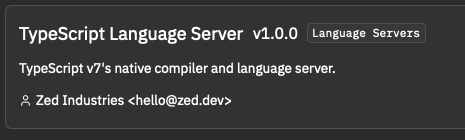
if you're using zed with typescript 7, you need to install a new tsgo extension and configure it correctly according to the readme... https://t.co/xVIR9YsQRi

@thenewstack ·
Learn how to build your first MCP server using TypeScript and connect it to Claude Desktop with this step-by-step calculator app tutorial for developers. https://t.co/C4hD4S2fBU
Best TypeScript tweets
Xholic studies what works in your niche, drafts posts in your voice and schedules them for the hours your audience is online.
$0 today · Cancel anytime
Browse all tweet collectionsKeep exploring
