Debugging, testing, and production readiness
The gap between a convincing local demo and dependable software: bugs, staging, tests, monitoring, edge cases, scale, and ownership.
34%
Best tweets about Vibe Coding
Browse the best tweets about vibe coding, prompt-to-app workflows, rapid prototyping, launches, failures, and lessons from AI-assisted builders. Updated weekly.
Builders showing what they made, how they prompted it, what broke, and what it took to turn a prototype into a real product.
Original Xholic analysis
The posts present vibe coding as a fast way to create MVPs and prototypes, while repeatedly distinguishing a working demo from a dependable production system. The editorial tension is the transition from prompting and rapid iteration to testing, architecture, security, distribution, and ownership of the code.
48% of posts
All-time engagement
48% of posts
Published in 90 days
Conversation map
The gap between a convincing local demo and dependable software: bugs, staging, tests, monitoring, edge cases, scale, and ownership.
34%
Nontechnical builders use AI tools to turn ideas into apps, demos, landing pages, and early products quickly.
28%
Recommendations for AI coding tools, frameworks, databases, deployment, version control, and complementary services.
26%
Distinctions between delegating code generation for prototypes and using AI within disciplined, architect-owned software delivery.
26%
The human capabilities AI does not replace: clear problem framing, fundamentals, taste, imagination, patience, systems thinking, and decision-making.
22%
The work beyond building: user research, prioritization, finding demand, getting users, app-store friction, and turning prototypes into businesses.
22%
Specs, schemas, engineering structure, reviews, authentication, secrets, dependency hygiene, and avoiding AI-generated technical debt.
20%
Practical loops for describing outcomes, generating code, testing, pasting errors, revising prompts, and managing agent context.
18%
Tone and stance
Performance benchmark
Posts with media make up 26% of this collection. Their median all-time score is 7.83, compared with 25.4 for text-only posts.
Format mix
Consensus and debate
Shared view
Posts describe nontechnical builders using AI to turn ideas into functional early products quickly. They also share accessible stacks and plain-language workflows for getting started.
Shared view
Multiple posts argue that scaling, edge cases, debugging, testing, architecture, security, monitoring, and code ownership need attention beyond generating a working demo.
Shared view
Practical guidance recommends specifying the desired outcome and stack context, working from actual errors, making one change per prompt, and refreshing context or reverting when stuck.
Shared view
Several posts contend that taste, product vision, user understanding, validation, and distribution remain important once code generation becomes faster.
Open debate
Some posts reserve “vibe coding” for lightly reviewed AI generation and distinguish it from architect-owned AI-assisted engineering. Another argues that serious vibe coding can cultivate engineering habits such as articulation, patience, rigor, and documentation.
Open debate
One workflow prioritizes shipping an imperfect MVP for feedback, while other posts recommend specs, architecture, and staging practices as systems become more complex or approach production.
Open debate
Supportive examples present AI as leverage for rapid product creation. Critical posts describe risks including hardcoded keys, conflicting authentication implementations, missing database structure, debugging difficulty, and security exposure when generated systems are treated as production-ready.
What performs
The starter-stack post was the highest listed outlier, with an all-time score of 399.1, or 18.85 times the supplied median. It combines a concrete stack with a direct instruction for building a first app.
The post distinguishing professional AI-assisted coding from vibe coding was a listed outlier, with an all-time score of 299.62, or 14.15 times the supplied median.
A builder’s post reporting that a vibe-coded app reached $1,000 in a day was a listed outlier, with an all-time score of 229.12, or 10.82 times the supplied median.
Supplied analytics report a text median all-time score of 25.401, compared with 7.832 for posts with media.
Statistical standouts
Creator landscape
The five most represented creators account for 18% of the selected posts.
1. Priyanka Vergadia
@pvergadia
2 posts
2. Viktor Seraleev
@seraleev
2 posts
3. Sergio Pereira
@SergioRocks
2 posts
4. Wise
@trikcode
2 posts
5. Vaishnavi
@_vmlops
1 post
6. Umair Shaikh
@1Umairshaikh
1 post
Wise posted twice and had the highest supplied top-voice median all-time score, 243.59. The cited posts distinguish generated code from understanding it and focus on the difficulty of debugging code the builder did not write.
Sergio Pereira’s cited posts argue that visible flows are not the whole system and that specifications, architecture, and requirements can guide AI toward more durable products.
Priyanka Vergadia’s cited posts describe prototypes as valuable but distinct from production systems, and recommend architecture-oriented prompts that include tests and security rules.
Since the previous snapshot
Themes, sentiment, stance, and post format are classified per tweet. All counts, shares, medians, creator concentration, freshness, and performance comparisons are then calculated directly from the published snapshot.
Xholic's all-time score compares engagement while accounting for reach, post age, and creator consistency. It is used for relative comparisons within this collection.
This report analyzes the exact 50-post snapshot shown below. AI identifies editorial categories and drafts explanations; all statistics are calculated from the snapshot, and every narrative claim is checked against cited posts before publication.
Best Vibe Coding tweets
Ranked 01–50

@AlexFinn ·
Here's the best tech stack for vibe coding your first app Each are easy to use and have a free tier If you've never built an app before, take this list, give it to your AI of choice and you'll be set: Web framework: NextJS Database: Supabase Authentication: Clerk Payments: Stripe Styling: Tailwind 3D assets: ThreeJS AI API: logic- Tough tasks: GPT5, cheap tasks Claude Haiku Emails: Resend AI app I use to build it all: Claude Code Copy and paste that stack into an AI, give it an idea for an app (or ask it to brainstorm ideas for you) then say start building. You'll get V1 of your app 0 technical experience needed for this Any questions let me know!

@ModestMitkus ·
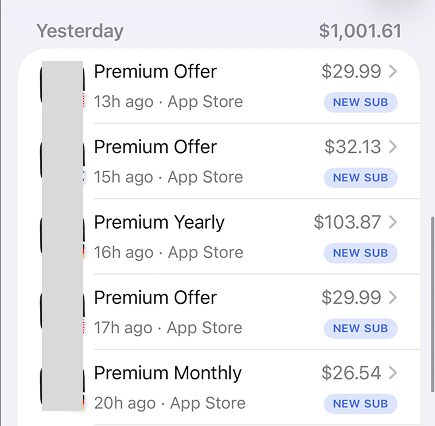
My vibe-coded app just hit $1,000 in a single day. Three months ago, I didn't know how to build an iOS app. I still barely do. People joke about vibe coding, saying that it writes slop code (as if junior-mid code is any better). Many people miss the point that some actually take it seriously and achieve pretty nice results. I didn't have technical skills, but I always wanted to build things. Not some random Notion templates as I did before (and still reached $30k/month xD), but real functional products written in code. Vibe coding literally gave me a cheat code that I can use in real life. I can turn all my ideas into functional products and make money from them. It literally changed my life and now I can't stop. For some AI is here to take their jobs, for some it's life changing opportunity and massive leverage.

@ujjwalscript ·
The “Vibe Coding” honeymoon is officially OVER. For a while, it felt magical. Prompt in, product out. No deep context, no architecture, no trade-offs. Just vibes. But reality is catching up: • Systems still need to scale • Edge cases still exist • Debugging still hurts • And someone still has to own the code AI didn’t replace engineering, it amplified the gap between people who understand systems and people who don’t. “Vibe coding” is great for getting started. But shipping real, reliable software? That still requires thinking. The engineers who win won’t be the ones who vibe the fastest - they’ll be the ones who understand what the vibe produced.

@svpino ·
Last year, I met a person who has never written a single line of code in his life, yet he feels he can build anything he wants. He told me point-blank: "I challenge you to tell me something I can't build using AI." I tried to explain, but I couldn't find the right words. The most fascinating aspect of vibe-coding is how it has convinced so many people to believe they are better and more capable than they really are.

@zuess05 ·
Vibe coding is just a dopamine addiction disguised as a business model. You type a prompt. You get a full app. You feel like a god for 10 minutes. Then you remember you are terrified of marketing. So you just open a new tab and build another app instead. The internet is about to become a massive graveyard of 24-hour side projects.

@DeRonin_ ·
📁 Vibe Coding | ├ 📁 Mindset | ├ 📁 You don't need to know how to code | ├ 📁 You need to know what you want to build | ├ 📁 Think in outcomes, not syntax | └ 📁 Ship first. Understand later. | ├ 📁 Stack (pick one, don't overthink) | ├ 📁 Cursor — for building full apps | ├ 📁 v0 — for UI fast | ├ 📁 Replit — for no setup | └ 📁 Claude — for when you're stuck | ├ 📁 The Loop (this is literally all of it) | ├ 📁 Describe what you want in plain english | ├ 📁 Paste the result | ├ 📁 See what broke | ├ 📁 Describe the fix in plain english | └ 📁 Repeat until it works | ├ 📁 Prompting That Actually Works | ├ 📁 Be specific about the outcome, not the method | ├ 📁 Include what stack you're using | ├ 📁 Paste the error — don't summarize it | ├ 📁 "Make it look like X" beats "make it beautiful" | └ 📁 One change per prompt. Always. | ├ 📁 When You're Stuck | ├ 📁 Paste the full error, not just vibes | ├ 📁 Ask "why did this break" before "fix this" | ├ 📁 Start a fresh chat with fresh context | ├ 📁 Revert to last working version | └ 📁 Google exists. Use it. | └ 📁 The Truth About Shipping ├ 📁 Your MVP will be ugly. Ship it anyway. ├ 📁 Nobody cares about code quality at zero users ├ 📁 Feedback > perfection ├ 📁 Done > perfect └ 📁 The builder who ships beats the one who waits

@Rahul_J_Mathur ·
Vibe Coding will make you a great Engineer If you are serious about using Vibe Coding to create business value - you have to cultivate the Engineering mindset i.e. You will have develop: (1) Great articulation skills to explain the problem statement (2) Thick skin & patience to explore multiple solutions (3) Creativity to navigating dead ends (4) Rigor & discipline to structure your work (5) Mental models to help you get work done We are in an era where veryone is pushing us to unlearn - become a toxenmaxxer, ship AI slop & junk code like food leftovers. But, I want to push back to remind you that the select few who unlock 10x or 100x productivity from Vibe Coding are those who have re-learnt the core principles of Engineering. ➡️Articulation, problem–solution pairing, patience, tinkering, documentation etc are a SUPERPOWER in the AI era.
 Watch video

@BawsaXBT ·
if you're new to vibe coding, this post is for you: i've been vibe coding for 4 months now. my only method of testing? testing locally. if it looks good, it works, cool. push to production. but, not once did AI tell me: "hey, you should probably stop doing that." so i finally setup a staging environment this month. > separate vercel + supabase > separate branches > separate database here's what it's changed for me: > localhost isn't testing. it's a demo for yourself. > staging is where you actually catch breaks. > shipping to real users with no middle step? that's gambling, not building. vibe coding gets you to "it works on my machine." but it doesn't get you to "it works for everyone." tldr; build a staging environment asap.

@Param_eth ·
People who invested time & money into vibe coding: 5–6x outcomes in different ways Some built apps/websites, went viral on X, and were paid by X. - Some landed freelancing clients from what they built - some won hackathons - some secured grants from their projects - some turned ideas into SaaS products - some started earning fees from BagsApp Vibe Coding is for everyone :)

@SergioRocks ·
Vibe coding builds demos. Specs builds products. Two development styles are emerging. One starts with prompts: - Open the AI tool - Describe the feature - Iterate until it works It’s fast. It feels magical. The other starts with a spec: - Define the system - Outline the architecture - Clarify product requirements Then let AI generate the code. Both move quickly at first. But as complexity grows, the difference shows. Because AI does one thing extremely well: - It amplifies whatever discipline already exists. With structure, it accelerates the build. Without structure, it accelerates chaos. AI didn’t remove the need for solid system architecture. It made it more important than ever.

@zarazhangrui ·
So much of vibe coding is just “knowing what’s possible”. Most people severely underestimate what coding agents can do. How to build this mental model: - be chronically on X; see other people’s use cases and demos - get your hands dirty, tinker relentlessly, waste lots of tokens - approach it with a playful spirit of experimentation “I wonder what it would do if I tried X🧐”

@pvergadia ·
🟥WARNING: Vibe coding without a Lead Architect prompt is throwing away 80% of your results. How do you vibe code like a senior engineer? Here's what a structured AI prompt actually gives you: → Enforced separation of concerns across every file it writes → Named directories, stated before a single line of code → Auto-typed functions, docstrings, and error handling every time → Tests suggested after every implementation → Security rules baked in: no hardcoded secrets, rate limiting, input sanitization Without this? AI Coding agents writes code. With this? they thinks like your senior engineer. AI coding tools fail at architecture. One prompt that enforces your structure turns a vibe coder into a disciplined staff engineer.


@shushant_l ·
I'm shocked most people still spend months learning to code from scratch. Here's how to build real apps faster with the complete vibe coding playbook. --- 📂 Complete Vibe Coding Guide ┃ ┣ 📂 What Is Vibe Coding? ┃ ┣ 📂 Plain Language Prompts ┃ ┣ 📂 AI Coding Assistant ┃ ┣ 📂 Functional Code Output ┃ ┣ 📂 Conversational Development ┃ ┗ 📂 Debug Through AI ┃ ┣ 📂 Why It Matters ┃ ┣ 📂 AI Adoption Growth ┃ ┣ 📂 AI Generated Code ┃ ┣ 📂 Faster Development ┃ ┣ 📂 Higher Productivity ┃ ┗ 📂 Non Developer Friendly ┃ ┣ 📂 Vibe Coding Workflow ┃ ┣ 📂 Describe ┃ ┣ 📂 Generate ┃ ┣ 📂 Review ┃ ┣ 📂 Iterate ┃ ┗ 📂 Deploy ┃ ┣ 📂 Tool Selection ┃ ┣ 📂 Lovable ┃ ┣ 📂 Bolt .new ┃ ┣ 📂 Claude Code ┃ ┣ 📂 Cursor ┃ ┣ 📂 Windsurf ┃ ┣ 📂 Replit ┃ ┣ 📂 GitHub Copilot ┃ ┗ 📂 v0 .dev ┃ ┣ 📂 Coding Approaches ┃ ┣ 📂 Traditional Coding ┃ ┣ 📂 No Code ┃ ┣ 📂 Vibe Coding ┃ ┣ 📂 Strengths ┃ ┗ 📂 Limitations ┃ ┣ 📂 AI Tool Categories ┃ ┣ 📂 AI App Builders ┃ ┣ 📂 AI Coding Assistants ┃ ┣ 📂 Best Use Cases ┃ ┣ 📂 Feature Comparison ┃ ┗ 📂 Tool Selection ┃ ┣ 📂 Context Management ┃ ┣ 📂 Persistent Context ┃ ┣ 📂 Project Rules ┃ ┣ 📂 Documentation ┃ ┣ 📂 Memory Files ┃ ┗ 📂 Agent Instructions ┃ ┣ 📂 Prompting System ┃ ┣ 📂 Technical Context ┃ ┣ 📂 Functional Requirements ┃ ┣ 📂 Edge Cases ┃ ┣ 📂 Integration Details ┃ ┗ 📂 Clear Constraints ┃ ┣ 📂 Prompting Tips ┃ ┣ 📂 Plan Before Coding ┃ ┣ 📂 Reference Existing Patterns ┃ ┣ 📂 Request Tests ┃ ┣ 📂 Break Big Tasks ┃ ┗ 📂 Ask Follow Up Questions ┃ ┣ 📂 Security Checklist ┃ ┣ 📂 Review AI Code ┃ ┣ 📂 Validate Inputs ┃ ┣ 📂 Protect Secrets ┃ ┣ 📂 Check Authentication ┃ ┣ 📂 Scan Dependencies ┃ ┗ 📂 Test Before Production ┃ ┣ 📂 Common Mistakes ┃ ┣ 📂 Blindly Trusting AI ┃ ┣ 📂 Skipping Reviews ┃ ┣ 📂 Weak Prompts ┃ ┣ 📂 Shipping Without Testing ┃ ┗ 📂 Ignoring Security ┃ ┣ 📂 Anti Drift ┃ ┣ 📂 Keep Clear Context ┃ ┣ 📂 Break Tasks Down ┃ ┣ 📂 Plan Before Building ┃ ┣ 📂 Resume From Checkpoints ┃ ┗ 📂 Stay Consistent ┃ ┗ 📂 The Mindset Shift ┣ 📂 Think Like an Architect ┣ 📂 AI Writes the Code ┣ 📂 Better Prompts ┣ 📂 Better Systems ┗ 📂 Better Software


@Hartdrawss ·
I took over a vibe-coded codebase last month. Here's what i found inside : 6 months old. 400+ files. All AI-generated. Client thought it was production-ready. > 4 API keys hardcoded in the source files. > No error boundaries anywhere in the app. > 3 different auth implementations running in parallel. > Database schema with no foreign keys or indexes. > 5 npm packages that don't actually exist. > Every component doing 4 jobs instead of 1. The app "worked." It would have collapsed under 100 users. Vibe coding is a speed tool, not an architecture tool. > The founders who get this ship fast and clean. > The ones who don't spend 3 months rebuilding something that needed 3 weeks of structure upfront. TLDr; Write the spec. Define the schema. Then prompt.


@seraleev ·
Having taste is an expensive luxury. When vibe coding started taking off, I thought we’d see a flood of new products and shrinking app revenues. Then I started seeing the products most vibe coders actually build. Now I sleep much better. The more vibe coding spreads, the more it proves that shipping code is only part of the game. Taste, product vision, and knowing what not to build still matter.

@DannyLimanseta ·
Whatever you can imagine, you can vibe code it. Imagination isn't talked about enough in the context of vibe coding. After vibe coding for a year now, I've realised that your imagination is the limiting factor when it comes to vibe coding (or building) anything. Whatever you can't imagine will not be built. Like all other skills, imagination is something that needs to be honed. 1. Imagination fidelity How clearly you can visualise a concept in your mind determines how well you can simulate your idea. Having high imagination fidelity means you can describe what you want more precisely, which means the AI can build it more accurately. 2. Imagination library Imagination is heavily reliant on what you've been exposed to. If you're building a game, you need to play lots of games. If you're building an app, you need to use lots of apps. Exposure is what fills your imagination library, and your library is what you draw from when you're running simulations. As AI models get more powerful, your imagination is going to be the differentiator in a sea of derivative ideas that will get vibe coded into existence. It's worth building and honing it.
@SergioRocks ·
Vibe coding feels like progress. Because something works. - You describe a feature - You click a few buttons - You tweak a prompt And suddenly you have a UI. An API endpoint. A working flow. It looks like a product. But what you built is the surface. Not the whole system. The hard part is everything underneath: - What rules define “correct”? - What happens when inputs don’t match expectations? - What state does the system rely on? - What breaks when usage scales? None of that shows up early. Because vibe coding optimizes for getting something visible. Not for making it reliable. It's great for demos and MVPs, but limited and risky for production software.
@pvergadia ·
❤️🔥Hot take: Vibe coding is great. A PM, designer, or ER doctor building a prototype to show their vision? Incredible. Democratizing ideas is real. But a vibe-coded prototype ≠ a production system. AI can generate code. It can't replicate the experience gained by the scars of running something at scale.

@roxinft ·
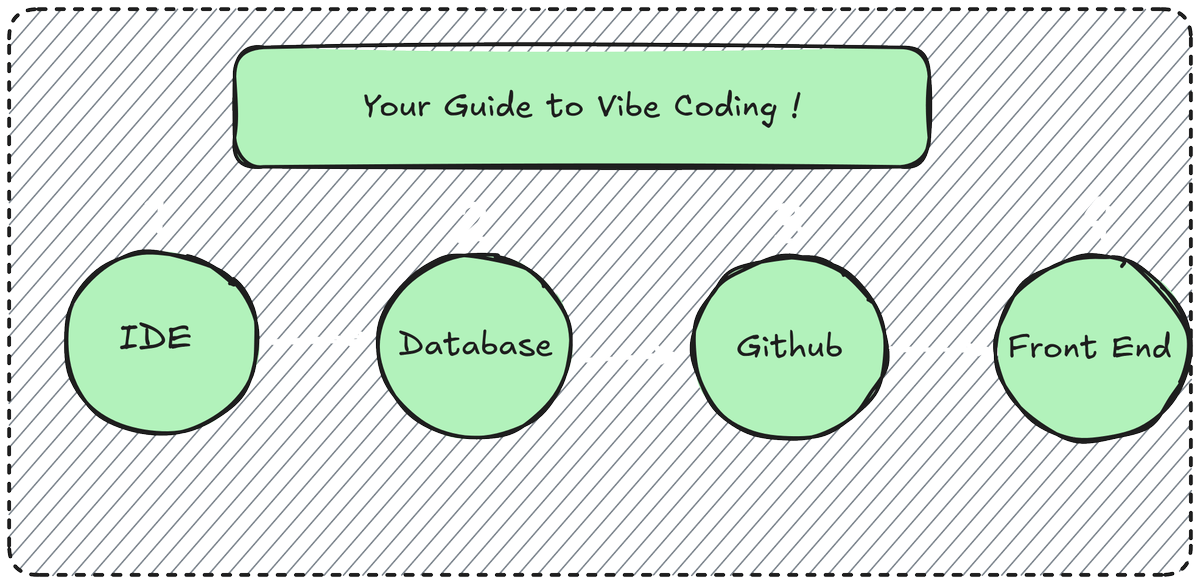
Vibe coding has been a hot topic for a while now. If you’re still a bit clueless and wondering how to get started, this post is for you. Here are four things you need to start vibe coding: 1. An IDE (code editor) I prefer Cursor. You can explain what you want in plain English, and it helps you write or edit the code without breaking your flow. 2. A database You’ll need a place to store your data. Supabase is a great option and has a generous free tier. 3. Version control GitHub is where you store your code, track changes, and manage commits. 4. Frontend & deployment This is the UI — what users actually see on the screen. I prefer Vercel because it’s easy to use and very beginner-friendly. Voila you can now vibe code and create your first program :)

@clarry_d_trader ·
Vibe coders in the house 😂🚀 People keep saying vibe coding is built on an unstable foundation. My take? Learn the fundamentals: APIs, databases, authentication, security, and a bit of programming logic. Then use AI to build faster. That’s a much stronger foundation than just prompting. At that point, execution and marketing become the real differentiators. #vibecode #ai #buildinpublic #saas


@smratitiwa86867 ·
Vibe coding was fun… until your AI-generated website started animating like a PowerPoint slide. Cursor. Claude. Gemini. They could build beautiful UIs — but GSAP animations were always the weak spot. That changes today. An open-source repo just dropped with official GSAP prompts + agent skills designed specifically for vibe-coding workflows. Now AI agents can create: • cinematic scroll animations • smooth timelines • buttery transitions • Apple-style motion design • actually polished frontend experiences This is the missing layer between “AI-generated” and “professionally crafted.” REPO ↓
 Watch video

@Prathkum ·
I was on a weekly team sync today. Our SEO manager had some ideas to improve traffic, DR, and AI visibility. He started sharing his screen. I expected an Excel sheet or a Notion doc. Instead, he opened a vibe-coded landing page. Then walked us through multiple vibe-coded pages and content he wants us to turn into real webpages. Vibe coding has changed the game. Most of it may never go to production. But that’s not the point. Anyone can now turn their ideas into something real. And build custom solutions for their own problems without waiting on anyone.

@sandislonjsak ·
Vibe coding: You describe the outcome or vibe in natural language, the AI generates the code (often the bulk of it) and you iterate by prompting symptoms rather than editing the source. Review is light or absent and the focus is speed and flow. AI-assisted software engineering: AI accelerates writing, debugging and refactoring, but the engineer owns architecture, reviews changes, understands the code and applies testing, security and maintainability standards. First is great for prototyping, second is great to speed up production level software delivery.

@pascal_bornet ·
Built in an hour. Debugged until Sunday. I love vibe coding because it gives people the confidence of a senior engineer approximately twelve minutes before the first error message appears. The prototype looks impressive, the demo works once, and everyone celebrates. Then someone clicks the wrong button, and the person who "built" the application begins negotiating with Claude as if it were holding the source code hostage. AI has made software development dramatically faster, but it has also created a new technical role: The person who keeps asking the model to fix what the model just fixed. Be honest, how many prompts away is your application from becoming completely understandable? #AgenticAI #HumanAgentOrchestrator #SoftwareDevelopment #AICoding
 Watch video

@osi_fav ·
This week, I started the Design to MVP vibecoding bootcamp for designers organized by @Joe_brendan_ at @devanddesignhq. Today’s session, was all about getting hands-on and actually building. Today I worked on: • Installing Node.js on my computer • Setting up my IDE (Google Antigravity) • Exploring the tools, extensions and LLMs needed to start building with vibe coding • Building my first vibe-coded to-do app 🎉 And honestly, there’s something exciting about going from just learning to actually creating. It may look small to some people, but moments like this are how real progress starts. Here is a video of the simple to-do app I built in this post More learning. More building. More shipping.
 Watch video

@glenngabe ·
Yep, vibe coding is amazing... until it goes wrong -> Read this before you vibe-code another app: Your dream vibe-coded app might be a security nightmare. "The danger, he says, is when a personal app drifts into the realm of business software and stores shared, hosted data without anybody realizing that shift has happened. And, he says, the calculus changes when vibe coding moves away from local apps for tracking migraines or meals or package deliveries and enters the realm of apps that handle customer logs, medical data, financial records, or internal documents." "n a more concerning and high-profile case in late January, a developer named Matt Schlicht launched a viral social network called Moltbook. It was built entirely for AI agents, and he did not write a single line of code. Within days, researchers at the security firm Wiz says it found the app’s entire production database wide open, exposing tens of thousands of email addresses and private messages. Moltbook patched the bug shortly after being told about it, but this wasn’t a one-off." https://t.co/XnOhUWn4WB

@_vmlops ·
This guy open-sourced a collection of popular apps you can build yourself using vibe coding
 Watch video

@z3vios ·
Vibe coding with an agent such as @Grok is not about writing perfect prompts on the first try. It’s about treating the model like a sharp collaborator who can hold the entire shape of what you’re trying to build while you stay in flow. Most people still talk to it like a search engine. “Write a function that does X.” That’s fine for small jobs. It is not vibe coding. Real vibe coding starts with the feeling of the thing. Describe the experience you want the code to create. The constraints that matter. The trade-offs you are willing to accept. The parts that must feel elegant versus the parts that can be rough for now. Then let Grok meet you at that level of abstraction. Iterate in conversation, not in isolated prompts. Keep the thread alive. Correct the direction, not every line. The code that comes out of that process usually has a coherence that pure syntax-level prompting never reaches. Because the model was solving for the same vibe you were holding. That is the shift. #VibeCoding #DevOps @NZSIS_RBLX @GCSBeCreative

@Anubhavhing ·
vibe coding gets clowned on constantly "it's just slop code" "no real engineer does this" meanwhile someone in greece built a site in 2 hours... and forced a government ministry to delete a page in 72. The code quality didn't matter the timing did and I really Liked when he said this. "Usually, setting up a site for this kind of civic stuff takes days of messing with boilerplate, layout tweaks, and deployment config. By the time you're done, the momentum is gone. Vibe coding meant I could just launch it instantly while the topic was still hot and catch them completely off guard." Basically AI assisted coding has helped so many people.


@gregorycampion ·
Been super curious about vibe coding. So I built an app this week. I’m not technical. I don’t code. I dictated into my phone. Using the free version of Replit, I created Dink Sync — a simple pickleball scheduling app so my friends can stop sending 1M texts. Took ~30 minutes. The AI: •Wrote the code •QA’d its own work •Fixed its own bugs That part felt… magical. The friction? Getting it into the Apple App Store. $100 developer fee. Screenshot size requirements. Privacy policy URL. Platform bureaucracy. We’re very close to frictionless creation. But distribution still belongs to the gatekeepers. Big takeaway: The bottleneck isn’t coding anymore. It’s clarity of thought. The new leverage is intention. We just entered a world where you can speak something into existence. That’s a shift. Made a video diving into the details. See next tweet.
Best Tweets by Topic