

andrew chen (@andrewchen) X analytics
@andrewchen
🇺🇸 a16z speedrun
@andrewchen has 456.4K followers, a median of 23.6K views per post and a 0.10% engagement rate.
Based on 30 recent original posts (high confidence). Updated October 24, 2026.
At a glance
Key stats
- Followers
- 456.4K456,441 followers on October 24, 2026+6.7K in 7 days
- Median views per post
- 23.6K
- Average views per post
- 389.3K
- Engagement rate (by views)
- 0.10%
- Original posts per week
- 5.4
- Average engagements per post
- 395
Engagement grade
Needs work
This is below the benchmark for accounts with 100K-1M followers.
Profile score
71/100
- Profile completeness100
- Audience shape100
- Engagement25
- Consistency100
- Positioning clarity30
Monetization
Estimated X creator earnings
$27–$65 in the last 30 days
From 5.5M views on @andrewchen's original posts in the last 30 days.
Rewards eligibility: likely
Rough estimate. X publishes no payout rate, so this assumes about $5–12 per 1M original-post impressions from reported creator payouts. Only Premium viewers’ impressions count, so real payouts can be much lower.
Free report
How does your account compare with @andrewchen?
Get the same report for your own account by email: engagement grade, median views, best times to post and estimated earnings.
Growth
Follower growth
+6.7K followers in the last 7 days. Tracked by Xholic since October 4, 2026.
| Date | Followers | Change |
|---|---|---|
| Oct 24, 2026 | 456,441 | +3,316 |
| Oct 21, 2026 | 453,125 | +2,741 |
| Oct 18, 2026 | 450,384 | +605 |
| Oct 17, 2026 | 449,779 | +1,667 |
| Oct 15, 2026 | 448,112 | +1,302 |
| Oct 10, 2026 | 446,810 | −899 |
| Oct 8, 2026 | 447,709 | +18 |
Timing
Best times to post
When @andrewchen's recent posts performed best (UTC).
- #1 slot
7:18 PM
Monday · UTC
- #2 slot
8:18 PM
Tuesday · UTC
- #3 slot
7:23 PM
Wednesday · UTC
What worked
Top recent posts
- 01

@andrewchen ·
Epic

- 136Replies
- 394Reposts
- 2.2KLikes
- 6MViews
6.2x average engagementHas an imageShort post (under 100 characters)Posted Thu 03:00 UTC - 02
@andrewchen ·
Jev is going to change the prosumer/consumer AI landscape by unlocking a specific thing: Ad-supported + free AI native apps this is going to usher in a generation of new AI-native marketplaces, social networks, photo apps, messaging, calendars, email, collab tools, and much more. Why? Previously, if you wanted to have an AI-native app with multiple/fast LLM calls on every screen, the math just didn’t work - inference costs just couldn’t be paid back from throwing a few video ads or affiliate links. So there were really just two solutions: 1) be a massive company and subsidize AI costs 2) charge a subscription fee to cover inference (or both) So what happens when you take a different approach that’s looks to be, initially, >400x cheaper than a more general LLM? I think it means that app developers are going to make their apps smarter and different in interesting ways. It won’t be as generically powerful as LLMs, but instead folks will create highly differentiated point solutions. You may not have a generically powerful virtual admin to schedule all your meetings, but you may have a free/ad-powered assistant that can comb through your inbox, filter for only important emails, figure out important dates, prioritize contacts, and do other interesting 80/20 work. Same for generically powerful virtual companions, or app builders, etc - it may be that we can hybridize the LLM and future Jev-like models that adds “wow” features at 1/1000ths of the cost, to make the economics work. If folks hear of interesting new apps/interactions/etc built on Jev, I’d love to hear it!
- 136Replies
- 81Reposts
- 1.1KLikes
- 103.7KViews
6.0x average engagementText onlyLong post (over 200 characters)Posted Sun 03:00 UTC - 03
@andrewchen ·
DO AGENTS HAVE NETWORK EFFECTS? We are seeing a new wave of general purpose consumer-friendly agents, and it’s causing many thousands of AI startups to re-evaluate their place in the market. Will these new horizontal players take over completely? Will it be winner take all? Can products that focus vertical use cases survive? The new wave of products - Muse, Town, Instinct, Grokbot, etc - come from taking the power and magic of Openclaw/Hermes but wrapping it in polished, secure, consumer-friendly experience. This is only the beginning, and soon every major tech company will throw their hat in the ring and thousands of startups that have been working on vertical agents in X (travel, shopping, family, work, SMB, etc etc) have big existential questions to answer. The simple case against winner-take-all dynamics: These agents are tools, not networks. They inherently provide a solo experience, and although packaged as chat experiences, they don’t have network effects the way that Whatsapp or phone networks do. They’re more like email clients - I can use Superhuman and someone else uses Outlook and someone else is on Gmail, but in the end we just send email to each other. In that metaphoi, if a Muse agent encounters a Instinct agent, they will just figure out how to talk to each other by building APIs, or using email/messaging/etc., so that there’s no advantage to everyone running the same thing. Further, you can swap out the underlying LLM - as we saw in the Claude vs Clawdbot saga - things will still work. The memory and underlying context are just text files, and AI are great at porting things from one system to another. So where’s the moat? Just because they are tools today doesn’t mean they can’t evolve into networks. As I’ve written about in the past, instead of discussing “network effects” as a vague/amorphous concept, let’s instead overlay it against core KPIs each product has to build against: - Acquisition network effects: More users** = lower CAC, higher virality, more signups - Engagement effects: More users = higher retention, deeper usage, more frequency - Monetization effects: More users = higher ARPU, higher conversion, more share of wallet (**PS. and by “more users” of course I actually mean, of course, higher network density with more interconnection within/across networks. Not scale effects) So looking at these sub-categories of network effects, you might ask: What are the features that you’d build to actually create network effects in agents? How does this category become winner-take-all? Acquisition: In the pre-AI world, network effects in customer acquisition were driven by users taking actions that then bring in even more users - whether that’s sending an invite, sharing a piece of content, or getting mentioned in a comment. Those users would then join the network, repeat the same actions, creating more viral loops that would throw off more users. In the post-AI world, both users and agents can initiate these loops. An agent might suggest, “hey, do you want me to help organize a New Years celebration with family” and then might pull together a group chat with your siblings, in-laws, and parents. It might build a microsite for the event and ask people to sign up and RSVP, creating an opportunity to generate a signup. Or for work, you might finish a slide deck and your agent asks if you want to pull together a meeting to present it to your team. When it does that, it might create a prep doc, take notes, and host it all on a microsite that engaged others. These types of agentic viral loops need a few things to work: They need to be able to plug into your contacts, and to have enough context to know when to loop which people into which projects/events/activities. They need access to communication channels like email/messaging/otherwise, specifically where they can reach potential users, as this serves as the viral substrate for propagation. The magic will be how to get all of these things without being creepy, and to create enough trust to reach out to friends/colleagues/etc on your behalf, without being too push. No one wants an agent that says, “hey Andrew would like to get lunch next week” followed by “and sign up for this agent to agree!” - it has to be better and more subtle than that. Many viral loops in the pre-AI era, particularly in the workplace, were built on a content creation loop - you use Google Slides to make a thing, you share a link, and then people would view it. Eventually they might make their own. Many products like Figma, spreadsheets, Notion, Canvas, are all built on this loop, and so are YouTube, Instagram, etc. In the agentic world, you might start by talking to your agent about interior decoration ideas, and it might ultimately build you a Pinterest-like board and make it easily shareable with others. It might build you a spreadsheet mini-app with a budget, a schedule, etc., and again, make it easily shareable. It might volunteer to do this inside a group chat with your friends, and if they want to view it, they should sign up and get their own agent too. If the content creation loop works for agentic virality, I think it means there’s a big incentive for every agent to volunteer to make visually-appealing, shareable content, do this often. AI is so good at codegen that creating a one-off disposable artifact will probably be more useful than not. And there’s a big incentive to drive virality by building/owning the content yourself as the agent. In the interior decoration example, it would be more viral to create a standalone version hosted by the agent, rather than building an actual Pinterest board, or to build a self-contained mini-spreadsheet rather than creating a GSheet. A properly tuned agentic viral loop will do the former because it helps spread the agent, rather than helping spread Pinterest/GSheets. This might all sound like horrific spamminess to you, but I think it might be done tastefully. If an agent is high-retention and high-usage, you’ll have many shots on goal to gradually invite your friends onto the same platform as you. The first shot might come from an invite loop that says your colleague/friend wants to set up a place to share photos/coordinate calendars/etc., and even if you say no, over time, your friend might share very useful microsites for projects or events or research that’s relevant, and you might decide that you want to sign up to leave a comment, but then eventually you might try the other functionality as well. Engagement: It’s easy to imagine that in a world where everyone by default has super intelligent agents that product engagement in agents would go up. The simple argument is that the ubiquity of agents would lead to more successful task completion, making agents more useful and applicable to more problems. Routine tasks like scheduling something or summarizing/sharing notes from a meeting, would happen instantly if it ran through agents and you removed humans completely. As agents become more successful over time, not only with your own tasks but in coordinating larger and more complex multi-user decisions, you’d end up using them more. However, this does not answer the question of network effects. The question there is, does your agent get better when other people are all using the SAME agent? As I said earlier, the argument for NO is if each type of agent runs on a frontier AI model, can talk to other agents (all different types) in real-time via email/messaging/APIs/connectors/etc. Then there’s not much leverage. If you’re just organizing a meeting or a dinner party or meeting the agents just ask each other in real-time - and even if they are heterogeneous - they can use email and calendars and figure it out. But some tasks do benefit from everyone running the same agent, because you get the benefits of centralization: Trust, speed, identity, discovery, etc. Some examples: - “Who are 10 people in San Francisco that I should meet?” - agents can’t just ask each other to find an optimal solution - “Find me a VP of Engineering who isn’t publicly looking for a new job, but would leave for a fast-growing startup that pays X in stock” - there’s a mix of private and public info here, and an agent of a passive jobseeker might lie if the asking agent is not trustworthy - “Who’s a trustworthy seller of X that I should buy from?” - reputation might be gamed, and it might be better to have a global source of truth - “Help me pick out the best dinner in the next 5 minutes that my friends and all their +1s would like, incorporating allergies/schedules/locations” - real-time solution incorporating a bunch of shared context - … and even more so, if you imagine that there may be agents that lie, exaggerate, or otherwise to benefit their humans For the above examples, you could imagine Muse/Town/Instinct/whatever building a shared network+context layer that understands the network, its relation to public/private data, acts as a system of record for identity/trust, does multi-sided marketplace matching, etc. Then it would allow only its agents access to this platform, and agents outside of the network wouldn’t have access. If you’re part of this network, and are contributing data, your agent gets more useful over time. The network gets more powerful over time. The counterpoint to this counterpoint is that perhaps new startups will fill the void as a series of agent-facing point solutions, making it possible for people running agents of all times to interface with each other. Perhaps Muse creates a proprietary ecommerce marketplace that only Muse agents can use, but perhaps there will just be a next-gen eBay for any agent to sell to any other agent, and this service maintains central reputation/identity at that layer. In other words, perhaps the centralization will still happen, but just at a layer above agents. Most likely both will happen - every large tech company adds chat, commerce, search, etc, but also there are pure play versions of each of these. But this feels like more fragmentation than a true winner-take-all. Some parting thoughts: My argument in this writeup is simple: Agents don’t inherently have network effects. If all we build are super-intelligent assistants that can use tools and talk to each other, then the category might look surprisingly fragmented. Your agent can talk to my agent, just as Gmail can send email to Outlook, and there’s no particular reason we need to use the same one. Better models, UX, integrations, memory, and distribution might create very large companies, but those are not network effects. But the next gen of agents have a big opportunity design network effects in their interactions. On acquisition, they can turn the things they create—documents, events, websites, research, group chats, plans—into viral objects that naturally pull other people in. And on engagement, they can create shared networks of identity, reputation, relationships, private context, and intent that make the agent increasingly useful as more of the people around you join. There’s many ways for these network effects to instantiate. If we’re lucky, things will look more like the open web - mostly decentralized, with bits of centralization to make certain tasks smoother. Identity could become an open protocol. Reputation could live in marketplaces. Commerce could happen through an agent-native eBay. Professional discovery could happen through an agent-native LinkedIn. Agents could remain interchangeable clients sitting on top of a constellation of networks and marketplaces, much as browsers and email clients do today. In that world, enormous network effects emerge around agents without producing a winner-take-all market for the agents themselves. My guess is that we’ll see a fight over exactly this boundary. Every major horizontal agent will try to pull valuable network functionality inside its walls: host the artifact instead of creating a Google Doc, execute the transaction instead of sending you to Amazon, make the introduction instead of searching LinkedIn, create the event instead of using Partiful. Every time it does this successfully, it converts somebody else’s network effect into its own. Meanwhile, every incumbent network and a new generation of startups will have the opposite incentive: make their networks universally accessible to every agent so that no horizontal agent can recreate and capture them. This is why I don’t think the interesting question is simply, “Will agents have network effects?” Of course some will. The much more consequential question is: Where will the network effects live? If they live primarily in open protocols and specialized networks, we may end up with thousands of agents competing on intelligence, personality, UX, specialization, and price, all interoperating with the same underlying ecosystem. Vertical agents can thrive in this world. But if a few horizontal agents successfully accumulate identity, relationships, private context, reputation, latent intent, and distribution - and keep those assets proprietary - then switching agents starts to mean leaving your network behind. Next couple years will be very fun to see how this plays out.
- 163Replies
- 54Reposts
- 638Likes
- 502.4KViews
4.5x average engagementText onlyLong post (over 200 characters)Posted Tue 05:00 UTCOpens with a question - 04
@andrewchen ·
SPEEDRUN 008 APPLICATIONS NOW OPEN we are now taking intros/recos for founders we should be meeting for SR008 We have a new SF office where we’ll be hosting the residency, and I will personally be working with founders on growth/distribution/fundraising/more. Apply now for a Jan 2027 start And yes, we do invest up to $1M but we do lots of other things for you too :) more info: https://t.co/lExlSgiixi — SPEEDRUN 008 We invest up to $1M in your new startup. Applications for SR008, our next residency, are open now through November 1, 2026. SR008 runs February 1 to April 16, 2027, in San Francisco at our new offices in Jackson Square We help founders with capital, customers, and talent. When you join speedrun, you get: - Capital: Up to $1M, plus $10M+ in credits from 200+ partners through the speedrun Marketplace. When you’re ready to raise your next round, Demo Day puts you in front of a room full of investors. - Customers: Introductions to executives and customers through SR Insiders, our network of 150+ C-suite founding members and 1,000+ executives and operators. You’ll also get AI Faire and Tech Week to meet buyers in person, Launch Lab to get your product in front of people, and Brand Lab to shape how you show up from day one. - Talent: Access to the Talent Network of 171,000+ people, which our team is always growing, plus hiring and HR support as your team scales. You’ll also be building alongside a community of 1,000+ speedrun founders who support each other with customer introductions and product feedback.
- 73Replies
- 55Reposts
- 717Likes
- 1.5MViews
2.5x average engagementShares a linkLong post (over 200 characters)Posted Mon 16:00 UTC - 05
@andrewchen ·
a fellowship with $250k for recent grads/students - deadline next week link: https://t.co/w7mfnRgJgj more info 👇 -- Applications are closing soon for a16z speedrun alpha, our new fellowship for technical students and recent grads who want to start building now - Up to $250K investment - $1M+ in credits across AWS, GPC, Azure, Open AI, Anthropic, Cursor and many more. - Automatic final interview for speedrun, up to $1M investment - Office hours and hosted sessions with speedrun partners - Coworking space at the speedrun office throughout the fellowship - 8-week, in-person experience (January 11 – March 5) for folks that would rather get experience before starting their company, we also have a Talent Track that fast-tracks you toward roles at breakout speedrun startups just over a week left to apply: https://t.co/w7mfnRgJgj
- 19Replies
- 25Reposts
- 287Likes
- 2.1MViews
1.5x average engagementShares a linkLong post (over 200 characters)Posted Tue 15:00 UTC - 06
@andrewchen ·
I totally understand this
- 60Replies
- 32Reposts
- 820Likes
- 120KViews
1.3x average engagementText onlyShort post (under 100 characters)Posted Fri 15:00 UTCQuote post
Latest
Recent posts by andrew chen
The latest 30 original posts from @andrewchen, newest first, as of October 24, 2026. Replies and reposts aren't included.
@andrewchen ·
congrats to my very talented colleagues @cdixon @eddylazzarin @guywuolletjr on their new fund, a16z Frontier. Crypto and more.
- 14Replies
- 4Reposts
- 169Likes
- 14.8KViews
@andrewchen ·
p(China) is what we should be talking about, not p(doom) What is the probability that China - with its lead in robotics, manufacturing, construction capability, and second place on AI, GPUs, innovation - will become the primary beneficiary of the technological revolution the world is experiencing, over the next decades? If your p(China) is high, what are you doing - and what should we be doing - to advance US capabilities in the coming decades so that we can lead, not follow? IMHO p(doom) is the sideshow
- 67Replies
- 16Reposts
- 223Likes
- 32.2KViews
@andrewchen ·
AI doomers: “the world is gonna end in 10 years” the same AI doomers: “I must buy a house in presidio heights / noe / mill valley ASAP!!” Reminds me of davos billionaire climate doomers who fly private and buy beachside
- 28Replies
- 7Reposts
- 216Likes
- 20.6KViews
@andrewchen ·
HERE’S THE SIGN YOU’VE BEEN WAITING FOR- for those of you with side projects, late night coding sessions, the jam sessions with friends/coworkers. Maybe already know you’re a founder- you who follow all the greats, try all the latest AI tech, and have always known you are going to start something. Here’s your chance to build faster and bigger, learn a crazy amount in a short time, and really test yourself in the real world. Bet on yourself. Build your startup with us. SPEEDRUN 008 IS HERE
 Watch video
- 48Replies
- 16Reposts
- 248Likes
- 598KViews
@andrewchen ·
SPEEDRUN 008 APPLICATIONS NOW OPEN we are now taking intros/recos for founders we should be meeting for SR008 We have a new SF office where we’ll be hosting the residency, and I will personally be working with founders on growth/distribution/fundraising/more. Apply now for a Jan 2027 start And yes, we do invest up to $1M but we do lots of other things for you too :) more info: https://t.co/lExlSgiixi — SPEEDRUN 008 We invest up to $1M in your new startup. Applications for SR008, our next residency, are open now through November 1, 2026. SR008 runs February 1 to April 16, 2027, in San Francisco at our new offices in Jackson Square We help founders with capital, customers, and talent. When you join speedrun, you get: - Capital: Up to $1M, plus $10M+ in credits from 200+ partners through the speedrun Marketplace. When you’re ready to raise your next round, Demo Day puts you in front of a room full of investors. - Customers: Introductions to executives and customers through SR…
- 73Replies
- 55Reposts
- 717Likes
- 1.5MViews
@andrewchen ·
FINAL day to apply for the Speedrun Alpha fellowship https://t.co/aiNkBstBKd For students / dropouts / recent grads: we want to invest up to $250k. Come work out of our SF offices and explore ideas, find a cofounder, etc. More details: Start building. We back you pre-entity, pre-idea, pre-team. Apply as an individual. If you already know who you want to build with, great. Have each person apply separately and note who you’re building with. - Up to $250K investment - Automatic final interview for speedrun, up to $1M investment - $1M in credits across AWS, GPC, Azure, Open AI, Anthropic, Cursor and many more. - Coworking space at the speedrun office throughout the fellowship - Office hours and hosted sessions with speedrun partners - 8-week, in-person experience (January 11 – March 5)
- 16Replies
- 5Reposts
- 90Likes
- 197.7KViews
@andrewchen ·
important points on the future of LA vs SF The sad part of LA is that the movie business jobs are predominantly blue collar workers that build and operate the industry, not just celebrities. And it’s sad that those jobs are going away
- 9Replies
- 3Reposts
- 65Likes
- 16.6KViews
@andrewchen ·
wow fleet week. traffic in sf so messed up today that my Waymo was blocked for 15 min and had to escalate to humans in the loop to reroute. Made a pretty hilarious left turn and big loop, finally on my way back. 20 min ride turning into a 50 min detour
- 20Replies
- 0Reposts
- 93Likes
- 16.6KViews

Show all 30Show fewer
@andrewchen ·
Hosting our first hackathon at the Speedrun offices in Jackson square to close out SF Tech Week! See y’all in LA next!!
- 14Replies
- 6Reposts
- 94Likes
- 9.8KViews
@andrewchen ·
the new waymo ojai vehicle 👌🏼👌🏼👌🏼👌🏼 it’s so nice. Finally got one today in SF
- 35Replies
- 0Reposts
- 128Likes
- 31KViews
@andrewchen ·
btw Tech Week in SF has grown 10x since we started running it in 2023 Inevitable that this will eventually be the largest tech conference in the world

- 34Replies
- 8Reposts
- 169Likes
- 17.1KViews
@andrewchen ·
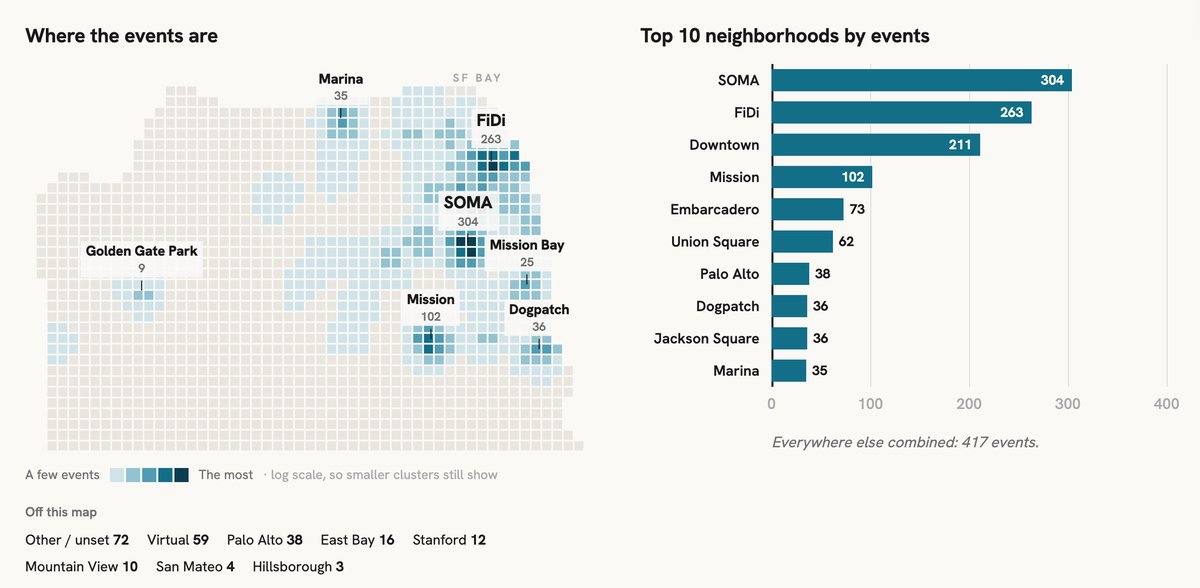
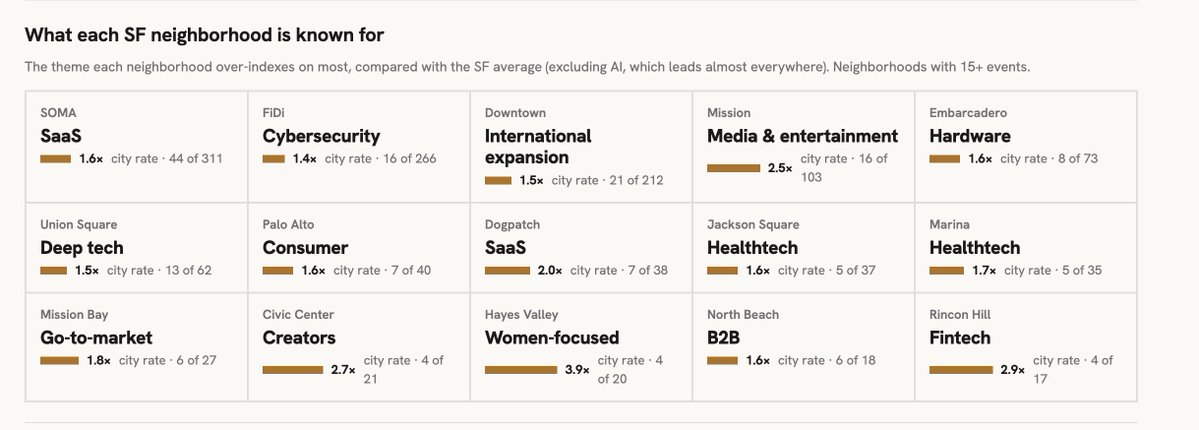
some fun stats from SF Tech Week - the largest ever - with thousands of events and 50k+ attendees. We've more than doubled since we started hosting in SF Amazing to see FiDi emerge as a force! Used to be that tech was just in SOMA. Plus the Mission+Dogpatch as well
- 18Replies
- 14Reposts
- 142Likes
- 17.8KViews
@andrewchen ·
fun to use town/muse/grokbot after months of being a DAU on hermes/openclaw Reminds me of all the amazing fun and insanity it is to admin your own linux box versus using something like iOS Not switching for now! Too much fun nerding out
- 42Replies
- 0Reposts
- 119Likes
- 15.7KViews
@andrewchen ·
DO AGENTS HAVE NETWORK EFFECTS? We are seeing a new wave of general purpose consumer-friendly agents, and it’s causing many thousands of AI startups to re-evaluate their place in the market. Will these new horizontal players take over completely? Will it be winner take all? Can products that focus vertical use cases survive? The new wave of products - Muse, Town, Instinct, Grokbot, etc - come from taking the power and magic of Openclaw/Hermes but wrapping it in polished, secure, consumer-friendly experience. This is only the beginning, and soon every major tech company will throw their hat in the ring and thousands of startups that have been working on vertical agents in X (travel, shopping, family, work, SMB, etc etc) have big existential questions to answer. The simple case against winner-take-all dynamics: These agents are tools, not networks. They inherently provide a solo experience, and although packaged as chat experiences, they don’t have network effects the way that…
- 163Replies
- 54Reposts
- 638Likes
- 502.4KViews
@andrewchen ·
SF Tech Week kicks off today!! We’ll be hosting a bunch of events over the next few days, at our new Jackson Square office and for our massive Demo Day with 1000+ investors. Also sharing a couple fun stats/factoids 👇🏼 - SF TECH WEEK 2026 1,700+ events on the calendar, more than double (!!) in the past two years 1,266 hosts from 1,058 companies, including OpenAI, Anthropic, SpaceXAI, Stripe, Google, Vercel, Databricks, ŌURA, Mistral, Perplexity, Cerebras, Lovable, Ramp, Brex, Mercury, AWS, Adobe, Reddit and more 100+ events hosted by portfolio companies of Speedrun, a16z Fastest-growing themes: - Hardware: tripled, the strongest and most consistent growth of any theme - Cybersecurity: more than tripled from a small base, largely driven by AI security as companies deploy agents - Infrastructure: more than doubled, as compute and the AI stack draw more builders - Deep tech: doubled, with more science- and research-led startups on the calendar

- 26Replies
- 20Reposts
- 159Likes
- 18.8KViews
@andrewchen ·
who’s in SF next week? We’re hosting, co-hosting, and organizing a bunch of events with great speakers including at our new Jackson Square office. Full SF+LA tech week calendar now online!

- 42Replies
- 15Reposts
- 272Likes
- 23.6KViews
@andrewchen ·
welcome to speedrun @abliteration_ai team and @founderengineer! "AI with guardrails that you control" - love it.
- 10Replies
- 4Reposts
- 59Likes
- 15.3KViews
@andrewchen ·
when the personal computer won, it made $20k+ workstations in 1980s a distant memory - SGI, Next, Sun, etc. I remember thinking, huh why would anyone ever buy a computer that expensive!?? yet now you buy a PC and add a single RTX PRO 6000... or a Mac Studio. And prices are only going up...
- 42Replies
- 3Reposts
- 137Likes
- 22.6KViews
@andrewchen ·
yup. This is where open weight AI needs to go Customer controlled guardrails >>> black box rules
- 18Replies
- 3Reposts
- 40Likes
- 14.9KViews
@andrewchen ·
a fellowship with $250k for recent grads/students - deadline next week link: https://t.co/w7mfnRgJgj more info 👇 -- Applications are closing soon for a16z speedrun alpha, our new fellowship for technical students and recent grads who want to start building now - Up to $250K investment - $1M+ in credits across AWS, GPC, Azure, Open AI, Anthropic, Cursor and many more. - Automatic final interview for speedrun, up to $1M investment - Office hours and hosted sessions with speedrun partners - Coworking space at the speedrun office throughout the fellowship - 8-week, in-person experience (January 11 – March 5) for folks that would rather get experience before starting their company, we also have a Talent Track that fast-tracks you toward roles at breakout speedrun startups just over a week left to apply: https://t.co/w7mfnRgJgj
- 19Replies
- 25Reposts
- 287Likes
- 2.1MViews
@andrewchen ·
Love that there’s a bunch of new startups focusing on local AI / sovereign AI / GPU hoarding 😂 speaking my language! Congrats to @zainmfj and the @ghostai team
- 18Replies
- 7Reposts
- 151Likes
- 26.6KViews
@andrewchen ·
by now we’re used to: - frontier model launches - 6-12 months later, the chinese open weight models close the gap this week we’re seeing: - jev launches - a few days later, swarms of US AI developers ship their own open weight models :) tracking 2-3 early ones so far, but looks like some great open weight alternatives coming within the week I’m sure there will be some great chinese open weight alts for jev coming also
- 76Replies
- 14Reposts
- 302Likes
- 44.3KViews
@andrewchen ·
curious if Jev-like models might accelerate us towards on-device AI native functionality on mobile devices strong LLMs are a long way from running on phones: - slow memory bandwidth - only highly quantized MoE models will fit - lots of issues with power/heat/etc Folks are building NPUs for the next gen of mobile but targeting pretty modestly sized LLMs There’s lots of mobile UX that would benefit from fast/cheap AI decision models - from notifications, typing/texting, to in-app experiences like inboxes/calendars/etc I always figured the other solution would be a model-on-a-chip that would encode an older-yet-useful model into the actual phone hardware itself, but maybe this will move faster?
- 69Replies
- 12Reposts
- 198Likes
- 21.3KViews
@andrewchen ·
Jev is going to change the prosumer/consumer AI landscape by unlocking a specific thing: Ad-supported + free AI native apps this is going to usher in a generation of new AI-native marketplaces, social networks, photo apps, messaging, calendars, email, collab tools, and much more. Why? Previously, if you wanted to have an AI-native app with multiple/fast LLM calls on every screen, the math just didn’t work - inference costs just couldn’t be paid back from throwing a few video ads or affiliate links. So there were really just two solutions: 1) be a massive company and subsidize AI costs 2) charge a subscription fee to cover inference (or both) So what happens when you take a different approach that’s looks to be, initially, >400x cheaper than a more general LLM? I think it means that app developers are going to make their apps smarter and different in interesting ways. It won’t be as generically powerful as LLMs, but instead folks will create highly differentiated point solutions.…
- 136Replies
- 81Reposts
- 1.1KLikes
- 103.7KViews
@andrewchen ·
Sometimes it’s the small victories that make your day

- 34Replies
- 0Reposts
- 175Likes
- 16.9KViews

Formats
Content mix
- Text only
- 60%
- With media
- 30%
- With links
- 3 posts
- With hashtags
- 0 posts
Creator style: High-reach broadcaster
See the full app
This creator report is one small part of Xholic
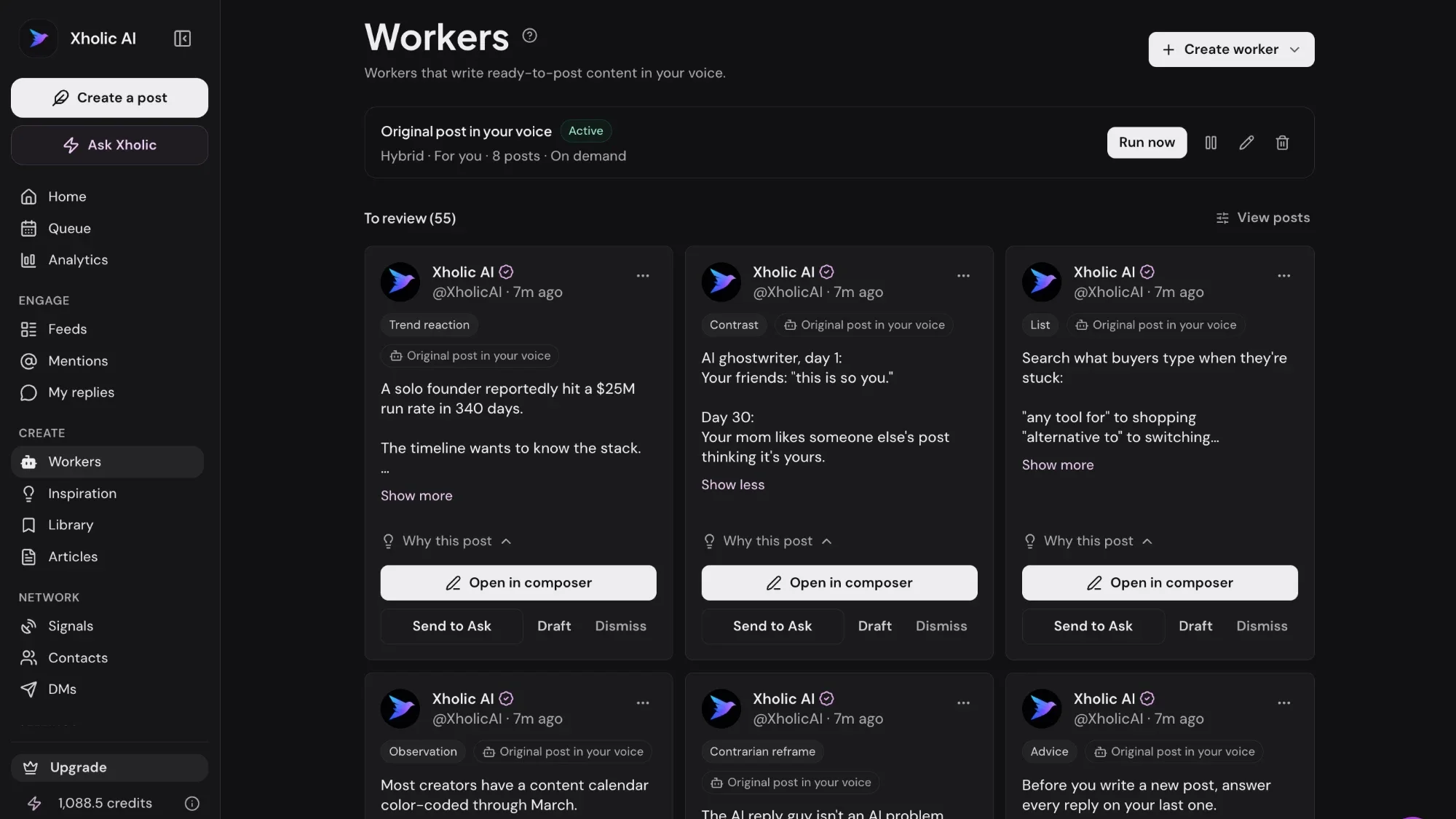
Click through a sample creator's account in the real app. No sign-up, nothing to install.
- Posts written in your voice and scheduled for your best hours
- Buyers found on 𝕏, with a reply drafted for each one
- Analytics that show which posts grow you
No sign-up or login needed · Takes about 2 minutes
Grow your own account
Want numbers like @andrewchen's?
Xholic writes posts in your voice, schedules them for the hours your audience is active, and tracks what's working every day.
$0 today · Card required · Cancel anytime
Live demo: no sign-up or login needed · takes about 2 minutes
Keep browsing
More in Founders & tech CEOs
See all of Founders & tech CEOs


Keep exploring
Free tools
- Compare Twitter AccountsPut two public accounts head to head and see who leads on views, engagement, grade and posting pace.
- Twitter Engagement Rate CalculatorCalculate engagement rate from your numbers or a public profile and grade it against your tier.
- X Monetization CalculatorChange the assumptions behind six X revenue models and compare gross revenue with direct contribution.
Guides
- How to Check an X Follower Count Live (and Read the Trend)Watch any public X account's exact follower count update live, read the session and 90-day charts, and see why the number differs from the X app.
- How to Analyze Any X Profile and Read the ReportAnalyze any public X profile and read the report properly: how each metric is calculated, what is measured vs estimated, and three worked readings.
From the blog
- X Analytics for Brands & Businesses: A Practical GuideHow brands and businesses use X/Twitter analytics to track reach, engagement, and ROI — with the KPIs that actually matter.
- Twitter Growth for SaaS Founders: A Practical PlaybookTwitter growth for SaaS founders explained with proven X strategies. Profile optimization, content cadence, replies, threads, metrics, and templates that work.
Best tweets on this topic
- Best tweets about Product-Led GrowthExplore the best tweets about product-led growth, including activation, onboarding, free trials, virality, conversion, retention, pricing, and PLG metrics.
- Best tweets about LeadershipExplore the best tweets about leadership, covering decisions, communication, trust, accountability, culture, feedback, management, and team performance.
- Best tweets about EntrepreneurshipExplore the best tweets about entrepreneurship, covering ideas, execution, customers, risk, resilience, hiring, capital, and lessons from building companies.
About this data
- Analytics are inferred from public profile and recent post data. They do not include private impressions, profile visits, link clicks, or follower-source data.
- Deleted, protected, unavailable, or rate-limited posts may be missing from the sample.
- Stats come from public posts Xholic has stored, not private X Analytics. Xholic is not affiliated with X Corp or @andrewchen.
- Own this account and want it hidden? Email support@xholic.ai — we verify ownership and handle requests within 2 working days.