Trust, psychological safety, and humility
Credibility comes from admitting mistakes, listening, protecting people, sharing uncertainty, and creating conditions where problems and dissent surface early.
34%
Best tweets about Leadership
Explore the best tweets about leadership, covering decisions, communication, trust, accountability, culture, feedback, management, and team performance.
Specific leadership decisions, communication practices, team dynamics, accountability, feedback, trust, and lessons from real responsibility.
Original Xholic analysis
Across the 50 leadership posts, the most common themes are trust and psychological safety (34%), followed by candid feedback/accountability and clarity/expectations/focus (22% each). The posts commonly frame leadership as setting clear standards, addressing difficult issues directly, and transferring ownership rather than solving every problem personally. Operating-rhythm content—including offsites, goals, metrics, owners, and follow-through—also produced some of the strongest individual scores.
78% of posts
All-time engagement
64% of posts
Published in 90 days
Conversation map
Credibility comes from admitting mistakes, listening, protecting people, sharing uncertainty, and creating conditions where problems and dissent surface early.
34%
High-performing teams address hard truths directly, set explicit expectations before judging results, and use honest feedback to create responsibility.
22%
Clear priorities, standards, decision rights, goals, and definitions of success reduce uncertainty and prevent teams from being distracted by complexity.
22%
Senior leaders create leverage through people, strategy, resource allocation, organizational design, communication with boards, and long-term judgment.
20%
Leadership requires making unpopular, timely, and principled decisions under uncertainty, while distinguishing enduring non-negotiables from flexible choices.
20%
Culture is established through leaders’ repeated behaviors, sacrifices, communication, standards, and treatment of people—not slogans or perks.
18%
Offsites, scorecards, weekly reviews, one-on-ones, goals, owners, metrics, and follow-through turn strategy and discussion into coordinated action.
18%
Leaders scale by resisting rescue instincts, coaching rather than supplying answers, and transferring real ownership so others build judgment and capability.
10%
Tone and stance
Performance benchmark
Posts with media make up 40% of this collection. Their median all-time score is 9.35, compared with 10.8 for text-only posts.
Format mix
Consensus and debate
Shared view
Several posts argue that leaders should establish priorities, success criteria, and expectations before evaluating results. They also present focus and reduced uncertainty as ways to make work more manageable.
Shared view
Posts describe hard conversations and direct feedback as necessary for handling underperformance, surfacing problems, and preventing unresolved issues from accumulating.
Shared view
Posts connect trust with admitting mistakes or uncertainty, listening, and responding calmly under pressure. These are presented as behaviors that can make it easier for people to raise ideas and concerns.
Shared view
A recurring view is that leaders should avoid reflexively rescuing every problem. Coaching, delegation, and giving others space to carry decisions are presented as ways to develop capability beyond the leader’s direct intervention.
Open debate
Some posts favor restraint and broad ownership from leaders, while another argues that teams first need direction, expectations, and accountability before autonomy is effective.
Open debate
One post defines transparency as openly sharing mistakes and decision-making process. Another argues that managing up requires filtering information and tailoring the level of detail to what a senior leader needs.
What performs
The top outlier, with an all-time score of 1,283.96, argues that managers should resist stepping in to solve every problem and instead help others develop their own solutions.
Other listed outliers cover executive-team communication and management practices, standards of performance, a detailed leadership-offsite agenda, and a concise argument for focus.
List posts had a supplied median all-time score of 20.41, higher than announcements (11.03), stories (7.37), and questions (2.44). The cited posts are resource-list examples within that format.
Statistical standouts
Creator landscape
The five most represented creators account for 20% of the selected posts.
1. Abhishek Singh
@0xlelouch_
2 posts
2. Alvin Foo
@alvinfoo
2 posts
3. Andrew Feldman
@andrewdfeldman
2 posts
4. Big Brain Business
@BigBrainBizness
2 posts
5. Dave Kline
@dklineii
2 posts
6. Gregor Purdy
@GregorPurdy
2 posts
Big Brain Business published two evidence tweets and had a median all-time score of 876.71, the highest among the supplied top voices. Its cited posts address delegation and CEO communication practices.
Dave Kline’s two cited posts argue for reducing complexity through focus and identify hard conversations as a core new-manager skill.
Abhishek Singh’s two cited posts are resource lists covering topics including feedback, ownership, operating practices, metrics, incident learning, and stakeholder updates.
Since the previous snapshot
Themes, sentiment, stance, and post format are classified per tweet. All counts, shares, medians, creator concentration, freshness, and performance comparisons are then calculated directly from the published snapshot.
Xholic's all-time score compares engagement while accounting for reach, post age, and creator consistency. It is used for relative comparisons within this collection.
This report analyzes the exact 50-post snapshot shown below. AI identifies editorial categories and drafts explanations; all statistics are calculated from the snapshot, and every narrative claim is checked against cited posts before publication.
Best Leadership tweets
Ranked 01–50
@BigBrainBizness ·
Simon Sinek offers a counterintuitive take: The moment you step in and fix the problem, you stop being a leader: You got promoted because you were the best at the job. And that's precisely what makes leadership so difficult. The same instinct that made you great at the work, seeing the problem, knowing the answer, fixing it fast, becomes a liability the moment you move into a leadership role. Simon is direct about this: "Then you're not leading. You're just doing the work. You just have the leadership position." The people who now report to you may not be as good as you. They'll move slower. They'll miss things you would have caught immediately. And in those moments, every instinct will tell you to step in. But that instinct is exactly what you have to resist. "You can't just come in and tell them how you would do it. You have to push them to solve the problems the way that they would, just like someone did for you once before." Someone once gave you the space to figure it out. That patience is what shaped you. Now it's your turn to offer the same to others. Simon points to Chanel as a company that has built this principle into its culture. Newly hired senior leaders are not allowed to speak in meetings for their first three months. "You don't know anything about our company. And you'll learn by listening." Chanel trusts that their leaders will be around for the long term, so 90 days of silence is a small price to pay for someone who truly understands the business before they start shaping it. That's institutionalised patience. And it's almost unheard of. Most organisations reward speed, decisiveness, and output. So the pressure to swoop in and fix things feels justified, even virtuous. But Simon draws a hard line between having a leadership position and actually leading. One is a title. The other is a practice. And that practice demands something most high performers find deeply uncomfortable. Watching someone struggle toward an answer you already have, and choosing to let them find it themselves. That restraint is the real work of leadership.
@BigBrainBizness ·
Jensen Huang on how he keeps 55 executives motivated when they're already incredibly wealthy: His answer reveals an unconventional management philosophy that starts with the structure of his leadership team: "I'm surrounded by 55 people. My management team, my direct reports is 55 people. I write no reviews for any of them. I give them constant reviews and they provide the same to me." Even more surprising is how he handles compensation: "My compensation for them is the bottom right corner of Excel. I just drag it down. Literally, many of our executives are paid the same exactly to the dollar. I know it's weird. It works." Jensen also avoids the typical executive rituals that most CEOs rely on: "I don't do one-on-ones with any of them unless they need me. I never have meetings with them just alone. There's not one piece of information that I somehow secretly tell E-staff that I don't tell the rest of the company." He explains the thinking behind this radical transparency: "In that way our company was designed for agility, for information to flow as quickly as possible. For people to be empowered by what they are able to do, not what they know. That's the architecture of our company." But the real answer to keeping wealthy employees motivated comes down to one thing — his own behavior: "How do I celebrate success? How do I celebrate failure? How do I talk about setbacks? Every single thing, I'm looking for opportunities to instill every single day. What is important, what's not important, what's the definition of good? How do you think about a journey? How do you think about results? All of that all day long." The lesson is clear: when money no longer motivates, culture does. When your top people no longer need the paycheck, what they need is a leader worth following.
@StartupArchive_ ·
Jack Dorsey on what he learned about culture from 49ers coach Bill Walsh When Bill Walsh joined the 49ers, they were the worst team in the NFL. Within three years, they were Super Bowl Champions. In his book, The Score Takes Care of Itself, he writes: “Winners act like winners before they’re winners…The culture precedes positive results. It doesn’t get tacked on as an afterthought on your way to the victory stand. Champions behave like champions before they’re champions; they have a winning standard of performance before their winners.” And he provides six guidelines for establishing a standard of performance: 1. Start with a comprehensive recognition of reverence for and identification of the specific actions and attitudes relevant to your team’s performance and production. 2. Be clarion clear in communicating your expectation of high effort and execution of your Standard of Performance. Like water, many decent individuals will seek lower ground if left to their own inclinations. In most cases you are the one who inspires and demands they go upward rather than settle for the comfort of doing what comes easily. Push them beyond their comfort zone; expect them to give extra effort. 3. Let all know that you expect them to possess the highest level of expertise in their area of responsibility. 4. Beyond standards and methodology, teach your beliefs, values, and philosophy. An organism is not an inanimate object. It is a living organism that you must nurture, guide, and strengthen. 5. Teach “connection and extension.” An organization filled with individuals who are “independent contractors” unattached to one another is a team with little interior cohesion and strength. 6. Make the expectations and metrics of competence that you demand in action and attitudes from personnel the new reality of your organization. You must provide the model for that new standard in your own actions and attitude. Twitter and Square founder Jack Dorsey encourages anyone thinking about leading teams or building a company to read this book: “What’s important about this is that as you start building a team, you need to set expectations around how people need to perform in the company—how people need to act in the company. And these can be very simple things, but without that, you are rutterless—you will react to the outside. And if you react to the outside, you are building someone else’s roadmap and you’re building someone else’s dream instead of your own.” Video source: @ycombinator (2013)
@businessbarista ·
I love quarterly offsites. Call me a sicko, but there’s nothing better than a technology-free, 8-hour block to steer your business from 10,000 ft rather than worry about day-to-day blocking and tackling. Here’s the agenda I’m using to crush tomorrow's leadership offsite, so we can keep hyper-scaling @tenex_labs. Feel free to steal it: Segue: 15 min Previous Quarter Review: 30 minutes Review the VTO: 60 minutes Break: 15 minutes IDS: 90 minutes Lunch: 30 minutes IDS: 90 minutes Break: 15 minutes Establish Quarterly Goals: 120 minutes Next steps: 10 minutes Conclude: 5 minutes Section-by-section breakdown: Segue Take 5 minutes, each person should share: - Best business and personal news in the last 90 days - What is working in the organization - What is not working in the organization - Expectations for the day Previous Quarter Review a) Review key metrics: - Revenue - COGS - Gross Profit - Gross Margin - Operating Expenses - Net Profit b) Review quarterly goals (company & individual): - Go through all goals and state Done or Not Done. No other commentary at this point. - Discuss why the missed goals weren’t completed. - Decide what you want to do with each goal. You have 4 options: • Carry the goal forward to the next quarter. • If the goal is 95 percent complete, completing the last 5 percent simply becomes an action item for the To-Do List. • Reassign the goal to someone else. • Delete the goal. VTO review VTO stands for Vision, Traction, Organizer. It is the one-page window into the most important parts of your business. - Core values - Core focus - Marketing strategy - 10-year BHAG - 3-year picture - 1-year plan - 90-day goals (rocks) This is your opportunity to review & revise any parts of the VTO as leadership. Identify, Discuss, Solve - List out all of the key issues that are top of mind - Prioritize the 3 biggest issues - Go through IDS for each issue: • Clearly identify the real issue, because the stated problem is rarely the real one. • For discuss, you get everything on the table in an open environment where nothing is sacred. • Solve becomes an action item for someone to do. The item ends up on the To-Do List, and when the action item is completed, the issue goes away forever. - Assign remaining issues to team members as to-dos Next Quarter Goals - Team lists everything on the whiteboard that has to be accomplished in the next 90 days. - Make as many passes at the list as necessary until you’re down to three to seven. - Once you’ve narrowed your list: • Set the date that the goal is due • Make the goal specific, measurable, and attainable. - Set individual goals • Once the company goals are set, the members of the leadership team each set their own goals. • They first carry forward any company goals that they own to their individual list of goals and then come up with their most important three to seven. - Create the goals sheet • At the top are the organization’s Goals, and below that are each of the leadership team’s individuals Goals. This Goal Sheet is brought into your weekly meetings to review your Goals. Next Steps 1. List out todos 2. Assign owners & dates for completion Conclude - Everyone takes 2 minutes and writes down: • Feedback on the meeting • Whether their expectations were met or not • Their rating on the meeting from 1 to 10 - Everyone shares what they wrote down Also shoutout to @EOSWorldwide, the operating model we use to run these offsites and our entire company.

@aymanalabdul ·
The CEO is the most unnatural position at any company You don’t actually “do” anything tangible Your output is the output of the team Your metrics are the teams metrics But for the company to be successful, you have to nail 10 major areas of mastery: 1. People Are you hiring the best people for the job? How many of your problems would go away if you were only surrounded by A players? Your job as CEO is making sure you're putting the best team possible on the field 2. Strategy Are you choosing the best problems to solve? Are you ignoring the urgent to focus on the important? Decided which hill you want to conquer. And defend it 3. Execution Are you creating systems and processes that let you step away from the day-to-day of the business so you can think long term? If you couldn't sell the business tomorrow and walk away - you don't have a business, you have a job Fix that 4. Cash You can recover from a bad strategy. Maybe even a bad hire. The one thing you can't recover from? Running out of cash Watch this like a hawk 5. Psychology Being CEO is a very stressful position (and nobody cares) Are you managing your own psychology and the psychology of your people to be resilient? If you're burnt out - how do you think the team is feeling? Morale is the hidden currency of the best teams 6. Leadership/Management Are you elevating yourself as a leader or manager constantly? Are you helping your people level up? The best teams have 76% of their leadership team home grown 7. Time Management Is your day well organized or are you running from one emergency to the next? Know the 3 most important tasks for you to work on each morning 8. Communication and managing up Not just verbal but being able to read body language and understand what’s NOT being said is critical to gathering relevant information to help you make informed decisions (This is why being a remote CEO is so much harder) 9. Hard Skills You are the advisor for all the other departments. You don’t need to be the expert at everything but you will be looped in and expected to contribute on many decisions related to product, marketing, sales, etc Don't be the dumbest person in the room 10. Decision making Arguably the hardest skill of the CEO. You are the final decider on many of the most important decisions for the company The right decision is rarely the popular one Making good long-term decisions often means you will be unliked in the short term This is why the CEO is such a tough job You will stop getting invited to happy hours Your former coworker friends will start hanging out without you You need to stay the course because these tough decisions are what ensure the company stays successful This is the job Learning to carry all of it is what makes you a pro CEO See you at $100m 🤝
@StartupArchive_ ·
Ben Horowitz advice to CEOs “You want to be liked and respected in the long-run. Not the short-run.” “You have to be able to tell [your team] the truth in a way that you probably don’t tell most of your friends the truth,” the a16z co-founder explains. “Anthropologically, we want people to like us so we tell them what they want to hear. But on a company level or if your on the board of somebody’s company, you have to be able to tell them what they don’t want to hear. That’s the most important thing you’re going to say. And yes, they’re not going to like it when you say, but over time it can save the company.” Ben continues: “That’s what leadership is about. If everybody agrees with the decision, then you didn’t add any value, because they would’ve done that without you. The only value you ever add is when you make a decision that most people don’t like, and that’s where leadership comes in… That’s the thing that takes practice.” He gives Nvidia CEO Jensen Huang as an example: “When Jensen talks about how you have to get to near-death to get yourself to do that, I think that’s true. It’s hard to build that [muscle of telling people what they don’t want to hear] if everything is going great.” Source: @lennysan (Sep 2025)
@milan_milanovic ·
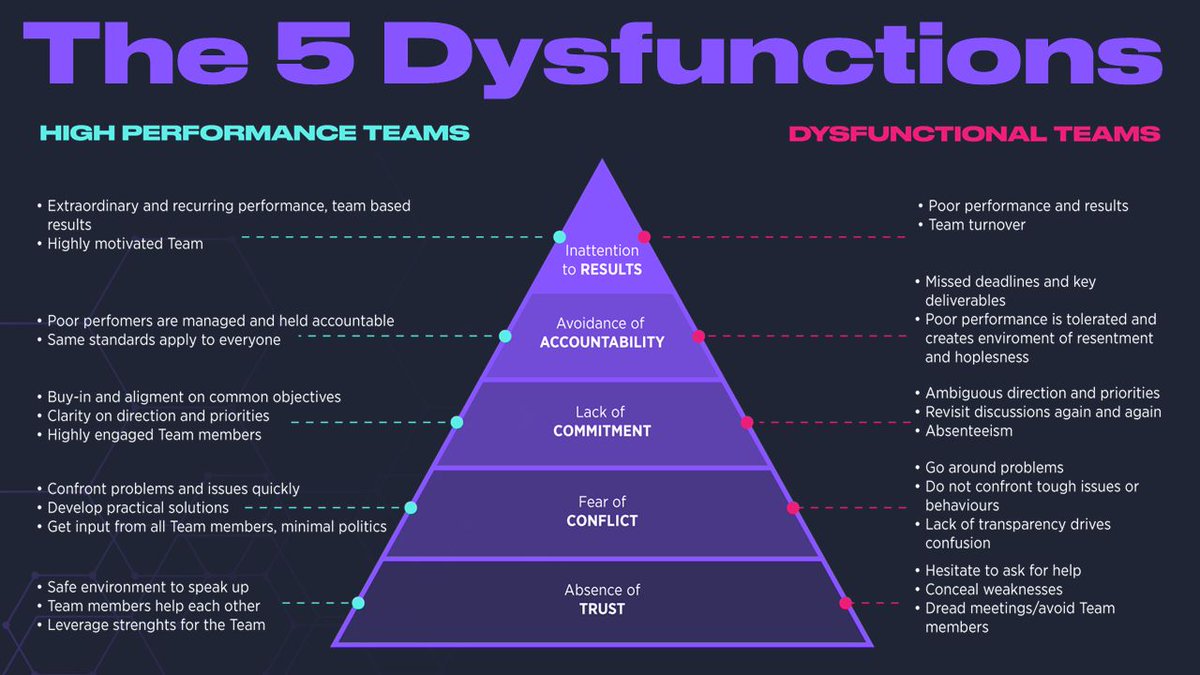
𝗛𝗼𝘄 𝘁𝗼 𝗕𝘂𝗶𝗹𝗱 𝗚𝗿𝗲𝗮𝘁 𝗧𝗲𝗮𝗺𝘀? One of the most important components of your leadership is your team's well-being. To have a great team, they need the trust, commitment, and accountability necessary for high performance. Yet, there is no simple cure for all of these issues. And what I often see is that managers don't understand that some conflicts within a team are actually normal and healthy, especially during team formation. Patrick Lencioni, in his book "The Five Dysfunctions of a Team," identified those dysfunctions: 𝟭. 𝗔𝗯𝘀𝗲𝗻𝗰𝗲 𝗼𝗳 𝗧𝗿𝘂𝘀𝘁 Members of effective teams must feel safe enough to open up, share their ideas, and acknowledge mistakes without fear of ridicule or retribution. It takes time to establish trust among a team, and it's crucial to understand that this process must start with you. This entails keeping your word, being trustworthy, and setting an example for others. 𝟮. 𝗙𝗲𝗮𝗿 𝗼𝗳 𝗖𝗼𝗻𝗳𝗹𝗶𝗰𝘁 Healthy conflict is essential for robust discussion that leads to creative problem-solving and consensus. Encourage them to engage in constructive, lively debate and to question one another's ideas when they disagree. This can be challenging at first, especially for shier team members. Ask direct, open-ended questions that will get everyone's attention during meetings. It is also good to train your people in conflict-solving methods. 𝟯. 𝗟𝗮𝗰𝗸 𝗼𝗳 𝗖𝗼𝗺𝗺𝗶𝘁𝗺𝗲𝗻𝘁 Without members committing to decisions, plans cannot be implemented, and objectives cannot be achieved. By actively encouraging team members to weigh in on issues before you ask them for a commitment, you can discourage "after-meeting meetings." Take note of those who are remaining silent and attempt to get their opinions on the subject. 𝟰. 𝗔𝘃𝗼𝗶𝗱𝗮𝗻𝗰𝗲 𝗼𝗳 𝗔𝗰𝗰𝗼𝘂𝗻𝘁𝗮𝗯𝗶𝗹𝗶𝘁𝘆 Everyone needs to take ownership of their decisions and actions; otherwise, progress is hindered, and objectives remain unrealized. Accountability is key for your team members, both to one another and to themselves. Make sure that, to begin with, everyone is accountable for their own work and behavior. Encourage team members to provide regular, mutual feedback on each other's performance, behavior, and accomplishments. 𝟱. 𝗜𝗻𝗮𝘁𝘁𝗲𝗻𝘁𝗶𝗼𝗻 𝘁𝗼 𝗥𝗲𝘀𝘂𝗹𝘁𝘀 All efforts need to focus on achieving team results before individual accomplishments are celebrated. Make sure your team members are focused on the team's and the company's true objectives to overcome this dysfunction. What can also help here are OKRs that align people's objectives with the team's.
@sweatystartup ·
There's an attribute that's incredibly rare, even among people already in leadership roles: the ability to walk into a meeting, form a plan, and tell people exactly what to do and how to execute it in a way that makes them actually want to do it. Most people in corporate America are just messengers. They know something needs solving, so they hold a meeting about it, pass the message down to the underlings, who pass it to someone else, and round and round it goes until nothing actually happens. One in 30 managers I hire today are genuinely good at taking charge, saying "this process is wrong, here's how we fix it, start right now," and making sure it actually gets done. That's a completely different skill than just managing and passing down directives from above. It's rare, and it's the single most important thing I look for in a leadeship role.
@brettberson ·
The job of a .001% Chief Product Officer: “Understand customers deeply, set direction/choose the few big bets that matter, and build a team that can execute without you in every detail.” That is how Diya Jolly thinks about the role. Diya is the CPO at @Xero, a $10B accounting software company serving nearly 5M customers. She joined me on Executive Function to unpack what world class product leadership looks like in a post ChatGPT world. We got into how the CPO role is changing, why the best product leaders are spending more time on fewer decisions, and what it takes to build products when customers themselves do not yet know what AI will make possible. Timestamps: 00:12 How an excellent CPO makes an impact on the business 02:01 How the CPO role shifts under founders vs hired CEOs 03:38 Influencing a founder without going deferential 07:37 How adding value to customers is always a net positive 08:45 Why roadmaps need more risk in the AI era 12:30 How to shelter innovation teams from the existing system 15:12 What's different about being a great CPO in 2026 17:34 How AI has changed the concept of an app 18:28 It’s essential for CPOs to fly at a low altitude 20:34 How misaligned incentives cause organizational politics 25:13 Being demanding without creating a fear-based culture 28:10 Why raising ambition is a CPO's number one job 31:39 The boss who taught Diya to keep raising the bar 32:43 The hardest part of being a CPO 35:28 The three buckets Diya uses to delegate 36:30 How Diya protects deep-work time on her calendar 42:45 Xero’s game-changing early bet on AI insights 44:58 How far into the future should CPOs plan for? 47:14 What it takes to be an excellent C-suite member 48:53 Why ambitious PMs should chase impact, not titles 50:28 The four bottlenecks that stall career growth
@0xlelouch_ ·
Top 10 resources to learn engineering leadership (practical for working devs): 1) The Manager’s Path (Fournier) Covers the ladder: tech lead vs EM, 1:1s, feedback, hiring, promos. 2) Staff Engineer (Will Larson) Scope, influence, and execution when you’re leading without managing people. 3) An Elegant Puzzle (Will Larson) Org design, team sizing, migrations, and why coordination costs eat roadmaps. 4) Accelerate (Forsgren/Humble/Kim) DORA metrics, what actually correlates with throughput, and what doesn’t. 5) Google SRE book + Workbook Error budgets, incident response, toil, and how to run ops without heroics. 6) RFCs at scale: GitLab Handbook + Basecamp Shape Up Two real writing cultures. Compare how they do planning, ownership, and tradeoffs. 7) Charity Majors blog (Honeycomb) Debuggability, observability, and leading by improving feedback loops in prod. 8) Lara Hogan: Resilient Management How to run 1:1s, set expectations, and handle conflict without theater. 9) Rands Leadership Slack + Rands posts Good for calibrating messy people problems: incentives, burnout, org churn. 10) Practice project: run a blameless incident + write the retro + follow-ups Pick a real outage from your org or open-source postmortems. Create: timeline, impact, 5 whys, owners, and 30/60/90 day fixes (alerts, runbooks, load tests, rollback plan).
@im_tolumichael ·
The more responsibility you carry, the less room you have for emotional reactions. As your role grows, more people depend on you. Decisions affect more than just you, your words carry more weight. In those moments, how you respond matters. Stay calm under pressure, think before you speak, handle issues with understanding. This builds trust. People rely on your steadiness, they feel confident in your decisions, they know you can handle difficult situations. Over time, composure becomes part of your leadership. And in many roles, that steady approach is what keeps things moving forward.
@quotesdaily100 ·
Psychological strategies the world's greatest leaders use daily: 1. They listen far more than they speak. The leader who listens holds more power than the one who dominates every conversation. 2. They make people feel significant. Not just valued. Truly significant. This creates loyalty that money alone can never buy. 3. They control their emotional state before walking into any room. Their energy sets the temperature for everyone around them. 4. They take full responsibility publicly and give credit away completely. This single habit builds unshakeable trust over time. 5. They ask better questions instead of giving all the answers. The right question unlocks more than the best advice ever could. 6. They communicate the same vision repeatedly until it becomes the culture. Repetition is not weakness in leadership. It is the strategy. 7. They make hard decisions without waiting for perfect information. Courage in uncertainty is what separates leaders from managers. 8. They study people more than they study strategy. Understanding human motivation is the greatest leadership skill that exists. 9. They protect their team fiercely in public and give honest feedback privately. This combination creates psychological safety and high performance together. 10. They lead themselves first. Discipline, mindset, health, and clarity in their own life before asking anything of anyone else.
@staysaasy ·
I saw the leadership of two different companies in action recently. The first was a company that was crushing it. Their leadership group was absolutely nonstop hard conversations. Vocation didn’t matter. Ideas won the day. The second company was fine. Good not amazing. Their leadership team did absolutely everything possible to not step on each others toes. Every leadership meeting was a Cold War. Nothing in the open. The first company leadership group had a deep respect for their employees. The second treated them like minions. The first had many young viciously smart people in leadership positions. Authority came from intelligence. The second clearly hired mature to try to get authority though age. Both companies have leaders that will go to their grave thinking they were the best thing since sliced bread. The difference is that second company will have people whose careers were ultimately unremarkable, and they’ll all blame other people for that middling outcome.
@toddsaunders ·
I was talking to a founder yesterday who made a very unpopular decision at his company. He ended the unlimited tokens policy... There were lots of motivations behind it, but the way he explained why has been stuck in my head all day. He said the free for all was never the end state. It was a deliberate phase they modeled out with their board. Essentially you eat the waste on purpose early, because under adoption costs you more than overspend ever will. A team that never learns to utilize for the tools is a permanent tax. And a team that overspends for 12 months is a one time tuition bill. So you pay the tuition and you get everyone pilled. But the free for all had an expiration date, and phase two for them a token budget per person, sized to outcomes instead of tokens burned. Then he said the thing that got me. "Most leadership teams will get this exactly backwards. They'll treat the budget as a way to cap the spenders. The real move is the opposite. The winners won't be the ones who spend less.. they'll be the ones who built the leverage underneath the spend. Things like skills, shared context, internal tools that raise everyone's outcome per token at once." It's an interesting approach and a hard decision in this AI era, especially when you want your team using it daily. Their view is that policing individual usage is linear. But building the leverage layer is exponential. His leadership team actually doesn't believe this switch is rationing tokens. It's just making every token worth more.
@0xlelouch_ ·
Top 10 resources to learn engineering leadership (practical for working devs): 1) The Manager’s Path (Fournier). Concrete transitions: senior to lead to manager, with common failure modes. 2) Staff Engineer (Larson). Scope, leverage, and how to lead without authority in real orgs. 3) An Elegant Puzzle (Larson). Org design, team topology, incident culture, and scaling the human system. 4) High Output Management (Grove). 1:1s, metrics, and why output = leverage x team, not hours. 5) Accelerate (Forsgren/Humble/Kim). DORA metrics, what actually correlates with performance, how to measure change. 6) Google SRE Book + Workbook. SLIs/SLOs, error budgets, on-call hygiene, and how to say no with data. 7) The Pragmatic Engineer newsletter (Gergely Orosz). Real hiring loops, leveling, compensation patterns, and org stories. 8) Will Larson’s blog. Engineering strategy, scope boundaries, migrations, and staff+ archetypes with examples. 9) Lenny’s Newsletter (engineering-adjacent). Management tactics, feedback, and career ladders; skip fluff, keep templates. 10) Practice project: run your team like a product for 4 weeks. Write 1 RFC, define 2 SLOs, start an on-call retro doc, track 3 DORA metrics, and do weekly stakeholder updates with a changelog + risk list
@umikathryn ·
I used to think leadership was mostly a personality question. Some people walk into a room and immediately shape it. They speak first, think out loud, and give everyone something to react to. Others barely say anything for most of the meeting, then ask one question that quietly rearranges everyone’s thinking. I’ve worked with both. I don’t think one is inherently better than the other anymore. Now I think the leaders who left the biggest impression on me aren’t necessarily the ones with the strongest presence. They’re the ones who slowly make their own presence less central. Not because they’ve checked out, but because they’ve built enough trust that someone else can carry the conversation. There’s a subtle difference between delegating work and delegating ownership of the story. Letting someone else be the person who explains the strategy. Who gets quoted after the meeting. Who people start looking to before they look to you. That shift is easy to miss because it rarely feels dramatic. It usually looks like saying less, resisting the urge to polish someone else’s point, or letting an imperfect explanation stand because the confidence it builds is worth more than the precision you would’ve added. Maybe that’s what good leadership compounds into. Not becoming the loudest voice in the room or the quietest but creating a room that no longer depends on yours.
@ryandeiss ·
I manage 17 companies across a $200M portfolio. Every Monday morning, I review all of them from a single Google spreadsheet in about 14 seconds by doing this: 1. Keep it simple. I've spent tens of thousands on fancy BI tools. Keep going back to Google Sheets. Because it actually works. 2. Track it weekly. Daily is too noisy. Monthly isn't agile enough. Weekly is the sweet spot. 3. Make it manual. When data magically appears, you have data. When humans manually enter it, you have insight. Manual entry creates ownership. 4. Mirror your customer journey. Your scorecard should reflect how your business actually creates value. 5 STEPS TO BUILD IT 1. Define your metrics categories (Evergreen, North Star, Departments) 2. Choose metrics driven by the stages in the customer journey (marketing, sales, fulfillment, ops, etc.) 3. Assign an owner to every single metric 4. Set monthly targets ahead of time (no revisionist history) 5. Track weekly with color-coded status (Green = on track, Yellow = behind with a plan, Red = behind with no plan) Difference between yellow and red is the question, “Do you have a plan to get back into the green?” Your job as a leader is to ask questions that help your team turn red to yellow and yellow to green. That's scorecard-based leadership. That's the whole job.
@GregorPurdy ·
You don't need to be a better leader. You need to be the right leader for the situation you're actually in. Two leaders at the same company with the same title. One focuses on Recruiting because the team is scaling fast. The other focuses on Execution because the team is intact and shipping is broken. Same level. Completely different Superpower priorities. Both are right. Context has three layers. Your organization's stage and pressures. Your role's specific demands over the next 90 days. Your own Strengths and Dangers. Stack rank the 13 Leadership Superpowers against these layers. No ties. No middle ground. Every Superpower forced into an explicit position. That constraint is the point. It surfaces the 1 to 2 that are truly Required. Everything else is Desired. Leaders who spread development across six Superpowers because everything feels urgent end up average everywhere. The goal is focused impact. Write it down. Revisit every 90 days. Your context will shift. Your Required Superpowers shift with it. At Amazon, I watched leaders transform their effectiveness simply by getting honest about what their role actually demanded right now. Leadership development doesn't work without proper context. Focusing on what truly matters turns effort into impact.
@GregorPurdy ·
Your relationship with your boss is a system. You either engineer it or leave it to chance. Leaders invest hours preparing for team syncs and client reviews. The relationship with their own manager runs on assumptions. Goals stay vague. Updates land too late or too cluttered. Trust erodes through a series of small misses nobody names. Managing up means building a reliable operating rhythm with senior leadership. Clarify goals early. Surface priorities and resource needs proactively. Calibrate the level of detail your boss actually needs. Learn how your boss processes information. Some want the headline. Some want the data behind it. Make commitments deliberately and keep every one. Flag risks before they become surprises. That consistency is what builds trust over quarters, not weeks. The pattern that kills momentum looks familiar. Flooding your boss with detail thinking it signals thoroughness. Going silent thinking no news is good news. Both erode confidence quietly. The leaders who earn more scope, more resources, and harder problems understand one thing. If you are being completely transparent, you aren't adding value. Your job is to filter and deliver what matters.
@alvinfoo ·
"Leadership isn't a title, it's the choices you make when everyone is watching." When Japan Airlines faced a mountain of debt and an uncertain future, their CEO made a decision that spoke louder than any profit forecast: he took a pay cut to live closer to the people he served. By lowering his own salary to roughly $90,000, less than many of his pilots, he put the company’s recovery ahead of personal gain. That gesture was more than symbolic. It rebuilt trust, aligned priorities from the top down, and showed every employee that sacrifice and shared responsibility were not just words on a mission statement but a lived reality. What followed was the kind of turnaround most leaders only read about. In three years, culture shifted, efficiencies improved, morale rose, and Japan Airlines went from heavy debt to industry-leading profitability. The story isn’t magic, it’s a roadmap made of practical lessons: - Lead by example. When leaders share sacrifice, they inspire cooperation and accountability. - Prioritize people. Respect for employees creates loyalty, better service, and real operational gains. - Communicate a clear purpose. A united team focused on a single, shared goal works faster and smarter. - Make tough choices transparently. Courage in hard times builds long-term credibility. - Small actions compound. One decision can unlock many others, creating momentum that transforms outcomes. If you’re facing a challenge, personal, professional, or organizational, remember this: bold humility and authentic leadership change trajectories. Success rarely comes from shortcuts; it comes from steady choices that put the mission and the people first. Lead with integrity. Serve with courage. Trust the process and watch what a united team can achieve.
@dittycheria ·
A hill I’m willing to die on. When it comes to leadership, vulnerability is a strength, not a weakness. Most leaders carry real insecurities or imposter syndrome. That shows up in subtle but damaging ways. They avoid admitting mistakes, resist asking for help, and stick with decisions long after it is obvious they were wrong, all because they fear looking weak or losing authority. In reality, the opposite is true. Nothing builds credibility faster than a leader who can say they were wrong or that they need help. It sends a clear signal that truth matters more than ego and that learning matters more than the perception that you have all the answers. That signal changes behavior. People stop posturing and start being honest. Problems surface earlier. Debate improves. Accountability becomes real instead of performative. Over time, that kind of environment compounds. The organization gets sharper, faster, and more resilient because the truth stops being negotiated and starts driving decisions.
@umikathryn ·
Leadership is the ultimate multiplier. While good leaders focus on directing tasks and driving results, great leaders focus on capacity-building. They empower their teams by transferring skills, delegating high-level responsibilities, and fostering an environment where independent thinking can thrive. Transitioning from directing to developing requires a very specific set of strategies. Great leaders scale their impact by putting these core principles into action: 1. Shift from Directing to Coaching Instead of just giving answers, great leaders ask probing questions to help team members find solutions themselves. 2. Delegate for Growth, Not Just Task Offloading Give team members stretch goals that push them outside their comfort zones, and give them the autonomy to make decisions. 3. Embrace the Freedom to Fail Innovation relies on taking risks. Great leaders build psychological safety, treating mistakes as critical teaching moments rather than reprimandable offenses. 4. Provide Consistent Feedback and Mentorship Growth requires honest, constructive, and ongoing dialogue. It's about seeing what your team can become, not just what they can do today
@milan_milanovic ·
The best managers often run the most dysfunctional teams William Meijer drew it as two lines on a chart. One is made of kind lies, and it sinks. The other is made of unkind truths, and slowly it climbs. What throws people is how backward it feels in the moment. The comfortable lie feels like generosity. The honest one feels like you broke something, and it keeps feeling that way for a while before it comes good. Picture the lie first. "The work looks fine." "We'll figure it out later." Everyone leaves the room relaxed, and nothing moves. The thing you didn't say is still there next week, heavier. The truth costs you, but the bill comes once. The conversation goes badly, the person is upset, and you drive home wondering if you handled it wrong. Then the work gets fixed. And now they know you'll tell them where they actually stand. That's worth more than the afternoon it cost you. I've watched both of these run for 20+ years. Some of the warmest teams, the ones that felt great to be in day to day, were the ones coming apart underneath, because nobody wanted to be the person who said it. This isn't a license to be harsh. Plenty of people are blunt and still useless to their teams. The real discipline is refusing to let "I'd rather not have the awkward conversation" dictate your decisions. If there's a piece of feedback you've been softening for months to keep things pleasant, have that conversation this week. #SoftwareEngineering #Leadership #CareerGrowth #TechWorldWithMilan
@mbertulli ·
I sat down with @mikebeckhamsm and @JasonPanzer to talk honestly about what leadership really costs when the stakes are high. Jason Panzer talked about hot dogs. > You know the Costco story > $1.50 hot dogs > Same price for DECADES > One of Jim Sinegal's leaders came to him > Said they couldn't sell at that price anymore > "If you change the price of the hot dogs, I will fucking kill you" Mike took that story and made a point. > To be a really effective leader > you have to know what your hot dogs are > The two or three things where you're completely unreasonable and inflexible > Then you stay open-handed on everything else > You hear feedback > You go with the flow > This is how it's going to be I agreed with that. Every company has to be built around a few non-negotiables and your team needs to know what those are. One of mine: > There's genuinely one fire-able offense in my company > If you see something that is wrong > And you say nothing > And I find out > You're done > You're doing everybody a disservice at that point > There's no room for it Your job in this seat is to say what you believe to be true regardless of how it makes people feel. Speak plainly, never attack people, but attack problems relentlessly. Figure out your hot dogs and be completely unreasonable about them.
@andrewdfeldman ·
Real leadership looks nothing like it does on TV. On TV, leadership looks either like military leadership or sports leadership. Tall men with strong jaws leading men into battle. Urging them forward. Big motivational speeches before the BIG GAME. In Silicon Valley, nobody has to salute. And everyone can leave tomorrow to find work elsewhere. And we play every day. For years at time. There are many ways to lead world class engineers. But all of them include being authentic, giving them interesting work, world class colleagues, and looking out for them and their family’s interest. I learned early on that bullsh*tting engineers is the surest way to lose their respect. At Cerebras we work in the deepest of deep tech. Our more than 130 patents span lithography, chip architecture, packaging, software algorithms and ML. There is much on which I am not an expert. And I never claim to be. When I don’t know, I say I don’t know. When I mess up, I say I messed up. And I tell the team why I messed up and what I learned. That is the real meaning of transparency. Sharing what it is easy to share is not transparency. Everyone can do that. True transparency is sharing the sausage making. The false starts, the mistakes. Removing the illusion that good decisions spring like Zeus's children fully formed from the CEO’s head. They don’t. Nobody became an engineer to build ordinary things. We are engineers to build extraordinary things. This is not what we do. It is who we are. This is fundamental to leading world class engineers. Nothing kills the soul of an exceptional engineer like boring work, mediocre colleagues and long meetings in which power point acumen and presentation skills rather than good ideas carry the day. Avoid them like the plague. Ask from exceptional engineers, exceptional effort. Ask for their passion, drive and wisdom. In return the job of a leader is to: 👍 Deliver interesting work. 👍 Surround them with exceptional colleagues. 👍 Eliminate the silly blockers that seem to constantly crop up. 👍 And with every minute of your time, and all your energy, to try to make them and their family wealthy.
@AlanSteinJr ·
Before you hold someone accountable for results, make sure you've made the expectations crystal clear. Leadership starts with clarity.
@HeyZoyaKhan ·
Most people still believe that leadership in artificial intelligence comes from deeply technical, highly specialized backgrounds. Daniela Amodei offers a very different example one that reflects how leadership in the AI era is actually evolving. Her academic path didn’t start with computer science, but with English literature. Early in her career, she worked across global health, policy, and politics, contributing to congressional campaigns and international initiatives. It was a foundation built on communication, systems thinking, and real-world impact not engineering. Her move into tech began at Stripe, where she led risk and operations. In that role, she helped significantly reduce financial losses while building systems that could scale safely an early sign of her focus on responsible growth. In 2018, she joined OpenAI, stepping into a cross-functional leadership role spanning research, policy, safety, and operations. During a critical phase in AI development, she contributed to the rollout and governance of models like GPT-2 and GPT-3, as capabilities began accelerating at an unprecedented pace. But alongside that progress, she identified a growing concern: The technology was advancing faster than the frameworks needed to guide and deploy it responsibly. In 2020, she acted on that insight. Leaving OpenAI, she co-founded Anthropic with her brother Dario Amodei with a clear mission: to ensure that increasingly powerful AI systems are also safe, interpretable, and aligned with human values. Since then, Anthropic has emerged as a key player in responsible AI. As President, Daniela Amodei has helped secure over $30 billion in funding from major industry partners, guided the development of Claude, and supported new approaches like Constitutional AI where systems are trained to follow structured ethical principles rather than relying only on prompts. She often describes herself as a “generalist generalist,” someone who operates across domains instead of within a single lane. And that may be the bigger takeaway. In complex, fast-moving fields like AI, the ability to connect disciplines policy, technology, ethics, and operations matters just as much as deep technical expertise. Her perspective is grounded in a simple idea: the future of AI won’t be defined only by what these systems can do, but by whether people trust them. She didn’t wait for safer AI to happen. She chose to help build it. A reminder that non-linear paths are not a weakness they can be the foundation for meaningful impact in shaping the technologies that define our time.
@mikebeckhamsm ·
A hostess at 17. By 26, a VP running an $800M business. Today she’s the CEO of AG1, doing well past $500M in annual revenue. @mbertulli and I sat down with @KatColeATL for our latest Operators Titans. Over the last two decades, Kat has operated consumer brands at a scale almost no one else has. Restaurants, CPG, and DTC. Multiple times. But what struck me isn’t her resume. It’s how she thinks. My 5 biggest takeaways: 1. Crisis creates clarity “When something is a crisis, the view gets far more concentrated.” In good times, teams waste enormous energy debating what’s necessary versus nice-to-have. Crisis strips that away. Kat led a multi-billion dollar restaurant holdco through COVID while her infant daughter was hospitalized and almost died. Her takeaway wasn’t about surviving. It was that focus is a superpower, and crisis forces you to use it. There are more penalties for spreading out and being indecisive than there are for narrowing in and being decisive. Even if that decision is wrong, you will have clarity in how to address it. 2. The most dangerous risk is standing still “I have gotten very clear-eyed that not taking that leap is a big risk.” Kat doesn’t see herself as a risk-taker. She sees inaction as the bigger gamble. That’s a fundamentally different orientation than how leaders typically think, and I believe it explains why she’s been able to reinvent companies over and over again. The rebrand from Athletic Greens to AG1. Going from single product to multi-product. DTC-only to Costco. Every one of those looked like a big swing from the outside. From Kat’s seat, not swinging was scarier. 3. People care if the CEO sees them “Sometimes it’s involvement for culture versus impact.” I know this one well from personal experience. People in your organization spend a lot of time asking themselves: Does the CEO know what I do? Do they care? How do they perceive me? We don’t think that way as leaders because we’re focused on driving results. But it matters tremendously to them that they’re seen. Kat talked about going into the labs for tastings, being with co-manufacturers, not because she needs to make those decisions, but because showing up tells the team their work matters. Presence is an act of leadership. 4. Curiosity beats the playbooks “Questions scale. Answers don’t. Answers get dated. Beliefs and playbooks get dated.” This might be the single best line from the entire conversation. Every operator has had the experience of a tactic or framework that worked brilliantly for a season and then stopped. That’s because answers expire. But the right questions: What matters to the customer? What are we really seeing? What’s standing out? Those compound over time. The leaders who ask better questions make better decisions. Period. 5. Humble courage is the unlock “If you’re only courageous and confident, you’re a bull in a porcelain shop. If you’re just humble and curious, you’re just a student. It’s the two together.” It’s a thread that runs through everything Kat does. Humility is the mindset, curiosity is the action. Confidence is the mindset, courage is the action. The magic is in combining them. Being willing to say “I don’t know” while also being willing to act decisively on what you learn. That balance is what separates operators from everyone else. What I respect about Kat is she’s not performing leadership. She’s living it. As a CEO, a mom, a wife, a daughter. This one is worth your time. I guarantee it.
@TheJobfather__ ·
A good question for a senior leader: “When you look at this function over the next year, what needs to change for the team to be more successful?” This shows you are thinking beyond your task list. It also helps you understand whether leadership has a clear direction or is just hiring and hoping the role fixes everything.
@BrettErik ·
"I can handle this" i asked an 8-fig entrepreneur what mantra has made him the most effective for driving results, and enduring through highs/lows. And there were plenty of those for him High level, it almost always comes down to that question. I love this frame because in 99.9% of situations a solution can be found. But it's usually not the technical aspects of a problem that take down organizations, it's usually the emotional/psychological frame of the leadership. If you accept that you can handle the situation, then there's nothing left but to get to work.
@alvinfoo ·
Leaders who constantly label people “underperformers” are usually the real problem. Simon Sinek nails it: When you only focus on what someone does wrong, you kill their confidence and create the exact failure you’re complaining about. Catch people doing things right instead. Most “underperformance” is a leadership failure in environment and attention — not a character flaw.
@andrewdfeldman ·
Your board doesn't want you to do what they say. Many first-time CEOs don't understand this. Sometimes we should do what they recommend. Other times we shouldn’t. Our job is to think extremely carefully about what the board says. To use their advice to improve our decisions. It is unusual for a board member to know your business better than you - you and your team think about it every waking minute. Over my career, I’ve been lucky to have some great board members. Pierre Lamond and Mark Leslie come to mind. As well as those who have been with @cerebras for its entire 10 year journey, including @ericvishria, of Benchmark, Lior Susan of Eclipse, @vassallo from Foundation Capital. Between them, they have seen hundreds of companies across many industries. They have contributed their wisdom, ideas, views on best practices, relationships advice and much more. I think about their advice. I learn from it. I make better decisions because of it Even when I don’t take it. As a CEO, our obligation is to wrestle with their guidance and then use our best judgement. Here are some things not to do: Don’t be defensive. Nothing kills trust like defensiveness. Don’t immediately follow their advice, or immediately dismiss it. Both are wrong. Chew on their advice. If their idea is better than the status quo, or better than your current plan, do it. If not, don’t. But in any case, Tell them you considered it. Tell them what it changed in your thinking. Tell them where you landed and how you got there. The board’s role is governance and counsel. Your role is leadership.
@LeadClearly1 ·
Two professionals on a team once delivered the exact same results on a critical project. Both finished on time, both stayed under budget, and both met every requirement. On paper, they looked identical. But thier manager saw something deeper. One simply submitted the final deliverable and moved on. The other took time to explain his thinking. He walked the team through the trade-offs he made under pressure, the risks he considered, and why he chose that path. That made the difference. Months later, when a senior role opened up, the manager chose the second person without hesitation. The first was left wondering why his strong results were not enough. The answer is simple. Your manager is not only judging your output. They are also judging your judgment. Many professionals focus only on doing the assigned work well. That matters. But leadership potential shows up in something deeper. How you think through problems, how you make decisions under pressure, and how clearly you explain your reasoning. If people cannot see how you arrive at decisions, they cannot fully trust your judgment. Do the work well. But do not stop there. Show how you think. That is what builds trust in your leadership capacity.
@_jaydeepkarale ·
The best managers I've worked with had one thing in common They made work feel smaller. Not because the projects were easier. Because they removed unnecessary uncertainty. You knew what success looked like. You knew what to prioritize. You knew someone had your back if things went wrong. Looking back, I don't remember the managers who pushed the hardest. I remember the ones who created an environment where people could do their best work. Leadership isn't about creating pressure. It's about creating clarity.
@MichaelDBrandt ·
A common leadership problem is dealing with egos of multiple people who are necessary to the success of the project. It’s easy for people to conflate “this couldn’t happen without me” with “I’m the only reason this happened.” To navigate this, I find it helpful to: a) acknowledge the value someone brings to the table, especially if they are necessary. b) frame the conversation in terms of the overall pie chart of success. Each piece is necessary, but the pie only completes if there’s teamwork across all the necessary pieces. One of the best things you can do as a leader is advocate for each person individually, as well as the collective success of teamwork, and help everyone understand how the pieces come together.
@oliverbrocato ·
The 30min calendar events I never skip: My weekly 1-1s with my leadership team. Started a couple months ago. One of the best operational decision I've made. Not because I need a rundown on what's happening in the biz—I already know all the details. I do them bc I wanto know with what's happening with the PEOPLE. What's frustrating them. What they're proud of. Where they feel stuck. What they'd change about the workflow or how I run things. That information doesn't show up in a dashboard. It rly only comes out when you sit across from someone, look them in the eye, and actually ask. If u think that culture is built in all-hands meetings, ur missing a vital piece of building something meaningful. It takes 30mins/week to make sure ur team is heard. That's all.
@SuccessWithJake ·
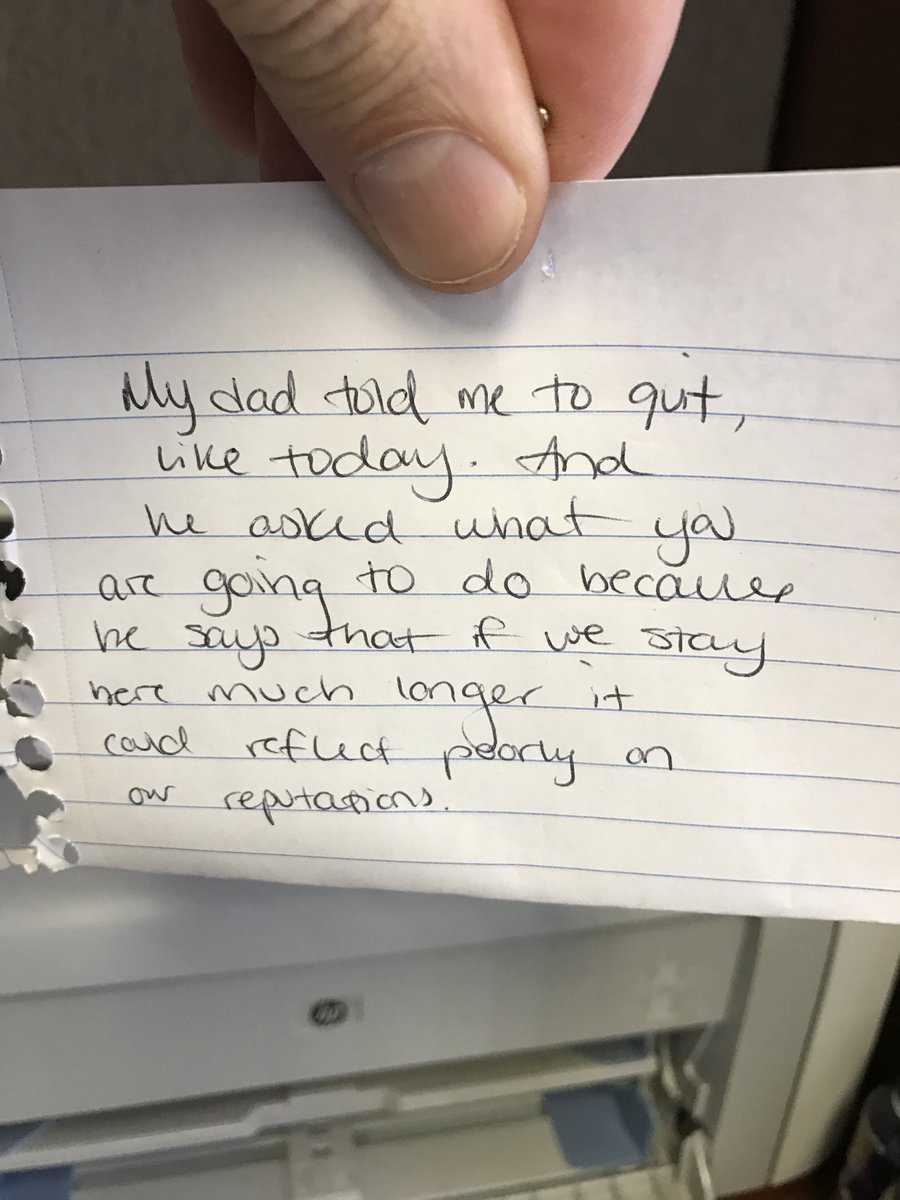
I found a note once. Written between two employees. One of them had been told by their dad to quit. Like today. He said if they stayed much longer it could reflect poorly on their reputation. What a punch to the gut when I read it. I took a photo of it. Not out of anger. As motivation to get better. Still have it. Early in my career I thought great leadership meant staying out of the way. Let people do their thing. Trust the team. No structure. No expectations. No accountability. Just autonomy. It felt progressive at the time. Then performance started slipping. Then I found the note. By the time I tried to fix it the damage was done. Full reboot. People don’t thrive in a vacuum. They need direction. They need expectations. They need to know someone is actually leading. Autonomy is a reward for a team that’s already performing. It’s not a starting point. I learned that the hard way.
@Narayani07 ·
The best leadership advice I ever received fit in one line: Make yourself easy to work with. It sounded simple. And it has stuck with me ever since. Most people miss it completely. If you're a leader, please remove the barriers that slow your team down. If you're a peer , please show up in a way that makes collaboration effortless. If you're growing, please make it easy for the right people to invest in you. If you are Mentor, please avoid condescending tone. Every role. Same principle. The best leaders don't demand energy from the room. They return it. They make decisions easy to understand. Feedback easy to receive. And trust easy to give. And That's not a soft skill. That's a leadership strategy.
@immarkwilliam ·
A truth you have to make peace with: If you keep stepping in, people will always let you keep stepping in. I used to jump in whenever I saw something on my team going sideways. A decision stalling, a project drifting, something not being done the way I'd do it. I'd step in and fix it. And in the moment it always felt necessary, like if I didn't, it wouldn't get handled. But what that does over time is every time you step in and rescue it, you teach the person that you will. So they stop pushing all the way through the hard part themselves, because they've learned that if it gets stuck, you'll show up and take it. It's not that they're lazy. It's that you've quietly made yourself the safety net, and people lean on safety nets. The uncomfortable part is that the dependency isn't really their fault. It's mine. I built it, one rescue at a time. So now I try to sit on my hands a lot more, even when it's hard to watch. I let them get stuck and work their own way out, because that's the only way they ever learn to. Remember: stepping in feels like leadership in the moment. But most of the time it's just you getting in the way of someone growing.
@HustleFundVC ·
Going from small company founder to big company founder isn't just a business transition. It's a personal one. Brian Ma learned this firsthand. Early stage, you're heads down on product market fit. You're moving fast and just trying to survive. But as the company grows, the job changes. It becomes about leadership. Communication. Managing people through hard moments. And that forces a different question: who are you as a leader? What motivates you? What drives you? How do you handle the lows? Most founders don't think about any of this before building companies. Brian didn't either. But it turns out that self-awareness is one of the most important things you can develop as a founder. The product gets you so far. The person you become gets you the rest of the way.
@rachelnabors ·
Back when I was dating, I realized the meaning of "people treat you how you let them." You don't get to adopt this attitude so easily in leadership roles. VP only talks over drinks? Pack the electrolytes. Report struggling to attend meetings on time? Start coaching them. Leaders have to have flexibility in boundaries that isn't required of an IC. Meetings keep being scheduled after 8pm? Unless they are mandatory, decline. If you accept them, people are going to keep scheduling you out of dinner. If you don't, they'll have to adapt and find a time that works for the whole team. Ive noticed my IC self is a different beast from my manager self
@oliverbrocato ·
The best process improvement we've made in months came from outside the leadership team. Not through a meeting, but in a single Slack message. We have a channel—#ideas-improvements-optimizations. Every agent drops at least 1 idea/week. Not optional. REQUIRED. Because the people closest to the work see things leadership never will. But they'll never say it unless u build a structure that forces them to. Most founders miss out on so much bc they skip out on actually implementing what comes out of all-round communication. Don't nerf urself just because u wanto protect ur ego.
@jacobm ·
Work looks like it is constantly changing. But a lot of the time, it's just wearing different costumes. First, it was perks. Then it was flexibility. Now it is AI, productivity, and speed. The language, the tools, and the expectations evolve. But the bigger mistake often stays the same: we keep misunderstanding what employee experience is actually supposed to be. Employee experience was never meant to be a collection of perks, a bundle of accommodations, or a race to deploy more tools. At its core, it is about how leaders design work so people and organizations can succeed together. That means trust. It means clarity. It means growth. It means meaningful work. It means creating an environment where people can learn, contribute, adapt, and perform. This is where leadership matters. Perks can make work nicer. Flexibility can make work easier. AI can make work faster. But leadership determines whether any of those things actually make work better. That is the trap many organizations fall into. They keep optimizing around what is visible and easy to signal. Better offices. More benefits. More flexibility. More tools. More dashboards. More output. None of those things are inherently wrong. The problem starts when leaders confuse them for the employee experience itself. The real foundation is deeper than that. People want to trust leadership. They want to understand what is expected of them. They want managers who know how to lead human beings, not just enforce processes. They want work that helps them grow, connects them to purpose, and gives them a reason to care. Technology can support that. Flexibility can support that. Even perks can support that. But none of them can replace it. That is why this moment matters so much. Organizations do not have to blindly follow every trend just because it looks modern, progressive, or efficient. They can stop and ask a better question: are we designing work for appearances, or are we designing work that actually helps people thrive over the long term? AI raises the stakes. It can help organizations become smarter and better designed. But it can also push them into another shallow cycle where employee experience becomes nothing more than a productivity race dressed up as innovation. The organizations that get this right will be the ones led by people who keep work human while making it more adaptive. We have more signals now than ever before. We can see the pattern more clearly. So the question is no longer whether work is changing. The question is: will leaders keep chasing the costume, or will they finally redesign the core?
@jacobm ·
Is "world-class" success worth it if the human cost is too high? The news about @nomacph's toxic culture and René Redzepi’s resignation is a clear leadership crisis. In this clip, Redzepi describes the "genius" trap: the unexplained anger and the internal struggle of a leader who realizes their vision has become a prison for their team. When excellence is fueled by fear, it’s unsustainable. Redzepi admits he was "genuinely unhappy," but the exposé reveals the staff paid a much higher price. In my work on Leading with Vulnerability, I talk about the gap between competence and character. If you’re a high-performer who expects people to "read your mind, you’re building a ticking time bomb of burnout and resentment. Vulnerability without change is just theater. The "big change" Redzepi mentions must be a shift toward Employee Experience. Real leadership means creating a space where perfection doesn't require psychological warfare. Are you allowing "wiggle room" for your team to be human? Or are you demanding they read your mind?
@pascal_bornet ·
With AI, will leadership evolve from control to coordination? I think we're asking the wrong question about AI and leadership. Most conversations focus on whether AI will replace managers, make leaders more productive, or automate decisions. Those are interesting questions, but I don't think they're the ones that will define the next decade. The question I've been wrestling with is much simpler. What happens when part of your team isn't human anymore? That changes leadership in a way we've never experienced before. For decades, management meant supervising people. Leaders assigned work, tracked progress, and reviewed results because humans needed direction, coaching, and feedback. But intelligent agents don't need leadership in the same way. That's where many organizations fall into what I call the Supervision Trap. Leaders manage AI agents the way they manage people, and instead of improving oversight, they become the bottleneck that prevents AI from scaling. That realization changed how I think about leadership. I no longer believe the leader of the future will control the most work. I think it will be the one who designs the best collaboration between people and intelligent agents. That's orchestration. And, orchestration is different from management because it starts by deciding what people do, what agents do, and where human judgment and accountability must remain. When I work with organizations building hybrid teams, these are the questions I encourage leaders to ask. → Where are we supervising agents when we should be designing better systems? → Where are humans adding judgment instead of simply checking AI's work? → Have we increased the speed of the technology, but left leadership operating at yesterday's assumptions? I don't think AI is making leadership less important. In my opinion, it's making poor leadership far more visible. The technology may be ready. The real question is whether our leadership models are. What do you think? As organizations build hybrid human-agent teams, will leadership evolve from control to orchestration or will fundamentals of management remain the same? #HumanAgentOrchestrator #HybridManagement
Best Tweets by Topic