Fundraising signals and choosing investors
How founders become fundable, create momentum, target outreach, assess investor conviction, and diligence VCs.
34%
Best tweets about Venture Capital
A curated collection of the sharpest, most-shared X posts about venture capital—saved so you do not have to dig through the timeline yourself. Updated weekly.
Investors and founders on term sheets, valuations, and what VCs actually look for.
Original Xholic analysis
Posts emphasize venture as a search for exceptional, visible strengths, while also debating the trade-offs of VC funding: control, growth pressure, capital efficiency, and exit timing. Investor diligence and demonstrable milestones recur as practical fundraising considerations.
34% of posts
All-time engagement
66% of posts
Published in 90 days
Conversation map
How founders become fundable, create momentum, target outreach, assess investor conviction, and diligence VCs.
34%
Venture returns as an extreme-outlier business, with emphasis on exceptional strengths, non-consensus bets, ownership, and entry price.
26%
Critiques of herd behavior, hype, weak value-add, governance failures, markups, and misaligned GP, LP, and founder incentives.
24%
Fund concentration, megafunds, delayed IPOs, private-market liquidity, exit mechanics, and the consequences of scaling venture as an asset class.
18%
The case for profitable, founder-controlled businesses and lean validation instead of venture financing or mega-rounds.
16%
How demonstrable de-risking, traction, pricing, oversized rounds, and follow-on expectations shape valuation and financing choices.
16%
Term-sheet dynamics, liquidation preferences, board power, dilution, secondaries, and the trade-offs founders make after taking capital.
12%
AI-driven shifts in startup capital needs, investment concentration, software risk, VC workflows, sourcing, and investor differentiation.
10%
Tone and stance
Performance benchmark
Posts with media make up 46% of this collection. Their median all-time score is 18.2, compared with 13.6 for text-only posts.
Format mix
Consensus and debate
Shared view
Several posts characterize venture returns and selection as outlier-driven. They argue that founders benefit from making a distinctive strength—such as team, product, traction, or social proof—clear during fundraising.
Shared view
A valuation-focused post argues that investors give more credit for risk reduction when it is visible through milestones such as a working demo, customer, or signed contract. Other posts similarly emphasize traction, repeatable revenue, and product validation before approaching VCs.
Shared view
Founders are advised to examine how a firm makes decisions, whether the partner they know has authority, and what founders from publicly mentioned but no-longer-listed portfolio companies say. Follow-through after a meeting is also presented as a signal of investor interest.
Open debate
One post values the availability of risk capital for unproven, cash-burning companies. Critical posts argue that VC financing can introduce growth pressure, founder-control trade-offs, and more difficult paths to liquidity, while presenting bootstrapping as an alternative for some businesses.
Open debate
One fundraising post recommends securing an early lead to create momentum with other investors. Other posts criticize herd behavior and investment-committee consensus, arguing that unconventional opportunities may require an investor willing to act on individual conviction.
Open debate
Posts offer different perspectives on AI-era venture dynamics: one argues AI lowers the cost of validating an idea; another says capital is flowing to fewer companies at a faster pace; and a third predicts agents could automate major VC workflows.
What performs
The highest-scoring tweet in the supplied data discusses what investors may seek: exceptional team, product, customer traction, or social proof. The fundraising-and-investor-selection theme accounted for 34% of the 50 tweets.
VC incentives and industry critique recorded the highest theme median all-time score, at 30.26. Its cited posts cover criticisms of VC and bootstrapping trade-offs, predicted AI disruption of fund workflows, and financing gaps for long-horizon technologies.
Question-format posts had a median all-time score of 49.644, above opinion posts at 15.175 and announcement posts at 6.45. The supplied question-format examples include posts about investor behavior, fundraising, and AI-era startup investing.
Statistical standouts
Creator landscape
The five most represented creators account for 20% of the selected posts.
1. apriori
@apriori0x
2 posts
2. Dan Gray
@credistick
2 posts
3. Erik Bruckner
@E_Bruxxx
2 posts
4. Gabriel Jarrosson
@GJarrosson
2 posts
5. Hadley Harris
@Hadley
2 posts
6. Harry Stebbings
@HarryStebbings
2 posts
The dataset contains 37 creators, and the top-five placement share is 20%. The listed top voices each contributed two tweets, indicating that the conversation is distributed across many contributors rather than concentrated in a few highly prolific accounts.
The cited posts span structural arguments about fund scale and exits, practical questions founders can ask about decision authority, and an explanation of venture’s outlier-return logic. Together, they illustrate both system-level critique and fundraising or investment decision frameworks.
Since the previous snapshot
Themes, sentiment, stance, and post format are classified per tweet. All counts, shares, medians, creator concentration, freshness, and performance comparisons are then calculated directly from the published snapshot.
Xholic's all-time score compares engagement while accounting for reach, post age, and creator consistency. It is used for relative comparisons within this collection.
This report analyzes the exact 50-post snapshot shown below. AI identifies editorial categories and drafts explanations; all statistics are calculated from the snapshot, and every narrative claim is checked against cited posts before publication.
Best Venture Capital tweets
Ranked 01–50

@StartupArchive_ ·
Naval Ravikant’s advice for raising venture capital: “It is an emotional sale, not a rational sale” “The process of raising money from an investor, a friend of mine once joked, is the process of young men and women seducing old men and women. You’re essentially trying to get them to look at you, and to see themselves in you… And so it is an emotional sale. It is not a rational sale. And you have to understand that at its core level.” And as Naval explains, emotional sales do not happen via checklists. For example, it’s rare to fall in love with someone because they check a bunch of boxes (e.g. pretty good looking, pretty nice, pretty smart, etc.). “Usually there is one thing about the person that is so overwhelming that makes you fall in love with them. And in that same way, when an investor is deciding to make an investment in a startup, they usually look for one exceptional characteristic about the startup that they truly adore.” Naval believes there are four categories in which you can really excel: Team. “If you can show that you have done something exceptional, other than starting this company, that’s a huge thing.” Product. “A lot of entrepreneurs make the mistake of showing investors a half-finished or not-working product and then try and explain their way around it. The reality is investors are users also, so they’re highly visual. They want to see it. They want to play with it. And they’ll make up their mind very quickly.” Customer traction. “If you have users and if those users are organically joining and growing, that’s very good. If you have to say: give us money and then I’ll go get customers, they don’t like to hear that.” Social proof. “Social proof is basically looking at what other people are doing and doing that. So in the investing context, what this means is if you have one investor committed, very often you can get more investors interested. Or if you have a famous entrepreneur or advisor who’s very knowledgeable, involved with with the company, that can help bring investors.” Naval concludes: “So those are the four criteria that I think most investors look at, and you really want to be exceptional at at least one of them.
 Watch video

@tibo_maker ·
more founders are choosing bootstrapping over VC - liquidity events now take 14 years on average. up from 7. that's your entire 30s waiting for an exit that might never come. - bootstrapped startups are 3x more likely to be profitable within 3 years. VC-backed companies optimize for growth metrics, not money in the bank - preferred shares mean founders often walk away with nothing. even when the company "succeeds," VCs get paid first. sometimes that's all there is - bootstrapped companies spend 1/4 of what VC-backed startups spend on customer acquisition and grow just as fast. capital efficiency wins - VCs can force a sale whenever it suits them. drag-along clauses give them that power. you built it, they decide when to sell it - fundraising takes 4-5 months of full-time work. that's 4-5 months not building your product or talking to customers. most founders who reach traction don't need VCs anymore by then - AI tools let solo founders build what used to require a 10-person team. the capital requirement that made VC necessary is disappearing - 38% of startups now launch without external funding. up from 26% in 2019. the shift is already happening - most VCs are not operators. they can pressure you to grow but can't help you build. the "value add" is often just intros to other portfolio companies - VC money outside of AI has dried up. if you're not building AI, you're fighting for scraps anyway - a $10M business you own 80% of beats a $100M valuation where VCs control the outcome. math is math - the ZIRP era is over. cheap money inflated VC activity for a decade. that's not coming back - founders are getting ousted by their own boards. the company you built becomes a job you can be fired from - VC turns you into a middle manager of your own company. board meetings, investor updates, formal reporting. you didn't quit your job to get another boss - the pressure to hit arbitrary growth targets breaks people. chasing 3x year over year because your investors need it, not because your business needs it - you stop building what customers want and start building what looks good in a pitch deck. that's how products die - VCs funded hundreds of AI startups in the last few years. most are already dead or irrelevant. the foundation model companies just absorbed their use cases - when funding dries up, VC-backed companies panic. bootstrapped companies just keep going. you're already used to operating lean. you started a company for freedom. VC often takes that away if the business feeds your life and you control it, why give that up?

@MollySOShea ·
BREAKING: Inside $VCX — The Public Venture Capital Fund (aka on 𝕏: "mini Anthropic IPO") Portfolio: • Anthropic - 21% • Databricks - 18% • OpenAI - 10% • Anduril - 7% • SpaceX - 5% Fundrise CEO Ben Miller (@BenMillerise) breaks down the launch of their publicly listed closed-end fund, Fundrise Growth Tech Fund (NYSE: $VCX) ..and why it has gotten so much insatiable demand. VCX debuted at roughly $700M valuation & surged +18x, with shares spiking to $575, way above the estimated net asset value (NAV) per share of $18.97. VCX debuted on the NYSE March 19, 2026 giving over 100,000 investors access to a portfolio of top private companies including Anthropic (~20%), Databricks (~18%), OpenAI (~10%), Anduril, & SpaceX How we got here? Private markets are now where most value is created. VCX portfolio companies grew ~193% vs ~25% for public tech benchmarks, highlighting the gap between private and public market growth. Meanwhile, IPO timelines have stretched from ~3–5 years to 10–15+ years, meaning public investors are increasingly missing the highest-growth phase. We discuss how VCX works as a closed-end fund, why it has traded at a premium (despite most closed-end funds trading at discounts), & how @fundrise accessed top-tier companies during the 2022–2023 venture downturn — including buying from distressed sellers and stepping into competitive rounds. We cover: • VCX launch & @NYSE debut • Portfolio (Anthropic, OpenAI, Databricks, SpaceX) • Risks: volatility, cycles, and downside scenarios • Will megafunds like a16z or General Catalyst go public? • Private vs public market growth gap (193% vs 25%) • Macro shift: value creation moving to private markets • IPO window + why companies stay private longer • How Fundrise sources and wins allocation • Closed-end fund structure, NAV, premiums/discounts 𝐓𝐈𝐌𝐄𝐒𝐓𝐀𝐌𝐏𝐒 (00:00) Benjamin Miller, Co-Founder & CEO at Fundrise (01:12) The idea that almost got rejected (04:27) How the 2023 crash created big opportunities (05:54) From $700M to $6.5B in days (07:38) How a closed-end fund works (11:09) Inside the VCX portfolio (OpenAI, SpaceX, Databricks) (14:50) What Robinhood & Destiny are doing (17:02) Why private markets are pulling ahead (21:38) IPO environment right now (22:17) The SaaSpocalypse & market volatility (25:55) What happens if VCX trades down (27:39) How VCX moves through cycles (31:25) How they decide where to invest (35:45) Investment size and scale (36:59) Most underrated portfolio company (40:37) Biggest lesson: pain = success (43:30) Origin story: why Fundrise exists (47:12) Will big VC firms go public? (50:52) Future of venture capital (54:05) Biggest risks ahead (57:18) Democratizing venture capital (01:00:56) What’s next for VCX (01:03:05) Dealing with skeptics
 Watch video

@geoffwoo ·
the venture capital bloodbath is coming and most vcs have zero idea agents will replace 90% of what associates and principals actually do: • deal sourcing through network analysis • due diligence via automated data mining • portfolio monitoring with real-time metrics • pattern matching across 10,000x more deals what exactly are you getting paid for when an agent can analyze every startup in your sector in 3 minutes? the entire industry is built on information asymmetry that ai just eliminated most funds will become algorithmic within 24 months the only vcs who survive are the ones who can actually build companies, not just write checks and send intros

@ry_paddy ·
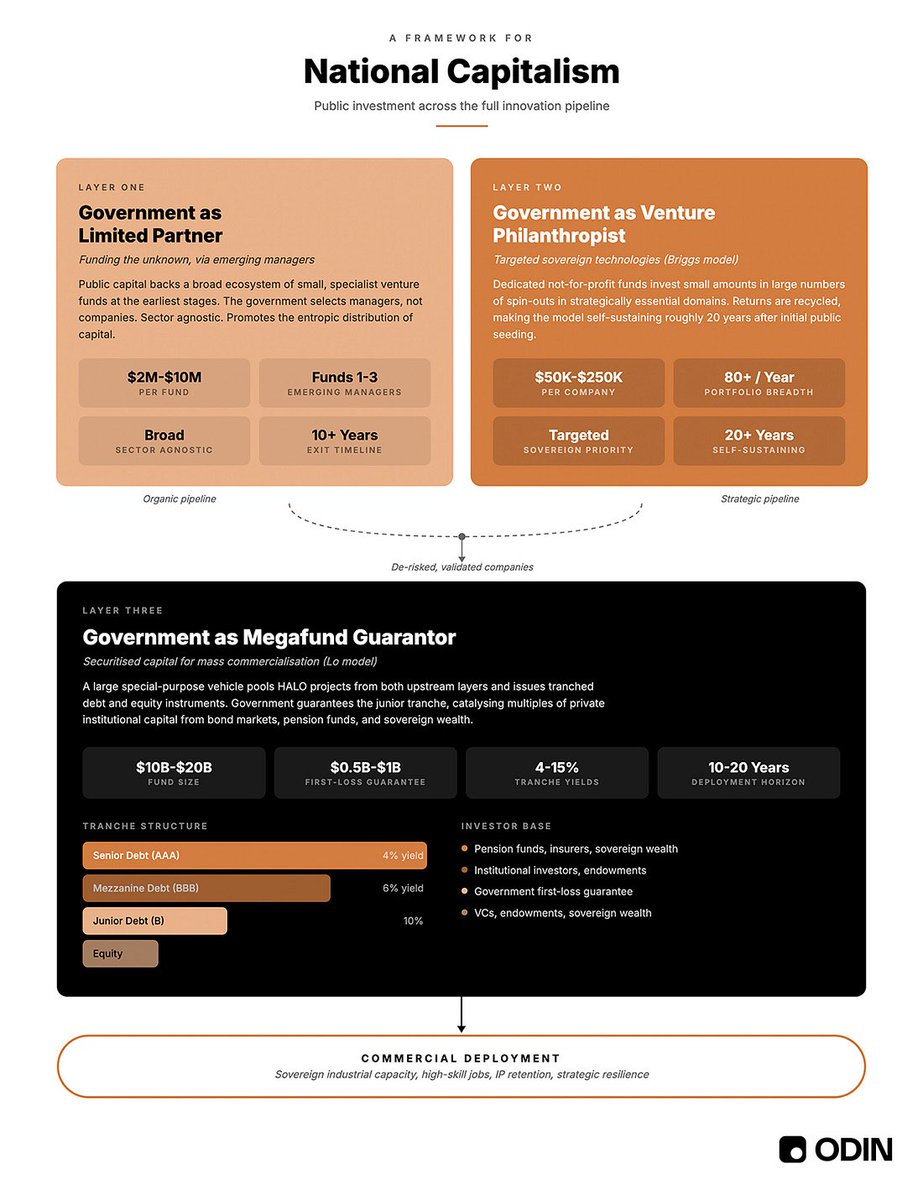
Venture capital, for all its ability to drive innovation, is mismatched with many of the technologies civilization needs most: - Building a nuclear reactor costs billions and takes over a decade. - Bringing a new cancer drug to market requires $1-2 billion over ten to fifteen years, with a 90% failure rate. - An estimated 80% of energy startups fail because funding dries up during the scaling phase. Meanwhile, the biggest VC firms are pouring record funding into AI, crypto or whatever the latest thing is. I am not pointing fingers - the time horizons for exit, incentives and LP demands drive this behaviour - but we are leaving critical opportunities to drive human progress underfunded. A growing body of research proposes three roles for the state to help bridge this gap: First, acting as a limited partner for emerging fund managers, where studies show moving public LP activity earlier produces the same productivity gains as doubling the allocation. Second, funding self-sustaining "venture philanthropy" vehicles that make small, broad investments in university spin-outs, accepting that over 96% will fail while the outliers more than cover losses. Third, guaranteeing junior tranches in securitized "megafunds" that pool hundreds of R&D projects into bond-like instruments accessible to pension funds and insurers, unlocking debt markets 400 times larger than VC. Read the full breakdown below from @credistick on the research that underpins these strategies.


@lessin ·
Never Compete. I was on with someone from our team at slow talking about competition recently… ‘how do you compete in venture capital’, etc… win deals. My honest philosophy? I hate competition professionally (love it in sport, but not business)…. And I think competition is especially stupid in early stage venture capital, where you are competing over / crawling over each other for out of the money call options on things that almost certainly will not work. Early stage VC competition on deals almost by definition leads to over-pricing / overpaying … and it also demonstrates a fundamental lack of creativity. Egotistically, if you want your money to matter / to make a difference, you want to be funding otherwise unfunded opportunities — where you see something others don’t… where money is most expensive, commands the highest return AND - to put a nice spin on it - where the money matters the most. So if you find yourself in a competition over a seed deal, IMHO you are a bad capitalist / limiting your returns, an un-creative person / a mere ‘market participant’ (yuck), and also misusing the incredible mandate and license you have to find things and make them happen in the world. You have to be careful about seeing mirages, because some things / most things are not funded because they are actually bad.. you can’t like things just because they are unliked… BUT your job is to have discipline in the wilderness / in the wander, and as the game evolves … both as a capitalist, and egotistically as someone who realizes how awful it is for your tombstone to say ‘market participant’
@StartupArchive_ ·
Marc Andreessen on what VCs look for in startups “The conventional statistics are that about 200 of the 4,000 venture-fundable companies per year will be funded by a top-tier VC. About 15 of those will someday get to $100MM of revenue, and those 15 will generate something on the order of 97% of all of the returns for the entire category of venture capital in that year.” He continues: “Venture capital is such an extreme feast or famine business. You’re either in one of the 15 or you’re not.” As Marc explains, VCs are looking for extreme outliers, and when they’re evaluating your startup, they’re asking themselves if this business is one of the 15 businesses that year that will get to $100MM in revenue. One principle Marc believes helps firms invest in outliers is investing in strength rather than lack of weakness. “The default way to do venture capital is to check boxes: really good founder, really good idea, really good product, really good initial customers. Check, check, check, check. ‘Ok this is reasonable, I’ll put money into it.’ But what you find with those checkbox deals is that they don’t have something that makes them really remarkable and special. They don’t have an extreme strength that makes them an outlier.” The takeaway for founders here is to make sure they highlight to VCs during the funding process that they have a really extreme strength across an important dimension. Video source: @ycombinator (2014)
 Watch video

@bg2clips ·
Brad Gerstner tells the story of how he got into venture capital: "One of the things that I thought was interesting stylistically in my first exposure to venture back in '99, 2000, is they were generalists. People would walk in off the street, two people and an idea. And it seemed like the office was always full of people doing kind of random things, frankly, from restaurants all the way through..Even today on Twitter, @paulg is like you shouldn't actually say you're focused on anything because you should back the best entrepreneurs." – @altcap on the @JTLonsdale podcast
 Watch video

@credistick ·
Venture capital has outgrown its ability to competently manage capital. The magic of VC is the interface between GP and entrepreneur; making judgements about ideas and people that stretch into the future. The desire to scale VC into an asset class has undermined that discipline, as the structures that enable scale have obscured idiosyncrasy. This has observable, measurable consequences. Slower innovation, weaker companies, and slipping returns. A growing desperation expressed in trying to extract more from less. I sympathise with the honest techno-optimists who believe that more capital means greater acceleration. But that bullish sentiment is being exploited by rent seekers, enabling misallocation and technological stagnation. In truth, venture capital can scale, but to remain productive it must be scaled proportionally along the right dimensions, without compromising the fundamental mechanics of capital coordination and liquidity. 1) Venture capital must not become as top-heavy as it is today. First-check firms provide the discovery of new opportunities. If the downstream market grows out of proportion with that discovery layer, everything begins to crumble. 2) Exits must not be delayed in order to absorb more capital. Going public is extremely beneficial for innovative companies, and has positive externalities for innovation generally. Private capital feels easier, but it is poison in the long-run. With this in mind, I propose four pillars of scaling venture capital toward greater productivity, in the context of national capitalism — how states can wield capital for industrial growth: The first pillar is to remember that venture capital is an exit business, not an endlessly printing markups business. Companies should be oriented towards an exit once they reach an appropriate scale and are sufficiently derisked. Historically, that has been somewhere between 6–8 years. It may be longer for others that require it (see: SpaceX), which is fine. In practice, that means not wilfully shovelling growth capital into businesses that would otherwise be public. Which means finding a more productive purpose for that capital, which may be challenging for large, lazy allocators. (Building on themes explored in a large body of research, cited in Hitting Escape Velocity.) The second pillar is to ensure that the foundation of small and emerging managers is robust, producing a healthy stream of opportunity. This runs contrary to larger VC incentives and LP bias toward brand power, but the alternative is concentration that rots returns and consensus that rots innovation. (Building on work by Martin Aragoneses of INSEAD and Harvard University’s Department of Economics, and Sagar Saxena of the University of Pennsylvania.) The third is to ensure R&D intensive technologies have access to patient early capital that can carry them through to commercialisation. This helps prevent VC simply flowing down the path of least resistance to scalable software slop. Where venture capitalists do not quite have the courage to back novel “HALO” technologies from inception, they may need outside support. (Building on research by Kyle Briggs of the University of Ottawa Department of Physics.) The fourth is to provide access to well-structured mezzanine financing for companies with extreme setup costs, from nuclear plants to clinical trials. This gives early VCs the confidence to invest in these categories knowing there is downstream capital and liquidity when an IPO may be too distant and too risky. (Building on work by Andrew Lo, of MIT’s Department of Financial Engineering.) So, in the spirit of Kyle Harrison’s techno-solutionist commitment, here is how we may address those pillars…

@lucainweb3 ·
Venture Capital is entirely a game of outliers One outlier in a portfolio erases ten bad bets sitting next to it. And every outlier looks completely crazy in the room it gets pitched in. Sequoia wrote $214M into FTX and lost every dollar by November 2022. The headline broke and I assumed the fund was in trouble. A few years earlier Sequoia had put $60M into WhatsApp and made around $3B in three years. a16z poured money into fab .com in 2013 when the press was calling it the next Amazon. It raised $336M and sold for parts. That same year a16z led a $25M round into Coinbase - that position was worth approximately $11B at the 2021 listing. Y Combinator gave $20,000 to a website for letting strangers sleep in your house in 2009. That check was worth over $1B by Airbnb's IPO and completely revolutionized the real estate market. If it sounds completely crazy, you're probably closer to an outlier than you think.


@gregisenberg ·
Adobe abandoning its $20b acquisition of Figma got me thinking... Man, it's tough to be a VC-backed founder. You create one of the most game-changing products, Figma. Millions of people use and love it. Every designer looks up to you. You get a $20B offer. Finally, after 11 years of starting the company, you see that financial payoff. And then all of a sudden, some regulatory body in the UK says “no bueno”. Crazy part is, you’ve never even been to London and you don’t like tea very much. You’re more of a California guy. So, deal is off. This is the new reality of VC-backed founders. It’s IPO or bust for the most part. I think lots of founders and soon-to-be founders will look at this and ask themselves: Why would I go the VC route? The path to liquidity is tough. Yeah, maybe you can sell some secondary shares in a Series A or B. But also, you’re reliant on VCs to make that happen for you. Are you really in control of your destiny? This is more headwinds for the profitable, bootstrapped movement. Solopreneurship, multipreneurship, bootstrappers, call it what you want. You answer to no-one but yourself. You’re business might not be worth $100b but you can build a $1B business without VC. You probably won’t go to mars, but you can make it to the moon. Another trend: You’ll also see more and more people raise capital and issue dividends. Profit sharing. I saw 2 deals this week of founders raising money on a YC safe note but issuing dividends. It was music to my ears. And I bet music to theirs too. It might not look like it but I believe this to my core: It’s a beautiful time to be building internet businesses.

@StephNass ·
The cruel VC eye. Founders get pissed off when they realize they don't have what VCs want. ▸ Track record: academic and professional achievements ▸ Social capital: people who will refer you and invest in you ▸ A hot market: like AI right now ▸ Traction: retention, usage, and growth NONE of these can be built overnight. So by the time you decide to raise, 80% of your fundability is sealed! 👈 That's why fundraising is so frustrating. The cruel VC eye doesn't care how hard you're working. It cares about traction, track record, social capital, and a hot market. So founders end up optimizing for low-impact items: ▸ Your product ▸ Your pitch deck ▸ Your story Don't get me wrong, those are important items. But it can't be everything you're bringing to the table. So what should you do instead? Talk to "smaller" investors. Angels, accelerators, maybe emerging VC managers. Chase grants, too. Sure, you won't raise $4M. But $500k, maybe. Use that $500k to build up your team, get some traction, and reach product-market fit. Then you're VC material. You're not born VC fundable, you become VC fundable. (Or bootstrap all the way and keep 100% of that sweet equity!✌️)
@tibo_maker ·
I'll never raise VC funds again for my startups ❌ the VC horror stories going around X this week have been brutal to read - a GP fell asleep for 30+ min during a $15m series A pitch - one VC signed a term sheet, then ghosted. never wired the money - another wanted a cut of acquisition proceeds despite investing $0 - a top VC offered a founder his co-founders' stock in exchange for firing them - another committed $5m at the start of a round, then asked to be "downsized" to $100k the day they were supposed to close - one VC passed on a company because he didn't think a woman could lead a security company. that company is worth $87b now almost every founder I know who has tried to raise has a story like this. it's not rare. it's the default experience most founders don't actually need VC money. they think they do because the ecosystem trains them to. raise, scale, exit, repeat. that's the only path anyone talks about and even the well-meaning VCs are stuck with the math. they need outsized exits because the model runs on a power law. one or two big wins per fund cover everything else so if your business is doing fine but not on a billion-dollar trajectory, the attention just fades. follow-on rounds dry up. intros slow down. the partner who was in your DMs 3 years ago stops replying that's when the pressure kicks in. you start hiring ahead of revenue and chasing growth numbers someone wrote on a whiteboard. you stop building for users and start building for the next round I've raised before - that's why I won't again every product I've touched since has been bootstrapped and profitable today my portfolio is at $1m mrr across 5 saas products and the best part isn't the number, it's that I feel completely free free to move fast, change direction, double down, or slow down - whatever feels right no one wrote that on a whiteboard for me


@Suhail ·
All my bad VC stories mostly just make me sound like a wuss so I'll just share a good one: One time I crashed an Allen&Co event since it meant I could pitch 4 investors in one day in the same location. I didn't want a week gap in my fundraise so Max Levchin encouraged me to crash the event in Scottsdale after I joked about doing so. I flew to AZ and drove w my dad in the car to the Ritz. Anyway, everyone I pitched was very lukewarm until I get to Ben and Marc at a16z. I pitch them both at a coffee table. Neither seemed all that interested in my deck so I presumed they're also checked out on my company. Ready to close the laptop and return home, Marc stands up and says: "If anyone gives you an exploding termsheet, tell them to go fuck themselves." At this point, I hadn't even heard of what that was so I had no idea if this was a good or bad reaction. It was Friday. I went to the partner meeting on Monday. Termsheet that week. We had no other termsheet options. The rest is history. I really appreciate the conviction they had on two young nobodies.

@signulll ·
venture capital is too easy to dunk on cuz variance is enormous & noise dwarfs even that. capital access should function as signal but inverts into negative signal disturbingly often which is a hilarious miscalibration of the whole apparatus. tho fair, evolution fucks up constantly too, so maybe selection pressure just is like this. case in point.. met a guy recently (only because i know someone at his fund) whose entire lore is early faang employee, never founded anything, now runs a vehicle. proceeded to grill me on products i actually built & scaled, which was its own kind of comedy. then monologued about network effects for 30 min without clocking that this meeting was actively decrementing his own. i love irony so so much.🤣

@rohitdotmittal ·
Etched is most likely going to be a very big company. Congrats to everyone involved. But it’s a clear example of how extreme the power law in venture has become - a hardware company started in 2022/2023 that is already a $10B+ company (and talking $20B) in just a few years. Venture capital is flowing to fewer companies, and it’s moving at a much faster pace. If something is working, deals are closing 10x faster than a few years ago. Investors are willing to write much bigger checks on limited proof points when the company sits in the right vertical. I tell founders the same thing every time: you’ll know if something is working faster than you ever could before. If it doesn’t generate immediate pull after a certain point, it’s probably not going to be a rocketship. A small number of companies with the right characteristics will absorb the vast majority of the capital. The game is increasingly about finding the idea that attracts that capital right away.


@HarryStebbings ·
In 2020, one of the best venture capital investments ever was made. Out of a $54M Cyberstarts Fund I, @giliraanan made a $6.4M investment into @assaf_rappaport and @wiz_io. On Wiz's $32BN exit to Google, that investment returned the fund a reported 30 times over. $6.4M turned into $1.42BN. A 222x return. Gili is one of the greatest investors of the last decade. I sat down with him and have condensed my notes from our discussion (episode released today). 8 Lessons from Turning $6.4M into $1.42BN 🔥 1. Venture doesn't work (for most) ⚠️ The distribution of returns is not equal, and Gili believes the current influx of cash will end in catastrophe for many players. If you are an LP distributing your allocation evenly across the market, you shouldn’t be sleeping well at night. 2. Stop "Babysitting" Founders 🍼 Gili is clear: He is not in the business of babysitting. If you trust a founder to protect a nation's most sensitive data, you must trust them to handle a large bank balance without getting "sloppy or lazy". 3. The Science of Exceptions 🦄 Venture isn't about rules; it’s about the exceptions. If you apply lessons linearly—like assuming every company needs to follow a "Triple, Triple, Double, Double" path—you’ll struggle. Greatness doesn't have a limit, and it often doesn't follow a textbook. 4. Growth is DNA, Not Engineering 🧬 Velocity is the best predictor of a healthy business. When a company grows at an insane pace, it becomes part of its DNA; it rarely just fades away unless there is a massive external event. If you have to "engineer" growth with a horrible magic number, you’re in a bad business. 5. Be Selfish and Greedy 💰 Gili argues that for an early-stage investor, being selfish and greedy aren't negative traits—they are requirements for success. Price matters, especially in a market where entry prices are no longer balanced with the probability of a unicorn exit. 6. The "Branding Event" IPO 🏷️ Forget liquidity. Gili views going public as a marketing and branding event—a way to tell customers and employees, "I am here to stay". In reality, an IPO is often the opposite of a financial event because of the "shackles" and limitations placed on selling stock. 7. Secondaries as Talent Retention 🔄 Secondaries are a tool to retain your best engineers and product managers. When employees are fully vested after four years, a secondary program is the "antidote" that prevents them from leaving to diversify their family wealth elsewhere. 8. The "Shittiest Investor in the Room" 🪞 Even the greats feel the sting of failure. Gili admits that during his decade at Sequoia, he spent many days looking in the mirror thinking he was the "shittiest investor in the room". It takes immense determination to keep going when you won't know if you're actually good at your job for five or six years. (Links in Comments)

@nic_detommaso ·
The biggest lever in VC fundraising is FOMO. Many may not agree with this but the reality is most of VC is herd mentality. Investors look to others to validate their decisions. Very few do it on their own. As a founder, your goal in your fundraising sprint is to make everyone you talk to believe that they will miss out if they pass on your company. Here’s what can help generate fomo: 1) Get to know VCs before you start fundraising. Talk about your company and vision, avoid giving too much financial info. 2) Say you are not fundraising lol (this makes VCs want to pre-empt your round). 3) Set a date to start formal fundraising. Reach out to the VCs that expressed interest previously. 4) Get a term sheet as fast as possible. It can be from any VC but getting a lead early is what makes VCs swarm and move quickly. If you do this well, your round can get filled quickly. The reality: 1 VC saying yes makes other VCs look harder to see “what they are missing.”

@etnshow ·
.@avipat_ Co-Founder of @usekled, says too much venture capital is being allocated on hype rather than conviction. "You drop out of Stanford, walk into a VC office with no idea and a Stanford hoodie on, and walk out with a $5 million cheque." "The great companies never came out of this behaviour." "When we were raising, people would say, 'I saw your Twitter video got 4.4 million views. Take my money please.'" "The people I said yes to were the ones who actually sat down and looked through the company." "Real conviction is very hard to find nowadays."
 Watch video

@brycent ·
I've had multiple people ask me... "why not raise money for Vesting?" The answer is simple: To build what we are building doesn't require venture capital, it required the pain of me bootstrapping for 7 months before we made our first $. Additionally, a lot of really strong businesses have been ruined by playing the venture game too soon. I don't want Vesting to fall into that trap. We are building a multi-platform, creator-owned, bootstrapped, media company that talks about venture backed startups. (organic + ad rev) We've also built a media agency on the backend that works directly with startups on: - Spinning up organic content on socials - Running social media pages for brands - Helping startups with marketing support - Helping startups run paid ads that convert - Helping companies position their brand through incredible storytelling We are profitable, and building a strong base that will give us a chance to be a major player in the startup and venture space for many years. Raising is great, but understanding if it's right for your business is all that matters.
@nic_detommaso ·
Investing in unicorns - to build a simple VC exit model, you essentially need to track 2 things: 1) How much of the company you own at exit (the funding & dilution path) 2) What the total company is worth when it finally sells (the exit valuation) A big part of a VCs job is understanding exit potential of a startup when they write a check. Obviously when you’re investing at the preseed or seed stage (even at the Series A), your assumptions on exit potential are just that, assumptions. And very, very theoretical assuptions at that. Despite likely being off on every assumption made at that stage, you still need to understand / evaluate the inputs of the exit model to pressure test whether a startup can reach “venture-scale.” As a quick refresher, venture-scale means: The ability to scale to $100 million in revenue in 7 years with little capital and a low penetration of the market. Usually reaching a $1 billion+ valuation. So with that, a VC exit model at the early stages is not about “being right,” it’s more about having a sanity check. In today’s deep dive, I walked through a VC exit model and the inputs needed to figure out what your investment could be worth when a company exits. Read on: https://t.co/tgVYgCusr7 Image source: Crunchbase


@E_Bruxxx ·
The amount of VC deal passing because a startup doesn’t perfectly fit an investment thesis is outrageously staggering. Maybe I’m too old school, but I think the best thesis in venture is finding exceptional founders and backing them. Too many investors convince themselves they understand a market better than the founder who spends every waking hour living it. The founder is in the trenches talking to customers, hiring talent, shipping product, and feeling the market move in real time. Most VCs have a 10k ft view of the market. The biggest outcomes rarely fit into a box and the best founders create new boxes. Find the killers. Drop the bag.

@MartinGTobias ·
Saw a seed VC post their actual 2025 backing criteria publicly this week: 18 pre-seed checks, 14 pre-revenue, 10 first-time relationships, 10 rounds they led, median check $500-750K, median valuation $7.5-10M, all highly technical teams, all US-based or actively relocating. That's not a vibe. That's a targeting brief, sitting in public view. If you're blasting 200 investors with the same deck, you're ignoring data like this that would take 10 minutes to read and could double your reply odds. Read the fund's actual portfolio and stated criteria before you email them. Same point I made last week on cold email reply rates: targeted outreach beats volume outreach by 3-5x. Specificity is the whole game -- for the investor's criteria AND for your ask.
@E_Bruxxx ·
Talk to a number of solo GPs who left large funds and one reason comes up consistently: they got tired of watching their highest conviction deals die in investment committee because the partnership couldn't get comfortable. Consensus is good at protecting against obvious mistakes, but really good at killing non-obvious winners. That's a problem. One thing I'd be asking every VC if I were a founder: How are investment decisions actually made at your firm? Healthy rigorous debate is essential, and each deal should be challenged. But I've become increasingly convinced the best venture investments are made because one person sees something everyone else doesn't. If I'm a founder, I want to know: • Can one partner lead and get a deal done? • Does every investment need committee approval? • Does the person I'm building a relationship with actually have decision-making authority? Those answers tell you a lot about a firm's speed, culture, and willingness to back unconventional founders. Personally, I'd rather have one investor with overwhelming conviction than ten investors who are merely comfortable. Consensus breeds average. Conviction finds outliers.
@credistick ·
Writing an article about the two purposes of venture capital, in the context of today's bifurcated market: 1) generating returns 2) driving innovation It's usually assumed that the two go hand-in-hand, where VCs generate returns from innovation, but it's unfortunately easy to find cracks in that premise. So what is the connection, and which arrangement is preferable? A free market absolutist (like Milton Friedman) would only care about profits. The job of a VC is to maximise value for their LPs, and the market determines fees. An industrialist (like Henry Ford) might point to the compounding returns from broader prosperity. A more ambitious goal that such absolutism may sacrifice. Essentially, while the fiduciary duty is to deliver the best possible returns in current conditions, this might reflect a less optimal "finite game". It may be desirable that venture capitalists play a longer-term "infinite game", focused on creating positive externalities and strategic goals. To explore this, I picked six interesting capitalists from history who would likely have strong opinions. I then set up an agent for each, based on their body of work, to set about debating the topic. The result (link below) is mostly for entertainment, but it's interesting from the perspective of understanding the spectrum of capitalism and how attitudes have changed. Amongst the questions, the six figures were also asked which contemporary firms or investors they most admired, and the answers were interesting: - Adam Smith spoke highly of @usv - Milton Friedman chose @foundersfund, and @sequoia under Don Valentine - Ayn Rand pointed to Mike Moritz of @sequoia, but was mostly critical of investors - Rockerfeller highlighted Warren Buffet and Berkshire Hathaway, acknowledging it's not a venture firm, along with @NoubarAfeyan and @FlagshipPioneer - Andrew Carnegie chose @sacca, @KaporCapital and DBL Partners - Henry Ford said, if forced at gunpoint, he would pick Arthur Rock for Fairchild Semiconductor, and Georges Doriot at American Research and Development Corporation They were also asked where they would invest if they managed a $300M venture fund today, what advice they would offer to LPs, and whether or not venture capital is failing the public.


@JamesonCamp ·
Had a coffee with a friend who raised multiple times from Sequoia, Greylock, and serval more tier 1 VCs and we talked about capital raising Was awesome to hear some perspective on capital raising from a founder instead of a VC I combined it with some advice I got from other venture backed friends years ago for IG video that did well so I’m sharing here 3 things I learned: 1. Your TAM slide is made up. Everyone in the room knows it. The simpler the deck, the better. Just big vision and team. 2. Fundraising is dating. If a VC invites you to an in-person meeting, tell them you’re too busy. Create scarcity. (This advice came from a diff friend while I was raising years ago actually. 3. I pitched VCs a $200M business last year. They said “that’s cute.” Fund economics need billion dollar outcomes now. SpaceX changed the math. Early stage the actual KPI? Vibes. Aura. Whether they believe you’ll figure it out no matter what.
 Watch video

@apriori0x ·
VC Exits Don't Matter 🤨🤨🤨 In this episode of Deeply Intents (🎤,🎧) I chat with @wquist of Slow Ventures and @credistick from Odin. This episode pulls apart the current discourse on venture investing looking at the world through investor and researcher perspectives [w/ plenty of spice]. 🥵🥵🥵 Timestamps 0:00 - Intros 3:01 - Exits don't matter 6:41 - Everyone eats their own BS 7:46 - Paper marks and management fees 10:25 - Now you can have your cake and eat it too 11:25 - Carry is not dependent on time value of $ 13:18 - Megafunds do the easy thing 14:39 - Top of funnel is still limitless 15:16 - 90% of venture = assett management 16:03 - True venture doesn't scale 18:29 - VC and software are tied together 21:00 - A machine for fake value 24:14 - In a perfect moment with AI 26:33 - Great investors are great editors 29:25 - Seed-strapping trends 31:12 - Businesses and art projects 35:30 - How important and big is it? 39:12 - The assumptions are the important part 39:43 - It's all a DCF, everything in life is a DCF 41:54 - Founder archetypes and success 45:39 - Founders should be the best investor in their own company 47:02 - What people in venture don't see coming 54:45 - Founder opportunity cost is extremely scarce
 Watch video

@andrewdfeldman ·
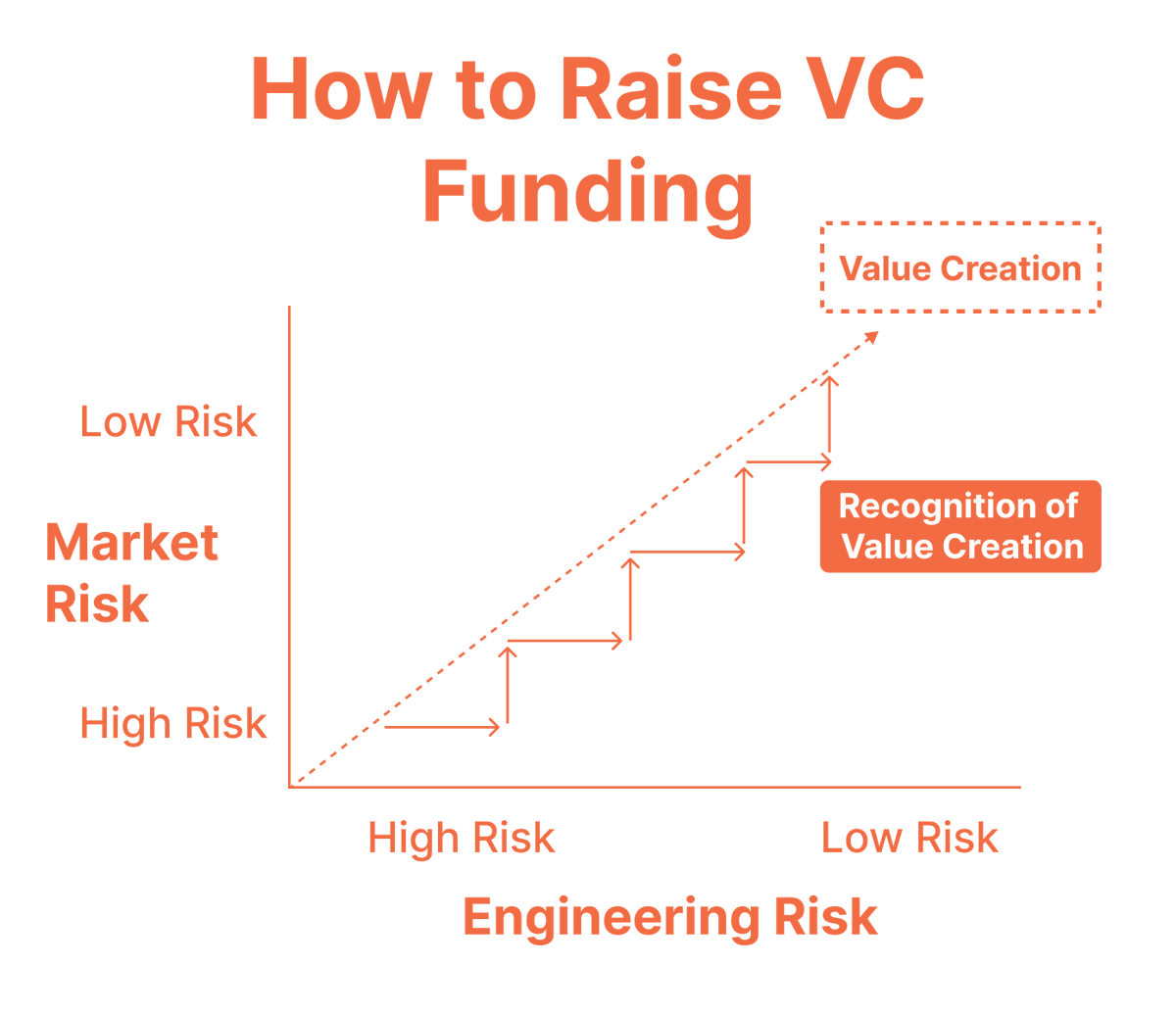
After raising >$4 billion in 17 financing rounds over 25 years, I've learned that every single fundraise comes down to this simple graph. It’s how venture capitalists (VCs) think about valuation. Let me explain. The graphic shows how you increase valuation by reducing two very specific kinds of risk. Engineering risk - the risk that you can build your idea. Market risk - the risk that the market will buy your product. Unfortunately, while you reduce engineering risk in a smooth line through hard work day by day, VCs only give you credit for it when you hit a milestone. Daily work is hard to understand. Milestones are easy to evaluate. A working demo. A first customer. A signed contract. Hence the step function change in your valuation. The worst thing is to be raising money just below the riser in the step function. You don’t get paid for the risk you’ve reduced because its hard for VCs to see. And because they can’t see it, they don’t give you credit for it. You have done nearly all the work, but get no credit for it in valuation because you can’t demonstrate it. Reducing market risk is similar. A large legitimate customer committing to purchase reduces risk and can be easily demonstrated. Viral adoption of your solution similarly reduces risk and is demonstrable. This is how you drive valuation up. When you think about raising money, always think about how much money you need to comfortably get through the next major demonstrable milestone. When you present, frame everything as: “we will use this money to achieve this goal, which reduces the following risks.” And finally, when you complete a fundraise, I recommend immediately writing the slide deck you want to use for the next raise. Think about the risks that you would like to eliminate, formulate progress as “risk reduction on the engineering or on the market acceptance” dimensions. Every raise I've ever done comes back to this graph. Reduce risk. Demonstrate it. Get rewarded for it.

@rodriscoll ·
This market is way more consensus up and down the stack than it's ever been in venture. Of the newly minted unicorns in Q1 of last year, 40% already had one or more up rounds by Q4. Once you're a winner, the money says king make, double king make, and so on. It's too hard to pick the guy at 50 pre that might make it. Just pile into the guy who's made it. Even at $12b, the worst case is a 1x. It's the venture capital equivalent of “you can't get fired for buying IBM.”
@lucainweb3 ·
VCs aren't saying no to your idea. They're saying no to where you are. The bull market playbook was simpler: right narrative, right timing, right intro, investment followed. A lot of founders are still running that playbook. The market it was built for is gone. If you haven't launched, have no revenue, and haven't validated product-market fit, a VC is the wrong conversation. Not forever, but right now. Bootstrap first. Get angels if you need outside capital. With AI, you don't need much to validate an idea anyway. The cost of proof has never been lower. Approach a VC when you have something to show: traction, partnerships, repeatable revenue. And that last one matters more than people admit. Not a one-time spike. Not an NFT mint. Recurring revenue from real customers paying you consistently. That's the bar in 2026. The founders who understand the difference between "too early for funding" and "too early for this specific conversation" are the ones who will close rounds this year.

@harris ·
vc's are great at being excited. in meetings, out of meetings. right up until the point they pass on your round. that's hard for founders to process and read. if you want to know what a vc really thinks, watch for follow up. see if they spend limited political capital on you. that's signal.

@srcasm ·
Venture capital loves clean problems. Give a VC a SaaS tool with clear churn cohorts and a linear sales cycle, and they’ll write a check all day. But give them a business tackling the non-linear and deeply human world of addiction recovery, and a lot of them will not. I’ve been sober for 3+ years. That journey is the main reason I was able to see what others missed when I first met @kobyjconrad and looked at @sunflowersober. Why I backed Koby… • Koby has lived insight. He is building for humans he deeply understands. • Sunflower is rebuilding the community layer. Addition often destroys that. • My own sobriety gave me the context to understand why certain tradeoffs mattered I believe the best "vertical AI" will come from the people who have lived the deepest inside the problem. If you are building in the mental health or recovery space, I’d love to chat. Tag a friend.

@richardchen39 ·
Why shouldn't founders raise a huge round at a crazy valuation before PMF? It's difficult since for most founders it's an ego thing. When they see their peers get these term sheets they should deserve the same. But: 1) I've seen so many startups fail because they raised too much money. I've never seen a startup fail because they didn't raise enough. It's counterintuitive but raising too much leads to lack of focus (trying things in parallel instead of going all in on one) and hiring too quickly (which causes drama with employees when pivoting to find PMF). 2) It sets the bar incredibly high for the next round in terms of traction needed. VCs expect a 2-3x markup between rounds. No VC will do a down round at early-stage. I've seen so many 2021 era valuation founders BEG for a down round, but they can't say "Please invest because my company sucks."
@MartinGTobias ·
A well-known seed investor just published a "vibes-based founder's guide to choosing a VC" -- basically: talented founders have leverage now, pick your VC on fit and feel. True if you're already fundable. Backwards advice for the other 90% of founders who haven't raised a dollar yet.
@HarryStebbings ·
WTF is going on? Anthropic and Elon. Cerebras IPO. Ramp at $40BN. I sat down with @jasonlk & @rodriscoll to discuss the deal, along with the biggest news in tech this week: - Anthropic Buys Compute From Elon & Commits $200BN to Google - Cerebras IPO: The Breakdown - Ramp's $40BN Latest Valuation - Hubspot Tanks, Monday Rockets: WTF is Happening in Public Markets? My notes below: 1. Foundation Made the Investment of the Decade with Cerebras Jason argues that Foundation’s success with Cerebras is a masterclass in “actual venture capital” because they did not just muscle into a hot round. They incubated the company in 2016, when the category did not even make sense. By playing the long game, finding a brilliant founder, seeding the idea, and holding roughly 9% ownership through a $40B+ IPO, they proved that the biggest returns still come from doing the hard work before a deal becomes obvious. 2. What Founders Have to Understand Is That to Win, You Have to Mentally Be Changed Forever There is a fundamental breakpoint around the four-to-five-year mark when a founder’s brain is permanently rewired by the intensity of the journey. Jason notes that winning at a high level requires a commitment to becoming a different person. The happy-go-lucky version of yourself from the early days is gone, replaced by someone who can often only relate to other founders who have survived similar maelstroms. 3. The Enemy of My Enemy Infrastructure Play Anthropic’s partnership to use SpaceX’s Colossus 1 data center highlights a massive consolidation where the strongest players are hoovering up all available capacity on the planet. For Elon Musk, this move transitions xAI from a buyer of CapEx to a net seller of capacity, turning a potential money pit into a $3 to $5 billion annual revenue stream because Grok is not currently growing at the same pace as leading-edge models. 4. The Crackdown on Shadow Cap Tables Anthropic is enforcing board approval for all secondary sales to reclaim cap table control and call out "bad actors". Rory warns that side contracts for "economic rights" are legally fragile; because the company has no obligation to honor unapproved transfers, many investors face "messy" losses at the IPO. 5. Model vs. Application: The Vertical SaaS Death Zone The industry is debating if horizontal models will consume the application layer or if vertical workflows will remain independent. Jason predicts a "terminal state of decay" for legacy marketing tools because agents have no need for manual templates. Once a model can perform an application’s core function directly within a prompt, that software becomes obsolete. 6. Token Maxing vs. The 100x Engineer Despite massive growth forecasts, a "micro backlash" is growing against "token trash" generated by mediocre developers. Jason predicts a clampdown on wasteful agentic spend, where companies prioritize unlimited resources for elite "100x engineers" while restricting "web heads" who burn compute for minimal productivity gains. (links below)

@LubaYudasina ·
"Venture capital is like a casino. The house always wins. It's a rigged system." TaskRabbit founder @labunleashed would know. She pitched every VC in Boston in 2008. Nobody was interested. So she bootstrapped TaskRabbit for the first 18 months by herself. Years later she sold it to IKEA for $100 million plus, and spent years afterwards separating her identity from the company. Now she's on the other side of the table, and what she wants from founders isn't the pitch deck. It's the story. In this episode: Why she calls venture capital a rigged casino How TaskRabbit ended up giving Lyft its first drivers The origin story most people haven't heard Why every founder competes for capital across every industry, not just their own What it took to separate her identity from the company she built Was so fun talking to Leah! Full episode: https://t.co/8D0C4b7dMZ
 Watch video

@hpierrejacques ·
Venture capital is not immune to AI disruption. So we asked ourselves the hard question: If we were starting Harlem Capital today, what would we do differently? We spent three days in a house rebuilding our sourcing strategy from scratch. We walked away with three new truths: – Technical founders are back – The outliers are more extreme – Pre-seed is the new seed In an ai-native world, people are the moat. If sourcing is the edge then the systems behind it must evolve. Curious how others are dirupting themselves? https://t.co/Crq66u77YD
@apriori0x ·
Amazon only raised $8M of institutional money pre IPO, which is about $17.3M in today's terms. Amazon was arguably the most important company in the US for the last decade or so. If Amazon and many other important companies can be built without Mega-round venture funding, then it suggests this new generation of software startups do not need Mega-round funding. For software companies without real capex spend or structural opex spend, mega-rounds make 0 sense. Ironically, Amazon built AWS which reduced capex spend for many software startups. Note that ~ 212 of the largest 300 US public companies by marketcap never raised from VCs. There is also plenty of empirical literature suggesting that raising too much actually hinders a startup's ability to succeed. Look no further than the crypto industry. Yes, legislation changed (Sarbanes-Oxley) which makes IPOing, pre-profit, 3 years into a company's life (Amazon) more difficult now. But at least it was public markets supporting the financing. Public companies have a much higher compliance and regulatory bar to meet. If your stance is that Mega-rounds simply substitute for the prior early pre-profit IPO option you must also admit they sometimes (often) substitute for a real business model. Ergo, blitzscaling strategies gave users a free lunch (subsidized usage) just long enough for them to get addicted and come to depend on the product which enables the enshittification cycle. Neither Ethereum nor Bitcoin raised from any institutional investors. They are not startups, but they were "projects" that created outsized returns without venture capital investment. If you were early to ETH, say ICO or around that time you actually could buy at a fair value and sell to liquid funds, who needed exposure, years later. This is similar to what IPOs used to offer retail investors (not the same). As opposed to the sinister low float high FDV SpaceX type of IPOs that mirror token launches. Token valuation does not equate to value creation the same way market cap of a public company does not. Valuation is about expectations of the future. But when those expectations are priced in private markets there exists significant information asymmetry for retail investors at IPO time. They become exit liquidity, the same way SoftBank can be exit liquidity for early round investors. There are still bag holders, it's just that the mega-round structure puts retail at the end of it. And it doesn't have to be this way. Mega-rounds can also create this status carrot for ambitious founders who want to be seen raising at large valuations, which actually risks putting the cart in front of the horse up to and including creating perverse incentives to generate as much narrative hype as possible without building anything real; as in marketing company 1st then product company. The focus shifted from the customer to raising the next round. Regardless, venture capital is a critically important source of capital formation. It is necessary and helpful. I just think *most* "Mega-rounds" are wasteful and not helpful for entrepreneurs or investors. One more thing. Real network effects self-finance. If you are yeeting $1B into a Series E, the flywheel does not exist. **Note that technically Mega-round is understood as financing round raise >$100M but colloquially I'm just using it to mean "frothy round".

@JoinPond ·
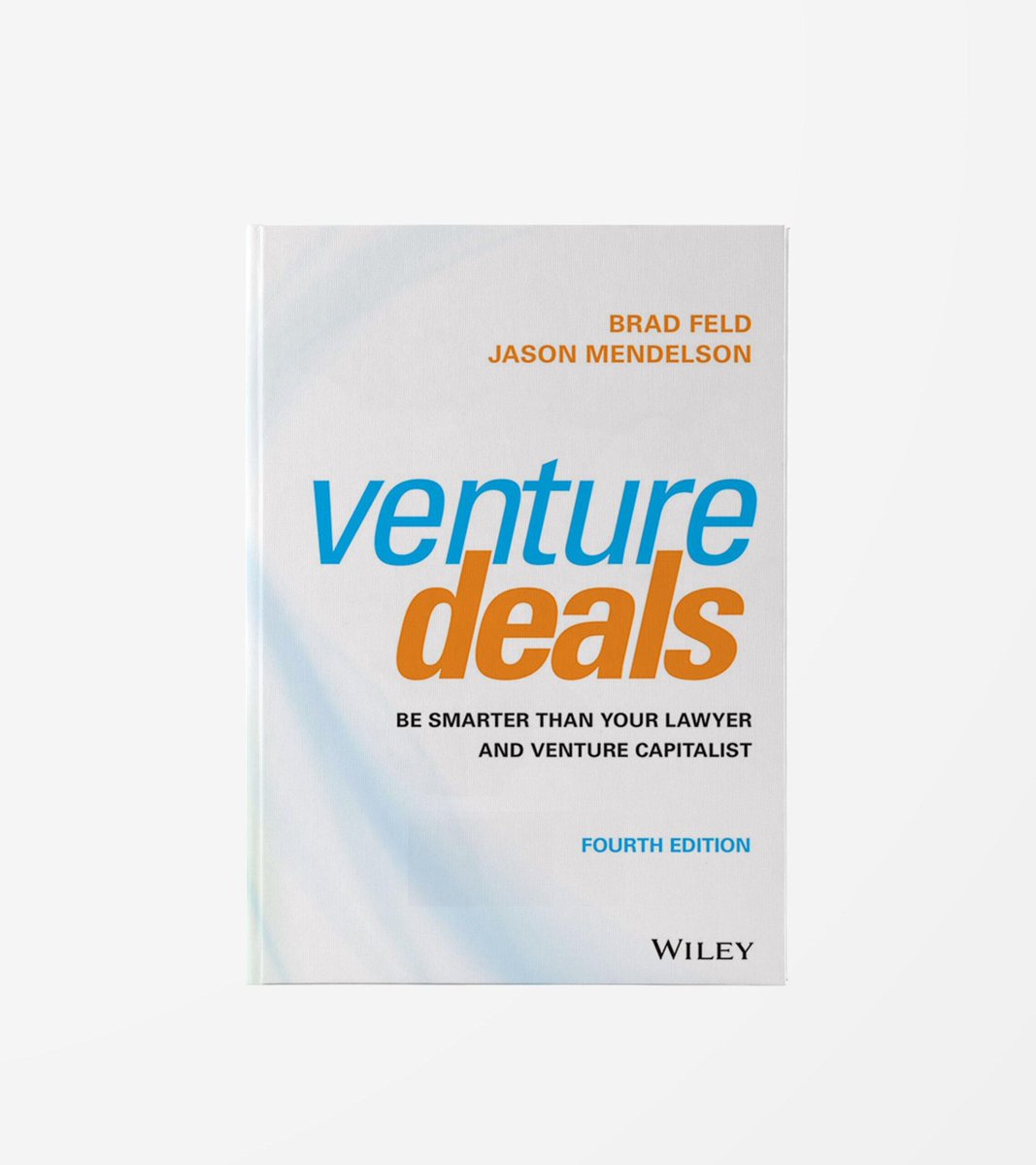
4 books that changed how investors actually write checks @Jason wrote Angel after realising most first-time angels don't understand portfolio math. You need 50+ bets before the probabilities work in your favour. Most angels write 3 @bfeld wrote Venture Deals because founders were signing term sheets they didn't understand. The liquidation preference section alone has saved founders from deals that looked good on the headline and were disasters in the waterfall @alitamaseb analysed 200+ unicorn companies for Super Founders. Most of what investors say they look for domain expertise, repeat founder status doesn't correlate with outcomes the way the pattern-matching suggests @scmallaby wrote The Power Law as the actual history of VC, not just the mythology. The real decisions, the structural reasons most funds underperform The frameworks make more sense once you know where they came from, save this



@JesseTinsley ·
⚠️ Trigger Warning ⚠️ Random Tech investor pattern match I have seen repeatedly. On average Tech VC’s will invest as much preferred equity as there is a capacity to absorb 1x that amount in debt. Intentionally or unintentionally the pattern is clear the risk is effectively zero. Why? Because they can sell or dividend recap and get a 100% return 99% of the time. Not quite the “risk” capital many people assume it is because there is zero institutional senior debt above them. Its effectively you sell us control, will call this a “Venture Investment” post Series C or beyond and we tell you what you are allowed to do with “your” business. Seems more similar to private equity where you sell a majority just in this case VC has convinced everyone that reinvesting it in your business vs taking that money yourself is the only way.

@willsclips_ ·
Founders are often told to raise venture capital through warm introductions. @Seshproducts founder Max Cunningham started with over a hundred cold emails. One of those emails led to @MidnightVP becoming the company’s first investor. Sesh has since raised more than $40M from investors including @8vc, @diplo and @PostMalone.
 Watch video
@GJarrosson ·
Treating Demo Day as a passive viewing experience means you will only get access to the deals that nobody else wants. Sourcing generational companies requires a proactive, highly targeted hunting strategy that begins long before the main event. By studying early launches and monitoring founder social signals, you can construct a high-conviction shortlist of teams to systematically court. This structural approach shifts you from a reactive investor to a precise, relationship-driven partner. Venture capital is a game won on the margins of persistence, and early outreach is the ultimate mechanism for tilting the table in your favor. @davj @Fondocom
 Watch video
@JoinPond ·
Every VC says they invest in 'founder quality'👨🔧 Here's what the phrase actually means depending on who says it: @ttunguz means: show me your data instincts. Do you know your cohorts, your retention, your unit economics without looking? He's evaluating how you think, not how you pitch @hunterwalk means: show me how you lead. How you hire, how you handle the first time something breaks. He's evaluating whether your team will stay @bfeld means: show me you're built for the long game, ot the exit but the decade. He's evaluating whether you'll still be showing up when it's genuinely hard. Same phrase and three completely different evaluations happening in the same room Know which one you're in?

@rohitdotmittal ·
$15M+ raised and a $100M+ valuation can actually make a company harder to sell. Founders forget that they have to grow into the valuation and hopefully a lot more. The valuation is based on the company's future potential, not its current value. When you go to sell the company, the questions will be the exact opposite. At Helium Ventures, when we look at venture backed startups looking to sell, we ask a few simple questions: - how stable is the revenue? - how hard is this business to operate? - what growth levers still exist? - what breaks if the founder leaves? - why is this worth owning now? Founders often go into acquisition conversations anchored to the last round. Buyers do not. A founder says: “We were valued at $100M.” A buyer thinks: “I am buying a company with subscale revenue, limited leverage, and real operating work ahead.” This is why so many founder acquisition conversations go nowhere. The founder thinks in venture narrative. The buyer thinks in operating reality. The right question is usually not: “What multiple should I get?” It is: “What is this buyer actually buying?” Revenue? Technology? Team? Customers? A foothold in a market? A problem they don’t want to build from scratch? Once you understand that, pricing starts making more sense. Many founders would make better decisions if they stopped comparing acquisition offers to their last valuation and instead compared them to their real alternatives (at their current level).

@LightspeedIndia ·
India’s VC market hit approximately $16 billion in 2025, marking its second consecutive year of growth and reflecting a balanced lift in ticket sizes and deal volumes. The India Venture Capital Report 2026 by @BainandCompany and @IndianVCA covers the full 2025 landscape, including the fintech rebound, SaaS incumbents returning to market, the IPO exit pipeline, and what India's macro tailwinds mean for the year ahead. In this publication, we share our perspective on two themes shaping India's venture ecosystem: the long-term value being built in quick commerce, and what the year ahead looks like for deal activity and capital deployment. Read the full report: https://t.co/D57L2BEigX @rahultaneja @vivekgambhir @AmitMeh97501351


@sabben ·
💥🎯 Q1 venture capital data just dropped, for over 400 locations. All available at @dealroomco platform. Some insights Q1 2026: - $296.3B in VC funding year-to-date, the highest quarter on record - Global vc-backed startup ecosystem value now sits at $44.8T - AI Model Layer startups accounted for 60% of all VC raised, $181.1B - Scaleup rounds ($100M+) are surging — the biggest quarter since the 2021 peak 🏙️ Top 5 cities by funding: Bay Area — $212.3B New York City — $8.2B London — $6.4B Boston — $4.4B Austin — $4.2B 🌍 Top 5 countries by funding: 🇺🇸 USA — $247.6B 🇨🇳 China — $14.4B 🇬🇧 UK — $7.8B 🇫🇷 France — $3.4B 🇮🇳 India — $3.3B 🚀 Biggest rounds: @OpenAI ($122B), @AnthropicAI ($30B), @xai ($20B), @Waymo ($16B), DayOne ($2B), @nscale ($2B)
 Watch video
@GJarrosson ·
Dropbox and AirBnB were able to reach billion dollar valuations after having raised only a relatively small amount of venture capital ($7M and $8M). Contrast that with other web startups of the era who raised more before crossing over into unicorn status - Square ($65M), Twitter ($55M) and Facebook ($40M). Training a generation of entrepreneurs to live as cash efficiently as possible during the market discovery phase of a startup, was one the biggest innovations of Y Combinator... Even with high price points, and valuations I still believe this is happening at YC today. Several Lobster Capital portfolio companies are portfolio and are unwilling to raise mega rounds... the ethos of YC has always been do more, with less.
Best Tweets by Topic