Marketing, ads, and conversion storytelling
Using customer stories, problem-to-solution journeys, native-feeling ads, sales-page narratives, emotional framing, and proof to improve attention, trust, and conversion.
36%
Best tweets about Storytelling
Browse the best tweets about storytelling, from hooks and narrative structure to tension, clarity, brand stories, personal writing, and memorable examples.
Actionable storytelling principles, narrative structures, examples, editing techniques, emotional stakes, and applications in business or content.
Original Xholic analysis
The conversation presents storytelling as a practical craft: structure events around conflict and change, ground business narratives in audience insight, and use editing, pacing, and visual variety to support attention. Posts on AI filmmaking emphasize expanded production possibilities while also stressing storytelling craft, taste, voice, and positioning.
76% of posts
All-time engagement
26% of posts
Published in 90 days
Conversation map
Using customer stories, problem-to-solution journeys, native-feeling ads, sales-page narratives, emotional framing, and proof to improve attention, trust, and conversion.
36%
Positioning companies and founders through a clear why, distinctive brand angle, mission, comeback or underdog arcs, and narratives that build investor, employee, and customer conviction.
30%
Improving narrative quality through planning, visual composition, camera choices, pacing, clarity, repetition, visual variety, editing, and retention-aware execution.
28%
Using curiosity, conflict, suspense, relatable struggle, sensory detail, transformation, and emotion-before-logic to make stories compelling and persuasive.
26%
Practical story architectures: setup-conflict-transformation-payoff, three acts, story beats, PAS, hero-versus-villain, open loops, cause-and-effect, and motivation-reaction units.
24%
Using generative image and video tools to storyboard, produce, experiment with, and scale cinematic, visual, and long-form narrative work while preserving human taste and voice.
18%
Reverse-engineering successful content into beats and templates, studying storytelling mechanics deeply, and learning from fiction, film, talks, and commercial examples.
14%
Turning everyday experiences, founder experiences, failures, lessons, and authentic voice into memorable posts, audience growth, authority, and repeatable content.
12%
Tone and stance
Performance benchmark
Posts with media make up 52% of this collection. Their median all-time score is 13.1, compared with 22.8 for text-only posts.
Format mix
Consensus and debate
Shared view
Posts favor progression over information dumps: setup, conflict, transformation, and payoff; cause-and-effect beats; and a sequence from a customer problem to a solution.
Shared view
Several posts recommend using relatable struggle, sensory detail, suspense, and transformation to make a message felt, then adding lessons, proof, or logic.
Shared view
For founders and brands, posts frame narrative as more than promotion: articulate why the company exists, what it represents, and the customer problem it understands before moving to execution.
Shared view
Long-form video guidance treats storytelling as one factor among pacing, visualization, music, visual variety, segmentation, authority, and emotional dynamics—not a problem solved by quick cuts alone.
Open debate
One post asks whether AI film needs its own storytelling language, while others argue that core narrative craft, taste, and human voice remain important as AI speeds production.
Open debate
Templates and reverse-engineering are presented as useful for extracting beats and building ads, while another post argues that narrative is not one-size-fits-all and requires founder voice, audience perspective, and experimentation.
What performs
The storytelling craft, pacing, and editing theme had a median all-time score of 36.7, above the overall median of 18.36. The two highest-scoring outliers in the dataset were YouTube-retention posts, at 231.71 and 220.26.
Tutorials accounted for 26% of posts and had a 27.095 median all-time score. A post on reverse-engineering story beats and a post outlining a four-phase creative-strategy system were both included among the dataset’s score outliers.
Posts with media made up 52% of the set, but had a 13.11 median all-time score compared with 22.79 for text posts. This is a descriptive result for this evidence set, not evidence that media lowers performance.
Statistical standouts
Creator landscape
The five most represented creators account for 20% of the selected posts.
1. Alexa | Startup founder
@alexabelonix
2 posts
2. Andrew Gould
@AndrewWriteCopy
2 posts
3. Austin Mich
@austin__mich
2 posts
4. Dhaval Makwana
@heyDhavall
2 posts
5. Mario Joos
@MarioJoos
2 posts
6. Noir Creates
@noironx
2 posts
Sarah Levinger’s two cited posts translate story mechanics into repeatable ad work: reverse-engineer successful content, then connect research, format, structure, production, and measurement.
Mario Joos’s posts present retention as a multi-variable editorial problem spanning story, pacing, visual design, segment transitions, and emotional variation.
Andrew Gould’s posts cover a cause-and-effect writing unit and a fiction reading list, connecting narrative momentum, lean prose, and understanding of human nature to copywriting practice.
Since the previous snapshot
Themes, sentiment, stance, and post format are classified per tweet. All counts, shares, medians, creator concentration, freshness, and performance comparisons are then calculated directly from the published snapshot.
Xholic's all-time score compares engagement while accounting for reach, post age, and creator consistency. It is used for relative comparisons within this collection.
This report analyzes the exact 50-post snapshot shown below. AI identifies editorial categories and drafts explanations; all statistics are calculated from the snapshot, and every narrative claim is checked against cited posts before publication.
Best Storytelling tweets
Ranked 01–50
@MarioJoos ·
If you want to get more views on your long-form YouTube videos, you need to think about audience retention. However, retention is impacted by many factors, so knowing where to start can be difficult. Here is a long list (60+ items) of topics to think about if you want to improve your YouTube retention. - Storytelling - Character development - Video structure - Visual pacing - Transition techniques - Call-to-action placement - Music selection - Set design - Camera angles - B-roll usage - Onscreen text design - Subtitle strategy - Video length - Segment variety - Amount of comedic relief - Authenticity - Intro efficiency - Shot progression - Visual hierarchy for attention - Cutting techniques - Motion graphics - Camera framing - Shot sizing - Suspense and tension - Usage of zooms - Cognitive biases that affect watch time - Cognitive biases that affect satisfaction - Shot duration - Expected value - Foreshadowing - Goal setting - Breaking fourth wall - Clarity of language - Teaser usage - Overexplaining - Curiosity - Optimizing for expected watch time per impression - Endscreen optimization - Emotional resonance - Music volume - Adding unexpected turns - Story arcs - Autoplay impact - Cognitive load theory - Plot twists - Stakes / negative consequences - Personal relevance for interest - Sentence structure - Third wheel effect - Comedic preference - Segmentation loss - Types of obstacles - Amount of rules - Complexity of rules - Visualization - Personality - Tone - Multiple storylines - Cross cutting - Parallel Editing - Tension layering - Continuity - Ad placement and so much more..
@MarioJoos ·
The YouTube Retention Iceberg To improve retention on YouTube, you need to do a lot more than "quick cuts". In fact, this doesn’t even guarantee great retention. So, let’s talk a little about retention optimization. When we try to optimize retention, there are many factors that people talk about, such as your intro, the actual content, and even the format in which we present the content. However, when we look deeper, we find many factors that rarely get addressed, and this post will dive into some of these factors. First, common (obvious) factors. First, let’s discuss some of the less obvious ones, which are still common enough that this shouldn’t be the first time you’re hearing about them. Examples include: Storytelling: The better we are at conveying information to the viewer, the more engaged they’ll be. Pacing: The speed at which we present new information, or even the speed at which we talk, can affect how enjoyable your content is. Visualization: YouTube viewers love a visual experience, and when we visualize what we’re talking about, viewers tend to be more engaged in the content. Music choice: Background music can drastically impact how viewers feel while watching the content, which influences retention. Pop-up graphics: Adding little visual stimuli on the screen can make the video seem more high-effort and enjoyable to watch compared to videos without those stimulants. There are many more factors that I haven’t even mentioned here or in the iceberg picture, but this should give you an idea of what kind of factors play a role. Next, uncommon (less obvious) factors. Second, let’s look at the factors that aren’t talked about enough and sometimes have more impact on retention than any of the previously mentioned factors. They are: Segmentation loss: The natural loss of interest that happens after concluding a segment. Visual variety: If all of our content looks the same, viewers will have a harder time staying engaged through the visual aspect of our content. Perceived authority: For certain types of content, especially educational content, how credible a person is can be the deciding factor between a video doing well or a video scoring less than a thousand views. Emotional dynamic: Creating an experience with enough ups and downs can influence memorability, which will affect future watch experiences. Pacing variations: Sometimes content needs to slow down, other times it needs to speed up. This post is just the beginning of what you should consider when optimizing for retention. I hope it has made you excited about the complexity of retention and how much more there is to it than some may make it seem.
@HeyAbhishek ·
AI storytelling is about to break internet 🔥 I built this full anime storyboard with ChatGPT Image 2.0 Then Seedance 2.0 turned it into this cinematic animated short in minutes. Full step by step tutorial with prompts: 👇
@SarahLevinger ·
🎉 HOW TO STEAL WINNING ORGANIC CONCEPTS (Ethically): 1. Copy the prompt at the end of this thread 2. Download an organic post that has at least 50k likes. 3. Drop both into Gemini, run the prompt. 4. Ask Gemini to make you a viral ad script using the exact story structure it just pulled, but for your brand (make sure you drop in your URL.) You’re welcome. ☺️ Prompt: “I’m going to give you a piece of UGC content. Your job is to reverse-engineer the story mechanics, not summarize it. Perform the following steps in order: STEP 1 — Transcription Transcribe the video or audio verbatim. STEP 2 — Structural Analysis Break the content into labeled story beats. Use these labels where applicable: Hook Setup Rising Tension Conflict / Escalation Turning Point Climax Resolution / Release Button (final line or emotional endpoint) If a beat doesn’t exist, mark it as “absent.” STEP 3 — Framework Matching Identify which established storytelling framework this UGC most closely aligns with. Choose from (but do not limit yourself to): Freytag’s Pyramid Pixar Story Framework Hero’s Journey Dan Harmon’s Story Circle 3-Act Structure Serial Escalation (comedy trope) Problem → Agitation → Solution Open Loop → Disruption → Resolution Rant Arc (claim → frustration → break → resolution) Provide a short justification for your selection: “This content most closely matches X because…” STEP 4 — Extract the Underlying Story Formula Convert the structure into a generalizable story equation, removing all specifics. Example format: Start with a confident assertion Immediately introduce a contradiction Escalate tension through repeated failures Insert self-interruption Break into climax moment End with punchline or release This must be framework-agnostic, meaning it describes behavior and pacing, not plot. STEP 5 — Generate a Pure Template (No Script) Turn the extracted formula into a blank template, using placeholders only. Use this format: Template: Line 1: [action/emotion/purpose] Line 2: [conflict introduced] Line 3: [escalation step] Line 4: [escalation intensifies] Line 5: [turning point] Line 6: [climax moment] Line 7: [resolution / button] Rules: No product mentions No specific lines of dialogue No creative writing No script generation Only structure + placeholders STEP 6 — Output Format Your final answer must include ONLY: Transcription Labeled story beats Framework match + justification Underlying story formula Blank template (structural only) Do NOT generate a rewritten script. Do NOT generate creative lines. Do NOT add suggestions unless asked.”
@SarahLevinger ·
❤️ It's ok if you're still confused about your creative strategy... Very few people are sharing their setups this year but I believe that sharing is caring! 🤩 Below is the entire system I run with every DTC brand I consult for. The strategy is pretty simple: 4 phases, 12 questions, one page that drives every downstream decision. Creative strategy is the hardware, ads are just the software. Here's how this breaks down: PHASE 1 - Research PHASE 2 - Ideation PHASE 3 - Concept Development PHASE 4 - Production PHASE 1: RESEARCH — nail down when, why, who? WHEN does this person actually feel the problem? Get specific, because the micro-moment is where your best hooks live. WHY are they feeling it? The emotion underneath sets the tone for everything downstream, especially scripts. WHO are we attracting? Don't just list your avatars... try and identify the similarities the whole TAM shares. 𝘞𝘩𝘦𝘳𝘦 𝘵𝘰 𝘧𝘪𝘯𝘥 𝘢𝘭𝘭 𝘵𝘩𝘪𝘴 𝘴𝘵𝘶𝘧𝘧: the places people are already talking. Reviews, surveys, customer interviews, social listening. You're hunting for the language people use to describe the problem when nobody's asking them about it. PHASE 2: IDEATION — the which, what, and where. WHICH problem do we solve? Out of everything research surfaced, what's most 𝘶𝘯𝘥𝘦𝘳𝘴𝘦𝘳𝘷𝘦𝘥 and most likely to land right now? WHAT format delivers it best? Are we building a static, GIF, UGC, pro video? Choose your format for the message, never because it's trending. WHERE do we reach them? Map to their purchase phase: trigger, exploration, evaluation, purchase. PHASE 3: CONCEPT DEVELOPMENT — the how, which, and what. HOW do we tell the story? This is where we choose the story structure (if we're making a video). Hero's journey, Freytag's pyramid, and in medias res are three of my favorites! The sequence matters more than the content itself since it directs what people feel next. WHICH content type serves the story? "POV text overlay" might work better than a full mashup or "3 reasons why". WHAT platform are we designing for? Design for the platform you're advertising on, don't just cross-post and pray. PHASE 4: PRODUCTION — who, how, which. WHO will build this ad? The format selection + platform selection from Phase 3 should have already decided this for you. HOW long will it take? This is where brands 𝘣𝘭𝘦𝘦𝘥 momentum, so set tight parameters for this ("We need this video + b-roll back in 4 days") and stick to them! WHICH metrics define a win? Hook rate tells you something totally different than your CPA will. Define what success means for this particular ad type BEFORE launch, not on day 3 when things look like they're tanking (but they're really not). 😅 Once you have al this in place, run the ad then decide: did it work? Yes → iterate and build momentum. No → straight back to Research. If you have to go back to research, make sure you do some extra digging: did we find the wrong insight, or just read it wrong? Then run it all again. Creative strategy is all about understanding the human on the other side of the screen before you make anything at all. Get the human right and the rest is easy. Your creative strategy is the mental system that decides what the factory should make week over week, month over month. Set this up this week, and let me know how it goes!
@JamesMalsawm ·
I posted for 30 days straight. No likes. No replies. No new followers. I almost deleted everything on day 24. I didn't. On day 31 — one post reached 17,000 people. 567 likes. 47 reposts. 380 strangers visited my profile. What changed? I stopped writing tips. I started writing stories. Here is what nobody tells you about storytelling: You don't need a big life to tell a great story. You just need four things: 1. A setup — where you were before 2. A conflict — what made it hard 3. A transformation — what changed 4. A payoff — what your reader walks away with That's the whole formula. My story above just used all four. - Setup: posting into silence for 30 days. - Conflict: almost quitting on day 24. - Transformation: switching from tips to stories. - Payoff: 17,000 people felt something real. Your stories don't have to be dramatic. They just have to be true. At the night's write down one moment from your day. Two lines. Just enough to remember it. Do that every night for 30 days. You will never run out of things to post again. The story was always there, You just needed to see it.
@StartupArchive_ ·
Sequoia founder Don Valentine: “The art of storytelling is incredibly important” “The art of storytelling is incredibly important. And many—maybe even most of the entrepreneurs who come to talk to us can’t tell the story. Learning to tell a story is incredibly important because that’s how the money works. The money flows as a function of the stories.” The founder of Sequoia founder explains that the story is how you explain what you want to do, how long it’s going to take, who the competition is, and how much money you need. a16z cofounder Ben Horowitz shared a similar view in a 2014 Forbes interview: “Storytelling is the most underrated skill… Companies that don’t have a clearly articulated story don’t have a clear and well thought-out strategy. The company story is the company strategy.” He continues: “The story must explain at a fundamental level why you exist. Why does the world need your company? Why do we need to be doing what we’re doing and why is it important?… You can have a great product, but a compelling story puts the company into motion. If you don’t have a great story it’s hard to get people motivated to join you, to work on the product, and to get people to invest in the product.” This is the job of the founder and CEO: “The CEO must be the keeper of the story. The CEO is responsible for getting the story right, that it’s up to date, compelling, and can move the hearts of men and women. That’s the fundamental responsibility of the chief executive… The mistake people make is thinking the story is just about marketing. No, the story is the strategy. If you make your story better you make the strategy better.” Source: @StanfordGSB (Oct 2010)
@AndrewWriteCopy ·
Storytelling’s Secret Structure (Warning: this is going to get a little technical and nerdy, but it will be worth it for anyone who writes stories in their copy.) It's no great secret storytelling is a powerful tool for sales and copywriting. But what's not as well known is that effective storytelling has its own unique writing pattern. So I'm going to share that with you right now: Effective storytelling is based on cause and effect. That is, the idea one event is the result of another event. For example: Cause - The temperature plummeted. Effect - Andrew put on his hat and gloves. Putting on the clothes was a result of the cold temperature. And that’s the building block for writing a story. Something happens therefore something else happens. In writing it's known as a Motivation Reaction Unit (MRU). The cause is the motivation, the effect is the reaction, together the pair form the unit. Now let's look at how you write them: You start with a motivation sentence. This something that happens to your character that's important enough for them to respond to. For example: • The dog's growl turns into a bark. Then you have a reaction sentence. This is how your character responds to the motivation. For example: • Sam starts to back away. And putting them together: • The dog's growl turns into a bark. Sam starts to back away. And that's it. The benefits of this technique are it’s: • Simple... • Drives your story forward... • Gives it a logical flow... And it makes sure your reader won't lose track of what's going on. Plus, to turn it into a story all you have to do is rinse and repeat. You follow one MRU with another, and another, and so on. A quick example: The doorbell rings. Dan looks up but decides to ignore it. It rings again, repeatedly. With a frustrated sigh he gets up and goes to see who it could be. "I know you're in there, Daniel. I need to see you right away." Dan recognises his mother's voice and opens the door... Breaking it down: Motivation – Doorbell rings. Reaction – Dan ignores it. Motivation – Doorbell repeatedly rings. Reaction – Dan goes to find out who it is. Motivation – The person speaks to him. Reaction – Dan recognises them and opens the door. Now that's not going to win me any awards. But it does demonstrate it's not difficult to use MRUs to write a professional-sounding story. And that's how you start to become a great storyteller. To sum up: 1) Start with something that happens to your character. 2) Follow-up with the character's response. 3) Repeat as needed. And you don't need to follow the pattern exactly. Sometimes you might want two or three motivation or reaction sentences in a row. Play around with it. Credit for this goes to Jack Swain. He was the first to break down the mechanics of storytelling in his 1965 book, "Techniques of the Selling Writer". And if you found this useful: Repost it to help your fellow persuasion professionals. Make sure you’re following me @AndrewWriteCopy for more quality copywriting and marketing content. And enjoy the rest of your day!
@AndrewWriteCopy ·
11 of the Best Fiction Books for Copywriters If you're a copywriter don't limit yourself to marketing and copywriting books. You also want to read fiction. Because it can help improve your: • Writing. • Storytelling. • And understanding of human nature. Plus, it's a great way to relax! So let's have a look at 11 of the best fiction books for copywriters: And we'll start with hard-boiled novels. These are pretty much perfect for copywriters as the writing's lean with the focus on driving the story forwards. Gary Halbert's favourite was the Travis McGee series by John D. MacDonald, but I prefer... 1) Grifter's Game by Lawrence Block Block's my favourite hard-boiled author and this is as good a starting point as any for his work. It's his first novel published under his real name and it's a no nonsense noir tale with a pitch black ending. 2) Red Harvest by Dashiell Hammett Hammett's the man who invented the genre and he's probably best known for The Maltese Falcon. But I've picked this, his influential tale of a private eye setting a city's gangs against each other. 3) Killer in the Rain by Raymond Chandler After Hammett, Chandler was one of the first hard-boiled writers. His novels usually get the most praise, though I think this collection of eight short stories is the perfect introduction to his style. 4) A Hell of a Woman by Jim Thompson You can't go wrong with anything from Thompson. His writing's excellent, his stories are dark, and this is one of my favourites from him. 5) The Hunter by Richard Stark Stark's a pseudonym for Donald E. Westlake. And this is the first in his series of books starring crook Parker. Easy to read, hard as nails, and highly enjoyable. 6) No Good From a Corpse by Leigh Brackett Brackett’s best known for her sci-fi (she wrote the first draft of The Empire Strikes Back). But it turns out she could write a mean hard-boiled novel too. Her use of dialogue makes it almost feel like you’re watching a movie. Now let's take a quick detour to a more modern thriller… 7) Orphan X by Gregg Hurwitz You're not going to find many better examples of verb-driven, fast-paced, action-packed storytelling. Lightweight, but incredibly entertaining. Now a few of the classics to finish. These are great for understanding what makes people tick: 8) Moby Dick by Herman Melville For a book about chasing a whale, this covers a lot of ground. It touches on everything from religion and free will to insanity and the limits of human knowledge. 9) Anna Karenina by Leo Tolstoy Tolstoy's best known for War and Peace, but this is a more accessible read. And it's every bit as relevant today as when it was first published back in 1878. 10) Crime and Punishment by Fyodor Dostoyevsky A true psychological thriller. Dostoyevsky was a master at diving deep into the human psyche. 11) The Count of Monte Cristo by Alexandre Dumas A swashbuckling tale of revenge. Excellent storytelling with surprisingly deep characters. And that’s all folks! If there are any books you’d recommend let me know. Follow me @AndrewWriteCopy for more posts on marketing and copywriting. And if you found this valuable, repost it to help your fellow persuasion professionals. Enjoy the rest of your day.
@HarryStebbings ·
99% of founders do not have the one skill that will change the trajectory of their business. Storytelling. Founders today are unable to tell compelling stories. It is a crime. How do you tell a compelling story? It is a combination of art and science. 1. Art. You need to make it resonate with your audience. Add detail. Add too much detail where it feels excessive. For example: "I was sitting in the Benchmark partner meeting. The table in between me and the partners felt enormous, crowded with more Fiji water than I had ever seen. My clammy palms were sweating so much, and I stared across the table at five scary faces and thought, "My God, this moment could change my life." Excessive detail brings the audience in. The cliff hanger at the end compels people. Surpise with no answer leaves them in suspense. That is art. Then comes the science. 2. Science: This is a structured framework of lessons that you took from the art. Always have them numbered. "At that moment, I realized dealing with high-stress environments is about three core things: 1. Lesson 1 2. Lesson 2 3. Lesson 3 Founders, your ability to tell compelling stories will dictate your ability to 1. Raise money from the best investors. 2. Hire the best people. 3. Convince customers to choose you over competitors. Focus on telling a great story, and you will change the trajectory of your business.
@noironx ·
The Learning Method of a 17x Bounty Winner (consecutively) Most people skip the small details. Like… the tiny mechanics of how a skill actually works. Take storytelling for example. A lot of people learn it by just watching movies. They absorb the general vibe, plot, emotions, scenes but its all BROAD. Nothing is broken down. I do it differently. Instead of starting with the whole thing, I break the skill into its skeleton first, then I study each part DEEPLY. For storytelling, I did not start with films. I started with the ''STRUCTURE'' UNDERNEATH it. Like: - camera shots - framing - pacing - composition But I dont just ''learn camera shots'' and move on. What I do now is to go DEEPER: asking and learning: - WHY this shot instead of another? - WHAT emotion does it create? - HOW is it executed technically? - WHAT changes if you move the camera slightly? I study each piece until I understand how it actually works not just what it looks like. Then when I go back and watch movies, Im not just watching anymore. Now Im seeing the system behind it. Thats the difference. Most people learn from the OUTSIDE IN. I learn from the INSIDE OUT.
@parkerworth ·
The highest-earning skill for entrepreneurs right now is storytelling. If you want to build an audience that buys in the age of AI...here are the books that changed how I sell: 1/ Building a StoryBrand - Donald M. 2/ This Is Marketing - Seth G. 3/ $100M Offers - Alex H. 4/ Contagious - Jonah B. 5/ Influence - Robert C. 6/ Sell Like Crazy - Sabri S. 7/ Expert Secrets - Russell B. 8/ Purple Cow - Seth G. Read and apply. Your content will never convert the same way again. Which book would you add to this list?
@noironx ·
A Great Storytelling Always Takes Time. Take @Pixar for example.. they don't animate everything and fix later. Instead they plan the hell out of everything first. As a storyteller, planning and strategizing is your one and only bestfriend. Because no amount of good editing/gear saves a bad and boring story.
@williamkast_ ·
Ad formats that are working right now: 1. Founder talking head - Raw, low production, just the founder speaking about the product or problem - 30 seconds of genuine talk outperforms polished content. 2. Voiceless B-roll ads - Mix of B-roll and product shots, no one talking - Script delivered through text overlay bullet points - Clean, fast, easy to scale. 3. Yapper ads - Someone talking organically into the camera, completely uncut - No script feel, no editing - Builds trust faster than anything polished because it feels like a friend telling you about something 4. AI educational videos - AI visuals explaining a concept or mechanism - Great for health brands where you need to educate before you sell. 5. Camouflage ads - A native-looking image that blends into the feed like an organic post - Paired with long-form ad text using emotional storytelling from problem to solution to action - People don't realize it's an ad until they're invested. The format isn't what makes these work though. What makes them work is the message underneath and how well it speaks to the right persona at the right awareness stage. The format gets attention. The message gets the conversion.
@lulumeservey ·
There’s a window right now for an OAI narrative resurgence The best move is to reposition themselves from “Pressured Incumbent” to “Underdog on a Comeback Arc” Kinda painful, because it means admitting to no longer having the lead. But unavoidable - people already think that, and you can’t have a comeback without something to come back from This is a chance for storytelling. Specifically, a 3-act story Right now people think the story is two acts: Act 1 they were ahead Act 2 now they’re not (and trying to convince people otherwise comes off as cope) The new story adds a third act: Act 1 we created the category and we built lots of amazing new things Act 2 we spread ourselves too thin and learned we needed to do fewer things better Act 3 we’re focused, we’re united, we’re bringing in hitters. We’ve got some of the smartest people in the world, now with TBPN on comms, TWO full Noams on research, Dean Ball on policy. We’re coming to take our lead back (motivating, energizing, upward arc of the hero’s journey) When you frame the story this way, you create a U-shaped trajectory Plus, the underdog position comes with big advantages that the incumbent doesn’t get Everybody loves the underdog, and everybody loves a comeback story Nobody roots for the frontrunner, nobody forgives their missteps, everybody takes shots at them. The lucky underdog has permission to be scrappy, to do surprising things, to throw punches OpenAI has spent years in the lead position - playing defense, fighting impossible expectations, not allowed to punch “down” while people call them gay and evil Switching to the underdog position lets them take more risks and finally go offense Being an underdog is a gift! If you have that opportunity, definitely use it
@thisisgrantlee ·
15 years ago, Simon Sinek walked onto a stage with a broken mic and a flipchart. Then he proceeded to give one of the most-watched TED talks in history (21M views). This wasn’t by chance. He engineered success using storytelling hacks we can also learn: 1. Insert a question in people’s minds: “How do you explain when things don't go as we assume?” When a mental "loop" opens up in your brain, you desperately need to close it. He forced the audience to become detectives and crack the case. This is Problem-Agitate-Solution (PAS) at its finest. First, you expose the problem. Then, you agitate the pain of not knowing. Finally, you offer the cure. Sinek sold us the relief of resolving the mystery. 2. Went ‘old school’ with a marker and flipchart. We had good tech back then, but Simon chose a flipchart and a barely functioning marker. The audience saw an idea getting handcrafted in real time. The unpolished and scrappy nature of this was appealing. 3. Created the ‘Hero Vs Villain’ structure. Why are stories like The Lion King and Snow White such huge hits? They use the same framework, and the reader cannot help but be part of the narrative. 4. Repetition is the key to understanding. He kept repeating the line "People don't buy what you do; they buy why you do it,” purposely sounding like a broken record. Repetition is the key to understanding. Repetition builds trust. Your brain starts to take the claim as a fact when it's driven home. It’s the same reason why classic songs still top the charts. Repetition is the key to understanding. 5. He declared: "I believe," not "I think." It’s a powerful distinction. "Thinking" is a process, but "believing" is an identity. Like Martin Luther King Jr., Sinek made believers out of the audience. 6. Added scientific proof to solidify his talk. The way he talks about the Golden Circle and correlated with reason, logic, and data, making his thesis more credible. The emotional connection of the “Why beating the What every single time” is what worked. The lesson in this: If you are a founder broadcasting your thoughts to the audience, this storytelling framework always works.
@pzf_ai ·
Do AI films need their own storytelling language? Silent filmmakers spent decades mastering visual storytelling. Then sound arrived and the industry almost forgot everything it knew. Early talkies were static and stage-bound; microphones were fixed, cameras couldn't move freely. The focus shifted so heavily to dialogue that a lot of visual storytelling craft was temporarily lost. I think AI is at a similar inflection point. The tools allow us to create things that would have been extremely difficult or expensive before. We can merge styles, bend visual rules, bring genuinely unusual ideas to life as an individual. I think the core principles of narrative, composition, emotional pacing still apply. But AI opens up visual possibilities that could lead to genuinely new forms of storytelling we haven't fully explored yet. What do you think: new language, or new tools for the same craft?
@Diesol ·
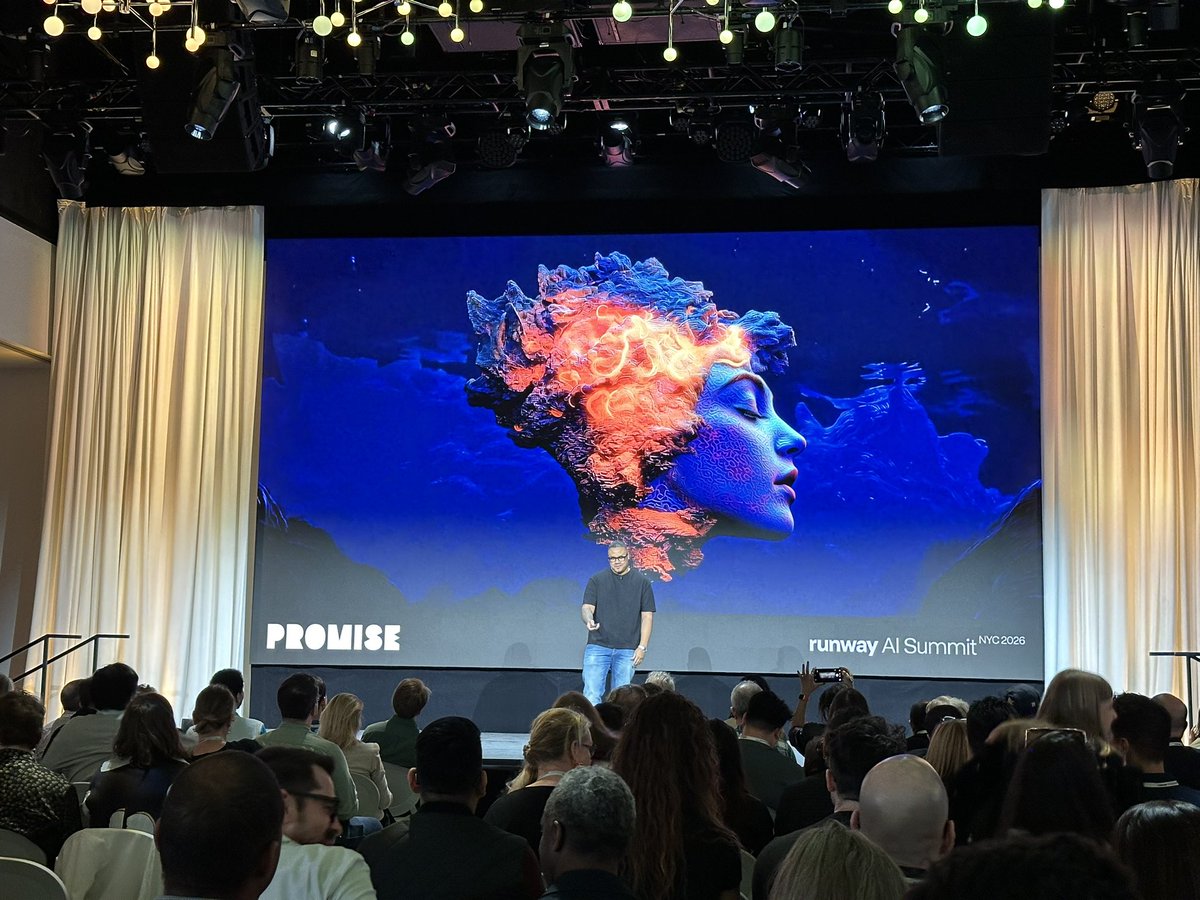
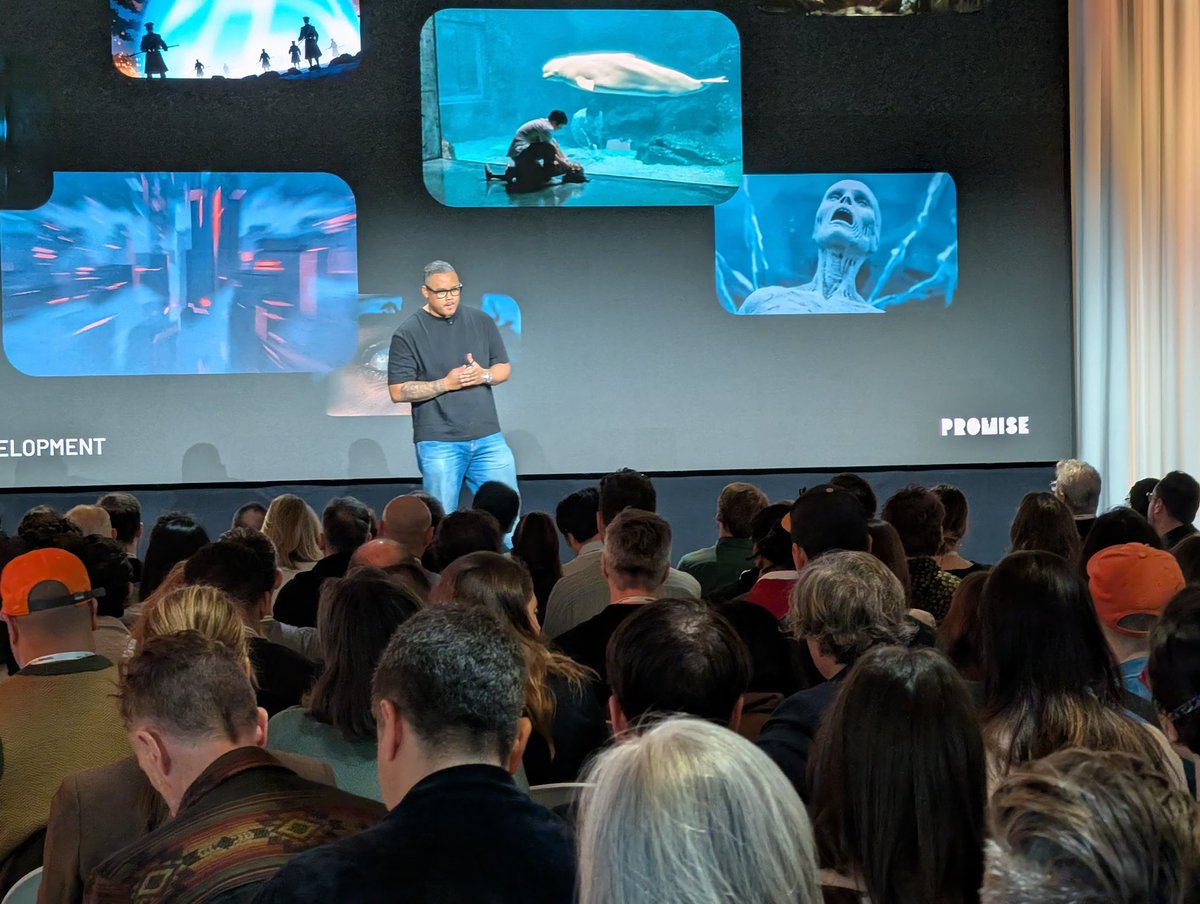
Fresh off of speaking at the Runway AI Summit yesterday in New York. A few thoughts after many fruitful conversations. I don’t come directly from tech. My goal isn’t to be a “tech or AI bro.” I come from film sets, edit bays, and storytelling. I come from film and art school, drawing naked figures for 6 hours a day. After incredible conversations I’d figured I’d share the real state of the union regarding AI and the art and film industry. What’s clear to me is this: AI isn’t waiting to “arrive.” It’s waiting for storytellers and artists bold enough to define it. Both old and emerging. Right now, we’re still in the phase where people are reacting to the tools and to tech demos. Not understanding the complex workflows that are developing to tell stories in new interesting ways. But the real shift happens when creators start bending the tools to their voice. When we are seeing more people who have been crafting stories their whole life start to emerge. That’s when this becomes something bigger than just click-bait content. That’s when it becomes cinema. And I assure you, many of us are doing just that. We need more storytellers in this space. Because without them, it takes longer to move forward in a meaningful way. When people start seeing the real voices and the real stores, it’s all she wrote. Coming sooner than you think.
@GrahamStephan ·
An underrated skill in a post-AI world will be authentic storytelling. People want to connect with people. This has always been true, this is true now, and it will be true in the future. With AI, every person will be able to start a business with a few clicks. But those businesses won’t survive without a brand. And you can't build a brand without a story. I’ve met some fascinating business owners lately. Apart from a great product and an excellent team, they all have a clear story about who they are and how they can help you. I talk about investing. That includes investing in yourself: learning the skills to build something useful, providing value, and actually being able to tell the story of how you do it. When the tech gets easier, your authenticity will be the moat.
@henrydaubrez ·
It’s funny. Last few days, besides the few morons saying I was lying about something I have absolutely no reason to lie about, a lot of you also told me: “Don’t share your process, they’ll rob you blind.” I hear you, and thanks for the concern, but if you’re clinging to workflows right now, you’re clinging to straws. I’m not saying I want to give away everything I spend hours and money figuring out, but the reality is that processes don’t stick. The tech moves too fast. Every project I’ve done so far used different tools, different tricks, different bugs, different approaches. What you learn today has an expiration date, and that’s fine. The one thing I actually trust is what I learned about storytelling this past year by releasing multiple short films. Traditional filmmaking makes it hard to keep producing fast, often, and at decent quality. Working with AI let me fail faster, and learn faster. I also trust my taste. Not because it’s for everyone, but because it’s mine. Between storytelling, taste, and vision, I’m betting that matters more than any workflow that will be obsolete by the time I finish writing this. Why do you think so many people farm engagement or sell “secret workflows”? Because they know those workflows won’t last. The value is in the moment, not in the method. Trust yourself. Your voice lasts longer than your tools.
@TatsukiThomas ·
Simple storytelling framework I used to write my first six-figure sales page: • Introduce yourself • Describe problem • Agitate/share failed solutions • Trigger point to find your own solution • Start researching • Discover solution • First time it gets results • Gets more consistent results • Other people ask for it • Get them results as well • So you turn it into your offer Whether this is for a sales page, VSL or founder ad… Stick this just after the hook + lead. Thank me later.
@tfadell ·
So what do you do when you're stuck with a manager who's hellbent on driving off a cliff, ideally while throwing all their money out the window at some consultants? Or what if you have data but it's inconclusive - nobody can say for sure where it leads? Or what if you need to convince your team to follow you even though you can't prove you're heading in the right direction? You tell a story. Storytelling is how you get people to take a leap of faith to do something new. It's what all our big choices ultimately come down to – believing a story we tell ourselves or that someone else tells us. Creating a believable narrative that everyone else can latch onto is critical to moving forward and making hard choices. It's all that marketing comes down to. It's the heart of sales. And right now you're selling – your vision, your gut, your opinion. So don't just hit them with the classic "This is Jane, this is her life, and this is how her life changes when she uses our product" slide. Helping people see things from the customer's perspective is a critical tool, but it's just part of what you need to do. Your job in this moment is to craft a narrative that convinces leadership that your gut is trustworthy, that you've found all the data that could be gleaned, that you have a track record of good decisions, that you truly understand your customers and their needs and - most importantly- that what you're proposing will have a positive impact on the business. If you tell that story well, if you bring people along with you on that journey, then they will follow your vision, even if there's no hard data to back you up. - #BUILD Chapter 2.2 Data Versus Opinion
@daviefogarty ·
Every founder wants to hire "storytellers" but not many founders (or AI) can explain what brand storytelling actually is. Storytelling at its core comes down to the concept and the execution. The concept is your brand angle. It’s the lifestyle, the values, and the thing that makes you different. AI can suggest things for the concept - but they struggle with originality. It's just a big autocorrect pulling from existing concepts. No chance Chat GPT would come up with the concept behind Red Bull. Only founders can create the concept. You’ve lived the problem and built the solution. And part of brand is finding unique positioning and underserviced markets. The execution is different. That's onboarding influencers to tell your story, creating products that reinforce your message, and building creatives that communicate your angle. Now even AI can help with execution, but only once you know your concept. Ex: If I were launching a supplement brand, AI wouldn't create the brand positioning. That's on me to figure out. But once I know the angle, AI can help me create the creatives, write the scripts, and build content at scale. The problem is that founders skip the concept and jump straight to AI execution. They try to use AI as a replacement for thinking and it waters down their message. The difference is clarity on the concept and only you as a founder can create that.
@ProofofIntern ·
easy way to improve your storytelling on socials: repetition builds memory, but saying the same thing the same way gets boring fast. the trick is to repeat the message in different formats. take your core idea and create a post for each format: 1️⃣ educate - break it down so people learn something new 2️⃣ entertain - make them laugh while still landing the point 3️⃣ inform - share facts, updates, or news that back it up 4️⃣ inspire - show what’s possible when the idea is applied 5️⃣ challenge - flip a common belief and reframe the lesson that’s how you drive the message home without sending your audience to sleep.
@p_millerd ·
these three recent books on my pathless path recs are all pretty similar and are a format i like: personal storytelling sharing of real challenges and failures authentic sharing of others stories (this is hardest to pull off, but you can tell the difference when its filler versus the author actually found the persons ideas or concepts interesting) please more of this kind of book in non-fiction
@game_for_one ·
"Logic doesn’t persuade people. Clarity, storytelling and appealing to self-interest do." - Morgan Housel This industry is probably the most practical demonstration of this. The best tech can go completely unnoticed unless it’s played right. Crypto doesn’t reward building, it rewards narrative. The project that wins isn’t the one with the cleanest architecture. It’s the one that makes you feel like you’re missing out if you’re not in it. This is literally why KOLs exist. The attention layer is the product. Story is most of the game.
@paulfinneyx ·
ran a 1.5hr storytelling masterclass at @NewtonSchoolHQ , pune last saturday world building. arc. POV. taste. a full A24 deep dive. largely based on our new storytelling machinery @sanctuaryparc the students' questions were the best part some of the ideas in that room genuinely inspired me. want to do more of these. niche, deep. dm if your cohort or program could use one
@blwiertz ·
Europe, you have a storytelling problem! The biggest difference between the Bay Area in Europe is not the talent, it certainly is not. And that is a huge relief, I have to say. The biggest difference is the storytelling around venture and the growth stories you see left and right. These are the things that push founders and builders to the next level. Seeing your neighbor add 100mARR in a month makes you uncomfortable, because you're only adding 2mARR. And this is where huge outliers are coming from. If you're serious, you'll need to spend time in the Bay Area, but you don't need to be there all the time or have your team based there. Big shoutout to @Lovable , which is doing an amazing job telling its growth story and inspiring many European builders. This is what we need more of, and ideally, in every ecosystem we have.
@BigBrainBizness ·
Rory Sutherland, Vice Chairman of Ogilvy: "When you create perceptual value, you are creating value." Rory argues that marketing has long been misunderstood, treated as an optional extra rather than a genuine source of worth. He describes the dismissive view of marketing as "the fairy dust on top of the real intrinsic value that resided in a product or service." His response is blunt: "I completely dispute that." For @rorysutherland, worth isn't fixed inside the object itself: "I think we value things according not to what they are but what they mean, and what they mean is context dependent." That meaning, he explains, can be reshaped through storytelling, framing and recontextualization, and the effect is real: "You can absolutely use psychological mechanisms to make things more valuable, more enjoyable, more precious." He then makes a point he admits is "over ambitious": "Perceived value is a very environmentally friendly form of value to create because you can generally create meaning and imbue a product with meaning with a lot less carbon consumption than is necessarily involved in making the product three times bigger or five times faster." His most striking claim is about where breakthroughs actually come from: "If we're looking for breakthrough 10x moonshot improvements, it's actually much easier to find psychological moonshots than technological moonshots." He illustrates this with the train. "Making one ten times faster was possible in the 1820s, but today it's an extraordinarily difficult, even dangerous, engineering problem. Making the journey ten times more enjoyable? That's still doable."
@RichKleinAI ·
The future of storytelling is bright! ✨ It's a wonderful time for creative people. The latest video models are making it possible for more people (regardless of their technical skills) to tell stories. This is a short trailer for a story I'm working on that started with a Midjourney image, which I expanded into a 2x3 storyboard panel using GPT Image-2, then brought to life with Seedance 2 on Runway.
@TechByMarkandey ·
Most conversations around AI still sound like predictions. But something different is already happening, quietly. Stories are being retold, reimagined, and rebuilt with new tools. Over the past year, the focus has been on exploring how technology can deepen culture—not in theory, but in actual creation. The AI Mahabharat, announcement of projects like Historyverse, are all small steps in that direction. This isn’t about replacing storytellers. It’s about giving them new ways to dream faster, deeper, and at a scale our traditions deserve. Some of the most interesting storytelling work today doesn’t happen on film sets; it’s happening in quiet studios powered by technology, where creativity and code quietly meet. The shift isn’t loud. But it’s already underway. (Vijay Subramaniam | Building where technology meets storytelling)
@aaliya_va ·
I have wroked with many founders and observed one thing: Every founder is already carrying a story. good content gives that story a voice. For AI and tech founders, that matters even more. The product may be complex,the market may be noisy,and everyone is using similar language. A strong founder narrative creates clarity. Let me share with you 5 step process I use to manage n grow Founder social media: 1:Define what the founder stands for Before creating content, I identify: >The market belief they hold >The customer problem they understand deeply >The product philosophy behind the company >Their personal and professional proof The goal is simple: Make the founder known for something specific. 2:Build their real voice The best founder content is usually hiding inside the business already. I listen to sales calls, customer conversations, team meetings, voice notes and podcasts. Then I capture the founder’s: >epeated phrases >analogies >strong opinions >storytelling style >Technical explanations >Natural tone I do not try to make them sound like a creator. I make their actual thinking easier to recognise. 3:Find ideas from real work Good ideas rarely come from scrolling social media. They come from customer objections, product decisions, industry shifts, internal debates and things the founder has changed their mind about. Every week, I review competitor content too. And ask the founder: > Do you agree? > What is missing? > What does your experience say? That is how generic market conversations become original founder content. 4:Make each platform do its job LinkedIn is for depth. It is where founders explain ideas, tell stories, share lessons and build trust over time. X is for proximity. It is where founders join relevant conversations, share sharper observations and stay close to their industry in real time. Same narrative. Different expression. 5:Listen after publishing The work does not end when a post goes live. I look at who replies, what questions appear, what language buyers use and whether the content creates meaningful DMs or conversations. The best content system is a loop: Post → listen → learn → improve My job is not simply to manage a founder’s account. It is to help the market understand why that founder is worth listening to. When founder content is done well, it does more than create impressions. It gives the market a clear reason to listen, trust and eventually buy.
@adriansolarzz ·
the best ads don't feel like ads they feel like stories that happen to mention a product "let me tell you about this amazing product" triggers ad detection. defense shields up. looking for reasons to scroll "okay so the craziest thing happened last week" triggers story mode. you want to know what happened. no defense shields the structure: open with relatable struggle build the pain introduce solution as discovery not pitch show transformation through story end with casual recommendation not cta "i tried everything. spent hundreds. nothing worked. then my friend mentioned this app. skeptical but tried it anyway. three weeks later i can't believe the difference" the viewer watched 45 seconds doesn't feel sold to. feels like advice from friend. absorbed every benefit through narrative ai ugc is perfect for this test 50 different personal narratives. same product different stories. find which resonates with which segment the pitch that doesn't feel like a pitch converts 3-4x better stop selling. start storytelling your product is just a plot point - adrian
@0xAndros ·
Everyone talks about storytelling as being essential in the AI age. But how do you tell a good story? @lulumeservey breaks this down into 3 simple points: 1. What are you even doing? Half of startups can't simply convey that 2. What do you represent? What is the upshot if you succeed? 3. What is the societal change you're creating? E.g. for Space X: Level 1: "We're building a rocket." Level 2: "We're restoring American spaceflight from the private sector: reviving an industry that's been stagnant for decades." Level 3: "We're restoring spaceflight from America, humanity's last best hope, because we need to make mankind an interplanetary species." Now you're not just building a thing. You're leading a movement. Generational companies operate at Level 3: and every employee, investor, and customer can feel it.
@ishverduzco ·
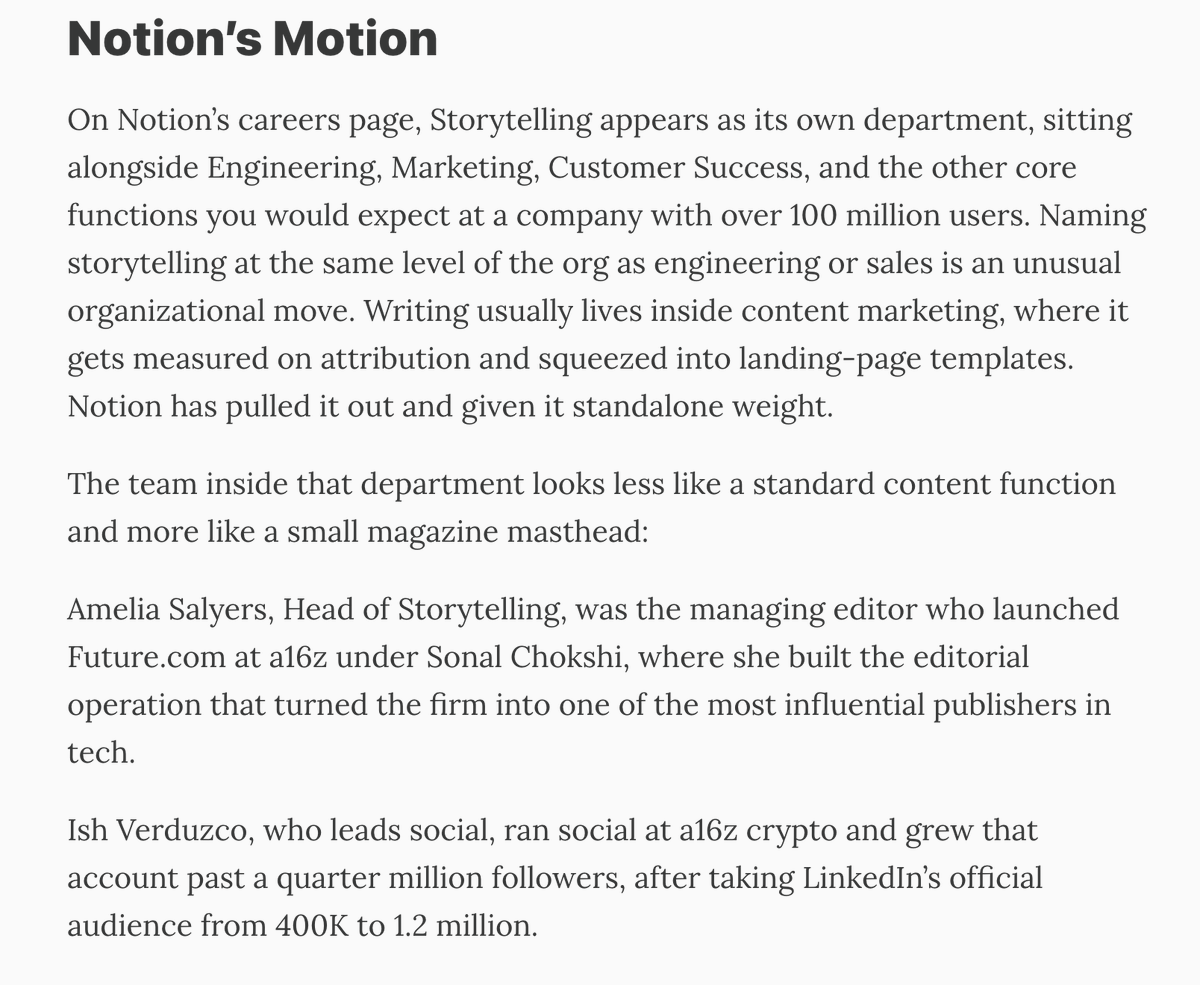
Notion's Storytelling Team got a nice lil shoutout in @stephenmruiz's recent post. My favorite section: "For a long time, the center of gravity in software was technical. Product, engineering, and research created the value, and editorial work lived closer to the edges, brought in to explain what had already been built. That arrangement is breaking down. As more software starts to look and feel the same, storytelling has taken on a different job: helping people understand a market that moves faster than they can track, naming what each company actually does, and clarifying where the category is heading. The shorter way to put it is that narrative is becoming how a company turns capability into conviction. The product still has to be true. The story is what makes the truth legible, memorable, and credible in a market where most things look the same on a spec sheet."
@SecretCFO ·
When I was a Baby CFO, I left a whole bunch of people confused after an all-hands meeting. We'd had a mediocre quarter, but in the context of a strong year. The message I was trying to land was that we needed to avoid complacency to stay on track. But by failing to give the broader context (and focusing too hard on the quarter), people took away the message that we were doing badly. And it confused them, because they thought we were doing well. It taught me the importance of thinking about stories in different narrative arcs. Much like a TV show. The original pitch for Breaking Bad was just six words: "What if Mr Chips became Scarface?" But along the way there were all manner of twists and turns, some plots anchored to an entire series, others to a single episode in isolation. (Remember "The Fly"?) CFOs need to think about storytelling the same way. Except our stories have the added complexity of different stakeholders. In today's edition of The Secret CFO's Playbook, we dive into structuring stories for different finance audiences (investors, lenders, employees, etc) across different timeframes, all built on the same core facts. We aren't fiction tellers, after all... To read the Playbook, click the link in the comments.
@heyDhavall ·
AI video is slowly moving beyond demos and cinematic clips. What's more interesting is seeing creators use it to tell longer, character-driven stories. Episode 2 of *My Uncle Don Quixote* continues the journey of an immigrant kid and his uncle trying to build a life in New York. The series is AI-made, but the conversation it raises is bigger than the technology itself. We're starting to see AI become a real tool for long-form storytelling, not just visual experiments. #AI #AIGC #AIDrama
@wizofecom ·
One of the most tragic things you can do as a founder, especially if you’re a greater storyteller, is not share those stories online for other entrepreneurs. Founder-marketing is all about storytelling. I know an exceptional founder who does multiple 8 figures a year, but his posts used to get 2 likes because all he was sharing was technical value of how to use his SaaS, product tips, and feature reveals. I did a call with him, he told me about conversations he had with his billionaire investors, stories about founders with the fastest-growing companies in the world, and how his business almost went under. I told him to talk about them all the same way we were chatting on the call and it was one of the best decisions he's ever made. Now successful founders ask him for advice constantly, his SaaS has a new sign-up channel, and growth on his personal brand has been in the green month over month. Your stories ARE your authority.
@heyDhavall ·
AI movies usually try to impress you with visuals. This one actually tells a story. My Uncle Don Quixote is an AI drama adapted from a popular Chinese web novel, following a young immigrant who moves to New York to live with the uncle he believes is wealthy... only to discover reality is very different. What surprised me most wasn't that it was AI-generated. It's that the production team says they made the entire series for roughly what a typical Hollywood production spends on just one minute of film. If AI can deliver long-form storytelling at this cost and quality, we're entering a very different era for filmmaking. Worth watching the first episode just to see where AI storytelling is heading. #ai #aidrama #aigc
@allisonbraley ·
The medium is not the message. For a long time in tech, it felt like we were getting this wrong. We got so excited about better targeting on social and other platforms that we lost sight of what matters. Even the argument about going direct vs. working with press is a sideshow. You can't run either of those strategies well without a good story. Everyone thinks their story is good. That's the hard part. When we work tirelessly on something day after day, we lose sight of the bigger picture. No one cares as much about our thing as we do. But the focus on telling great stories again is giving me a sense of hope that this is changing. The hard part is that none of this is one-size-fits-all. There's no one playbook that is going to help you win. You have to figure out what works for YOUR story, YOUR audience... that is going to look different than the company you hold in your mind's eye as the blueprint. You can't just look at [HOT STARTUP] and tell your marketing team to "go do that." It won't work. It will also involve some trial and error. That's the only constant. Experiments are the name of the game. Coming up with your narrative requires a ton of inputs, but the biggest one is the founder's voice and vision. After that, you have to factor in audience's POV, competitive landscape, tone & voice, design language, what's already happening in the conversation around your space... This is not a simple process. If you try to oversimplify it, you will generate junk. All this to say -- keep talking about taste and storytelling! This is a great step forward. But don't underestimate the work and time required. It's very real.
@austin__mich ·
I used to think storytelling in marketing was just cute. Then a client proved me painfully wrong. A while back, I pitched a client on a simple campaign. Clean copy, clear CTA, logical benefits, you know, the usual. I was expecting the “This is great!” email. Instead, I got: “Hmm, feels flat.” I stared at the screen like, Flat? Me? Never. Then the client said something that stung a little: “Tell me why you created this. Tell me a story.” That was when it hit me that I had sold the features, the logic, the neat structure but I didn’t sell the emotion. I hadn’t spoken to the limbic brain. The part that actually decides. So I rewrote everything. Added a real story behind the product, showed the transformation, painted the “imagine this” picture. That version doubled their conversions in one week. What I learned from that experience is simple but humbling and I'll share it with you. ● People buy the feeling and justify it with the facts. ● If you don’t speak to emotions, logic won’t save you. ● Storytelling is not decoration, it’s the doorway to decision-making. And if you want to get more clients? Talk to the human, not the robot in their head. Follow for more easy, real-world marketing lessons.
@parkerworth ·
One of the most underrated business-building strategies: Subliminal Storytelling. Wrigley’s Gum used it to dominate their market and save themselves from bankruptcy. Here’s a commercial breakdown to teach you storytelling (and hack your customer’s minds): Gum is a 13.76 billion dollar market. And it was used as social currency. How? Having pieces of gum to share with classmates created connections. But as competition grew these tactics no longer made the gum stand out. Extra had to act fast (and fight 3 things): •Saturated Market/Competition •Connecting their business to their customers •Getting customers without relying on long-lasting flavor How did Extra do it? Storytelling. Why are stories so important? 95% of Gum purchases are made unconsciously. If you want to read your customer’s minds… You have to throw away logic. Extra told a story where buying gum - was an experience. A story that created emotion: Extra had a 2-second window to tap into for buyers to purchase. They doubled down on the "social sharing aspect" Extra found a way to tap into human emotions. By using a story to bridge the gap between Extra and the customer: One commercial changed everything 2015: Extra launched a commercial featuring 2 people. Sarah & Juan A high school couple meets at a locker when Sarah drops her books. Juan helps her and as a thank you, She offers him gum. . . As the story progresses Juan and Sarah share: •Arguments •First Kisses •Falling in love •Leaving each other Then Sarah is in an office You realize they aren't in school anymore. This is real life. The common point between each life stage is sharing Extra Gum. The scene shifts: Sarah is at an art gallery The mysterious environment shift grabs your attention. •Where is she? •Why is she there? •What happened to Juan? Sarah looks around. The frames have gum wrappers with sketches of each of the life moments shared in the commercial. She stares: Sarah stops at the last frame. It's a picture of a stick figure proposing to a girl. She turns around and Juan is there on one knee, proposing to her. The video flashes back through all of their life experiences together. The one connection between every moment? Extra gum. This commercial was viewed 100s of millions of times. Why did it work? It focused on relatable experiences: •High School •The first kiss •Getting married •Leaving for school/work If you want to appeal to your customers, focus on emotion. Not logic.
@ChinosmithJesse ·
There is a storytelling principle that feels almost illegal to know. Because it was weaponised by one of the most brutal dictators in human history... Adolf Hitler. Now, put the dark history aside for a second and look purely at the raw psychology of mass influence. The principle is simple: Emotion First, Logic Later. Most marketers, coaches, and copywriters have this completely backward. They try to chunk down the logic before the prospect has even accepted the frame. They lead with features. They lead with their unique mechanism. They try to appeal to the rational brain to prove why their offer is superior. The mind’s belief system has a firewall. When you pitch logic to a cold prospect, that firewall goes up instantly. Their reality rejects your claim because it exceeds their current threshold of believability. It enters the realm of maybe possible but falls completely short of attainable for me. Emotion bypasses the firewall completely. When you make someone feel a profound sense of anger, injustice, hope, or belonging... you immediately shift their state. You take them out of the realm of critical thinking and drop them into a completely new reality. Once the emotion is anchored, the logical brain will do whatever it takes to justify that emotion. The logic doesn't create the belief. The logic merely validates the emotion they are already feeling. Hitler knew this. He didn't rise to power by presenting logical spreadsheets about the German economy. He rose to power by chunking up to the highest emotional drivers. He channeled the collective anger, humiliation, and desperation of a broken post-war nation... and only then gave them a twisted logical framework (a scapegoat and a plan) to justify those feelings. He hijacked their reality by controlling their state. When you understand how to use this ethically, your copy and your content change forever. You stop trying to convince people to buy. Instead, you build a frame of emotional resonance that is so strong, their own mind convinces them to buy. You chunk up to the highest emotional driver first. You speak to the symptom that keeps them awake at night. You make them feel completely understood. Only then do you chunk down. Only then do you introduce your logical vehicle, that gives their brain permission to take action. Behavior is driven by emotion. Justification is driven by logic. Flip the order, and you lose the sale. Nail the sequence, and you can shift their reality.

@austin__mich ·
B2B businesses aren’t struggling because their product is bad, they’re struggling because their marketing is boring. Yeah, I said it. For years, we’ve treated B2B and B2C like they’re two planets in different galaxies. B2C gets the fun, storytelling, and emotions. B2B gets charts, metrics, and enough spreadsheets to make your eyes water. And the funny part is everyone thinks this is the “serious” way to grow. But the problem is, that strategy doesn’t really work anymore. Actually, if we’re being honest, it never really worked. People make decisions emotionally and justify them logically even in boardrooms, so when your marketing sounds like a 20 pages technical manual, customers simply don’t care. The moment I realized this, I stopped leading with facts and started leading with stories. Not made up stories, relatable, human ones that actually make people feel something. Look at FedEx. They could’ve bragged about their 100% overnight delivery rate and it'd be true but instead, they said: “When it absolutely, positively has to be there overnight.” What that tag did is it sparked an instant emotional connection. Because buyers may not remember the metric but they remember the panic of their package that arrived late when they used a different logistics company. And now, here is a company telling them their package will start coming in absolutely and positively. They were reminded of their past trauma and provided an immediate solution. What do you think they'll do the next time they need to send or receive a package? Exactly!! That is marketing gold. Lead with emotion instead and back it with logic. Tell the story your customer actually wants to hear.
@MrIPalomera ·
Everyone in corporate America suddenly wants a 'storyteller' and forget that it is a severe distribution crisis. I have watched this happen up close over the last few years while working with founders and exec teams who quietly realized that earned media no longer works the way it used to. In the 2000s, the U.S. had roughly 66,000 journalists and today it is closer to 49,000. Print circulation is down around 70% since 2005 & traffic to the largest newspaper sites is down more than 40% in just four years. When that pipe collapses, companies do not become poets but they become publishers out of necessity. So now Google, Microsoft, Notion, and fintech startups are all hiring “storytellers” and paying them up to $250k a year, not because they love narrative, but because they cannot rely on anyone else to explain what they do. The first order effect is obvious: brands control the message. The second order effect is more subtle: hen everyone runs their own newsroom, marketing and truth start sharing the same keyboard. I have seen the best operators handle this well where they hire so called 'storytellers' to translate real work. If your product, numbers and decisions cannot survive a spreadsheet, no amount of storytelling will save you. Build something real, then tell the story without lying to yourself.
Best Tweets by Topic