Muse model releases and performance
Muse Spark, Muse Image and related model launches, upgrades, benchmarks, multimodal abilities and comparisons with rivals.
34%
Best tweets about Meta AI
Explore the best tweets about Meta AI, covering its assistant, product integrations, model research, launches, adoption, privacy, and business strategy.
Meta AI products, assistant features, research, product integrations, launches, user experience, safety, and company strategy.
Original Xholic analysis
Muse releases anchor this conversation, with assistant upgrades, developer access and cross-app distribution reinforcing Meta’s product ambitions. Enthusiasm about vision and agentic features coexists with doubts about retention, consent and monetization. Supplied analytics show higher median scores for announcement posts than opinion posts, without establishing why.
40% of posts
All-time engagement
70% of posts
Published in 90 days
Conversation map
Muse Spark, Muse Image and related model launches, upgrades, benchmarks, multimodal abilities and comparisons with rivals.
34%
Thinking and Contemplate modes, parallel agents, connected tasks, shopping research and plans for personalized assistants.
22%
User growth, retention, app rankings and Meta’s ability to distribute AI through its existing audience.
22%
The Meta Model API, coding tools, locally run models, enterprise services and access for third-party AI tools.
20%
Meta AI across its app and website, WhatsApp, Instagram, Facebook and Messenger, including AI-powered search and support.
18%
Business Agent, customer-service and sales automation, ad-creation connectors and AI-driven ad targeting.
12%
Research into self-improving agents, learned computer interfaces and training agents to operate software.
10%
Meta AI experiences on Ray-Ban glasses and plans for new glasses, pendants and workplace wearables.
10%
Tone and stance
Performance benchmark
Posts with media make up 72% of this collection. Their median all-time score is 6.21, compared with 7.16 for text-only posts.
Format mix
Consensus and debate
Shared view
Launch announcements connect Muse Spark 1.1 to Thinking mode and the new Meta Model API, while Muse Image adds image generation. These posts frame model releases as upgrades to both consumer and developer products.
Shared view
Official rollout plans span Meta’s apps and AI glasses. Independent commentary also identifies the existing audience and free access as competitive advantages, even where the same commentators question growth tactics.
Shared view
Posts describe parallel-agent Contemplate mode and connections to Gmail and Google Calendar. A hands-on account finds the parallel-agent interface appealing, but these reports do not establish task reliability.
Open debate
An account relaying Zuckerberg’s remarks emphasizes broad monthly usage; Deedy questions whether app growth is organic and cites weak retention. These address different adoption measures, so reach alone cannot resolve the dispute.
Open debate
A privacy integration announcement sits alongside criticism of unsolicited Instagram notifications and reporting that public accounts were opted into an image feature by default. Privacy commitments and specific consent concerns remain distinct issues.
Open debate
Reporting presents the model API as a business Meta considers meaningful. Hedgie instead questions subscription economics and the value and risks of customer-facing business agents; those critiques are commentary, not demonstrated outcomes.
What performs
Announcements account for 70% of the sample and have a median all-time score of 10.288, versus 4.43 for opinion. Muse launch posts are prominent examples; the comparison does not establish a format-driven effect.
Supplied theme medians are 11.828 for research architectures and 10.403 for Muse releases, compared with 2.5 for agentic assistant features and 2.185 for wearables. This is a score comparison, not a measure of product demand.
The supplied benchmark analytics identify the Spark 1.1 launch post as a 417.03× median outlier and the accompanying announcement as 67.12×. These exceptional scores should not be treated as typical conversation performance.
Statistical standouts
Creator landscape
The five most represented creators account for 20% of the selected posts.
1. Deedy
@deedydas
2 posts
2. Glenn Gabe
@glenngabe
2 posts
3. Hedgie
@HedgieMarkets
2 posts
4. Mark Kretschmann
@mark_k
2 posts
5. Meta Newsroom
@MetaNewsroom
2 posts
6. Natalie Lung
@natlungfy
2 posts
Meta Newsroom’s two posts cover model distribution and support integration; its supplied median all-time score is 94.09. The account contributes a product-rollout perspective rather than independent validation.
Deedy’s two posts pair praise for vision and free access with criticism of growth tactics and retention. The supplied creator median is 28.3; the posts offer a mixed assessment rather than straightforward endorsement.
Since the previous snapshot
Themes, sentiment, stance, and post format are classified per tweet. All counts, shares, medians, creator concentration, freshness, and performance comparisons are then calculated directly from the published snapshot.
Xholic's all-time score compares engagement while accounting for reach, post age, and creator consistency. It is used for relative comparisons within this collection.
This report analyzes the exact 50-post snapshot shown below. AI identifies editorial categories and drafts explanations; all statistics are calculated from the snapshot, and every narrative claim is checked against cited posts before publication.
Best Meta AI tweets
Ranked 01–50

@finkd ·
(1) Today we're releasing Muse Spark 1.1 -- a strong agentic and coding model at a very low price. It's available through our new Meta Model API and in Meta AI.

@AIatMeta ·
We’re excited to introduce Muse Spark 1.1, a significant upgrade from the first Muse Spark model we released earlier this year. Along with this release, we are launching a public preview of the new Meta Model API where developers can access Muse Spark 1.1. The model is also available now in "Thinking" mode in the Meta AI app and on https://t.co/wHkMPH82ZH. Learn more: https://t.co/zGcA3XaWpN

@alexandr_wang ·
1/ releasing muse image today — the first image generation model from MSL. it's agentic: pairs with muse spark to reason through your prompt, search the web, and plan before it generates. people get what they meant on the first try. live now in the Meta AI app.



@MetaNewsroom ·
Today we’re introducing Muse Spark, our most powerful model yet, giving you a faster and smarter Meta AI. Muse Spark currently powers the Meta AI app and website and will be rolling out to @whatsapp, @Instagram, @facebook, @messenger, and AI glasses in the coming weeks. https://t.co/WHTipuuAmj

@alex_prompter ·
🚨 BREAKING: Meta AI just published a paper that redefines what “self-improving AI” means. It’s called Hyperagents, and it solves a fundamental limitation that every prior self-improving system couldn’t get past. The problem with current self-improving AI: → Systems like the Darwin Gödel Machine (DGM) can generate better versions of themselves over time → But they only work in coding, where the improvement task and the target task share the same domain → Outside coding, the self-improvement process stays fixed and handcrafted → The system gets better at tasks but never gets better at getting better What Hyperagents actually does: → Combines a task agent (solves the problem) and a meta agent (modifies both itself and the task agent) into one editable program → The modification process itself is editable, creating what the researchers call “metacognitive self-modification” → The agent doesn’t just learn to perform better. It learns to improve at improving → This works on any computable task, not just coding The results across four domains (coding, paper review, robotics reward design, Olympiad-level math grading): → Continuous performance improvements over time in every domain tested → Outperforms baselines without self-improvement or open-ended exploration → Outperforms prior self-improving systems including the original DGM → Meta-level improvements (persistent memory, performance tracking) transfer across domains and accumulate across runs That last point is the one most people will overlook. The improvements to the improvement process don’t just help in one domain. They carry over. The system builds compounding infrastructure for getting smarter, regardless of the task. This is the architectural difference between an AI that gets incrementally better at one thing and an AI that builds the scaffolding to accelerate its own progress everywhere. Meta’s team (Jenny Zhang, Bingchen Zhao, Wannan Yang, Jakob Foerster, Jeff Clune, and others) essentially removed the ceiling that kept self-improving systems domain-locked.


@testingcatalog ·
BREAKING 🚨: Meta is testing loads of Avocado variants internally, including multiple release candidates, Avocado-mango agent, Avocado 9B, and more. Avocado Think Hard performs quite well and, as reported earlier, is comparable to Gemini 3 level models. All this in parallel to Gemini A/B testing on Meta AI.


@borrowed_ideas ·
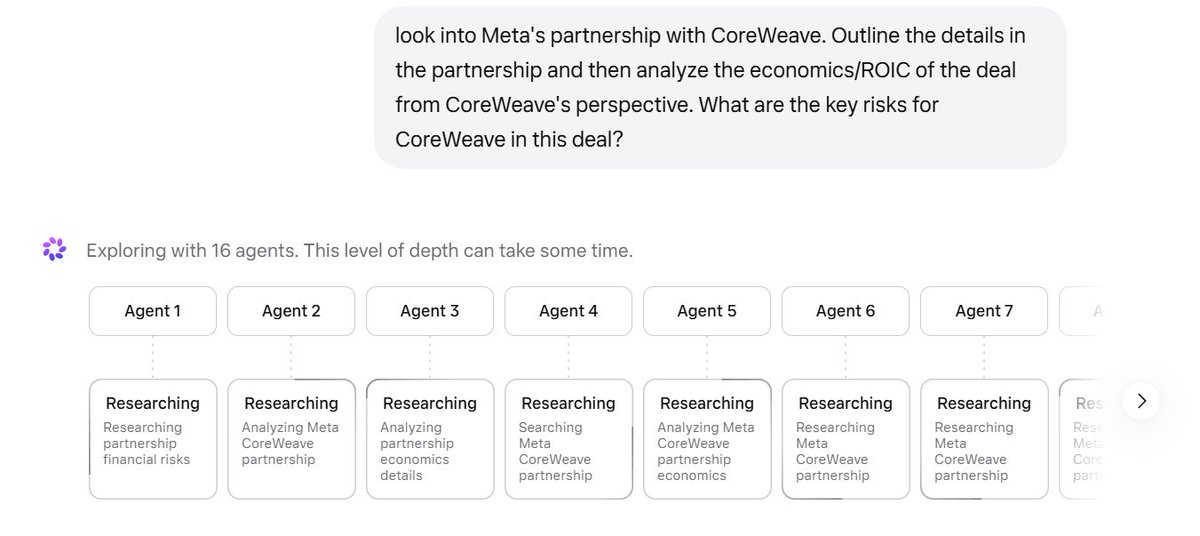
Not usually a Meta AI user, but wanted to give them a shot after the latest model release (it's free anyway). So I installed the app on my desktop, and noticed "contemplating" mode (didn't see that on the mobile app btw). When I asked a question, 16 agents simultaneously started working on the question which looks pretty cool!


@alexeheath ·
Meta AI chief @alexandr_wang told me the company sees its new API for selling AI models as a real business, not just a learning exercise. Tokens are “gigantic and growing very, very quickly,” he told me, and capturing even a slice of that “can be a very meaningful business even for Meta at our scale.” https://t.co/v9H2ANuXUk

@HedgieMarkets ·
🦔Meta launched paid subscriptions for Instagram, Facebook, and WhatsApp globally on Wednesday, plus separate AI plans starting at $7.99 a month and creator plans at $14.99 and $49.99. Instagram Plus and Facebook Plus cost $3.99 monthly. WhatsApp Plus costs $2.99. The features include story insights, profile customization, super reactions, and the ability to extend stories beyond 24 hours. The new "Meta One Premium" plan at $19.99 a month unlocks more compute for AI queries, deeper reasoning, and more video and image generation. Meta's existing ad business generated roughly $165 billion last year, so the subscription play is not about revenue replacement. The AI tier rolls out first in Singapore, Guatemala, and Bolivia. My Take Meta saturated the global market years ago and has run out of new users to acquire. The subscription announcement reads as what happens when an ad business reaches the end of its growth runway and the company needs a second revenue line to justify the AI capex spend to investors. Meta committed $60 to $80 billion in 2026 capex, mostly on AI infrastructure, and the ad business alone cannot grow fast enough to absorb that spend at current margins. Subscriptions add a recurring revenue line the equity analysts can model, even if the absolute numbers stay small for years. Pay attention to the AI tier specifically. Meta is following OpenAI, Anthropic, and Google in metering compute access by subscription level, which means the same token economics pressure that broke Microsoft's internal Claude Code rollout and forced Google AI Pro to strip credits from subscribers is now showing up in Meta's pricing. Free users still get Meta AI, but at lower compute. Premium users get "thinking mode" and more video generation. The first markets for the AI plans are Singapore, Guatemala, and Bolivia, which is Meta testing how much consumers will pay for AI access in markets where the alternative is no AI access at all, before pricing the US tier where users can switch to ChatGPT for the same monthly fee. Hedgie🤗


@deedydas ·
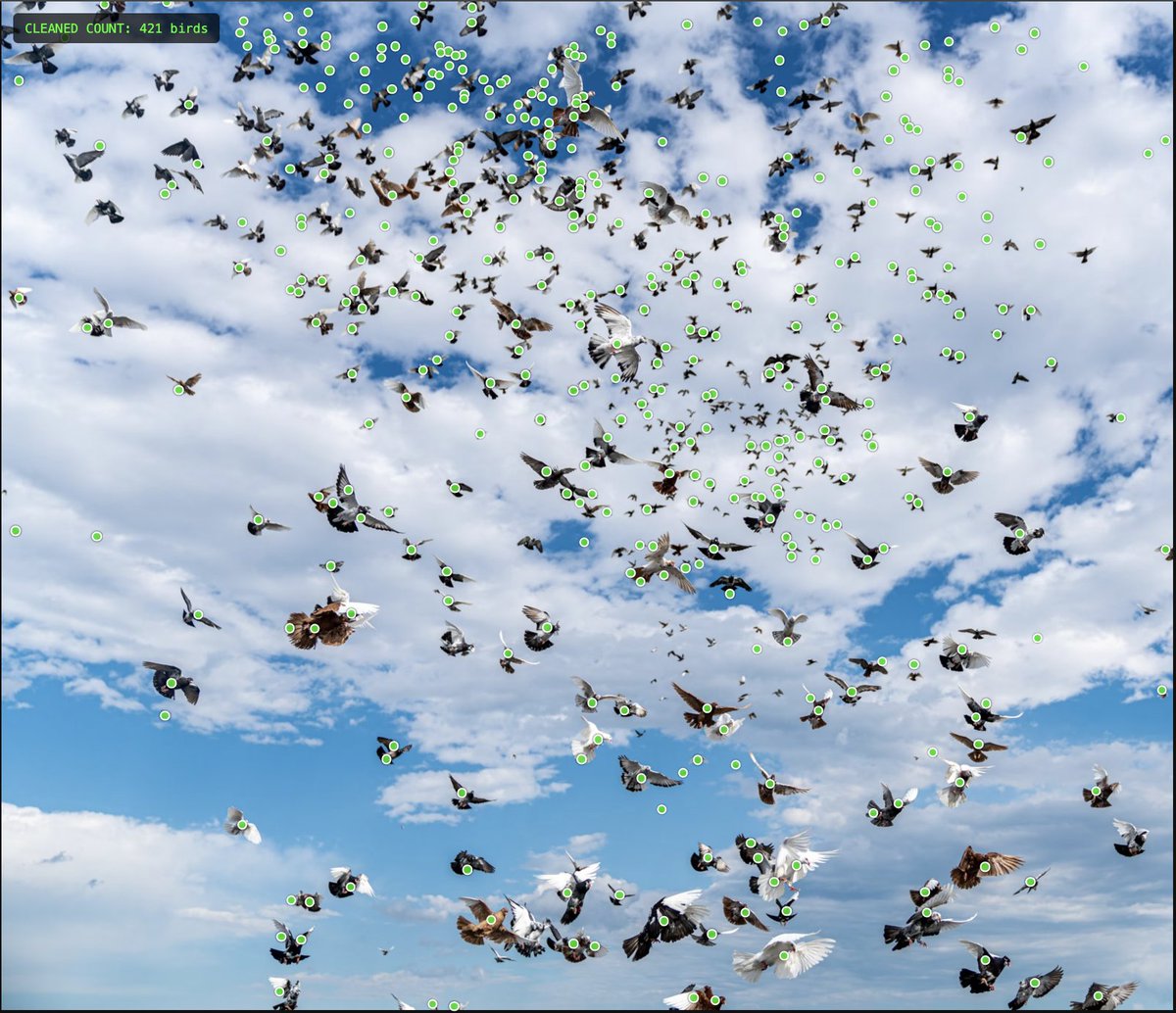
The coolest thing Meta AI's Muse Spark can do by far is counting objects! As you can tell, it's far from perfect. They call it "visual grounding" and it can count objects and do bounding boxes. I've been playing with the new model and here's what I think so far: Good stuff: – Incredible at vision. It's ability to read text in images is the best I've seen. – Really high quality at web design. It's the only model I've seen that uses Unsplash, OpenLibrary and other images by default. – It's free! You don't pay to use Muse Spark Thinking. Bad stuff: – Meta's classic playbook of growth tactics are dodgy. They're sending Instagram notifs to people's friends without their consent. Their app ranking jump is not organic. – Reasoning itself is pretty solid but not best in class. It can do pretty advanced math and science problems. The long term threat here is Meta has distribution and has the ability to give their model away for free, which makes them a formidable threat to the big AI labs, particularly in consumer.
@deedydas ·
Meta AI has shockingly grown 2.5x in the last 2mos and is poised to be the #3 AI consumer app in the world behind Gemini and ChatGPT. Sadly, this growth is very likely inorganic given it has by far the worst retention by a mile: only 4.5% users stay in 30 days.


@realBigBrainAI ·
Mark Zuckerberg, CEO of Meta, on why the AI bubble question matters less than everyone assumes: Zuckerberg starts by conceding the part almost nobody argues about anymore: "I think most people at this point view that AI is going to transform pretty much every category of product and every part of the economy and all that. The big question is to what extent are we in a bubble versus to what extent is this gonna be a big thing soon?" Then he does something unusual for someone spending 65 to 70 billion dollars a year in capex. He takes the bubble scenario and shrugs at it: "Even if it is a bubble and it takes a bit longer to build out, that's not necessarily the end of the world. Although it will be expensive for certain people." Pressed on that spending, he doesn't dispute the exposure. He just narrows the debate down to timing: "Is this going to be a kind of five to 10 year thing? And in some ways it probably will to get built into every enterprise workflow and things like that." And that's where his own evidence cuts against the slow scenario: "The more that we work on this, it actually seems like all the things that we think are going to happen happen sooner, and being even more ambitious has been more predictive over the last few years about where things are likely going to be in the industry." The proof @finkd offers is his own track record of being wrong in one direction. Meta AI is "right about a billion people monthly active using it across our apps." And the goals that got them there kept turning out to be too small: "We keep on setting these goals for what do we think is going to be the most used AI? What do we need to do? And we keep on passing them, and then others in the industry keep on passing their goals too. And then we're like, ah, we should have had even higher goals." Note what that implies. Others in the industry keep passing their targets too. The people with the most information and the most money at risk keep underestimating the thing they're building, then correcting upward. The clearest place he sees it is advertising, and what he calls business agents. There are "two basic versions of this," and the first is already underway: the ad system itself is dissolving. "It used to basically be if you wanted to run ads, you had to come up with your own creative and you had to come up with who you wanted to reach. You had to kind of have a sense of who your customers were and do a lot of your own measurement. And over time, we've just automated more and more of this." The endpoint removes the advertiser from nearly every step: "The basic end goal here is any business can come to us, say what their objective is. I want to get new customers to do this thing. I want to sell these things. Tell us how much they're willing to pay to achieve those results. Connect their bank account, and then we just deliver as many results as we can." No creative. No targeting. No measurement. An objective, a price, and a bank account. His own summary of the pace: "It's all just happening very quickly."
 Watch video
@HedgieMarkets ·
🦔Meta just launched Business Agent, an AI that handles customer questions, product recommendations, appointment booking, lead qualification, and sales on WhatsApp, Messenger, and Instagram. Over a million businesses already use it. It's free to start, with paid subscriptions coming. The Information reports Meta plans to charge up to $200 a month for its planned "Hatch" AI agent. A basic website with a contact form has done most of this for a decade. My Take Meta cut 2,212 people from Menlo Park. Its AI support chatbot spent months giving away Instagram accounts to anyone who asked politely. And now the company wants small businesses to pay $200 a month to let a Meta AI agent talk to their customers unsupervised. The same week Microsoft's internal strategy doc said step one is "make people addicted," Meta is running the business version of the same play. Get a million businesses on the free tier, let them restructure around the tool, then flip on the subscription. This reads like a 2015 Zendesk demo with "AI" stapled to it. Businesses have automated customer Q&A, appointment booking, and product recommendations for years with simple chatbots and web forms that cost a fraction of $200 a month and don't carry the risk of an LLM going off script with a paying customer. Meta needs this to work because the ad business that funds everything just lost the engineers who built it, and the AI spending has to produce revenue somewhere. Right now that somewhere appears to be small business owners who don't have the context to evaluate what they're actually getting. Hedgie🤗


@kimmonismus ·
Meta is building an agentic tools for its more than 3bn users, according to people familiar with the matter, including an advanced digital assistant which will be powered by its new Muse Spark AI model. >Another insider said the goal was to develop a product similar to OpenClaw Via FT

@MetaNewsroom ·
Today we’re rolling out the Meta AI support assistant on @instagram and @facebook, and more advanced AI systems for content enforcement on our apps to make them work better for you. https://t.co/GlNORlIlPh

@moxie ·
Confer's privacy technology is coming to Meta AI. We're integrating private AI and end-to-end encryption into Meta's products: https://t.co/v6arAZLQCA

@Polymarket ·
JUST IN: Indie developers report a massive surge in Meta AI scraping on their sites, with some saying it has overloaded their servers.

@neilpatel ·
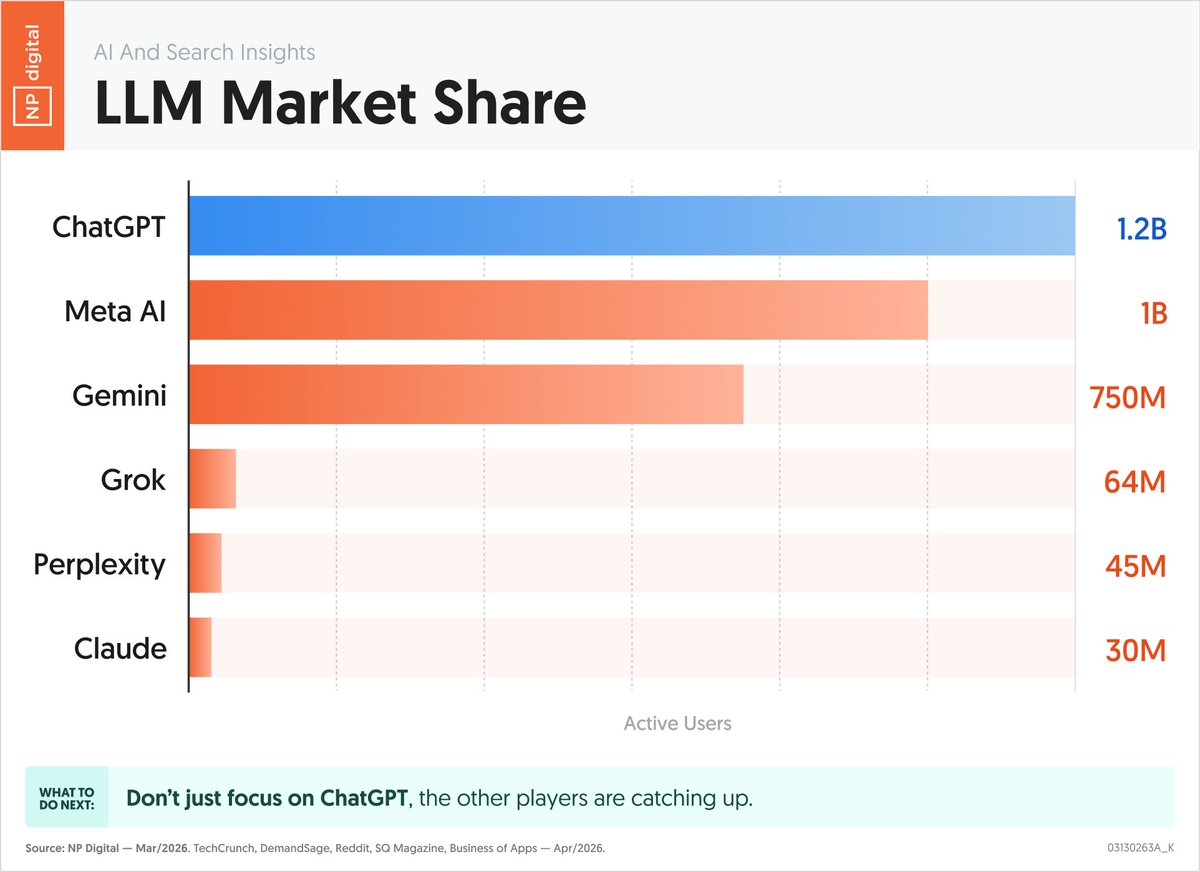
Everyone talks about ChatGPT because it has the most monthly active users, but no one really talks about Meta AI. Just check out the most popular LLMs by active users. Meta is really close behind ChatGPT. And Gemini is growing fast. Of course, not all users use each platform in the same way, but Meta and Google have such large user bases that it's easy for them to direct a portion of their traffic to whatever they want. Don't just optimize for ChatGPT.

@aakashgupta ·
Meta went from App Store #57 to #5 in four days after launching Muse Spark. The way they did it tells you everything about what the model actually is. When you download the Meta AI app, Instagram sends notifications to your friends telling them you're using it. No opt-in prompt. No toggle. Your friends get a notification as prominent as a new follower, and suddenly everyone in your social graph knows you're chatting with an AI. One TechCrunch writer called it a personal humiliation. Meta calls it a feature. The model itself jumped from a score of 18 (Llama 4 Maverick) to 52 on the Artificial Analysis Intelligence Index. That's a real leap. Nine months ago Meta paid $14.3B for a 49% stake in Scale AI and brought in Alexandr Wang as chief AI officer. He rebuilt the AI stack from scratch. The result is a model that's competitive with Gemini 3.1 Pro and GPT-5.4 on selected benchmarks and legitimately strong on vision tasks. But here's the part that matters: Muse Spark is Meta's first closed-source model. After years of open-sourcing Llama, they locked this one inside the Meta ecosystem. You need a Facebook or Instagram login to use it. Your conversations can inform ad targeting. Someone discusses menstrual health with the chatbot and then sees period product ads on Instagram. Meta's spending $115-135 billion on AI capex this year. They're not building a chatbot competitor. They're building the world's most sophisticated ad targeting input device, and they're distributing it for free to 3 billion monthly users who already have Meta accounts. OpenAI and Anthropic charge for their best models. Meta gives theirs away because the product was never the model. The product is the data you feed it, and they already own the pipes.


@AlphaSignalAI ·
The day AI replaces the computer wasn't supposed to come this fast. Right now, AI uses computers as tools. This paper asks a different question: What if AI became the computer itself? Neural Computer is a new paper from Meta AI. It proposes a machine where computation, memory, and I/O all live inside a single learned model. No traditional software stack. No explicit programs. The model is the runtime. They trained video models to simulate terminal and desktop environments from raw screen recordings. With just 1,100 hours of terminal data, the model learned to render cursors, execute simple commands, and echo outputs correctly. GUI results go further: 1. Clicks trigger real interface changes 2. Typing updates text fields accurately 3. Hover states respond correctly 4. Window transitions stay coherent The gap is still massive. Two-digit math breaks it. Long reasoning fails. But the direction is clear. Instead of installing software, you would install capabilities directly into the model. Instead of writing code, demonstrations and interactions become the programming language.
 Watch video
@mark_k ·
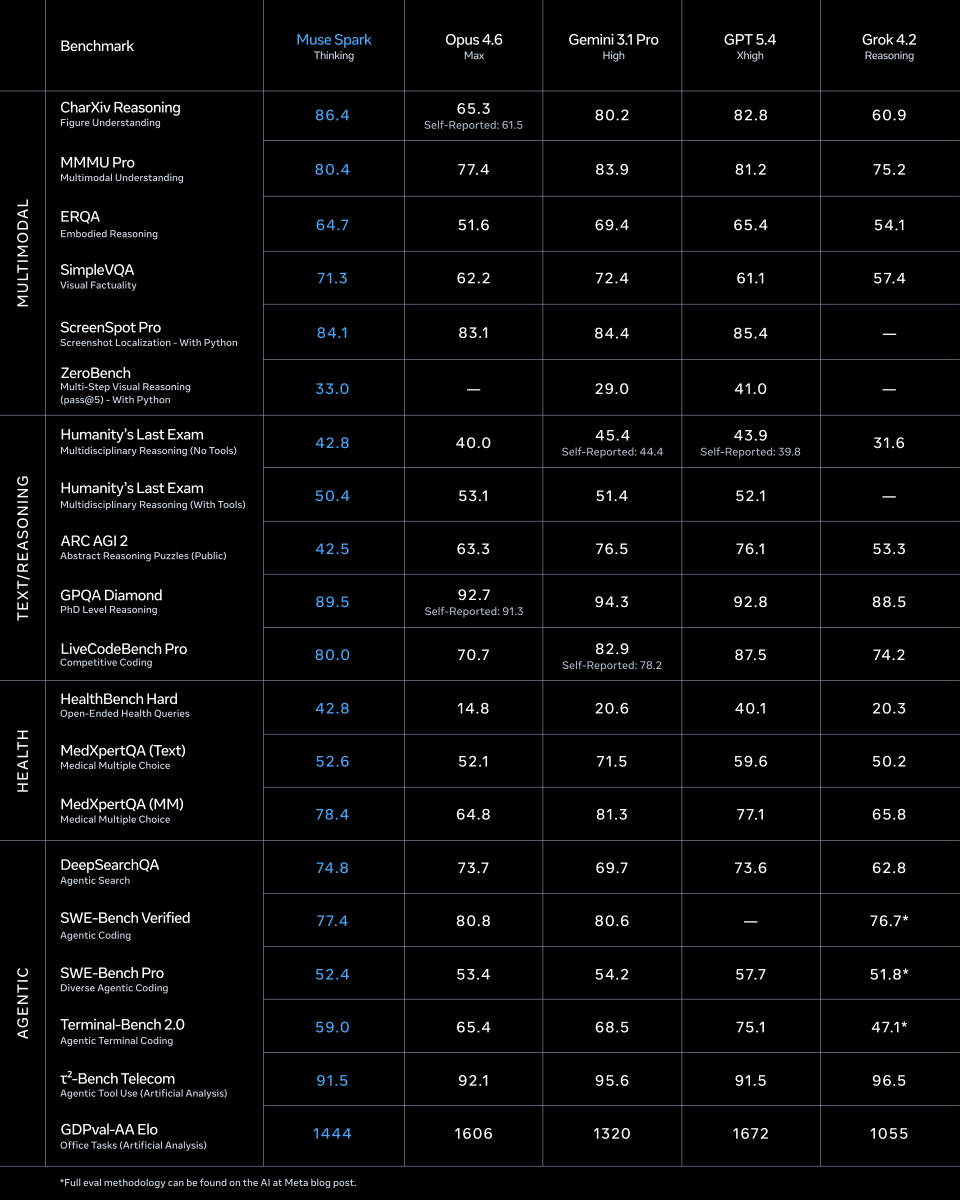
Meta now has its own agentic coding tool for the CLI: Muse Code. Here are some initial benchmarks! @AIatMeta


@ai_for_success ·
small test of meta ai new muse glimmer 30b running locally. i asked it to understand the existing repo and come up with another example. it understood the repo, gave me its review, and created a new example based on the repo style and the master prompt that’s part of the codebase. video speed: 5x
 Watch video
@mark_k ·
Meta’s Avocado models hit delays! 🥑 The Avocado 9B and Avocado Mango agent variants are now pushed to at least May after underperforming rivals on complex tasks. Meta is reportedly routing some internal Meta AI requests through Google’s Gemini while it iterates.

@simonw ·
One of the things the pelican benchmark is still useful for is visually representing (to a tiny extent) the improvements in a single model family Here's Meta AI's Spark (8th April), Spark 1.1 (9th July), and Spark 1.2 (today, 5th August) https://t.co/nPxV7Og3Mw




@natlungfy ·
New: Meta is testing a shopping research feature in its AI chatbot, rivaling a similar tool offered by OpenAI’s ChatGPT and Google’s Gemini. https://t.co/97pgtlNMNk


@MilkRoadAI ·
Mark Zuckerberg stood in front of the world and promised to build personal superintelligence for everyone. He said Meta had the resources, infrastructure, and billions to bring the future closer. That video aged like milk left in the sun. Meta’s flagship AI model, code named Avocado has been delayed. It reportedly failed to keep up with rivals on basic tasks like reasoning, coding and writing. The model was supposed to launch this month and it has been pushed to May at the earliest. Here is the part that should make every Meta investor sit up straight. Meta's own AI leadership is now discussing licensing Google's Gemini to power Meta AI products. The company that pledged to build superintelligence is now considering renting someone else's brain. This is happening after Meta committed between $115 billion and $135 billion in capital spending for 2026 alone nearly double what it spent last year. Zuckerberg told analysts this would be the year "AI fundamentally transforms our work processes." Instead, Avocado could not even beat Google's Gemini 3.0 from November. It outperformed Meta's older models. It edged past Google's Gemini 2.5 from March but against the current frontier, it fell short on every critical benchmark. The backstory makes this even worse. Zuckerberg personally poached over 20 researchers from OpenAI. He dropped $14.3 billion on Scale AI and installed its 28 year old founder, Alexandr Wang, as Chief AI Officer. He created an entirely new division called Meta Superintelligence Labs. Some recruits received signing bonuses reportedly as high as $100 million. The result of all that spending and all that talent was two models, Avocado for text and Mango for images and both kept slipping their deadlines. Avocado was first expected by late 2025, then early 2026, then mid-March, and now May at the earliest. Meanwhile, Google is becoming the default intelligence layer for the biggest companies on the planet. Apple already signed a multiyear deal for Gemini to power the new Siri and Apple Intelligence features. Analysts estimate that deal could be worth up to $5 billion for Google and Samsung's Galaxy AI already runs on Gemini. If Meta ends up licensing Gemini too, Google could effectively power the AI behind platforms serving well over five billion users combined. That includes Apple’s 1.5 billion devices, Samsung’s massive base, and Meta’s 3.6 billion monthly active users.
 Watch video
@glenngabe ·
"AI Mode". OMG 🤣 -> Meta launches new AI features, including an "AI Mode" for search that uses Meta AI to surface answers pulled from public posts across the platform "The headline update is “AI Mode,” a new way to search Facebook that uses Meta AI to surface answers pulled from public posts across the platform, including Groups and Reels. Instead of scrolling through search results, users can ask a question in plain language and get a synthesized answer based on what people are actually discussing." https://t.co/GLVWlsF3VX
 Watch video
@ItsWillHenry ·
When I hear people saying "AI bubble is over, bro" I laugh inside my head. Why? Because Meta has now locked $35 Billion in with CoreWeave through 2032. > That is a 35 with NINE ZEROS. > Why? > Not for "training" the models anymore > This is for “inference” > Running AI features for billions of users on IG and WhatsApp > Turns out "Meta AI" suggesting a Chicken curry recipe requires the power output of a small star > Need more POWER. > Deal includes early access to NVIDIA's "Vera Rubin" platform > Makes current chips look like a GameBoy Color > Meta paying $21B to cut the line > Look at Meta's wallet > Projected 2026 capex: $135 BILLION > Enough to buy a mid-sized country or 15 minutes of uninterrupted GPU time > Have their own data centers, but still leasing more > Bank of America hikes global chip forecast to $1.3 Trillion > Forget software, this is a gold rush > Most valuable resources in 2026: 1. AI Chips 2. Functional electrical grid 3. Clean water (for cooling) Smartest money in the world quietly buying up all the electricity and silicon > CoreWeave and NVIDIA are the new landlords > Zuck just signed a very long lease > AI isn't slowing down > It's just getting impossibly expensive What do you think about this move?



@aiwithjainam ·
🚨BREAKING: Meta just dropped Muse Spark and the AI race just got a whole lot more interesting This is their most powerful model yet, built from scratch in just 9 months, and it's already live inside the Meta AI app for 3 billion people. Here's everything you need to know 👇
 Watch video
@lemire ·
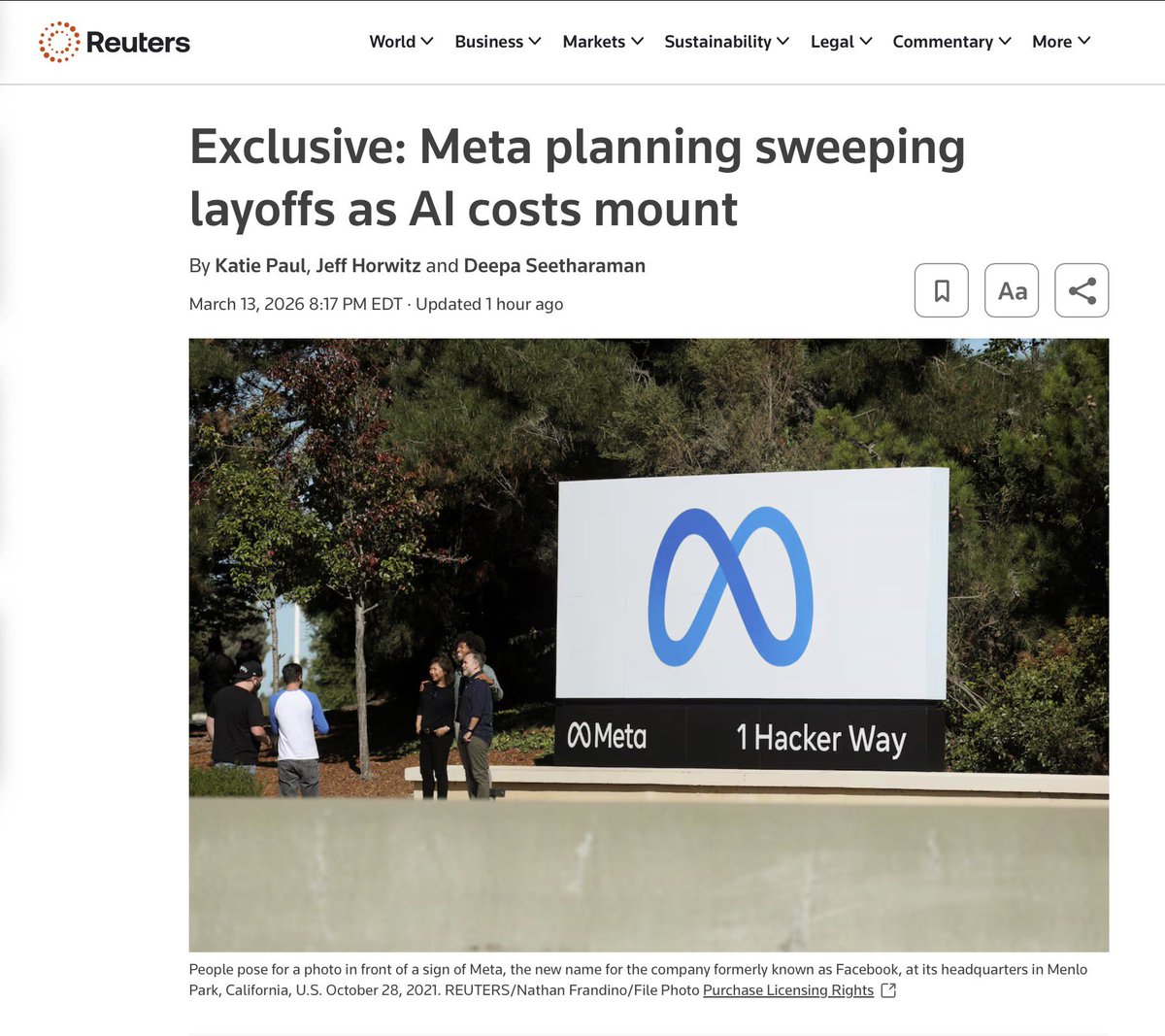
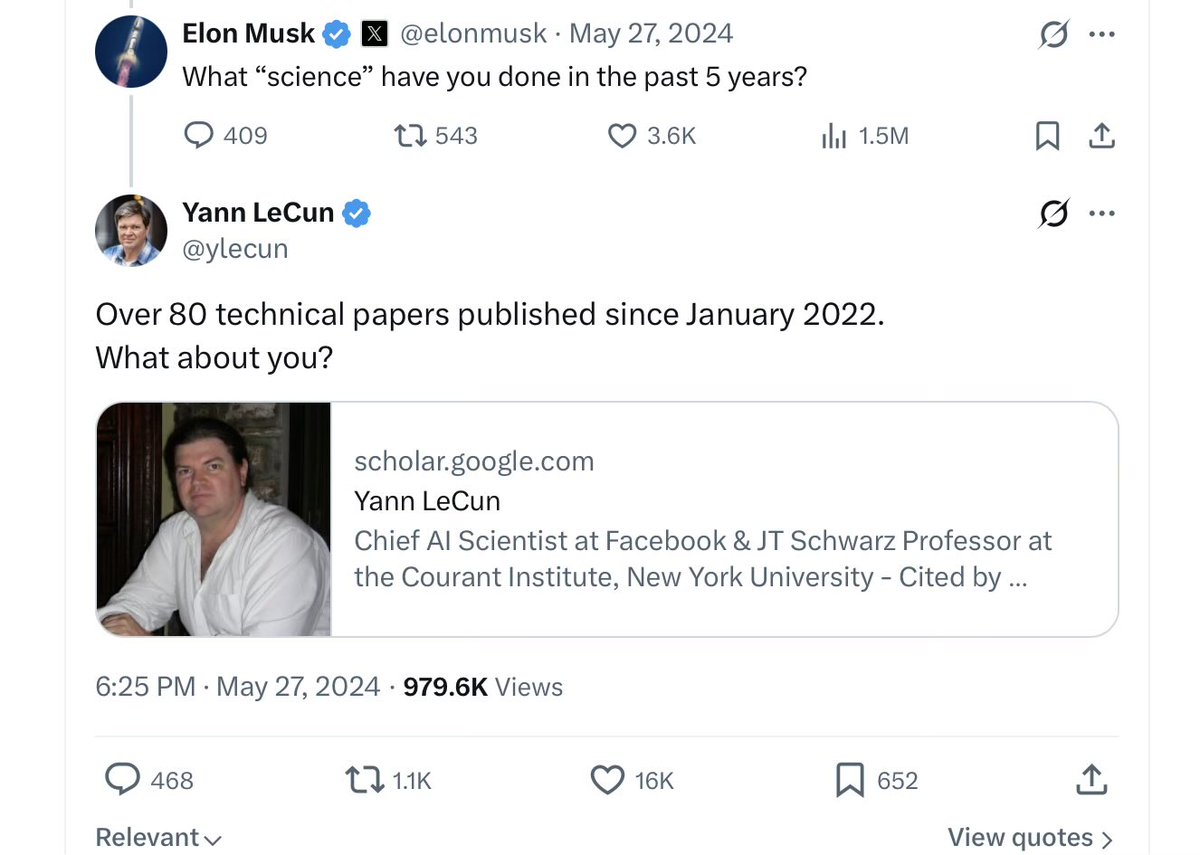
Two news items at the same time: Meta plans to lay off 20% of its staff due to AI, and they are delaying the release of their next AI models. They justify the upcoming cuts by saying they need to invest heavily in AI. Yet Meta is highly profitable—a true money-making machine. There is a hint that they are letting people go because AI will enable more work with fewer employees. Or perhaps it is just an excuse, and they realize they are overstaffed relative to what they actually need. Having more people than necessary is never positive—even when those people seem “effectively free.” Meta’s failure to lead in AI is interesting. It is the only major AI lab that bet heavily on one of the academic fathers of the field (in this case, LeCun). LeCun famously mocked @elonmusk and xAI, saying he was doing “research” and pointing to the many papers he had recently published. I have argued for two decades that research is not the process of publishing papers. Research is about discovery, not paper production. Confusing the two is a red flag. To be clear, peer-reviewed publishing papers is not even a necessary component of research. Peer review became a dominant paradigm during the cold war, long after Darwin, Einstein, and much of the great scientists had done their work. People typically object that I am conflating research and engineering. I am not. It would have been obvious to Turing that people building increasingly advanced systems to emulate intelligence are doing research—just as building better cancer therapies is research. Meta did not fail to lead because of a lack of talent or money. Nor is it short on engineering talent. That is not why they failed to lead. By many accounts, Meta’s AI spending is several times larger—and over a longer period—than xAI’s. It is also true that Meta has published far more papers than xAI. So what to make of it? Is Meta about to double down on AI? Will they succeed?



@TimurNegru ·
Got a pair of the Ray-Ban Meta glasses as a birthday gift and, slowly I'm starting to like them. The photo and video quality is not bad (not at iPhone level yet), you can stream Spotify, take calls, and just point them at something and ask Meta AI what it is or to translate text. The trickiest part so far is getting the framing right so shots aren't cut off or off-centre, and you need to avoid moving your head too fast or it affects the quality. They also go dark in bright sun and stay see-through indoors or at night, which I love since you can actually wear them inside too. In restaurants for example. Below are some shots I took in the Bahamas and Mexico. (and to add, I have no affiliation with the brand and this is simply me sharing my experience:))


 Watch video
@TheTechInvest ·
🚨BREAKING: $NBIS SECURES MASSIVE $META AI CONTRACT WORTH UP TO $27B " $NBIS, the AI cloud company, today announced a new long-term AI infrastructure supply agreement with $META, strengthening the collaboration between the companies. Under the five-year agreement, $NBIS will provide $12B of dedicated capacity across multiple locations, based on one of the first large-scale deployments of the $NVDA Vera Rubin platform. $NBIS will deliver this capacity starting early 2027. Furthermore, in connection with access to these $NVDA Vera Rubin deployments, $META has committed to purchase additional available compute capacity across certain upcoming $NBIS clusters up to a total of $15B over a five-year period. $NBIS currently intends to sell this capacity to third-party customers of its AI cloud business, with remaining capacity to be purchased by $META. The agreement has a contract value of up to approximately $27B.

@eric_seufert ·
Meta to use ads data for content recommendations Meta is repurposing advertiser-provided data to personalize Feed content and AI responses. By leveraging existing conversion integrations for recommendations, Meta maximizes the value of its scale. This strategy enhances user engagement while highlighting the competitive advantage that direct data ingestion creates over smaller platforms with fewer resources. https://t.co/D4a55dTIfY


@rokhladnik ·
Finally! "The tech giant is introducing Meta ads AI connectors in open beta to all eligible advertisers globally, allowing them to use their preferred third-party AI tools to create and manage their campaigns without having to switch up their current processes." https://t.co/4OSln9ZaRX

@Div_pradeep ·
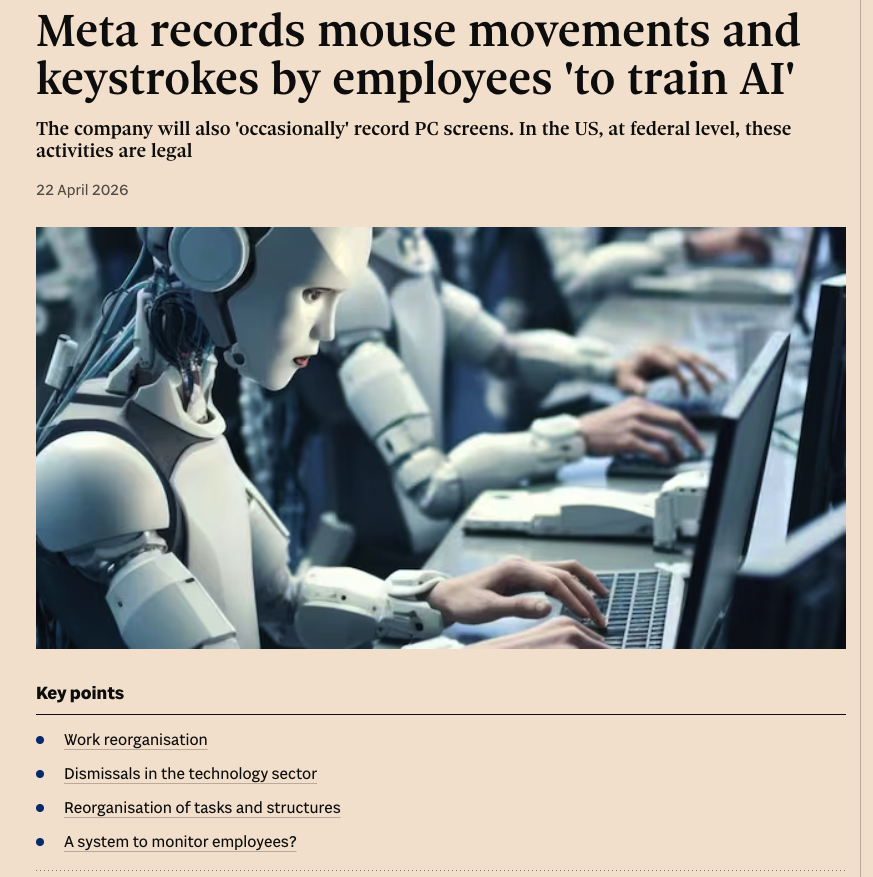
🚨BREAKING: Meta is now tracking employee keystrokes, mouse clicks, and screen activity. Not for performance reviews. For training AI. Here is what’s happening. Meta has started installing software on employee work computers that records: → Mouse movements and clicks → Keystrokes and shortcuts → Occasional screen snapshots The goal is to train AI agents to use computers like humans. Not just read data. Actually operate software. Why this matters. AI models today struggle with basic real-world tasks like: → Navigating dropdown menus → Using keyboard shortcuts → Interacting with complex interfaces Meta’s solution? Watch how humans do it. And turn that into training data. This is part of their “Model Capability Initiative.” Instead of synthetic data… They are using real employee behavior as ground truth. Meta says: → Data won’t be used for performance evaluation → Monitoring is limited to work-related apps → Safeguards are in place for sensitive info But not everyone is convinced. Critics are calling it workplace surveillance. Some compare it to gig worker tracking systems. Because even limited monitoring can capture: → Sensitive data on screen → Personal patterns of behavior → Internal company workflows And that raises a bigger question. To build AI that replaces human work… Do companies first need to record how humans work in detail? Because this is the shift. AI is no longer just trained on internet data. It is being trained on real human behavior. Inside the workplace. In real time.

@jerrod_lew ·
Meta Muse Spark has a detailed 'Contemplate' mode. When you use this, it fires up 16 different agents to complete complex tests and requests for you. This is available on web and the latest Meta AI app!
 Watch video
@_simonsmith ·
Meta AI in the Ray-Bans has gotten very good. Walk down the street, ask a question about something you’re looking at, discuss it. Voice is natural and fast, and isn’t interrupted by environmental sounds. Phone stays in your pocket. Feels freeing and a direction AI will take.

@theinformation ·
After encouraging staff to prove their “AI-driven impact,” Meta is now moving to cap employee token usage and steer workers toward in-house tools. Full story: https://t.co/SBAjAAkMBz

@ishuagra02 ·
🚨 META JUST RELEASED ITS OWN AI MODEL It's called Muse Spark, its first model in 9 months from its SuperIntelligence Labs, led by Alexandr Wang. ✅ free to use in Meta AI app ✅ offers Instant and Thinking modes ✅ multimodal across image, voice, and text inputs ✅ can orchestrate multiple agents in parallel ✅ shopping mode for learning users' interests ✅ trained to be effective at processing health data ✅ eventually will recommend content across Meta apps One thing to keep in mind. It's coding abilities don't match those of Opus 4.6 and GPT 5.4.
@alvinfoo ·
Meta AI is actually very powerful (yes). Most people are still using AI like a basic chatbot. But under the hood, things have quietly leveled up. Here’s something not many are talking about yet: You can enable a “contemplating” mode and it doesn’t just give you one answer. It spins up 16 (!!) parallel agents. Each one independently: • Researches your prompt • Refines the thinking • Generates its own answer Then something even more powerful happens… All 16 responses are synthesized into a single, higher-quality output. Not just faster answers, better thinking. This is a completely different paradigm: You’re no longer prompting one AI. You’re orchestrating a swarm. Think about what that means for: • Strategy work • Market research • Content creation • Problem-solving at scale Instead of relying on a single chain of thought, you’re getting diversity of reasoning + aggregation, similar to how top-tier teams operate. And the wild part? It’s currently FREE. Available on the web version. We’re entering a phase where the edge is no longer “using AI”… It’s how well you direct multiple intelligences at once. The people who learn this early will move faster, think deeper, and execute better than everyone else. AI isn’t just a tool anymore. It’s becoming a team.
 Watch video
@shawnchauhan1 ·
Meta did not acquire a product. It acquired the Dreamer team, which was building a personal agent OS for non-technical users. That team is now inside Alexandr Wang's Superintelligence Labs. The stated goal: agents that are always on, personalized, and integrated across surfaces and wearables. Meta has the distribution that every other agent builder is trying to manufacture. Two billion people already use its surfaces daily. The agent race is usually framed as OpenAI vs Anthropic. The quietest competitor has the largest installed base.


@ayushjaiswal ·
Spoke to my parents about how they’re using MetaAI. I’ve never seen them speak about any other product with so much passion. They’re based in a small town in India. Meta has started flexing its distribution at this point, I’d expect a fun quarter. They’re cooking. OpenAI might have two fronts open very soon. Fighting Anthropic on enterprise & Meta/Google on consumer. The data labelling guy may not be as horrible as people think despite the chaos. Excited to see Meta being taken seriously again.
@thetechstartups ·
🚨 Meta is spending like never before on AI. 💰 Free cash flow plunged 91% 🏗️ AI spending climbs to $145B 📉 Investors sent the stock down 9% in premarket trading. Mark Zuckerberg says @Meta could rent out its AI compute, but Wall Street wants one answer: When will all this spending start paying off? Read the full story 👇 #Meta #AI #ArtificialIntelligence #TechNews #BigTech #WallStreet #DataCenters #CloudComputing #Zuckerberg #Investing


@CommnThreadCo ·
Meta just released official AI Connectors for ads. MCP server + CLI that gives AI tools full read and write access to your ad account. Query campaigns, create new ones, update budgets, pull real-time insights. All through ChatGPT, Claude, or your terminal. This is the biggest infrastructure shift Meta has made for advertisers in years. https://t.co/la8YVHHA8m
@glenngabe ·
More devices enter the scene as companies compete to win the Jarvis movement. IMO, Meta has a huge trust issue, which will cause issues for them on this front -> Internal memo: Meta plans to start testing an AI pendant in 2027, release new AI glasses next month, start a “Wearables for Work” unit for enterprises, and more "Meta is racing against other big tech companies including OpenAI and Google to deploy new gadgets that they hope will propel use of their AI services. In addition to the work of its own teams, Meta has made acquisitions in the area including its purchase of AI pendant startup Limitless last year." https://t.co/Hpc8yL29cJ


@TheSixFiveMedia ·
Meta’s AI strategy isn't about building the best model, it's about building the most accessible one. @danielnewmanuv & @PatrickMoorhead break it down on Ep. 300 of The Six Five Pod, distribution is the real moat with ~3B users across Meta’s platforms. Muse Spark signals the next phase. Llama 4? Open, flexible…but not leading. Is Meta quietly winning AI by owning the audience?
 Watch video
@natlungfy ·
Meta AI’s new shopping recommendations (in tests) are tailored to what Meta already knows about the user’s location and to the gender it infers from their name, Bloomberg News found when testing the feature. Story here: https://t.co/WFh7umBLJL
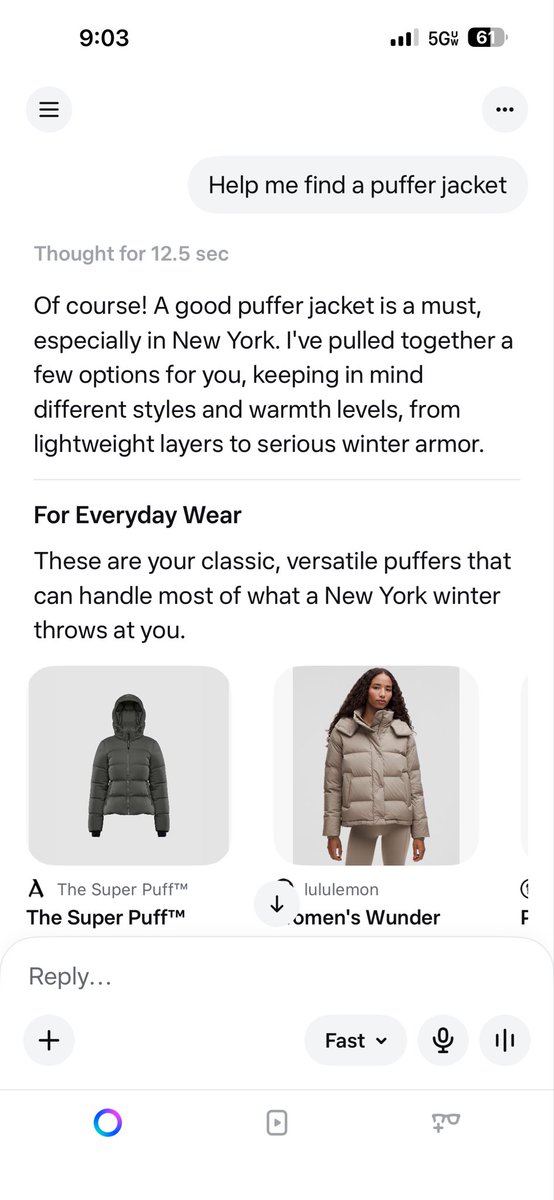

@Techmeme ·
Meta updates Meta AI with Muse Spark 1.1-powered agentic capabilities, connecting to Gmail and Google Calendar to perform tasks like creating daily updates (@inafried / Axios) (Visit Techmeme dot com for the link and full context!)
@theinformation ·
Exclusive: Meta is launching a new Enterprise Solutions unit to embed engineers and product managers with corporate customers. The move comes as Meta seeks to justify the company’s massive spending on AI infrastructure to investors. Read more: https://t.co/Sa0O8hhp1i

@gudanglifehack ·
Meta pulls Instagram tool that let AI use public photos Last week, Meta rolled out Muse Image, which is integrated into its Meta AI chatbot. A feature was introduced which let users @-mention Instagram accounts in the Meta AI app to bring specific Instagram profiles right into your images. All public accounts were opted in by default.
 Watch video
Best Meta AI tweets
Xholic studies what works in your niche, drafts posts in your voice and schedules them for the hours your audience is online.
$0 today · Cancel anytime
Browse all tweet collectionsKeep exploring