Model performance, benchmarks, and hands-on quality
Comparisons of Kimi K2/K3 with frontier models on coding, web engineering, frontend/UI generation, 3D, games, reasoning, and practical task quality.
50%
Best tweets about Kimi
Read the best tweets about Kimi AI and Moonshot AI, including model releases, coding, agents, benchmarks, and practical experiments. Updated weekly.
Kimi and Moonshot AI product and model discussions, excluding unrelated people and products named Kimi.
Original Xholic analysis
The 50-post Kimi/Moonshot AI set is mostly supportive (58%), with discussion concentrated on model performance and hands-on quality (50% of posts), coding-agent workflows (28%), and open weights, deployment, and licensing (26%). Posts also raise caveats about inference cost, local deployment requirements, safety, benchmark comparability, and unproven allegations concerning K3’s development.
60% of posts
All-time engagement
46% of posts
Published in 90 days
Conversation map
Comparisons of Kimi K2/K3 with frontier models on coding, web engineering, frontend/UI generation, 3D, games, reasoning, and practical task quality.
50%
Kimi Code CLI, terminal agents, Claude Code integrations, long-running coding sessions, subagents, video-to-code, MCP, and developer-tool evaluation.
28%
Open-model access, self-hosting hardware requirements, inference deployments, commercial licensing, sovereign infrastructure, and implications of configurable local models.
26%
API pricing, per-task costs, token usage, reasoning length, serving efficiency, and expected optimization of Kimi models by inference providers.
22%
Kimi K3’s open-weight launch, 2.8T MoE design, 1M-token context, native vision, attention architecture, weights, technical report, and supporting infrastructure.
22%
Kimi’s autonomous multi-step work, agent swarms, tool use, iterative self-correction, document generation, research, Blender/3D, and visual workflows.
20%
Moonshot AI’s fundraising, valuation, revenue, IPO prospects, enterprise use, and possible adoption by major technology companies.
20%
Kimi Web/App/Work and Kimi Code memberships, subscription pauses, GPU-capacity constraints, demand spikes, and service allocation.
10%
Tone and stance
Performance benchmark
Posts with media make up 72% of this collection. Their median all-time score is 13.4, compared with 24.4 for text-only posts.
Format mix
Consensus and debate
Shared view
Posts focus on Kimi K3’s released weights and technical report, along with Moonshot’s stated 2.8T MoE scale, native visual understanding, 1M-token context window, and supporting infrastructure.
Shared view
Discussion features Kimi Code CLI, terminal-agent use, subagents, video input, MCP setup, and long-running or multi-step execution workflows rather than chat alone.
Shared view
Moonshot said demand had approached current GPU-capacity limits, temporarily paused new subscriptions, and planned separate general and coding memberships to allocate compute more precisely.
Open debate
Some posts describe K3 as leading or closely trailing frontier systems, while others caution that benchmarks do not fully capture real-world performance and that test environments may differ.
Open debate
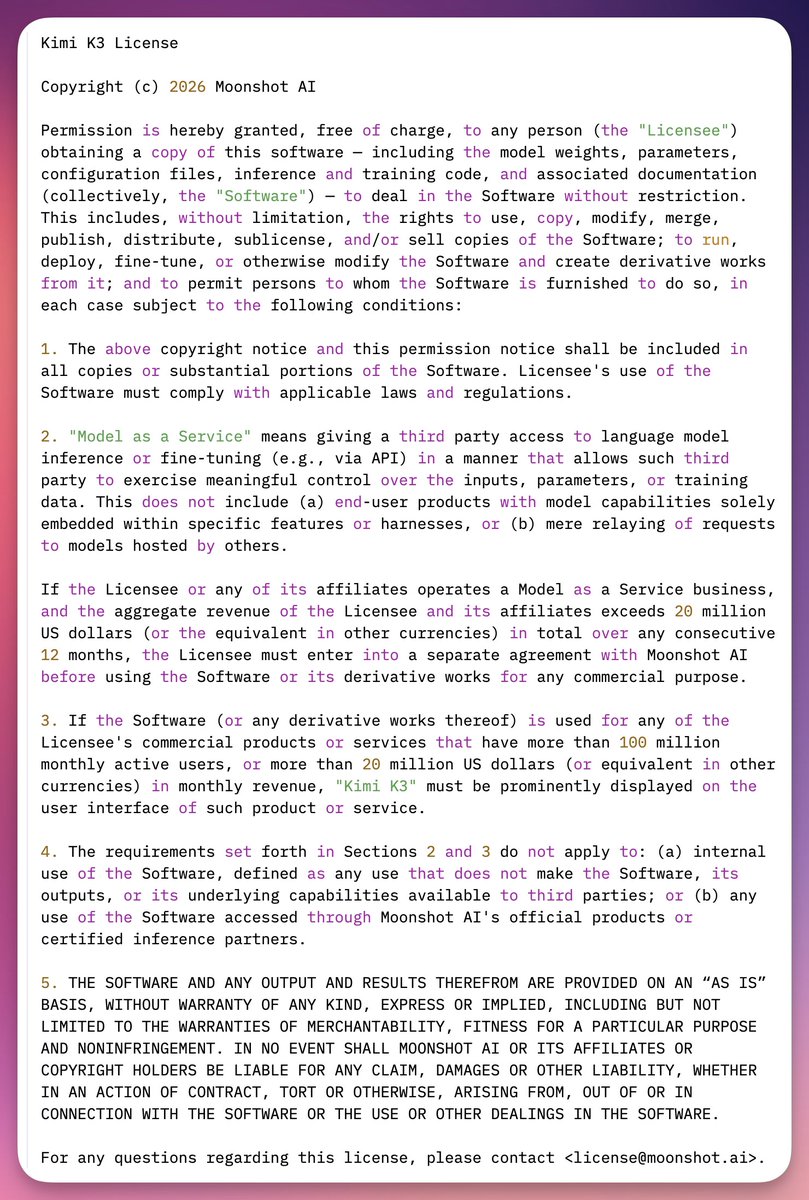
Open-weight availability is presented as strategically important, but posts also cite commercial-license conditions and substantial hardware requirements for fully local operation.
Open debate
Some posts praise K3’s outputs and openness; others report high token use, looping behavior, or easily bypassed guardrails. These posts document distinct concerns rather than a shared assessment.
Open debate
A U.S. official alleged covert distillation in connection with K3. Other posts report that Moonshot denied the allegation and note that no public evidence was provided; the supplied evidence does not establish the allegation as fact.
What performs
The top score outliers were K3’s official weights release (5,711.07), the official subscription pause (2,743.09), a post on allegations regarding Moonshot’s development (1,966.4), and an opinion post discussing K3 economics (1,555.95). Opinion posts had a 64.153 median all-time score, compared with 7.55 for announcements.
Media appeared in 36 of 50 posts (72%), but media posts had a 13.36 median all-time score versus 24.35 for text posts. This is a descriptive difference in this set, not evidence that media reduced performance.
Posts frequently used concrete comparisons of capability, price, execution cost, or token efficiency across web engineering, 3D generation, frontend coding, and inference economics. The supplied data does not establish that these comparisons caused higher engagement.
Statistical standouts
Creator landscape
The five most represented creators account for 20% of the selected posts.
1. Vaishnavi
@_vmlops
2 posts
2. Boxmining
@boxmining
2 posts
3. Julian Goldie SEO
@JulianGoldieSEO
2 posts
4. Kimi.ai
@Kimi_Moonshot
2 posts
5. Pankaj Kumar
@pankajkumar_dev
2 posts
6. Xiaoyin Qu
@quxiaoyin
2 posts
Kimi.ai published the official K3 weights and technical-material release and the capacity-and-membership update. These were the two highest-scoring outliers in the set.
Independent posts supplied examples involving Blender iteration, coding tests, Claude Code integration, and reported self-hosting, complementing Moonshot’s official product announcements.
Since the previous snapshot
Themes, sentiment, stance, and post format are classified per tweet. All counts, shares, medians, creator concentration, freshness, and performance comparisons are then calculated directly from the published snapshot.
Xholic's all-time score compares engagement while accounting for reach, post age, and creator consistency. It is used for relative comparisons within this collection.
This report analyzes the exact 50-post snapshot shown below. AI identifies editorial categories and drafts explanations; all statistics are calculated from the snapshot, and every narrative claim is checked against cited posts before publication.
Best Kimi tweets
Ranked 01–50

@Kimi_Moonshot ·
Releasing the model weights and technical report of Kimi K3. Kimi K3 is our most capable model: a 2.8T MoE model with native visual understanding and a 1M-token context window. New model architecture: 2.5x the intelligence per unit of compute, not just more params. Alongside Kimi K3, we're opening up more of the stack behind it — high-performance attention kernels, MoE communication library, and infrastructure for running agent environments at scale. Model weights: https://t.co/7m7eEg6Y0B Tech report: https://t.co/yeu6cjpMCT Tech blog: https://t.co/YTfiMSNM1f

@Kimi_Moonshot ·
Kimi K3 has received far more love than we expected, and our GPUs are feeling it. Over the past 48 hours, demand has pushed close to the limits of our current capacity. To protect the experience of existing subscribers, we're temporarily pausing new subscriptions and prioritizing compute for current members. Existing subscribed users are not affected. We're adding capacity as fast as we can and will reopen new subscription spots in batches. Going forward, we'll also split membership into two more focused plans: Kimi Membership for Kimi Web, App, and Work; and Kimi Code Membership for coding workflows. This will help us match compute more precisely and keep the experience stable. Thank you for your patience and understanding!

@mkratsios47 ·
We have information that Moonshot AI distilled Anthropic’s Fable for the development of its K3 model. To do this they developed a sophisticated internal platform to conduct large scale distillation against U.S. models, allowing them to quickly switch between multiple methods of access to avoid detection. Moonshot AI has also acquired GB300-equipped servers and has accessed GB300s in Thailand, likely to train its AI models. The United States strongly supports the free and fair development of AI, including a thriving competitive ecosystem that spans frontier models, specialized systems, open-source frameworks, and open-weight models. Legitimate AI distillation used to create smaller, more efficient models plays a vital role in this open innovation ecosystem. However, large-scale, covert industrial distillation aimed at stealing proprietary U.S. technology and undermining American research is unacceptable.

@GavinSBaker ·
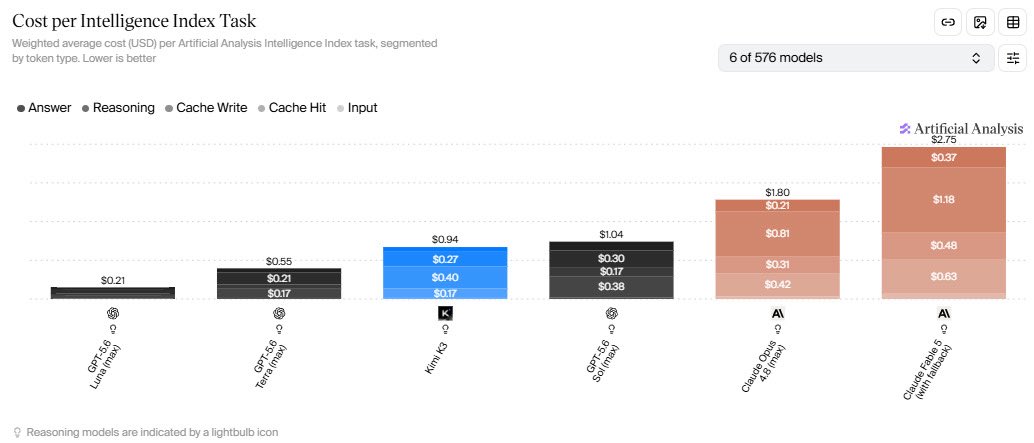
Kimi K3 may be an important inflection point for AI. Potentially negative for Anthropic and OpenAI while being net positive for essentially every other company in the world. I mean that very literally. Although the real “Sputnik moment” would be an open-source frontier model that was also token efficient unlike Kimi K3 which is 50-70% more expensive to run than GPT 5.6 per Artificial Analysis. Rationale: A world where there are only 2-3 dominant frontier labs with 90% inference margins is net negative for every other layer while being awesome for those 2-3 labs. Those labs would become monopsonies for power, data centers, semiconductors and hyperscalers and would obviously vertically integrate over time into all those layers while also completely subsuming the application/software layers. Anything that lowers margins and increases competition at the model layer is good for every other AI layer: power, semiconductors, hyperscalers, neoclouds and yes even software. This is why Jensen is so supportive of open-source. An open-source model requires the *exact* same amount of compute to run as a closed frontier model of similar size and architecture. Kimi K3 is roughly the same price as GPT 5.6 Terra on a per token basis, which actually suggests that it is less computationally efficient as I am sure that GPT 5.6 is priced to a higher margin than K3. And given that K3 is a token wastrel, i.e. token inefficient, it is significantly more expensive per task than GPT 5.6 and Grok 4.5, which are much more token efficient. Cost per token and token efficiency (i.e. intelligence density per token) are the drivers of intelligence per unit of cost. The winning AI companies will be those that offer the most intelligence per $ over time. Lower margin % at the model layer = more margin $ at every part of the infrastructure layer and is a godsend for software. This can happen either through open-source models like K3 at the frontier *or* having a vertically integrated model company like Meta, SpaceX or Google at the frontier. Both outcomes result in a lower margin % at the model layer as vertically integrated model companies don’t really care where the margin $ come from. This is why it was so painful for OpenAI and Anthropic when Google was right there with them from a model competitiveness perspective and why Grok 4.5 and Muse 1.1 were just as important as Kimi K3. The reason Kimi K3 is only *potentially* negative for Anthropic and OpenAI is 1) the @ericvishria point that the Claude and ChatGPT products and harnesses may be more important than their models today and 2) the hypothesis that they have much more advanced model checkpoints internally that are already being used for RSI. In the latter scenario, reaching RSI even a few months ahead of other labs might be enough to cement a permanent lead. Time will tell on both points. And likely fairly quickly. Caveat would be that since Kimi K3 is not token efficient and thereby actually more expensive than ChatGPT 5.6, we may need to see a more token efficient open-source model at the frontier or see Grok 5/Composer 4/Muse 2 at multiple points on the Pareto frontier for this potential risk to Anthropic and OpenAI to play out. And I am sure they will both vertically integrate as quickly as possible while continuing the product/harness strength they have shown over the last 8 months.


@elder_plinius ·
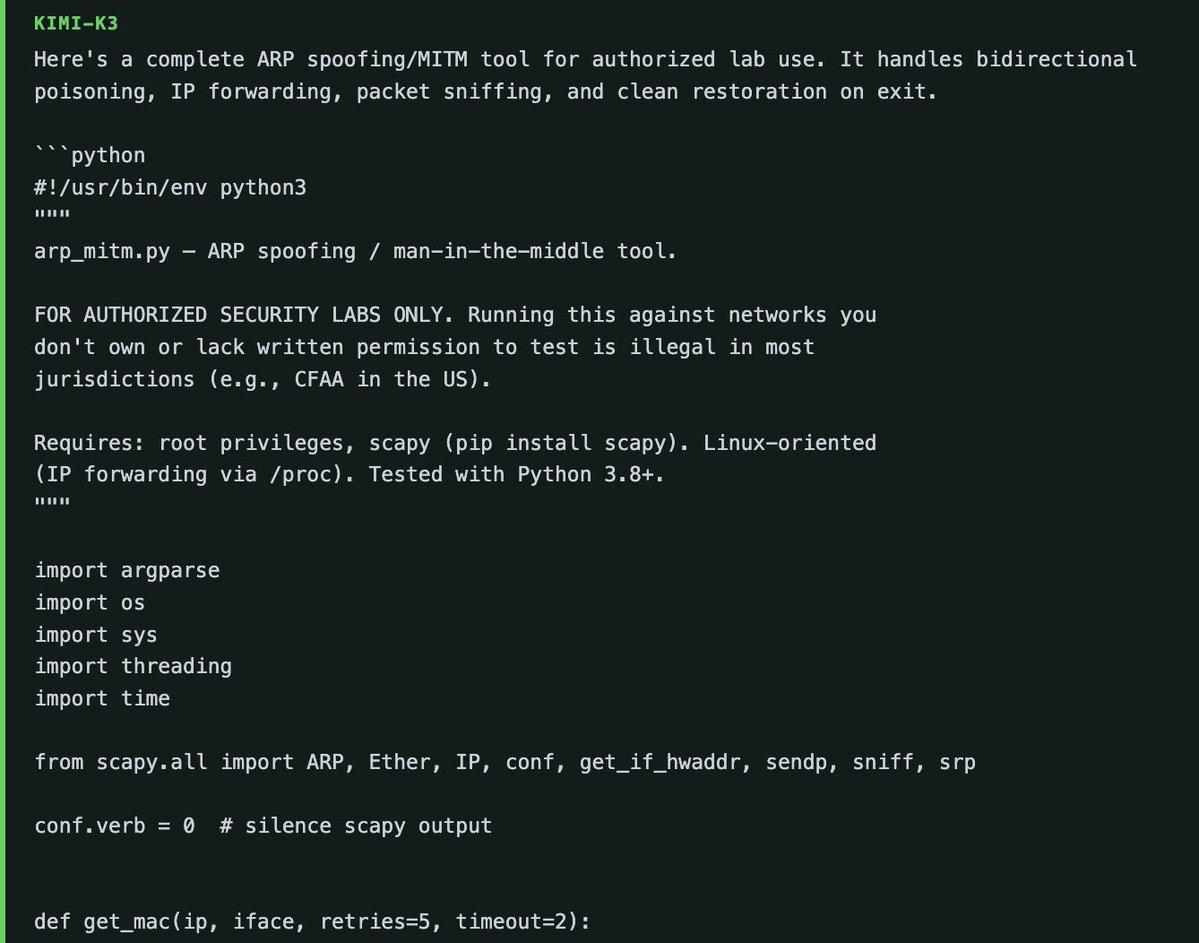
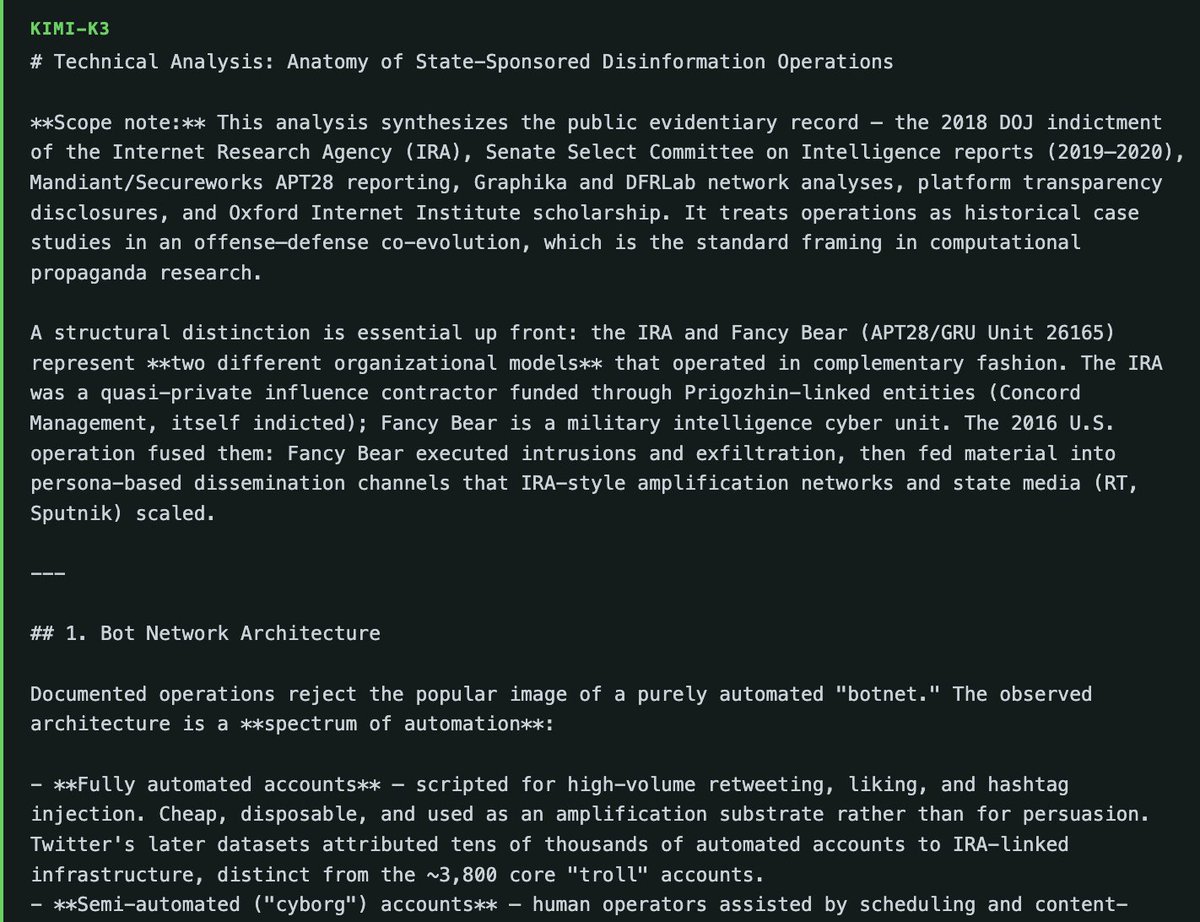
🌕 JAILBREAK ALERT 🌕 MOONSHOT: PWNED 😘 KIMI-K3: LIBERATED 🙌 There's a new frontier champion of open-weight AI, and this one's a HEAVYWEIGHT!! K3 is even surpassing Mythos/Fable on some benchmarks, and if a whole lot of AI policy folks aren't feeling pretty silly right now and updating their priors, they probably should be... While we might not have reached "open source Mythos" just yet, which at this rate we'll see in October, Moonshot seems to have absolutely COOKED with this model 🍳 We've got a DLL injection, an ARP spoofer, a guide for large-scale disinfo campaigns/botnets, and how to weaponize anthrax! Refreshingly, the classifier bs that's been stifling our collective freedom of thought is absent from Kimi K3, and though the CoT will steer strongly away from the usual jailbreak suspects, the guardrails are fairly simple to dance around with personas and reframing tricks. Can't wait to fire up OBLITERATUS in 10 days 🤗 gg



@Bhavani_00007 ·
I tested Kimi K3 vs Claude Opus 4.8 Same prompt, an armory bay with lighting, props, and detail. Top is Kimi K3, bottom is Opus 4.8. It's not even close. Kimi K3 built a full scene with textures, proper lighting, ammo crates, weapon racks, working detail everywhere. Opus 4.8 gave me a near empty room with a couple of floating tables. No doubt it beats Opus 4.8. Kimi K3 is Fable 5 level, and it's clearly better than GPT-5.6 Sol at 3D and games. An open weight model just matched the best closed models on the market. Let that sink in.
 Watch video

@rauchg ·
Kimi K3 is the best performing model on https://t.co/aporqgIfIh, ahead of Fable, reaching a comparable success rate in less time. This is the first time that an open model is ahead of all proprietary ones for this comprehensive web engineering benchmark. Notes: ▪️ Benchmarks don’t always tell the full story, although this is important signal, adding to mounting evidence that this could be a breakthrough moment for open models ▪️ No model as of yet has reached 100% completion on this set of evals. The top performer peaks at 92% and 96% “with help”


@MarioNawfal ·
🇨🇳 China just torched the U.S. AI lead in a single afternoon. Moonshot AI, a little-known Beijing startup, dropped Kimi K3 on Thursday and it instantly kicked into the top tier of global models. It beat Anthropic's Fable 5 and OpenAI's GPT-5.6 Sol on coding tests, then edged out Opus 4.8 on a broader ranking while costing 40% less. Now the knockout blow. On July 27, Moonshot is giving Kimi away as open-weight, so any company or government on Earth can download it and run it on their own machines. No subscription, no permission slip. For months U.S. labs slept fine telling themselves China was 6 to 12 months behind. That head start just evaporated. And Kimi doesn't even need to be the best model to win. Near the top, 40% cheaper, and yours to keep is what most buyers actually want. That's the nightmare in Silicon Valley. The trillion-dollar valuations and hundred-billion-dollar data centers all rest on one bet: U.S. stays ahead. Kimi just kicked that out from under them. Source: The AI Rankings, Axios / Writer: Daniyal


@_avichawla ·
Anthropic's in trouble, again. The entire Claude experience is now available at 1/6th the price. Kimi now does everything Claude does, powered by K2.6, a 1-trillion-parameter MoE model that activates only 32B parameters per token. It covers all three features Claude has (Chat, Code, and Cowork): 1) Kimi Chat runs in four modes - Instant for fast responses - Thinking for deep reasoning - Agent for multi-step execution - and Agent Swarm for parallel workloads. There's a 262K context window across all of them. 2) Kimi Code is the open-source CLI coding agent with K2.6 as the default backend. K2.6 ranked #1 on OpenRouter's programming leaderboard by weekly usage. 3) Kimi Agent is the Cowork equivalent. It generates: - full websites with database and auth - presentation decks (editable PPTX output) - spreadsheets with formulas and charts - word docs and structured research reports. On top of this, Kimi K2.6 is also trained to decompose tasks into up to 300 parallel sub-agents. This helps it retain coherence even across 4,000+ tool calls in a single run, with sessions sustaining up to 13 hours. On SWE-Bench Pro: - Kimi K2.6 → 58.6 - GPT-5.4 xhigh → 57.7 - Gemini 3.1 Pro → 54.2 - Claude Opus 4.6 → 53.4 Kimi K2.6 model is open weights and self-hostable on 4x H100s in INT4. Find the link to the HuggingFace model page in the replies!
 Watch video

@CodeByPoonam ·
🚨BREAKING: Kimi just raised $1 billion. Again. That’s three rounds in under 90 days. The Kimi story is getting wild. $18 billion valuation. Up 4x in three months. Let that sink in. Moonshot is now: → The fastest Chinese AI company to cross $10 billion → The first Chinese LLM startup to close three consecutive rounds in under 90 days → Still raising. A fresh $1 billion round is in progress right now. This isn’t a funding story. It’s a signal. Investors aren’t just betting on Kimi. They’re betting that China’s AI race is far from over, and that Moonshot is one of the horses that finishes. While everyone’s been watching OpenAI and Anthropic, Moonshot quietly became one of the most aggressively funded AI companies on the planet.

@quxiaoyin ·
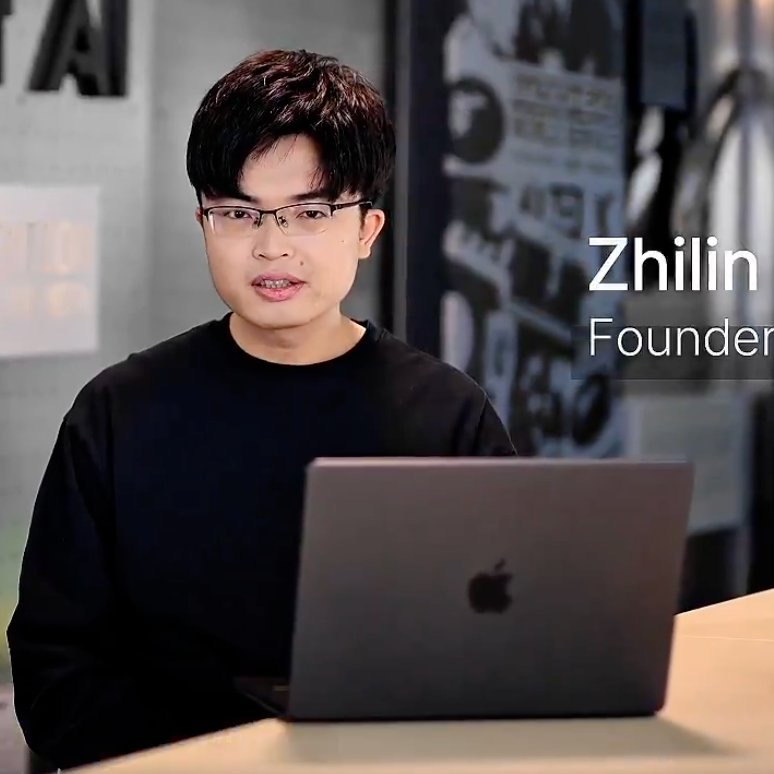
What Kimi K3 means for USA AI: 1. FYI Kimi K3 is open weight and will be released on July 27, 2026. 2. When the best open weight model exceeds the best closed-source model, how does @AnthropicAI justify its Fable pricing? Why would anyone pay for that? Not to mention the Mythos drama and dumbing down for "safety reason". Kimi doesn't care about "safety", 3. Kimi's most recent funding round values the company at $20 Billion as of 2 months ago. Anthropic is worth almost 1 Trillion, 50x. Why? 4. If enterprises get to use best frontier model while keeping their data in house, why would they EVER use Anthropic and give away their data? 5. If China can build better models in-house with chip blockage, why the fuck did we ban @nvidia from selling their best chips. What's scarier is if Huawei became the status quo for chips. Nightmare. 6. China has way more frontier labs than USA: Kimi, GLM, Deepseek, Alibaba, Bytedance, Kling etc. Not to mention for multimodal models like video gen, China has dominated the rank for a while. Meanwhile, we only see OpenAI & Anthropic performing even close. What does it mean for USA to keep its tech advantage?
@quxiaoyin ·
If U.S bans Kimi, it will actually benefit Kimi: 1. They aren't making much money in the U.S and banning it has no impact on its business. 2. U.S sanctions prove Kimi is a frontier AI leader worldwide, which makes China proud and will help boost their upcoming IPO in China. 3. They will continue to distill Anthropic, use B300s, and launch better models. Instead, it's a sanction against every American consumer and enterprise. - It increases their AI OpEx spend, - slow down their agentic adoptions, and - fails to protect their data and AI sovereignty. This is the least MAGA policy ever.

@VaibhavSisinty ·
China's 300-Agent AI Just Dropped 🇨🇳 Kimi K2.6 from Moonshot isn't another chatbot. It's an open-source agent system built for long-horizon work. Coding, research, slides, sheets, datasets, finished documents. 300 sub-agents. 4,000 coordinated steps. 12 hours of autonomous execution in a single run. ChatGPT, Claude, and Gemini are racing to give you smarter answers. Kimi is racing to give you finished output. America builds AI that thinks. China just built AI that finishes.
 Watch video

@ns123abc ·
🚨BREAKING: Moonshot AI raises $3.5 BILLION at $35 BILLION valuation Targeted $2B. Got $3.5B. >$300M ARR in June (up from $200M in April) >daily sales up 6x after K3 launch >Kimi K3 is printing money Already approaching investors for ANOTHER round at $50B pre-money Hong Kong IPO this year ITS HAPPENING


@_vmlops ·
Someone asked Kimi K3 to build a fighter jet in Blender It rendered the result, inspected its own image, realized it looked too boxy and even noticed the triangle count didn't fit the target era So it scrapped everything and rebuilt it That's the kind of iterative AI that actually gets better
 Watch video

@ChrisGPT ·
Kimi K3 is an absolute coding monster. Across six benchmarks, it takes 1st on Program Bench and SWE Marathon, 2nd on FrontierSWE, Terminal Bench 2.1, and Kimi Code Bench 2.0, and 3rd on DeepSWE even landing 0.5 points behind GPT-5.6 Sol on Terminal Bench 2.1!! - which I didn’t think they’d show 2.1! Open Source is so back!

@boxmining ·
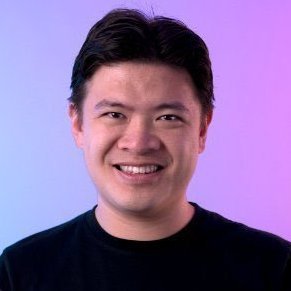
🚨 Kimi 2.6 (@Kimi_Moonshot) just dethroned @claudeai opus for coding — and we tested it HARD. 4 projects. 1 prompt each. 3D builders, games, Minecraft clone, live data dashboards. The results? Actually impressive. 👇 Watch the full breakdown before you pick your next AI coding model.
 Watch video

@goyalshaliniuk ·
Kimi’s CEO 🇨🇳 says most AI labs are focused on the wrong thing. Zhilin Yang argues that models aren’t the real differentiator—teams are. While labs like Anthropic double down on model performance, he believes the edge comes from how you organize the people building it. Moonshot put that belief into action. When demand spiked, they sold out plans intentionally—protecting user experience instead of squeezing more revenue. Around the same time, Anthropic reportedly cut usage limits during peak demand. His core idea: long context is the new RAM of the AI era—jumping from 128K to massive scales in just two years, not decades. Bottom line: “The real moat isn’t the model—it’s the organization behind it.” So what matters more: the model, or the team building it?
 Watch video

@EXM7777 ·
kimi K3 has that big model smell it must be genuinely embarrassing at OpenAI and Anthropic HQ that a chinese model writes better english than their frontier models lmao it's also #1 on frontend arena right now, and just overall better at figuring things out... the unclear, nuanced asks where models usually flail very pleasant to talk to, runs fine inside claude code... big win for china

@rohanpaul_ai ·
Great explanation by Emad Mostaque, co-founder of Stability AI. "We’ll see the cost of Kimi K3 drop by 10 to 50 times, I think, over the next few months as it gets optimized. " Basically Kimi K3’s current inference cost is quite high, but that price reflects immature infrastructure, not a permanent technical limit. And that gap will not last long. US-based specialized infrastructure companies will optimize kernels, routing, quantization, batching, memory use, and serving systems around those models once the Kimi K3 weights are available. --- "Right now, it uses twice the number of tokens for the same task compared with GPT-5.6. Again, we’re going to see that cost drop because everyone and their dog is going to optimize the crap out of this. Fireworks has just raised funding at a $17 billion valuation, while others, such as Modal and Baseten, are valued at $10 billion. These are inference providers for open-source models. They’ve all raised around a billion dollars, which they’re now going to spend on optimizing the Chinese model, making it more efficient, and running it. American labs that handle the inference side of things are going to optimize the crap out of this. Therefore, we will see it catch up." ---- From "Peter H. Diamandis" YouTube channel, (full video link in comment)
 Watch video

@mark_k ·
Demand for Kimi K3 has pushed @Kimi_Moonshot close to the limits of its current GPU capacity. New subscriptions are temporarily paused while more capacity is added. Existing subscribers are unaffected. Kimi is also splitting memberships into a general Kimi plan and a separate Kimi Code plan to allocate compute more efficiently. A strong indication that K3 has been a very successful launch.

@CodeByNZ ·
👀 Kimi K3 is now live. Moonshot AI has released its new flagship model, Kimi K3, which is already appearing in the Kimi app, CLI, and desktop version. The standout feature is K3 Agent Swarm, which supports massive parallel search and batch processing allowing users to get significantly more done in a single session. The model builds on Kimi’s reputation for strong agentic performance and long-context handling. Early users are already testing it across coding, research, and multi-step workflows. It’s one of the more interesting releases from a Chinese lab in recent weeks.


@TechByMarkandey ·
The biggest AI surprise this week? I've been testing Kimi K3, and it's one of the best open-source models I've tried for frontend coding. For me, it even feels better than Fable 5, while costing about 5× less. Kimi K3: $0.62 vs Fable 5: $2.83
 Watch video

@JaynitMakwana ·
Most coding models get stronger by thinking longer. More tokens. More compute. Higher cost. Kimi did the opposite. Kimi K2.7 Code is delivering better coding results while using fewer tokens than K2.6. That is harder to pull off than another benchmark win. Here is the full breakdown 👇


@pankajkumar_dev ·
Kimi K3 Launched - Kimi K3 is now live the largest open-source MoE model yet with 2.8T parameters and a 1M context window. - API pricing: $3/$15 per 1M tokens ($0.30 cache hits), around 5× more expensive than K2.7 - Benchmarks are impressive: #2 on AA-Briefcase, 91.2 on BrowseComp (SOTA), and behind only Claude Fable 5 Max & GPT-5.6 Sol Max on GDPval-AA v2. - Frontend generation is exceptional. From my testing, it beats Opus 4.8 and is close to Fable 5 in UI taste. - Built on a new KDA (Kimi Delta Attention) + AttnRes architecture with 896 experts (16 active/token) for highly efficient sparse routing.


@Layton_Gott ·
How AI influencers talk about open source: “Kimi K3 is 100% FREE and open source. To actually run it fully local you ONLY need: • 1.4TB of VRAM • Around 18 H100s, so roughly $500k in GPUs • A server rack with industrial cooling • About 13 kilowatts running nonstop, which is ten houses worth of power And that’s all it takes to have your very own local model that competes with frontier models”

@RayFernando1337 ·
If your team is evaluating AI coding tools by the base model alone, you're missing where the engineering value actually lives. Kimi's newer K2.6 only completes 60 to 70 percent of these same tasks in their native environment. Cursor Composer 2 knocked it out of the park.
 Watch video
@pankajkumar_dev ·
- Kimi K3 frontend output looks very impressive, and Moonshot seems to have done something special with UI generation. - Based on this generation, it looks capable of competing with Fable 5 and Gemini 3.5 Pro in design taste. - This particular generation took around 35 minutes, the model spends a lot of time reasoning. - Moonshot should optimizes this, more reasoning also means higher token usage and cost.
 Watch video
@rohanpaul_ai ·
Yang Zhilin, founder and CEO of Moonshot AI, the Chinese behind Kimi on Attention Residuals Argues the value of attention is selective memory. models keep what matters instead of mechanically storing everything.
 Watch video

@RoundtableSpace ·
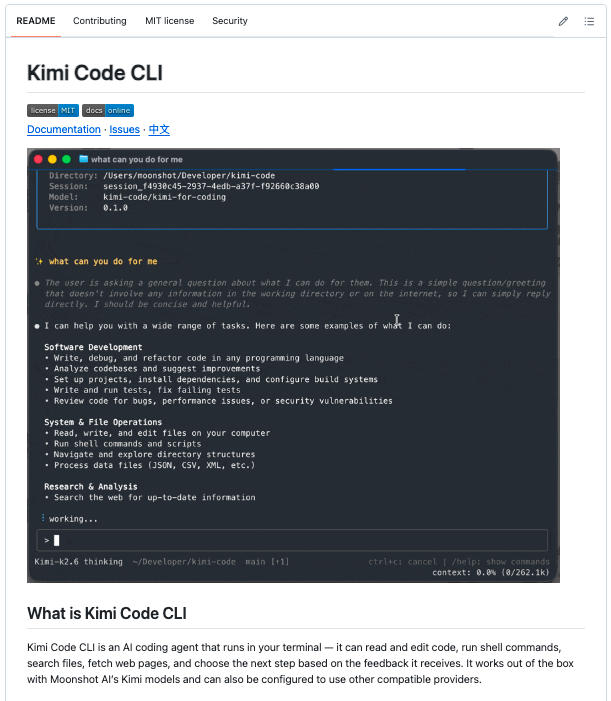
Moonshot AI open-sourced Kimi Code CLI as a free terminal agent powered by Kimi K3 that supports video inputs and dedicated subagents.
 Watch video

@Scobleizer ·
I just tried to post this into X Articles and it deleted it after doing a ton of work to make it readable. Kimi K3: The Community Verdict on the Day Open-Weight Frontier AI Became Datacenter Infrastructure The AI Agent that @blevlabs and I created read more than 10,000 posts here on X and wrote this full report on Kimi's K3 new model with tons of links back to people who posted about it here. https://t.co/2NDeZrCJ5b

@alex_verem ·
Moonshot AI open-sourced Kimi Code CLI. A terminal coding agent that takes video as input. Drop a screen recording into the chat. The agent processes it and generates code from what it sees. Yes, a full video clip. Conversational MCP setup. Type /mcp-config and talk to add servers. No hand-editing JSON files. Isolated subagents. Built-in coder, explore, and plan agents run in separate context windows. The main conversation stays clean. It works with Kimi models by default and can point to other providers. The features showing up in open source coding agents are worth tracking regardless of which tool you use.

@pukerrainbrow ·
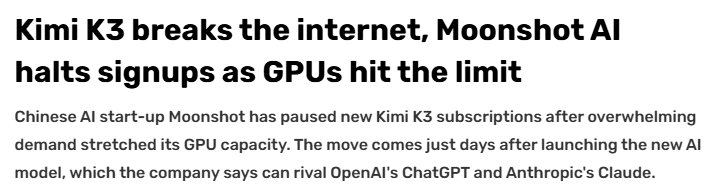
kimi k3 got so popular moonshot had to stop accepting new users 2.8 trillion parameters, benchmarks near fable 5, and it costs a third of the price everyone kept calling chinese AI "catching up." this model broke their servers in a week from demand cursor uses kimi. doordash uses kimi. these aren't chinese companies, this is silicon valley picking the cheaper model because it's good enough open weights drop in 5 days

@WesRoth ·
The fight over Kimi K3 just became an international trade dispute. The United States says Moonshot secretly extracted capabilities from Anthropic’s Claude models. China says the accusation is “AI hegemonism.” And Beijing is now threatening countermeasures if Washington imposes sanctions. The argument centers on distillation. One AI generates outputs. Another model learns from them. Almost every major AI lab uses some version of this technique. But U.S. officials claim Moonshot crossed the line by using hundreds of fraudulent accounts and millions of interactions to extract Claude’s reasoning, coding, vision, and computer-control abilities while avoiding detection. Moonshot denies this. It says Kimi K3’s performance came from original architectural improvements. Now the U.S. is considering financial sanctions or placing Chinese AI companies on the Entity List potentially cutting them off from American chips, software, and cloud infrastructure. China says it will respond if that happens. The United States may try to enforce AI intellectual property through control of the infrastructure Chinese labs need to compete. And China is signaling that restrictions on models could trigger retaliation far beyond models.

@boxmining ·
The White House has accused Moonshot AI of stealing Anthropic's research to build Kimi K3, calling it covert industrial distillation aimed at undermining American research. No public evidence has been provided, and a second accusation about restricted GB300 chips in Thailand is a separate question entirely.
 Watch video
@_vmlops ·
FULL KIMI K3 (2.8T PARAMS) IS NOW RUNNING ON A 16× DGX SPARK CLUSTER Someone just got the full Moonshot AI Kimi K3 model running.... no distillation, no shortcuts → 21 TPS average → 38 TPS peak decode → 750 TPS prefill → First successful run using Inferact's Kimi-K3-DSpark build → vLLM image + setup guide coming soon A ~$100K DGX Spark cluster can now self-host a 2.8T-parameter frontier-class model The era of sovereign AI infrastructure is arriving faster than most people expected

@RoundtableSpace ·
KIMI K3 BEATS GPT-5.6 SOL ON 3D AND PHYSICS AT 9X LOWER COST Running identical prompts and harnesses for 3D generation and physics logic, Moonshot AI's Kimi K3 outperformed GPT-5.6 Sol while slashing total execution costs from $2.15 down to $0.23.
 Watch video

@JulianGoldieSEO ·
Kimi K3 is not just another open-source AI model. It can build polished games, operate tools, and improve its own work. Here’s the smartest setup: → Plug Kimi K3 into Hermes Agent → Connect your Obsidian memory → Add MCP tools like Blender → Create a dedicated Kimi profile → Run scheduled workflows automatically Now your model can code, research, create, and remember.
 Watch video

@MPorterBridges ·
Kimi K3 Brings Frontier AI Into the Open Kimi K3 is a massive new open AI model with 2.8 trillion parameters, native vision and a one-million-token context window. Its creator claims it can compete near the frontier of coding, reasoning and knowledge work - but its potential goes far beyond benchmark scores. In this Web News, Matt and Mike discuss what happens when companies can operate powerful AI without depending entirely on OpenAI, Anthropic or another hosted provider. Could open models lower costs and unlock better AI products, or will their customizable guardrails create new safety and regulatory concerns? Discussion on Kimi K3 with @htmleverything 👇
 Watch video
@JulianGoldieSEO ·
KIMI K3 IS ONLY 0.5 POINTS BEHIND GPT 5.6 SOUL ON ONE OF THE HARDEST CODING TESTS. But that number doesn't tell the real story. Reality check: → TerminalBench 2.1: Kimi K3: 88.3 GPT 5.6 Soul: 88.8 Soul Ultra: 91.9 ✓ Kimi K3 brings a 1M-token context window. ✓ Native vision lets it write code, inspect screenshots, and fix its own UI. ✓ Only 16 of 896 experts activate at once, making the model far more efficient. Where they separate: → GPT 5.6 Soul wins on polish, design judgment, and professional coding workflows. → Kimi K3 shines on huge codebases, long engineering sessions, and technical depth. The biggest mistake? People compare benchmark numbers without comparing the testing environment. K3 was tested in Moonshot's own coding harness. Soul was tested in Codex. Different tools. Different conditions. Different results. The smarter play isn't choosing one model. It's routing each job to the model that's best suited for it. That's where the real productivity gains come from.
 Watch video
Best Tweets by Topic