

Patrick Collison (@patrickc) X analytics
@patrickc
@Stripe CEO, @ArcInstitute cofounder.
@patrickc has 1.8M followers, a median of 145.7K views per post and a 0.63% engagement rate.
Based on 30 recent original posts (high confidence). Updated October 26, 2026.
At a glance
Key stats
- Followers
- 1.8M1,840,400 followers on October 26, 2026−242 in 7 days
- Median views per post
- 145.7K
- Average views per post
- 295.9K
- Engagement rate (by views)
- 0.63%
- Original posts per week
- 4.7
- Average engagements per post
- 1,859
Engagement grade
Developing
This is near the lower benchmark range for accounts with 1M+ followers.
Profile score
72/100
- Profile completeness100
- Audience shape100
- Engagement25
- Consistency100
- Positioning clarity33
Monetization
Estimated X creator earnings
$24–$58 in the last 30 days
From 4.9M views on @patrickc's original posts in the last 30 days.
Rewards eligibility: likely
Rough estimate. X publishes no payout rate, so this assumes about $5–12 per 1M original-post impressions from reported creator payouts. Only Premium viewers’ impressions count, so real payouts can be much lower.
Free report
How does your account compare with @patrickc?
Get the same report for your own account by email: engagement grade, median views, best times to post and estimated earnings.
Growth
Follower growth
−242 followers in the last 7 days. Tracked by Xholic since July 28, 2026.
| Date | Followers | Change |
|---|---|---|
| Oct 26, 2026 | 1,840,400 | −450 |
| Oct 22, 2026 | 1,840,850 | +298 |
| Oct 21, 2026 | 1,840,552 | −90 |
| Oct 18, 2026 | 1,840,642 | +62 |
| Oct 17, 2026 | 1,840,580 | −259 |
| Oct 16, 2026 | 1,840,839 | −245 |
| Oct 15, 2026 | 1,841,084 | +279 |
Timing
Best times to post
When @patrickc's recent posts performed best (UTC).
- #1 slot
8:12 PM
Monday · UTC
- #2 slot
8:07 PM
Tuesday · UTC
- #3 slot
8:41 PM
Wednesday · UTC
What worked
Top recent posts
- 01

@patrickc ·
Assorted things I've been mulling over regarding agents in the economy: • Companies are in some sense the original superintelligence. It's often the case that they can use their amortized cognitive surplus to advance their interests against those of certain consumers: relative to the optimization capacity of companies, consumers can be inattentive, underinformed, irrational, etc. (Think, say, of some of the classic insurance upsells at the end of a booking process, which is typically priced substantially above what a regular policy would cost.) Herbert Simon introduced the idea of bounded rationality, and firms often end up benefiting from it. Thanks to personal agents, we will probably get somewhat more rational in how we engage with companies. • How exactly will outcomes change? Well, certain kinds of price discrimination will work less well (how do coupons work if every agent hunts fastidiously for them?), and certain kinds of customer cross-subsidy will change (today, people who forget to cancel subscriptions subsidize those who don't). Taken across the economy as a whole, I'm not sure what the incidence of all of this will be. • In corporate strategy, people have long debated the relative importance of distribution and product quality. Perhaps you've made something better, but does anyone know about it? Won't people just continue to buy the ACME Corp Mousetraps? Personal agents will, I think, act as a kind of structural subsidy for product quality. How would markets look different if individuals always spent at least 10 hours researching their purchases? On the margin, focusing on making a product better is, I think, going to become a more effective strategy for companies. This is good! • It true, a corollary is that information about product quality will become more important and impactful. Today, most people have very limited ability to aggregate and integrate such data, but agents will have insatiable thirst for such signals. (It's often said that data is becoming more valuable because it helps in the training of models. That's obviously true, but I think there's a secondary way in which it's more valuable simply as a complement to cheaper intelligence.) • A big question is whether agents will increase superstar effects (rational agents all settle on the same product) or increase dispersion (because everyone has slightly different tastes and preferences, which agents are good at eliciting, finally overcoming the artificial clustering we've been subjected to). • Many internet companies have monetized demand routing, which is in turn often predicated on short attention spans. "I'll click on the first thing I see." This has led to some amount of inefficiency, as companies try to propitiate capricious ranking algorithms and incur various placement fees. It's not all deadweight loss (willingness to pay is itself a kind of signal, which is valuable to buyers), but it's not great. How will the nature and value of this routing change in a world of personal agents? I don't know the answer, but I think that the effects might be pretty big. • Much of what I'm writing hinges on the assumption that personal agents will be on the consumer's side. I suspect that that will be the winning strategy, but whether it's true, and what it means to be true, involves a lot of other questions. Taken as a whole, the market is a massively parallelized, decentralized, and highly imperfect value attribution machine, and, taking stock of all of the effects, it seems to me that the quality point may well be the biggest: that agents will change the nature of the backpropagation such that the rewards for better products increase. Maybe this is too optimistic, but I suspect (and hope) that companies that make things that they're proud of will feel that the universe is a little more partisan in their favor.
- 492Replies
- 1KReposts
- 9.6KLikes
- 1.7MViews
10.4x average engagementText onlyLong post (over 200 characters)Posted Fri 23:00 UTC - 02
@patrickc ·
Brothers Karamazov was Einstein’s favorite novel, a verdict he shared with Freud, Hillary Clinton, and Murakami. Dostoyevsky was Pope Francis’s favorite author. Indeed, he approvingly quoted Elder Zosima; perhaps an interesting case of art molding life. At the risk of betraying my relative shallowness and inferiority, I confess that I did not love it. Written in the shadow of the death of Dostoyevsky’s son (also Alyosha), and, more broadly, after a life of repeated tragedy, Karamazov attempts most of all to address the problem of evil in Christianity. Ivan presents a trenchant argument, asking how the suffering of children may possibly be explained given the existence of a supposedly benevolent God (Dostoyevsky collected real court cases for Ivan), culminating in Ivan’s famous return of the ticket. The book gives some sense for how dislocating the nineteenth century must have been. The ascendant authority of science, the spread of materialist philosophy, the doctrine of evolution, the aftermath of the French revolution and its supposedly enlightened empiricism: in Karamazov, we get the feeling that finding some kind of consilience wasn’t just an abstract philosophical challenge, but a source of intense spiritual torment. If inherited tradition is no longer an adequate basis for faith, why would we rationally cleave to an apparently irrational theology? All of this was in the air: it was only two years later that Nietzsche declared God to be dead. Perhaps demonstrating the utility of the novel as a medium, Dostoyevsky does not even attempt to solve the problem, but merely to illustrate a response, showing how individuals (Alyosha, Elder Zosima) may in the face of the inherent injustice present in the world nonetheless pursue lives of benevolence and charity: theodicy-by-example. In so doing, Dostoyevsky tacitly concedes that none of the teetering justifications expounded over the centuries can actually survive critical pressure and be defended through pure logic. Ultimately, though, I don’t find myself being fully compelled by Dostoyevsky’s characterization of the problem or his proposed solution. As another sprawling confrontation with and attempt to reconcile the problem of evil, Grossman’s Life and Fate is maybe a useful counterpoint. Unlike Karamazov, Life and Fate shows actual people confronting great wickedness. Ikonnikov, a small but important figure, is ordered to help in the construction of a gas chamber. He refuses, with full awareness of the consequences that will ensue. The Karamazovs, by contrast, live middle class lives unvisited by greater events. Ivan has money, education, and leisure; his torment is the invention of his own mind and thus a kind of self-indulgence. Even Alyosha, the novel’s most sympathetic character, is never tested. His crisis is spiritual: there is a slightly comic kerfuffle about Zosima’s noisome corpse, which challenges his faith, but no circumstance requires him to stake his life or even his comfort. Thus, a fundamental issue with Karamazov is that the problems of the book are on some level fake: they’re the self-inflicted derangements of febrile and dysregulated men. How much can or should we learn from the insane? To be charitable to Dostoyevsky, we might say that he understood the spiritual dislocation of the era that later gives rise to the larger evils of totalitarianism in the twentieth, even prefiguring them in the Grand Inquisitor. (Dostoyevsky explored this theme in greater detail a few years earlier in Demons.) Camus in 1959: “The real nineteenth century prophet was Dostoevsky, not Karl Marx.” In this interpretation, the problems in Karamazov set the stage for those in Life and Fate. Maybe. At least as a work of art, I’m not sure that this anticipation is enough to make the book stand on its own. In Karamazov, one continually wonders why the brothers don’t just pull it together. Dostoyevsky seems to transpose his own inner depths and spiritual torment onto his characters, but most people are not tortured writers, and it does not feel that the unhingedness of the characters is ever fully earned. In attempting to address evil, Grossman’s conclusion is ostensibly similar to Dostoyevsky’s: the only resolution lies in senseless kindness. For Dostoyevsky, this message is embodied in Alyosha, who represents a kind of fervent innocence. For me, however, it’s not clear that Alyosha ever fathoms the realities and extremities of evil, and hence he’s not fully persuasive: does he even reckon with the misdeeds of his brothers? Grossman is willing to engage head on. Far beyond gruesome newspaper anecdotes or neurotic and volatile siblings, Ikonnikov directly experiences the Holodomor in Ukraine and then the murders of the Jews. He has no patience for the kind of revolutionary ideas that animated Ivan’s contemporaries: “whenever we see [the dawn of an eternal good], the blood of old people and children is always shed.” Alyosha believes in the Church and is willing to set aside its failures to address suffering. The book closes on his declaration that all shall rise again. That is, Alyosha does not accept the tragedy of Ilyusha, an innocent boy’s death, but rather seeks to deny and escape it. “We shall see each other and shall tell each other with joy and gladness all that has happened.” Life and Fate flatly rejects providential resolution. The heavens may be empty, and there is no greater meaning in evil. We can simply choose (freedom the other great theme of Life and Fate) to pursue acts of charity, generosity, and comfort: “Yes, as well as this terrible Good with a capital ‘G’, there is everyday human kindness. The kindness of an old woman carrying a piece of bread to a prisoner, the kindness of a soldier allowing a wounded enemy to drink from his water-flask, the kindness of youth towards age, the kindness of a peasant hiding an old Jew in his loft. The kindness of a prison guard who risks his own liberty to pass on letters written by a prisoner not to his ideological comrades, but to his wife and mother.” These acts don’t ennoble the suffering but are instead justified on their own terms. Such altruism cannot become a catechism, as clearly lies in Alyosha’s destiny (and Karamazov was planned before Dostoyevsky's death as the first of two works); instead, our kindness must be senseless. And we should presume no salvation in adherence: Alyosha imagines a kind of sacred tutelage, but Ikonnikov is unceremoniously shot. Karamazov doesn’t show true evil, and Dostoyevsky’s solution, such as it is, involves a kind of denial, or at least evasion through metaphysics. Grossman saw it directly, and instead argues, humanistically, that we should be kind just because. — If Dostoyevsky came to his works by trying to understand and depict Russian society, they in turn became tapestries for others to understand national souls. In the aftermath of WWI, Russia was the great power defined in opposition to the West. As Germany tried to rediscover its own soul in the wreckage of defeat, it looked east to Russia, and frequently to Dostoyevsky himself. Carl Jung thought that the German people had a kind of Karamazovian quality. In particular, he believed that Christianity had disciplined them without fully transforming the impulses beneath their ostensibly civilized conduct: the “Germanic barbarian” was divided into upper and lower halves. Religion had domesticated the former while leaving the latter untamed. Waning faith consequently threatened to release forces that its authority had long restrained: “As the Christian view of the world loses its authority, the more menacingly will the ‘blond beast’ be heard prowling about in its underground prison, ready at any moment to burst out with devastating consequences. When this happens in the individual it brings about a psychological revolution, but it can also take a social form.” Dostoyevsky was reputedly invoked on a weekly basis at Max Weber’s Sunday gatherings. At the beginning of Reflections of a Nonpolitical Man, Thomas Mann’s later-repudiated 1918 nationalist polemic, he quotes approvingly Dostoyevsky’s characterization of Germany as the “protesting Western empire”, never quite adopting or feeling at home with the inheritance of Rome. In the same year, Spengler wrote Decline of the West, and explicitly perceived in Russia a youthful vigor, primitiveness, and irrationality that contrasted with the senile high culture of the German and Western worlds. In Magic Mountain, Mann later used Clavdia Chauchat to personify the seductive dangers of Eastern (i.e. Russian) illogic. Hermann Hesse declared that, for all their differences, Fyodor, Dmitri, Ivan, and Alyosha are actually all of one type; the Russian man. In them, he perceived that “the ideal of the Karamazov, primeval, Asiatic, and occult, is already beginning to consume the European soul”, which was leading to the downfall of Europe. In Hesse’s conception, the Russian man rejects inherited ethics and morals, and even beneficent Alyosha represents an “amoral impartiality.” Man is, Hesse says, halfway between animals and higher consciousness; the former restrained through the process of civilization and domestication. The Karamazovs represent the fraying of the ties. Hesse proceeds, ominously, to notice that the Germans in particular are more vulnerable than any European people to the temptations of “all those evils which one may regard in different ways, but which collectively signify the Karamazov.” While he was prescient in anticipating some of what would follow, he was in the end too sanguine in his hope that the spiritual dislocation could remain limited to that. “It is possible that the whole Downfall of Europe will play itself out only inwardly, only in the souls of a generation, only in changing the meaning of worn-out symbols, in the dis-valuation of spiritual values.” Alas! In general, it is interesting to trace the mutual obsession between Russia and Germany: how preoccupied each was with the respective supposedly corrupting influences; how urgent the question of the national soul was felt to be. Many of the analyses seem a bit contradictory—Hesse actually inverts Dostoyevsky, for whom “everything is permitted” nihilism is a Western import for which Russian Orthodoxy is the cure—but there’s a striking intensity in the attempts to apprehend. Most of all, I’m struck by how anachronistic it all feels today: a country’s writers investigating the national soul and the nation’s fate through the lens of foreign literature. Which novels or works of art do we use to understand our contemporary issues? Should we be using such works? Do they inform or do they mislead? Today, the US worries a lot about China, but this mostly manifests at the level of trade balances, AI policy, and military prowess. We don’t seem to worry much about the spiritual force of Chinese ideals, and for all of the policy fractiousness, China continues to import and absorb American culture with enthusiasm that is mostly undimmed. There is a genre of jeremiad and cultural analysis in the US that rhymes a little with early twentieth century German criticism, but it today tends to be much more clinical, hinging around PISA scores, smartphones, lower fertility, and not around higher aspirations and ideals as such. So, to what extent should there be analyses of the national soul? And to what extent should they connect with major novels and works of art?
- 255Replies
- 373Reposts
- 4.7KLikes
- 658.1KViews
4.6x average engagementText onlyLong post (over 200 characters)Posted Sun 03:00 UTC - 03
@patrickc ·
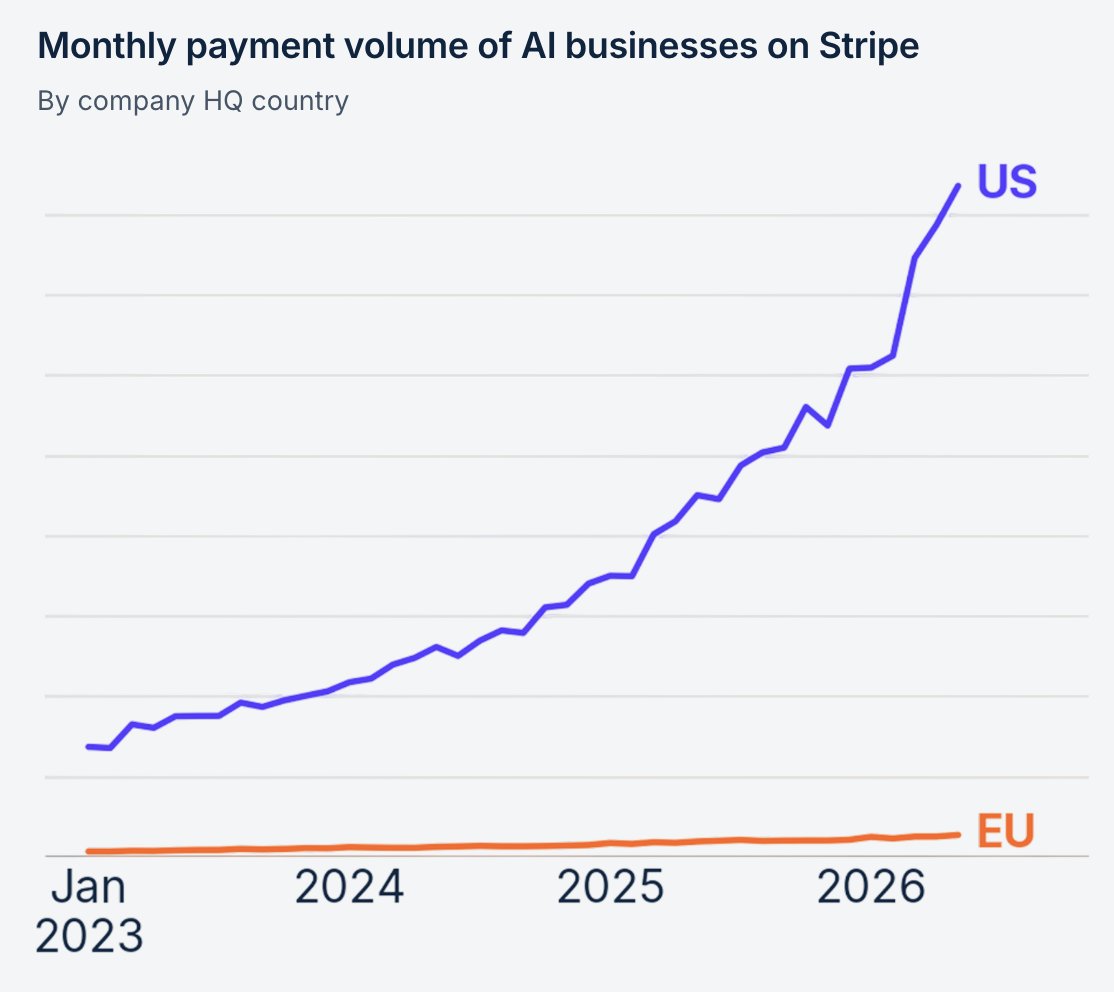
Some data we recently assembled on entrepreneurship/compute in Europe: https://t.co/x8pbpHLun7. We hope that one of the useful roles that Stripe can play is in collecting and publishing empirical data pertaining to entrepreneurship and industry in Europe. There's growing appetite to get Europe on a better footing, and cross-sectional comparisons can often shine light on where opportunities lie. If you're interested in this kind of thing, we publish more at https://t.co/YoZDuYbaBi.



- 282Replies
- 647Reposts
- 4.7KLikes
- 2MViews
2.7x average engagementHas an imageLong post (over 200 characters)Posted Thu 14:00 UTC - 04
@patrickc ·
New from @stripepress: the definitive guide to sales. I notice that startups today are scaling sales faster than ever, making it more valuable to get structures and incentives right from the outset.
- 51Replies
- 60Reposts
- 1.4KLikes
- 152.1KViews
1.1x average engagementText onlyMedium length (100-200 characters)Posted Tue 17:00 UTCQuote post - 05
@patrickc ·
These days, I'm struck by how the dominant mood on both sides of the Atlantic toward the other is a kind of pity. Europe frets about the US's supposed slide into autocracy; the US about Europe's pusillanimity and immiseration.
- 241Replies
- 87Reposts
- 3.1KLikes
- 329.5KViews
0.9x average engagementText onlyLong post (over 200 characters)Posted Sat 15:00 UTC - 06
@patrickc ·
I visited Wurster Hall at UC Berkeley today. It was designed by, and currently houses, the architecture faculty. The UC Berkeley website notes that "Wurster is often voted Berkeley's ugliest building." I visited because I was curious about whether it would in person seem as unattractive as it does in photos. And, in short: it does. It's gaunt, austere, and filmed in grime. On an elysian campus, it stands out for its bleak hostility. It reminds me of the German submarine base in Bordeaux. The UC Berkeley page agrees that it was never designed to be attractive, quoting the curator of their design archives: “Wurster and his handpicked architects didn’t want anything romantic, or sentimental — they hated the idea of ‘making pretty buildings. They wanted a serious building.” I guess we have to concede success relative to their stated goals, but it does make one wonder what it all says about architecture as a discipline.

- 386Replies
- 111Reposts
- 3.1KLikes
- 372.6KViews
0.9x average engagementHas an imageLong post (over 200 characters)Posted Sat 23:00 UTC
Latest
Recent posts by Patrick Collison
The latest 30 original posts from @patrickc, newest first, as of October 26, 2026. Replies and reposts aren't included.
@patrickc ·
I visited Wurster Hall at UC Berkeley today. It was designed by, and currently houses, the architecture faculty. The UC Berkeley website notes that "Wurster is often voted Berkeley's ugliest building." I visited because I was curious about whether it would in person seem as unattractive as it does in photos. And, in short: it does. It's gaunt, austere, and filmed in grime. On an elysian campus, it stands out for its bleak hostility. It reminds me of the German submarine base in Bordeaux. The UC Berkeley page agrees that it was never designed to be attractive, quoting the curator of their design archives: “Wurster and his handpicked architects didn’t want anything romantic, or sentimental — they hated the idea of ‘making pretty buildings. They wanted a serious building.” I guess we have to concede success relative to their stated goals, but it does make one wonder what it all says about architecture as a discipline.
- 386Replies
- 111Reposts
- 3.1KLikes
- 372.6KViews
@patrickc ·
New from @arcinstitute: using the latent space representation of genomes from single-cell life to find new candidate functional RNAs. I think this is cool because: (1) it uses deep learning and model interpretability to productive ends on a totally different kind of "knowledge"; (2) it shows how agents may be able to accelerate discovery in vast combinatoric spaces; and (3) it's an example of the synergy we'll hopefully see in the coming years between computational techniques and wet lab biology.
- 30Replies
- 62Reposts
- 680Likes
- 63.4KViews
@patrickc ·
Ben has for many years been the best analyst in tech. I’m very much looking forward to this new @stratechery + @stripe partnership. https://t.co/iFdKSV8NQ7
- 62Replies
- 65Reposts
- 1.8KLikes
- 268.6KViews
@patrickc ·
These days, I'm struck by how the dominant mood on both sides of the Atlantic toward the other is a kind of pity. Europe frets about the US's supposed slide into autocracy; the US about Europe's pusillanimity and immiseration.
- 241Replies
- 87Reposts
- 3.1KLikes
- 329.5KViews
@patrickc ·
Excellent report on the NSF from Matt Faherty: https://t.co/AfpMrP68V6. I wish there were more deep investigations and assessments like this of government agencies in the US, the EU, and elsewhere.
- 23Replies
- 36Reposts
- 226Likes
- 66.2KViews
@patrickc ·
I very highly recommend visiting the UK's great cathedrals, e.g. Lincoln and Durham. I did so earlier this year and find myself reminiscing about them quite frequently. Some of the most beautiful buildings in the world.
- 147Replies
- 78Reposts
- 2.7KLikes
- 128.4KViews
@patrickc ·
Today is probably a good time to check in on things with @privy_io, which became part of @stripe just over a year ago. Our acquisition was predicated on three factors: stablecoin growth, self-custody as a key enabler of broader global coverage, and rapidly increasing demand for programmable financial infrastructure. As we said at the time, "money has to reside somewhere, and Privy builds the world's best programmable vaults." Since then, the Privy team has executed exceptionally well: assets in Privy wallets have grown ~25x, monthly active developers are up ~3x, revenue is up ~9x, and Privy now facilitates nearly $25B of monthly transaction volume. @tryramp, @Deel, @Klarna, @felixpago, @HyperliquidX, and thousands of other businesses are building embedded banking functionality on Privy. At Stripe, we're deeply integrating Privy into Treasury, @Link, and Connect. In each case, it's accelerating our global expansion, and enabling us to build better functionality faster. (Coming soon:…
- 121Replies
- 55Reposts
- 1.2KLikes
- 176.8KViews
@patrickc ·
Stablecoin-backed cards make make global balances instantly usable at 100M+ businesses. We're looking forward to working with @plasma to advance the space.
- 50Replies
- 72Reposts
- 702Likes
- 83.8KViews
@patrickc ·
New from @stripepress: the definitive guide to sales. I notice that startups today are scaling sales faster than ever, making it more valuable to get structures and incentives right from the outset.
- 51Replies
- 60Reposts
- 1.4KLikes
- 152.1KViews
@patrickc ·
I’m very biased, but the new @WorksInProgMag is IMO a masterpiece in both design and content. https://t.co/0oNl1XSoOE
- 46Replies
- 42Reposts
- 770Likes
- 66KViews
Show all 30Show fewer
@patrickc ·
Brothers Karamazov was Einstein’s favorite novel, a verdict he shared with Freud, Hillary Clinton, and Murakami. Dostoyevsky was Pope Francis’s favorite author. Indeed, he approvingly quoted Elder Zosima; perhaps an interesting case of art molding life. At the risk of betraying my relative shallowness and inferiority, I confess that I did not love it. Written in the shadow of the death of Dostoyevsky’s son (also Alyosha), and, more broadly, after a life of repeated tragedy, Karamazov attempts most of all to address the problem of evil in Christianity. Ivan presents a trenchant argument, asking how the suffering of children may possibly be explained given the existence of a supposedly benevolent God (Dostoyevsky collected real court cases for Ivan), culminating in Ivan’s famous return of the ticket. The book gives some sense for how dislocating the nineteenth century must have been. The ascendant authority of science, the spread of materialist philosophy, the doctrine of evolution,…
- 255Replies
- 373Reposts
- 4.7KLikes
- 658.1KViews
@patrickc ·
Assorted things I've been mulling over regarding agents in the economy: • Companies are in some sense the original superintelligence. It's often the case that they can use their amortized cognitive surplus to advance their interests against those of certain consumers: relative to the optimization capacity of companies, consumers can be inattentive, underinformed, irrational, etc. (Think, say, of some of the classic insurance upsells at the end of a booking process, which is typically priced substantially above what a regular policy would cost.) Herbert Simon introduced the idea of bounded rationality, and firms often end up benefiting from it. Thanks to personal agents, we will probably get somewhat more rational in how we engage with companies. • How exactly will outcomes change? Well, certain kinds of price discrimination will work less well (how do coupons work if every agent hunts fastidiously for them?), and certain kinds of customer cross-subsidy will change (today, people who…
- 492Replies
- 1KReposts
- 9.6KLikes
- 1.7MViews
@patrickc ·
Remarkable assemblage in the new @WorksInProgMag: - @RobinRivaton and @bswud on how China's cities, and the competition between them, have driven its rise to techno-industrial preeminence, - @danwwang on Chinese and American second-tier cities, - @tylercowen on the food of Brazil, - @vpostrel on the invention of supermarkets, - @CharlesCMann on the discovery of porcelain, - @salonium on the myth of accidental scientific discovery, - Stephen Kotkin on Leninism's fatal flaw, - @owl_posting on biomedical hedge funds, - @PMArslanagic on the formula for lovable cities, - @pietergaricano on Ukraine as the future of war, - @PatRubenFitz on the Bronze Age Collapse, and - @SCP_Hughes on the social lives of hard-partying Victorian elites.
- 22Replies
- 40Reposts
- 513Likes
- 70.4KViews
@patrickc ·
We're hosting a small event to discuss the latest advances in AI and biology this Friday evening, featuring @arcinstitute researchers and others. Apply if interested! https://t.co/Esdvf4td1F
- 62Replies
- 63Reposts
- 935Likes
- 127.7KViews
@patrickc ·
Track $OUSD growth at https://t.co/HXKo5dXaia.
- 19Replies
- 27Reposts
- 279Likes
- 68.4KViews
@patrickc ·
Open Standard, $OUSD, is now live! Open Standard is a new USD stablecoin with a very large network of participating partners (https://t.co/DLdavkVEL3). It's designed to be exceptionally secure, reliable, and developer-friendly. Importantly, most yield is shared directly with partners rather than being internalized by the stablecoin issuer. Stripe is adopting OUSD in a number of core product flows.
- 51Replies
- 49Reposts
- 418Likes
- 66.2KViews
@patrickc ·
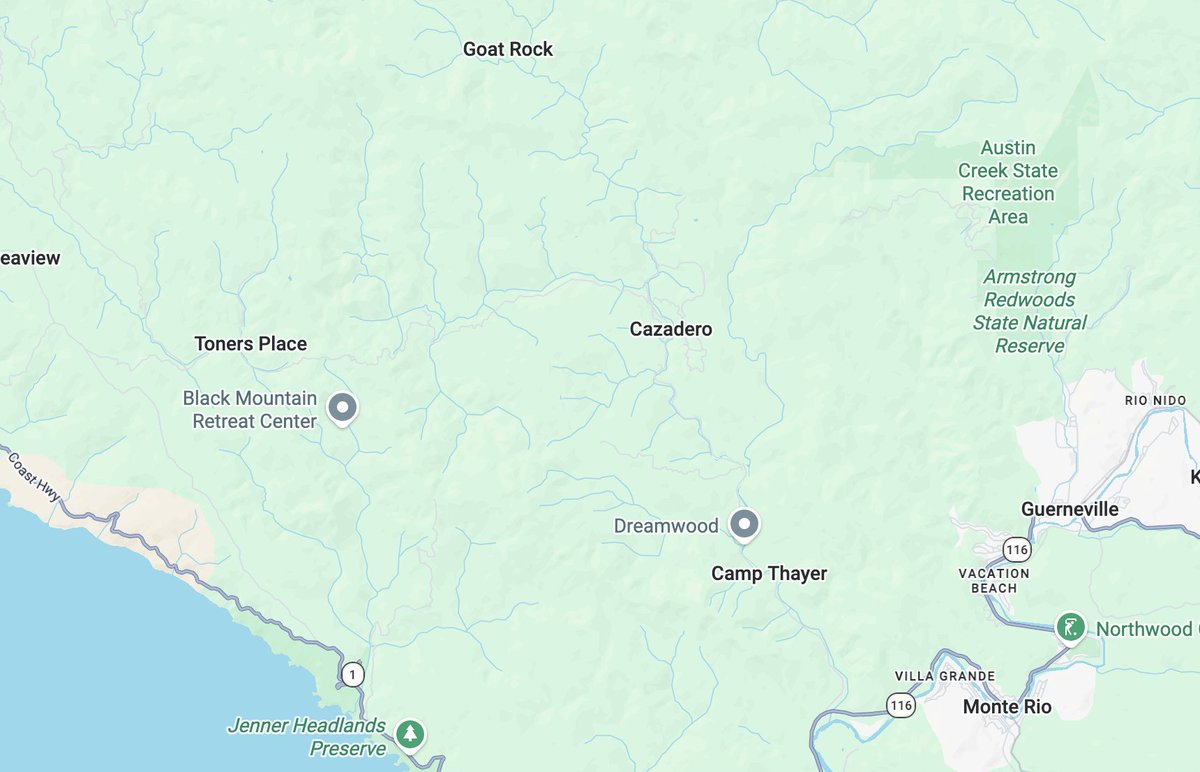
I've long wished that online mapping services were far richer and higher-density. They elide so much detail today! We have gloriously high-DPI screens... I want to wallow in cartographic filigree. AI of course now makes this possible: https://t.co/fRIivTYqt1


- 126Replies
- 45Reposts
- 1.5KLikes
- 359.8KViews
@patrickc ·
Very good post from @AtalantaArdenM on the role of suffering in art: https://t.co/eyzqdV0G7E.
- 17Replies
- 18Reposts
- 305Likes
- 78.2KViews
@patrickc ·
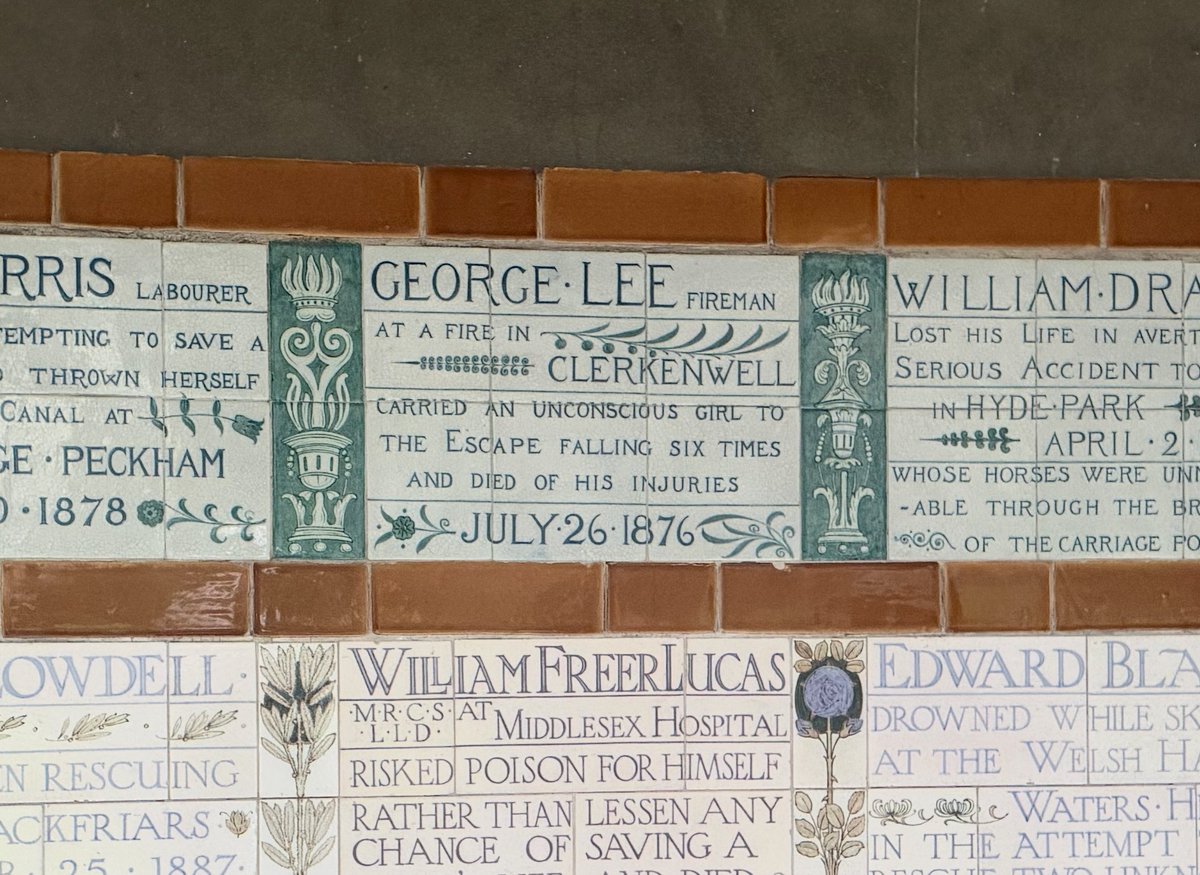
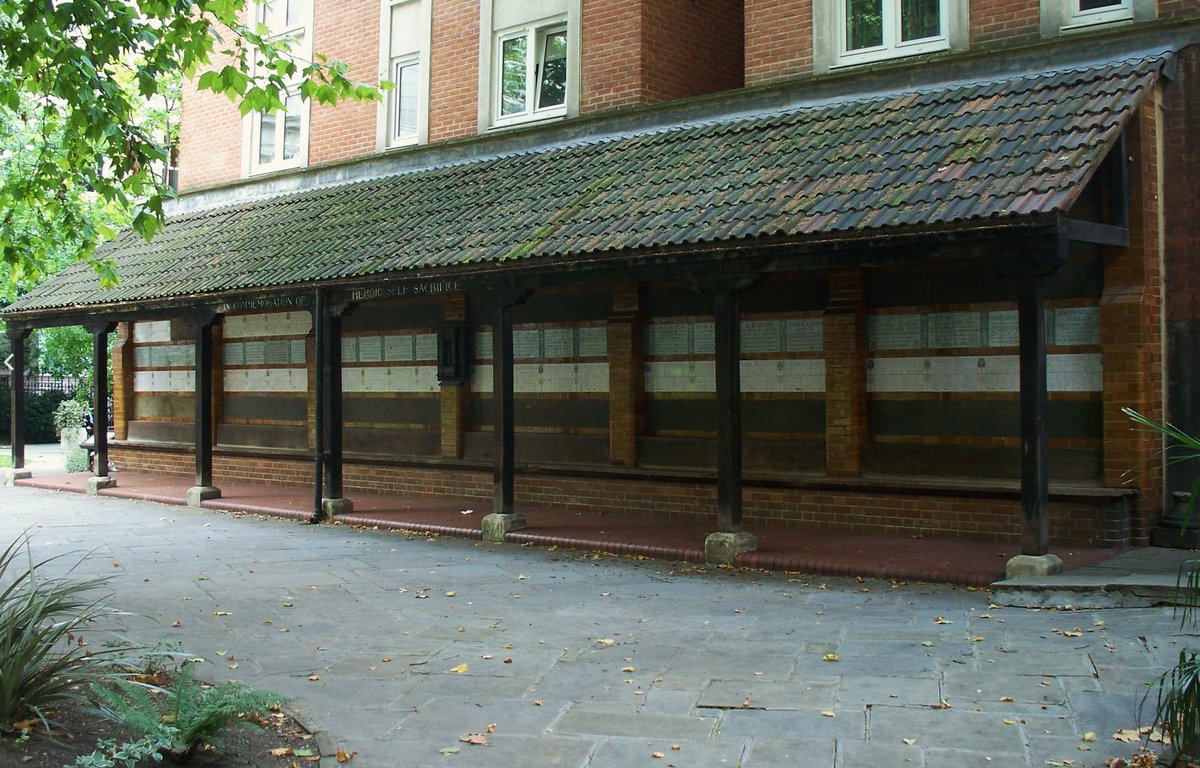
The small Memorial to Heroic Self-Sacrifice in London's Postman's Park is quite moving: an assembly of earnest Arts and Crafts tiles commemorating people who died saving the lives of others. George Watts, the creator, in 1887: "My proposal, as you know, is plainly this: that the memory of the deeds of heroism constantly recurring in our everyday life should be perpetuated and honoured as such deeds should, for they illustrate the character of our people as a nation of great acts." And elsewhere: "It is a great pity that they should only receive the recognition of a newspaper paragraph, and be forgotten next day." I'm often struck by how figures in this period across many countries seem solemnly concerned with the character of the nation.
- 23Replies
- 24Reposts
- 487Likes
- 66.9KViews
@patrickc ·
Some data we recently assembled on entrepreneurship/compute in Europe: https://t.co/x8pbpHLun7. We hope that one of the useful roles that Stripe can play is in collecting and publishing empirical data pertaining to entrepreneurship and industry in Europe. There's growing appetite to get Europe on a better footing, and cross-sectional comparisons can often shine light on where opportunities lie. If you're interested in this kind of thing, we publish more at https://t.co/YoZDuYbaBi.
- 282Replies
- 647Reposts
- 4.7KLikes
- 2MViews
@patrickc ·
🆕: @Meta and @stripe are partnering to make it easy for businesses to accept agentic payments using the @Muse Connector Platform. Learn more: • https://t.co/kGsKMULe3m • https://t.co/Fn5U2QRaaz • Email jweinstein@ / @jeff_weinstein
- 126Replies
- 92Reposts
- 1.5KLikes
- 211.5KViews
@patrickc ·
Very good piece, as usual, from @jburnmurdoch: https://t.co/gLBHIKEZtx
- 18Replies
- 35Reposts
- 645Likes
- 103.1KViews
@patrickc ·
Tempo is compounding very quickly. Seeing a lot of new stablecoin + agent use-cases.
- 45Replies
- 38Reposts
- 473Likes
- 139.4KViews
@patrickc ·
Given how wary academia (understandably) is of the effects of AI on many disciplines, it is particularly ironic that consuming its publications is so easy for the models (the world's knowledge is neatly serried in their pretraining corpora) and so cumbersome for most humans (with trenches of CAPTCHAs, accounts, and paywalls ensuring that only the unusually dedicated reader will ever make contact).
- 54Replies
- 62Reposts
- 868Likes
- 76.3KViews
@patrickc ·
A quick EU founder survey: https://t.co/LjizHbxgIQ.
- 63Replies
- 68Reposts
- 425Likes
- 258.6KViews
@patrickc ·
I'm curious to read other stories from people who've scaled new businesses in Europe. (And if your experience has been positive, that's also useful to hear.) Feel free to email me: patrick@stripe.com.
- 61Replies
- 29Reposts
- 636Likes
- 219.3KViews
@patrickc ·
Stimulating piece on Scottish education in @asteriskmgzn: https://t.co/jyTk8uTT1J. I suspect that discussions of canon, culture, and shared context to return to the fore in the coming years, as many skills, narrowly-construed, are ceded to AI, and as some of the excesses of de-Arnoldization, and the processes that Arendt described in her writing on education, start to recede. I’m curious on the causal linkage between PISA scores and the reforms he describes. It feels like a very exciting time to be a theorist of education, and I assume that the best work will come from surprising places.
- 35Replies
- 35Reposts
- 360Likes
- 65KViews
@patrickc ·
Architects oppose the kinds of buildings that most people like. (I’ve wondered if one could further corroborate this by using Flickr/Instagram or similar to investigate the building traits that correlate with photo frequency.)
- 105Replies
- 63Reposts
- 1.4KLikes
- 229.4KViews
@patrickc ·
Chris Arnade's blog continues to be one of the very best: https://t.co/tUMFIUq8R7. (You can also follow him: @chris_arnade.)
- 24Replies
- 61Reposts
- 1.2KLikes
- 400.9KViews


Formats
Content mix
- Text only
- 43%
- With media
- 17%
- With links
- 14 posts
- With hashtags
- 0 posts
Creator style: High-reach broadcaster
See the full app
This creator report is one small part of Xholic
Click through a sample creator's account in the real app. No sign-up, nothing to install.
- Posts written in your voice and scheduled for your best hours
- Buyers found on 𝕏, with a reply drafted for each one
- Analytics that show which posts grow you
No sign-up or login needed · Takes about 2 minutes

Grow your own account
Want numbers like @patrickc's?
Xholic writes posts in your voice, schedules them for the hours your audience is active, and tracks what's working every day.
$0 today · Card required · Cancel anytime
Live demo: no sign-up or login needed · takes about 2 minutes
Keep browsing
More in Founders & tech CEOs
See all of Founders & tech CEOs




Keep exploring
Free tools
- Compare Twitter AccountsPut two public accounts head to head and see who leads on views, engagement, grade and posting pace.
- Twitter Engagement Rate CalculatorCalculate engagement rate from your numbers or a public profile and grade it against your tier.
- X Monetization CalculatorChange the assumptions behind six X revenue models and compare gross revenue with direct contribution.
Guides
- How to Check Twitter (X) Analytics: Every Metric ExplainedHow to check your own X analytics on desktop and mobile, what's free per post and what needs Premium, what every metric means, and how to check any public account.
- Is X Worth It for Your Business? Score Your Readiness in 8 SignalsDecide whether X deserves a 90-day test: score eight readiness signals from 0 to 2, read what each score band means, and turn the gaps into a working plan.
From the blog
- X Analytics for Brands & Businesses: A Practical GuideHow brands and businesses use X/Twitter analytics to track reach, engagement, and ROI — with the KPIs that actually matter.
- Twitter Growth for SaaS Founders: A Practical PlaybookTwitter growth for SaaS founders explained with proven X strategies. Profile optimization, content cadence, replies, threads, metrics, and templates that work.
Best tweets on this topic
- Best tweets about Product-Led GrowthExplore the best tweets about product-led growth, including activation, onboarding, free trials, virality, conversion, retention, pricing, and PLG metrics.
- Best tweets about SaaSA curated collection of the sharpest, most-shared X posts about SaaS—saved so you do not have to dig through the timeline yourself. Updated every two weeks.
- Best tweets about EcommerceA curated collection of the sharpest, most-shared X posts about ecommerce—saved so you do not have to dig through the timeline yourself. Updated every two weeks.
About this data
- Analytics are inferred from public profile and recent post data. They do not include private impressions, profile visits, link clicks, or follower-source data.
- Deleted, protected, unavailable, or rate-limited posts may be missing from the sample.
- Stats come from public posts Xholic has stored, not private X Analytics. Xholic is not affiliated with X Corp or @patrickc.
- Own this account and want it hidden? Email support@xholic.ai — we verify ownership and handle requests within 2 working days.