Bootstrapped software and app projects
Nights-and-weekends SaaS, apps, AI tools, and web products built from personal problems or niche workflows, with MRR, users, launches, and acquisitions.
38%
Best tweets about Side Hustles
A curated collection of the sharpest, most-shared X posts about side hustles—saved so you do not have to dig through the timeline yourself. Updated weekly.
What people actually built on nights and weekends, and what it earned them.
Original Xholic analysis
Side-hustle posts most often focus on software, distribution, and assets. Across the sample, 70% of posts are supportive, while cautionary posts emphasize the practical constraints of building alongside jobs and family, plus the value of validation, runway, and sustainable pacing. [2075687908686823823, 2068037803934413216, 2077702276270235689]
70% of posts
All-time engagement
36% of posts
Published in 90 days
Conversation map
Nights-and-weekends SaaS, apps, AI tools, and web products built from personal problems or niche workflows, with MRR, users, launches, and acquisitions.
38%
Finding users through SEO, social posting, email lists, communities, paid promotion, early charging, feedback, and proof of demand.
30%
The practical limits of building alongside a job and family: burnout, inconsistent income, workload, keeping a salary, and avoiding overcommitment.
28%
Building businesses that operate beyond the founder's hours, generate recurring revenue, can be acquired, or compound into sellable digital assets.
26%
Newsletters, X accounts, ghostwriting, publishing, workshops, affiliate offers, and communities monetized through content, subscriptions, sponsorships, or products.
26%
Stories and thresholds for turning a side project into a primary business, including revenue milestones, runway, quitting decisions, and gradual scaling.
24%
Side businesses in SEO lead generation, pest control, wall printing, social-media management, vending, and other local-service or operational niches.
18%
Using AI coding and content tools to rebuild products, automate business workflows, lower production costs, and accelerate independent builders.
14%
Tone and stance
Performance benchmark
Posts with media make up 44% of this collection. Their median all-time score is 9.02, compared with 6.54 for text-only posts.
Format mix
Consensus and debate
Shared view
Software projects in the sample start from firsthand problems or niche expertise: a rebuilt deal-sourcing tool has eight paying customers, while AmpliFresh was built to address a content-workflow problem. [2068037803934413216, 2015468935572062300]
Shared view
Creators describe audience and channels as important to launching and monetizing products: one builder cites a 15K-subscriber list for a planned relaunch, while another reports building 15K subscribers and more than $1M in list revenue by documenting acquisitions. [2068037803934413216, 2067006134766940478]
Shared view
Several posts describe income streams or businesses that can extend beyond direct founder hours: local lead sites are rented for monthly fees, a design-inspiration project was micro-acquired, and publishing is presented as a sellable asset. [2075687908686823823, 2031407671929352487, 2045431284835537092]
Shared view
Posts describe AI being used to rebuild software and automate operational tasks, while other posts argue that validation, distribution, and platform trust still require work beyond production. [2068037803934413216, 2044395564834734466, 2066883981149126798]
Open debate
One post describes leaving after reaching $3K MRR and saving 12 months of runway; another argues that inconsistent earnings can make a job valuable stability while a business is still developing. [2073316911367032838, 2059168585033855202]
Open debate
One builder reports making apps alongside a commute, family, and full-time work. Other posts argue that an 8–9-hour tech day leaves little capacity and recommend fixed boundaries to reduce burnout risk. [2072055174483636288, 2077702276270235689, 2076680758689759418]
Open debate
One account reports a system requiring at most 1.5 hours weekly, while another says combining X with a job meant 14-hour days before writing full time. [2058895653246222710, 2073395359657726370]
What performs
Media appeared in 22 of 50 posts (44%) and had a 9.02 median all-time score, above the 6.54 median for text posts. [2075687908686823823, 2039758701620494401]
The local SEO lead-generation story was the top outlier at 859.97 all-time score, or 118.13 times the 7.28 sample median. Its post describes a lead-rental model and reports revenue figures. [2075687908686823823]
Announcements had a 14.467 median all-time score, higher than story (7.28), list (7.771), opinion (4.629), and question (6.265) formats. Acquisition and launch posts are examples of this format. [2031407671929352487, 2049099812037861585]
Creator-audience monetization had the highest theme median all-time score, at 13.247. Posts in the theme include a newsletter said to make about $400K annually as a side project and a list-and-workshop business reporting more than $1M in list revenue. [2079577840144793956, 2067006134766940478]
Statistical standouts
Creator landscape
The five most represented creators account for 20% of the selected posts.
1. Alex the Engineer
@AlexEngineerAI
2 posts
2. Dickie Bush
@dickiebush
2 posts
3. James Camp 🛠,🛠
@JamesonCamp
2 posts
4. Kevin Szabo
@KevinSzabo14
2 posts
5. Slim
@onu_slim
2 posts
6. Todd Saunders
@toddsaunders
2 posts
James Camp’s two posts connect a rebuilt tool with eight paying customers and a planned list launch to an account of 15K subscribers, 600 workshop buyers, and more than $1M in list revenue. [2068037803934413216, 2067006134766940478]
Todd Saunders’ examples focus on AI in practical businesses: a masonry operation automating lead and bid workflows, and a pest-control business reportedly doing $5M yearly while using internal software said to have increased close rates. [2044395564834734466, 2071986069000642868]
Dickie Bush compares $250 monthly digital-product revenue with the annual return from $100,000 invested at 3%, and presents ghostwriting as a side hustle he pursued alongside a 9–5 before leaving Wall Street. [2047738147463627003, 2037591294193602720]
Since the previous snapshot
Themes, sentiment, stance, and post format are classified per tweet. All counts, shares, medians, creator concentration, freshness, and performance comparisons are then calculated directly from the published snapshot.
Xholic's all-time score compares engagement while accounting for reach, post age, and creator consistency. It is used for relative comparisons within this collection.
This report analyzes the exact 50-post snapshot shown below. AI identifies editorial categories and drafts explanations; all statistics are calculated from the snapshot, and every narrative claim is checked against cited posts before publication.
Best Side Hustles tweets
Ranked 01–50

@mhp_guy ·
I just interviewed a guy who did $192,500 in one month working 2 to 3 hours a week. 90% net profit margins. This one is getting me all fired up just writing about it! This guy had an HR job he hated. Tried every side hustle in the book. (sound familiar?) eBay Dropshipping Affiliate marketing Facebook ads all of them He finally landed on running an SEO agency for local businesses and started actually making real money. Then a client called him in the middle of the night to complain about his results. The results were stellar by the way... Luke woke up the next morning, fired every single client he had, and walked away from $108,000 in revenue. Then he flipped the whole business inside out. Instead of doing SEO for other people, he built the websites for himself. Ranked them. Owned them. And rented the leads back out to local businesses for a flat monthly fee. His first 6 sites got him right back to $108K a year. Small niches, small cities. Towing in Woodside, Queens. Carpet cleaning in Irving, Texas. Tree service HVAC Pest control Limo He now owns 132 of these sites. I'm so pumped up after this one. In this episode Luke: - Walks through his live playbook for finding a winning niche - Shows the Irving, Texas carpet cleaning site that has paid him $500 a month for basically 7 years straight - Breaks down exactly why he only targets cities of a specific population size - Explains the rev share pitch he gave his biggest clients This one was so good!
 Watch video

@Joey_Walker82 ·
I'm soon to be 44 - I work 7:30am to 4pm Monday to Friday - I commute 2 hours every day - I have a side hustle business making belts and buckles (my hobby) - I have a son, a wife and a hefty mortgage - I go to the gym on average 3 times per week. And I'm about to have 2 apps on the app store, with a 3rd in development. If I can do this. You can too. NO EXCUSES!!
@myfirstmilpod ·
This side hustle is so easy, your boss wouldn't want you to find out about it. @mhp_guy on his best side hustle with a 99% profit margin: Wall Printers. Here's the game: Every restaurant, office, and gym needs wall art. They're paying local artists $3K and waiting a month. You roll up with a printer, upload a JPEG, and print a 5x8 mural in hours for $8 in ink. You charge $800. The blueprint: 1. Buy the printer for $4K-$16K (finance for $50-$150/month if you're broke) 2. Keep it in your garage, no retail space needed 3. Print a few walls for free to get time-lapse content 4. Post organically, run paid ads to whatever pops off It's pressure washing for 2026. Move fast. @ShaanVP
 Watch video

@toddsaunders ·
I keep saying the same thing and people keep not believing me.... So here's another one. @ZacOHara's family runs a $100M+ commercial roofing business. North Shore Masonry was a "side project" for the family, but since Zac took over, it's becoming a massive business. 5 months ago Zac couldn't find the terminal on his Mac... he had no idea what the "terminal" even was. Now his entire company runs on AI software he built himself. He built an AI agent named Mason... with his 58 year old dad who "still types with 2 fingers." Here's what Mason does: > Dad texts a photo of a business card. Mason researches the company, starts a cold email campaign, and launches a nurture sequence automatically. > Their coordinator Courtney used to hand type every lead into two different systems while on the phone. Now she gets off a call, sends the transcript to Mason, and he pulls every detail, builds the estimate, sets the task, creates the to-do for the salesman. Each call saves 8-10 minutes. She's setting 1.5x the leads she was before. Their salesmen were writing bid requests at 6:30 PM exhausted after a full day in the field. Mason writes the bid requests now. But the part that blew my mind was a feature he built with OpenClaw. A salesman sends a photo of a wall and says "I'm not sure what to do here." Mason identifies it as a historic building in Chicago, recommends Type O mortar, and advises that the lintel needs attention. Zac and his family are the future of software. THE BUILDERS ARE BUILDING!
 Watch video

@denk_tweets ·
I couldn't possibly be any more bullish on the creator economy right now: > Oliver Darcy has 100K+ subscribers generating $1M+ in ARR shortly after leaving CNN > CatGPT was working as a Chief of Staff a year ago… now she's a full-time creator with almost 1M followers > a newsletter for magicians with 10k readers makes $70K a year through subscriptions (just one example of thousands of niche newsletters on @beehiiv) > my own newsletter makes ~$400K a year as a side project > everything at Cannes Lions (the panels, the events, the parties) was all centered around the creator economy > box office hits are being led by and directed by YouTubers (on sub-million dollar budgets) > studios are now casting creators in films, knowing they'll get the added distribution of those creators promoting on their channels > Ramp, Rippling, Notion, Vanta, a16z, & Microsoft are all actively investing in storytelling and editorial roles > CAA and TPG just launched a $250M fund purely to acquire creator led media businesses & people are still only just waking up to how big of an opportunity this is

@0xkekov ·
it was never easy to make money in crypto I’ve spent a lot of time making my first 4-5 figs, but now things are even worse how I survive in 2026: web2 job - yes, I’m not afraid to be a normie and work for a boss. my internship is good and it gives me a stable salary (very good in this market) X account - don’t have native monetization, but paid gigs and ambs are a great side hustle airdrops - waiting for ~10 projects to tge that I farmed 2-3 years ago. it might still cook, especially in a bull market. the major one is polymarket, all my hopes are on it and one more thing: don’t be afraid to have a normal job the easiest way to build your first capital (or just take it from parents)
@robj3d3 ·
Getting laid off at 21 was the best raise of my life. It was October 2022. I'd just graduated and started my first corporate job as a software engineer. Six weeks in, I was still in "orientation" (didn't know those could run that long, but apparently they can). Me and three other grads got pulled into a boardroom for a video call with someone from head office in Norway. The meeting was to brief us on what progression looked like at the company. Basically, what we'd get back for being loyal. My salary was just over $50k, which is very good money for a new grad in the UK. But post-tax, post-insurance, post-inflation, post-everything-else, there still wasn't much left. About 20 minutes in, we got to the topic of promotions. "Your salary is fixed for the first year. After that, you'll go through an annual review." Everyone in the room nodded along, and I nodded with them. But underneath my nodding, my gut sank. Everything I'd gotten in life up to that point had been a direct result of what I put in. If I worked harder at school, I got better grades. If I put more time into my side hustles, I made more money. And now I was being told that no matter what I did, my reward wouldn't even be looked at for a year. Am I being too impatient? Is this just what normal people do? Should I ask if there are any exceptions? Why does everyone else seem so chill about it? Nope. I kept my mouth shut, nodded one more time, and walked back to my desk. 1 month later they laid me off. 1 year after that I started my first agency and made $38k. 1 year after that I started my first SaaS. 10 months after that it hit $10k MRR. 3 months after that it hit $30k MRR. Your output is a function of your inputs. I understood that part at 21. But what took me longer to learn is that the inputs with the most leverage aren't the hours you put in. They're what you tolerate, who you spend your time around, and where you choose to live. My old corporate job used to review my salary once a year. Now I review my salary once a month.


@JamesonCamp ·
A side hustle on track for $10-20K a month with 8 paying customers and zero marketing. That's where I'm at right now with a deal sourcing tool I rebuilt from scratch with Claude in about 2 weeks. I bought the original product a few years ago doing $500/mo. Grew it to $1,500. Then the scrapers broke. I'm not a developer so I let it sit dead for 2 years. Finally sat down and rebuilt everything from scratch. New data pipeline. New UI. Every feature. 21,000+ businesses in the catalog from 5 data sources. AI deal memos grounded in my own 144 point due diligence checklist from 5 real acquisitions. Comp valuations pulled from 5,270 real priced deals. 8 people paying $200/mo right now with zero marketing. The growth plan is simple: › Relaunch to my email list (15K+ subscribers) › Pay UGC creators to make content › Run paid behind whatever content pops › I already know every pain point from years in the acquisition space This is just a side project. Could scale to way more but it's not even my main focus yet. Building software is the easy part now. Distribution is the hard part. But distribution is for sale if you know where to look.


@alexcooldev ·
How to de-risk your startup so you don’t end up fail: - Indie first, not VC first - Build it as a side hustle - Keep your 9–5 as insurance - Fund it with your salary, not loans - Grow with organic marketing (X, TikTok, Reddit, LinkedIn) - Only quit when you’re cashflow-positive - Validate with real users before scaling - Charge early → revenue is the best proof - Build a painful “must-have” app, not a vitamin - Keep your MVP scope razor-thin - Cut burn rate to the absolute minimum - Automate or outsource what you can’t do well - Iterate fast → ship, test, fix, repeat - Focus on retention before acquisition - Avoid chasing vanity metrics (downloads ≠ success)
@JamesonCamp ·
The easiest side business doesn't start with an idea. It starts with documenting what you already do every day. I posted 500+ pieces about buying internet businesses. Built 15K email subscribers just from showing my work. 600 people bought my workshops. That list has done over $1M in revenue. Wasn't even the point when I started it. Then I bought a deal sourcing tool, rebuilt it with Claude Code, and I'm relaunching it to that same list. Should do $10K/month as a side project. The whole playbook is embarrassingly obvious. Document, build the audience, sell the sawdust, let the sawdust tell you what to build next. Most people would rather brainstorm the perfect product for 6 months than just talk about what they already know.

@TommiPedruzzi ·
This actor started book publishing. Lost $5,000 with his first book. But his second made $40,000. And he only works 12 hours a week. If he quits today, he could sell this business for $250,000. Publishing isn’t another side hustle. It’s an asset you can sell.
 Watch video
@floriandarroman ·
This guy makes $1M/year with a simple idea. (started as a side project) In this episode, @_baretto shares: - How he got 70K users/mo on autopilot - How he bootstrapped Tiiny Host to $1M ARR - Why founders become successful Watch the full video: https://t.co/MLSG7EMWot
 Watch video

@ldo_dev ·
How to build your first side project without losing your mind: 1. Solve something that actually annoys you - if you wouldn't use it, nobody will 😆 2. Skip the planning doc. Open your editor. Ship the ugly version first 3. Charge early. Free users just file bug reports and disappear 4. Use whatever stack you already know - boring and shipped beats fancy and stuck 🫡 5. Do your own support. Nothing teaches you the product faster 6. Build in public. Your messy journey is the marketing No fancy tools. No co-founder drama. No permission needed. Just you, a problem, and an embarrassingly basic MVP. Still figuring it out myself - but that's kinda the whole point 😉


@ClintFiore ·
About once a month I get a version of this call: - a business owner wants to sell their franchise business they bought into 2 years ago - it's growing in revenue, but losing money or barely breaking even on profit - they are a successful person that has a high paying job or better business elsewhere where they make their main income - they say, "I just don't have time to give this the attention it needs" - they say, "I just want out of it what I've got into it. The buildout alone was $300K." - they say, "the Franchisor isn't being helpful" - they say, "it's a great business. someone that could focus on it would do really well. it's been growing." They also always have an expensive lease they can't get out of, which makes it even harder for them to walk away and take the L. Sometimes they have some SBA debt too from the startup cost/buildout. I always say some version of: - "unfortunately this doesn't meet the criteria to sell on our platform. we need 3+ years in business and strong profitability of at least 250K/year." - "you may just have to close it down and do your best to sell the equipment and fixtures for what you can and take a loss on it. And check your lease and see what your options are." - "another option is if you have a good manager that can take over running it, as long as it's breaking even, and give them incentive to grow its profitability with a profit share % or something, that might work to keep it going and growing until it's more sellable. Or you could seller-finance it to them over time if you got real creative with the terms so they wouldn't be cash flow negative servicing the debt to you." - "or you can give it more attention, get it where it needs to be to be appealing to a Buyer, and call me back in a couple of years" Main lessons: - even if you're a successful businessperson already, don't assume you can start greenfield franchise businesses as a side hustle, no matter how easy the Franchisor makes it sound. These are real businesses that need real attention. - it's exceptionally hard to get it right with hiring a GM during the startup phase, and a lot to ask of a hired hand to take your business from "zero to one" for you. - franchises are riskier than you think. Much more risky. Most people just think of the franchise fee when exploring franchise options, but when you add up the franchise fee + buildout costs + operating capital needs to get you through the negative cash flow startup months/years + the total cost of the lease you sign up for and usually personally guarantee- the risk is actually a tremendous sum of money. Starting a franchise CAN be less risky than starting a non-franchise business from scratch as the business model and systems itself should be at least proven, BUT you still don't have product market fit at your specific location until YOU create it and prove it. And that's not easy. Which is why I generally encourage people to buy an established franchise business, with proven profits if they want to get in the franchise game, as your plan A. Yes you'll pay a lot more for it than a startup franchise, but it's 10X less risky. Then you can consider adding locations from there (buying out other established ones from retiring owners, or starting greenfield ones) from a solid foundation of cash flow and knowledge from running your established business for awhile first.

@KevinSzabo14 ·
If you are serious about building an audience. X can’t become a “side hustle” People who are successful make it top priority even before the starting earning income. You WON’T see growth that you desire at the start And the truth is, neither do you deserve it. Personally, I was working 14 hours with my job and X on the side and took me 6 months to write full time. So if you want to start earning: Learn a skill Learn to sell Build your authority The secret to growing is ‘involvement’ You must be everywhere the platform has to offer. If this doesn’t change your mindset I don’t know what will.

@DeepakSIndieH ·
I’m 47. • Failed at 5 side hustles by 40 • Left my corporate IT job(18 yrs) • Built SaaS for a niche community • Reached $13k/month MRR • Earned $600k+ in 5 years. Today it’s around $5k/month passive. Still grateful. A few lessons learnt the hard way: • Audience matters more than ideas • Showing up daily compounds • Nothing stays forever.change is the only constant • Money helps you keep playing • Be kind to yourself and others - Joined X in Jan 2026 - 600+ followers in 2 months Now building mobile apps in public. • First Android app live • iOS version shipping soon If you are into AI,tech,mobile apps,startups, reply and let's connect!

@onu_slim ·
How to use a N100k monthly side hustle to transform your finances If your side hustle makes N100,000 every month, don’t treat it like extra spending money. That N100k can completely change your financial position. I like maths so let me show you N100,000 * 12 months = N1.2 million a year. Now imagine you divide the N100k like this every month N40,000 for Investment N40,000 * 12 = N480,000 N30,000 for Emergency savings N30,000 * 12 = N360,000 N20,000 for Reinvest into the side hustle N20,000 * 12 = N240,000 Use this for better tools, marketing, equipment, learning or anything that can increase the income the hustle produces. N10,000 to Enjoy yourself N10,000 * 12 = N120,000 You don’t have to deprive yourself completely. Now look at what happened after one year Investment = N480,000 Emergency savings = N360,000 Business reinvestment = N240,000 Personal enjoyment = N120,000 Total: N1,200,000 And that’s without touching your main salary. Now imagine your N20k monthly reinvestment helps grow the side hustle from N100k to N150k monthly. That extra N50k is another N600,000 a year. This is why earning an additional N100k monthly can sometimes be more powerful than getting a N100k salary increase. The problem is that many people make N100k from a side hustle and immediately upgrade their lifestyle by N100k. More outings, clothes, Amazon Prime and Netflix subscriptions at same time. After 12 months, they earned an additional N1.2 million but have almost nothing to show for it. Don’t use your side hustle to finance a bigger lifestyle. Use it to build the financial life your salary hasn’t been able to give you. Your first side hustle should not make you look richer. It should make you become richer. Goodmorning

@RobHoffman_ ·
Today I’m CEO of 3 profitable tech companies, but at 25 this was my plan for getting rich: In Toronto, I bartended at a dive bar with a strip club in the basement. $300 a night. I got drunk with the patrons until 4am and high with my coworkers until 5. Then, I went home and wrote for major US news outlets that paid me $500 a piece for “hard hitting journalism” and political analysis. I was clearly far from a legitimate journalist but at least my bylines were. I interviewed Jordan Peterson once. I had a simple plan: save money, move somewhere cheap, and buy enough time to build a business. Once I had $10k saved I moved into a $50/month apartment in the barrios of Medellín. It had cracked concrete walls. No hot water. My next-door neighbours were gangsters who stole motorcycles, sold drugs, and partied until 5am. It wasn’t ideal working conditions but they never bothered me and the weather was nice. I tried building every business imaginable from that little apartment: A fitness brand. Niche affiliate sites. Nothing worked. I was plotting on how to get rich but had no idea how. Then I got a writing gig at a startup. The CEO had a comparatively worse drug and alcohol problem than me and since we couldn’t both be degenerates, I sobered up and grabbed the wheel. I stopped writing and started selling. I learned how business worked, spotted revenue opportunities, and willed them into reality. At some point I got promoted: $50k a year. I finally moved out of the ghetto. I've still never felt so rich. I went on to sell half a million dollars for the company that year. The next year I doubled it. It was like getting paid to go to business school: I funnelled every learning into slowly building a business of my own. The type of writing people pay for in the business world is called “SEO.” So I threw up a website, pulled together a team, and started selling. At first, it was just a side hustle. But one day my little agency crossed $1 million in annual revenue so I quit the startup gig and went all in. That’s how I went from a broke long-haired kid in a Medellín ghetto to a supposed “CEO.” Whatever that means. Now I have that title on my LinkedIn for three companies: two SaaS, one agency. All profitable, all growing. I couldn't have imagined any of it from that little apartment in Colombian gangland. Not the money. Not the companies. Not the person I’d become. Definitely not the yoga I do every morning and a life where drugs and alcohol play no part at all. All I know is I stayed delusional enough to believe it was possible and kept going. I hope this helps someone do the same. Keep going.


@kritarthmittal ·
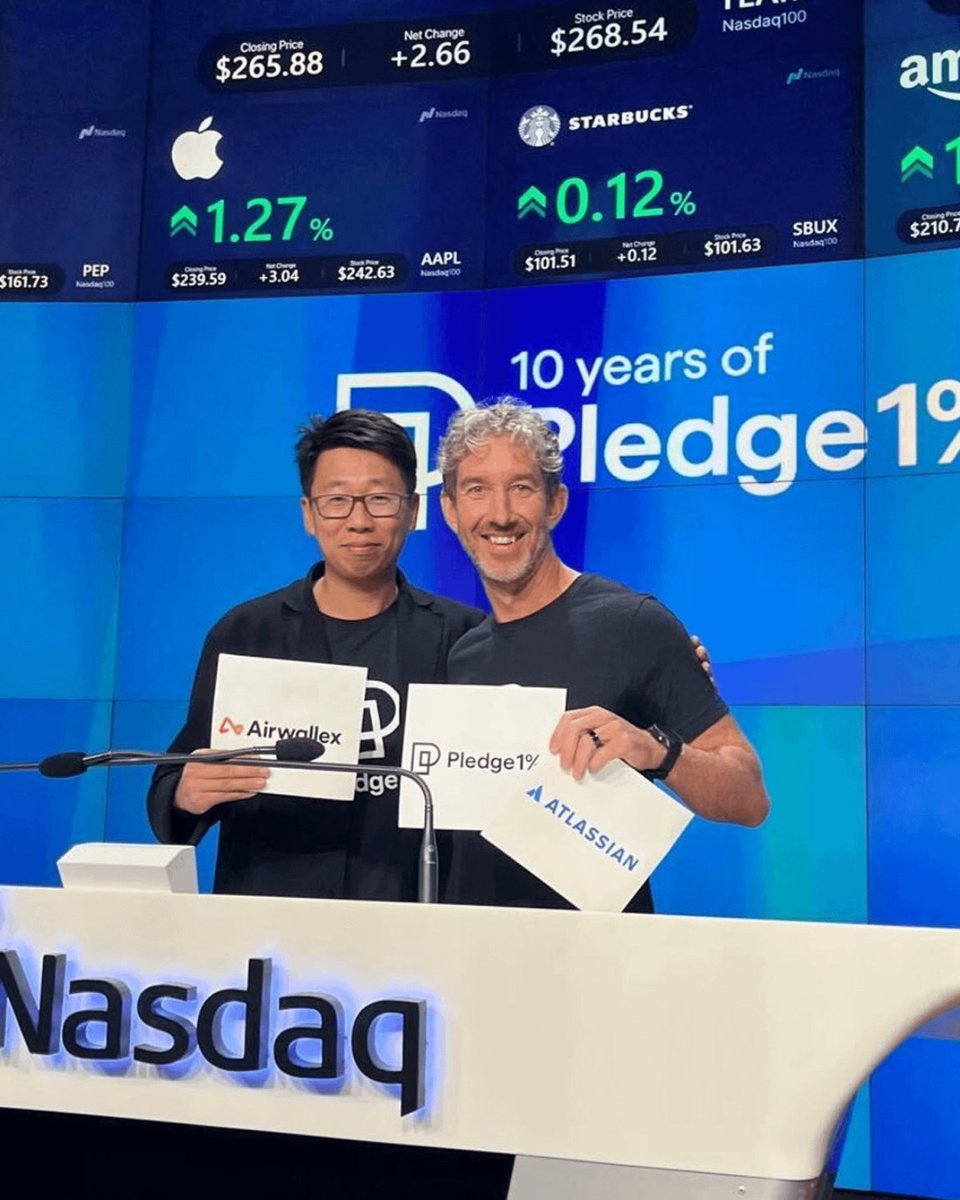
Jack Zhang lore is insane > born in Shandong, China > move to Australia at 15 > family loses everything at 16 > work in lemon factories at 40° to survive > hop petrol stations, restaurants, bartending > struggle to even pay for uni 2008-2014 > graduate CS from University of Melbourne > become an SDE at National Australia Bank > start side hustles while working full-time > trading algorithms, import/export (wine, olive oil, textiles), real estate > make $10M by age 29 (on the side) 2015 > open a specialty coffee shop > source beans from Brazil, Indonesia, Kenya > banks keep blocking payments > realize the global payment system is broken > quit everything to fix it > co-found Airwallex > Lucy Liu meets him on a Friday, wires $1M to his personal bank account by Monday 2015-2017 > first product fails > second product fails > pivot twice, nearly run out of money 3 times > every bank rejects them Goldman, JPM, etc > cold-call Macquarie Bank at 8am > pitch a junior guy on the night shift > convince them to connect Airwallex to interbank FX markets 2018 > land SHEIN as a customer > go from $0 to $1 billion in transaction volume in 9 months > Stripe offers $1.2 billion to acquire them > Patrick Collison flies to Shanghai personally > Airwallex hits $2M in revenue > co-founders vote on WhatsApp > they say no 2019 > Yuri Milner from DST Global meets Jack > doesn't ask a single business question > only asks about his childhood — the lemon factory, the financial struggles > two hours later: $100M investment at $1.1B valuation 2020-2023 > COVID kills half their revenue overnight > still doubles the business > 100%+ YoY growth for 8 years straight > hit profitability > 150,000+ businesses across 130+ countries 2025 > hit $1 Billion ARR > company valued at $8 billion > raised over $900M total > processing $200B+ annually > taking $70M in personal debt to buy more of his own stock > still writes code as CEO of an $8B company Jack Zhang for you, ladies and gentlemen. While most people were complaining about bank fees, he was getting blocked by sanctions lists at his coffee shop. By 39, he had built the company Stripe tried to buy for $1.2 billion, and turned them down. What's your excuse?

@SergioRocks ·
The real winner of AI isn’t enterprises. It’s side projects. Everyone talks about AI transforming companies. But the data tells a different story. At least for now. In Anthropic’s latest study of 80k+ users, the people seeing the biggest economic upside from AI are not employees. They’re builders. - Employees: 14% report meaningful economic gains - Entrepreneurs / independent workers: ~47% - Employees with side projects: 58% Let that sink in. Same tools. Same models. Completely different outcomes. Why? Because AI doesn’t reward access. It rewards agency. Inside a company, AI makes you faster at executing someone else’s roadmap. On a side project, AI makes you faster at creating your own leverage. That’s a fundamental shift. We’re entering a world where: - Execution is cheaper than ever - Distribution is THE bottleneck - "Taste" is the moat And side projects sit right at that intersection where the real leverage is.

@richardokunolar ·
Some years back, I had a gig that almost made me resign from my Big 4 job. In my head, I had already calculated freedom, early success, and how I was going to buy my dream car. Then I spoke with my mentor, and that discussion gave me serious insight which changed the way I started thinking about business, income stability, and risk. I was asked a few simple questions, and I remember looking at myself thinking, “Wait... why exactly have I not thought about this before?” One of the questions was whether I had savings that could sustain me for a few months if no gig shows up. Then it dawned on me that there was practically nothing in the bank. He further asked me to look properly at the numbers. Yes, I had one fantastic month, but the truth was that I had not made anything close to that consistently for almost 6 months before then. This is the case for many others. They underestimate how difficult it is to start, sustain, and grow a proper business. A business is not simply an idea that generates money from time to time. There are systems to build, operations to manage, clients to retain, finances to monitor, and pressure that rarely switches off. Sometimes people compare a side hustle to a fully operating business, but the two are often very different. One common mistake I have seen is when people assume that because their side hustle is bringing in some cash, the next logical step is to quit their job and focus on it full-time. Sometimes that decision works out well. Other times, it creates pressure that the business was not yet ready to carry. Your 9-5 or shift work may not always be exciting, but it gives stability. It gives predictable income, structure, and a level of certainty that allows you to plan ahead. That stability can quietly become the foundation for funding your bigger vision. A side hustle, on the other hand, may still be inconsistent, especially when life priorities compete for your attention. People often speak about entrepreneurship as though passion alone is enough. In reality, many successful businesses were built gradually while the founder still had another source of income supporting them. There is wisdom in growth that is measured and sustainable rather than rushed by pressure. This is also why getting work experience matters. The discipline, accountability, communication skills, and problem-solving ability you develop in your workplace can later become the same qualities that help your business survive. Sometimes your job is not delaying your dream. Sometimes it is preparing you for it. There is nothing wrong with building your own thing. In fact, more people should try. But there is also nothing wrong with recognising the value of stability while you build carefully. Every income-generating activity is not yet a scalable business, and every business idea does not need to become a full-time venture immediately. Growth is good. Timing also matters. So, before you quit your 9-5, ask yourself if you are truly ready.

@onlinedopamine ·
my little side project https://t.co/7GingWCt5a makes about $300 per month (from desktop app sales & ads) if i 10x it, my living expenses would be covered most traffic is seo; doing a bit of reddit promotion for the desktop app every now and then any idea how i can get this to $3k/m?

@toddsaunders ·
I just talked to a guy that started his career as a garbage man. Then he started a side hustle pest control business... And now his pest control business is doing $5M/year all because of a piece of software he uses internally that has dramatically increased his close rates. If he can go from garbage and pests to software.. so can you.

@AlexEngineerAI ·
The side hustle most beginners overlook when they think about AI income: managing social media for small local businesses. Not big brands. Not agencies. Restaurants, gyms, real estate agents, hair salons. They all need content. They don't have time to make it. They don't have budget for a full agency. Here is the basic offer that is working right now: 30 posts per month (captions, graphic briefs, story ideas), written with ChatGPT and designed with Canva, packaged as a done-for-you monthly content bundle. Price point: $250-500 per client per month. Three clients is $750-1500/month recurring. The real advantage: once you build a template system around one niche (say, local gyms), each new client takes 3-4 hours to onboard instead of starting from scratch. The hardest part is landing client number one. After that it compounds.

@agazdecki ·
Most founders think acquisitions are only for venture backed SaaS companies. They're not. Newton Zheng (@newtonzheng) started ePropel (@ePropelDigital) as a side hustle. He was helping businesses grow through SEO, landed a few clients, and kept building. Over time, the agency grew into a profitable business with recurring revenue, long-term customers, and a team spread across North America and the Philippines. When he decided he wanted to focus on a new venture, he faced a question many founders eventually ask themselves: Do I want to keep running this business, or is it time for someone else to take it to the next level? He chose the latter. After listing on @acquiredotcom, he received more than 40 NDAs, multiple offers, and ultimately found a buyer who was the right fit for both the business and the team. What stands out to me is that Newton didn't build ePropel for an exit. He spent years building a good business with recurring revenue, long-term customers, and a team that could operate without him. When the time came to move on to something new, buyers could immediately see the value in what he had built. That's usually how the best exits happen. They're the result of years of steady execution, not a few months of preparing a business for sale. Go build something great. Then sell it on your terms. Check out the full interview here: https://t.co/mdOmUhrRjx


@TJLarkin23 ·
Talked to a bunch of people making between $7k and $40k a month on their local newsletter recently #1 takeaway by far: They're working full time on it So many people treat their newsletters as a side project Which is fine, technically I'm doing that too with mine in my area But if you're wondering why you're not crushing it when you hear of people who are, this is probably why

@bmykhaylivvv ·
Just hit $500 MRR with AmpliFresh! Started as a simple side project to solve my own problem - keeping content fresh across platforms. Spent evenings coding while working full-time. The key was shipping fast and iterating based on user feedback instead of building in isolation. The Twitter growth to 2K followers came naturally by sharing the journey. Posted daily updates, code snippets, and honest struggles. People love following real progress, not polished success stories. Tech stack kept it simple: Next.js, Stripe, and PostgreSQL. Don't overthink the architecture early on - focus on solving the core problem first. --- Crossed $500 MRR milestone with AmpliFresh today. The moment when your side project starts paying for itself hits different. From idea to profitable SaaS in 3 months. Built it because existing content management tools felt bloated and expensive for small teams. Twitter became my distribution channel without paid ads. Shared behind-the-scenes moments, technical decisions, and user wins. Authenticity beats marketing budget every time. Next goal: $1K MRR by month 6. Already have a waitlist of features users actually want. --- Hit 2000 Twitter followers in 40 days by doing one thing consistently. Share your actual work, not just thoughts about work. Posted screenshots of AmpliFresh features, code reviews, and real user feedback. The dev community responds to substance over fluff. Building in public works because people want to support creators they follow from the beginning. My followers became my first customers and biggest advocates. $500 MRR feels like validation, but the community around the product matters more than the revenue right now. --- $500 MRR update: AmpliFresh users are sticking around. Churn rate under 5% because we focused on one core workflow instead of trying to be everything. Content teams just want their publishing process to work reliably without constant maintenance. Built the MVP with weekend coding sessions. PostgreSQL handles the data, Next.js for the frontend, Stripe for payments. Nothing fancy, just solid foundations that scale. Twitter growth happened by treating followers like colleagues, not an audience. Share your wins and failures equally.
@MikeHoffmann ·
If you own one vending machine producing $800/month… You're already outpacing what most people make from a side hustle. If you have 5, you've replaced a part-time income. If you have 20+, you've built something most people spend decades trying to find. The barrier to entry has never been lower.

@DanielPriestley ·
In my early days as an entrepreneur, I ran nightclub parties and sold roses door to door for Valentine's Day. All of these side hustles laid the foundations for building a multi-million dollar business in my early 20s. To be honest, the feeling I got from selling 100 roses door to door and making $360 profit was even better than the feeling I got last time I raised $1 million of funding for a tech start-up. What were your early experiences? Do you still remember them fondly?
@TommiPedruzzi ·
Side hustle: • Tied to your output • Stops when you stop • Scales with your time • Dies when life gets busy Digital Asset: • Tied to a product, not a person • Scales with more units, not more hours • Earns during the months you don't touch it Same effort to start. Completely different architecture after month six. Build the thing that doesn't need you present to function.

@vesting_tv ·
How @SzymonRybczak got into YC: Built Tester Army on weekends as a side project. Posted on LinkedIn he was changing jobs. VCs cold reached out. Applied to YC on the last day. Got an interview the next evening. 10 minutes. 30 seconds per question. 3am Polish time, Pete Koomen emailed. By 8am, he was probably in. Side project to YC in months. host - @brycent | @vesting_tv
 Watch video
@AlexEngineerAI ·
The biggest misconception killing AI side hustle beginners: passive income starts on day one. Every post says the same thing. "Set it and forget it." "Automated income while you sleep." "AI does the work for you." Here is the actual split between what AI tools handle vs. what you still need to do yourself: What AI genuinely automates: - Design creation (Midjourney, Canva AI) - First draft content (ChatGPT, Claude) - Video voiceovers and avatars (ElevenLabs, HeyGen) - SEO keyword and tag suggestions What AI cannot automate: - Platform cold starts (Etsy, Fiverr, KDP, Gumroad all begin with zero visibility) - Review and social proof accumulation - Niche validation (is there real demand for what you built?) - Optimization cycles once you actually have data The reality per platform: Etsy does not push new shops in search. Fiverr has a "New Arrivals" boost window for roughly 30 days, then organic discovery drops sharply without reviews. KDP assigns new books a Best Seller Rank above 5 million until they sell copies -- effectively invisible in browse. Gumroad Discover factors in payment history, so brand-new sellers see minimal Discover traffic. AI compresses the production side. It does not compress the platform trust-building phase. Those are two different things. What "passive" actually looks like: You spend months 1-3 uploading, testing niches, collecting first reviews, adjusting titles and tags. After that foundation exists, sales start compounding with less daily effort. That is the passive phase. It just does not start on day one. One more thing worth saying plainly: the people selling "instant passive income" courses are usually making their money by teaching passive income, not from the passive income systems themselves. Start with the expectation that months 1-3 are active, iterative work. Months 4 and beyond start to look like what the highlight reels are showing you.

@profitfounder ·
This guy makes $1M/year hosting PDFs on the internet. Last week, I met @_baretto in Bali. We spent an hour talking about: - how he bootstrapped Tiiny Host to $84K/mo - what it takes to succeed as a SaaS founder - how he gets 70,000 users a month on autopilot Chapters: 00:00 Intro 00:43 Meeting Elston in Bali 02:19 What is TiinyHost? 05:14 From software engineer to founder 07:42 It was just a side project 09:16 The biggest mistakes new founders make 12:13 Why I stopped chasing multi-product 14:01 The first users (and first dollar) 16:26 Finding the right marketing channels 17:05 Why YouTube is underrated 18:49 From 1 customer to 100 22:10 The best distribution channel (70K users/mo) 29:36 The journey from $0 to $8K MRR 31:30 Breaking through the next ceiling 35:43 The bootstrap advantage 37:32 Riding the AI wave 42:18 Saying no (and ignoring competitors) 47:31 Distribution with features 50:56 Don't try to be Steve Jobs 54:02 The mentor strategy that actually works 59:09 How to find the right mentor 1:01:54 Would I buy or build today? 1:04:15 The truth about being a founder
 Watch video
@onu_slim ·
Someone asked me how medics with little free time can earn extra income. So this is what actually works for a schedule that changes every week and never guarantees a free evening. Locum shifts come first. This is not a new skill, it is your existing one, sold in smaller blocks at other facilities on your off days. Medical content and consulting comes next. Health tech startups need people who understand clinical reality, not just code. Paid consulting in short bursts pays well and does not need daily attention. Dividend paying stocks and index funds are the passive layer. You do not manage these daily. You contribute consistently and let years do the compounding while your actual job keeps you occupied. Treasury bills and money market funds sit underneath that. Almost zero time commitment beyond setup, and your idle cash earns more than it would sitting in a regular savings account. Medical writing and exam tutoring round it out. Question bank writing, licensing exam tutoring, these pay per project, not per hour. They fit around chaos instead of demanding a fixed schedule. This is the mistake most medics make. They try to start a business that needs daily attention on top of a job that already owns their time. That combination dies within months, every time. The real formula is passive investing plus one skill based side income you can do in short bursts. Nothing that competes with the hours your patients already need from you.

@rcmisk ·
an indie hacker posted yesterday that he ended up in hospital. stress. he stayed up all night pushing because he thought the thing he built was about to be taken away. read that again. hospital. from a side project. nobody warns you about this part. your feed is MRR screenshots and "how i hit $10k in 90 days." nobody posts the panic attacks, the 3am chest tightness, the friendships that quietly starve. if you're juggling a 9-5 and a side project, the rules that keep this game survivable: 1. time-box the project, don't open-end it. fixed hours, then the laptop closes. unfinished today is fine. it will still be unfinished tomorrow, and you'll fix it faster after sleep. 2. the all-nighter is a scoping failure, not a work ethic. you promised yourself too much at 11pm. cut the feature in half and go to bed. 3. your 9-5 is runway, not the enemy. it buys you the one thing funded founders can't have: no clock. the people who burn out are racing a deadline nobody actually set. 4. track social health like you track MRR. when did you last see a friend without checking your phone? if the answer is "weeks," the project is already costing more than it earns. 5. no launch is an emergency. the market doesn't know your deadline exists. the whole game is staying in the game. a project that takes 3 years and leaves you healthy beats one that takes 1 year and takes you with it. what's the one boundary you won't break for your project?

@ShrikalaKashyap ·
every woman i've gotten coffee with recently has a side project she built herself -- a parenting site, a summer camp finder, a site that helps new postpartum moms, a personal website and a stealth (really cool) idea. the energy right now is completely different from even a year ago. they just opened claude code after their kid's bedtime and shipped it. and now every coffee ends the same way: "ok wait before you go, let me show you what i made." i love this era so much 💜💜

@Chrisjjosephs ·
Something that needs to be talked about more is how men lowkey don't have many ways to create side hustles around their passions. Women have an entire ecosystem it. GRWM. Fashion. Beauty. Etsy. DePop. Affiliate marketing. There are proven playbooks. Men have fewer obvious ones, maybe sports betting or gaming, but that's about it. I feel like we're entering an era where investing changes that men. Now platforms like Substack, subscriptions on X, or launching a portfolio on Autopilot are making it possible for men passionate about investing are monetize what they enjoy doing. Below is a chart comparing the annual earnings of hedge fund managers, creators, and athletes. The economics of investing have always been enormous but the issue is they've just been inaccessible to everyone except professional money managers. As investing becomes increasingly social and transparent, I think there will be thousands of men will build $20K–$50K/year side businesses around newsletters, paid communities, and investable portfolios.


@MakadiaHarsh ·
built a side project last year. revenue: $250 users: only 6 by every metric, a flop still one of the best things i did all year. no client brief. no deadline. no roi conversation. just a problem i found interesting. it reminded me why i started building in the first place. some projects make you money. some projects make you dangerous. you need both.

@JamesEbringer ·
Built a Twitter account to 154 followers and it's generating $5.84 in MRR per follower Most accounts at 154 followers generate $0 Most accounts at 50k followers generate $0 Followers don't pay you, distribution does Here's the actual setup - Spun up a new account from zero - Plugged a content system into it - Promoted one TAP offer through it - 1.5 hours per week of work, max Current state - 154 followers - $900 MRR in commissions - $1,800/mo in revenue moving through the offer - $5.84 MRR per follower For context $900 MRR is what most affiliate marketers set as their yearly goal I hit it as a side project on an account that doesn't even have 200 followers The lesson isn't "Twitter works" The lesson is that followers are a vanity metric Conversion mechanics are the actual metric If your content system routes 154 of the right people to the right offer, you out-earn 50k followers routing nowhere Most affiliates are optimizing for the wrong number Stop chasing followers Start building systems that monetize whoever shows up


@WilsonCompanies ·
Most people hear "poop scooping business" and think side hustle. What they miss: some operators have turned it into a multi-million dollar recurring revenue machine. One company in Colorado employs 50+ scoopers. Another generates $4 - 5M a year. Boring niches aren't small. They're often hiding sophisticated businesses in plain sight.

Best Tweets by Topic