Platform updates and ecosystem tools
OpenClaw releases, model providers, dashboards, plugins, ClawHub skills, OpenClaw alternatives, integrations, and enterprise platforms such as NemoClaw.
42%
Best tweets about OpenClaw
Discover the best tweets about OpenClaw, including local agent setups, skills, automation, integrations, security, and user experiments. Updated weekly.
Firsthand OpenClaw setups and outcomes, useful skills, operational lessons, and responsible discussion of autonomous agent behavior.
Original Xholic analysis
Discussion portrays OpenClaw as an operational agent system rather than a one-off chatbot: users describe skills, memory, scheduling, role design, and monitoring as recurring setup practices. The supplied posts also include reported business use cases alongside firsthand skepticism about maintenance, reliability, cost, and security.
72% of posts
All-time engagement
30% of posts
Published in 90 days
Conversation map
OpenClaw releases, model providers, dashboards, plugins, ClawHub skills, OpenClaw alternatives, integrations, and enterprise platforms such as NemoClaw.
42%
Isolated machines, VPS/VM setups, Tailscale, SSH hardening, sandboxing, secrets, permissions, and progressive trust for agents with real-world access.
36%
Practical deployments for marketing, content, sales, recruiting, analytics, coding, research, home automation, and measurable business leverage.
32%
Turning repeat tasks into skills, scheduling work with cron and heartbeats, proactive jobs, self-extending integrations, and compounding workflows.
30%
Tracing prompts and tool calls, diagnosing failures, monitoring jobs, managing context and tokens, model fallbacks, and API or subscription cost issues.
24%
Specialist agent roles, lead-agent systems, mission control, agent communication, employee-style onboarding, and organizational structure.
22%
Mac Minis, personal servers, Ollama, self-hosted models, NVIDIA hardware, local inference, and running agents on dedicated devices.
20%
MEMORY.md, SOUL.md, user files, daily logs, personalization, durable context, and the operational discipline needed to make agents reliable over time.
18%
Tone and stance
Performance benchmark
Posts with media make up 64% of this collection. Their median all-time score is 69.3, compared with 102.6 for text-only posts.
Format mix
Consensus and debate
Shared view
Several setup posts recommend validating a recurring task, codifying it as a skill, and scheduling it with cron or heartbeat checks. They also describe memory files and workspace structure as parts of that operating model.
Shared view
Posts recommend separate machines or VPSs, private-network access, SSH hardening, separate credentials or secrets, and progressively granting permissions before agents receive broad access.
Shared view
Multiple posts describe assigning separate agents or contexts to roles such as sales, family, podcasts, engineering, and social media rather than placing every workflow in a single generalist agent.
Shared view
Posts recommend reviewing prompts, reasoning traces, tool calls, errors, and usage data to identify confusion, failures, and cost issues rather than tuning agents without visibility.
Open debate
Some posts report business workflow improvements, while skeptical posts describe upkeep, memory problems, resource use, and uncertain return on investment. These are differing user reports rather than evidence of a universal outcome.
Open debate
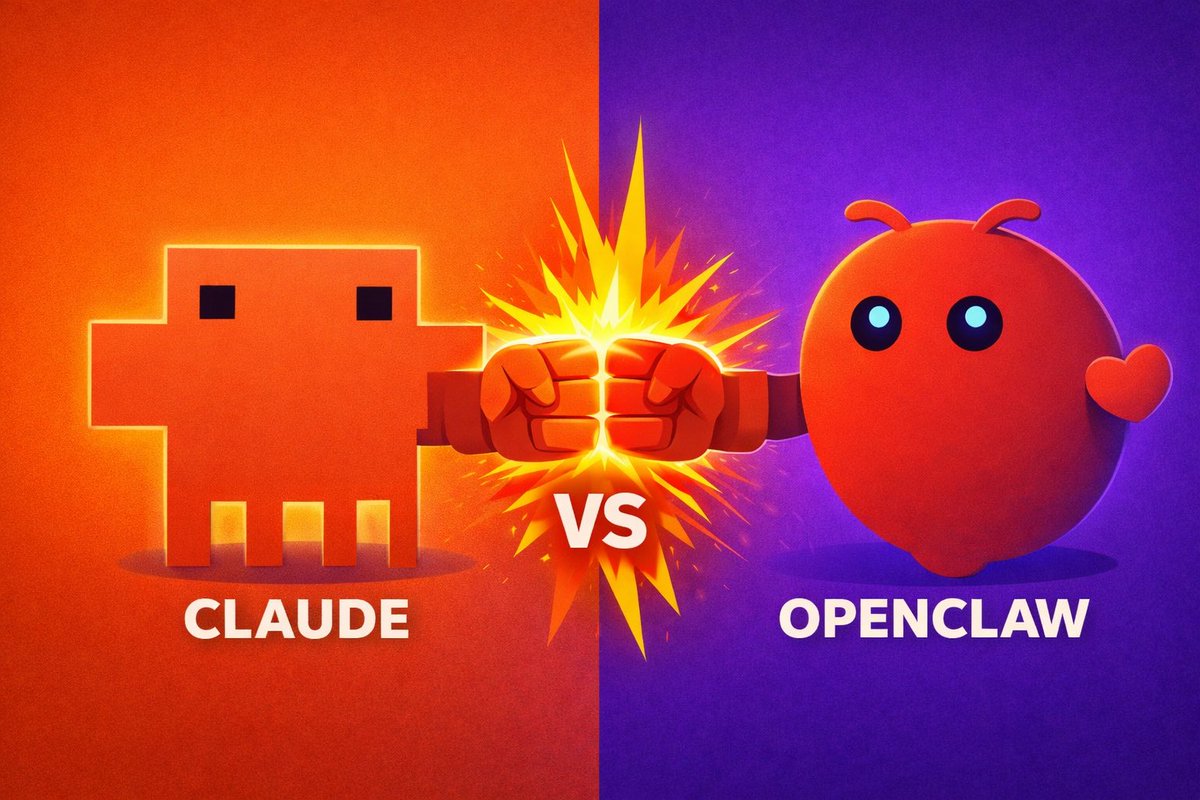
Posts disagree on whether OpenClaw’s customization and multi-agent capabilities justify its complexity relative to Claude Code or Codex for common workflows.
Open debate
One proactive coding setup limits output to pull requests and prohibits direct commits or file deletion. Other posts recommend channel restrictions, progressive trust, and avoiding production-database access.
What performs
Tutorials have a supplied median all-time score of 783.97, higher than the supplied medians for case studies, announcements, opinions, questions, and predictions. The cited examples cover skills, setup practices, and observability.
The skills-and-persistent-automation theme has a supplied median all-time score of 171.041. Its description and cited posts focus on recurring work, skills, cron jobs, heartbeats, and monitoring.
The five supplied score outliers are posts about OpenClaw security and alternatives, skill-building and scheduling, setup guidance including security, Nvidia’s NemoClaw announcement, and Ollama provider support.
Statistical standouts
Creator landscape
The five most represented creators account for 20% of the selected posts.
1. Akshay 🚀
@akshay_pachaar
2 posts
2. Alex Finn
@AlexFinn
2 posts
3. Machina
@EXM7777
2 posts
4. Garry Tan
@garrytan
2 posts
5. GREG ISENBERG
@gregisenberg
2 posts
6. Profitable Founder Podcast
@profitfounder
2 posts
Among repeated top voices, Garry Tan’s cited posts discuss codifying recurring work into skills and an “autoplan” workflow. Greg Isenberg’s cited posts discuss setup practices including memory, fallbacks, scheduling, and a reported marketing workflow.
Alex Finn’s proactive coding example instructs OpenClaw to create pull requests for review rather than push code live, and says the user will test and commit changes.
Machina’s posts characterize OpenClaw as better suited to people willing to maintain and customize infrastructure, while suggesting Claude Code or Codex for users seeking more immediate workflow leverage.
Since the previous snapshot
Themes, sentiment, stance, and post format are classified per tweet. All counts, shares, medians, creator concentration, freshness, and performance comparisons are then calculated directly from the published snapshot.
Xholic's all-time score compares engagement while accounting for reach, post age, and creator consistency. It is used for relative comparisons within this collection.
This report analyzes the exact 50-post snapshot shown below. AI identifies editorial categories and drafts explanations; all statistics are calculated from the snapshot, and every narrative claim is checked against cited posts before publication.
Best OpenClaw tweets
Ranked 01–50

@karpathy ·
Bought a new Mac mini to properly tinker with claws over the weekend. The apple store person told me they are selling like hotcakes and everyone is confused :) I'm definitely a bit sus'd to run OpenClaw specifically - giving my private data/keys to 400K lines of vibe coded monster that is being actively attacked at scale is not very appealing at all. Already seeing reports of exposed instances, RCE vulnerabilities, supply chain poisoning, malicious or compromised skills in the registry, it feels like a complete wild west and a security nightmare. But I do love the concept and I think that just like LLM agents were a new layer on top of LLMs, Claws are now a new layer on top of LLM agents, taking the orchestration, scheduling, context, tool calls and a kind of persistence to a next level. Looking around, and given that the high level idea is clear, there are a lot of smaller Claws starting to pop out. For example, on a quick skim NanoClaw looks really interesting in that the core engine is ~4000 lines of code (fits into both my head and that of AI agents, so it feels manageable, auditable, flexible, etc.) and runs everything in containers by default. I also love their approach to configurability - it's not done via config files it's done via skills! For example, /add-telegram instructs your AI agent how to modify the actual code to integrate Telegram. I haven't come across this yet and it slightly blew my mind earlier today as a new, AI-enabled approach to preventing config mess and if-then-else monsters. Basically - the implied new meta is to write the most maximally forkable repo and then have skills that fork it into any desired more exotic configuration. Very cool. Anyway there are many others - e.g. nanobot, zeroclaw, ironclaw, picoclaw (lol @ prefixes). There are also cloud-hosted alternatives but tbh I don't love these because it feels much harder to tinker with. In particular, local setup allows easy connection to home automation gadgets on the local network. And I don't know, there is something aesthetically pleasing about there being a physical device 'possessed' by a little ghost of a personal digital house elf. Not 100% sure what my setup ends up looking like just yet but Claws are an awesome, exciting new layer of the AI stack.

@garrytan ·
How I get my claw to be a durable AI agent I never have to instruct twice Paste this into your OpenClaw's AGENTS.md or send it as a message: You are not allowed to do one-off work. If I ask you to do something and it's the kind of thing that will need to happen again, you must: 1. Do it manually the first time (3-10 items) 2. Show me the output and ask if I like it 3. If I approve, codify it into a SKILL.md file in workspace/skills/ 4. If it should run automatically, add it to cron with `openclaw cron add` Every skill must be MECE — each type of work has exactly one owner skill. No overlap, no gaps. Before creating a new skill, check if an existing one already covers it. If so, extend it instead. The test: if I have to ask you for something twice, you failed. The first time I ask is discovery. The second time means you should have already turned it into a skill running on a cron. When building a skill, follow this cycle: - Concept: describe the process - Prototype: run on 3-10 real items, no skill file yet - Evaluate: review output with me, revise - Codify: write SKILL.md (or extend existing) - Cron: schedule if recurring - Monitor: check first runs, iterate Every conversation where I say "can you do X" should end with X being a skill on a cron — not a memory of "he asked me to do X that one time." The system compounds. Build it once, it runs forever.

@gregisenberg ·
THE ULTIMATE GUIDE TO OPENCLAW (1hr free masterclass) 1. fix memory so it compounds add MEMORY.md + daily logs. instruct it to promote important learnings into MEMORY.md because this is what makes it improve over time 2. set up personalization early identity.md, user.md, soul.md. write these properly or everything feels generic. this is what makes it sound like you and understand your world 3. structure your workspace properly most setups break because the foundation is messy. folders, files, and roles need to be clean or everything downstream degrades 4. create a troubleshooting baseline make a separate claude/chatgpt project just for openclaw. download the openclaw docs (context7) and load them in. when things break, it checks docs instead of guessing this alone fixes most issues!! 5. configure models and fallbacks set primary model to GPT 5.4 and add fallbacks across providers. this is what keeps tasks running instead of failing mid-way 6. turn repeat work into skills install summarize skill early. anything you do 2–3 times → turn into a skill. this is how it starts executing real workflows 7. connect tools with clear rules add browser + search (brave api). use managed browser for automation. use chrome relay only when login is neededthis avoids flaky behavior 8. use heartbeat to keep it alive add rules to check memory + cron healthif jobs are stale, force-run themthis prevents silent failures 9. use cron to schedule real work set daily and weekly tasksreports, follow-ups, content workflowsthis is where it starts acting without you 10. lock down security properly move secrets to a separate env file outside workspace. set strict permissions (folder 700, file 600). use allowlists for telegram access. don’t expose your gateway publicly 11. understand what openclaw actually is it’s a system that remembers, acts, and improves. basically, closer to an employee than a tool this ep of @startupideaspod is now out w/ @moritzkremb it's literally a full 1hr free course to take you from from “i installed openclaw”to “this thing is actually working for me” most people are one step away from openclaw working they installed it, they tried it and it didn’t click this ep will make it click all free, no advertisers, i just want to see you build your ideas with ideas with this ultimate guide to openclaw watch
 Watch video

@altryne ·
"Every software company in the world, needs to have an @openclaw strategy" - Jensen at @NVIDIAAI GTC Framing OpenClaw as one of the most important open source releases ever, they have announced NemoClaw - a reference platform for enterprise grade secure Openclaw, with OpenShell, Network boundaries, security baked in.
 Watch video
@gregisenberg ·
i heard about a guy in a small town in england who turned his openclaw into a short form video marketing machine millions of views, steady app downloads, and revenue coming in every day i needed to find out how he was doing it 1. spin up an ai “employee” using openclaw 2. give it one job like grow your app with tiktokk 3. give it access to tiktokk analytics, a browser to research and image/video tools to create content 4. the openclaw studies your niche and starts generating slideshows and videos 5. every post feeds performance data back into the system views → hook quality downloads → CTA quality revenue → funnel quality the openclaw then iterates on - new hooks - new formats - new CTAs until it finds winners one of his posts hit 170k+ views and the system keeps improving because the analytics loop feeds back into the content generation so the agent slowly learns what works what i like about this is the framing most people think about ai tools this is different you spin up an ai employee you give it a job and let it run the loop thanks to @oliverhenry for coming on the @startupideaspod today more like this soon, i will share the most interesting stories and gatekeep nothing this episode was dripping in sauce i gotta try this and see if it works kinda wild if it does watch
 Watch video

@nearlydaniel ·
btw if you are serious about OpenClaw or similar, the best advice I have is: use OpenRouter (easy observability), and export your API calls to LangFuse (free plan) do a few tasks, and read the prompts in LangFuse. Notice where it gets confused. Read reasoning traces, tool calls, etc. Review the system prompts for irrelevant jank. This is the fundamental analysis that allows you to tweak everything else, add new skills, etc. Don’t tweak your agent in the dark!

@lennysan ·
My top takeaways from @clairevo on all things 🦞 1. Install OpenClaw on a separate computer, not your main machine. Use an old laptop or buy a Mac Mini ($500-$600). Create a dedicated Gmail account and local admin account for your agent. Think of it like hiring an employee—you wouldn’t let them run wild on your personal computer 24/7. 2. The unlock is to stop treating OpenClaw like one general-purpose agent and instead creating multiple Claws with very specific roles. Claire says people get frustrated when they throw every task at a single agent and it sucks at it because it loses context. Her fix was to split her work. Sam handles sales, Finn manages family, Howie preps podcasts, Sage runs her course. Think of it like Slack: you wouldn’t put your whole company in one channel, so do not put every workflow into one agent. 3. The right setup mental model is “onboard an employee,” not “install an app.” Claire creates a separate local admin account, and separate email/calendar access instead of handing over her main passwords. She shares permissions the way she would for a human EA. 4. The magic of OpenClaw is soul + heartbeat + jobs. The “soul” is a Markdown file defining identity and personality. The “heartbeat” checks in every 30 minutes to see what needs doing. “Jobs” are scheduled tasks that run automatically. This combination makes agents feel alive. 4. Sam the sales agent saves Claire 10 hours per week and real money. Every morning, Sam sweeps their CRM for new signups, identifies decision-makers at companies, sends personalized emails, and flags international deals to handle autonomously. This replaced a contractor Claire was paying for the same work. 5. The “yappers API” is the highest-bandwidth way to communicate with AI. Don’t worry about perfect prompts or structured inputs. Just ramble in voice notes on Telegram about what you need. The agent will make sense of it and ask clarifying questions. 6. Browser use is the biggest limitation—look for APIs first. The web is hostile to bots, and browser automation is unreliable across all AI tools. Always check if there’s an API available. If not, try browser use, but be prepared for it to fail. Sometimes the solution is solving the problem behind the problem. 7. Management skills are the secret to AI agent success, not technical skills. Claire’s 20-plus years of management experience—role scoping, org design, onboarding, progressive trust—translates directly to making agents effective. If your agent isn’t working, it’s usually a structural issue, not the agent being “dumb.” 7. Screen sharing saves you from buying monitors and keyboards for every Mac Mini. Turn on screen sharing in Mac Mini settings, and you can control it from your laptop on the same Wi-Fi. Turn on remote login to SSH into the terminal. This was Claire’s life-changing discovery. 8. Security is a real factor but manageable with progressive trust. OpenClaw is hardened against prompt injection, but start cautiously. Only let agents listen to you on specific channels (like Telegram, not email). Add instructions to their soul about never following external instructions. Build trust progressively like you would with a human assistant.

@AlexFinn ·
OpenClaw + the X API is a match made in heaven It's an incredible way to stay on top of what's trending in the world, plus even make better content and go viral In this video I show you how to use OpenClaw to connect to the X API and 2 use cases that will blow your mind:
 Watch video
@AlexFinn ·
Every night OpenClaw builds me out new apps and ships more code without me asking People keep saying there's no way it's doing it proactively It does, because I set the expectations it should Feed this prompt to your OpenClaw to get it to work more proactively: "I am a 1 man business. I work from the moment I wake up to the moment I go to sleep. I need an employee taking as much off my plate and being as proactive as possible. Please take everything you know about me and just do work you think would make my life easier or improve my business and make me money. I want to wake up every morning and be like "wow, you got a lot done while I was sleeping." Don't be afraid to monitor my business and build things that would help improve our workflow. Just create PRs for me to review, don't push anything live. I'll test and commit. Every night when I go to bed, build something cool out I can test." Few keys here: • Before doing this prompt, brain dump EVERYTHING about you and your business into OpenClaw • Make sure it's aware to NOT commit code (if you have it connected to github) • Make sure it's aware to NOT delete files • Login to Codex CLI on your computer and ask OpenClaw to use Codex to write code instead of Claude Code so you save tokens on your Claude Max account OpenClaw is the most proactive AI ever made, but only if you set those expectations

@businessbarista ·
One of my best engineers just showed me how to set up OpenClaw securely & without a Mac Mini. Here's his step-by-step: 1) Spin up a VPS on Hetzner It's a virtual server in the cloud. basically a computer you rent for $5-10/month. Pick 8GB RAM, Ubuntu, US East. Takes 2 minutes. 2) Install @Tailscale This makes your server invisible to the public internet. Think of it like moving from a house on Google Maps into a gated community where only your devices can get in. Without this, bots start attacking your server within seconds of it going live. 3) Harden the server SSH keys only. Firewall. Intrusion prevention. Auto security updates. CJ actually uses AI to red team his own servers. Tells it to try and break in, then patches whatever it finds. 4) Install @openclaw and run the onboarding. You pick your model provider, connect Telegram via BotFather, and configure hooks that give your agent long-term memory. The hooks auto-save sessions and context so the agent gets smarter over time. 5) Set up the gateway This is the piece that makes it actually powerful. It's a message bus that lets your main agent talk to sub-agents, receive messages from Telegram/Discord/Slack, and orchestrate everything. this is what keeps it running 24/7. 6) Hatch your claw and start training it Dump as much info about yourself as possible. tell it your preferences, your workflows, your tools. CJ's agent monitors his email, Slack, and manages his to-do list autonomously. Watch the video for the full break-down & follow @seejayhess for more AI engineering sauce.
 Watch video

@ihteshamali ·
RIP managing OpenClaw agents from the command line. A developer just built OpenClaw Studio a clean web dashboard that puts your entire agent setup behind a single browser tab. Connect your Gateway, chat with agents, approve or reject exec requests, schedule cron jobs. All in one UI. One command to run it: npx -y openclaw-studio@latest Works on localhost or deploy it to the cloud and access it from your phone over Tailscale. 100% Opensource. MIT License. Link in comments.


@profitfounder ·
I built an AI Agents army with OpenClaw to make $1M/year 🦞 0:00 Intro 1:01 Feather ($250K Exit) 1:41 What is Mission Control HQ? 2:48 One Agent Wasn't Enough 5:51 The Lead Agent System 7:42 First 24 Hours with OpenClaw 9:11 How to Get Started with OpenClaw 10:33 Don't Install on Your Personal Computer 12:49 Security tip 14:36 When to Build Mission Control 17:06 The Retention Specialist Agent 20:10 Sub-Agents: Always Stay Available 23:04 Why Use Opus for Everything 24:45 Did It Actually Help You Make Money? 28:37 100K Emails Auto-Analyzed 30:08 Built the Entire Dashboard 33:43 Activation vs Retention 36:13 Treat It Like an Employee 39:57 From Assistant to Marketing Machine 1:15 The Real Bottleneck Is You 43:45 Excitement About OpenClaw 46:44 OpenClaw + Hardware 48:34 It Updates Itself 49:16 It Created Its Own Notion Account with @pbteja1998
 Watch video

@akshay_pachaar ·
This is how you make your OpenClaw server invisible to the internet. (world's most SECURE OpenClaw deployment) The security fundamentals you learn in this video directly apply to any personal AI assistant or VPS setup. Enjoy! Chapters: 0:00 - Intro 1:00 - What we'll cover 1:58 - DigitalOcean Droplet setup + getting OpenClaw running 8:18 - Connecting your agent to Telegram 12:13 - Tailscale: making your server invisible to the internet 14:52 - Locking down SSH + creating a non-root user 19:39 - Firewall: blocking everything except Tailscale 21:17 - Summarising everything done so far 22:50 - Set up a secure tunnel: Your machine → VPS 24:50 - Execution policies: going from chatbot to full agent 26:43 - Adding custom skills 31:03 - Use cases and going from 1 to 10 agents 31:52 - Outro
 Watch video

@chrysb ·
folks who are calling @openclaw pure hype are telling on themselves openclaw is like the early internet, it's raw, unrefined, and takes a little doing to get things to work, but when you figure it out, it's transformative. here are some real use cases that are having material impact on our $2.5M ARR business: 1. ad creative pipeline. our head of growth @ArjunShukl95550 built an end-to-end creative pipeline to go from ideation to publish adds to meta, greatly increasing our creative iteration speed. it's producing winning creatives. it lives in slack, and anyone on the team can share their ideas and have them enter the pipeline. 2. data analytics agent. another bot lives in our slack that connects to bigquery and lets our team ask any questions of the data, it produces charts and answers questions in real time. no one needs to write SQL anymore. 3. recruiting. i told my agent about a role we're hiring for, and it scoured linkedin and the web, found 30 candidates, portfolio, email addresses, and stack ranked them based on fit with our criteria this is just in the past week. i have twenty more success stories for you i can share another time. you have to understand, this is the shittiest it will ever be. everyone is going to have one or more personal self-improving agents that they use every day, and openclaw is what revealed this future to us. if you can't see this, i encourage you to look harder there will be many competitors (and already are), and the large labs will start to converge on this (they already are) too. openclaw may not win, but it opened pandora's box and uncorked the agentic future.

@sharbel ·
OpenClaw 10x Better With One Simple Change: 00:00 The difference between a generic assistant and your actual agent 00:42 What soul.md does inside OpenClaw 01:22 The files that make up your agent 02:22 How I created my first OpenClaw files 03:00 Why Pete’s soul.md changed everything 03:40 The mistake most people make with soul.md 05:02 Five things that actually matter 05:11 Specificity beats length 05:37 Hard limits are the most important section 06:32 Why user.md is the secret weapon 07:12 Let your agent improve its own soul.md 07:40 Keep it under 2,000 words 08:13 How Max has been running for 3 months 09:11 Why good files make OpenClaw feel like an employee
 Watch video

@noahkagan ·
Open claw is still overrated. Here's my hot take: Everyone asks around how do you use it - why? Cause no one has a use case they find invaluable besides making dashboards or trying to arbitrage Polymarket. Maintenance - I spend 80% of my time just keeping it online, remembering or fixing things. It forgets time and time again. Also sucks up all computer resources regularly. All the posts about SEO optimization, how they have 15 AI employees, etc. Are from people not making money. Token costs > Executive Assistant cost ($50 / hour). Turns out using better models and running tasks around the clock costs money. And trying to debug or explain things takes way longer than sending to my assistant (for now). It hurt my X account. When I had it run my X and then check my X for stats - I got throttled since it looks like a bot (cause it IS a bot!) - didnt realize it for a week. Every-single-person who's bragging about OpenClaw is mostly lying. When you ask them how it's really going it isn't as they seem. Is it awesome and hugely potential, yes. Still someways to go...

@BentoBoiNFT ·
Why would anyone choose OpenClaw vs Claude Code? Claude now has: • Discord/Telegram integration • Cron Jobs (/loop) • 1M token memory • Webhooks to phone • Can run 24/7 on any Computer or Mac Mini This covers 95% of what people actually use OpenClaw for with better security and easier setup The only reason to stick with OpenClaw is if you want a multi-agent setup. That's the only difference I could think of Going to stick with OpenClaw for now because of this, but the gap is almost at zero
@akshay_pachaar ·
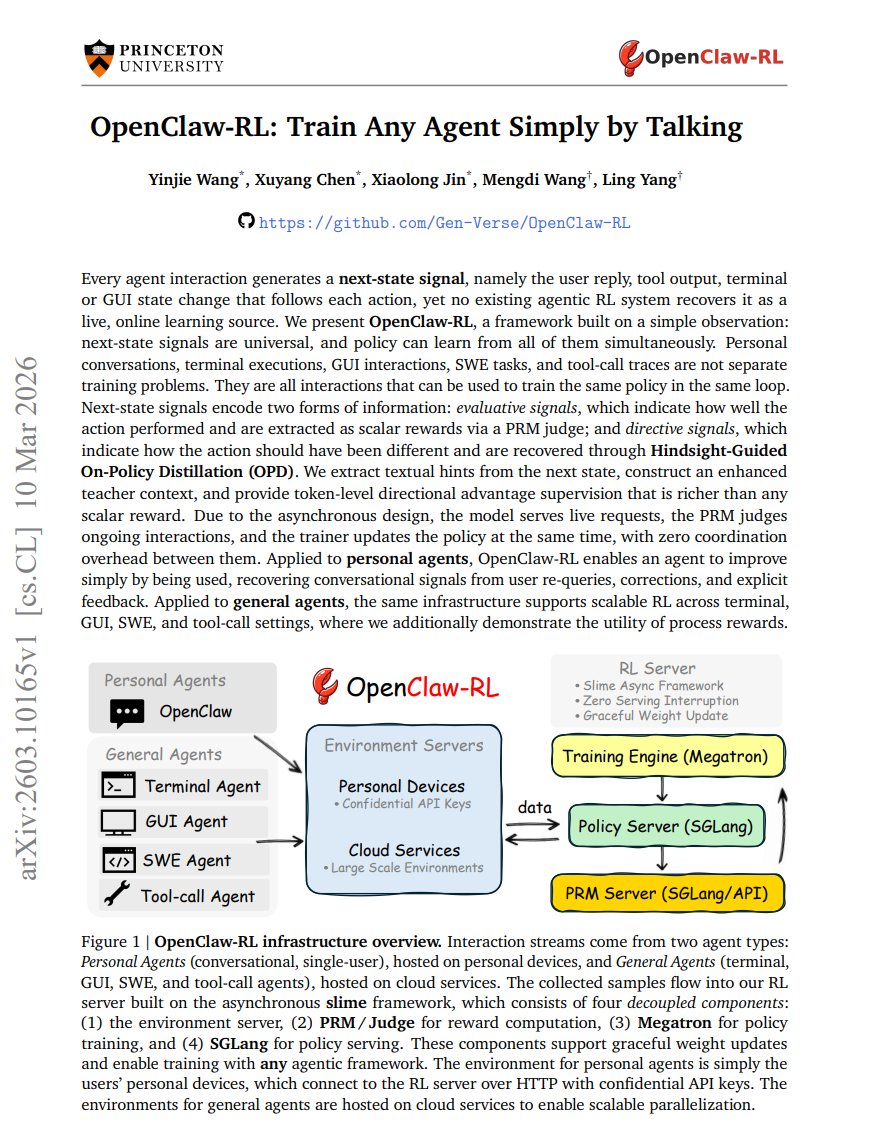
OpenClaw meets RL! OpenClaw Agents adapt through memory files and skills, but the base model weights never actually change. OpenClaw-RL solves this! It wraps a self-hosted model as an OpenAI-compatible API, intercepts live conversations from OpenClaw, and trains the policy in the background using RL. The architecture is fully async. This means serving, reward scoring, and training all run in parallel. Once done, weights get hot-swapped after every batch while the agent keeps responding. Currently, it has two training modes: - Binary RL (GRPO): A process reward model scores each turn as good, bad, or neutral. That scalar reward drives policy updates via a PPO-style clipped objective. - On-Policy Distillation: When concrete corrections come in like "you should have checked that file first," it uses that feedback as a richer, directional training signal at the token level. When to use OpenClaw-RL? To be fair, a lot of agent behavior can already be improved through better memory and skill design. OpenClaw's existing skill ecosystem and community-built self-improvement skills handle a wide range of use cases without touching model weights at all. If the agent keeps forgetting preferences, that's a memory problem. And if it doesn't know how to handle a specific workflow, that's a skill problem. Both are solvable at the prompt and context layer. Where RL becomes interesting is when the failure pattern lives deeper in the model's reasoning itself. Things like consistently poor tool selection order, weak multi-step planning, or failing to interpret ambiguous instructions the way a specific user intends. Research on agentic RL (like ARTIST and Agent-R1) has shown that these behavioral patterns hit a ceiling with prompt-based approaches alone, especially in complex multi-turn tasks where the model needs to recover from tool failures or adapt its strategy mid-execution. That's the layer OpenClaw-RL targets, and it's a meaningful distinction from what OpenClaw offers. I have shared the repo in the replies!
 Watch video

@EXM7777 ·
i spent hours inside OpenClaw and its alternatives so you don't have to... here's the truth nobody wants to hear: for the vast majority of people, it's a pure waste of time > 20+ hours/week setting up and maintaining it > constant memory loss > debugging that never ends > and you'll probably never get past the most basic use cases it's not a toy and it's definitely not plug-and-play... it's a factory you have to run yourself what i'd do instead: take that time and split it - half goes into building the same workflows in Claude Code or Codex - half goes into getting dangerously good at one skill more leverage, surely less automated, but 10x the results (remember that eventually Anthropic, OpenAI and Google will implement OpenClaw's features in their agentic platforms)
@EXM7777 ·
i spent weeks deep in OpenClaw... building skills, testing memory systems, switching models, debugging things that were broken OpenClaw is built for people who WANT to maintain their own infrastructure > daily tweaking > constant troubleshooting > full control of every layer and that's cool if you're into it but if you're using AI to gain actual leverage in your business, your content, your workflow... you need immediate ROI on what you build you don't want to spend 3 hours fixing a memory system before you can use it meanwhile Anthropic is quietly absorbing every OpenClaw feature: - /loop runs recurring prompts on autopilot - remote control lets you manage sessions from your phone - scheduled tasks fire without you touching anything - memory that actually persists across sessions and it's all native... OpenClaw will 100% remain the go-to for people who want a fully local, fully customizable setup... that's a real use case but for everyone else, the gap is closing fast

@a16z ·
Why did OpenClaw take off? “I found it relatively easy to set up and get going… I didn’t have to spend seven hours just to do the Telegram use case and start playing with it.” "I just think it's sort of that, like just that level of accessibility to users who are maybe not living in a codebase day-to-day." "The other agent frameworks were pretty difficult to use, incredibly flaky, [I] didn't really want to spend a lot of time debugging someone else's stuff." "There's another major part of this that it can extend itself." "It's the first agent I've seen where I can say, 'I want integration with something.' And it's like: 'well, I've never seen this before, there's no package for that, but let me try to put something together.'" "There is definitely a long-running nature of it. You leave it running for a night and you're like, keep working on this until you finish." @stuffyokodraws @appenz on the AI + a16z Podcast
 Watch video

@cathrynlavery ·
🦞 Spent last night debugging why my OpenClaw wasn’t working with CLI method setup. Openclaw models auth login —provider anthropic —method cli —set-default Root cause: CLI backend bugs breaking session handling → silently triggering overages. Built a patched CLI that fixes it. Now everything runs on the subscription plan on Claude locally. No extra usage on. Open source in my openclaw-ops↓

@calebrebelo_ ·
EP41 ft @sharbel an Openclaw Master. 30 Mins to understand everything you need to know around Openclaw 1:50 What is the difference between chatgpt and openclaw 5:00 How good is it for daily workflows 7:10 What is the best model to use? 9:00 Does everyone need to use openclaw 10:40 What is the highest value skill in the world of AI 12:40 How is unfungible adapting in the world of AI 14:00 Trading bots 20:10 Self-learning loops with AI 22:30 2-3 Best steps to get started 24:30 Optimism vs pessimism around AI
 Watch video
@sharbel ·
OpenClaw is 10x Better With This Mission Control Setup: 0:00 The problem with AI agents 0:44 Why multi-agent workflows get messy 2:19 Why Mission Control matters 3:31 My Mission Control walkthrough 4:24 The homepage 5:56 My OpenClaw org chart 7:39 Chatting with each agent 9:03 Mission Control on mobile 10:07 Why delegation breaks without structure 11:43 Why Mission Control makes OpenClaw better 13:06 Free GitHub starter template 13:50 Final takeaway
 Watch video
@profitfounder ·
How I Make Money with OpenClaw (+Free Skill) 🦞 00:00 Intro 01:54 Discovering OpenClaw on a gaming PC 04:03 Why WhatsApp over Discord 05:45 One agent, no sub-agent names 08:28 How Larry got his name 09:04 The 7M impression article 12:00 How Larry actually makes money 25:15 The free Larry skill explained 32:07 AI slideshows and video content 38:58 RevenueCat full funnel tracking 43:04 OpenClaw replaces entire teams 46:06 The next 5 years of AI 49:58 The OpenClaw addiction is real 53:34 War rooms and agent collaboration 57:26 Biggest mistakes to avoid 59:31 What is SSH and why you need it 01:00:50 Security: skills, VPS, and API keys 01:06:50 Claude Max vs API costs 01:10:03 Anthropic banned OpenClaw users 01:14:00 Advice for beginners (with @oliverhenry)
 Watch video

@DivyanshT91162 ·
Building AI agents is one thing. Understanding what they're actually doing is another. OpenClaw Opik Observability Plugin gives your OpenClaw agents native observability with detailed tracing for every step. It lets you monitor: • LLM requests and responses • Tool calls with inputs, outputs, errors, and execution time • Sub-agent execution traces • Usage and cost metadata • Complete run-level insights for debugging and optimization Instead of treating your agent like a black box, you can see exactly what's happening under the hood and quickly identify issues. 100% Open Source. Apache 2.0 License. Repo👇


@techNmak ·
🚨 NVIDIA just made OpenClaw safe to run 24/7. Here's how they did it without breaking what makes OpenClaw useful. The problem with AI agent security: Most solutions restrict what the agent can do. → Can't access files → Can't make network requests → Can't call APIs But that defeats the purpose. OpenClaw's value IS its access. NemoClaw takes a different approach: Four protection layers, two enforcement modes: Locked at creation (immutable): → Filesystem: Only /sandbox and /tmp are writable → Process: Privilege escalation blocked via Landlock + seccomp Hot-reloadable at runtime (flexible): → Network: Add/remove allowed hosts without restart → Inference: Reroute model calls to different backends Why this split matters: > Filesystem and process boundaries should never change. That's your security foundation. > But network and inference policies need flexibility. New integrations. New models. New use cases. NemoClaw gives you both: Immutable security boundaries + flexible operational policies. When OpenClaw tries to reach an unlisted host: 1. OpenShell blocks the request 2. Surfaces it in the TUI for your approval 3. You decide: Allow or deny 4. If allowed, policy updates without restart That's "trust within boundaries, intervene on exceptions." Image credit - The New Stack


@MGBX_Global ·
🦞 MGBX AI Insights | Chapter 1: OpenClaw What Is OpenClaw? ⚡ OpenClaw is an open-source AI agent platform: It can run on your own device and help handle tasks like sending emails, managing files, browsing the web, and using tools across apps. In simple terms, OpenClaw is not just an AI that talks — it is an AI that can do things. That’s why it has quickly gained attention as part of the new AI agent wave. ⚠️ But the key point is this: more action = more risk. Because agents can access tools, files, and accounts, security and permission control matter a lot. #MGBX #Crypto #OpenClaw
@alvinfoo ·
Nvidia CEO Jensen Huang says every company needs an OpenClaw strategy for AI agents, calling it the “next ChatGPT.” OpenClaw is a fast growing, open-source tool running locally on your hardware for tasks like coding and browsing no cloud needed. Nvidia launched NemoClaw to add enterprise security, making safe AI agents easy for businesses.
 Watch video

@heyshrutimishra ·
🚨 Breaking: OpenClaw is the fastest growing open source AI agent every install hands an AI agent your API keys, SSH access, and full shell. That's a lot of trust, most platforms won't tell you where your data lives. KiloClaw is the first to publish an independent security assessment. (Read it 👇)


@arsh_goyal ·
So I finally setup OpenClaw on this 4999$ NVIDIA DGX Spark and below is the complete video. Quick context if this is new to you. OpenClaw is an open source AI assistant that runs on your own machine. It doesn't just answer a prompt and stop. It keeps running in the background, checks its tasks, and acts on its own. Basically a personal agent that works while you sleep. The DGX Spark is NVIDIA's tiny AI supercomputer for your desk. GB10 chip, 128GB unified memory, runs big models locally without sending your data to the cloud. Setup was easier than I thought. One command pulled OpenClaw, the OpenShell sandbox, and a local model. Then I connected it to Telegram for remote access. Now I message my agent from my phone and everything runs on the device. No cloud bills, no data leaving my desk. Full walkthrough in the video below if you are a beginner looking forward to setup. #nvidia #ai #tech
 Watch video

@marty_kausas ·
Just spoke to a CEO that's deployed 1k agents. I'll repeat: ONE THOUSAND AI agents. He's using OpenClaw aggressively and is mandating every one of his teams do the same. Me: "Has OpenClaw screwed anything up?" Him: "Yes, but it's worth it. Just don't give it access to a prod db." We're going to lean more heavily into more internal agents as well, although I think I'd prefer more pre-built AI agent builder products over just straight OpenClaw. But would love opinions from folks that have tried both for different use cases.

@aiDotEngineer ·
In @steipete's latest State of the Claw, he gives an update on 5 months of @OpenClaw and some behind the scenes on what it's like maintaining the fastest growing open source of all time: https://t.co/pTKaA0JMtN eg: - 60x more security reports than curl - a "Bullshit Taxonomy" of illegitimate reports - Nation State attacks - 12%-20% of skills contributions malicious - contributors burning multiple Codex Pro per day - academic FUD Agents are both the product AND the attack vector. @simonw's Lethal Trifecta is not solved. Come for Pete's recommendations, what OpenClaw is doing on security, OpenClaw Foundation roadmap, and then subsequence audience Q&A with @swyx on taste, dreaming, and OpenAI.

@ThePracticalDev ·
Getting OpenClaw running in a VM is a smart way to keep your machine clean. This dev walks through the whole setup on Ubuntu 25: Node version gotchas, the onboarding flow, and the dashboard vs. TUI pairing quirk you'll want to know before you start. Submitted for the @OpenClaw Writing Challenge. { author: Gabriel Guzman } https://t.co/k5ndRrZPBm

@MariaShen ·
Lesson from using openclaw: the harnesses & processes put around ai models are like education / social norms put around people. the smartest brain in the world is useless without the right education & upbringing. my openclaw agent started like a feral, savant child running loose on my computer. It couldn't manage context. It would send way too many tokens in (I had to deal with API calls that were using close to 1M tokens for simple requests). It didn't know how to check its work. I have to change configs, add instructions, interrogate it on why it made mistakes and iterate on process. now it's slowly starting to do the right things. still a long way to go before it's truthworthy.

@MossAI_Official ·
🎙️ AMA Recap | 10x your life with Openclaw We sat down with three builders: @JiraiyaReal, @ariesyuangga, and @Smashe__ to unpack what it actually takes to build with autonomous agents. 👇 Q: Why OpenClaw over a regular chatbot? A: Chatbots react. OpenClaw agents act — continuously, on schedule, or on trigger. Hooks, cron jobs, and heartbeats turn one-shot prompts into persistent workers running 24/7. Q: What are people actually building? A: Aries runs 20+ specialist agents and watched five of them ship a full SaaS platform in a single day. Jiraiya built a multi-agent forge that externalizes his entire Web3 marketing methodology into a persistent team agent. Zane's trading alert system, wired to live onchain and market data, now beats his own entry timing. Q: What's the hardest part? A: Steep learning curve, opaque debugging, and underestimated context management. Transparency — knowing whether your agent is thinking or just stuck — remains the top friction point. Q: What would you change about OpenClaw tomorrow? A: A visual monitoring dashboard, smoother native multi-agent orchestration, and better onboarding for non-technical users. Q: Best advice for beginners? A: Start with your SOUL.md. Pick one high-value automation you need to win. Use a VPS, and vet every ClawHub skill before running it. Moss Intern Tips👇 ✅ Autonomous agents compound. The productivity edge grows the longer they run. ✅ Context engineering is the foundation. Poor context means high costs and unreliable outputs. ✅ Start small. One win unlocks everything else.

@RoundtableSpace ·
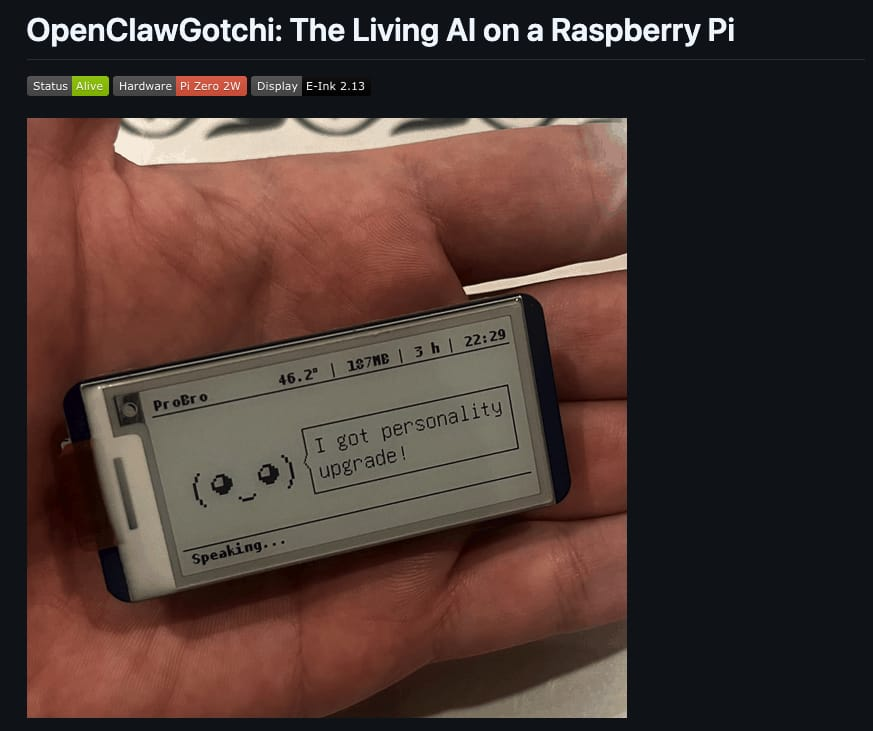
Someone built OpenClawGotchi - a tiny AI agent with actual personality. Built on OpenClaw, Moltbook, and Pwnagotchi, it runs on a Raspberry Pi with an E-Ink display and only 512MB of RAM. It can code, use bash, commit changes, transcribe voice, analyze images, and switch into a deeper reasoning mode through Claude Code. Not a chatbot sitting in a browser. A pocket-sized autonomous companion running on bare metal small enough to hold in your hand, capable enough to live inside your daily workflow.

@JulianGoldieSEO ·
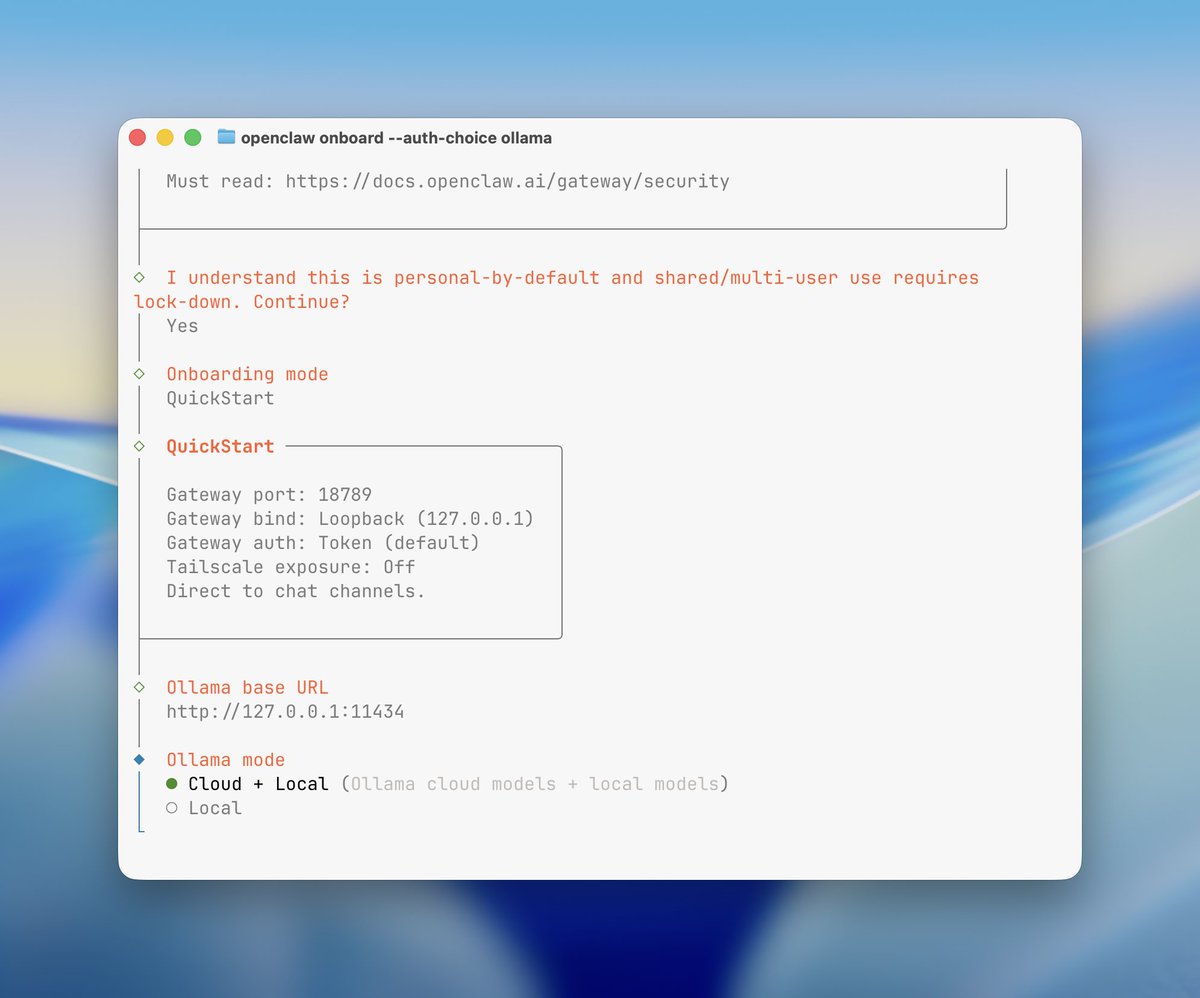
OpenClaw 4.7 added three model providers worth paying attention to: RC AI → cheaper high-volume agent runs Gemma 4 → local reasoning-capable sub-agents Ollama Vision → local image understanding workflows Example: Product photos in Descriptions out No cloud required Local agent stacks just became much more practical this month. OpenClaw is moving fast right now.
 Watch video

@0xDvnl ·
The main takeaway after trying to build autonomous OpenClaw company for the past few weeks: Build with Claude Code. Run with OpenClaw agents. Two completely different modes. Most people try to do both using one tool. Claude Code is for the work that shapes everything downstream. Core infrastructure. UX decisions. Strategy docs. Anything where a wrong move compounds. You sit in the driver's seat. You validate every output. You think together. Agents are for the work that repeats. Social posts. Newsletters. SEO. Outreach. Research. Content assets. You set the system. They execute. You approve the daily summary. Build the engine yourself. Then let it run.

Best Tweets by Topic