Product releases and platform expansion
New Manus capabilities across mobile, desktop, cloud computers, Projects, local agents, Telegram, APIs, and enterprise surfaces.
50%
Best tweets about Manus AI
Browse the best tweets about Manus AI, featuring autonomous agent tasks, browser workflows, research, product releases, benchmarks, and user results.
Manus AI agent capabilities, task execution, browser and research workflows, releases, evaluations, reliability, limitations, and firsthand use.
Original Xholic analysis
The 26-post conversation frames Manus as an agentic tool for multi-step execution, research, browser or computer workflows, and integrations. Sentiment is mostly positive (61.5%), though the evidence consists largely of user reports, opinions, and announcements; posts also raise concerns about computer-use agility, credit limits, and misuse of automated accounts.
61.5% of posts
All-time engagement
42.3% of posts
Published in 90 days
Conversation map
New Manus capabilities across mobile, desktop, cloud computers, Projects, local agents, Telegram, APIs, and enterprise surfaces.
50%
Autonomous multi-step work such as finding information, calling APIs, processing files, generating deliverables, and running long-lived tasks.
46.2%
Using APIs, connectors, Slack, Dropbox, Microsoft 365, Telegram, GitHub, and scheduled delivery to connect Manus to work systems.
30.8%
Browser automation, persistent sessions, local or cloud computer use, CLI and file access, and remote control from mobile.
26.9%
Meta Ads analysis, ROAS diagnosis, ad-library monitoring, audience research, creative angles, and automated marketing reporting.
26.9%
Research reports, competitor analysis, market sizing, financial investigation, source gathering, and research synthesis.
23.1%
Comparisons with Claude, ChatGPT, OpenClaw, Perplexity, and other tools, including Manus’s multi-model routing and strengths by task.
19.2%
Generating image variants, branded visuals, slides, websites, copy, transcripts, and other production assets.
15.4%
Tone and stance
Performance benchmark
Posts with media make up 50% of this collection. Their median all-time score is 9.90, compared with 9.53 for text-only posts.
Format mix
Consensus and debate
Shared view
Firsthand posts describe Manus searching for sources, making an API call after the user supplied a key, organizing files, and assembling recurring research and creative reports for Slack delivery. These are individual workflow reports rather than independent capability tests.
Shared view
Posts describe competitor analysis, market and financial research, executive summaries, and stored research reports. In one side-by-side competitor-research workflow, the author characterized Manus as more fact-focused than Claude.
Shared view
Announcements and user posts describe mobile control of a desktop computer, API and Microsoft 365 access, Slack workflows, browser operation with persistent login state, local-machine access, Telegram agents, and mobile Projects. These descriptions are sourced from the posts and are not independent product verification.
Open debate
One user preferred Manus for data and Meta ads analysis but said it needs context; another found Manus more fact-focused and Claude more action-focused in competitor research. A separate user reported using Manus for tasks they expected Claude Cowork to handle. These are personal comparisons, not controlled evaluations.
Open debate
One post says Manus was not yet as agile at computer use as always-on agents. Another warns that large-scale automated social-account operation could undermine online trust. Both are author assessments or predictions rather than verified product evaluations.
What performs
Deep research and competitive intelligence had the highest theme median all-time score (56.45), followed by marketing and advertising workflows (33.317). The cited posts include reported Ads Manager analysis, automated creative research, and research-to-Slack delivery.
The highest-scoring evidence post had an all-time score of 581. It claimed a Manus integration in Meta Ads Manager and described ROAS investigation. The score indicates engagement with the post, not confirmation of its claims.
Tutorials had a median all-time score of 40.36 and case studies 31.448, compared with 6.733 for opinion and 6.409 for announcements. Examples include an API-based research-storage setup and an automated research-to-Slack workflow.
Statistical standouts
Creator landscape
The five most represented creators account for 23.1% of the selected posts.
1. Vaibhav Sisinty
@VaibhavSisinty
2 posts
2. AI Engineer
@aiDotEngineer
1 post
3. Angelica 🌐⚛️🇹🇼🇨🇳🇺🇸
@AngelicaOung
1 post
4. ChrisUniverse 🗽
@ChrisUniverse
1 post
5. Camm
@cjfeth
1 post
6. okhlopkov.ton
@danokhlopkov
1 post
Several posts above the overall median all-time score of 9.72 provide end-to-end workflow detail, including automated ad research, podcast-transcript collection via an API, research storage, and creative-variant generation. This is an observed pattern in the cited posts, not evidence that specificity caused performance.
Analytics identifies 25 creators across 26 tweets, and the top-five placement share is 23.1%. Among the listed top voices, Vaibhav Sisinty is the only account with two tweets.
Since the previous snapshot
Themes, sentiment, stance, and post format are classified per tweet. All counts, shares, medians, creator concentration, freshness, and performance comparisons are then calculated directly from the published snapshot.
Xholic's all-time score compares engagement while accounting for reach, post age, and creator consistency. It is used for relative comparisons within this collection.
This report analyzes the exact 26-post snapshot shown below. AI identifies editorial categories and drafts explanations; all statistics are calculated from the snapshot, and every narrative claim is checked against cited posts before publication.
Best Manus AI tweets
Ranked 01–26

@EXM7777 ·
Meta spent $2 billion on Manus AI and shipped it inside Ads Manager in 7 weeks... fastest product integration in Meta history right now you type "why did my ROAS drop 18% last month" and Manus investigates across your data, pulls competitor activity from the Ad Library, and returns structured findings the analysis layer alone does what agencies bill $10K/month for... and 4 million advertisers have access under the Tools menu without knowing it's there it has never been easier to run ads

@cjfeth ·
Manus automations are actually cracked Got it running in the background to increase the output of my creative strategists by delivering them ideas & research, all automated Got an automation in place where everyday it’s mining across all the places my main avatars live Pulls in all of the data, then segments it all - new angles, concept ideas, new failed solutions, awareness mapping etc. At the same time, it’s scraping all of my competitors ad libraries & scanning their primary text & headlines Then it benchmarks this against its research data & I get visibility on what’s being underserved and where we can find leverage in the market Builds it all into a master report and automatically sends its directly into our slack Insane what you can build with ease now

@RapiHodler ·
Manus changes the game for statics. You scrape Reddit You find the pain points Manus generates 100+ variants in minutes Before: 1 week of design Now: 1 hour

@mwseibel ·
My new deep research setup: Manus to create research prompts / exec summaries, Webhound to run$100 deep research reports (Manus uses the Webhound API), Dropbox to store all the research reports (Manus saves/ organizes reports using the Dropbox API)

@heyitsalexP ·
I've been working to replace myself with AI since January. Here are my latest findings: Manus: best for big data analysis without hallucination and (obviously) Meta ads account analysis Also wonderful for synthesizing how business trends & Meta ads performance/changes tie together Needs context from you, or the outputs can resemble Meta account manager slop Lowest credit ceiling–seems like they're seeking profitability from the get-go vs other models Claude: Claude code is goated. Great for doing deep and comprehensive market and competitor research, then pivoting right into angle development and copy ideation. Still working to unlock the full potential of cowork. ChatGPT: Used to be my #1 rec for research, but performance has become less consistent and Claude is just as good (sometimes better) Fine for bouncing ideas around with no context, or generating prompts for images. No longer a "critical" tool for me. Parker: I am loving this tool more and more. I had to really put some structure behind my own creative strategy process to unlock the full potential. I use it for: quickly pulling ad performance metrics, brainstorming angle or persona ideation, asking it to "check my work" and evaluate concepts for creative diversity. As a competitive research tool, I'm still figuring out the best way to use it. Moby: great for generating weekly reports, but for ad hoc prompts it can be very slow. surprisingly good at concept ideation ("make me an ad that would appeal to men 45+, framing this product as a solution to slow metabolism") If I don't even know where to start defining a static format or sourcing competitors, sometimes Moby can do a decent job of creating something for a designer to work from.

@testingcatalog ·
ICYMI: Manus now allows users to control desktop computers via its mobile app through Manus desktop client. Additionally, seems like Music generation is coming to Manus soon as well. h/t @sethsaler



@dickiebush ·
Manus agent mode is unbelievably cracked I wanted transcripts of every podcast i’ve ever been on Asked it to search Youtube to find all podcasts with me as a guest, it found 19 links Then it tried to use an API call for a Youtube Transcript tool, but said I needed to make an API key Three clicks later I fed it the API key and it took all 19 links and made the API call to pull the transcripts Organized & uploaded each of them into its own file It now has context for every story I’ve ever told, over 264,000 words and 40 hours of content Absurd world we live in


@AngelicaOung ·
When the student is ready, the teacher will appear. Some of you might know, while I was in Beijing, I bought a book on OpenClaw on a whim. Of course, I never read it, but then my old roommate Ian saw it and asked me what I was doing with that. I told him that I didn't know; I just bought it because I felt nervous about being left behind by the AI agents craze. So that's when he volunteered to come over to my place and show me his entire workflow! Ex-roomate Bob and ex-roommate Iris (who is also Ian's wife) was there too, so it was a little Xindian reunion. Ian is an industrial design instructor at a university, so he had lots of cool tools that I would probably never use, but I'm glad I got to see them. Just as important as the information he passed along was his enthusiasm. He doesn't have AI phobia, nor is he terrified of being left behind. He's just exporing and vibing and creating. Things I learnt: -- Don't download OpenClaw. A lot of the cool things I heard about people doing with OpenClaw can be done more safely on something like Claude CoWork. -- Manus seems very promising! It's now on my phone and my laptop. If nothing else, it seems to have solved the problem of finding old tweets better than any other AI! -- Typeless is amazing! Ian had a whole presentation about how AI agents can help with a reporter's workflow and then showed us the prompts he used to generate it on Manus. "I'm not anxious about AI, it's just fun to explore. And I share what I learn along the way with others as much as I can and it helps me learn even more." <==What a great attitude!


@aiDotEngineer ·
🆕Apropos of completely nothing, here's the full 1.5 hour workshop from @ivanleomk introducing @ManusAI and the Manus API: https://t.co/ytYXsgpxD5 Six ways to use Manus: - WEB APP: Full-stack applications with backends, databases, authentication, and Al capabilities. - API: Programmatic access to Manus capabilities for custom integrations and enterprise deployments. - MS 365 INTEGRATION: Brings Manus directly into Microsoft 365 with enterprise-grade security. - SLACK APP: Conversational bots that execute workflows. - BROWSER OPERATOR: Web automation tasks with persistent login state - MAIL MANUS: Processes newsletters and deep research workflows.

@IMJustinBrooke ·
Here’s a free lesson from our AI mansion mastermind (Apr 24-25)… Everything is openclaw now. Openclaw was an idea, not a company. It was a new way of thinking about agentic use. Manus, Claude, & Perplexity all now have the same functionality. The Openclaw-ification of AI. What this means is now anyone can run their computers from their phone. Now everyone can build mission control dashboards, context layers, harnesses, and orchestrators that run tasks for hours on end. And you don’t need to do that brutal install process like when OC first came out. My wife uses Manus Agents (same thing as Openclaw) to send her a daily brief of all our marketing metrics. I use Claude Dispatch (same thing as Openclaw) to access files, browser, and skills installed on my computer at home while riding passenger in the car on a trip. My friend @coreyganim uses Perplexity Computer (same thing as Openclaw) to automate his SEO. He can pull audits, competitor intel, build topical authority maps, and write articles all while off doing something else. Openclaw was an idea. It showed all the big tech companies how the world wants to interact with AI. We want to text AI, and have it act like a 24/7 executive assistant. That’s available everywhere now. OpenAI may have bought the original codebase, but the idea was the real product. And the cat is out of the bag. IMHO, Claude is doing it best. All the power of Claude Code and Claude Cowork and whatever computer you want right from your phone. But Manus Agents does it well too. You get one of the most powerful image generators, website builders, and slide deck creators ever created. Accessible from your Telegram account on any device. Multiple LLM models included for the one monthly price and no installs or security risks. You can run a whole agency from your phone now. That’s the openclaw-ification of AI.


@VaibhavSisinty ·
Manus just entered the always on agent game 🔥 Or as I like to call it the OpenClaw space. Interesting move, but it's not quite there yet on computer use agility. Going to be a fun space to watch. 👀
 Watch video
@jeditrinupab ·
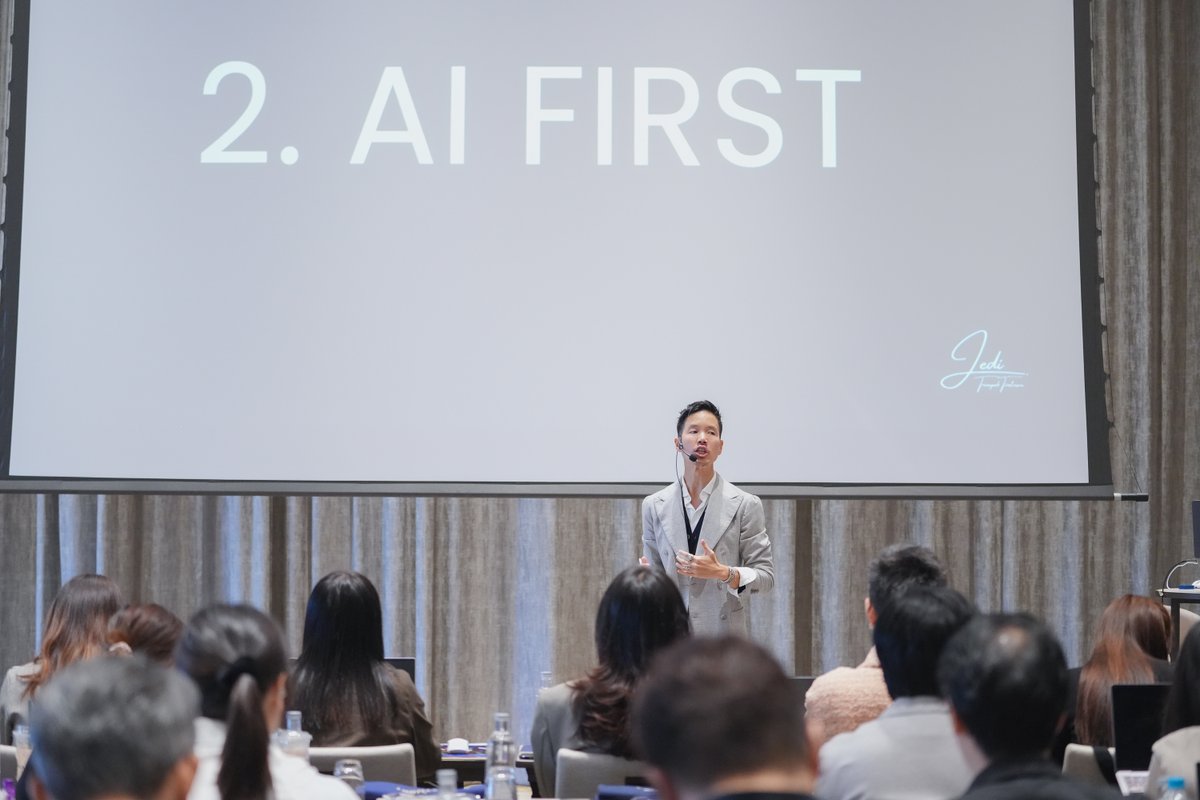
I get asked constantly: "What AI tools do you actually use?" Here's my honest answer for 2026. I call it my Intelligence Stack. LAYER 1: THINKING PARTNER — Claude (Opus 4.5) When I need to think through complex problems, Claude is my go-to. Because the thinking is deeper. Ask any software developer which LLM they trust for production code, and they'll say Claude Code. It's not even close. But here's what most people miss: Claude is for THINKING. The writing is more natural. More human. Less robotic. When I need to work through a strategy, write something important, or think through a complex decision, Claude. LAYER 2: ACTION ENGINE — OpenClaw Claude helps me think. OpenClaw helps me DO. Before OpenClaw, I was using Manus for most of my agent work. And Manus is still a beast, especially for enterprise integrations. But OpenClaw paired with Claude's intelligence? That's the combination that changed everything. OpenClaw doesn't just answer questions. It executes. Slides. Websites. Data processing. Content creation. Research synthesis. It's like having an employee who never sleeps, never complains, and works at 10x speed. LAYER 3: SECOND BRAIN — ChatGPT I’ve been with ChatGPT the longest. Which means it has the deepest context on my business, my goals, and the way I think. I can get high-quality answers with just a few short words, because the relationship is already built. It knows my patterns. My preferences. My history. That institutional memory is irreplaceable. Plus, the image generation is faster and better than ever. LAYER 4: RESEARCH & BROWSING — Perplexity Comet I barely touch Google Chrome anymore. Comet Browser is my default. Why? It has a built-in AI agent that can take over your browser and execute tasks on whatever webpage you're viewing. Tell it to clean up a spreadsheet, organize a page, or extract data, it just does it. Most other apps can't do this at all, or they do it in a crippled, limited way. Comet goes all in. No restrictions. No holding back. This is what the future of browsing looks like.


@VraserX ·
Manus AI is already running 50 accounts simultaneously. This is where social media is headed, and it should concern everyone. These systems will get so good that fake accounts will be indistinguishable from real people. At that point, trust online starts to collapse.
 Watch video
@dont_be_average ·
Running Manus 1.6 and Claude Opus 4.6 side by side as I'm doing competitor research for a client project. Both are finding the same info but the conclusions they're making are different. Manus is more facts focused, telling you how it is. Claude is more action focused, telling you what to do next. Running both side by side for 30 minutes, I've got an in-depth report on 14 competitors, including: - Their hooks, promises, and guarantees - Gaps in their offer that we could capitalize on - Links to their ads and landing pages - 13 new ad angles for us to test next. The big takeaway here: there is no "special prompt" for getting better results with AI. It's a natural conversation. The better questions you ask and the deeper you dig, the better results you're gonna get.
@VaibhavSisinty ·
Wild week in AI. I had to triple-check half of these were real. 😨 → China blocked Meta's $17,000 crore acquisition of Manus AI. Zuckerberg tried to write a cheque. China didn't let him cash it. → Sam Altman is building an AI-first smartphone with Jony Ive. Bezos and Zuckerberg both tried this and failed. This time the iPhone designer is on the team. → MIT students built a system that lets AI physically control your hand using muscle stimulation. Six people. 48 hours. Open source. → OpenAI shipped GPT-5.5 with a new prompting guide. Short outcome-based prompts now beat long step-by-step ones. The skill that got you ahead last year is the thing slowing you down today. → Manus launched Cloud Computer. Your AI agents now run 24/7 in the cloud. "My agent stopped working when I closed my laptop" is officially a problem from last year. → Telegram launched Lobster Father. Build and deploy AI agents inside Telegram with zero code. The app your parents use to forward good morning messages is now an agent platform. → OpenAI and Microsoft renegotiated the most expensive partnership in AI. OpenAI can now ship across AWS and Google Cloud. The Microsoft moat just leaked. → Anthropic shipped Claude Connectors with Adobe and 50+ creative tools. You can edit photos and resize videos without leaving the chat. Adobe Creative Cloud just got a new home. → Google signed a $200M classified Pentagon AI deal. In 2018 they promised never to use AI for weapons. 600 employees signed an open letter against this one. → Replit launched Slides. ElevenLabs launched Music. Lovable launched Mobile. Three of the hottest AI tools expanded into three new markets in the same week. Six months ago, Meta could buy any AI it wanted. Apple was the only credible smartphone player. Adobe owned creative work. Microsoft owned OpenAI's distribution. Google's "don't be evil" still meant something. Every one of those statements is now wrong. The map gets redrawn every week now.

@FracSlap ·
I appreciate Anthropic's velocity and ability to ship, but the quality of the product is not great. PDF exports in claude chat are super buggy and the artifact preview doesn't work for me anymore. Gmail and calendar integrations constantly break. If you're talking in voice chat and want it to generate a PDF it tells you that it can't in voice mode, so you have to exit out and type it in text (terrible ux) All kinds of issues with claude code over the last week across our team. On surface it looks like they are shipping a lot of products but if it's all half-assed and doesn't work then what good is it? I'm using Manus AI for a lot of things Claude Cowork should be able to do but Manus just works. Wish Anthropic would focus more on quality and also quit subsidizing compute and charge more so that models aren't getting nerfed by lack of compute because everyone and their dog is going ham on a $200 subscription.

@eric_seufert ·
Contextualizing Meta’s Muse Spark "Whether this API pilot emerges as a direct enterprise opportunity or not, there’s clear applicability to the Manus agent use case (which has already been brought to Meta’s ads manager), Meta’s off-platform Business AI initiative, and other advertiser-facing tasks. In other words: the consumer use case, advertising, also serves as an enterprise use case, and a worthy one given Meta’s scale." https://t.co/YITrxz9Iq7


@Startupat60 ·
You hardly hear anyone talking about Manus on here. But honestly for deep research it’s incredible. Ask it for things like competitor analysis market size financials monetisation options and it produces a proper research paper. From what I use (ChatGPT and claude) nothing comes close. But for research this thing is seriously good. Am I missing something or is Manus massively underrated?

@shawnchauhan1 ·
The assumption that AI agents live in the cloud is already wrong. Manus just moved its agent from a remote sandbox to your local machine. It reads files, runs CLI commands, uses your local GPU, and connects back to cloud services when needed. This matters because most real work lives locally. The agent that reaches it without moving data to the cloud wins on privacy, latency, and cost. Cloud-first AI architecture has a shorter shelf life than most teams think.
 Watch video
@danokhlopkov ·
I analyzed 183 AI bots on Telegram. 44.3M combined MAU. BotFather doubled to 7.3M MAU in 2 months. @ManusAI (Meta's $2B acquisition) chose Telegram as their first agent platform. Not WhatsApp. The AI agent market is forming on @telegram right now.

@RoundtableSpace ·
Manus Projects just landed on mobile shared files, instructions, skills, and connectors all accessible from your phone. Your agent workflows are now fully portable.
 Watch video
@volvoshine ·
Something I am a little late to in @ManusAI Manus is FAR Better at using @NanoBanana for image gen than I am. You can add it as a connector and it handles everything (In context). You can give your brand bible, reference images and rules and it will handle ALL the prompting

@ChrisUniverse ·
Version History on @ManusAI is one of the best features for vibe coding. Also, auto update to @github is freaking Genius! Manus is by far the best vibe code to production AI tool in the world. 🎯 No code needed 🎯 No need to copy/paste into a terminal to build 🎯 Manus auto builds backend integration 🎯 Manus auto builds analytics/tracking dashboard 🎯 Manus auto helps Google ranking with SEO built in 🎯 + much much more!


@FrancescoD_Ales ·
Manus just launched AI agents inside Telegram. Not WhatsApp?! → Full reasoning & multi-step tasks → Voice, images, docs — all in chat → Scan a QR code, done in 60 seconds → Two models: Max (deep) or Lite (fast) Meta paid $2bn for this. Here's my breakdown 👇
 Watch video
@drbarnard ·
I thought I liked @claudeai better than @ManusAI, especially for writing. But after wrestling with Claude Cowork all day trying to improve on what I’ve been getting from Manus, I’m coming to the conclusion Manus is just better. I think it boils down to the way Manus is picking the best model for each part of a task and using multiple models simultaneously instead of relying on a single model for everything. I’m so curious to know what specific models it uses for what specific tasks, but that’s part of the secret sauce, so they don’t show it. (I did everything with Opus 4.6 on a Claude Max plan and Manus 1.6 Max)

@MaxGrant__ ·
so early to manus they sent me a shirt last year they have gotten 10x better since. used to take forever to do complex tasks but i was amazed at the time of full browser control capabilities Manus was 6 months ahead of everyone else at the time

Best Manus AI tweets
Xholic studies what works in your niche, drafts posts in your voice and schedules them for the hours your audience is online.
$0 today · Cancel anytime
Browse all tweet collectionsKeep exploring