Most advice on how to get followers on twitter is too shallow to be useful. “Post good content” sounds right, but it doesn’t tell you what to publish, how to convert attention into follows, or how to know whether your account is improving.
Follower growth on X works better when you treat it like an operating system, not a bag of tricks. A strong profile converts visits. A deliberate content mix creates curiosity. Timely replies put you in front of people who don’t know you yet. Analytics tell you what to keep, what to drop, and what to refine.
Beyond Tactics Building Your Twitter Growth Engine
Random tips create random outcomes. One creator tries hashtags. Another posts threads every day. Someone else chases trends, copies large accounts, and wonders why the followers never turn into readers, customers, or meaningful conversations.
A better model is a growth engine. Each part has a job. Your profile converts curiosity into follows. Your content creates reasons to care. Your engagement gets you discovered in active conversations. Your analytics close the loop and tell you what compounds.
That matters if you’re a founder, indie hacker, analyst, or creator with limited time. You can’t afford random acts of posting. You need a workflow that makes growth more predictable.
Here’s the practical difference:
| Approach | What it looks like | Likely outcome |
|---|---|---|
| Tactic chasing | Posting whatever comes to mind, replying inconsistently, changing style every week | Spiky reach, weak conversion, no clear pattern |
| Growth engine | Clear profile promise, repeatable content pillars, daily engagement ritual, weekly review | Stronger compounding and cleaner decision-making |
Practical rule: If a tactic doesn’t fit into a system you can repeat weekly, it probably won’t build a durable audience.
Most accounts don’t have a reach problem first. They have a coherence problem. People see one decent tweet, click through, and then find a vague bio, a forgettable banner, and no clear signal about what they’ll get by following.
That’s why the best answer to how to get followers on twitter isn’t “be everywhere.” It’s build an account that converts attention reliably. Once that engine is in place, each good post and each smart reply becomes more valuable because the rest of the account does its job.
Optimize Your Profile as a Follower Magnet
A lot of X accounts do enough to earn a profile click, then waste it. The post is strong. The reply is sharp. The visitor arrives, scans for three seconds, and leaves because the account feels generic.
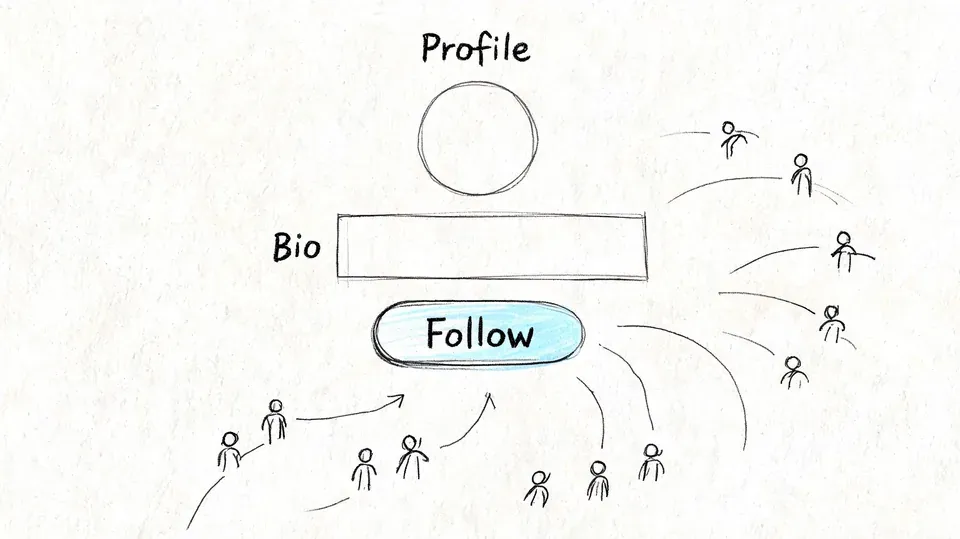
Profile optimization matters because it is the conversion layer of the growth engine. Content and replies generate attention. The profile turns that attention into follows. If this step is weak, better posting only sends more people into a poor funnel.
Make your profile easy to understand fast
Clarity beats cleverness here. A new visitor should know what you talk about, who you help, and why your account is worth keeping in their feed.
These four elements do most of the work:
- Banner: Treat it like positioning, not decoration. Show your topic, your audience, or the outcome your content helps with.
- Profile photo: Use a clear headshot for a personal brand. Recognition improves trust, especially when people have seen you in replies before they visit.
- Bio: Write a simple promise. State the subject matter and the angle.
- Link: Send people to a page that matches what your account is about. A random homepage creates friction.
The test is simple. If someone discovers you through one post, your profile should confirm the same promise immediately. If you post about B2B growth, your bio, banner, pinned post, and link should all support that topic. Mixed signals reduce follow conversion.
A strong bio usually reads more like positioning than a resume. “Sharing what I learn about pricing, onboarding, and SaaS growth” gives a visitor a reason to follow. A stack of titles and vague claims does not. If you want stronger examples, these Twitter biography ideas for creators and founders show the level of specificity that tends to work.
Your profile does not need broad appeal. It needs a clear promise for the right reader.
I treat profile visits as a funnel checkpoint. If posts get engagement but follower growth stays flat, the profile is usually the first thing to fix. The common failure points are predictable: weak bio, off-topic banner, no pinned proof, and a link that sends people somewhere unrelated.
A quick visual walkthrough helps here:
Turn your pinned tweet into proof
The pinned tweet has one job. Reduce uncertainty.
People rarely follow because of one good line. They follow when the account shows a pattern they want more of. Your pinned post should make that pattern obvious.
Three pinned tweet formats work well:
-
Best proof of expertise
Pin a thread or post that teaches something useful and shows how you solve problems. -
Origin story with relevance
Share your background only when it increases credibility around the topic you cover now. -
Resource hub
Pin a post that organizes your best threads, tools, or lessons if you publish across a few connected themes.
There is a real trade-off here. A funny pinned post can signal personality, but it often underperforms as a conversion asset. High-intent visitors usually respond better to proof. For founders and operators, that often means a thread, case study, teardown, or clear summary of what you have learned through practice.
Keep the whole profile consistent. Same niche. Same tone. Same level of specificity. That consistency is what makes the account feel followable instead of forgettable.
The Content Flywheel for High-Impact Posts
Follower growth usually stalls for one reason. The content mix is doing only one job.
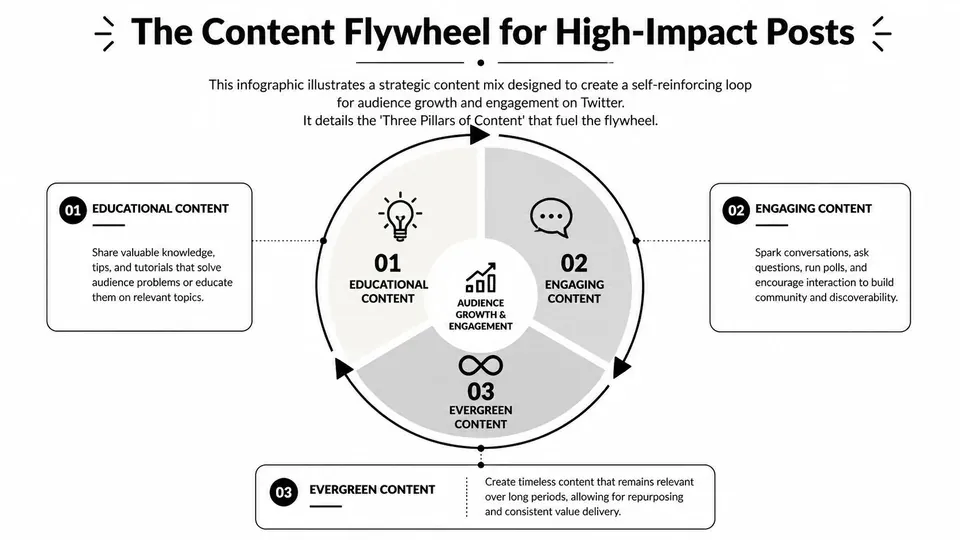
Accounts that grow steadily do not rely on a single format. They run a simple engine. One post builds trust, another earns distribution, and another makes the account recognizable enough to remember a day later.
The three post types worth repeating
I run X content around three repeatable roles. Authority. Engagement. Personality. If one role is missing, the whole system gets weaker. You may get impressions without follows, or follows without trust, or attention without recall.
| Pillar | Best use | What it should produce |
|---|---|---|
| Authority | Threads, breakdowns, frameworks, sharp lessons | Trust and saves |
| Engagement | Questions, opinion prompts, compact takes | Replies and discovery |
| Personality | Stories, observations, beliefs, behind-the-scenes notes | Affinity and memory |
Authority posts convert best when they teach from experience, not theory. A strong thread shows process. How you validated a product idea. How you rewrote a landing page. Why a sales message failed, then worked after one change. Specificity is what separates followable expertise from recycled advice.
Engagement posts expand reach by giving people an easy way to participate. Questions, contrarian takes, and clean opinion prompts work well when they are tied to your niche. Broad prompts get replies. Sharp prompts get the right replies. That difference matters if the goal is follower quality rather than vanity metrics.
Personality posts make the account feel owned by a real person. Founders and operators often underpost them. They publish lessons but hide the perspective behind them. A short story, a strong belief, or an honest observation helps people place you. That memory makes later authority posts perform better.
The flywheel works because each format strengthens the others. Authority gives people a reason to stay. Engagement brings new people in. Personality raises the chance that a profile visit turns into a follow.
What quality followers respond to
High-impact posting is less about volume and more about fit. A post can pull strong engagement and still weaken the account if it attracts people who will ignore everything you publish next.
That is why I track content in sequence, not as isolated wins. Did the engagement post lead to profile visits? Did those visitors find authority posts that matched the promise? Did the account feel consistent enough to earn a follow? Growth gets easier when those steps connect.
The concern about dead engagement is valid. This analysis of dead engagement and follower quality makes the same point from another angle. Raw activity can look healthy while retention signals stay weak. In practice, that means a viral post may inflate numbers without improving the audience you can reach next week.
Use this filter before publishing:
- Will the right follower feel like this post was written for them? If not, it may get attention without attracting the audience you want.
- Does the hook create curiosity without feeling manipulative? Curiosity earns clicks. Bait damages trust.
- Is there a clear next step after someone reads it? Good posts often lead to a reply, repost, bookmark, or profile visit.
- Does the post match the rest of the account? A disconnected hit often hurts more than it helps.
- Can you repeat this format without forcing it? Repeatable formats beat one-off cleverness.
For practical inspiration, review these examples of tweet formats that work on modern X accounts. The useful part is not the wording. It is the intent behind each format and where it fits inside the broader growth engine.
One warning from experience. Engagement posts are easy to overuse because the feedback is immediate. Authority posts are slower and harder, but they are usually what convert profile visits into long-term followers. Personality posts keep the whole system from feeling generic. The trade-off is simple. If every post tries to maximize reach, the account becomes forgettable. If every post tries to teach, distribution slows. If every post is personal, credibility stays shallow.
Strong accounts cycle through all three on purpose. That is how content stops being a posting habit and starts working like a growth engine.
Master Momentum-Driven Engagement Rituals
Posting on X without an engagement system is inefficient. Growth usually comes faster when you join conversations that already have distribution, then convert that attention into profile visits and follows.

Build a list that produces opportunities
Replies work best as part of a repeatable system, not as random scrolling.
A practical setup is simple. Track a small group of relevant accounts, check them at fixed times, and respond only when a post has enough early traction to carry your reply further. Tweet Archivist’s guide to getting more Twitter followers fast describes one version of this process: follow 20 to 30 niche accounts, focus on accounts roughly 2 to 10 times your size, watch for posts showing strong early engagement, and aim to reply among the first few useful responses. The same guide says this approach can expand visibility if you spend 30 to 60 minutes a day on it consistently.
The numbers are less important than the operating principle. Attention on X clusters fast. If a post is gaining traction and your reply improves the conversation, you can borrow momentum without chasing low-quality virality.
I use a routine like this:
- Create a private list of accounts in your niche. Include operators, smart peers, and mid-sized creators who post often enough to create regular openings.
- Check the list at set times each day. Morning, midday, and late afternoon is enough for many niches.
- Pick only a few posts where you have a clear angle, example, or disagreement worth adding.
- Ignore weak-fit threads even if they are getting attention. Reach without relevance does not build the right audience.
That last point matters. A reply can get likes and still bring in the wrong followers, or no followers at all, if it does not connect back to your account’s core promise.
Write replies that earn profile clicks
Good replies do a job. They make the original post more useful, show how you think, and create enough curiosity that the right person clicks through.
The highest-converting replies usually fit one of four patterns:
-
Add the missing step
The original post explains the idea. Your reply explains the execution detail people usually miss. -
Offer a reasoned counterpoint
Push back with logic, not performance. -
Bring a specific example
Short examples signal lived experience faster than abstract advice. -
Clarify the consequence
Show what breaks when someone follows the advice badly.
Here is the difference:
| Weak reply | Strong reply |
|---|---|
| ”Love this." | "The hidden bottleneck is distribution. A strong thread with weak early interaction often stalls, so I pair important posts with targeted engagement in the first hour." |
| "So true." | "This works better when the profile matches the claim. If the post promises growth but the bio reads like a resume, profile visits rarely convert.” |
Short is fine. Generic is not.
There is also a real trade-off here. Heavy engagement can grow an account, but it can also train you to depend on other people’s posts for visibility. Too little engagement has the opposite problem. You publish into a vacuum and wait for discovery. The better model is to treat replies as one part of the growth engine. Your profile sets conversion, your posts build authority, your replies create surface area, and your analytics tell you which conversations bring back the right followers.
That is why engagement should feel closer to market research than social media maintenance. Done well, it shows you which topics trigger response, which claims get ignored, and where your perspective is distinct enough to deserve more original posts of its own.
Implement Repeatable Growth Experiments
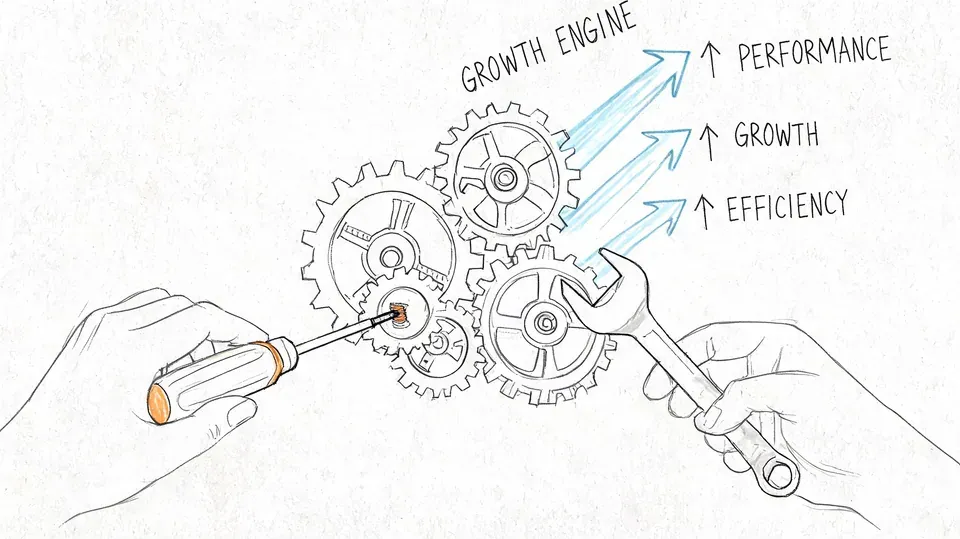
Most creators stagnate because they repeat habits, not because they lack effort. If you want follower growth to improve, you need experiments that isolate cause and effect.
Test one variable at a time
Don’t “change your strategy.” Test one input.
Good experiments are boring on purpose. They reduce noise. If you change format, topic, hook style, and posting time all at once, you learn nothing.
Useful tests include:
- Timing tests
Publish similar posts at different windows and compare how each one moves through your funnel. - Format tests
Compare threads against short standalone posts on the same topic family. - Bio tests
Rewrite your promise, then watch whether profile visits feel more likely to convert. - Pinned tweet tests
Rotate between a proof-based pin and a story-based pin, then observe which one better supports the rest of your content.
A simple log is enough. Date, post type, topic, hook style, time posted, and your observation about fit. That’s often more useful than overbuilding a dashboard.
Small tests beat big reinventions because they produce cleaner lessons.
Use paid amplification carefully
Organic growth should teach you what resonates before you spend money. If a post already attracts thoughtful replies, meaningful discussion, and profile curiosity, that might be a candidate for paid promotion.
But promoted distribution doesn’t fix weak positioning. It amplifies whatever is already there. If the profile is unclear or the post attracts the wrong audience, paying for more reach can make the quality problem worse.
Cross-promotion follows the same rule. Mention your X account in your newsletter, YouTube description, community, or product onboarding if the audience overlap is real. Don’t drag people across platforms with mismatched promises. A founder can reasonably invite newsletter readers to follow for daily operator notes. That feels coherent. A vague “follow me everywhere” request doesn’t.
The operating mindset matters more than any single test. When you start treating your account like a system under improvement, you stop asking, “What should I try next?” and start asking, “What did this teach me about conversion, relevance, and repeatability?”
Use Analytics to Steer Your Growth Strategy
Analytics is where follower growth stops feeling random.
On X, the useful question is not “Which post got the most reach?” It is “Which posts turned attention into profile visits and follows?” That shift matters because growth comes from a system, not isolated wins. A post earns impressions. The post or reply creates curiosity. The profile converts that curiosity into a follow. If one stage breaks, the engine slows down.
Read the follower funnel instead of vanity metrics
The cleanest way to review performance is through the path from impressions to engagements to profile visits to followers. You can track that inside native X Analytics and compare it post by post.
Read patterns like this:
-
High impressions, low engagement
Distribution was fine. The idea or framing was weak, too broad, or poorly timed. -
High engagement, low profile visits
The post got reactions but did not build enough intrigue around you. This often happens with generic takes, jokes, or commentary that people can enjoy without needing more context. -
High profile visits, low follows
The content worked. The profile did not convert. Usually the bio is vague, the pinned post is misaligned, or the account gives mixed signals about who it is for. -
Strong follower gains from one post type
That format deserves another run. Do not copy the exact post. Repeat the underlying pattern, such as operator notes, contrarian lessons, or clear proof-based threads.
This is the difference between reach and growth. Reach is exposure. Growth is conversion.
I treat every strong post as a clue about the system. Did the hook earn the click? Did the post promise the same thing the profile delivered? Did the audience that engaged match the audience I want more of? Those questions produce better decisions than staring at likes.
Run a weekly review that changes next week’s output
A weekly review only works if it ends in decisions. Mine takes about 20 minutes.
Use a short scorecard:
- Pull the posts and replies that drove the most profile visits.
- Mark what they shared. Topic, structure, tone, audience, and call to curiosity.
- Check follower conversion from those visits.
- Look for disconnects between top-performing content and profile positioning.
- Choose one adjustment for next week.
That last step is where analytics becomes a growth engine. Without it, reporting turns into entertainment.
For example, if short contrarian posts drive profile visits but founder story threads drive follows, the answer is not to pick one and ignore the other. The answer is to connect them. Use short posts to create curiosity, then make sure your profile and pinned content prove depth. If you want better visibility into those patterns, these Twitter analysis tools for better engagement and stronger decisions can help you review performance faster.
Analytics should sharpen judgment, not replace it. Use the numbers to see where your engine is losing energy, then fix that stage with intent. That is how an X account compounds.
Conclusion Your System for Sustainable Growth
Getting followers on X isn’t about finding one magical trick. It’s about building an account that earns attention, converts curiosity, and improves through feedback. A sharp profile, a deliberate content mix, disciplined engagement, and regular analytics review work together better than any isolated tactic.
That’s the durable answer to how to get followers on twitter. Build the machine first. Then feed it consistently. The result isn’t just more followers. It’s a more useful audience.
If you want help running that system faster, Xholic AI is built for it. It helps creators and operators find high-momentum conversations, draft better replies, and publish on-brand content without turning X into a full-time job.