Most advice about how do you get followers on Twitter starts and ends with “post good content consistently.” That’s incomplete. Good content matters, but plenty of smart founders and creators post useful things and still stall because they treat X like a publishing platform when it behaves more like a real-time discovery and conversation system.
The practical difference is visibility. A strong tweet nobody sees won’t grow your account. A sharp reply inside the right fast-moving conversation can. The accounts that grow steadily usually understand three mechanics at once: profile conversion, content packaging, and momentum-driven engagement. They don’t just tweet more. They create more opportunities to be discovered by the right people.
That’s the playbook that works now. Not hacks. Not generic engagement bait. A system that helps you get seen, earn profile visits, and convert those visits into follows.
Optimize Your Profile and Niche for Follows
Your profile isn’t a resume. It’s a conversion page.
When someone lands on your account from a reply, a thread, or a repost, they make a decision fast. They’re asking one question: “If I follow this person, what do I reliably get?” If your profile answers that clearly, you convert curiosity into followers. If it reads like a vague personal homepage, you lose them.
Treat your profile like a landing page
Start with your niche. Broad profiles attract weak intent. Specific profiles attract the right followers. “Founder sharing lessons from shipping SaaS” is stronger than “entrepreneur.” “Crypto analyst explaining on-chain moves in plain English” is stronger than “investor.”
A profile that converts usually does four jobs well:
- Bio says what you do for the reader. Don’t list titles. State the value. Teach, break down, analyze, document, curate.
- Header reinforces your positioning. Use it to signal your domain, style, or proof of work.
- Profile photo builds trust. Clear, simple, recognizable beats clever.
- Pinned tweet previews your best thinking. It should show what following you feels like.
If you want inspiration for sharper profile positioning, these Twitter bio examples for 2026 are useful because they frame bios as promises, not labels.
Practical rule: If a stranger reads your bio and can’t predict your next ten tweets, your niche is still too fuzzy.
A common mistake is trying to appeal to everyone in your field. That usually produces soft language like “thoughts on startups, marketing, tech, and life.” It feels flexible, but it gives nobody a reason to commit. A narrower promise gets more follows because it lowers uncertainty.
Build a pinned tweet that closes the loop
Your pinned tweet should do what your best sales page does. It should reduce friction.
Good pinned tweets usually fit one of these patterns:
| Pinned tweet type | When it works | What it signals |
|---|---|---|
| Best-of thread | You already have strong posts | Depth and proof |
| Starter guide | You teach a niche topic | Immediate value |
| Personal positioning post | You’re early and still defining the account | Why your perspective matters |
What doesn’t work well is pinning a random announcement, a joke, or a post that got likes but doesn’t explain your lane.
Use plain language. Tell people what you cover, who it’s for, and why your angle is worth following. If your niche is crowded, your edge might be your lens: operator-level detail, contrarian analysis, transparent build-in-public updates, or unusually clear tutorials.
That’s the first answer to how do you get followers on Twitter. You make sure every profile visit has a clear path to “follow.”
Develop a Content Engine That Builds Authority
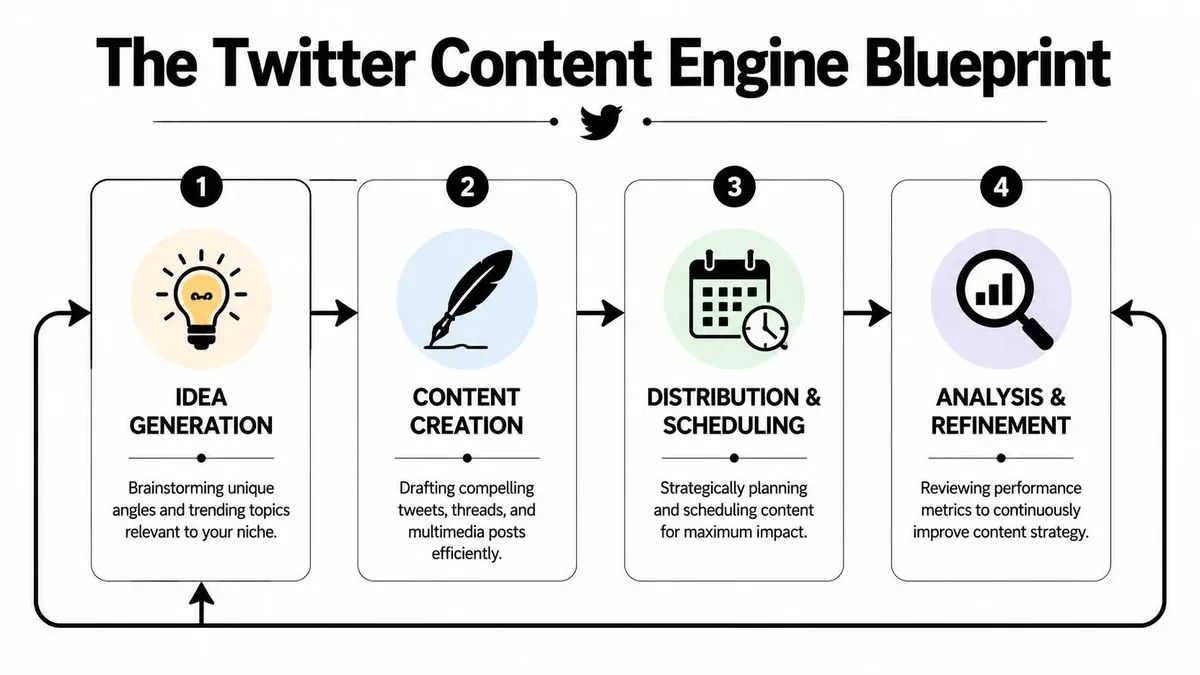
Most creators don’t have a content problem. They have a system problem. They rely on inspiration, then disappear when they run out of it.
Authority on X comes from repeatable formats rooted in actual expertise. The easiest way to create consistently is to stop inventing from scratch and start turning your work, opinions, and observations into structured outputs.
Use repeatable content pillars
For founders, analysts, and operators, three pillars tend to hold up well over time:
-
Education
Teach the thing you know how to do. Break a workflow into steps. Explain a recurring mistake. Show a decision framework. -
Analysis
Interpret what others are missing. This works well for market commentary, product teardowns, pricing decisions, or trend reactions. -
Progress
Document what you’re building, testing, or changing. Not as self-congratulation, but as evidence from the field.
The strongest accounts blend all three. Education builds trust. Analysis builds distinction. Progress builds personality and continuity.
Data from EvergreenFeed’s Twitter growth analysis says educational formats such as step-by-step instructions, tactical breakdowns, and specific how-to frameworks generate 2-3x higher engagement and retweets than generic posts, and that high-performing educational tweets generate 15-25% engagement rates versus 2-5% for promotional content.
That matches what many practitioners see in the wild. Promotional posts ask for attention. Educational posts earn it.
Format matters more than most people admit
A lot of “good content” fails because it’s packaged badly. The idea may be solid, but the format doesn’t invite a click, a read, or a save.
I’d build around a handful of formats you can reuse:
- Short tactical posts with one clear lesson
- Threads that teach a process or unpack a point of view
- Contrarian takes where you explain why common advice fails
- Question-led posts that surface a sharp observation
- Breakdowns of real examples from your niche
This collection of tweet examples that actually work is helpful because it shows structures you can adapt instead of copying tone blindly.
Good content on X is usually compressed expertise. It feels specific, usable, and easy to pass along.
One more trade-off matters here. Threads often demand more effort, but they create more room for depth and more entry points for discovery. Single tweets are faster, but easier to miss. If your niche rewards explanation, threads are worth the extra work.
Master the Art of Strategic Engagement
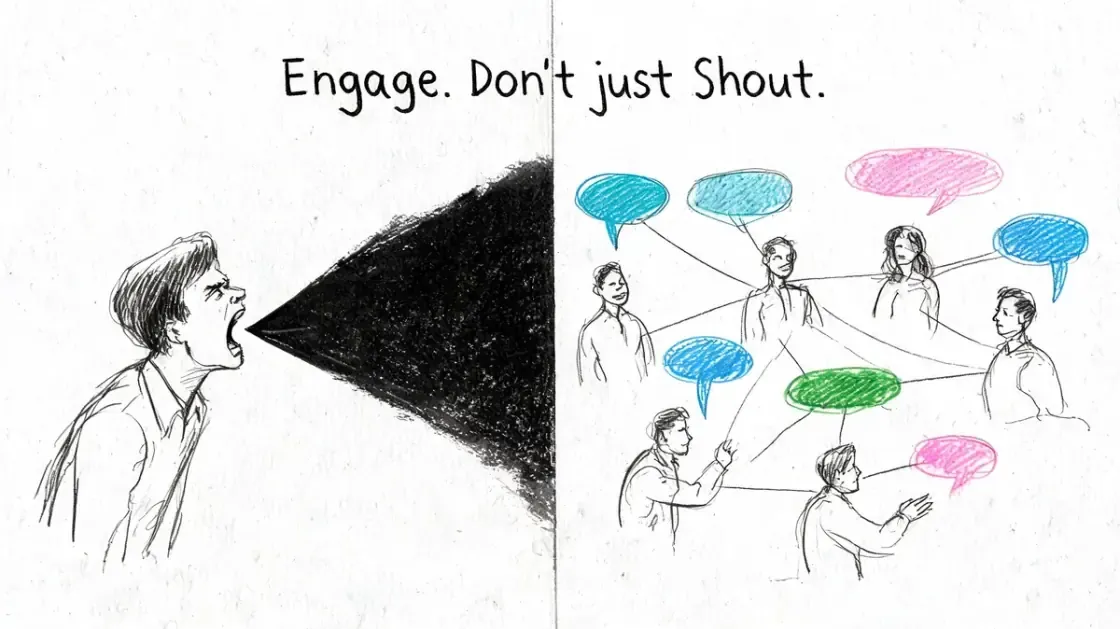
Publishing matters. But if all you do is publish, you’re asking the algorithm to discover you from scratch every day.
Strategic engagement changes that. Instead of waiting for distribution, you place your thinking in rooms where your target audience is already paying attention.
Why replies beat pure broadcasting
The highest-ROI workflow I know is simple. Build a list of 20-30 accounts in your niche with audiences 2-10x larger than yours, monitor them daily, and aim to be among the first 3-5 replies on their stronger posts with something useful. According to TweetArchivist’s follower growth guide, accounts executing consistent daily engagement through replies and posting grow at 3-5x the rate of sporadic accounts.
That isn’t because replies are magic. It’s because they borrow context, audience, and momentum.
The same source notes that replying within the first 30 minutes matters because that’s when visibility is strongest. Many smart people, however, get it wrong. They write thoughtful replies after a post already has hundreds of comments. By then, quality alone won’t save the reply from being buried.
One useful test: If your reply would still make sense copied under ten different posts, it’s too generic.
A good reply does one of three things. It adds a missing detail, sharpens the original claim, or introduces a relevant counterpoint without hijacking the thread.
What to say in replies that actually earns clicks
Most replies fail because they optimize for being agreeable instead of memorable. “Great point” and “Totally agree” don’t create profile visits.
Better reply patterns look like this:
-
Add operational detail
Mention the implementation step commonly overlooked. -
Name a trade-off
Show where the original advice breaks under real constraints. -
Offer a mini-example
A short example makes your thinking feel concrete. -
Ask a smart follow-up
Not a vague question. A question that advances the discussion.
Here’s a useful demo before the next point:
Replies work best when your profile is already set up to convert. Otherwise you get visibility without capture.
There’s also a stamina trade-off. Daily engagement works, but it can become a time sink fast. The fix isn’t to stop replying. It’s to focus only on accounts, conversations, and formats that produce profile visits and relevant followers.
Use Data Analytics to Find What Works
If you’re serious about growth, stop judging tweets by vibes.
X growth is a funnel. The practical version is Impressions -> Engagements -> Profile Visits -> Followers. Each stage tells you something different. Impressions tell you whether the platform distributed the post. Engagement tells you whether the post held attention. Profile visits tell you whether it created curiosity. Follows tell you whether your positioning converted.
Track the follower funnel
The most useful weekly review is usually small and manual. Open analytics, review recent posts, and log a few fields:
- Impressions
- Engagement rate
- Profile visits
- Follows from the post
- Format and topic
This guide to Twitter analysis tools is useful if you want a cleaner workflow for tracking the relevant metrics.
The key shift is this: don’t optimize for impressions alone. A tweet with broad reach but weak profile visits may be entertaining without being growth-positive. A narrower tweet with strong profile conversion may be much more valuable.
Find your one percent tweets
A major pattern in X growth is concentration. An analysis of 15 million public X posts found that the top 1% of tweets by a given account generated roughly 25-30% of all new followers over a 90-day window, and that accounts posting 2-3 threads per week grew followers 2.5-3x faster than those posting only single tweets, according to Creator Economy’s guide to growing on X.
That changes how you should review your content.
Don’t ask, “What should I tweet more often?” Ask:
| Review question | Why it matters |
|---|---|
| Which posts drove profile visits? | That’s the step before follows |
| Which topics produced repeat wins? | Topic often matters more than style |
| Which formats created outsized results? | Threads, breakdowns, and concise posts behave differently |
Your account usually grows from a small number of standout posts, not from average output.
This is why weekly review beats random experimentation. You’re trying to identify your small cluster of high-conversion ideas, then turn those into a repeatable system.
Scale Your Growth with Advanced Tactics and Tools
“Post more” is lazy advice.
More output can help, but it doesn’t solve the hard part. The hard part is joining the right conversation at the right moment with the right angle. That’s where growth starts to feel less like brute force and more like strategic advantage.
The momentum paradox
Most scheduling advice focuses on audience activity. That matters, but it misses something more important: conversation momentum.
As noted in Janet Machuka’s Twitter growth guide, many guides recommend posting when audiences are active but don’t address the distinction between posting frequency and posting momentum. The same source notes that tweets with images get 150% more retweets, yet doesn’t solve the more tactical question of when to deploy visual content within trending conversations.
That gap matters a lot for solo operators. You can post a strong reply at the “right time” and still miss because the thread is dead. Or you can enter a live, rising discussion with a useful image, chart, or framework and get seen far more widely.
Here’s the trade-off in plain terms:
- Scheduled consistency builds a reliable baseline.
- Momentum-driven engagement creates breakout visibility.
You need both. Consistency keeps the machine warm. Momentum creates upside.
The engagement debt problem
Growth-stage accounts often do the right things and still underperform. They write thoughtful replies. They polish their profile. They post useful threads. But they accumulate what I think of as engagement debt. The work goes in, the visibility doesn’t come back.
That usually happens for two reasons. First, they’re reacting too late. Second, they’re not learning which replies produce profile visits.
Tooling becomes practical, not ornamental. One option is Xholic AI, which is built to help creators find high-momentum posts, draft replies in their own style, and review reply analytics so they can see which engagement patterns are worth repeating. Used well, that kind of workflow reduces manual scanning and makes it easier to stay active without sounding templated.
Fast matters on X, but speed without context just creates more noise.
If you’re scaling your process, keep one rule in place. Never automate your judgment away. Tools should shorten research, drafting, and review. They shouldn’t turn your account into a feed of lifeless output.
Your 90-Day Twitter Follower Growth Plan
A good playbook only matters if you can run it without burning out. Ninety days is long enough to build signal and short enough to stay disciplined.
Research summarized by TweetArchivist’s follower tracking guide found that posting at least once per day increased the probability of sustained follower growth by roughly 40% compared with posting less than three times per week, and that accounts with a predictable series saw 20-25% higher follower growth rates than similar accounts without recurring cadence.
That tells you two things. Show up daily. Give people something recurring to remember you by.
Days 1 to 30
Focus on setup and consistency.
- Define your niche clearly. Choose one core audience and one clear promise.
- Rewrite your bio and header. Make both answer why someone should follow.
- Create one pinned tweet. Use a best-of thread, starter guide, or positioning post.
- Start one recurring series. Weekly market notes, founder lessons, teardown Fridays, whatever fits your niche.
- Post every day. Don’t overcomplicate format yet.
- Build a list of niche accounts. Follow the conversations your audience already lives in.
A simple weekly rhythm works well here:
| Day range | Main focus |
|---|---|
| Week 1 | Profile overhaul and niche tightening |
| Weeks 2-3 | Daily posting plus consistent replies |
| Week 4 | First analytics review and cleanup |
Days 31 to 60
Now you refine instead of just producing.
Add structure to what you’ve already been doing:
- Double down on your strongest topics.
- Turn one winning post into a thread.
- Keep the recurring series alive.
- Reply daily with intent. Aim for relevance, not volume.
- Review analytics weekly. Look for profile visits and follower conversion, not just likes.
This is usually when your content engine starts feeling easier. You’ve got formats. You’ve got raw material. You know what your audience responds to.
Days 61 to 90
The last phase is about maximizing impact.
At this point, you should be able to answer a few sharp questions: Which topics consistently earn profile visits? Which replies get clicks? Which series makes people come back? Which format feels sustainable?
Use the final month to tighten the system:
- Keep daily posting steady
- Increase thread quality, not just quantity
- Prioritize high-momentum conversations
- Use tools selectively to reduce repetitive work
- Archive ideas, high-performing posts, and reusable structures
You don’t need a viral hit to prove the system works. You need steady evidence that the right people are finding you, visiting your profile, and choosing to follow.
If you want help running that system without spending your whole day on X, Xholic AI is built for the practical parts that usually eat time: finding high-momentum conversations, drafting stronger replies, and staying consistent without sounding generic.