A bigger Twitter follower count doesn’t automatically mean stronger reach, better engagement, or more influence. That’s the advice many still repeat, and it’s the advice that misleads creators the most.
Plenty of accounts grow in raw followers while their impressions stall, replies dry up, and conversions stay weak. That usually isn’t a mystery. It’s a measurement problem and a quality problem at the same time. The number on your profile looks clean, but the system behind it isn’t. X rounds public counts, doesn’t natively give you historical follower data, and leaves creators reacting to shifts they can’t properly audit without outside tracking. Add bot waves, inactive followers, and periodic spam purges, and that “one number” starts telling a very incomplete story.
The better way to read follower count is as a signal cluster. You’re not just looking at how many people follow you. You’re looking at who they are, how many are still active, whether your growth is steady or distorted, and whether your audience actively amplifies what you post.
That’s where follower count becomes useful. Not as a vanity score, but as operational data. Once you understand how X reports followers, where the blind spots are, and how low-quality followers suppress your reach, you can make smarter decisions about content, competitor research, and audience targeting.
Introduction Why Your Follower Count Is Misleading
Most creators treat Twitter follower count like a scoreboard. More followers means more authority. Fewer followers means you’re behind. That sounds simple, but it breaks the moment you compare reach, replies, and conversion quality across accounts.
A bloated audience can make an account look stronger than it is. A smaller account with sharper positioning, healthier followers, and better conversation habits can outperform it every week. Founders see this when product posts with modest follower counts pull qualified replies, while larger accounts get empty likes and little downstream action.
The mistake is assuming follower count is a direct read on influence. It isn’t. It’s a partial read on audience accumulation. Influence comes from what that audience does after they see your post. Do they engage, click, reply, share, remember, and come back?
Practical rule: Don’t judge your account by follower count alone. Judge it by whether your followers create momentum when you publish.
The platform itself adds distortion. Public counts don’t always show precise numbers, and follower changes often reflect platform behavior as much as creator performance. If you don’t understand those mechanics, you’ll overreact to the wrong signals and ignore the useful ones.
That’s why a smart growth strategy starts with diagnosis. Before you chase more followers, figure out what your current follower base is made of, how X reports that number, and which shifts matter.
The Real Anatomy of Your Follower Count
A follower count is closer to an email list than a trophy. If the list is full of the wrong people, dormant accounts, or junk, the headline number looks fine while performance weakens underneath.
The cleanest way to think about it is follower health. Every account has some mix of high-quality engaged followers, passive followers, and dormant or bot accounts. Those groups do not contribute equally to reach.
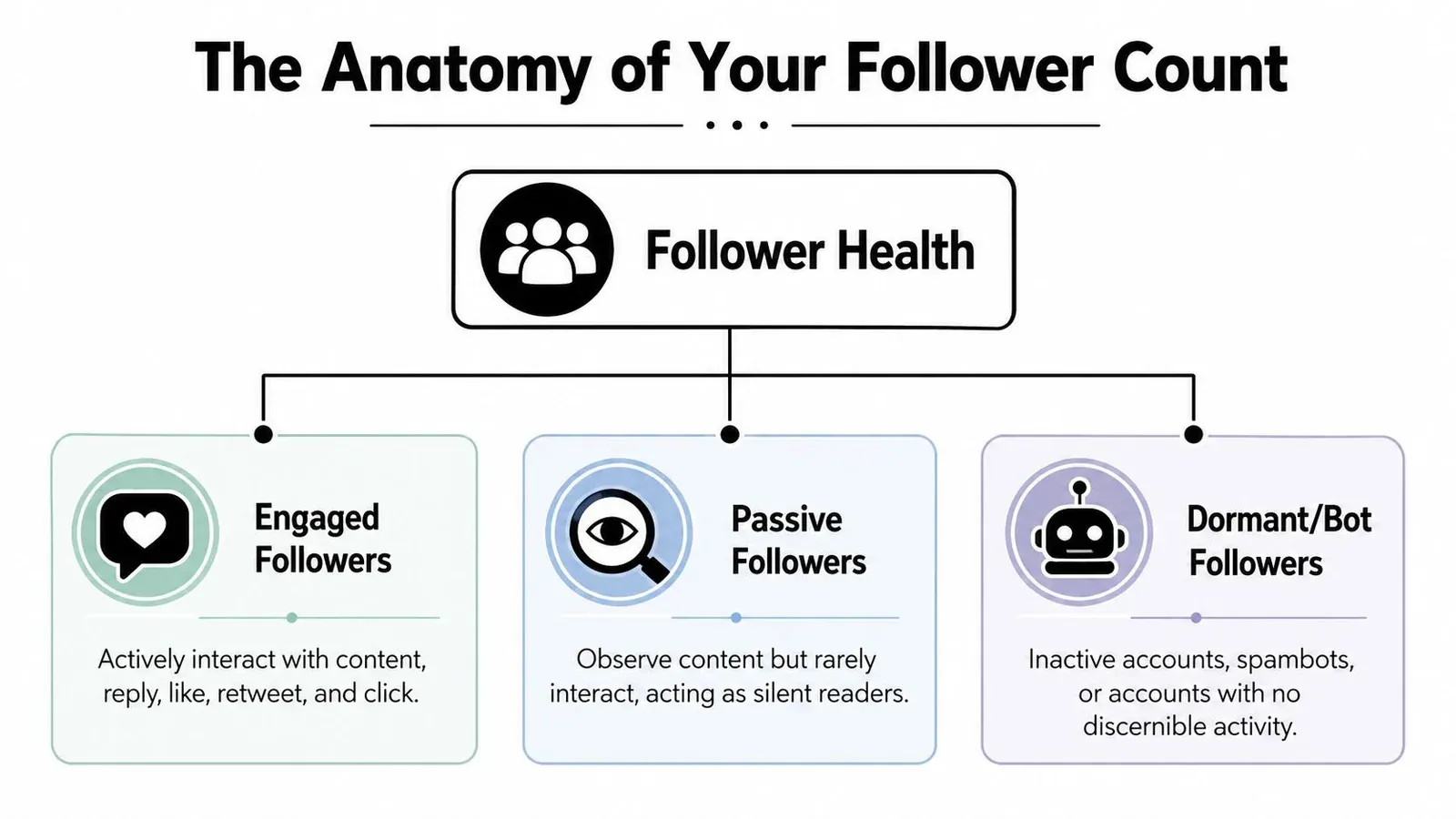
Follower count is a mix, not a single asset
Think of your audience like a garden.
- Engaged followers are the healthy plants. They reply, like, repost, click, and give your posts early traction.
- Passive followers are still useful, but quieter. They read, notice, and may convert later, even if they rarely interact in public.
- Dormant or bot followers are weeds. They inflate the number without helping distribution, feedback, or trust.
That last group causes more damage than most creators realize. If a big share of your audience doesn’t interact because they’re fake, abandoned, or dead weight, your posts can look weak relative to your total count. That changes how people read your profile, and it can also weaken how your content performs.
Why inactive follower dilution hurts reach
One of the most practical ideas to understand is inactive follower dilution. Stable or rising follower counts can coexist with declining impressions because bots and inactive accounts lower the engagement quality of your audience. Unfollr’s write-up on impressions dropping despite follower stability highlights this directly and includes an example where engagement improved from 1% to 1.25% after removing 1,000 fake followers from 5,000 total.
That’s the part many creators miss. Losing the wrong followers can improve the account.
Your follower count can go down while your account gets stronger.
This matters a lot for founders, analysts, and niche creators. You don’t need the broadest audience. You need an audience that can create signal. Better replies. Better idea feedback. Better distribution through real interaction.
A quick audit usually reveals the pattern:
- Healthy audience signs include recurring names in replies, relevant bios, visible niche alignment, and consistent conversation.
- Weak audience signs include strange follower-to-following behavior, no post activity, generic profiles, and growth spurts that don’t match engagement.
- Misread performance happens when creators celebrate net follower growth while ignoring lower post resonance.
If you want your Twitter follower count to mean something, stop treating all followers as interchangeable. They aren’t.
How X Actually Counts and Reports Followers
The number you see on an X profile looks exact. In practice, it often functions more like a simplified display layer than a precise operating dashboard.
That distinction matters because many creators make growth decisions from what is a compressed public-facing number.
The profile number is often an estimate
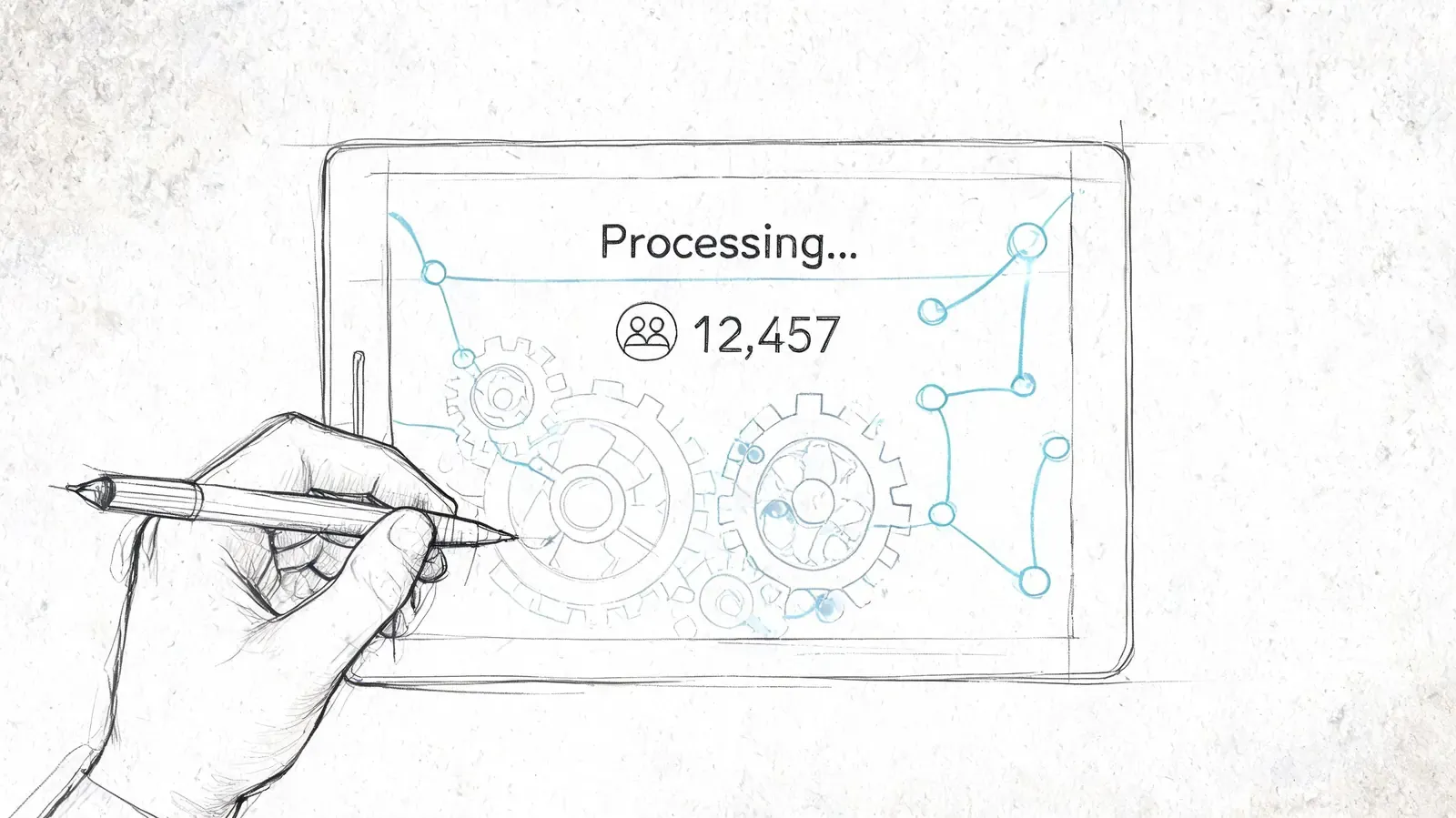
X does not natively provide historical follower data, which means you can’t just open the platform and review a clean timeline of follower gains and losses over time. Public profiles also round follower counts after certain thresholds, a behavior that has been in place since 2019, showing figures like “1.2K” instead of “1,247”. Viral Accounts explains why this makes third-party tracking necessary.
That public rounding changes how people interpret growth. A creator may think nothing changed because the rounded number still looks the same, while the underlying count moved enough to matter. The reverse happens too. Small public shifts can feel dramatic even when they don’t reflect a meaningful change in audience quality.
Here’s the practical takeaway:
- Public profile count is useful for rough social proof.
- Exact follower count over time is what you need for analysis.
- Sudden drops aren’t always content failure. They can reflect platform cleanup, especially when spam accounts get purged.
Why external tracking matters
Because X doesn’t offer native historical tracking, serious creators usually need outside systems. Tools such as Tweet Binder, Audiense Connect, HypeAuditor, and Tweet Archivist exist because the platform leaves a real analytics gap. Some tools provide up to one year of historical data, while manual spreadsheets remain viable if you want precision without paying.
Don’t react to one day of movement. Track the line, not the blip.
A simple tracking setup is enough if you stay disciplined. Record the date, exact follower count, net change, and context. If a post went viral, if you launched something, or if you noticed a strange drop, note it. Over time, that log becomes more useful than the profile display itself.
What doesn’t work is checking your profile a few times a day and trying to infer trends from rounded numbers. That creates noise, not insight.
Tracking Follower Growth That Truly Matters
Raw follower count is a lagging headline metric. Growth rate is the better operating metric because it adds context.
An account that gains the same number of followers as another account may not be performing equally well. Scale changes how gains should be interpreted.
Use growth rate, not just total followers
The simplest useful formula is (Net Growth / Starting Followers) × 100. Tweet Archivist’s guide to follower growth tracking gives a clear example: gaining 50 followers is a 5% growth rate for a 1,000-follower account, but only 0.5% for a 10,000-follower account.
That’s why experienced operators compare momentum in percentages, not just raw additions.
A few practical reads of this metric:
- Steady percentage growth usually points to real audience interest.
- Abrupt spikes deserve scrutiny, especially if post engagement doesn’t match.
- Flat totals with stronger growth rate periods can reveal which content cycles worked.
If you want a smarter workflow, pair growth-rate tracking with post notes and conversation notes. Then review what happened around your best windows. If you need a stronger analytics stack for that, this roundup of Twitter analysis tools that help improve engagement and write better tweets is a useful place to compare options.
What to track every day or week
You don’t need a bloated dashboard. You need a simple repeatable log.
- Starting count and ending count let you calculate net growth accurately.
- Context notes explain why movement happened. Product launch, strong thread, controversial take, or competitor mention.
- Pattern quality matters as much as the number. Smooth upward movement usually reads healthier than erratic jumps.
A manual spreadsheet works if you’re consistent. Track date, exact count, net change, and a short note on what happened that day. If you use an automated tool, make sure it captures historical data and not just recent snapshots.
A follower graph without context is easy to misread. A follower graph with notes becomes a decision tool.
The point isn’t to admire the chart. It’s to learn which actions produce qualified audience growth and which ones only create temporary noise.
The Strategic Case for Quality Over Quantity
The strongest X accounts rarely optimize for follower count alone. They optimize for audience composition.
That creates better outcomes in ways creators feel quickly. Posts get more meaningful replies. Feedback gets sharper. Offers attract more relevant people. The account builds authority inside a niche instead of broadcasting weakly to a mixed crowd.
A quantity-first strategy usually creates surface-level proof. A quality-first strategy creates advantage.
Follower growth signals quality vs quantity
| Indicator | High-Quality Growth Signal | Low-Quality Growth Signal |
|---|---|---|
| New followers | Relevant people from your niche start appearing repeatedly in replies and profile visits | New followers arrive without matching post interest or niche fit |
| Engagement pattern | Replies, discussion, and saves-like behavior through recurring interaction | Thin likes, shallow reactions, little conversation |
| Audience fit | Bios, interests, and behavior align with your topic and offers | Generic or unrelated accounts dominate new follows |
| Growth shape | Consistent upward movement tied to content or participation | Sudden spikes with little downstream engagement |
| Feedback quality | Better questions, objections, and real market signals | Noise, spam, or empty praise |
| Business value | Higher chance of newsletter signups, product interest, or trust-building | More vanity, less intent |
The trade-off is straightforward. Quantity gives you optics. Quality gives you distribution and outcomes.
For founders and solo builders, that matters more than almost anything else on X. A smaller audience that understands your niche can validate positioning, sharpen messaging, and spread your posts through actual engagement. A larger passive audience mostly increases the distance between your visible follower count and your true influence.
There’s also a credibility angle people underestimate. Discerning users can tell when an account has an inflated Twitter follower count and weak interaction. The mismatch is obvious. It lowers trust fast.
What doesn’t work is chasing broad, low-fit followers with generic content. That may increase the number, but it weakens the account’s signal-to-noise ratio. What works is attracting people who care enough to respond, remember, and return.
Actionable Strategies for Attracting Quality Followers
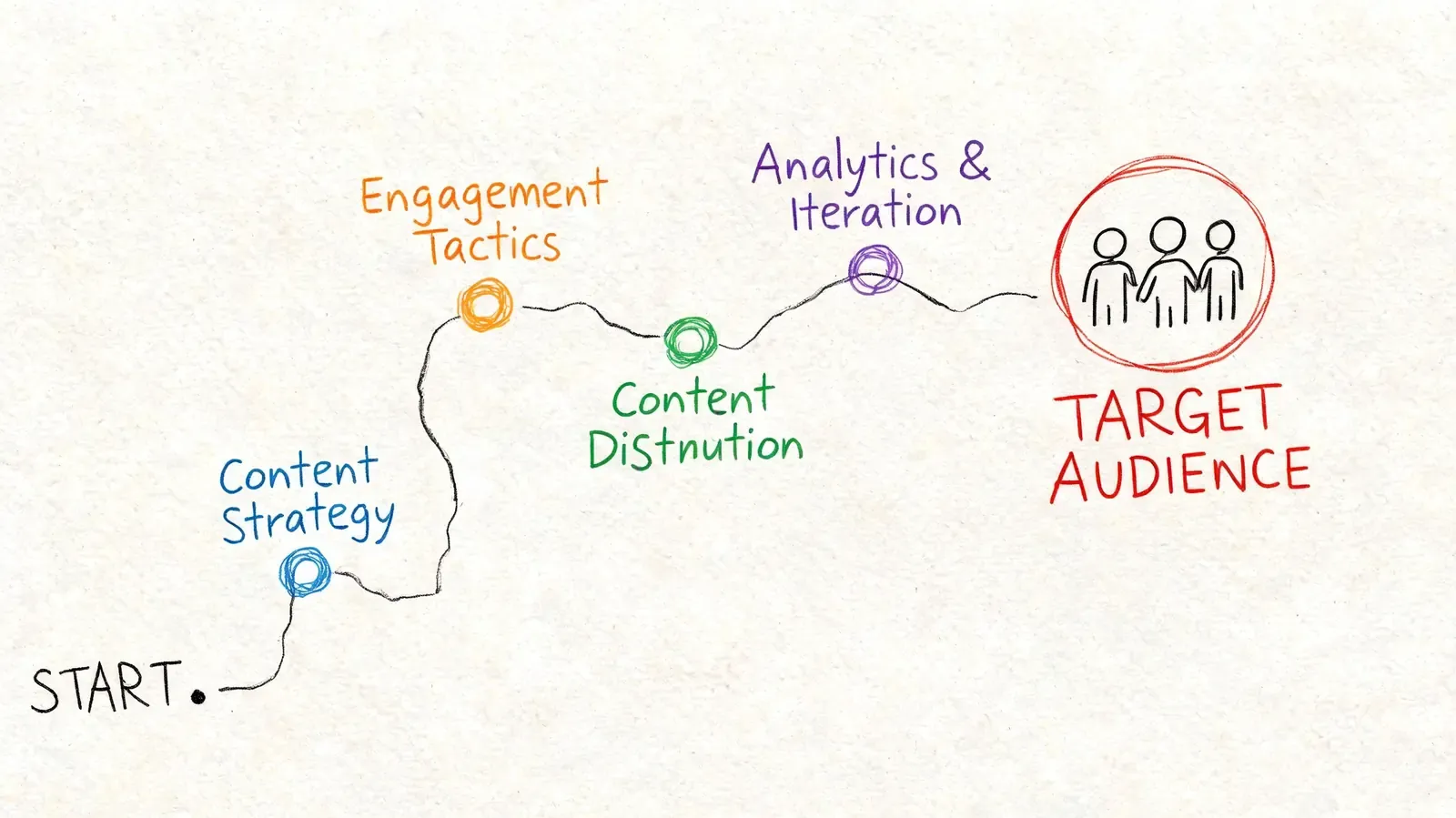
Good follower growth starts before the follow. It starts with where you show up, what angle you bring, and whether the right people can immediately tell you’re worth tracking.
Mine competitor audiences for gaps
One of the best underused tactics is competitor follower analysis. Not to copy competitors, but to identify the segments inside their audience they aren’t serving well.
Coindive’s analysis of Twitter follower growth tactics notes that targeting high-quality segments in a competitor’s audience, especially users with strong follower-to-following ratios, can yield 20-30% higher engagement when you address unmet needs with more practical content.
That gives you a cleaner playbook:
- Look for neglected subtopics. In startup or crypto niches, many accounts stay broad. The gap is often practical application, process breakdowns, or operator-level commentary.
- Prioritize quality signals. High-ratio followers are often more promising than random large pools of followers.
- Write for the unmet intent. If competitors talk features, talk implementation. If they post opinions, post working examples.
Many creators waste time. They chase the same audience with the same framing. The smarter move is to find adjacent demand that’s already visible but under-addressed.
Earn follows through visible contribution
High-quality followers often come from public proof of thinking. The fastest route isn’t posting more random originals. It’s contributing intelligently where your ideal audience is already paying attention.
Useful contribution tends to have three traits:
- Specificity. Add a real example, a sharper distinction, or a clear operator insight.
- Timing. Join conversations while they’re active enough to surface.
- Profile continuity. Your profile and recent posts should match the quality of your reply.
A practical content reference helps here. If you want examples of post formats that create stronger response loops, review these tweet examples that actually work in 2026.
This walkthrough is worth watching before you refine your reply strategy:
Build for the right kind of recognition
A strong Twitter follower count grows more reliably when people know what bucket to place you in.
That doesn’t mean sounding narrow or robotic. It means becoming legible.
- Own a point of view. Generic agreement attracts weak follows. Distinct framing attracts the right people and repels the wrong ones.
- Publish practical patterns. Repeatable lessons, teardown-style posts, and concise observations create memory.
- Use give-first behavior. Helpful replies, clear summaries, and useful references create trust before any ask.
The best followers don’t arrive because you asked for a follow. They arrive because they saw enough evidence that future posts will be worth their attention.
What doesn’t work is trying to appeal to everyone in your niche. What works is becoming unusually useful to a recognizable slice of it.
Convert Follower Signals into Engagement with Xholic
Understanding follower count is only half the job. The other half is turning those signals into daily action without getting lost in the feed.
That’s where a workflow tool matters. Xholic AI is built for the exact loop this article has been describing: find momentum, join the right conversations, stay consistent, and turn visibility into healthier follower growth.
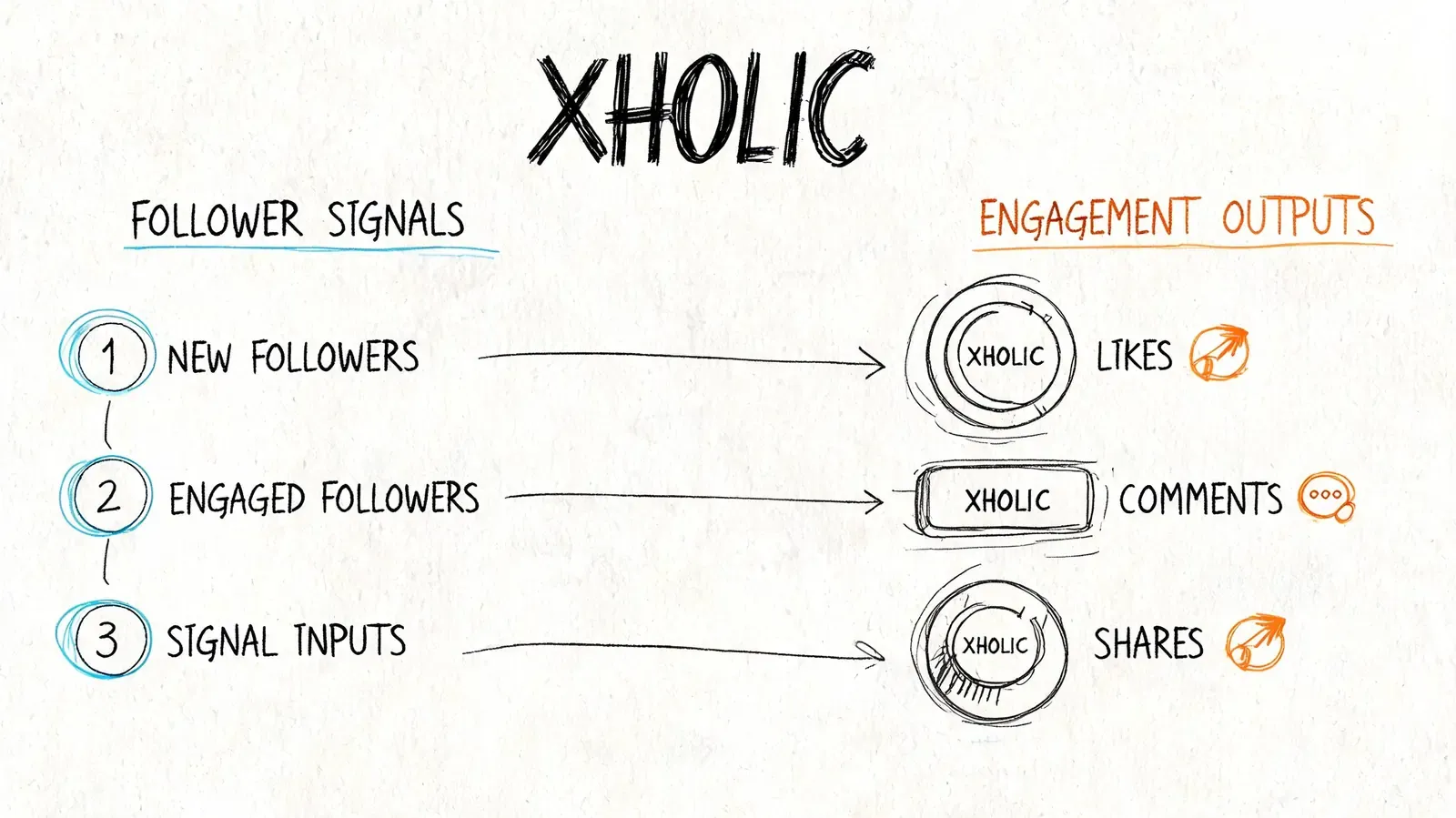
Its always-on discovery engine indexes 2.5M+ viral tweets and scores posts by momentum, which helps creators spot conversations that are worth entering instead of reacting blindly to the timeline. The AI Reply Composer helps you contribute faster without sounding generic, and the voice-matching tools keep output aligned with how you already write. For anyone trying to convert audience insight into stronger participation, that cuts a lot of friction.
The rest of the stack supports consistency. Daily Pack gives you post ideas in your style. Reply Deck and Saved & Collections make research and follow-up easier. Goals & Streaks help maintain the rhythm that organic audience growth usually requires. If you want a broader view of how these kinds of tools support engagement, this guide on boosting your Twitter engagement with AI post and reply tools is a strong companion read.
The key advantage is operational, not cosmetic. Xholic doesn’t auto-post. You review everything, keep control, and use the system to compress ideation, editing, and engagement into a faster loop.
That matters because better follower growth usually comes from repeated smart actions, not one-off hacks.
If you want to turn your Twitter follower count into something more useful than a vanity number, try Xholic AI. It helps you find high-momentum conversations, write sharper replies, and publish consistently without the usual time drain. You can start with a 7-day free trial, no credit card required.